-
 1/3
1/3
Stefan Rinck , Der Alpen-Clan kehrt zurück (The Return of the Alpine Clan)
27 novembre 2025 — 19 avril 2026
Pinakothek der Moderne, Munich (DE) -
 2/3
2/3
Stefan Rinck , Der Alpen-Clan kehrt zurück (The Return of the Alpine Clan)
27 novembre 2025 — 19 avril 2026
Pinakothek der Moderne, Munich (DE) -
 3/3
3/3
Stefan Rinck , Der Alpen-Clan kehrt zurück (The Return of the Alpine Clan)
27 novembre 2025 — 19 avril 2026
Pinakothek der Moderne, Munich (DE)
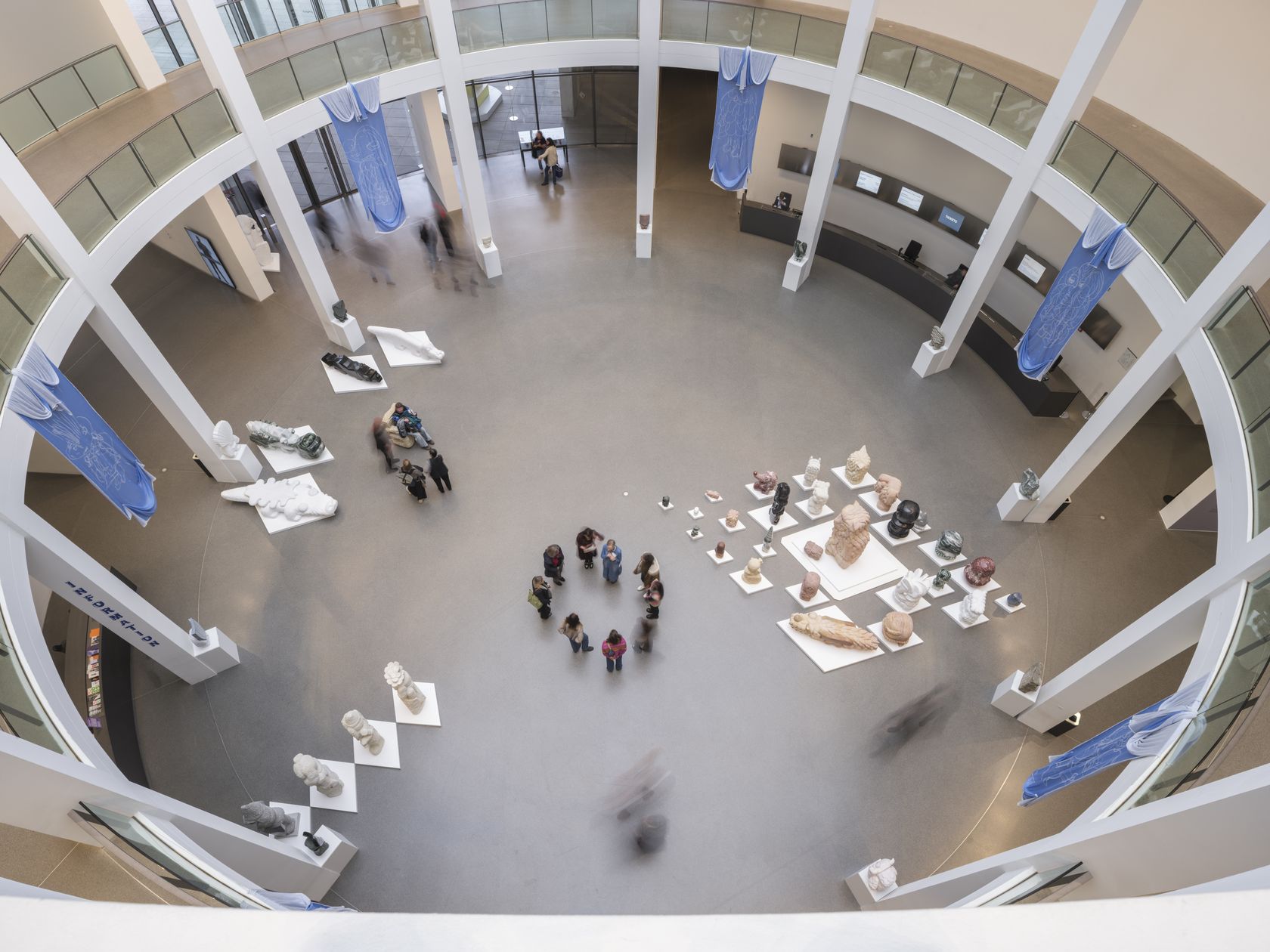
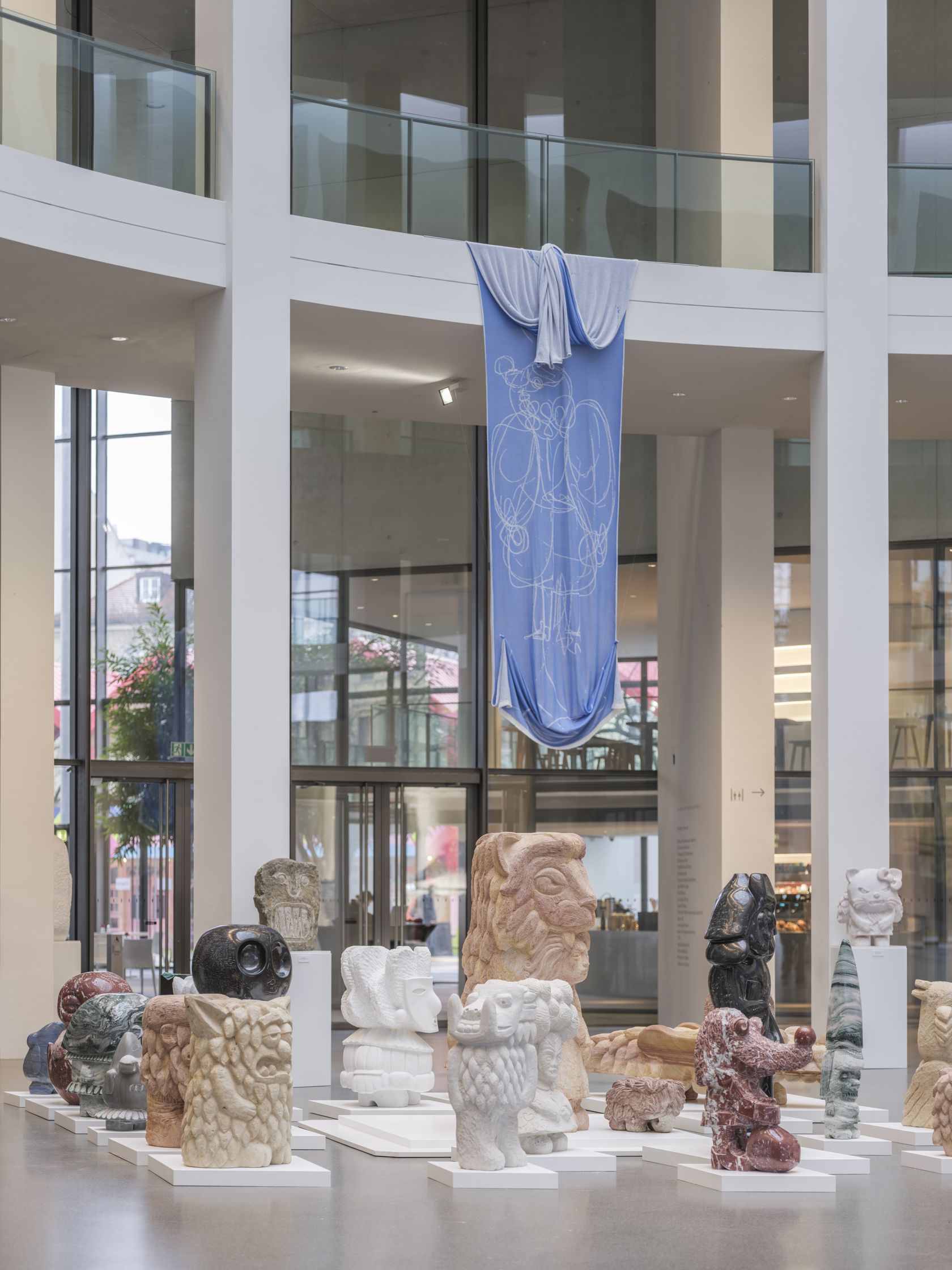
Stefan Rinck's sculptures are undoubtedly not lightweight. And yet they appear like feather-light fantasy games in which the sculptor boldly intertwines facets of high and low culture with epochs of cultural and art history. Their contradictory nature is compelling, as they give the impression of being free-spirited capriccios rather than heavy stone monuments. It is this naturalness that captivates us. All of these are artistic parameters that Stefan Rinck pursues in his work. With tact and sensitivity, he continually readjusts them from sculpture to sculpture. Vice versa, they stimulate his artistic engagement with the world.
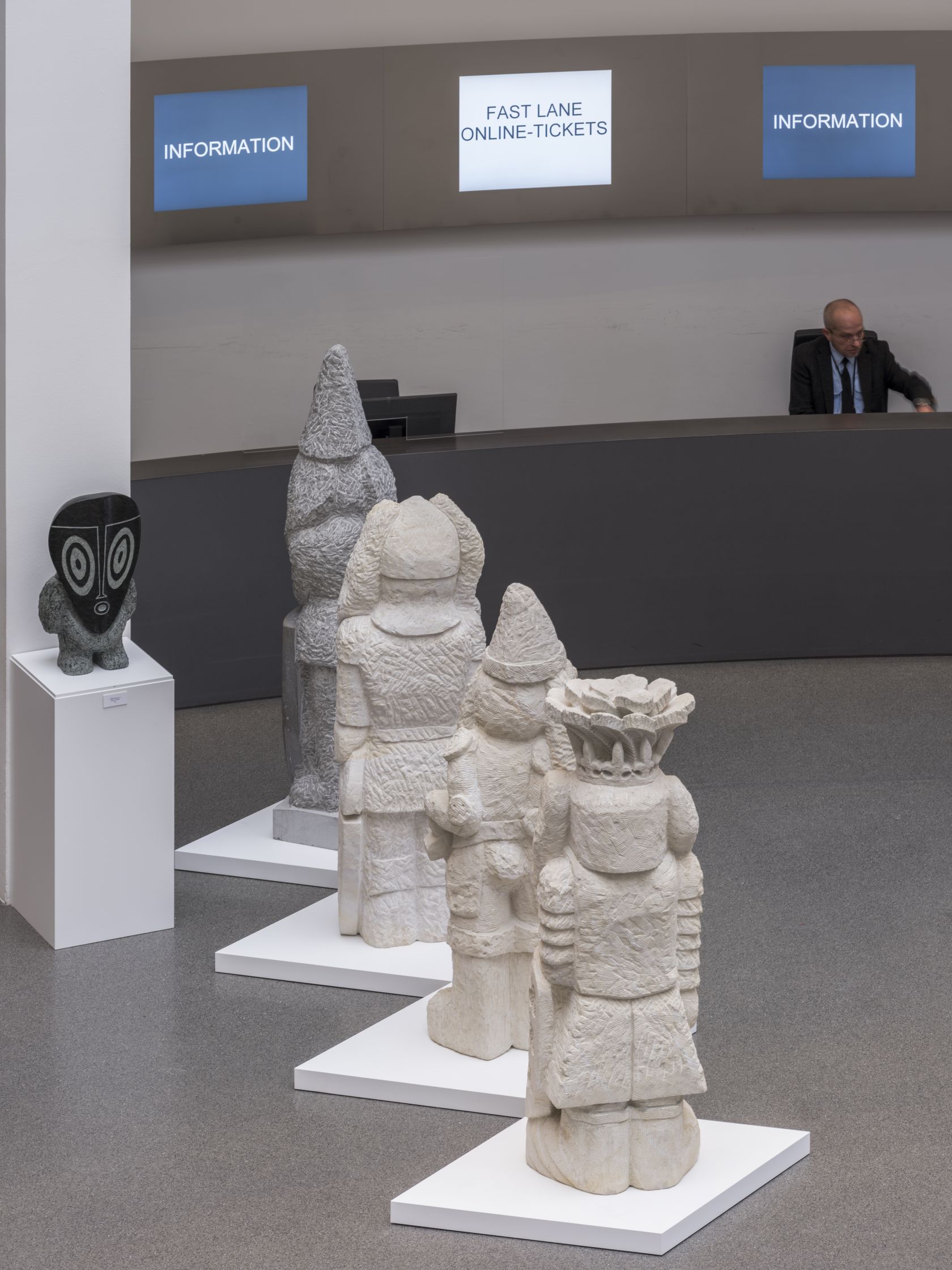
Under his hands, raw chunks of rock grow into unknown, sublime beings. Even when preselecting the respective type of stone, he considers the processing methods specific to the material in order to do justice to the allure of the future sculpture. With the connoisseurship of a stonemason, his gaze can shift abruptly from the rather brittle, clay-coloured Elbe sandstone to the hard and colour-intensive blue Macauba or green Atlantis quartzite, only to unexpectedly set his sights on a block of snow-white Statuario marble, the ultimate material for any classical sculptor, for his next folie. The mélange of materials in his sculpture park conjures up a fantastic panopticon of shimmering spirits of life, which he breathes life into. With their often exaggerated habits, they are reminiscent of Picasso's extraterrestrial jugglers from his blue and pink periods. Like them, Rincks' statues populate our world without sharing our reality. That is what makes them so appealing to us. We are suddenly touched by the strangeness of their fairy-tale habitat, which, when viewed from close up but at a safe distance, is not unlike our human nature with its longings and fears.
In doing so, the well-read artist draws us deep into the cultural and art history that can be seen in his work and shares his wealth of knowledge with us. For example, his enthusiasm for Romanesque and Gothic cathedral sculpture is unmistakable. One might jokingly suggest that he activates their defensive magic for the present in his sculptures. In many cases, he references epoch-making milestones and transfers them into a new, contemporary form, not least in order to respond to the present with his work.
From the end of 2025, he will realise the first of three rotunda projects curated by the Staatliche Graphische Sammlung München. An accompanying new catalogue brings together key sculptures created by the artist over the last ten years and provides an overview of his idiosyncratic artistic development. It also documents Rinck's brilliant crescendo of more than thirty newly created sculptures, which have found their way into the Pinakothek under the title Der Alpen-Clan kehrt zurück (The Return of the Alpine Clan). They naturally evoke a Bavarian attitude to life in which traditional cultural practices such as customs and superstitions, but also pride in one's homeland and, last but not least, festive culture are reinterpreted. Rinck's recently created panopticon for the Pinakothek der Moderne humorously questions regionally influenced cultural practices in his site-specific installation, appropriating them and reinterpreting them. With a wink, he presents an alternative to the existing order – reminiscent of the medieval festival culture that suspended hierarchical structures and still lives on in rudimentary form in Bavarian carnival celebrations, for example. This reveals his subtle artistic strategy of raising complex questions for discussion rather than providing one-dimensional answers in his work.