To learn more about available works, please provide your contact information
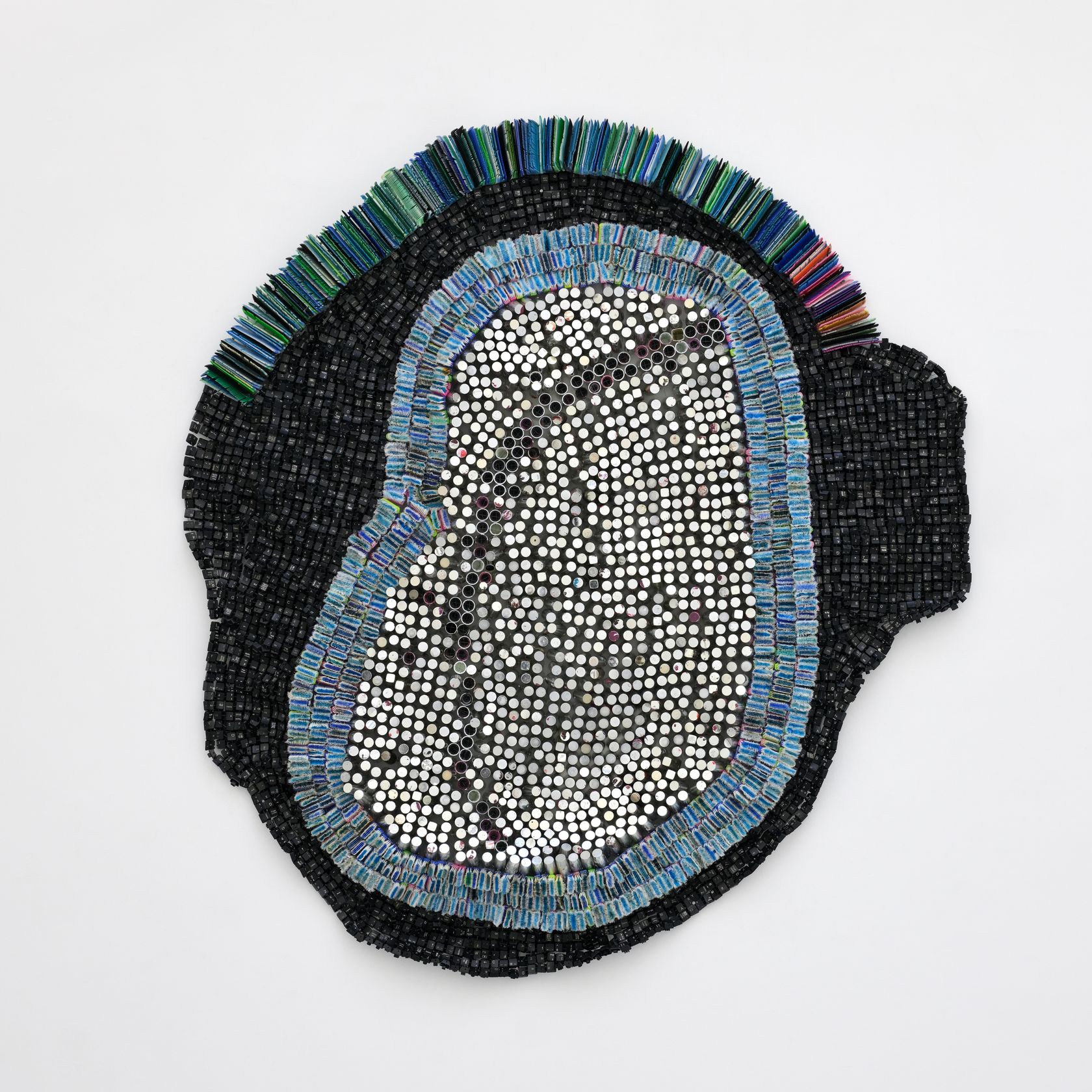
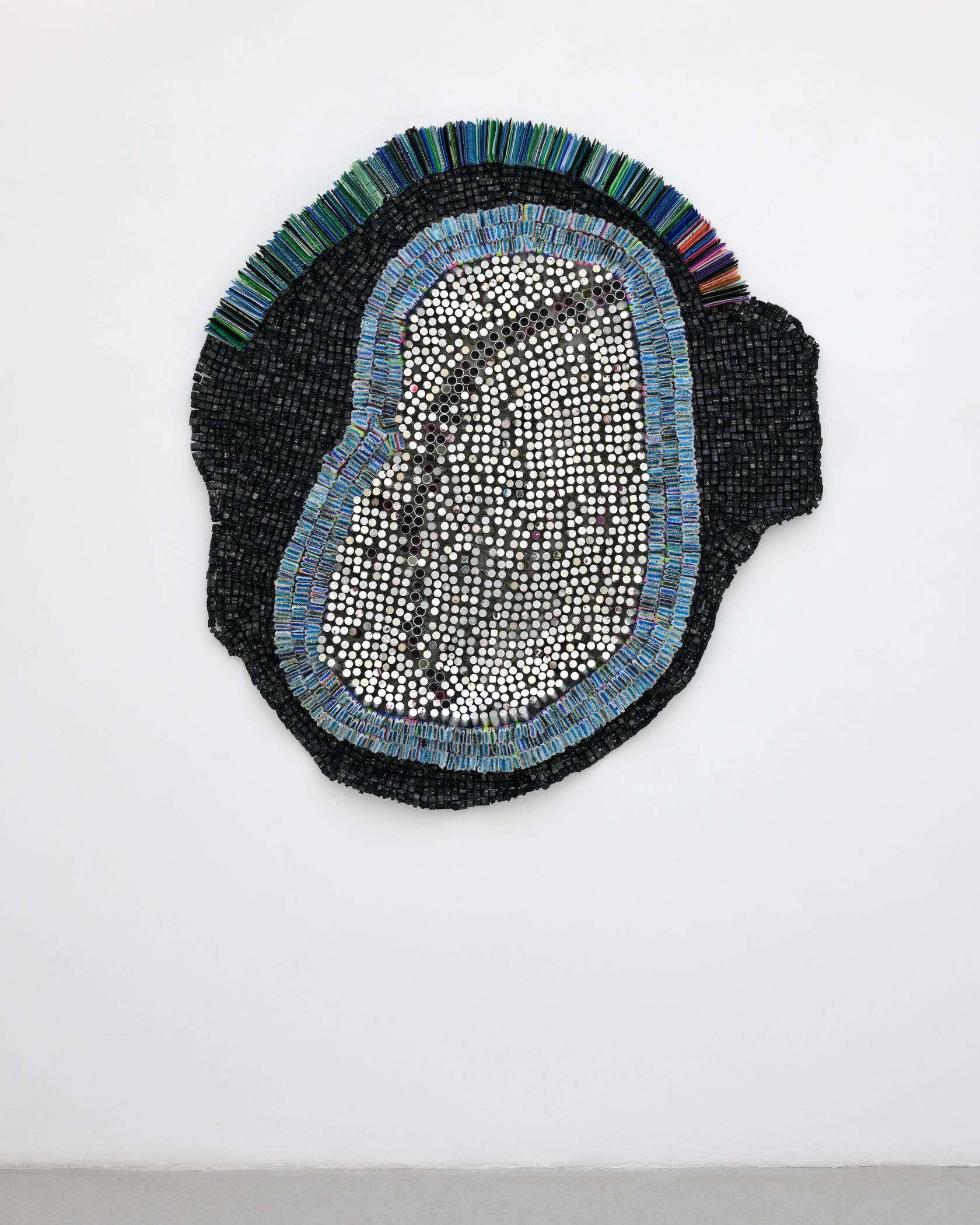
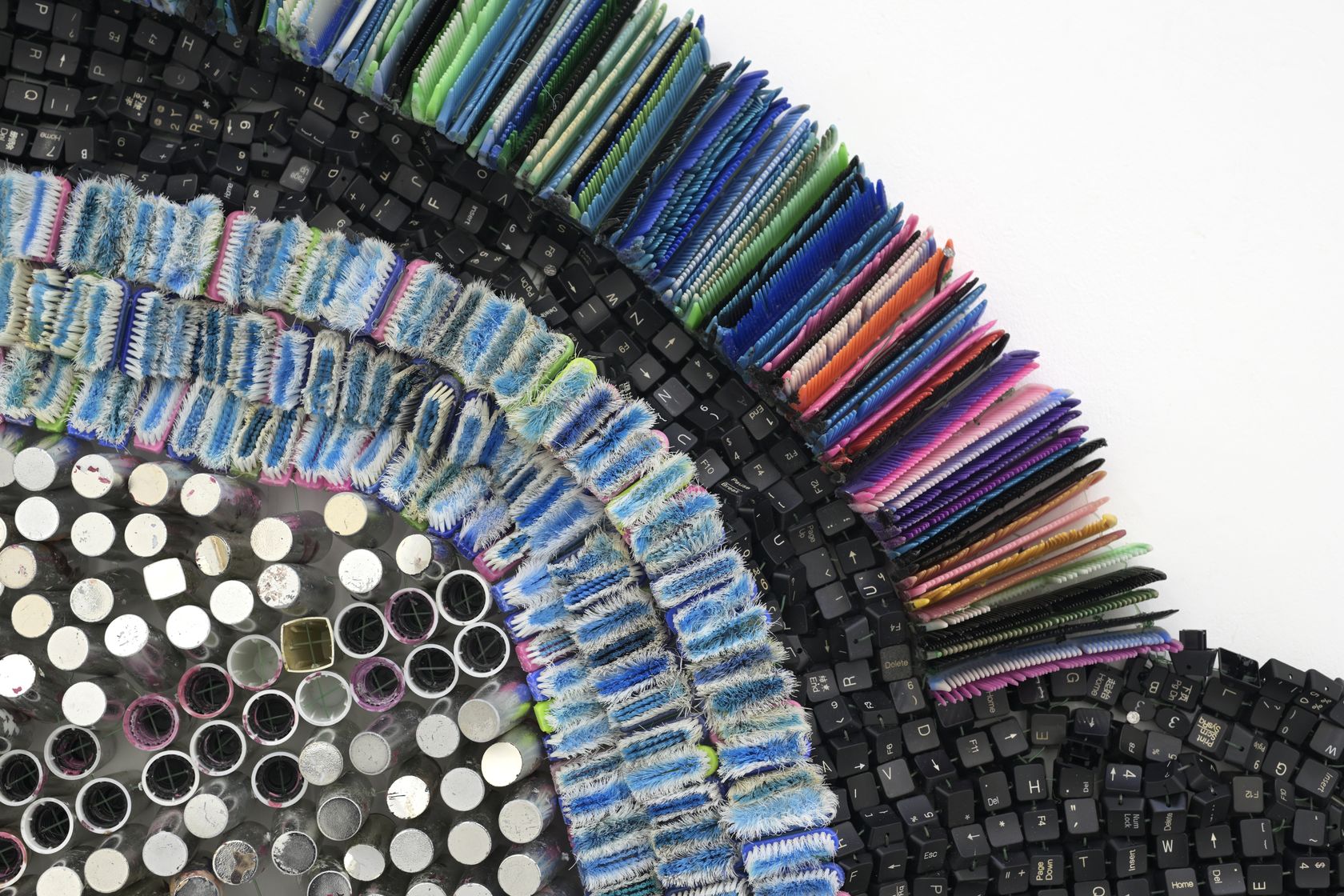
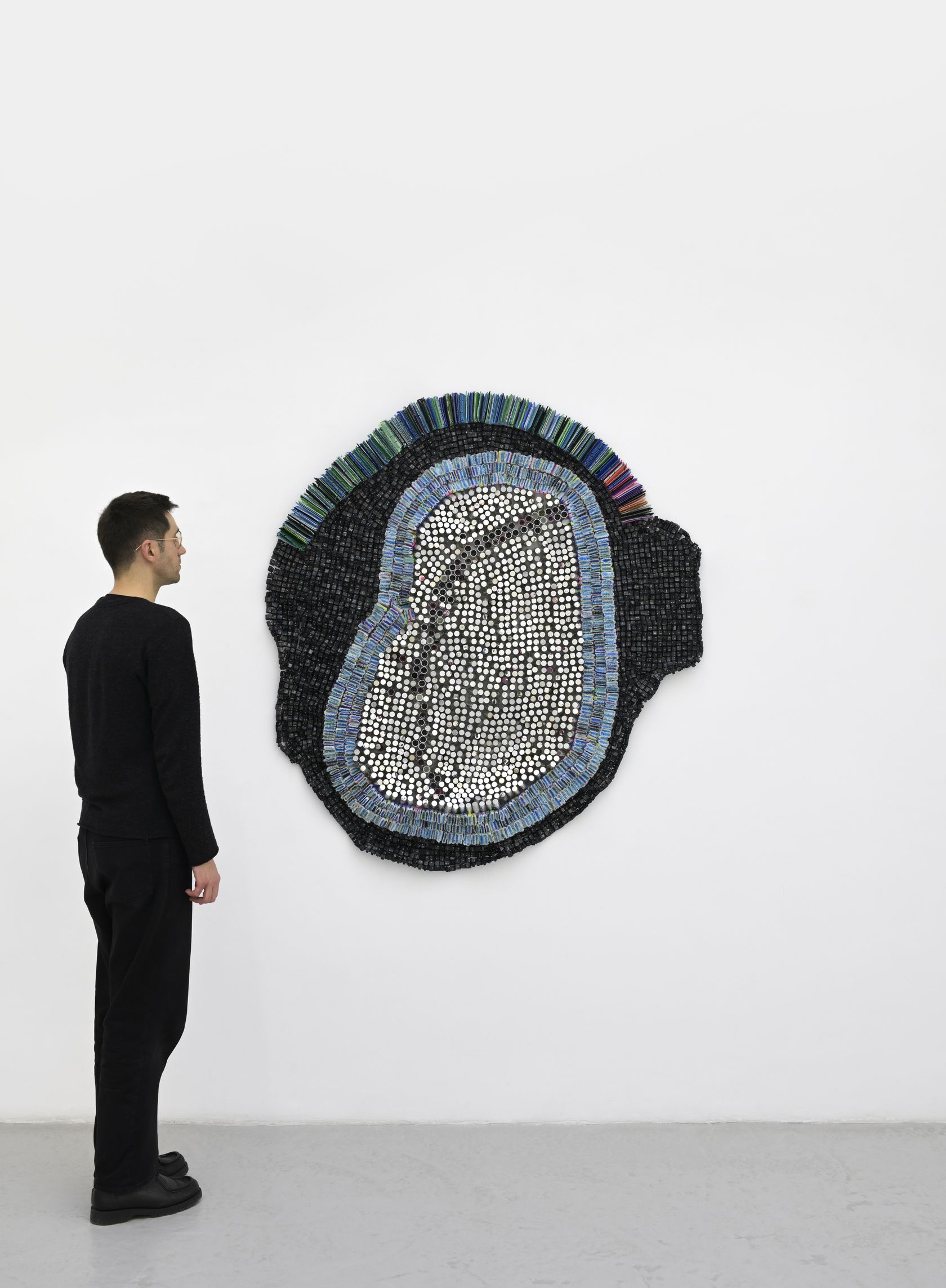
- Moffat Takadiwa
- The Consumer Portrait , 2026
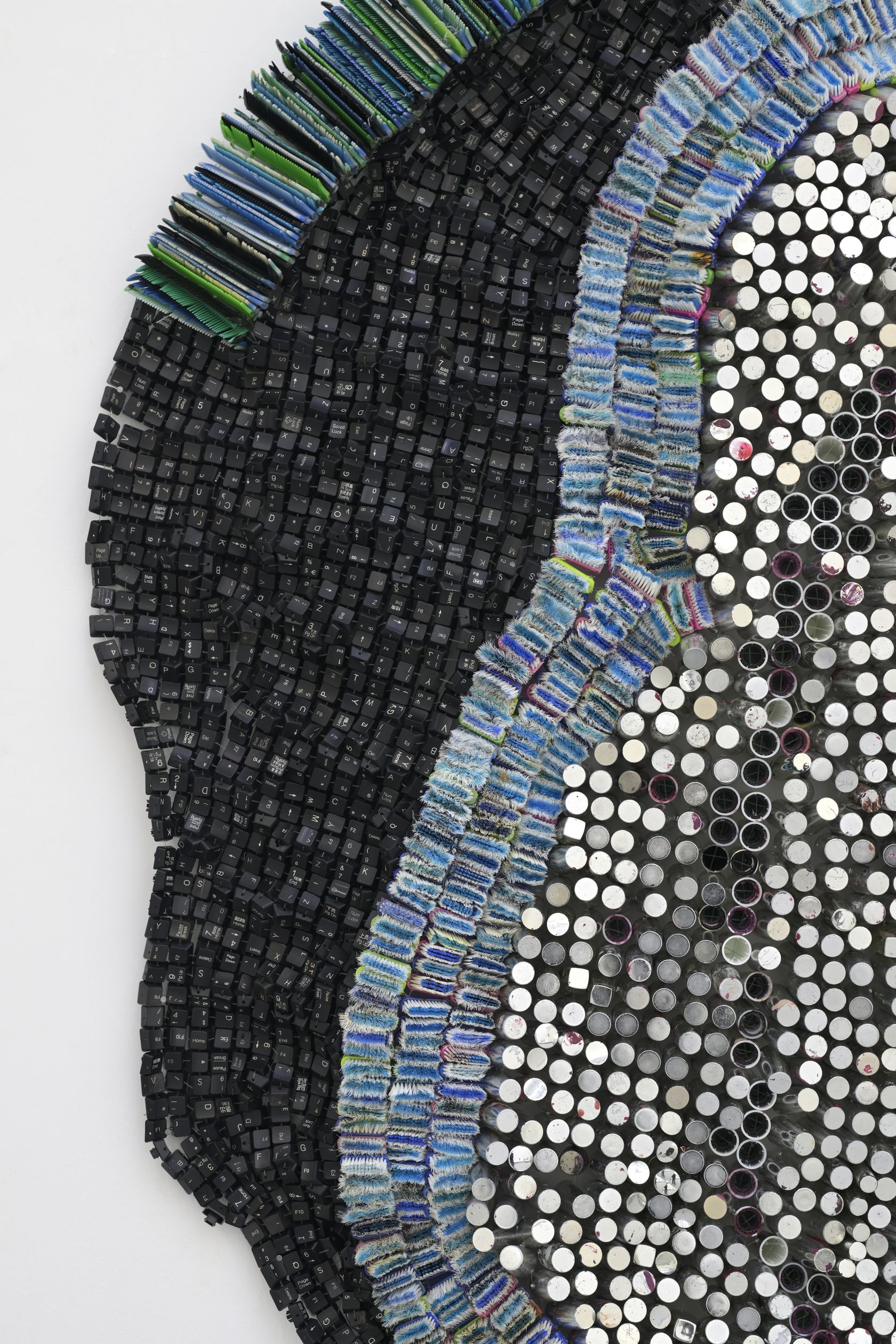
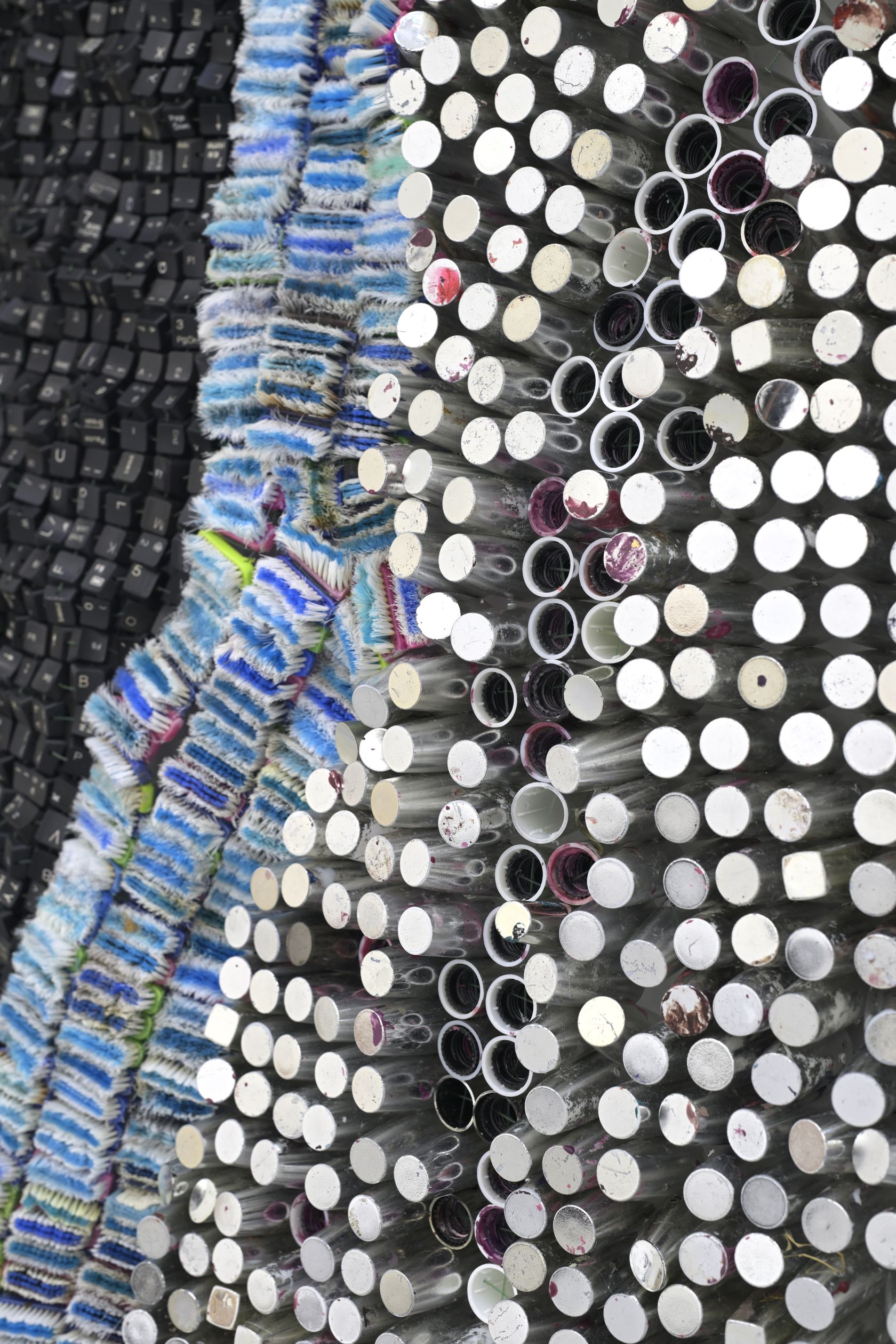
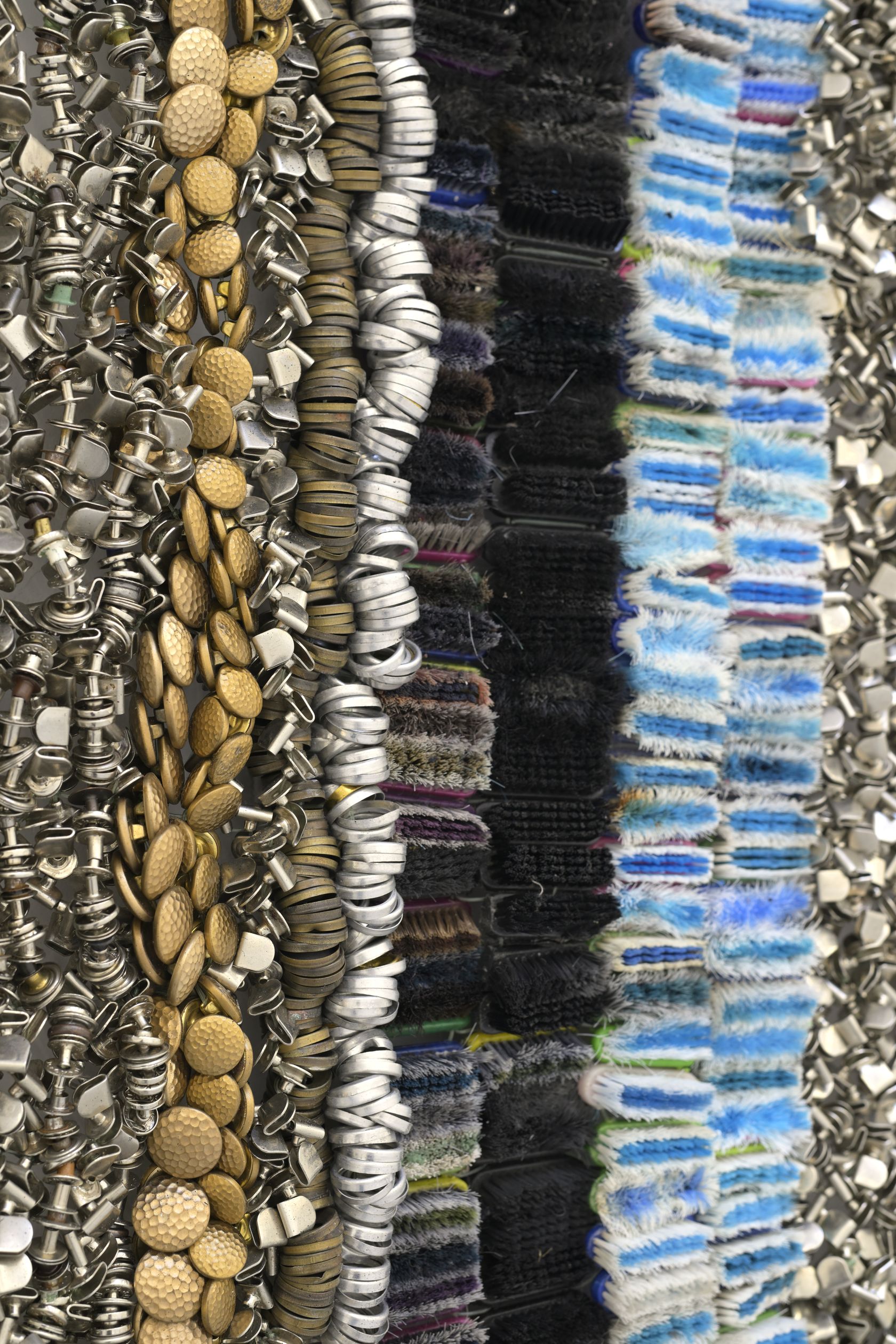
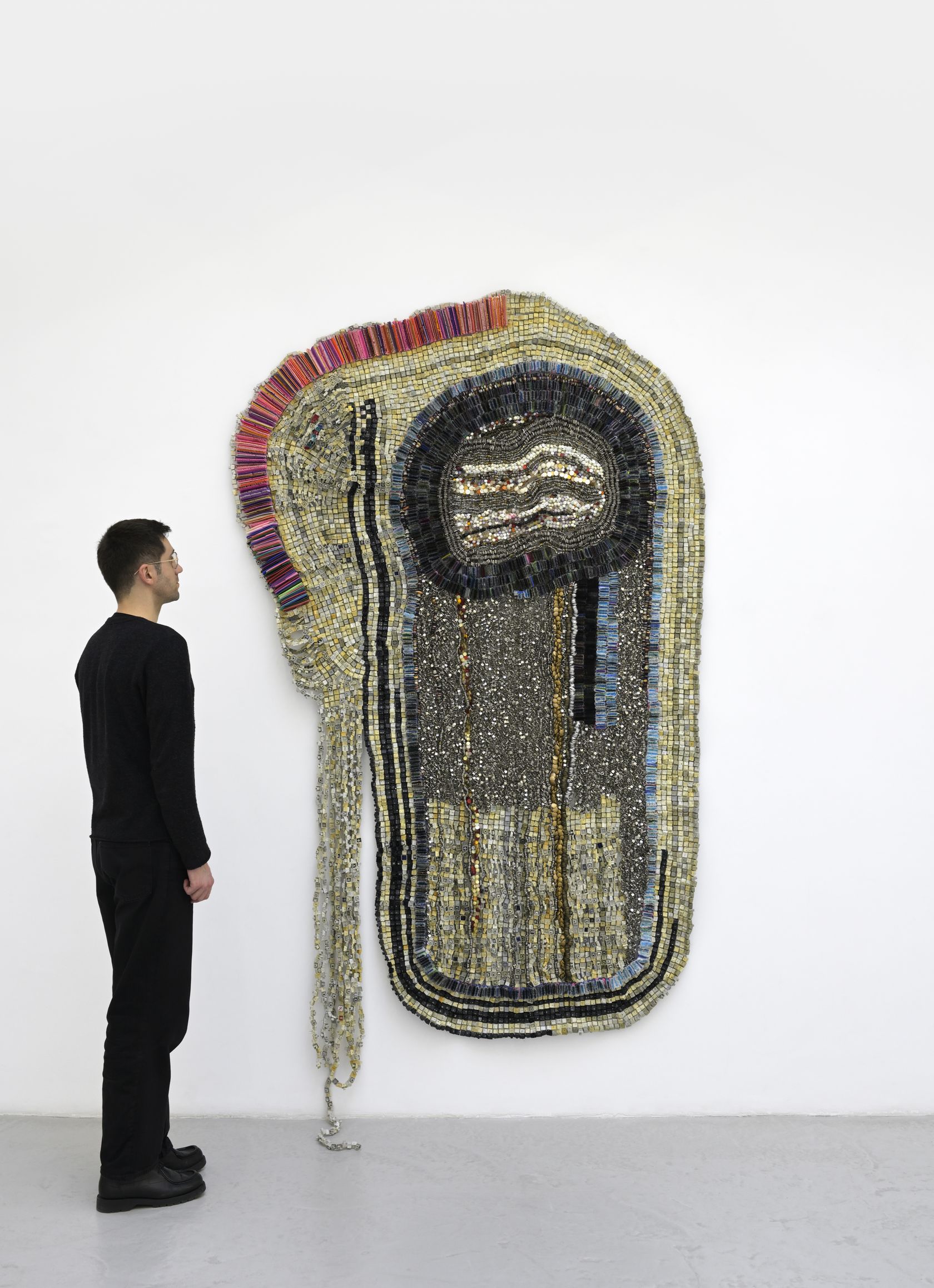
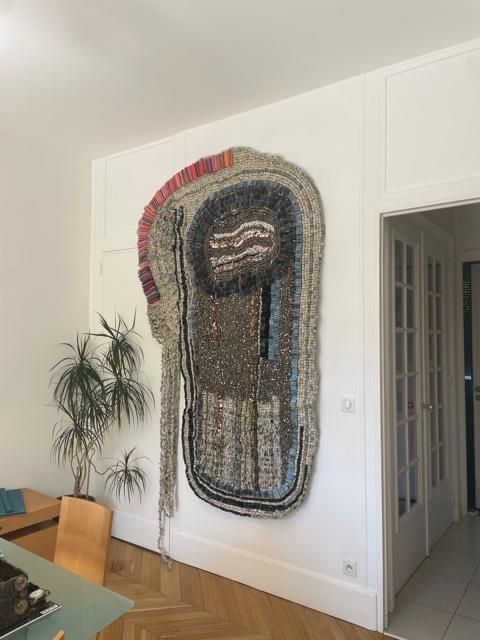
- Keyboard keys, plastic toothbrush head, combs and nail polish tops
-
- 150 ×
- 138 × cm
- 59 1/16 ×
- 54 5/16 × inches
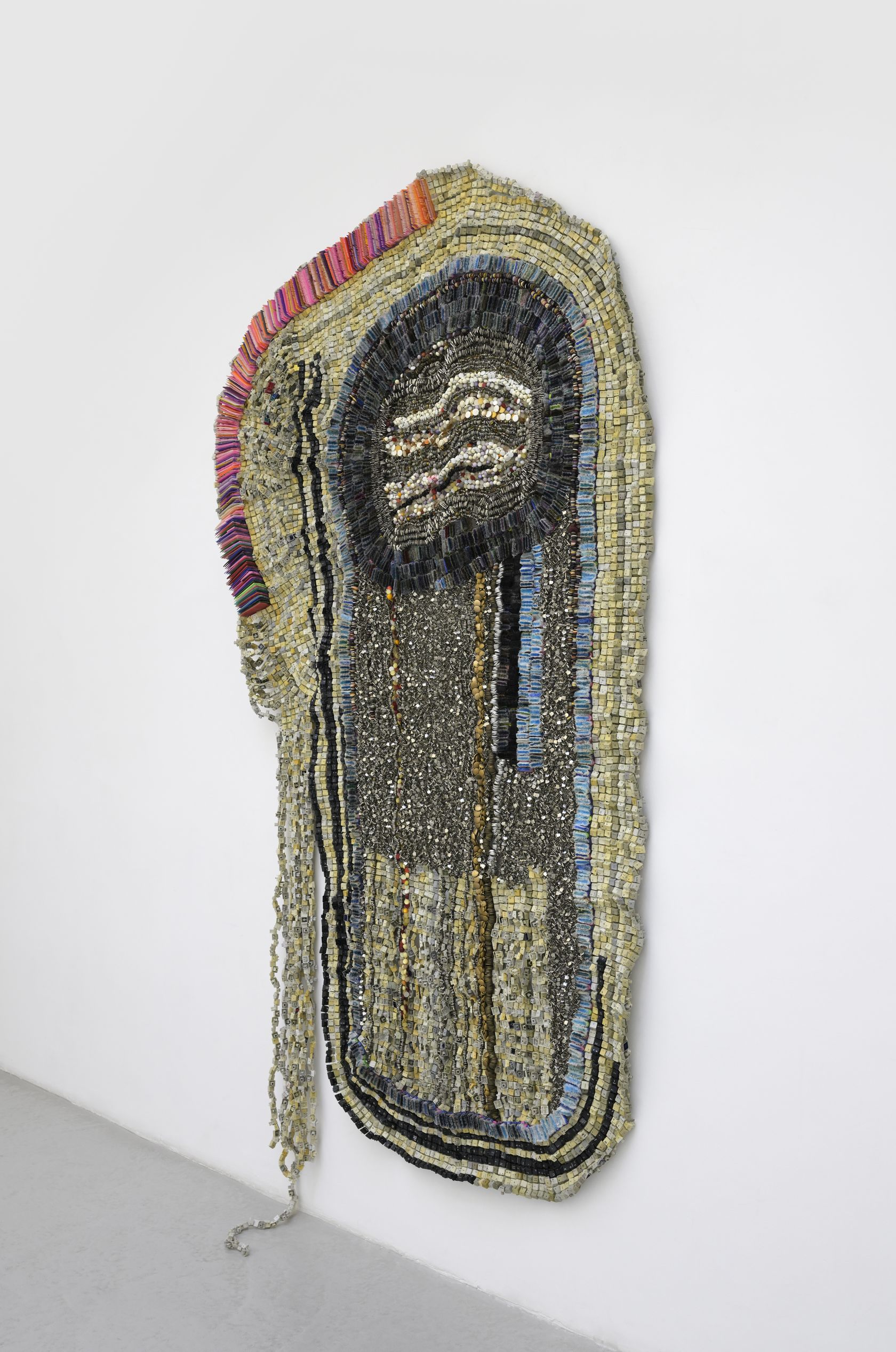
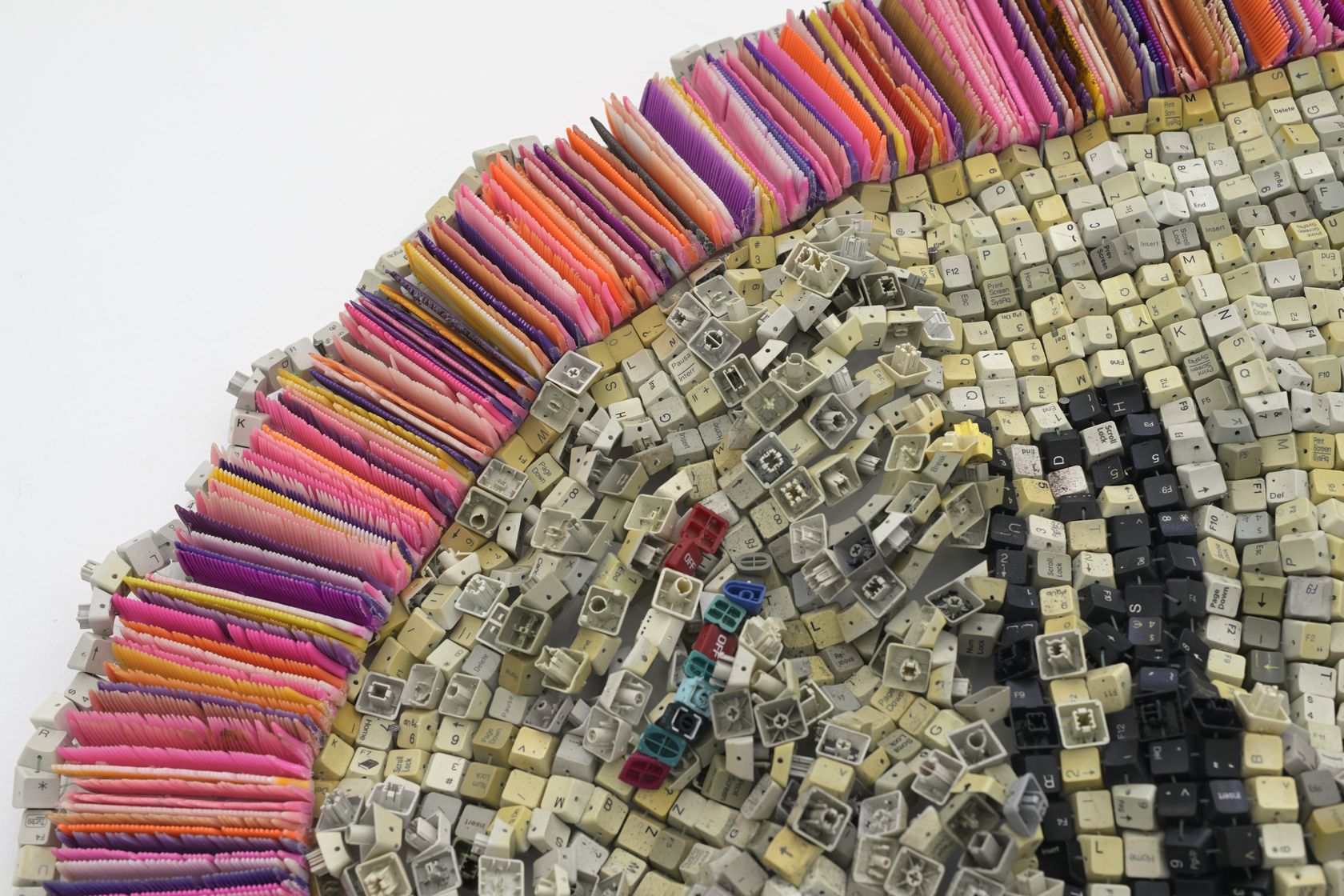
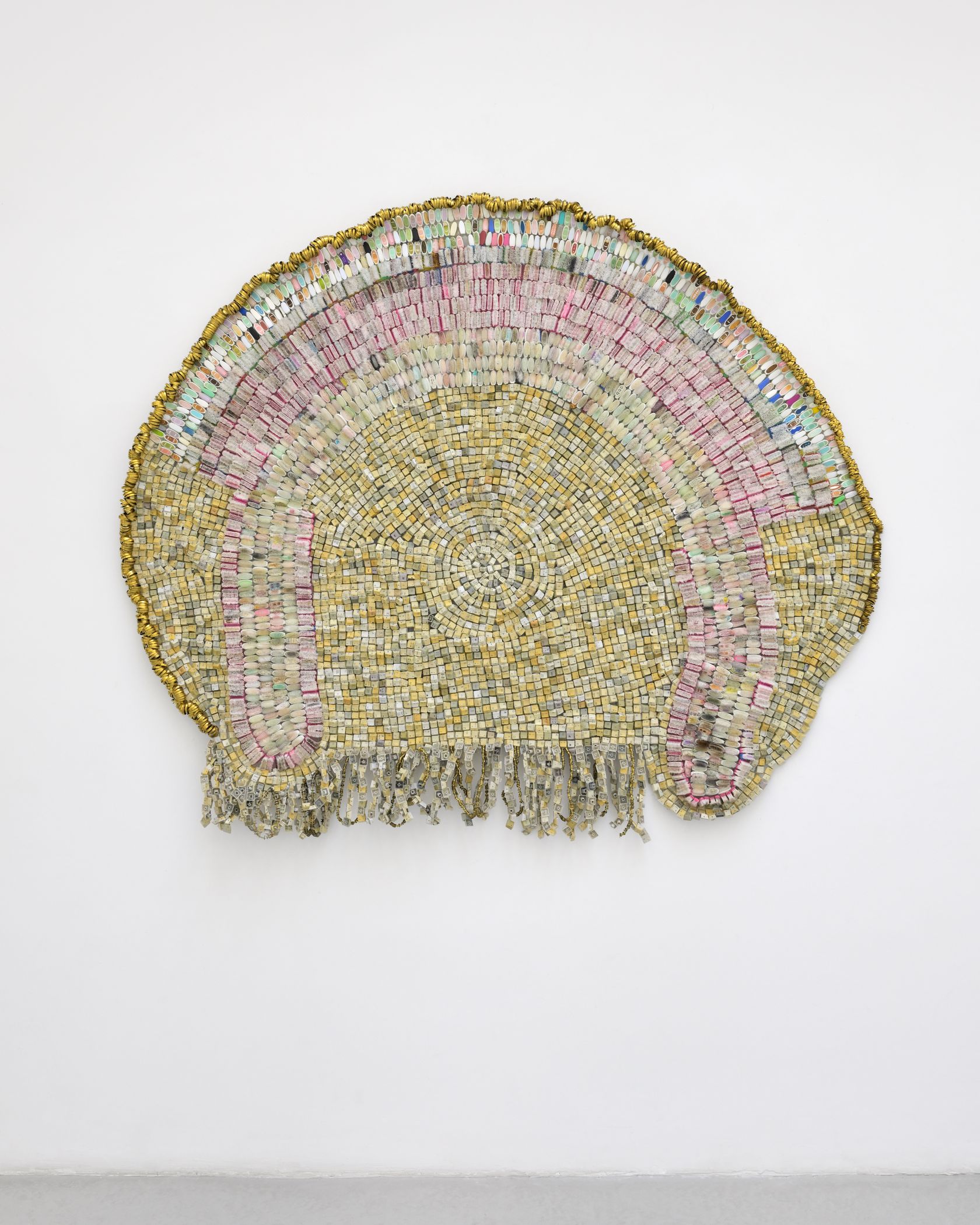
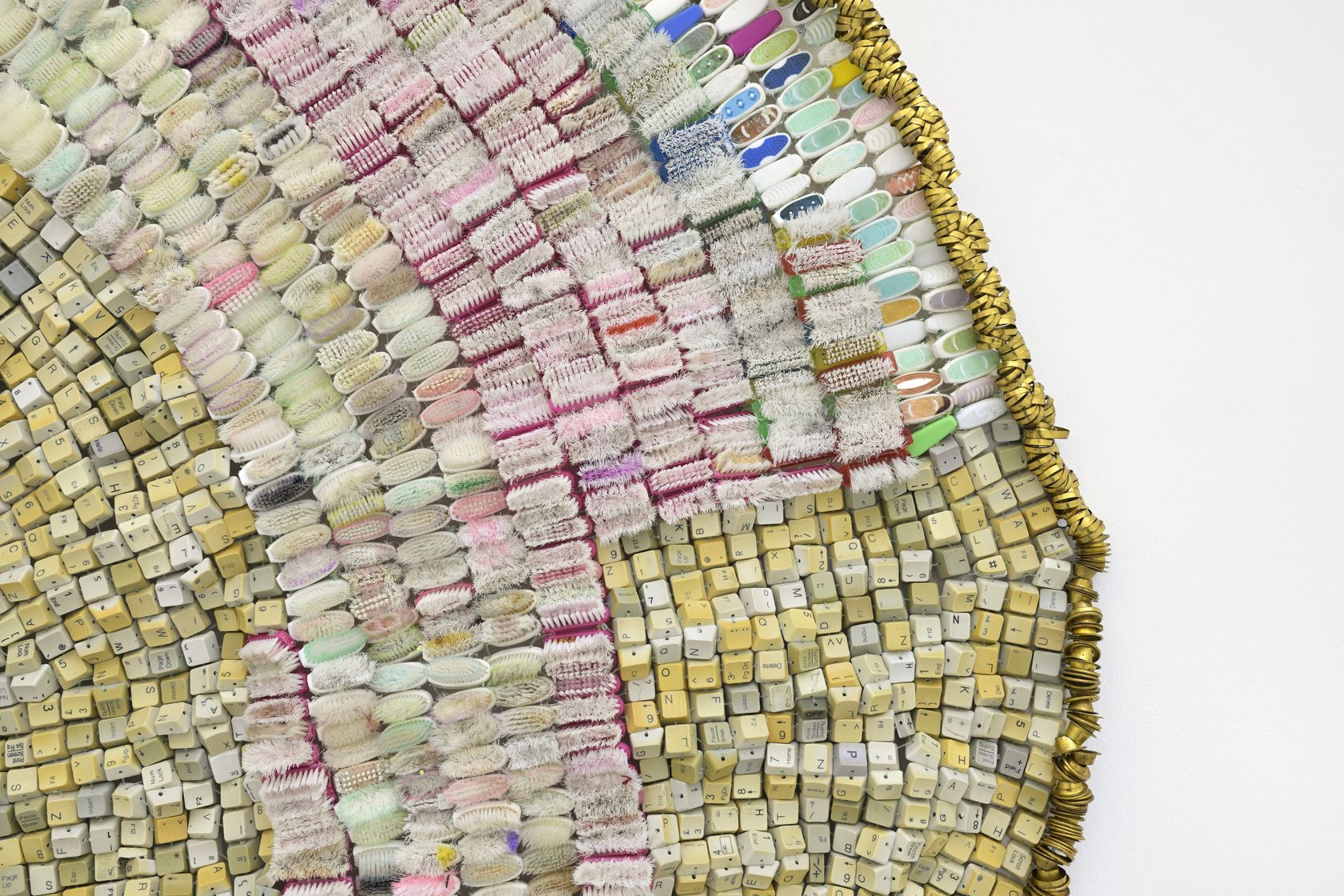
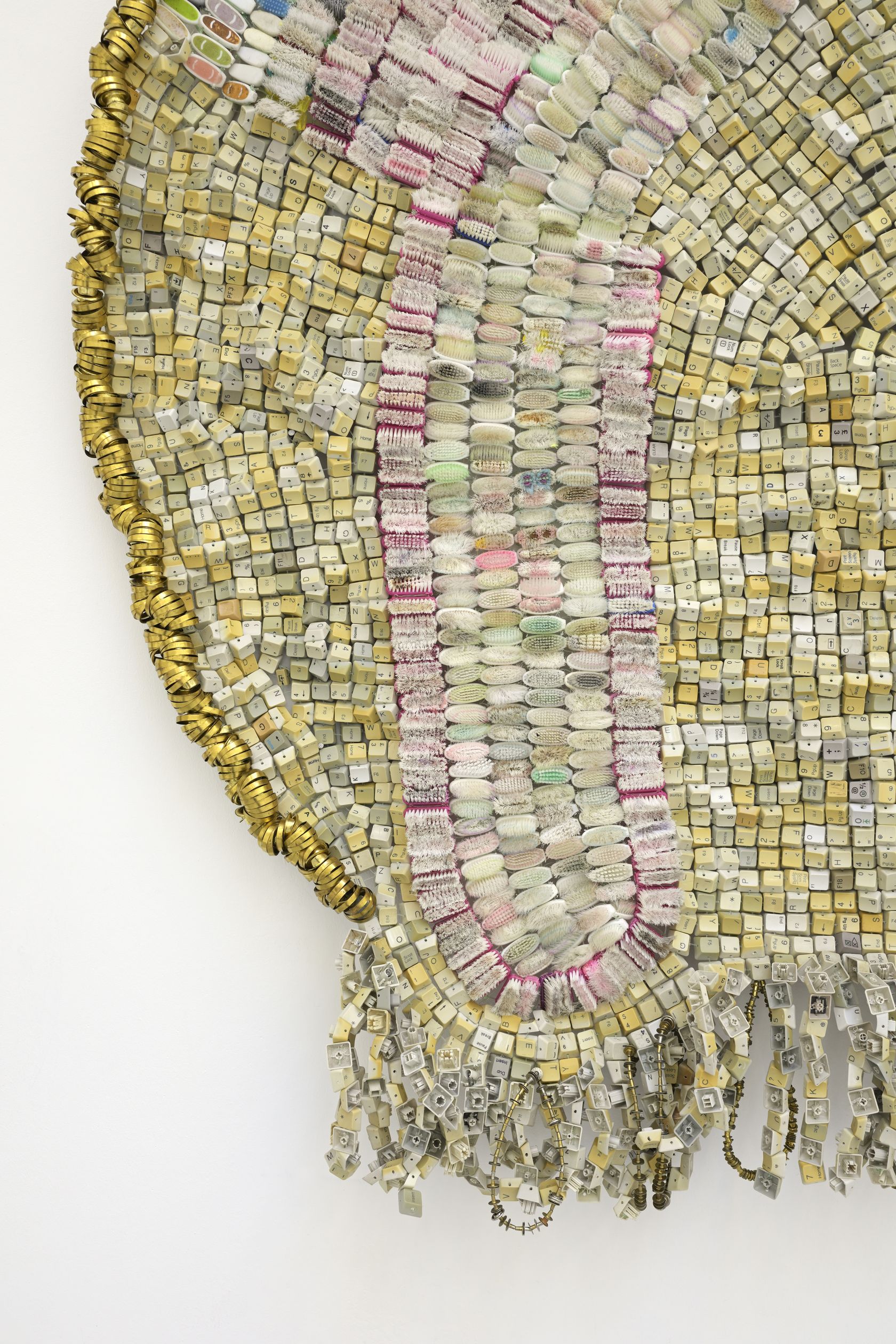
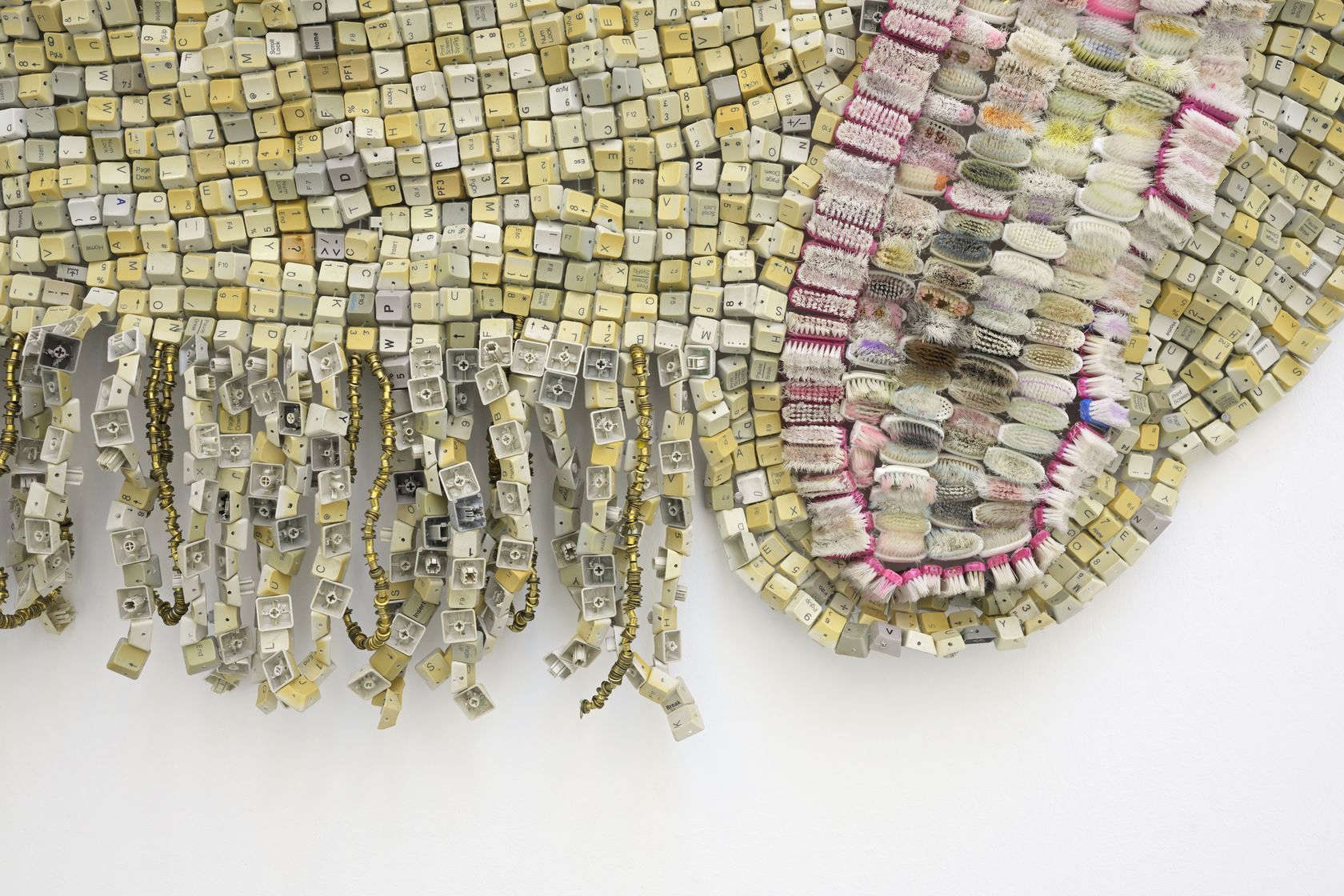
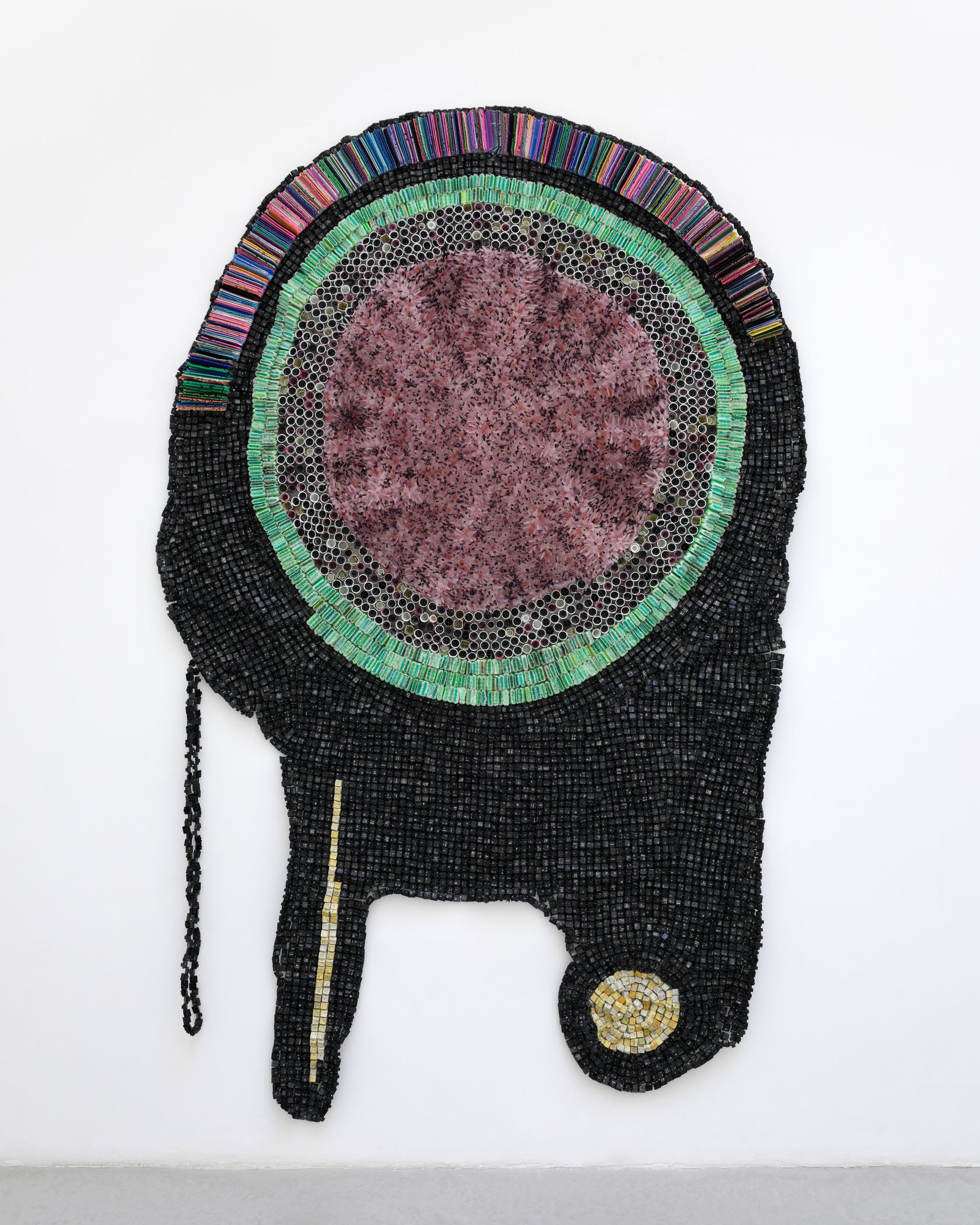
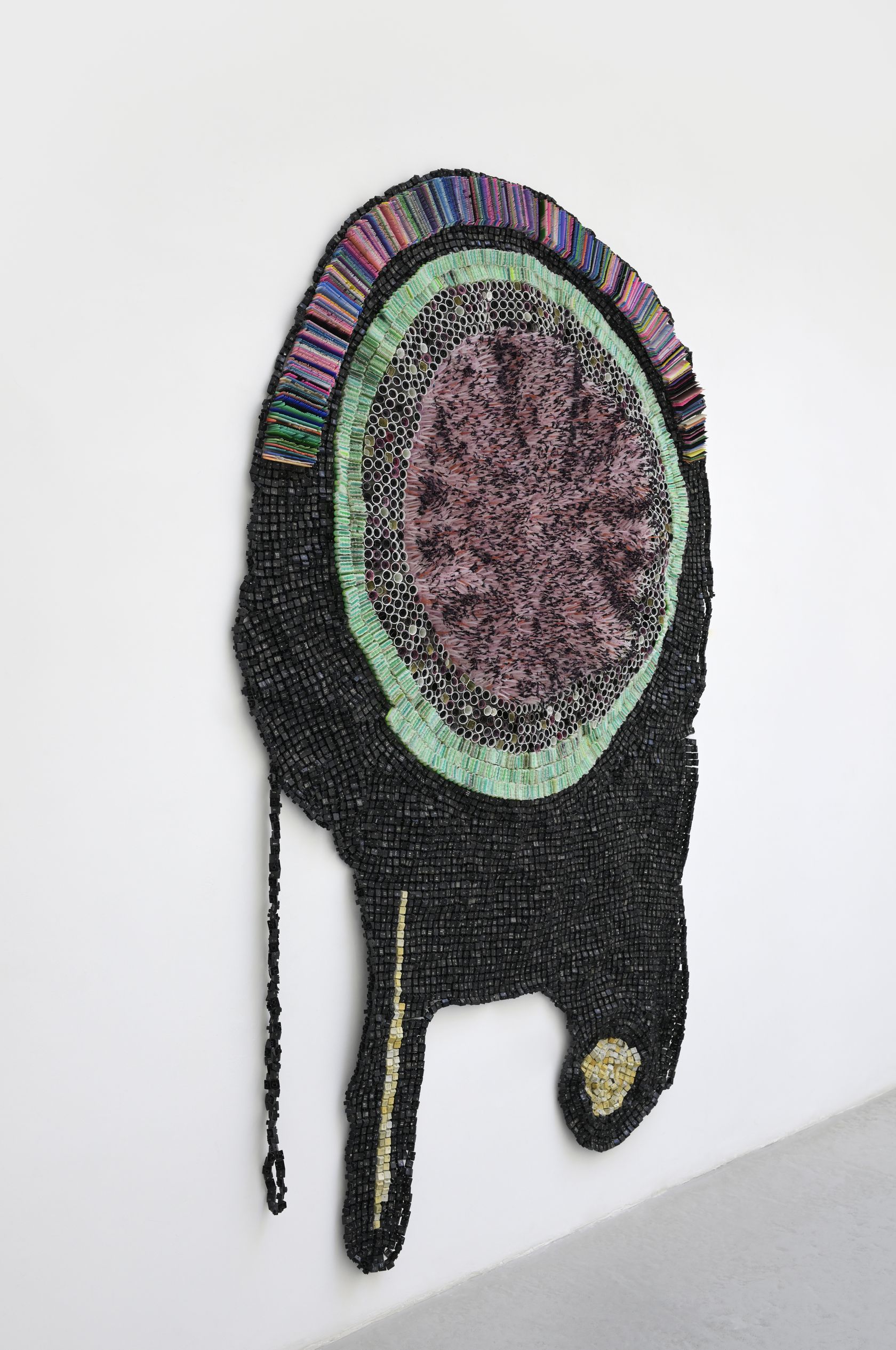
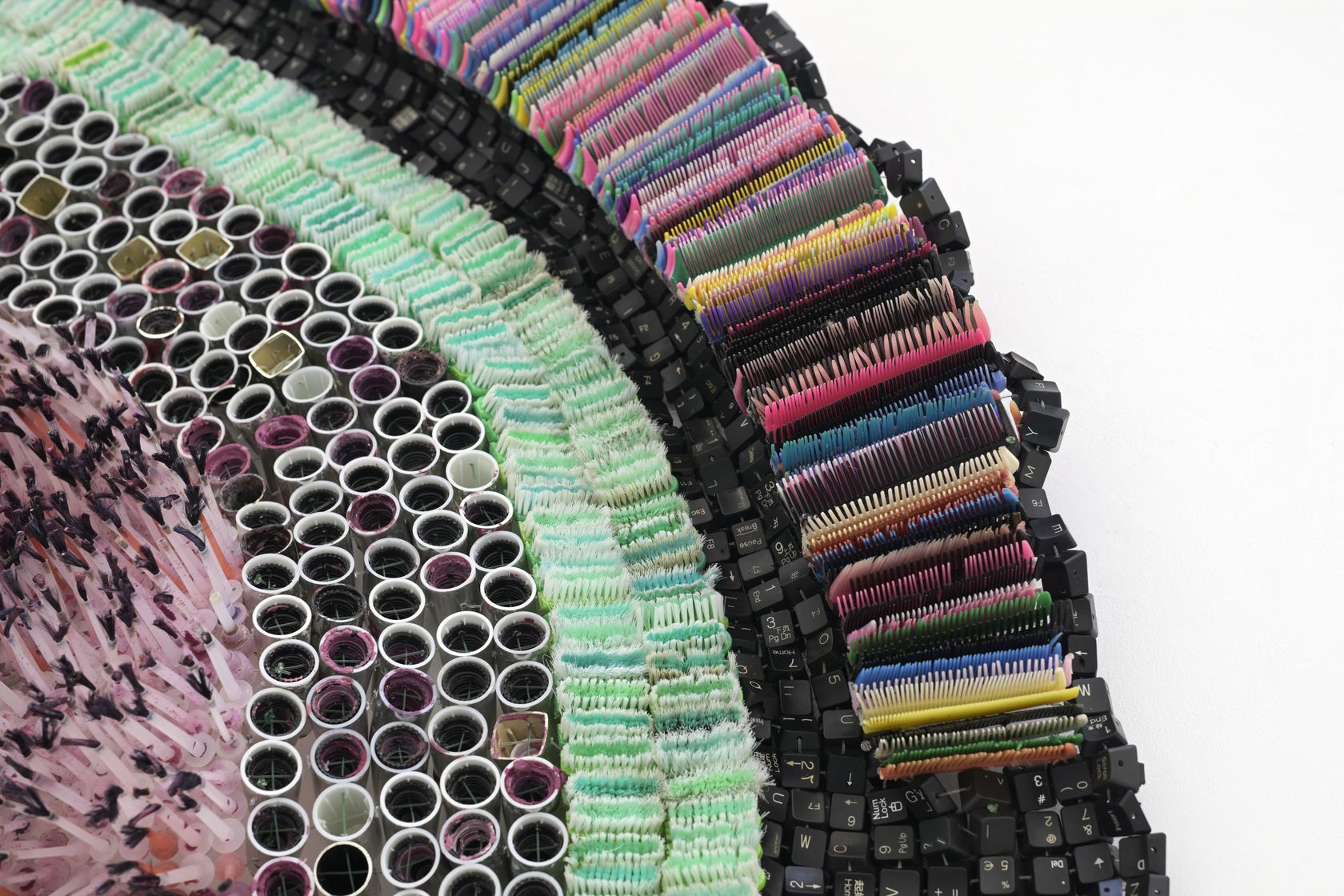
The Crown! pushes Takadiwa’s ongoing project further, reclaiming the leftover traces of everyday things and turning them into what you might call post-industrial textiles. These are not objects of comfort. They carry the tensions of Africa’s post-colonial afterlife: the politics of black hair, the hunger for small vanities, the choreography of conspicuous consumption. Afro combs, which appear throughout the show, serve as archives of social, political, and spiritual history, rooted in African traditions and the colonial self-fashioning they forced. Once tools for grooming and ritual, these combs now bear the weight of resistance and pride in Black political life.
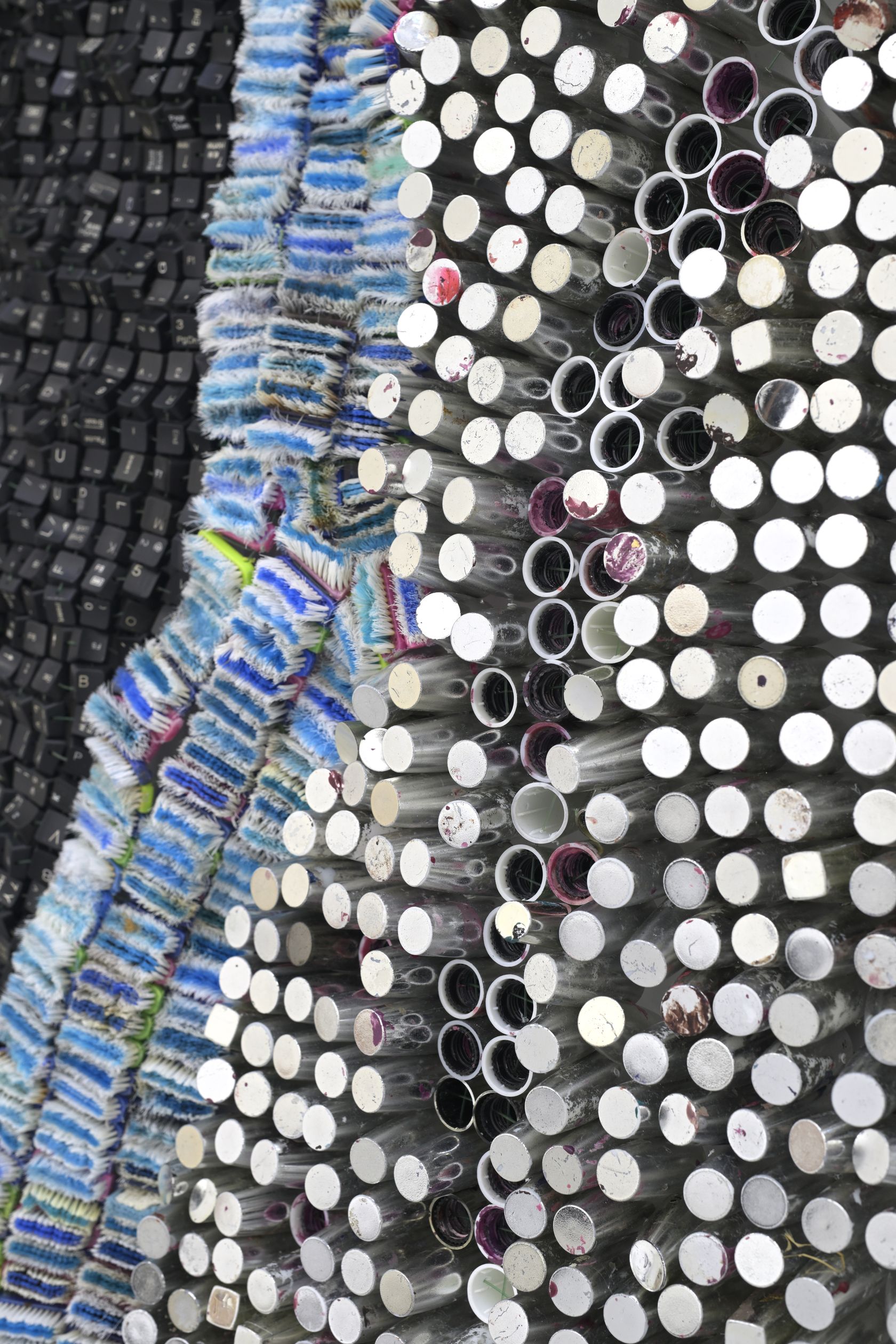
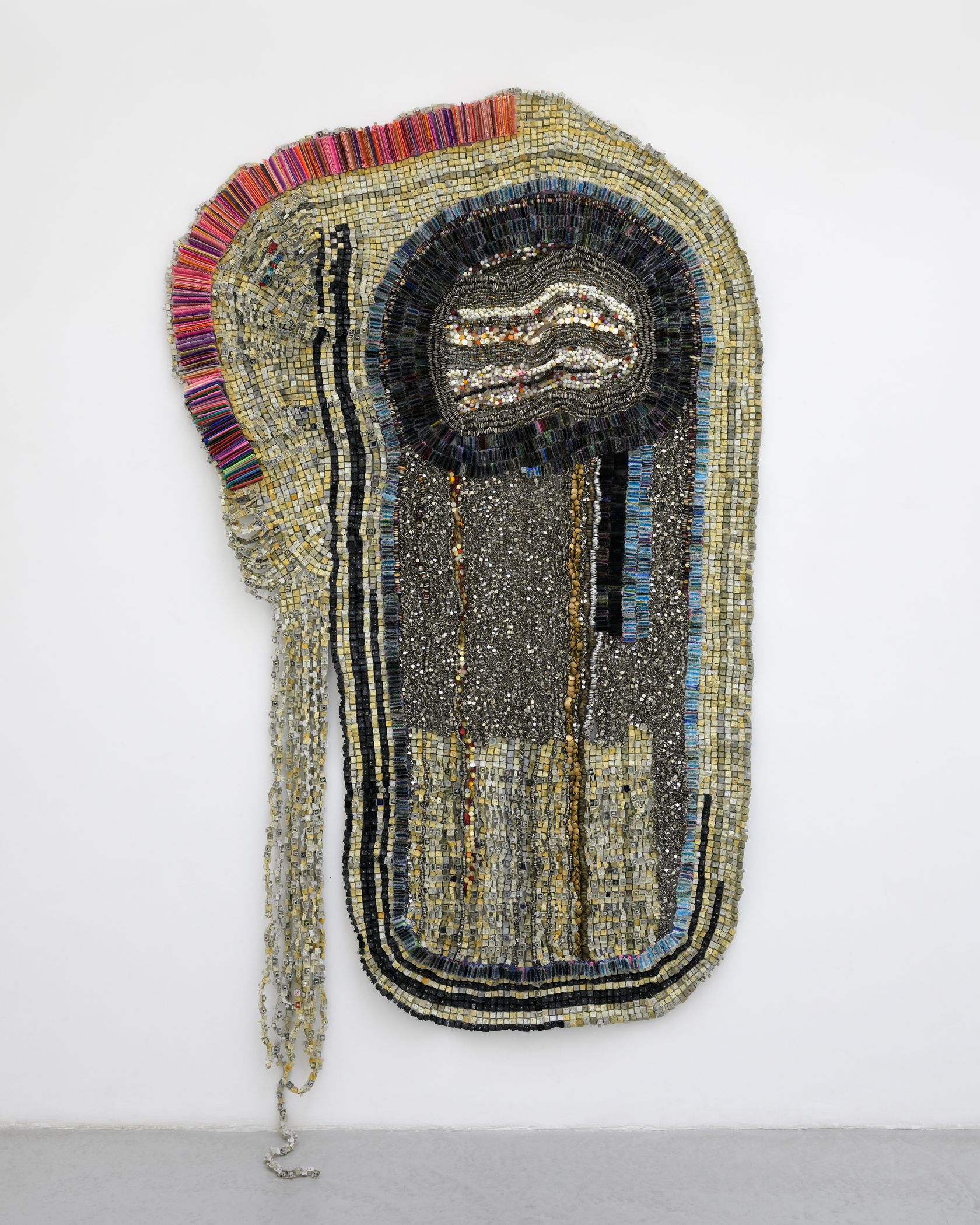
- Moffat Takadiwa
- Combed Hair , 2026
- Keyboard keys, buttons, plastic toothbrush head, combs and nails polish parts
-
- 280 ×
- 155 × cm
- 110 1/4 ×
- 61 × inches
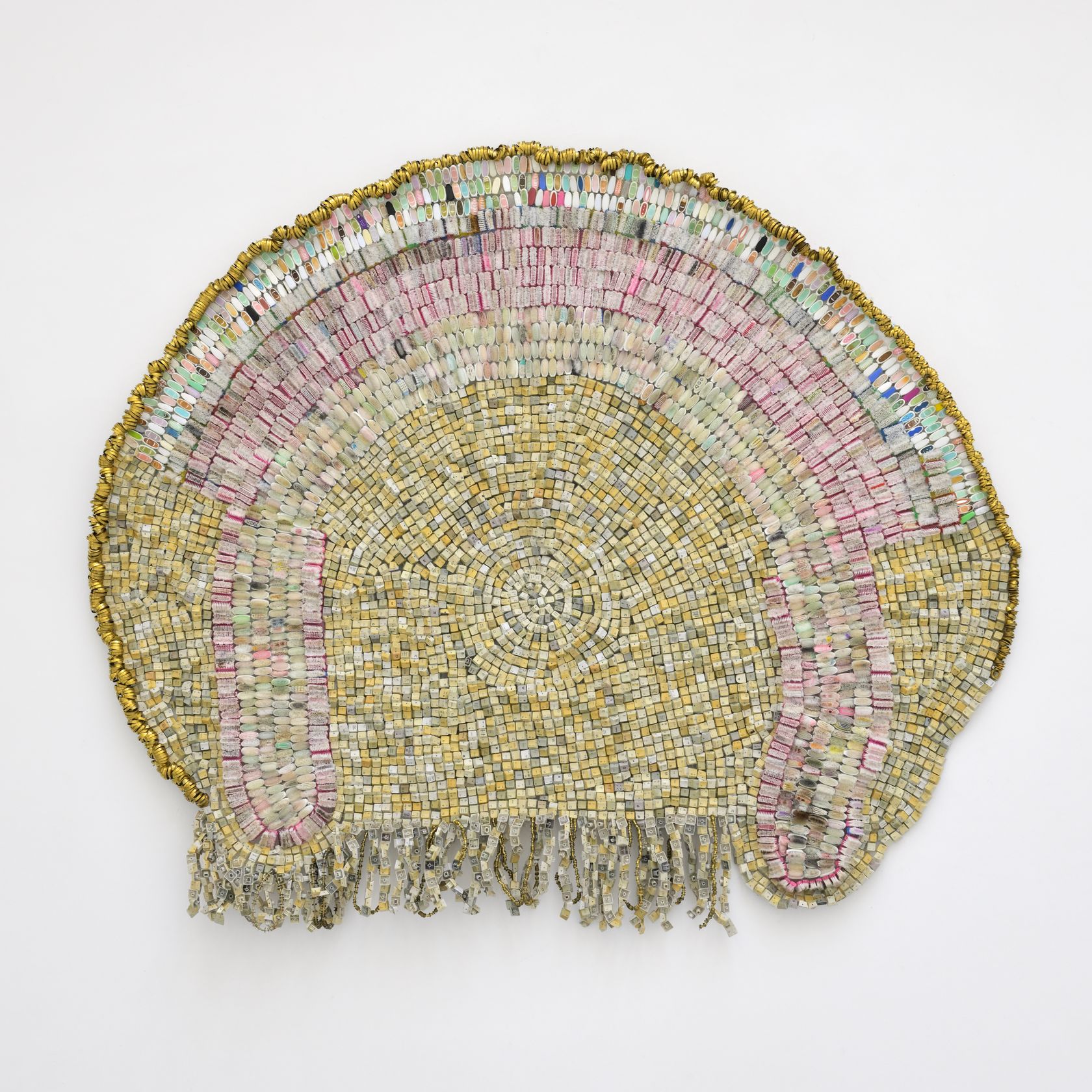
Throughout the exhibition, crowns built from keyboard keys, bottle caps, and combs stand for authority and power, but are always rooted in Black experience. In Takadiwa’s hands, hair becomes a way to shape the self and push back, tangled up with the gendered politics of Black grooming and the colonial histories that still shape Zimbabwe’s sense of beauty. Western portraiture’s single, commanding gaze is pointedly absent. Instead, circular forms and masks suggest wholeness and a shared identity. The objects have become guardians, their faces spiritual, in step with African cosmology and the influence of ancestors.
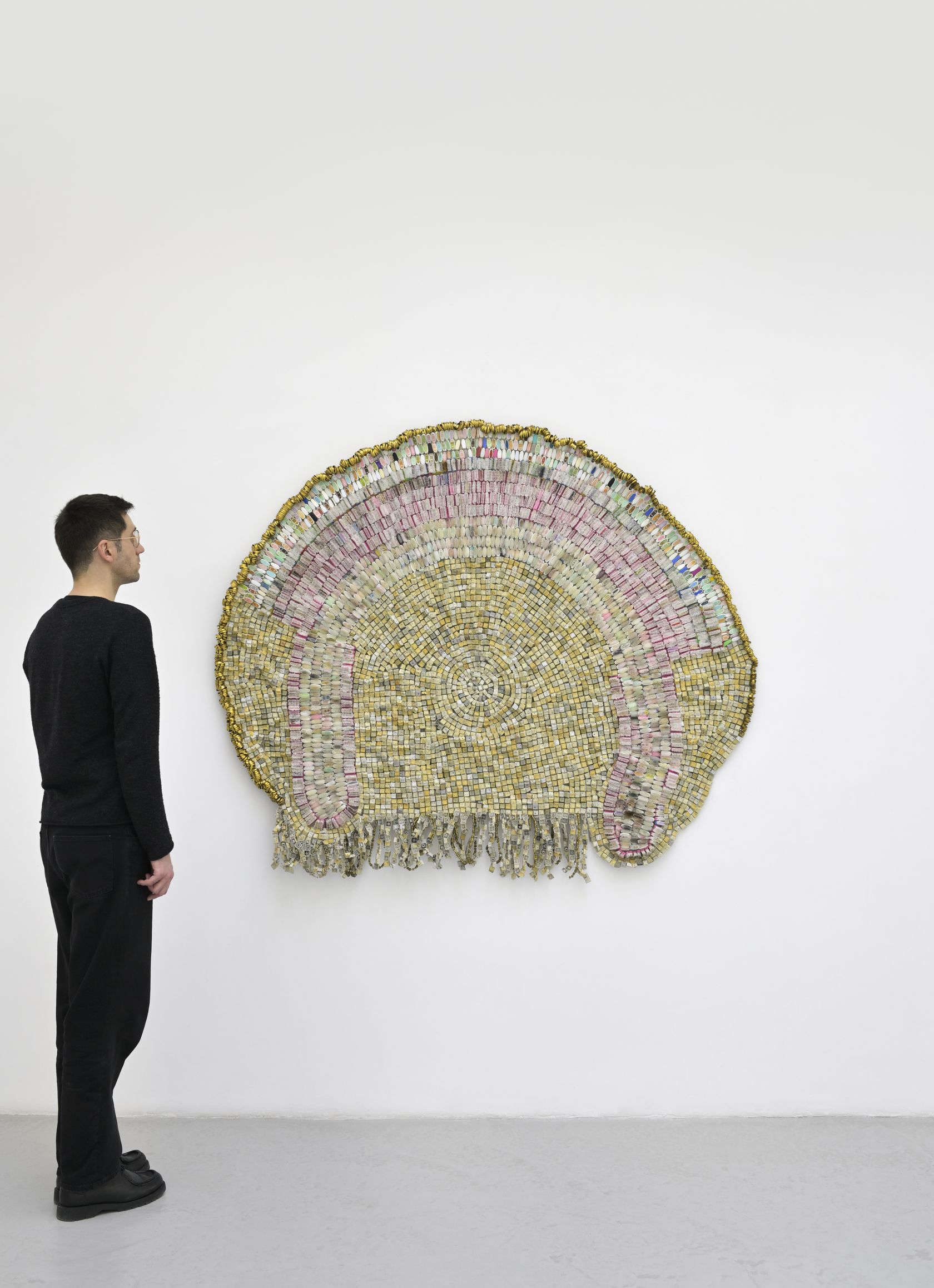
- Moffat Takadiwa
- Muchapihwa Korona , 2026
- Keyboard keys, plastic toothbrush head and button accessories
-
- 142 ×
- 170 × cm
- 55 7/8 ×
- 66 15/16 × inches
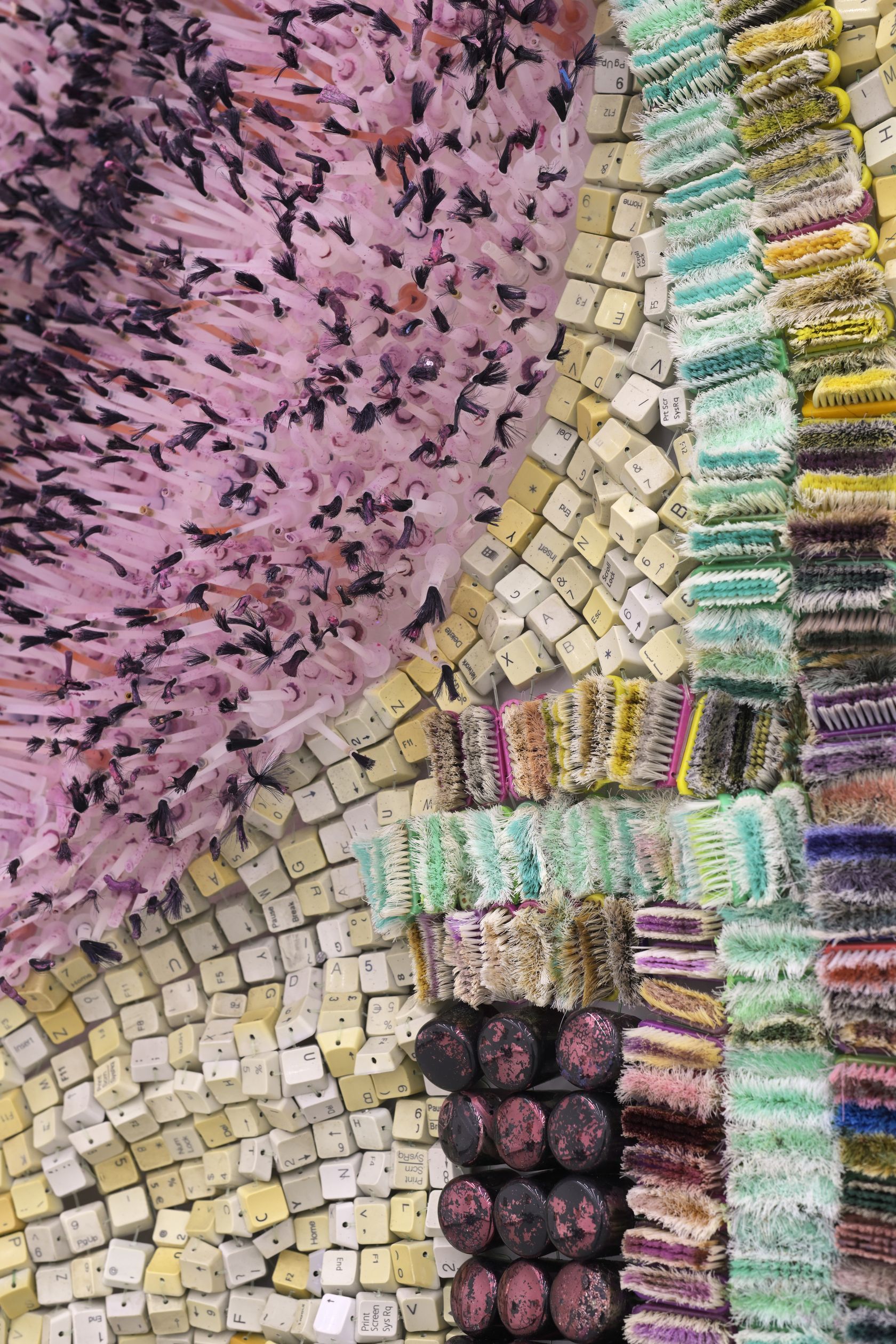
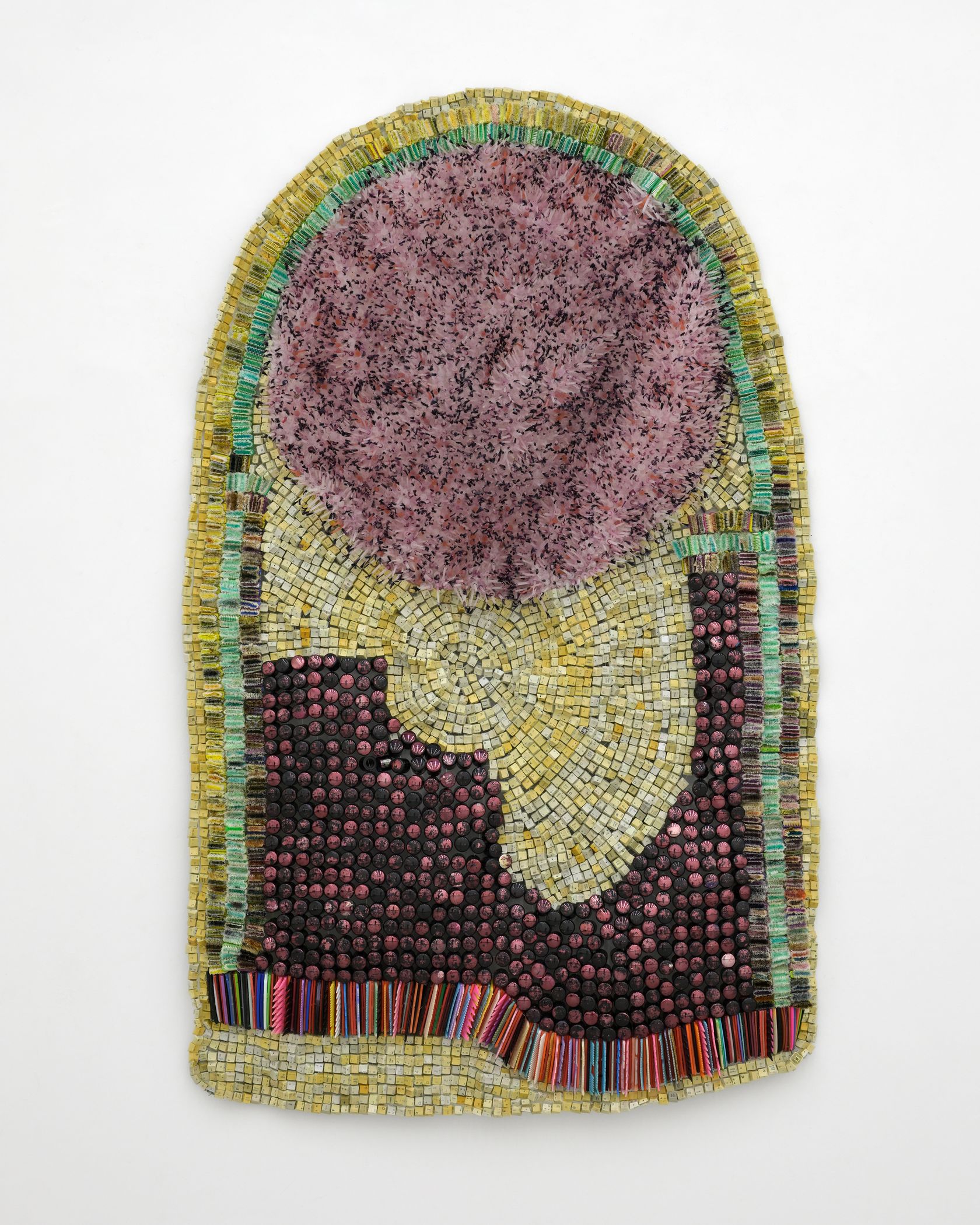
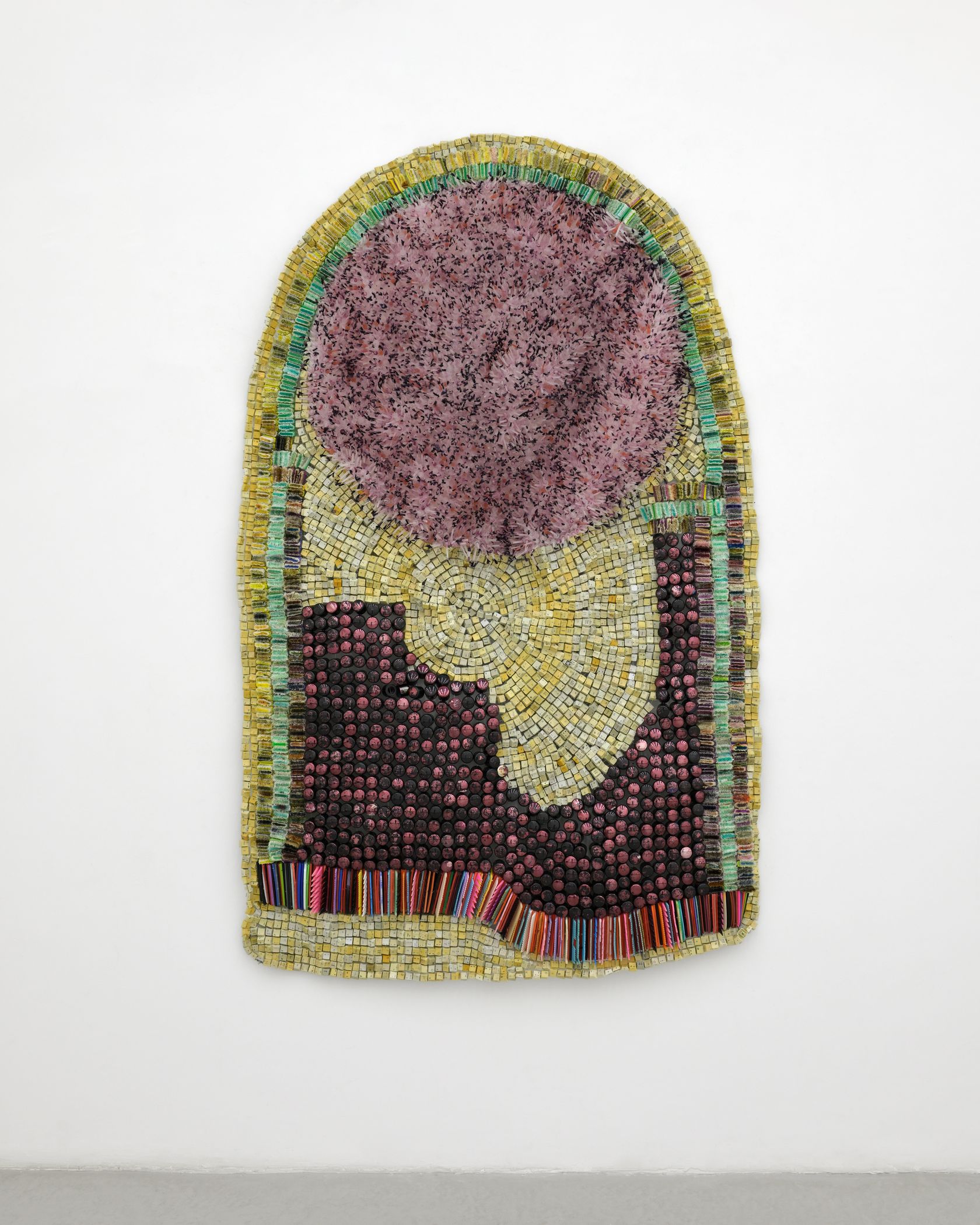
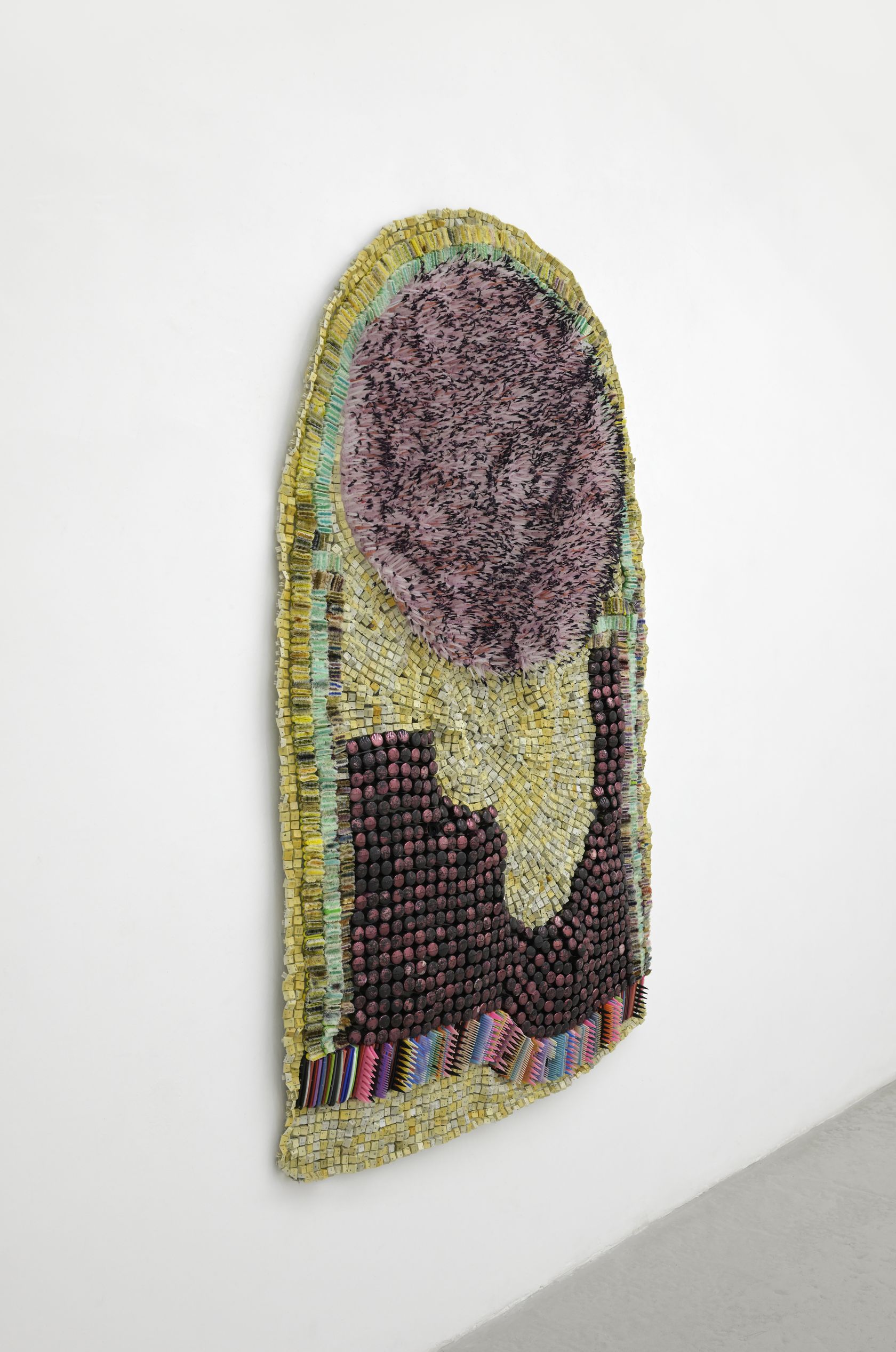
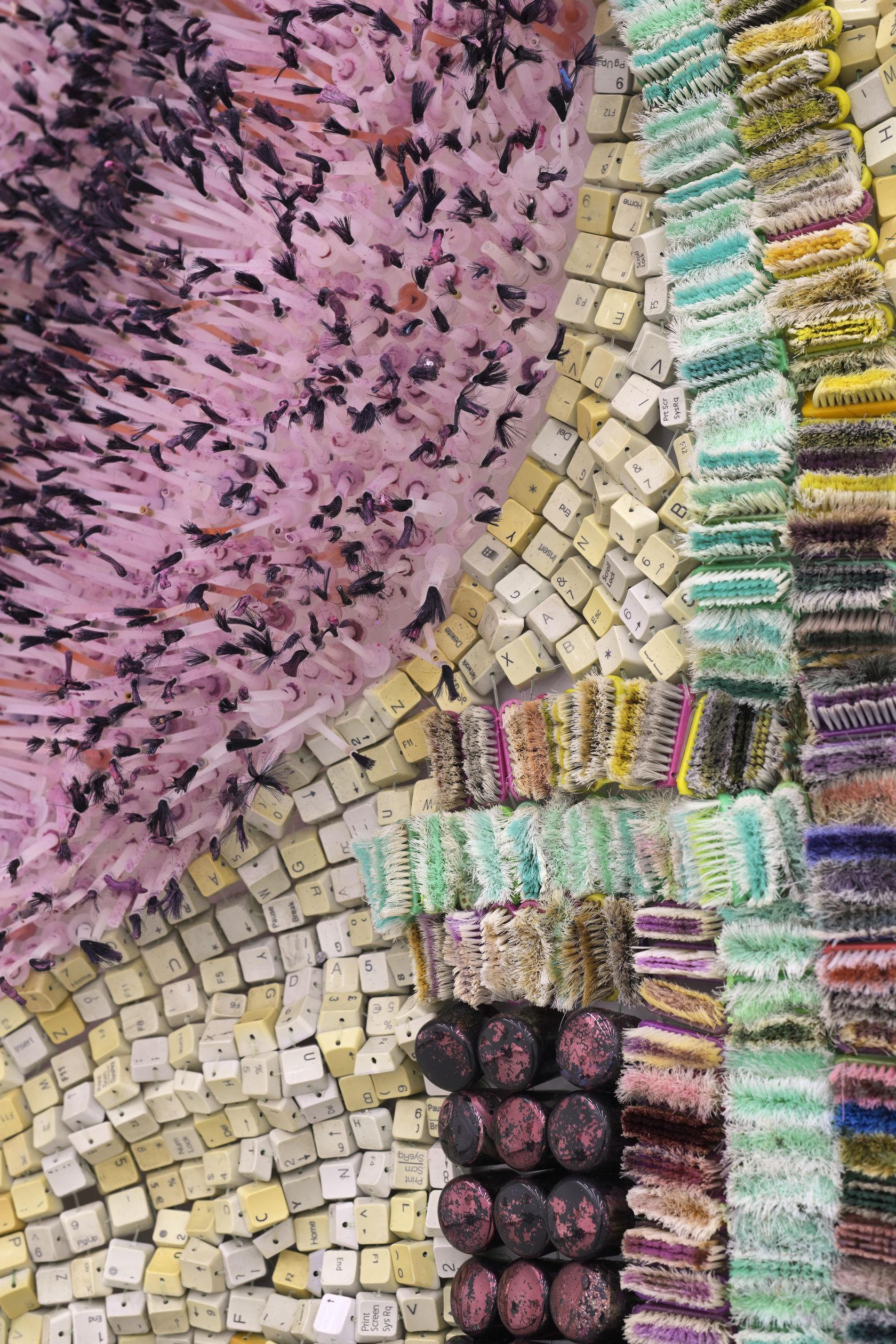
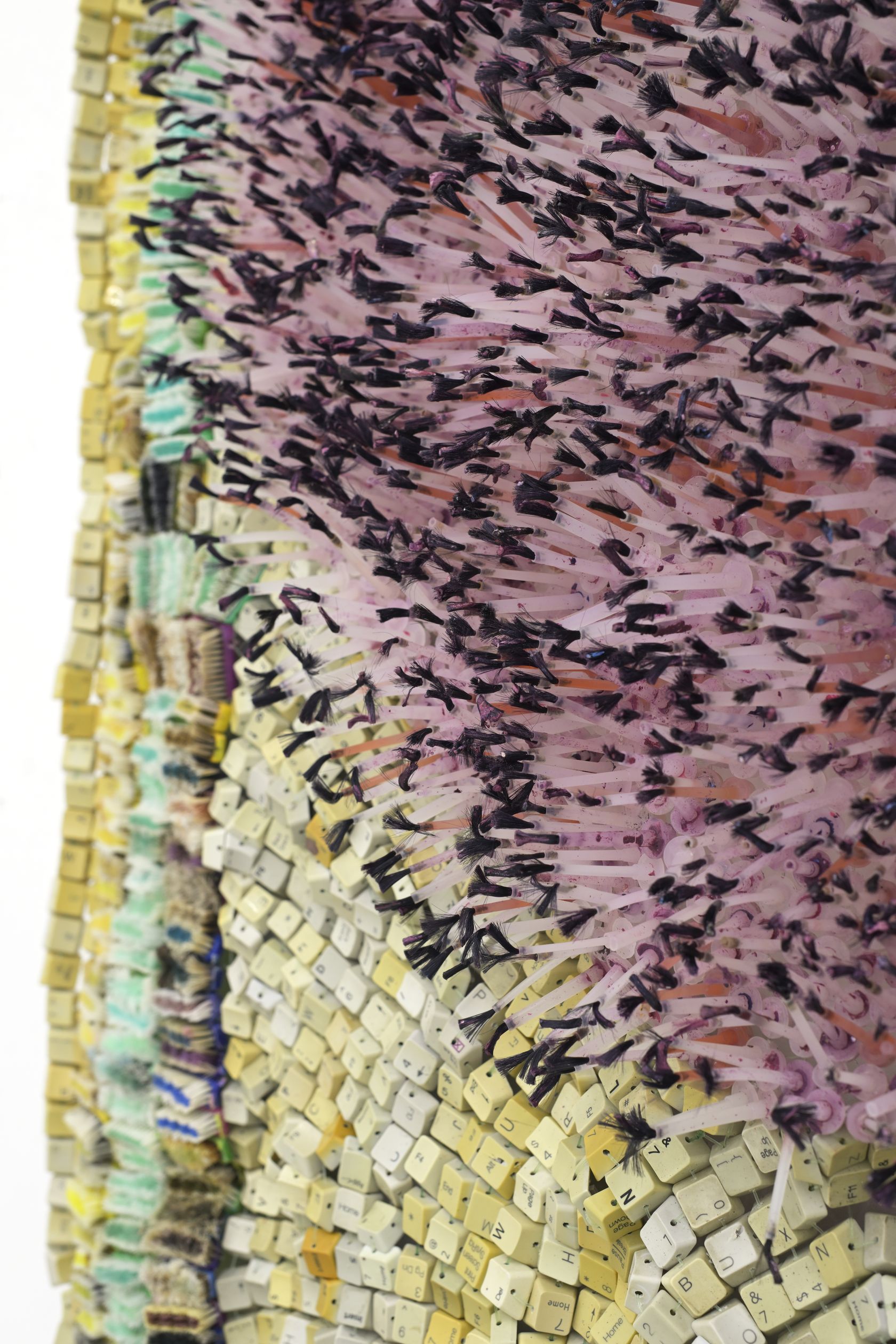
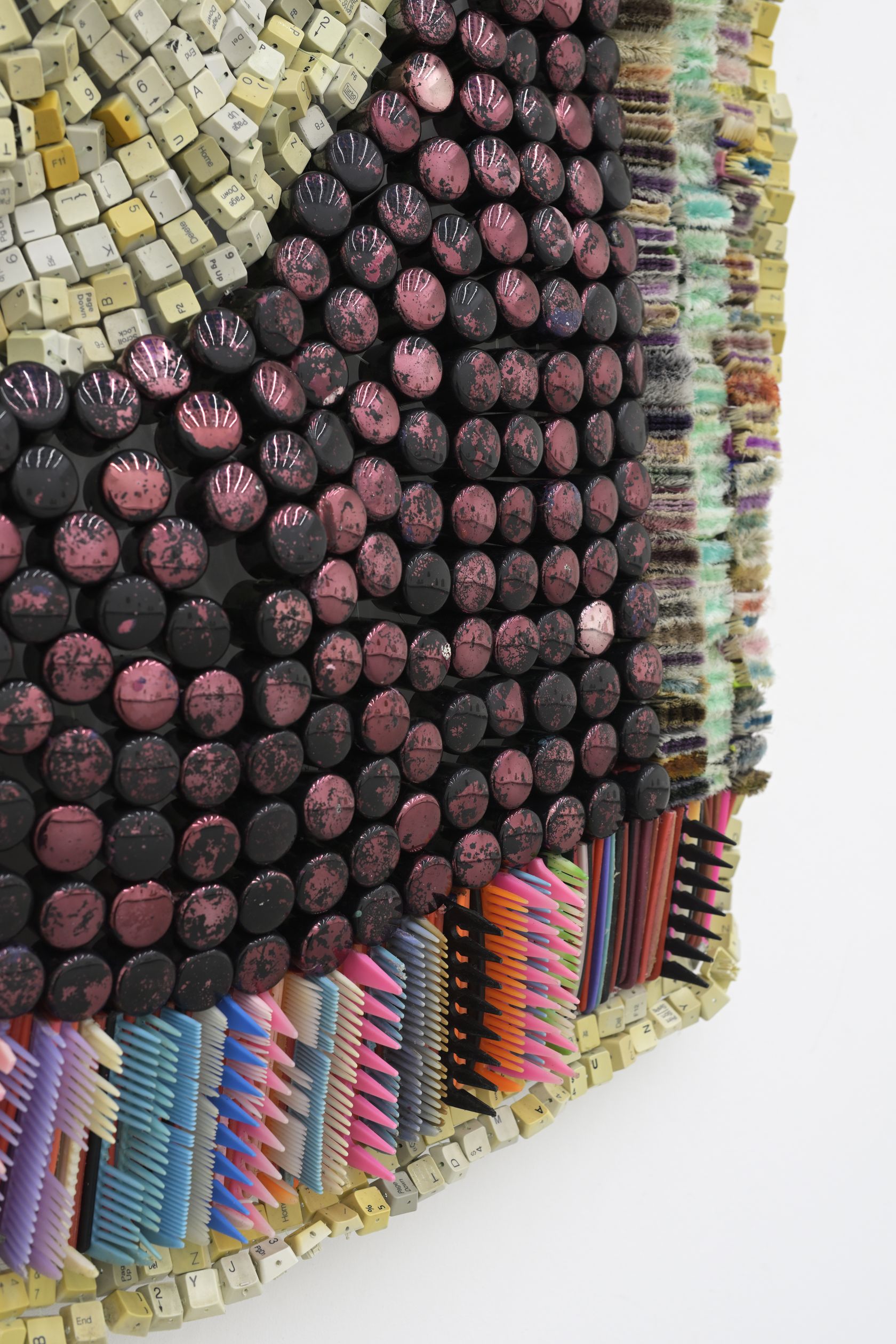
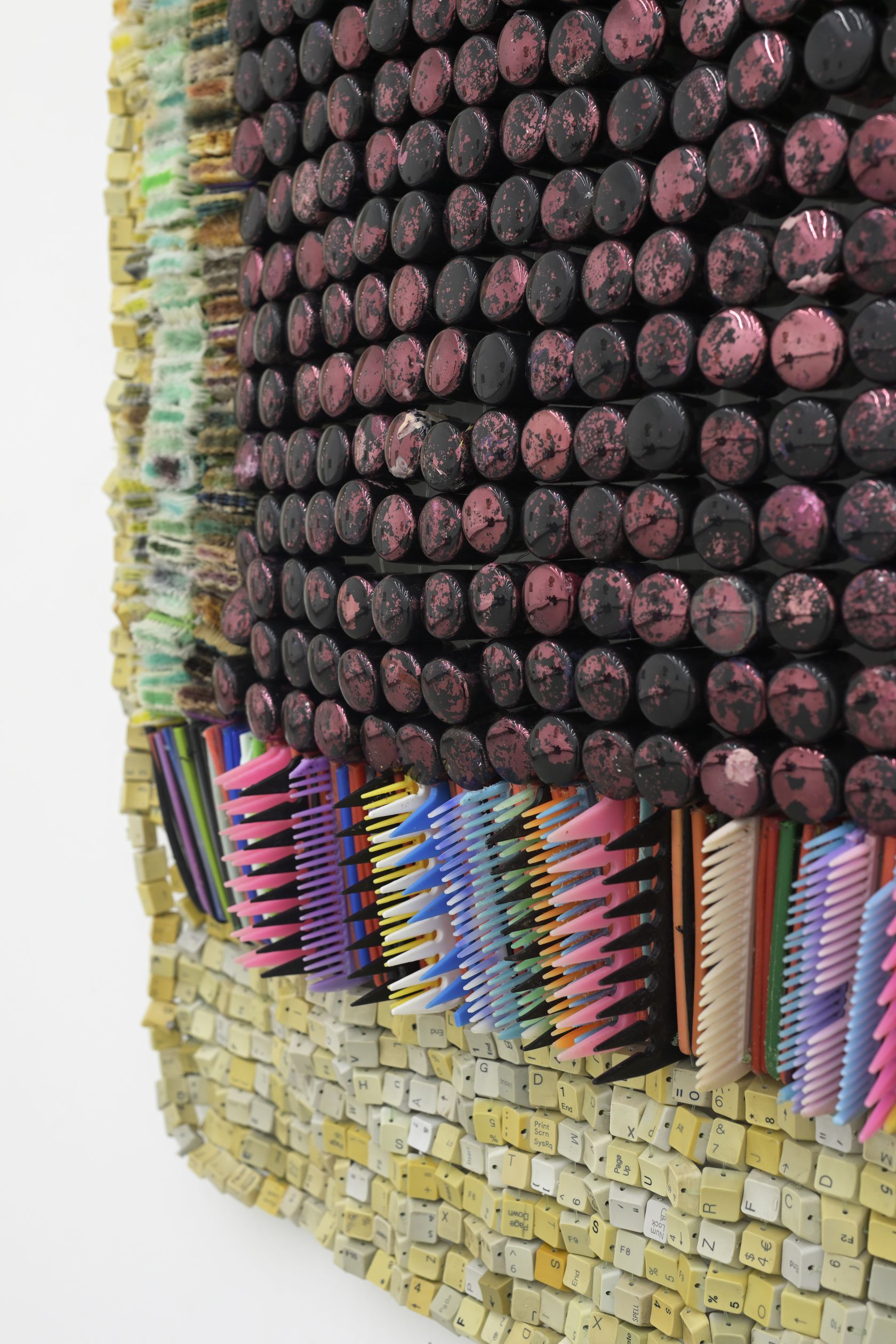
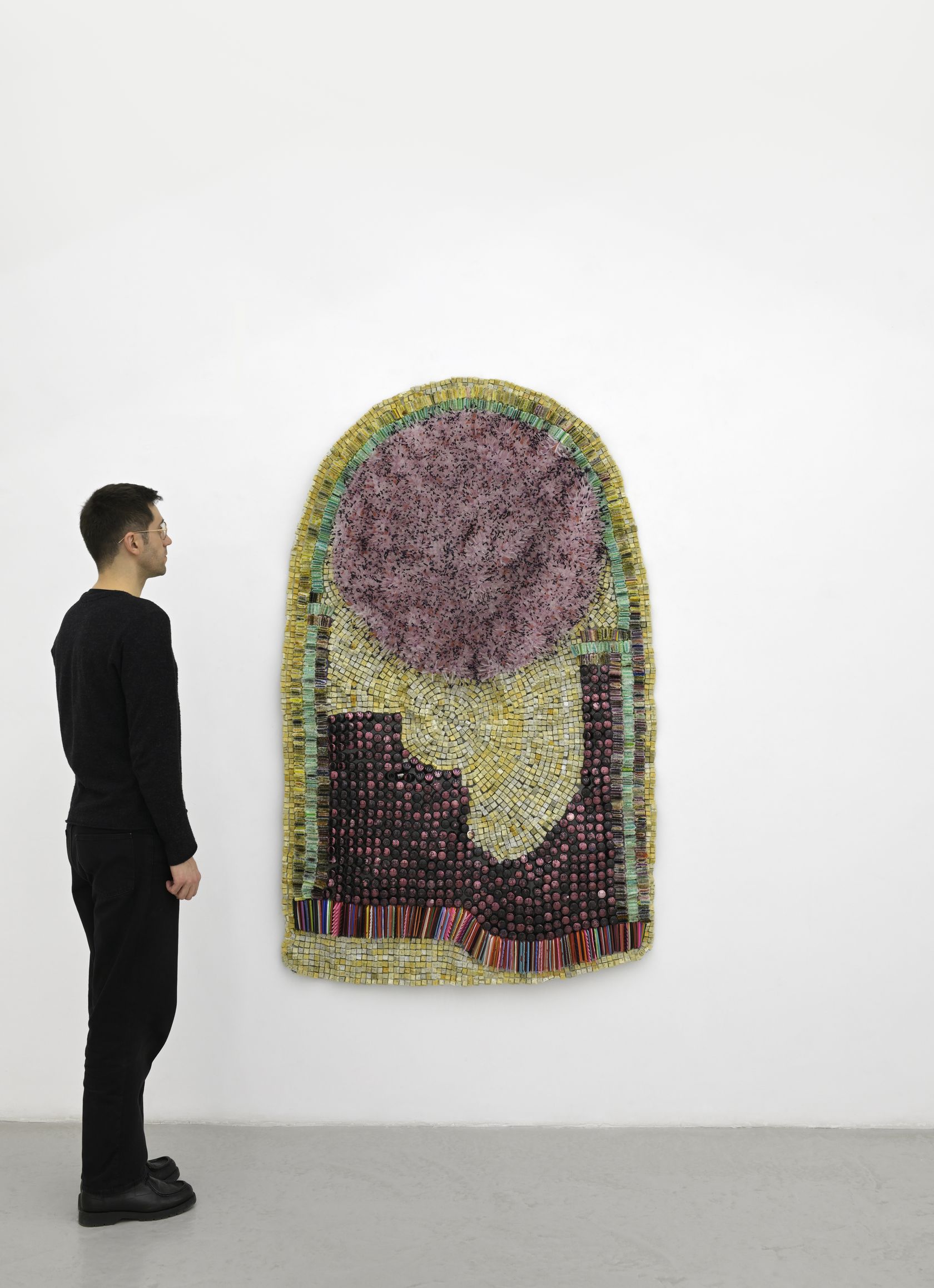
- Moffat Takadiwa
- Daily Reflections , 2026
- Keyboard keys, plastic toothbrush head and nails polish parts
-
- 180 ×
- 116 × cm
- 70 7/8 ×
- 45 11/16 × inches
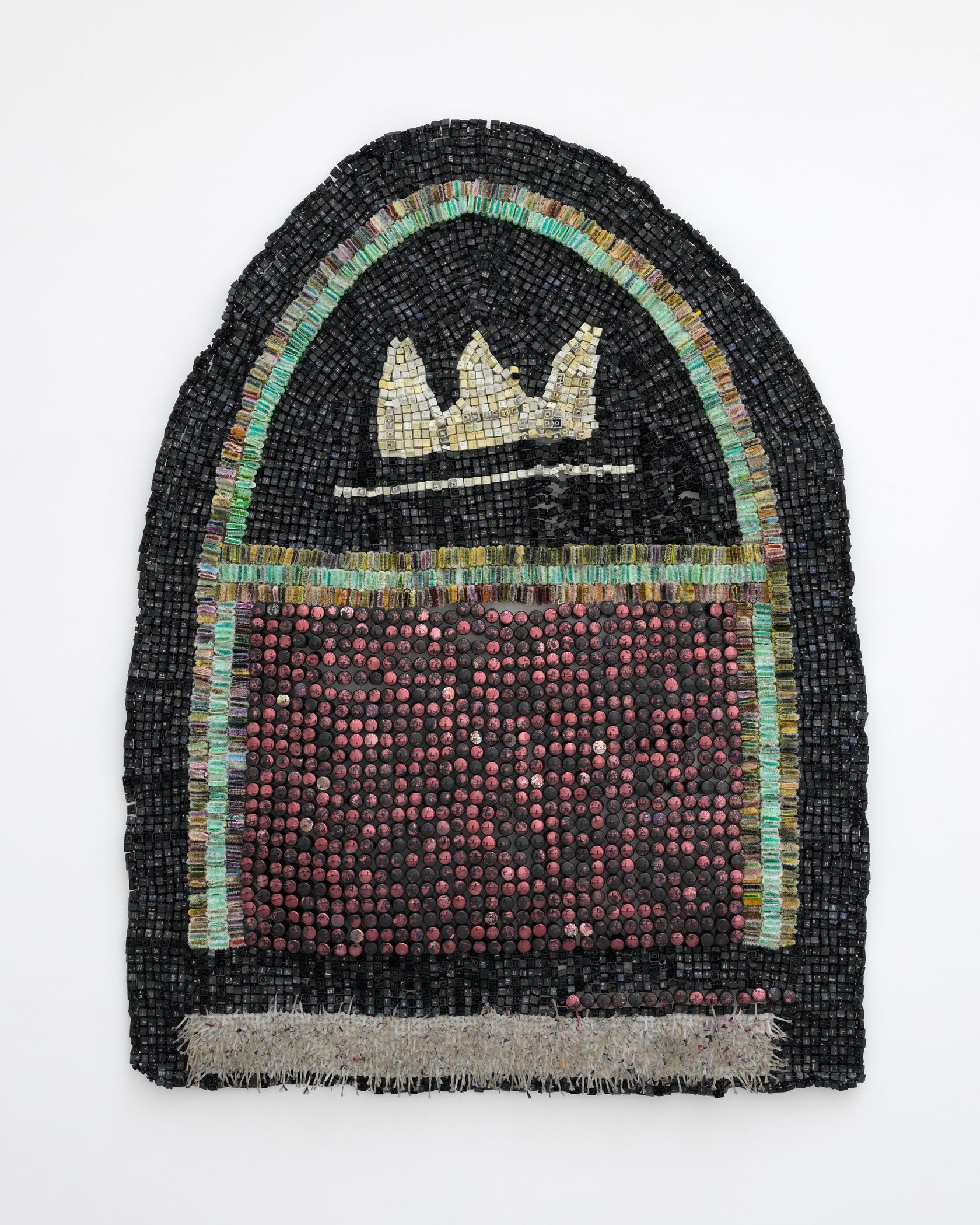
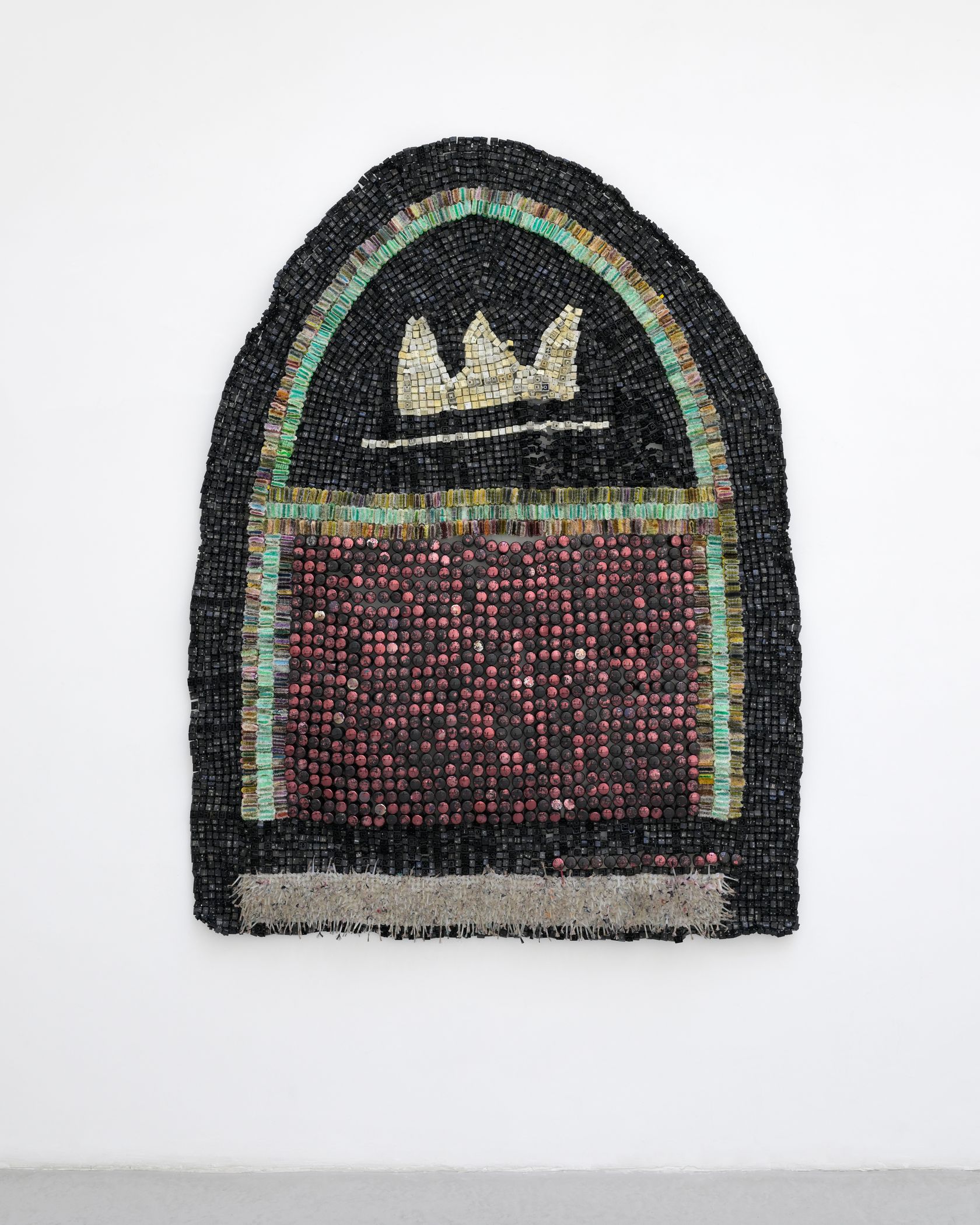
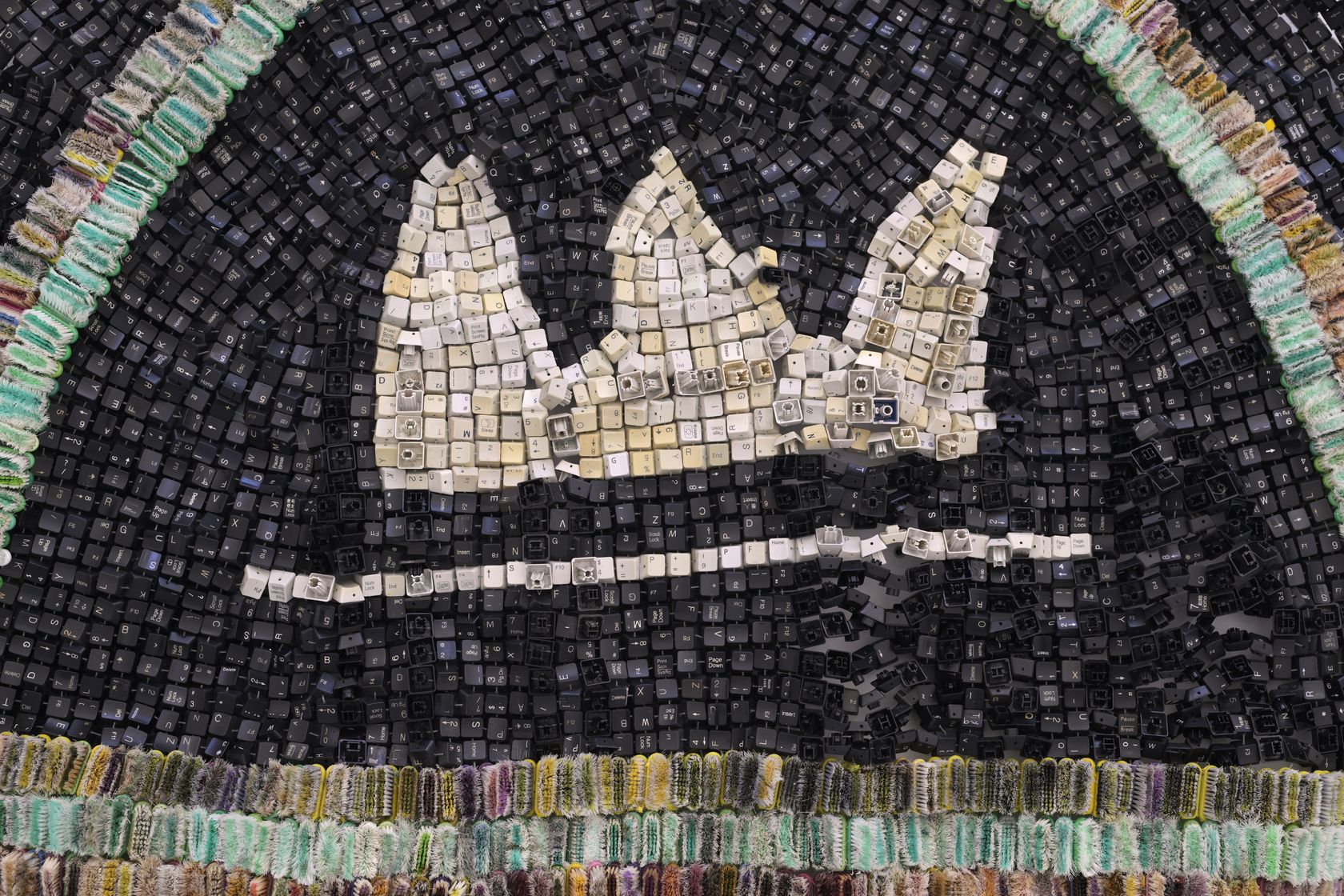
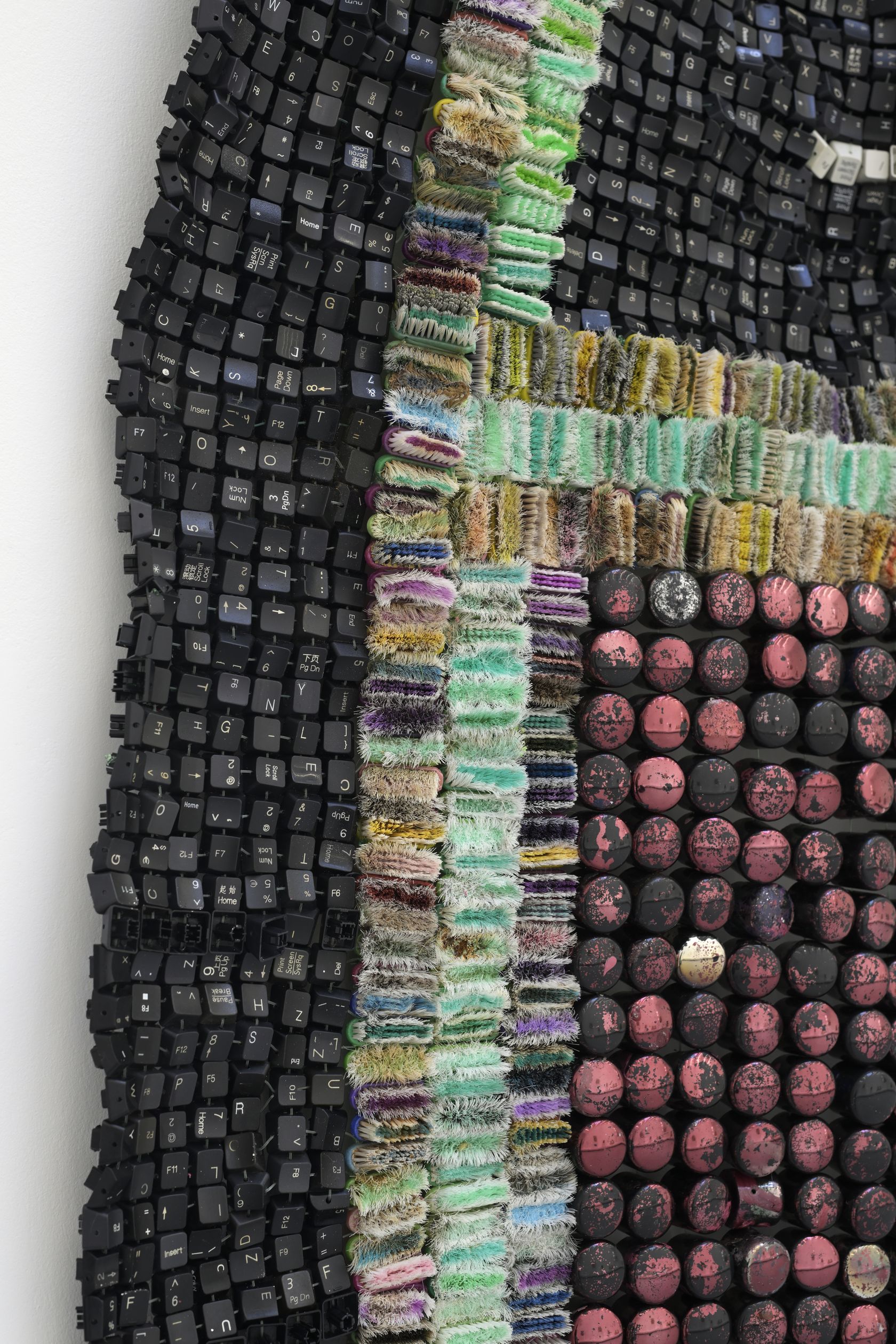
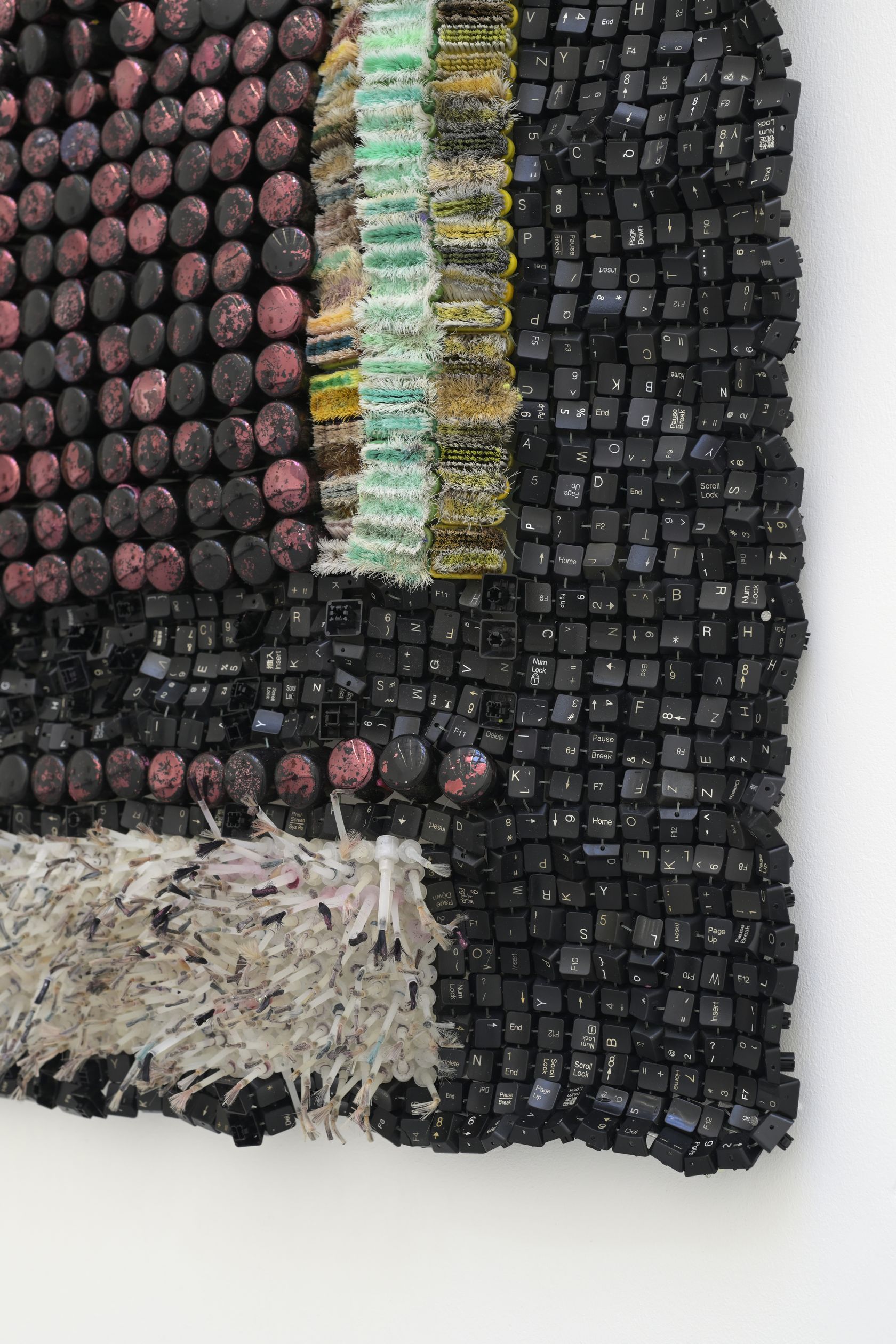
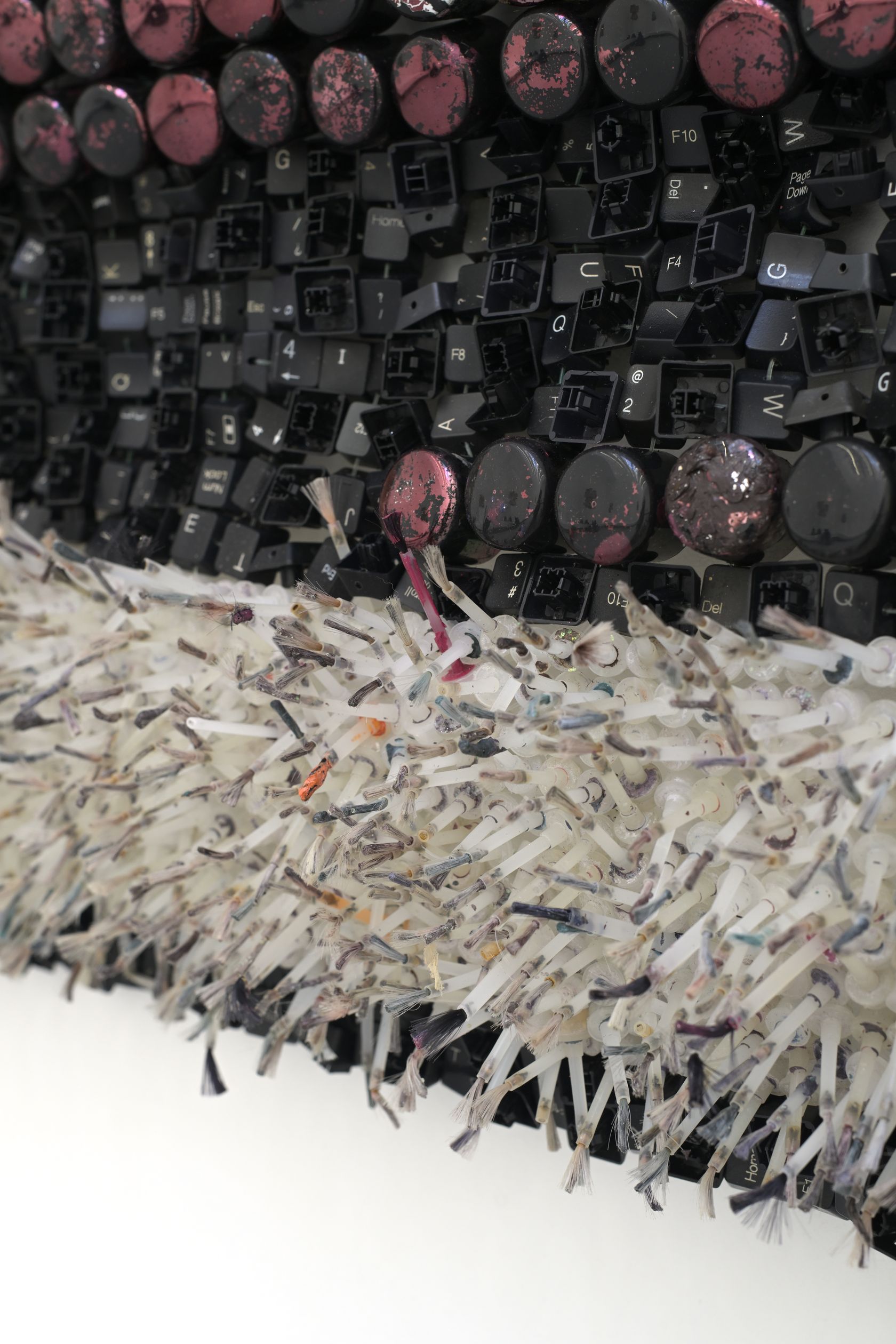
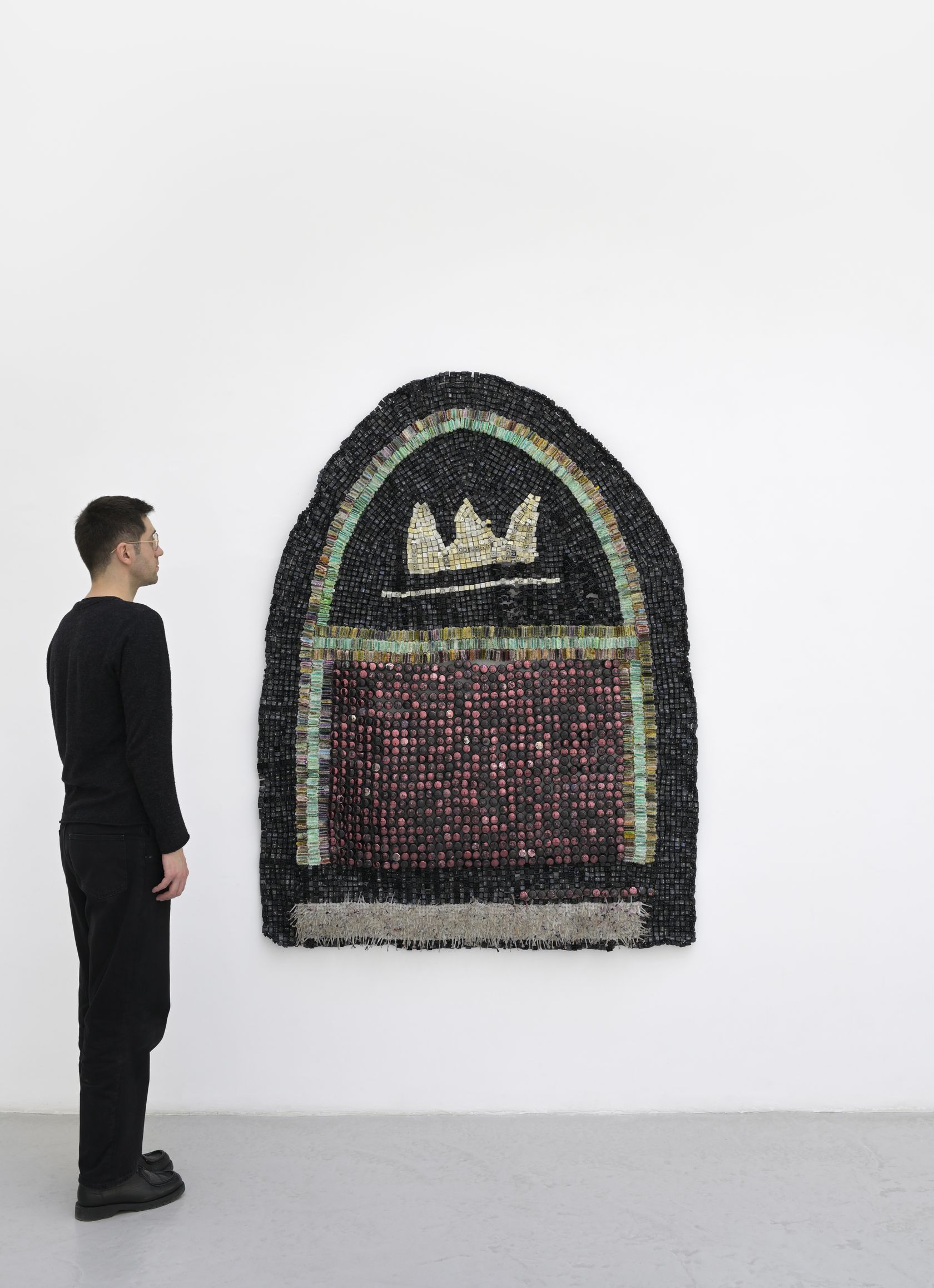
- Moffat Takadiwa
- The Crown (2) , 2026
- Keyboard keys, plastic toothbrush head and nails polish parts
-
- 183 ×
- 141 × cm
- 72 1/16 ×
- 55 1/2 × inches
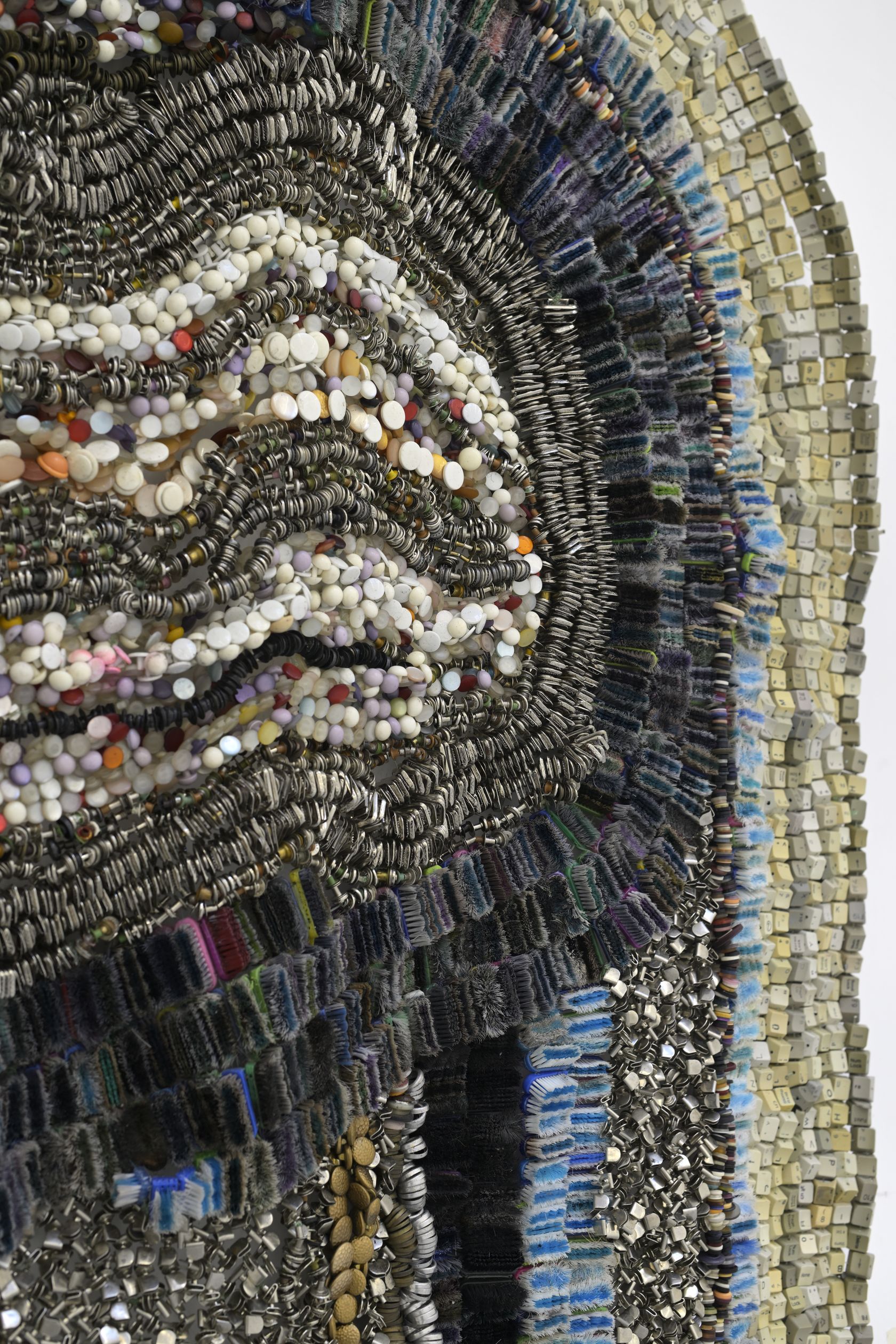
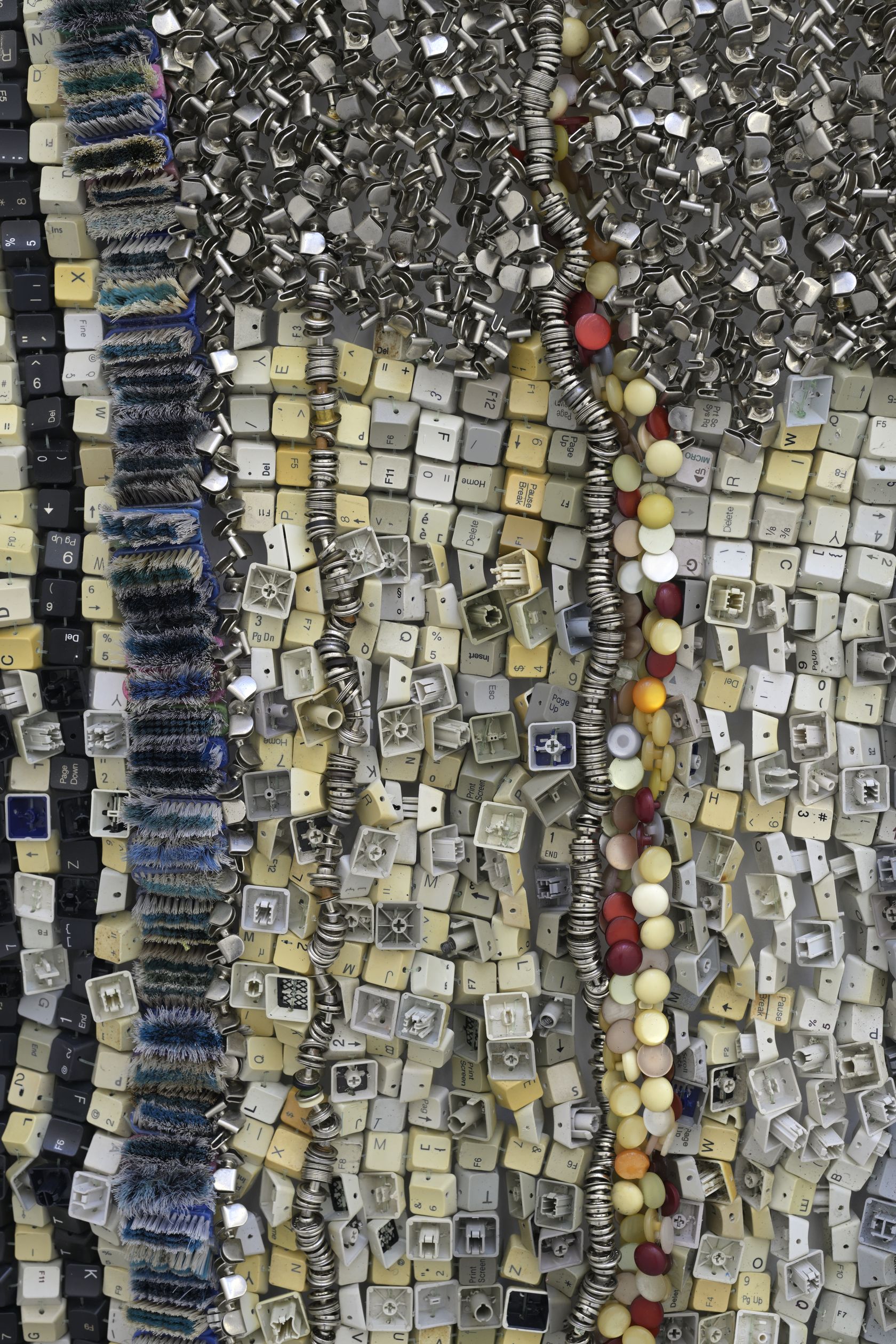
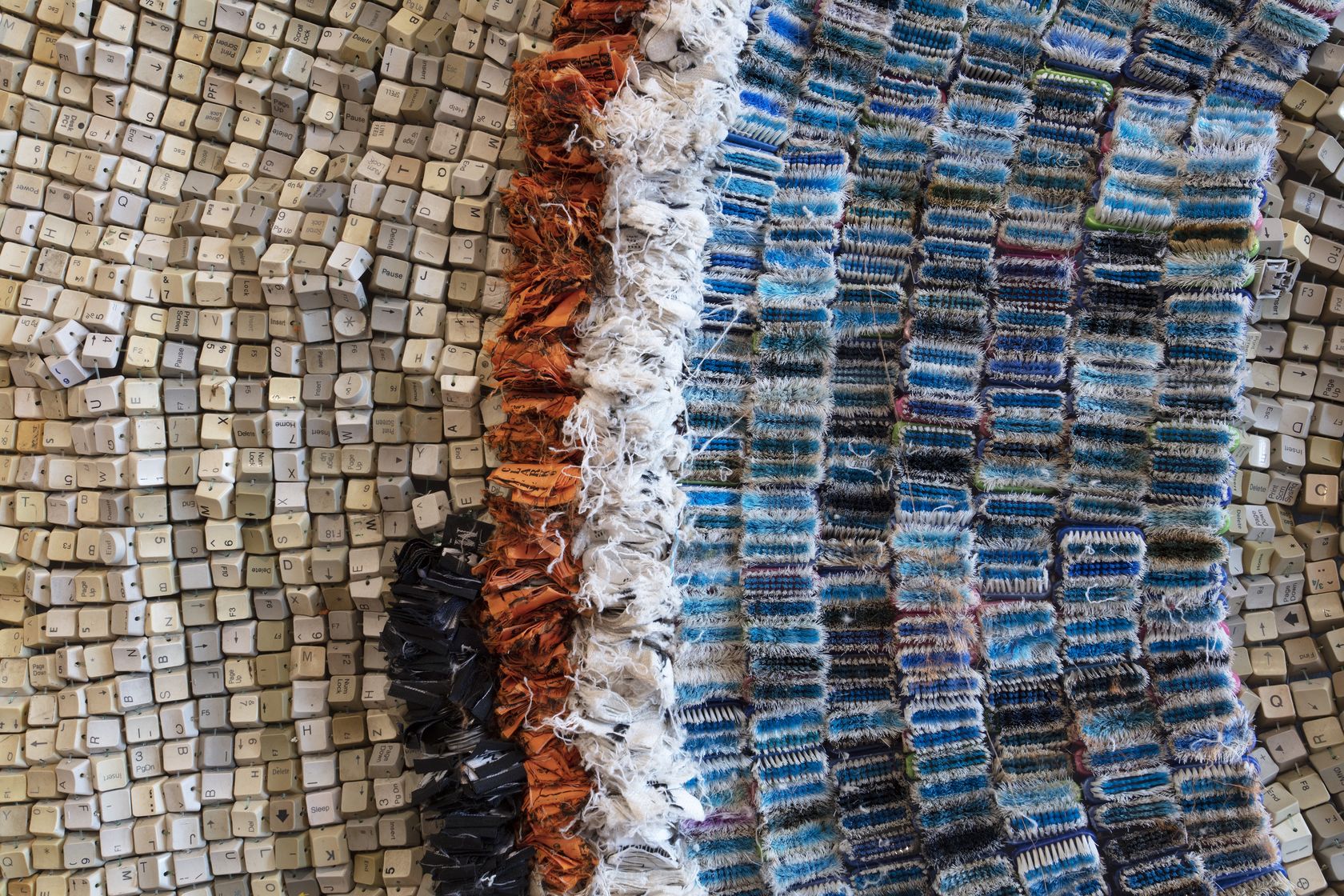
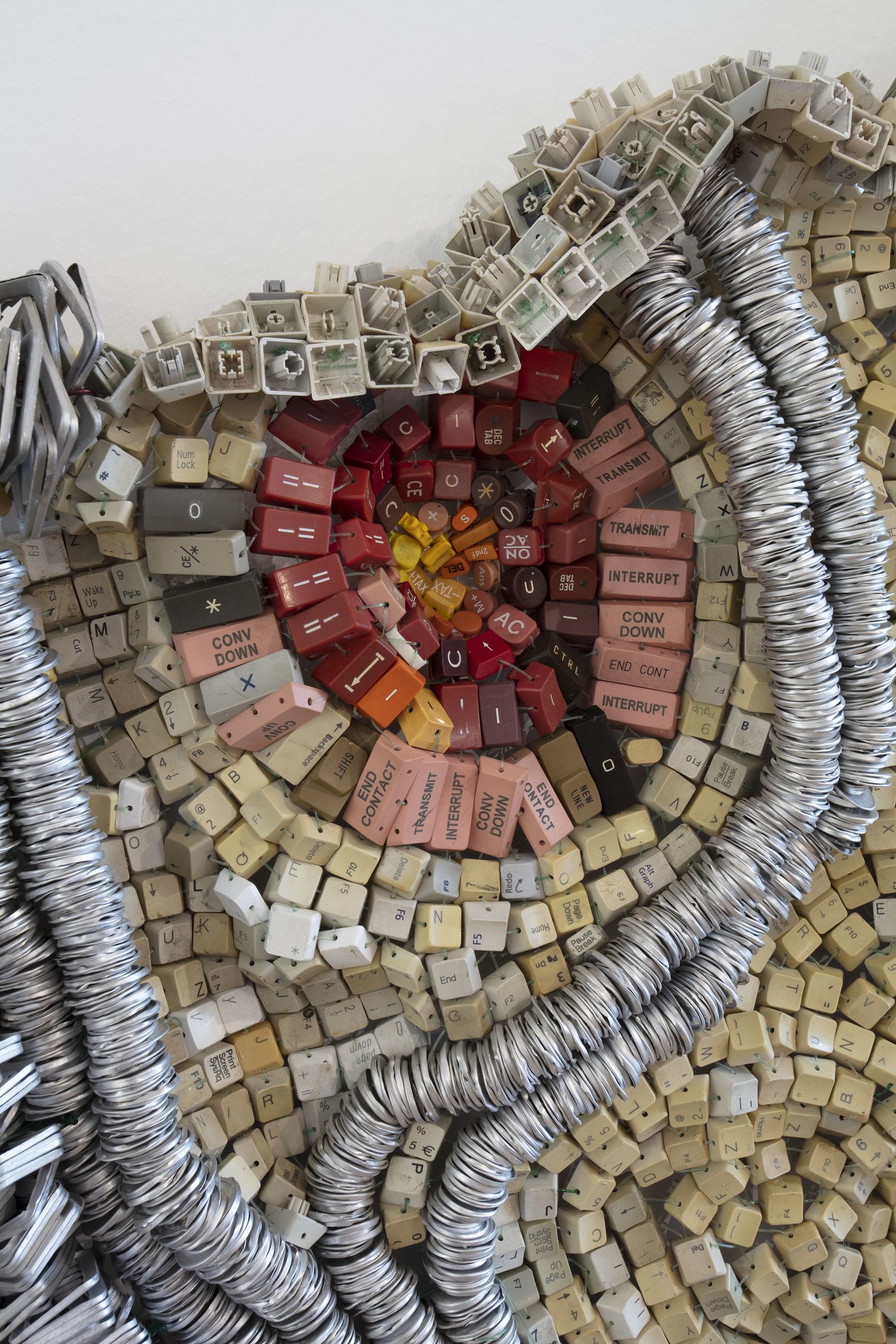
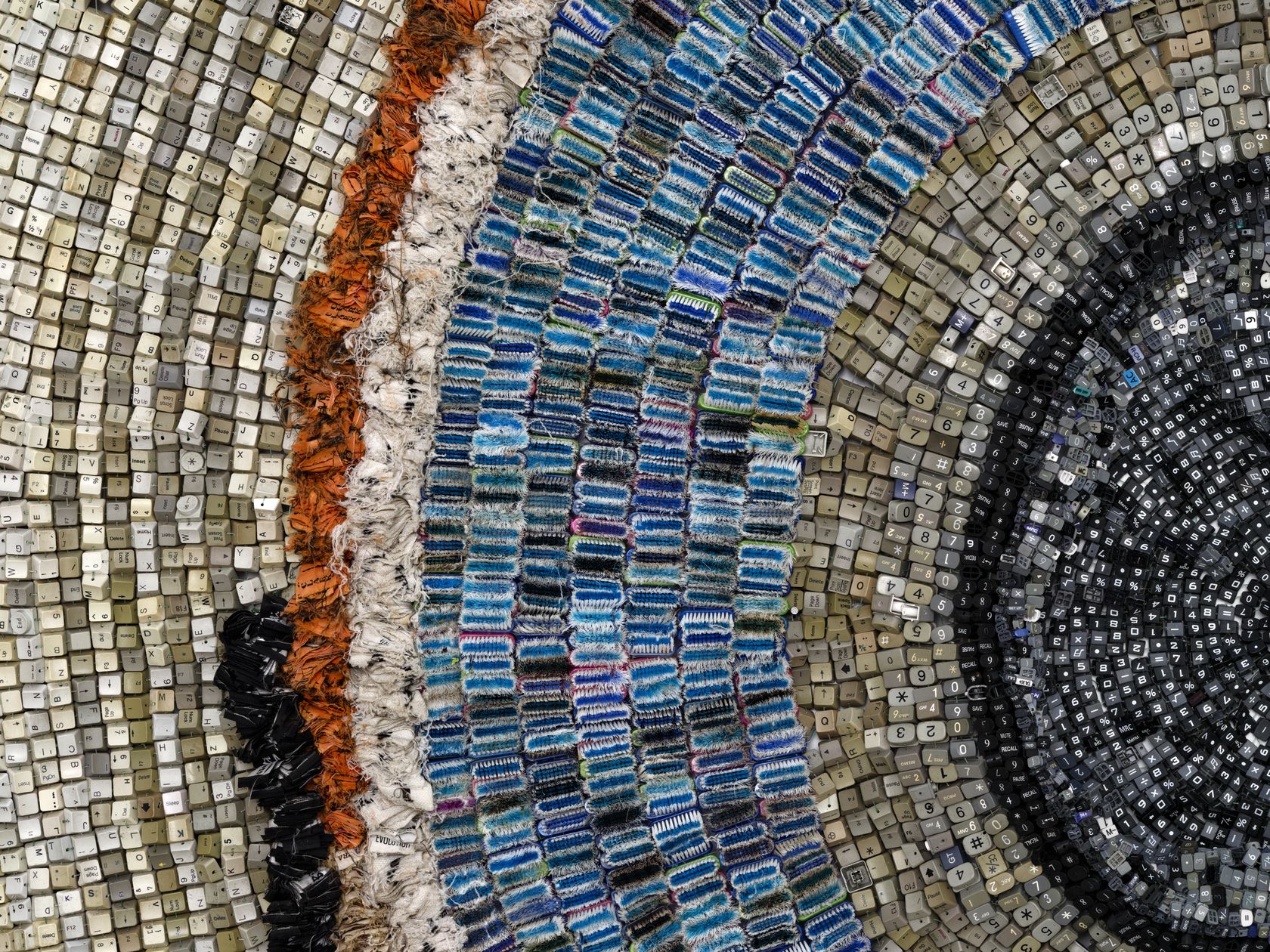
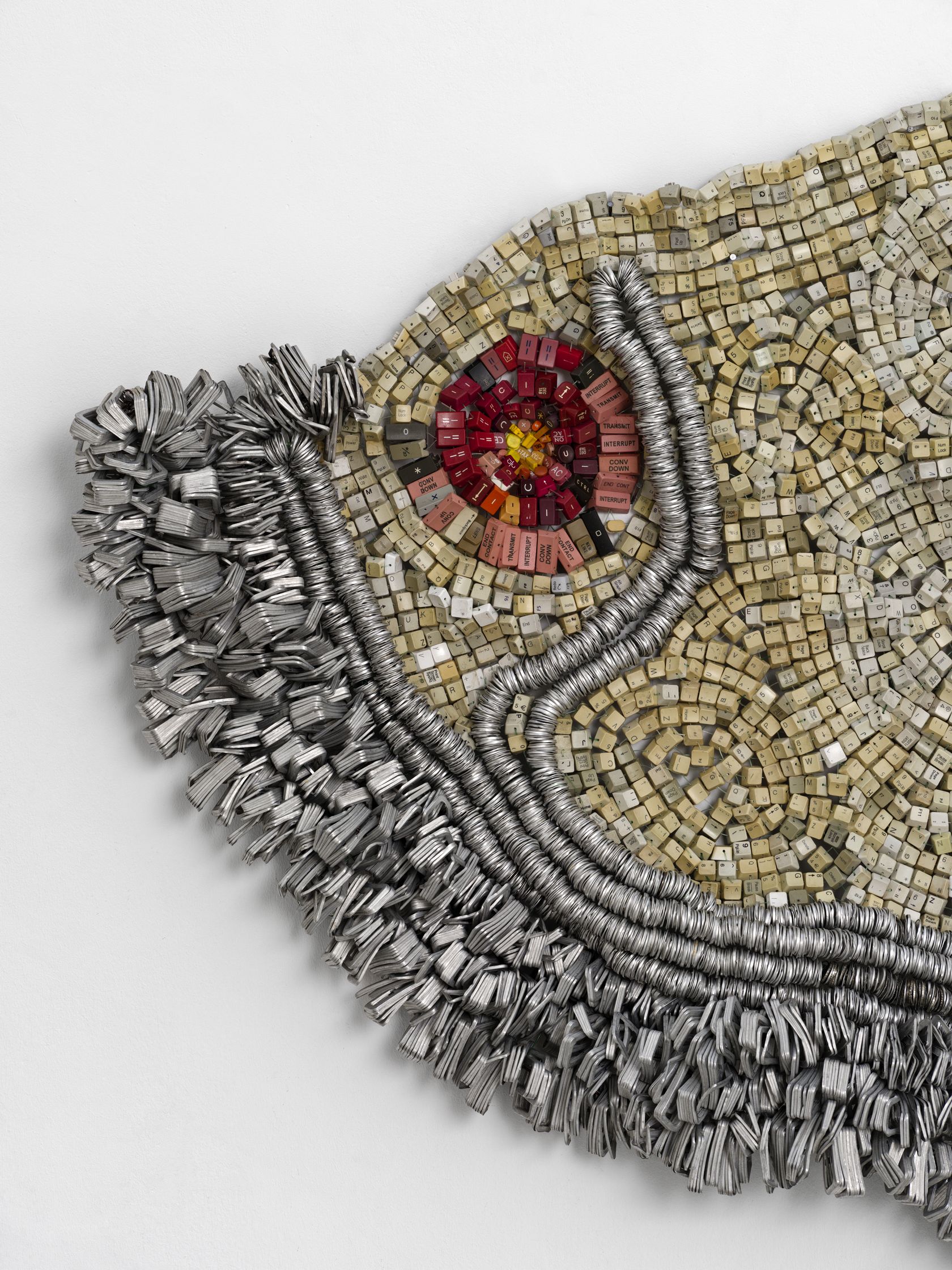
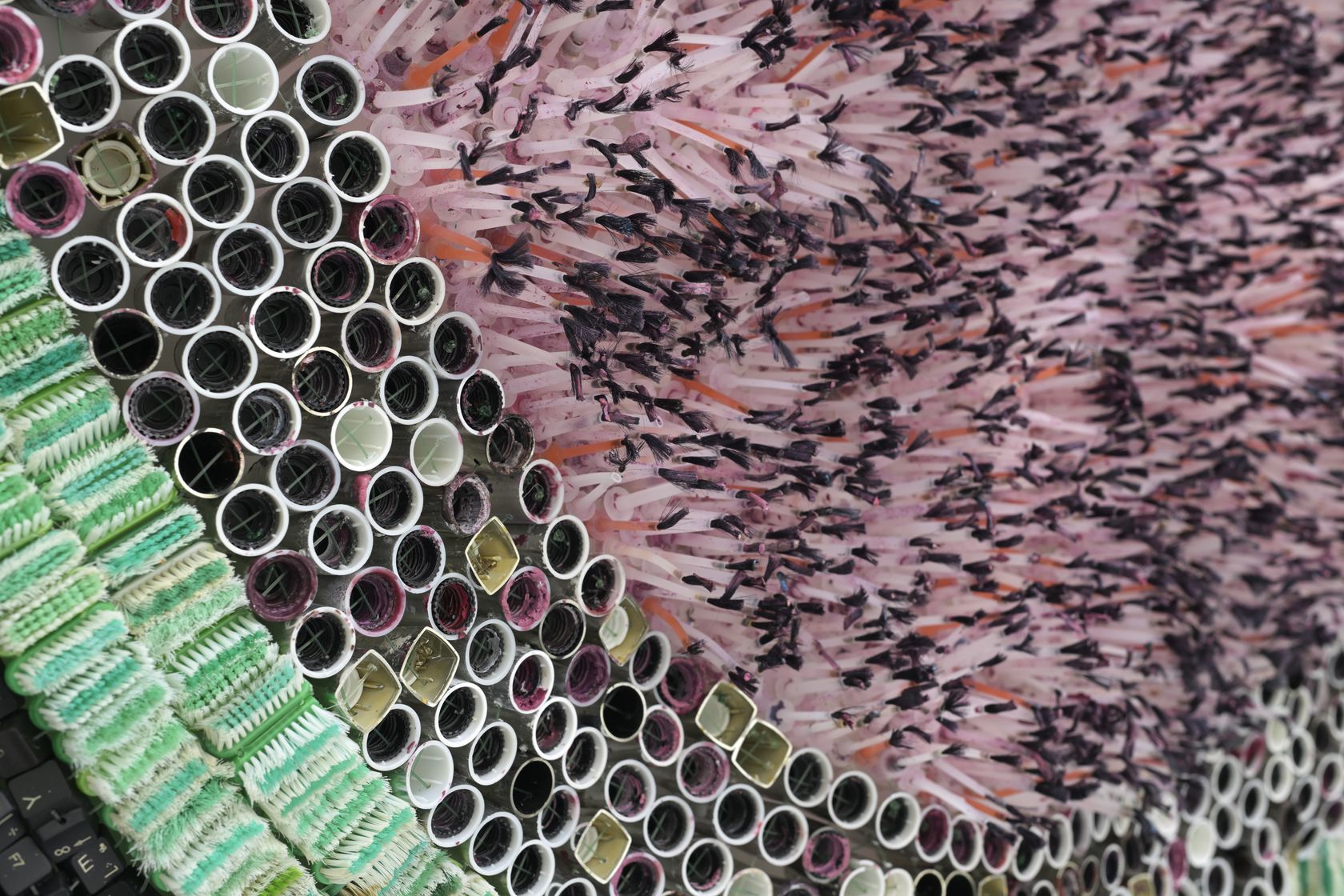
Takadiwa’s work moves on several levels at once. Circular forms and masks hint at wholeness and a sense of the collective, acting as guardians that echo African cosmology and ancestral power. Hair and keyboard keys—one organic and charged with meaning, the other industrial and anonymous—are set side by side, pointing out the way identity gets tangled up with global manufacturing. These materials, pulled from Harare’s waste, end up in galleries, priced for Western buyers. This is not a failure of the work, but maybe its most truthful aspect.
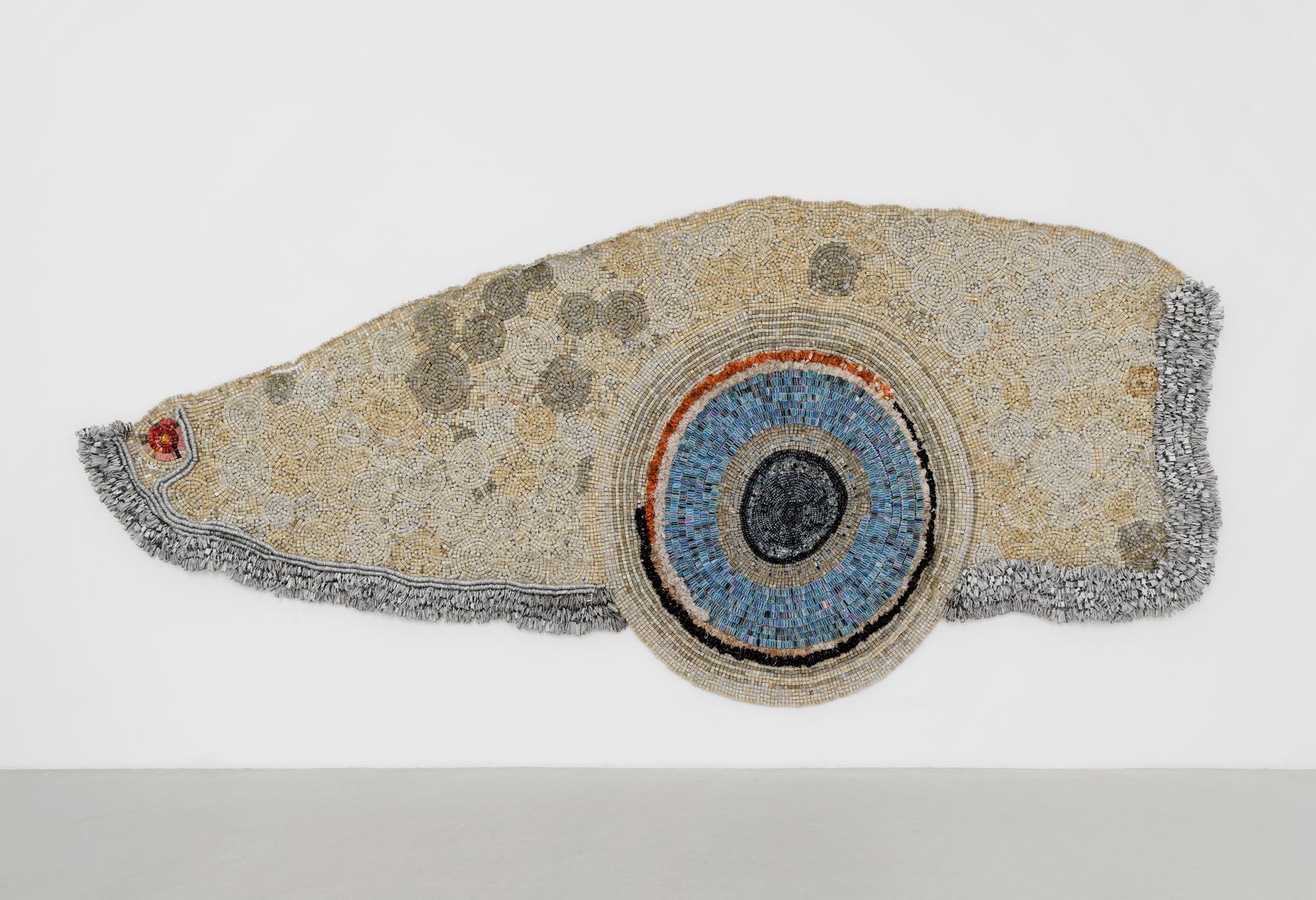
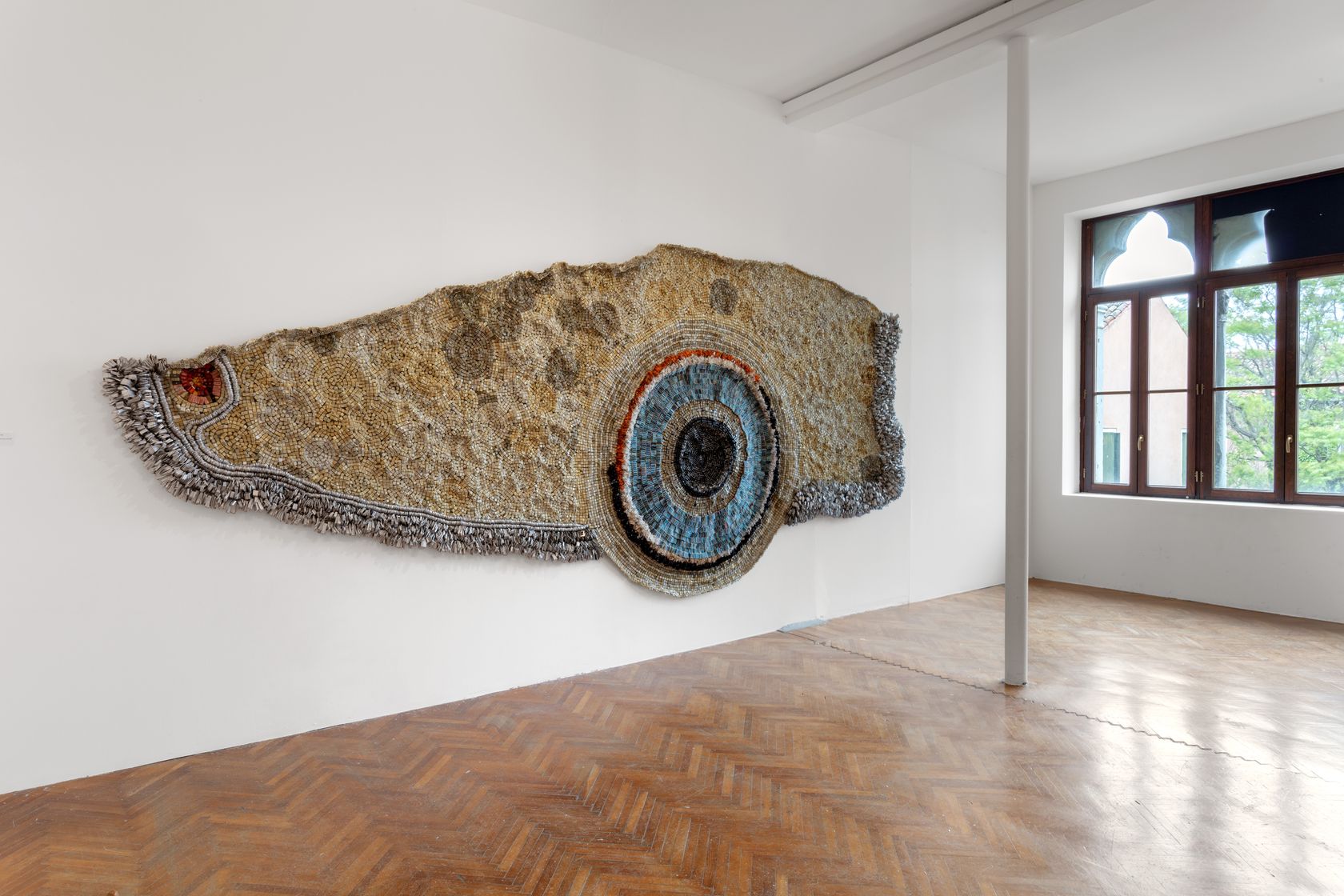
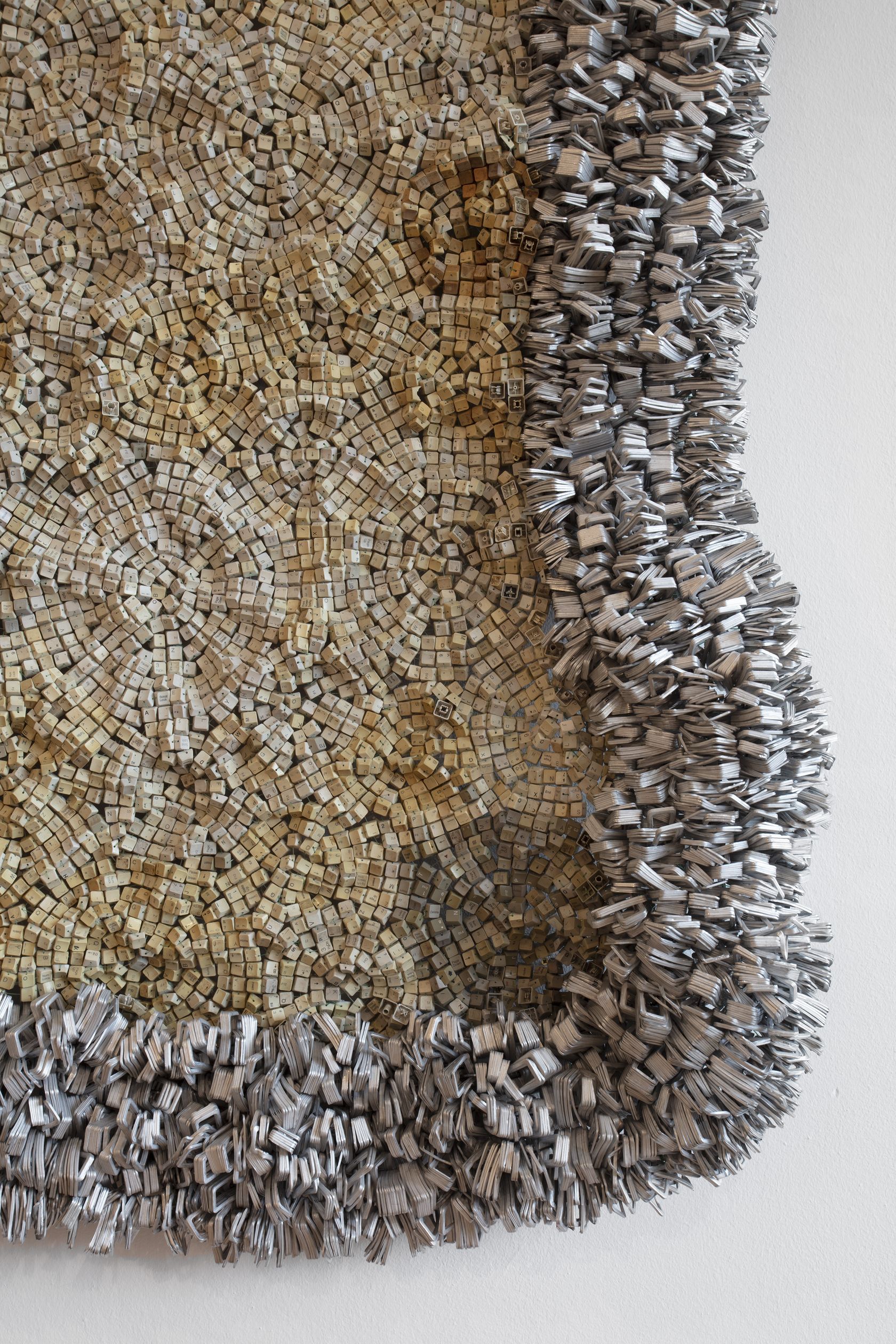
- Moffat Takadiwa
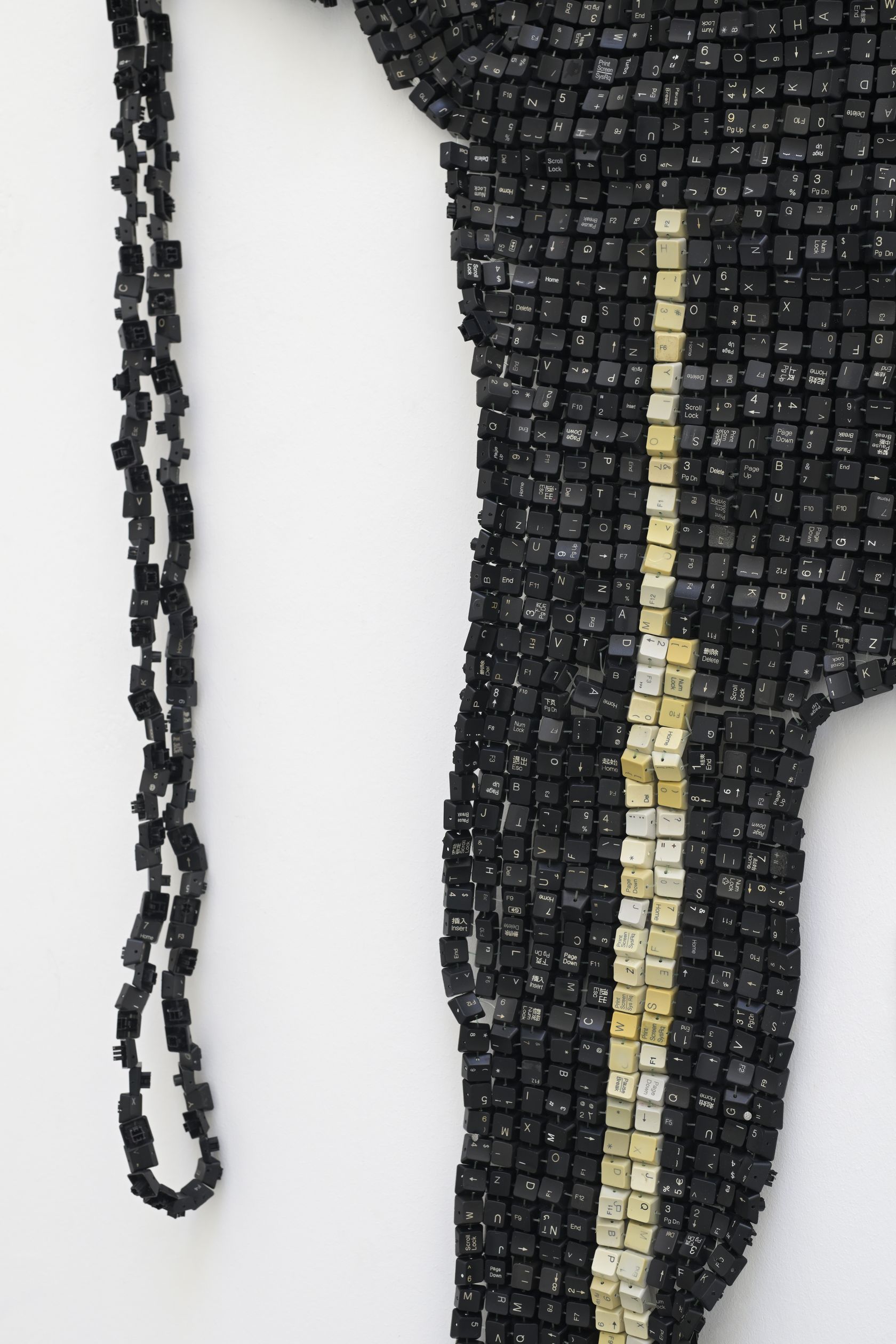
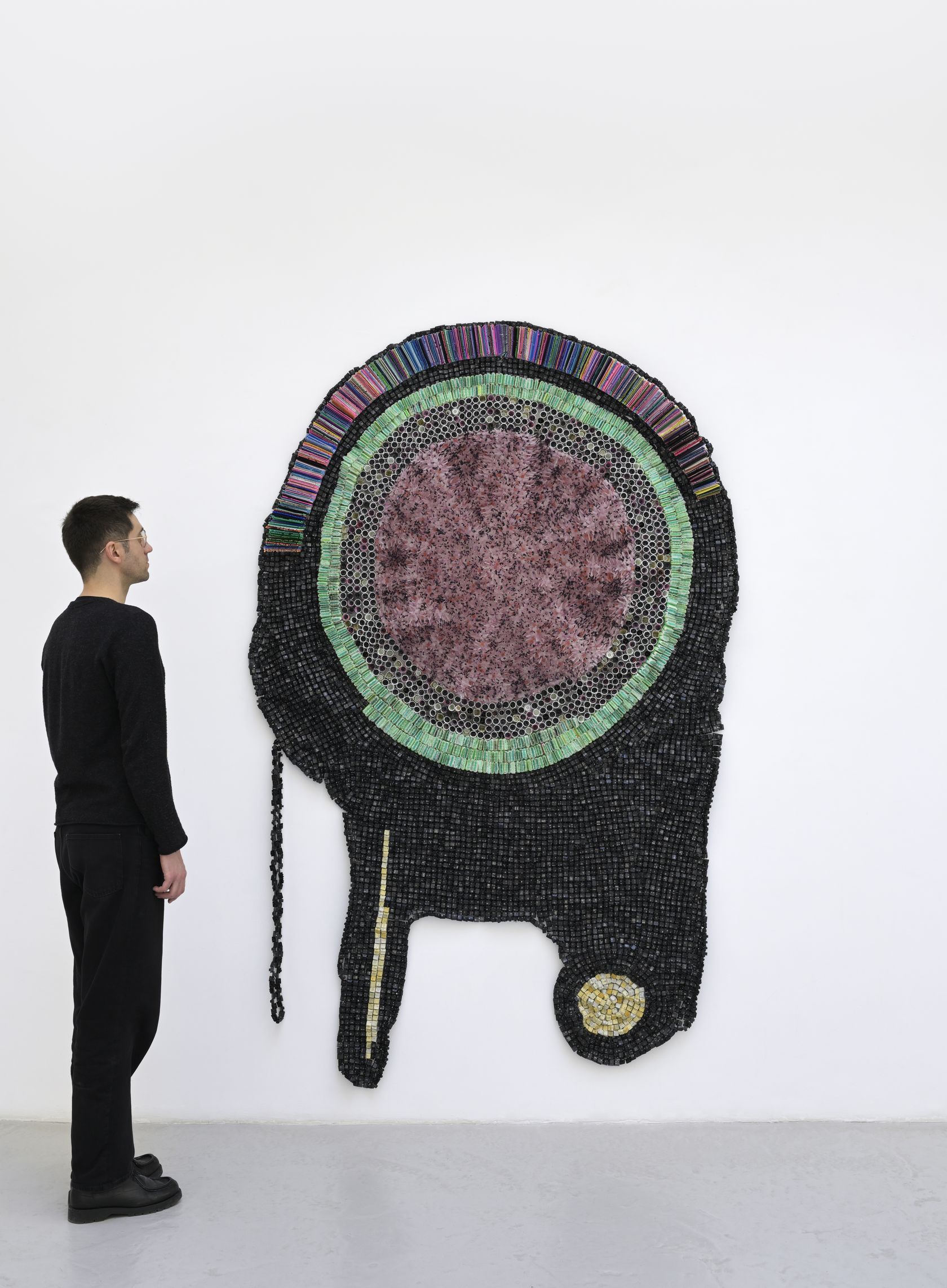
- Just Delete , 2024
- Plastic computer and calculator keys, belt buckles, toothbrushes, clothing tags
-
- 240 ×
- 540 ×
- 10 × cm
- 94 1/2 ×
- 212 5/8 ×
- 3 15/16 × inches
- Moffat Takadiwa
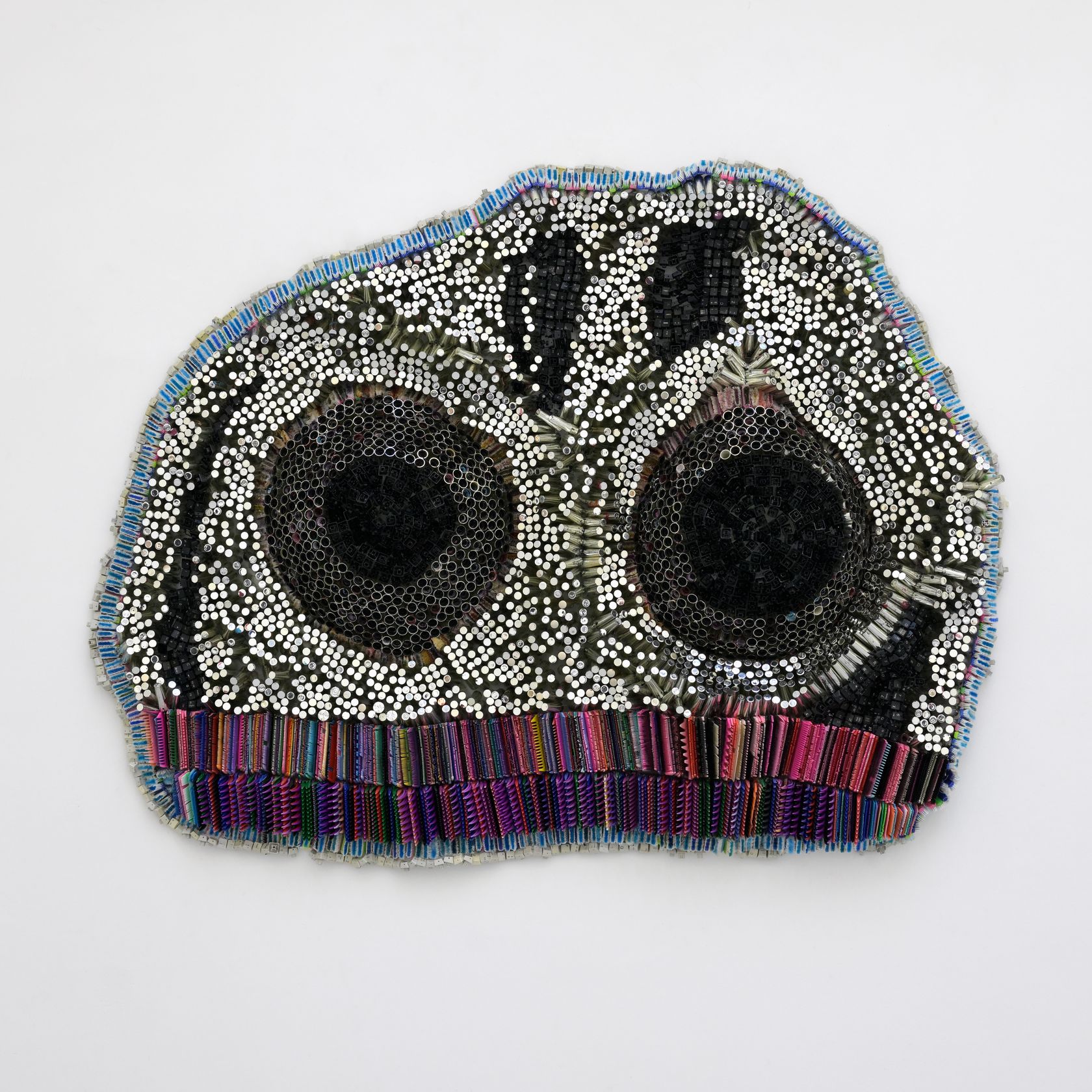
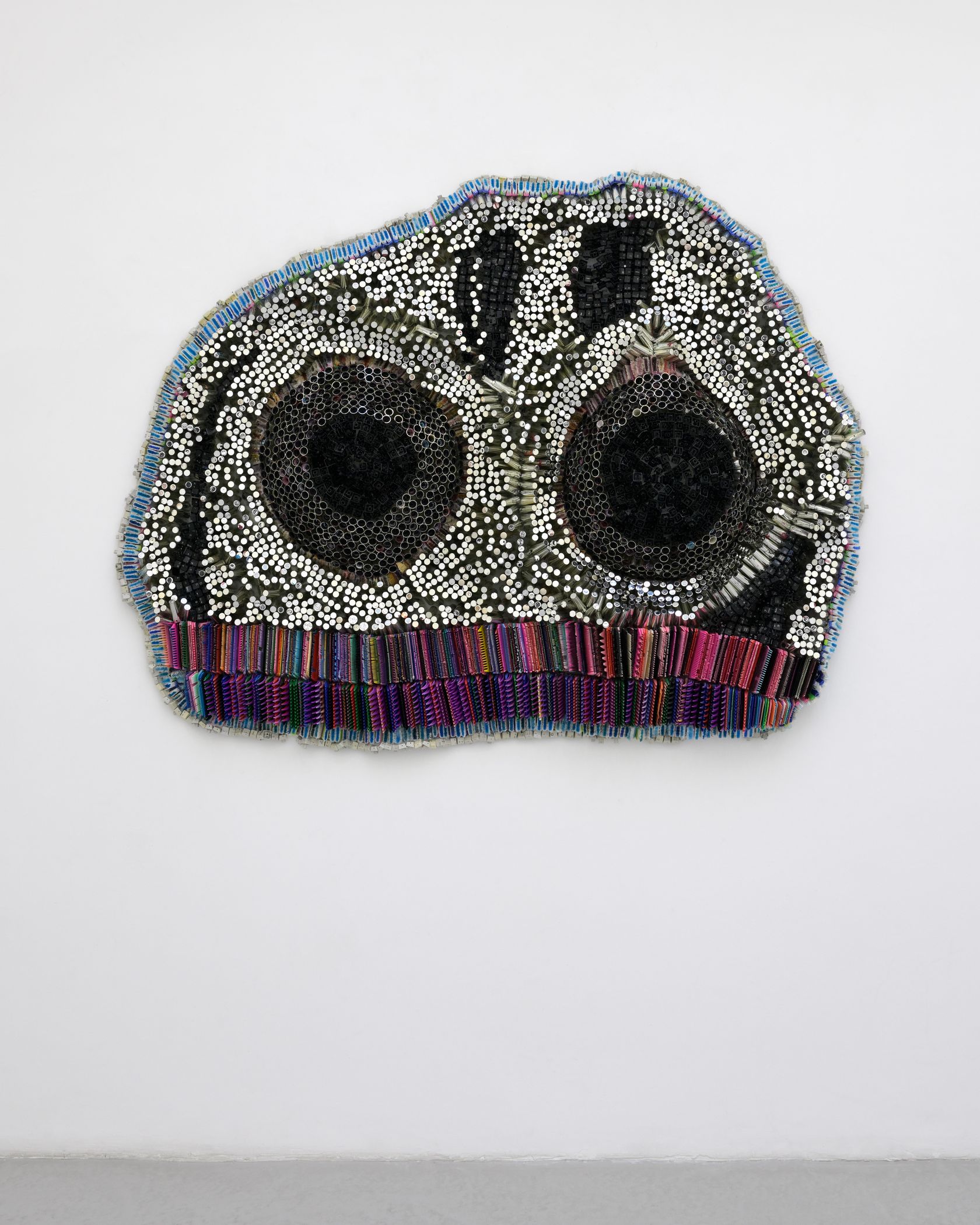
- Pink Nails , 2026
- Keyboard keys, plastic toothbrush head and nails polish parts
-
- 235 ×
- 152 × cm
- 92 1/2 ×
- 59 13/16 × inches
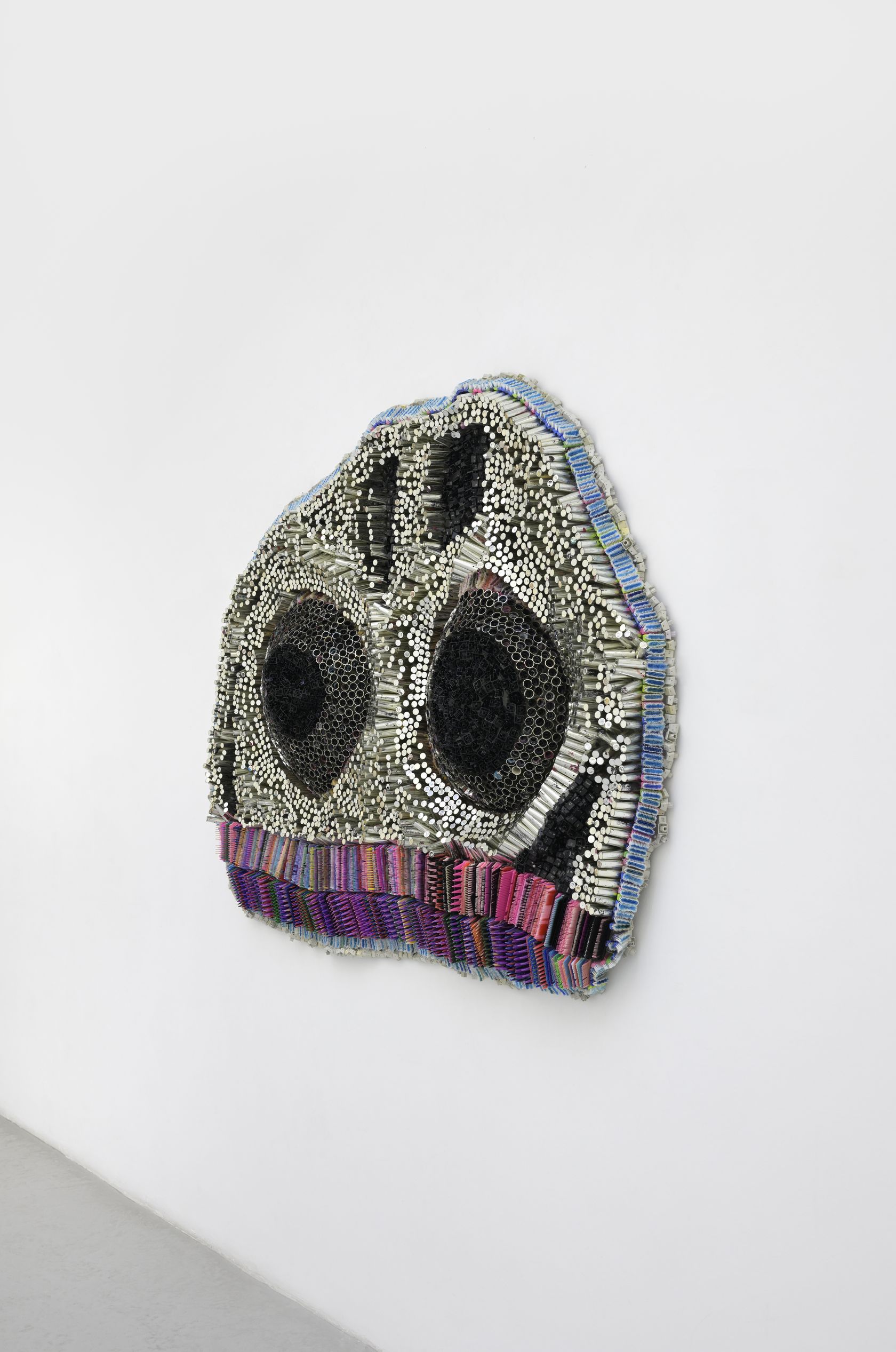
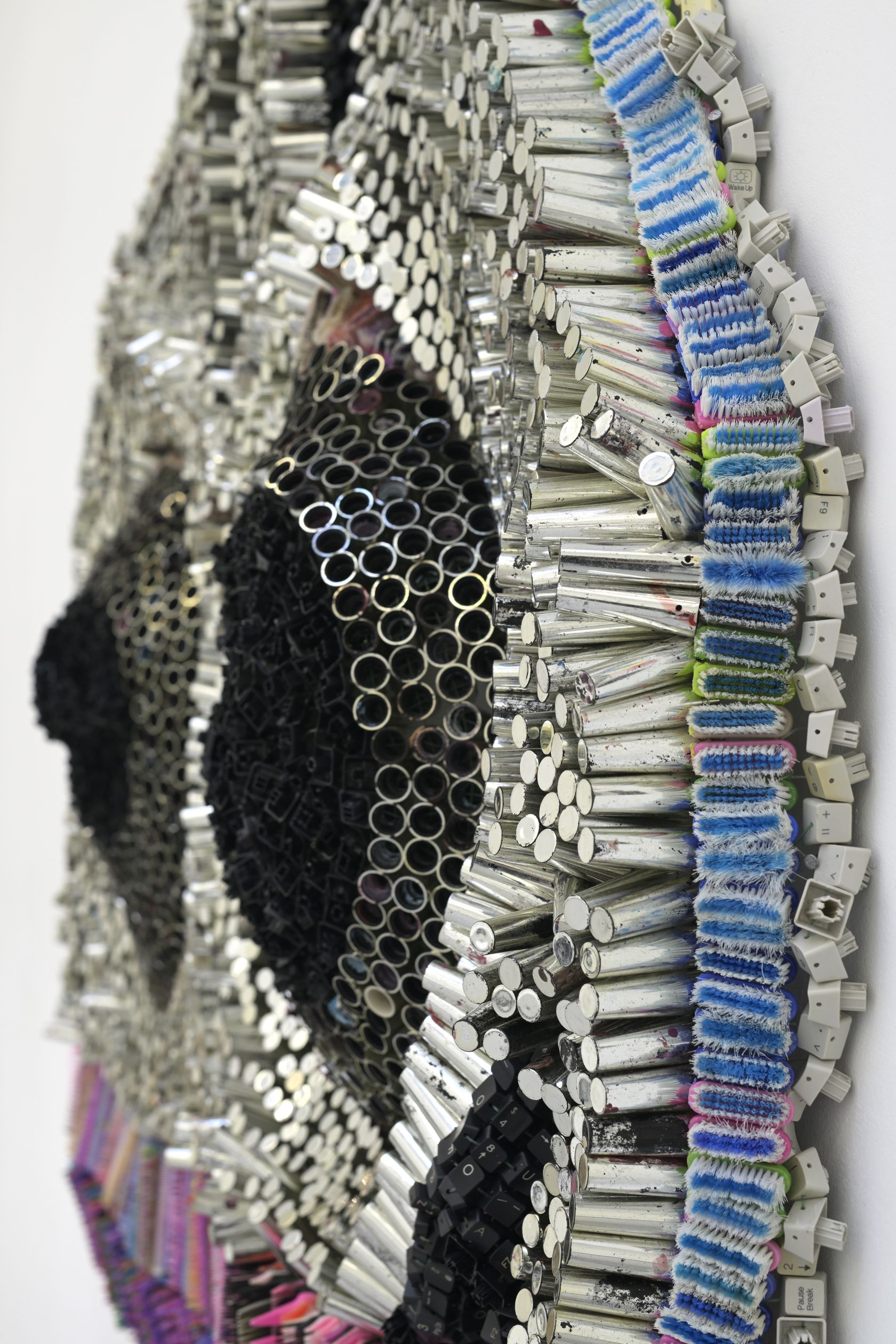
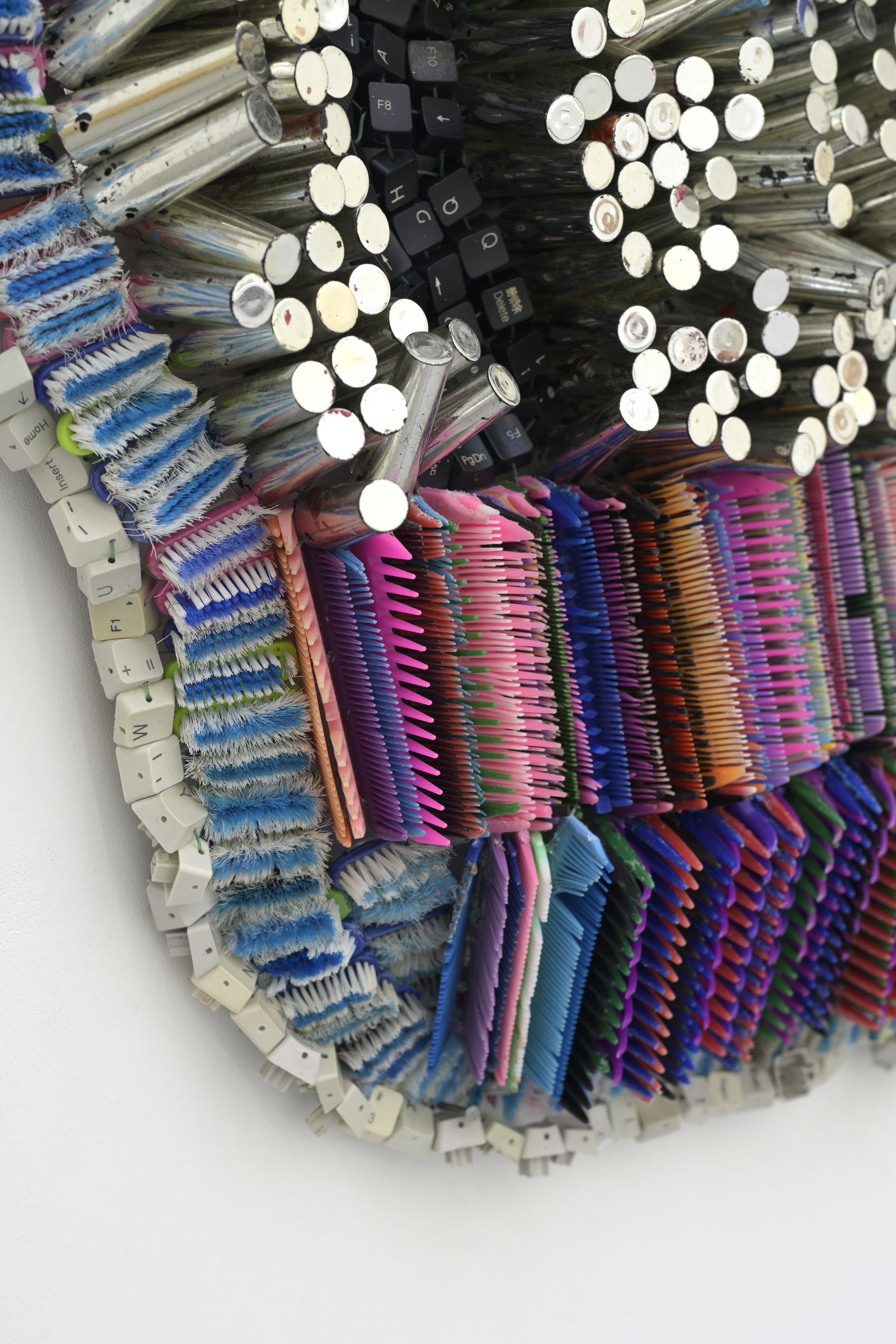
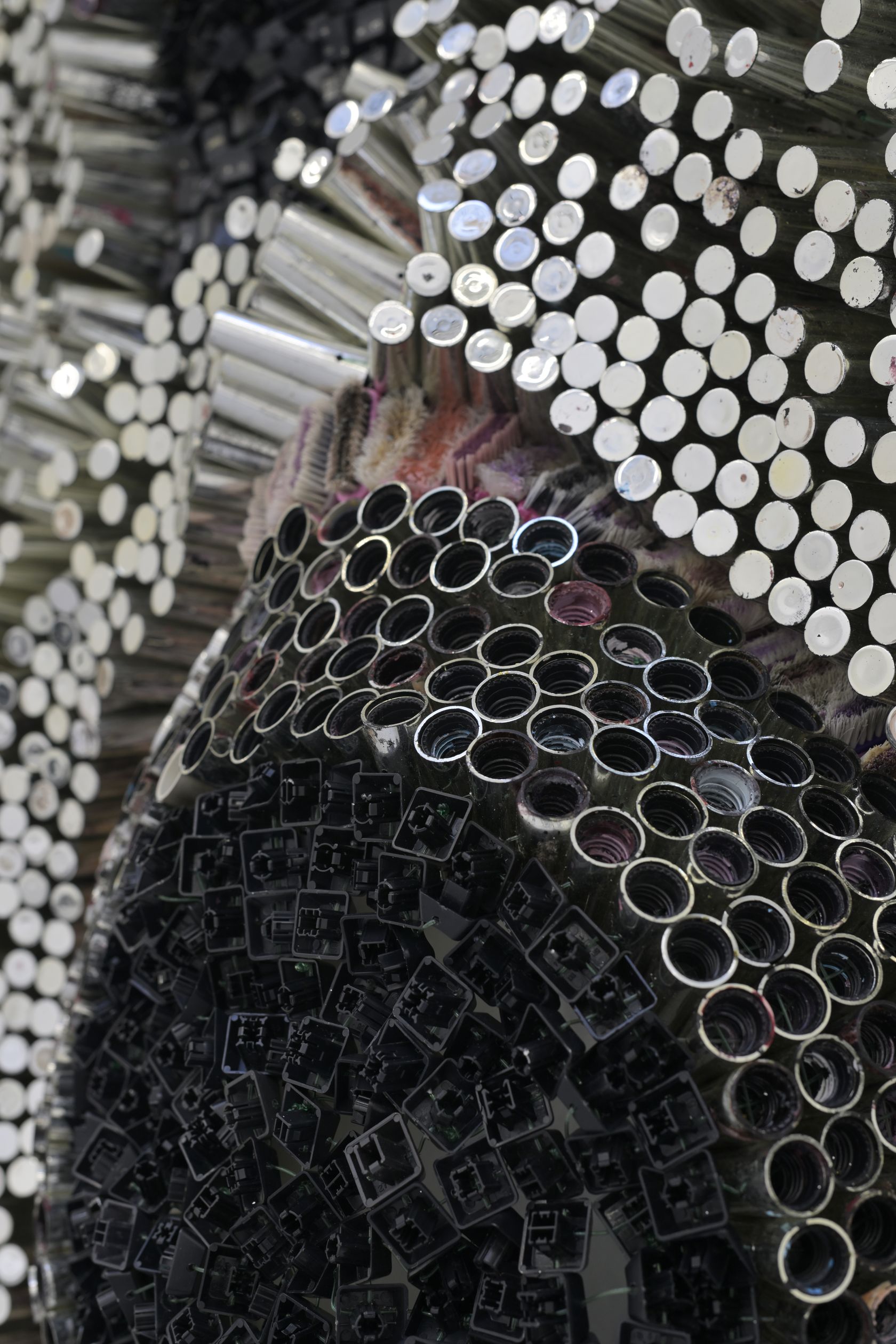
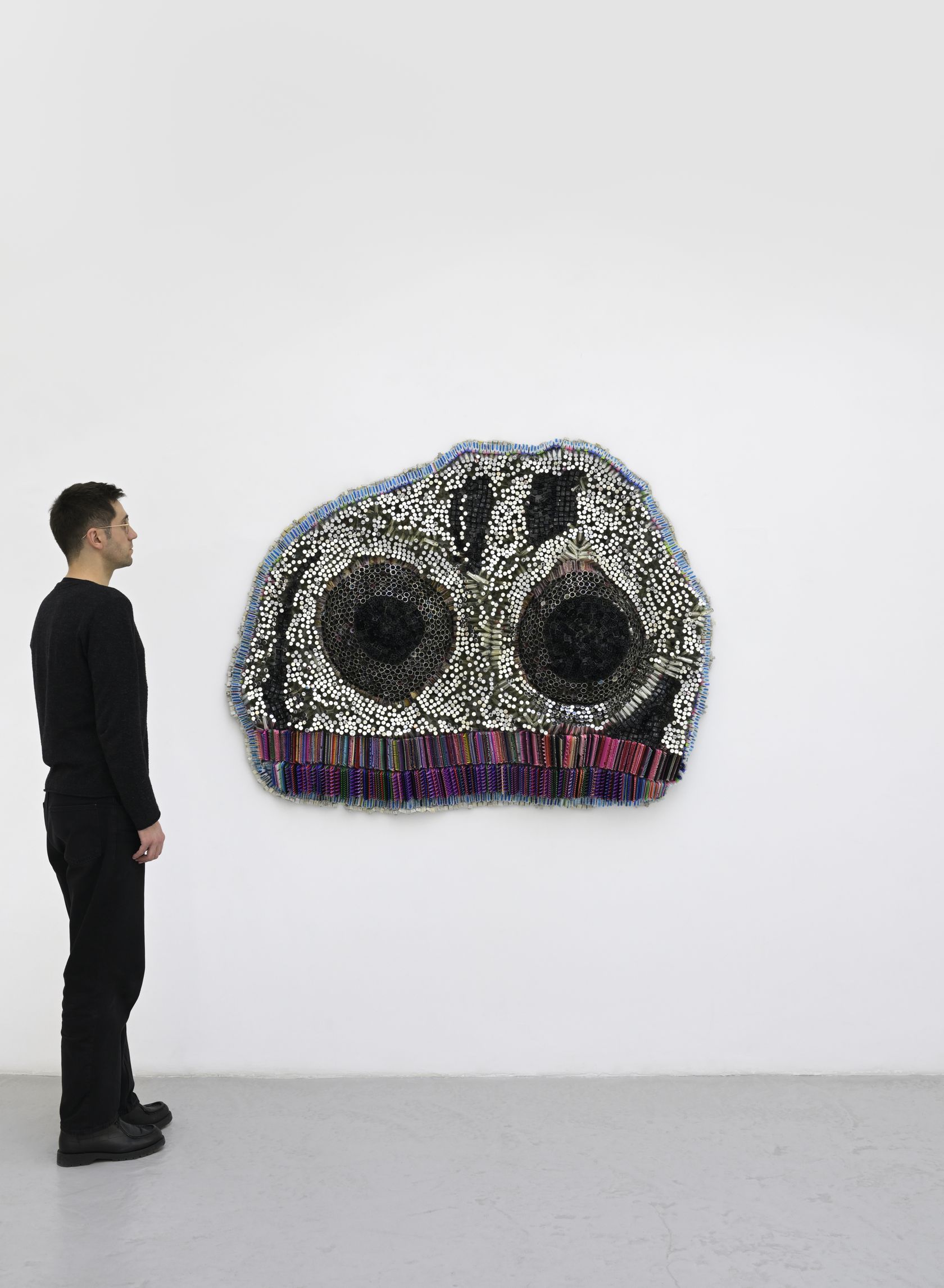
- Moffat Takadiwa
- African Mask , 2026
- Keyboard keys, plastic toothbrush head, combs and nail polish tops
-
- 125 ×
- 165 × cm
- 49 3/16 ×
- 64 15/16 × inches
Moffat Takadiwa’s works show that you can rebuild worn-out structures from the ground up, using the very scraps left behind by extractivism. The beer hall that once enforced colonial order now shelters a community of artists, busy with the work of repair. This is not a metaphor. It is the reality that shapes Takadiwa’s crowned figures—not as dreams of some lost pre-colonial past, but as composites, pieced together from the fallout of a once-promising globalization project, insisting on their own way of being. Whether the westernized art world can meet that insistence or only admire it from a safe distance remains an open question.
Moffat Takadiwa creates large format sculptures from materials found on garbage dumps, notably computer parts, plastic bottle-caps, toothbrushes and toothpaste tubes. After gathering great quantities of these objects and sorting them by color and shape, the artist weaves these discarded scraps into rich wall hangings. Once suspended, these post-industrial fabrics, through their intricate beauty, acquire an aura of ritual or totemic artifacts.
Born in 1983, Moffat Takadiwa lives and works on the outskirts of Harare in Mbare, one of the largest recycling centers in the country and an important hub for the informal economy. Belonging to the post-independence generation, his work reflects his preoccupation with issues such as consumerism, inequality, post-colonialism and the environment. Since the earliest days of his artistic career, he has used his practice as a platform for the rehabilitation of his community, working with young local artists and designers, with a view to founding the world first artistic center based on the use of reclaimed materials.
The National Gallery of Zimbabwe, Harare, staged a major solo exhibition of Moffat Takadiwa in 2023. In 2024, he had his first solo exhibition in a French institution at the Galerie Édouard Manet, Gennevilliers, and represents Zimbabwe at the 60th Biennale di Venezia alongside five other artists. He exhibited his works in major institutions abroad as well, most notably at the Craft Contemporary (US), during the exhibition organized by Jeffrey Deitch and Gagosian at the Moore Building in Miami (US), at the ARoS Kunstmuseumat, Aarhus (DK), the MACAAL, Marrakesh (MA) and the Arnhem Museum (NL).