
To learn more about available works, please provide your contact information
Art Gstaad 2026
February 19 - 22
Helene Appel
Glen Baxter
Françoise Pétrovitch
Laurent Proux
Stefan Rinck
Xie Lei
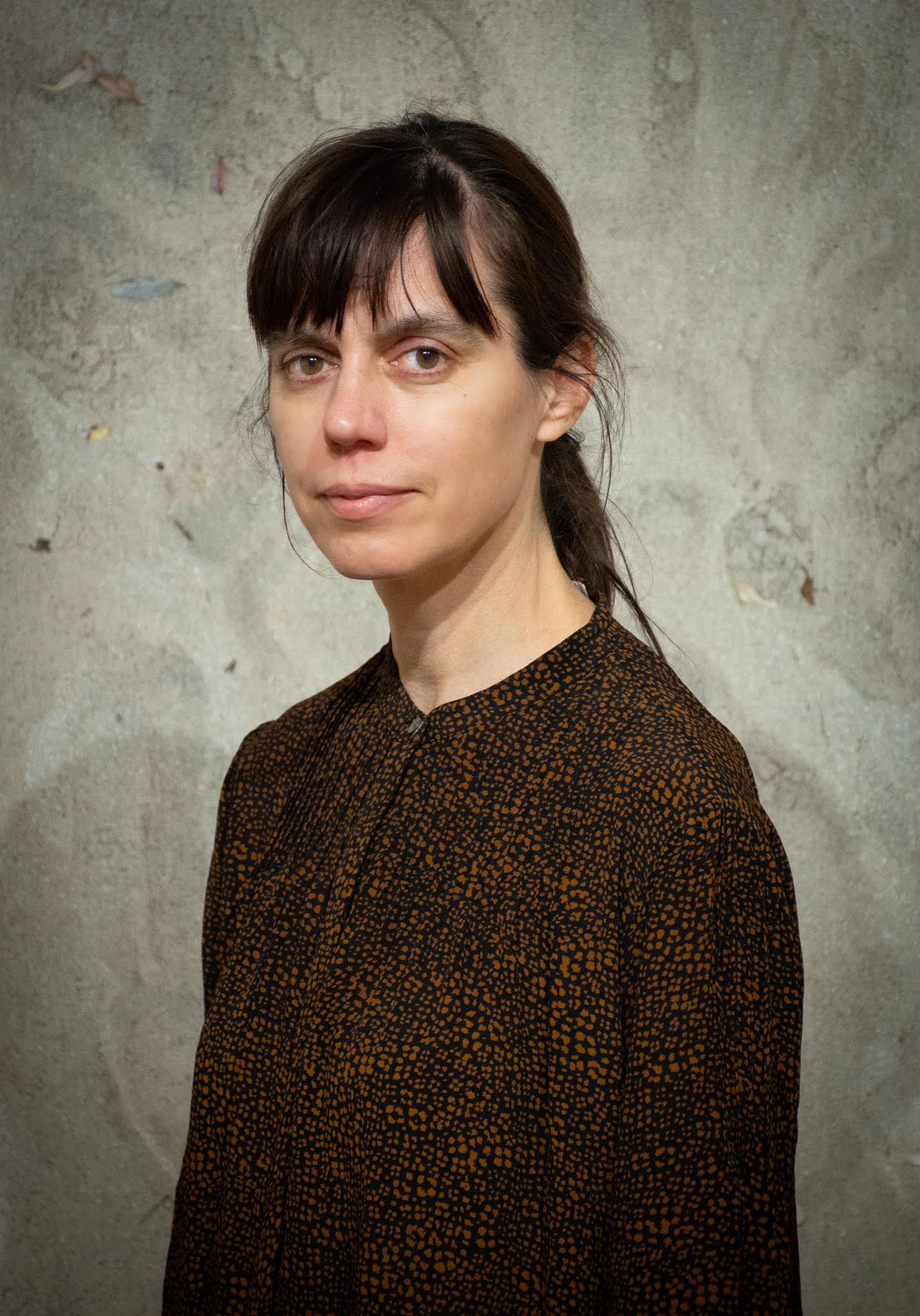
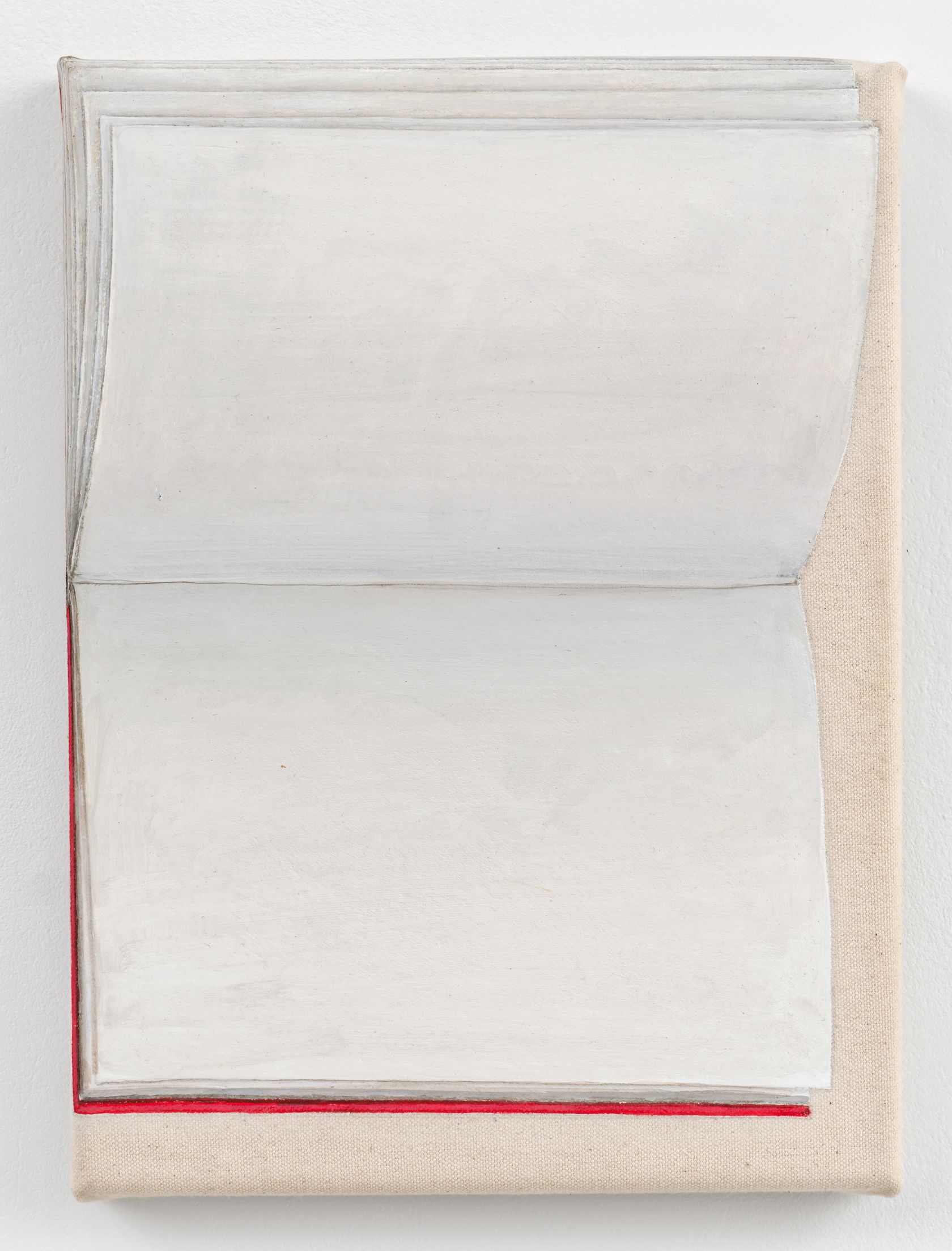
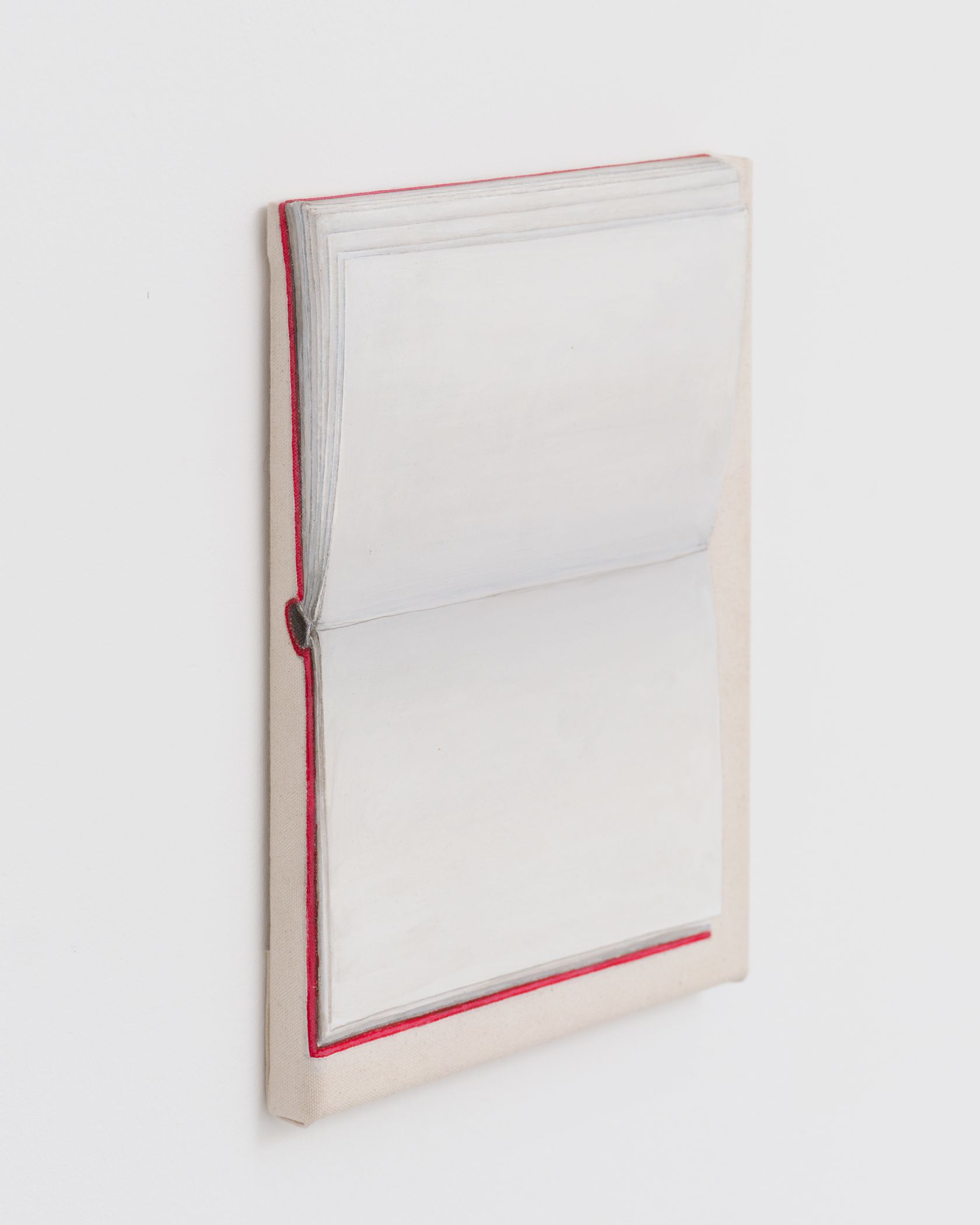
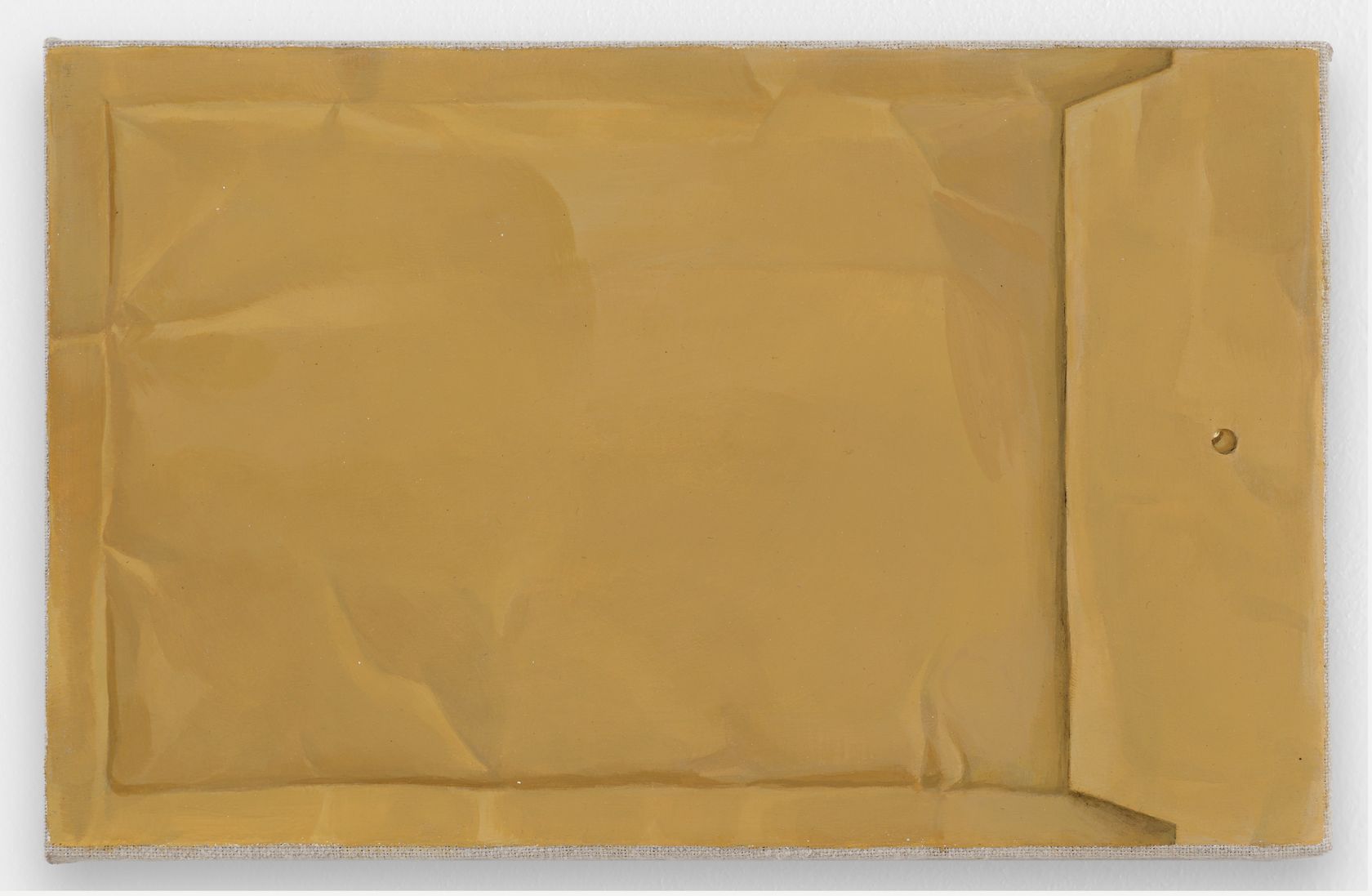
Helene Appel imparts a real presence to the life-sized subjects she paints on raw linen canvas. The formats and techniques she uses for each painting are dictated by the subjects themselves. Embracing even the most trivial details, her works put forward a vision stripped to its essentials and far removed from any moral or metaphysical interpretation. The unvarnished truth of everyday objects is captured with unrelenting realism, preserving the perfection of the moment. There is no attempt to manipulate the eye in a trompe-l’oeil manner, instead our gaze is encouraged to seek out the inherent aesthetic qualities of twigs, soapy water, fishing nets, envelopes or chopped fennel… The apparent simplicity of bringing to life these objects through painting, opens the door to the most profound exploration of the relationship between art and reality. Or to put it more simply: “What you see is what you get… but take a better look at what you see.”
Helene Appel was born in 1976 in Karlsruhe (Germany) and currently lives and works in Berlin. She is a graduate of the Hamburg School of Art and the Royal College of Art in London. Her work has been exhibited at the Museo Marino Marini in Florence, at the Drawing Room and the Hamburger Kunsthalle in Hamburg, at the Städtische Galerie in Delmenhorst and at the Thalie Foundation in Brussels. Her paintings feature in numerous public and private collections such as the National Museum of Contemporary Art in Greece, La Gaia in Italy, the Olbricht Collection in Germany and at Touchstones, Rochdale in the UK.
Glen Baxter’s œuvre is immediately recognisable. He has remained true to his simple and highly effective process for almost fifty years: a comic sketch is accompanied by a short, incongruous, even discordant caption. Baxter elaborates a parallel world based on a burlesque hijacking of an iconography sourced from the 1930s and 40s, which provides him with an assortment of cowboys, boy scouts and golfers in tweed. His refined prose contrasts with his seemingly outdated imagery, blending elegantly in a quest for the frisson cherished by surrealists such as de Chirico and Max Ernst. Bewilderingly nonsensical, astonishingly witty and tragi-comic, like life itself, these talkative drawings celebrate the heady rush of linguistic mishaps.
Born in 1944, in Leeds, Yorkshire, Glen Baxter attended the Leeds School of Art. After several stays in New York in the 1970s, where he was introduced to poetry through his involvement with the artistic circles of St. Mark’s Church, he finally settled in the Grosvenor Park area of South London. He taught at Goldsmiths College for around fifteen years. His work has been regularly exhibited in New York, London, Tokyo and Sidney as well as in France, where it has been shown in numerous institutions and features in around fifteen public collections including the Pompidou Centre, the National Centre for the Visual Arts (CNAP) and several Regional Contemporary Art Collections (FRACs). His oeuvres are also included in the collections of the Tate Gallery, the Victoria & Albert Museum in London and the MoMA in New York. His drawings have regularly graced the pages of the New Yorker, Vanity Fair, The Observer and Le Monde. He has also published some fifty books.
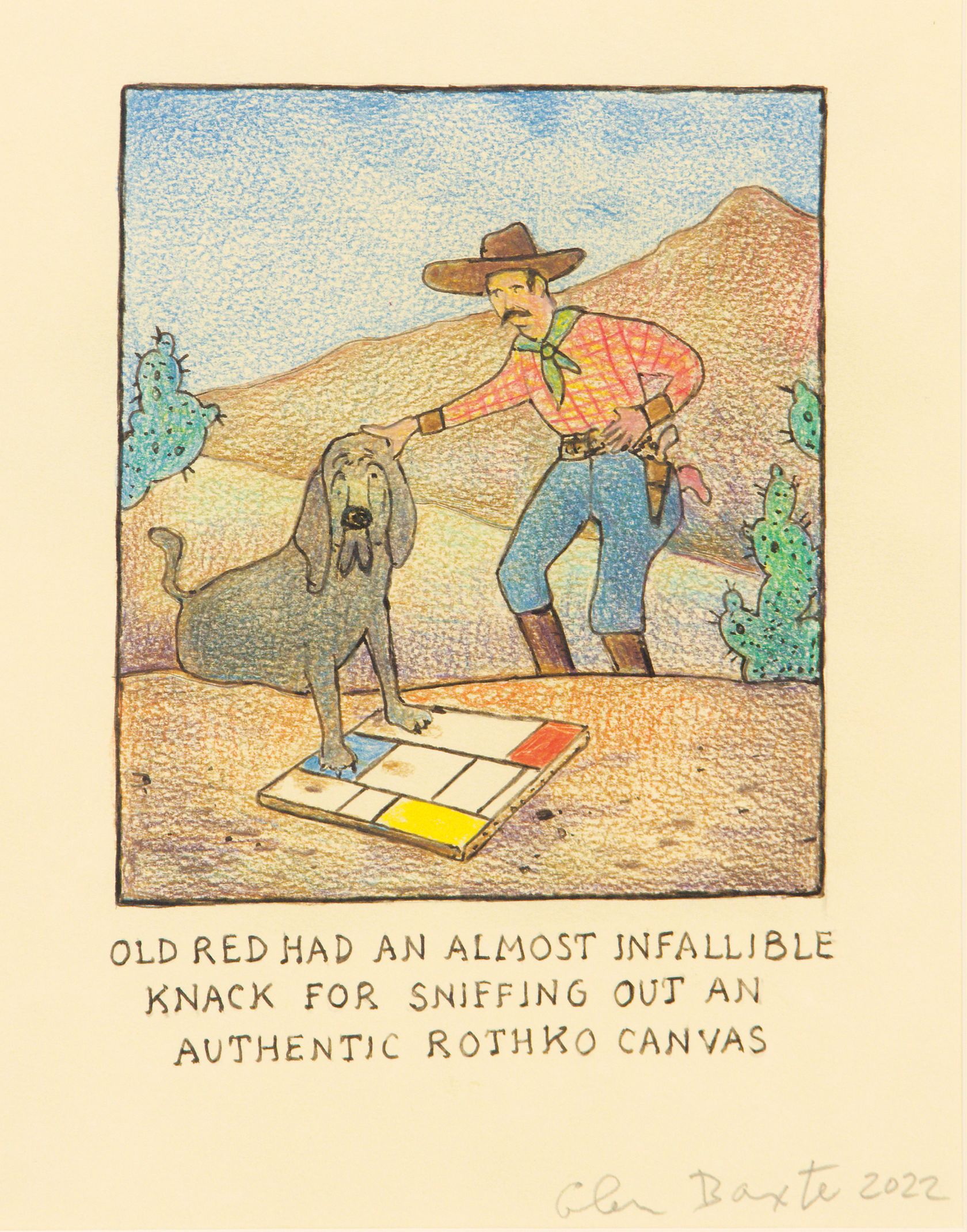
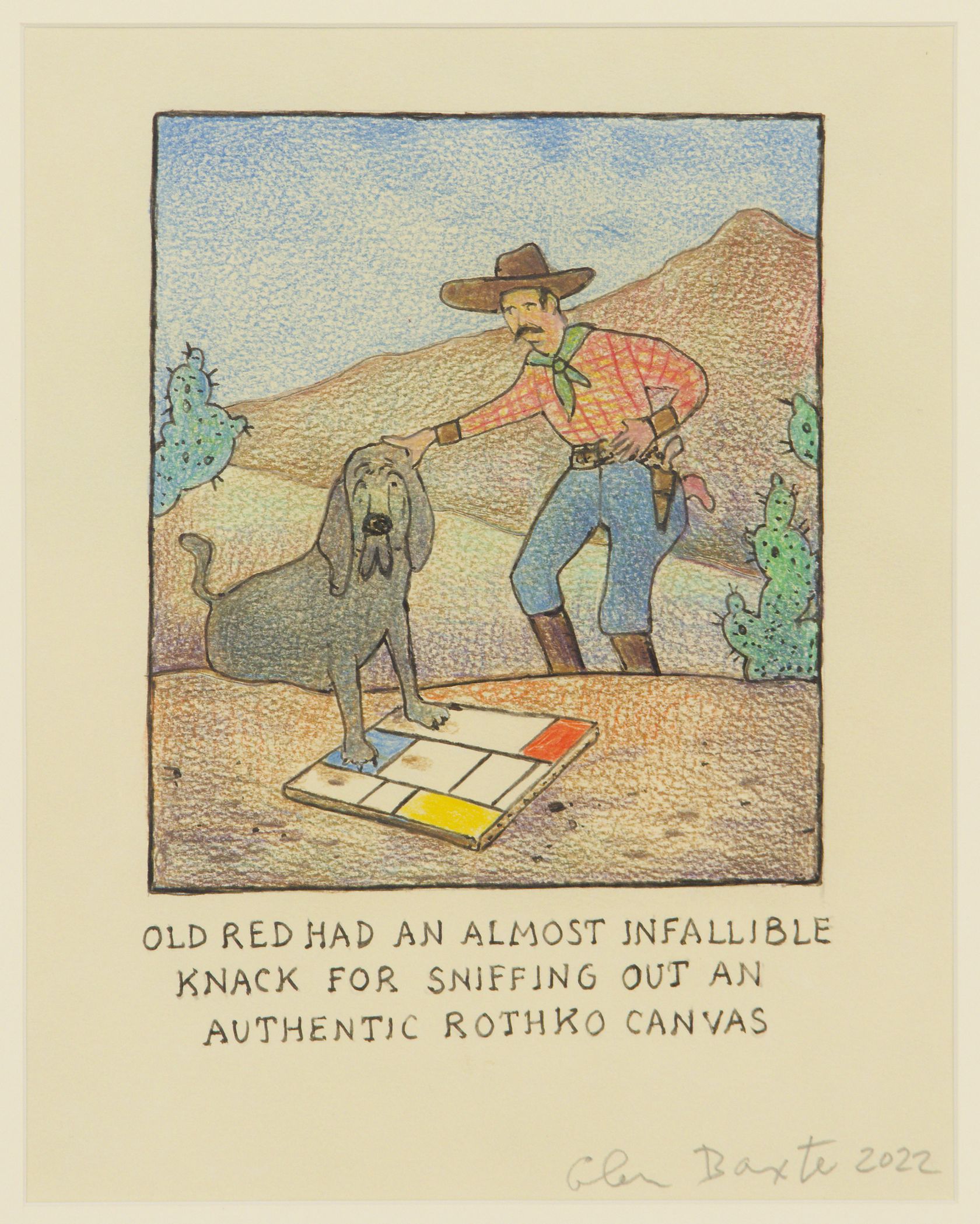
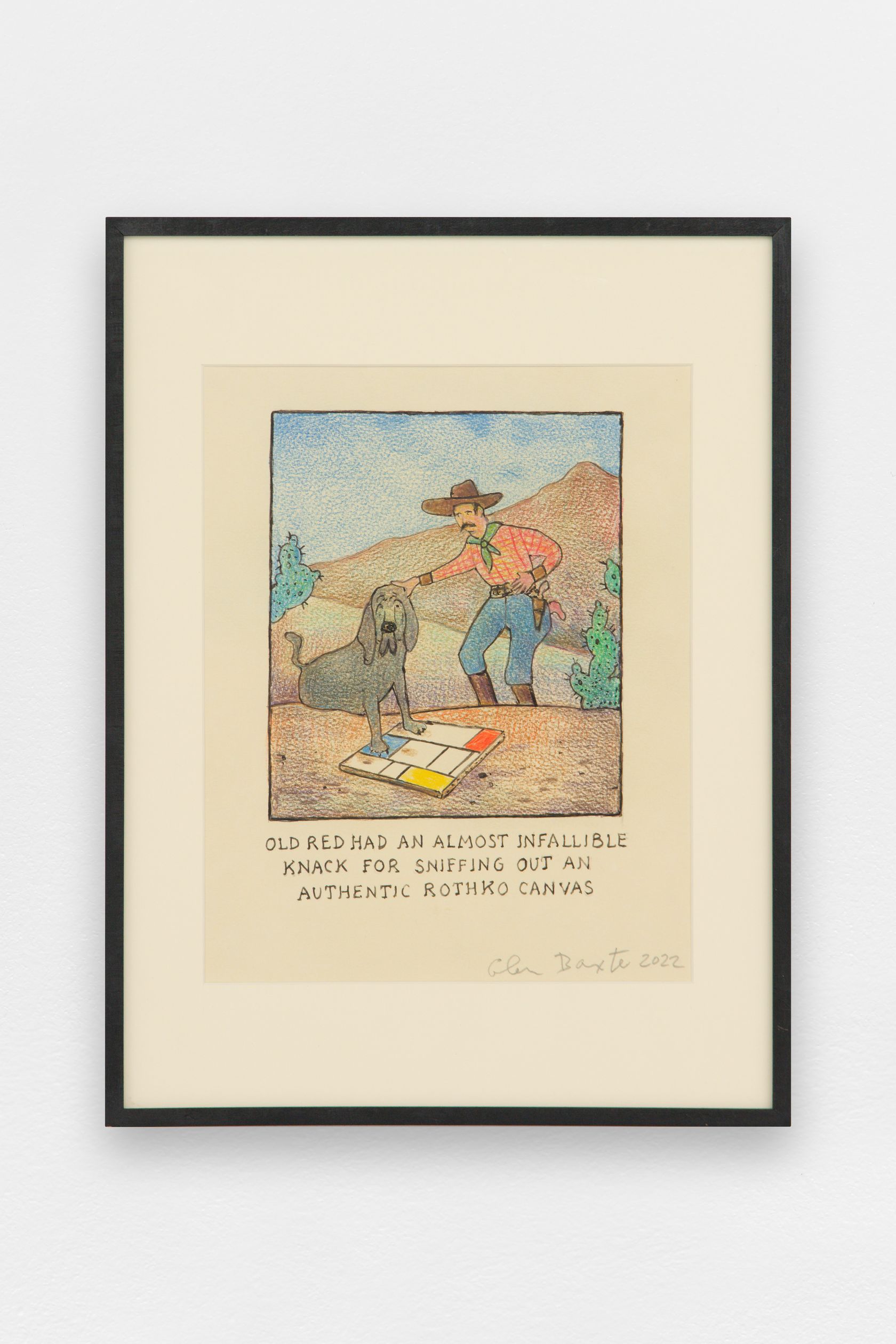
- Glen Baxter
- Old red had an almost infallible knack for sniffing out an authentic Rothko Canvas , 2022
- Ink and pencil on paper
-
- 38 ×
- 28 × cm
- 14 15/16 ×
- 11 × inches
- unframed
- 51.5 ×
- 41.5 ×
- 3 × cm
- 20 1/4 ×
- 16 5/16 ×
- 1 3/16 × in
- framed
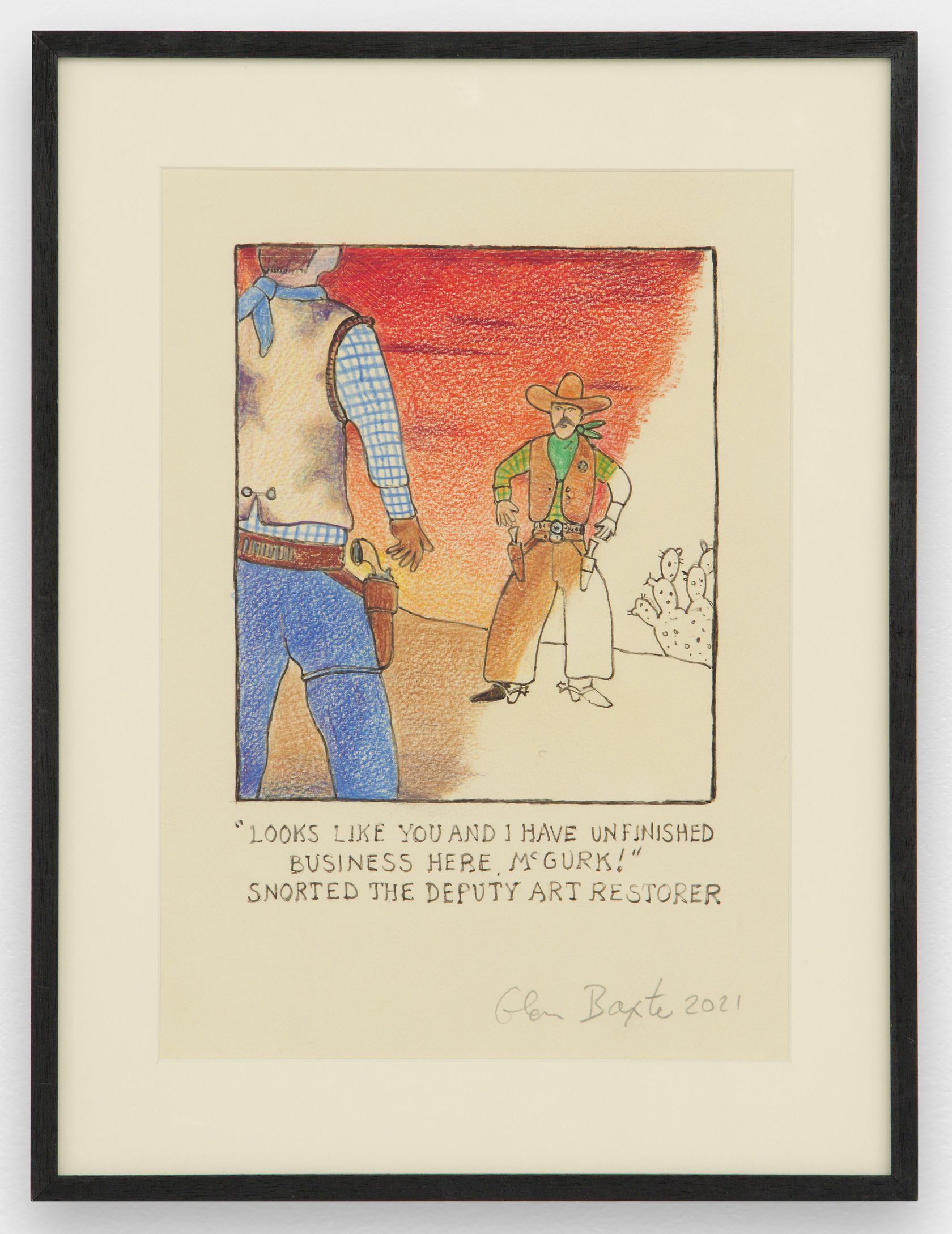
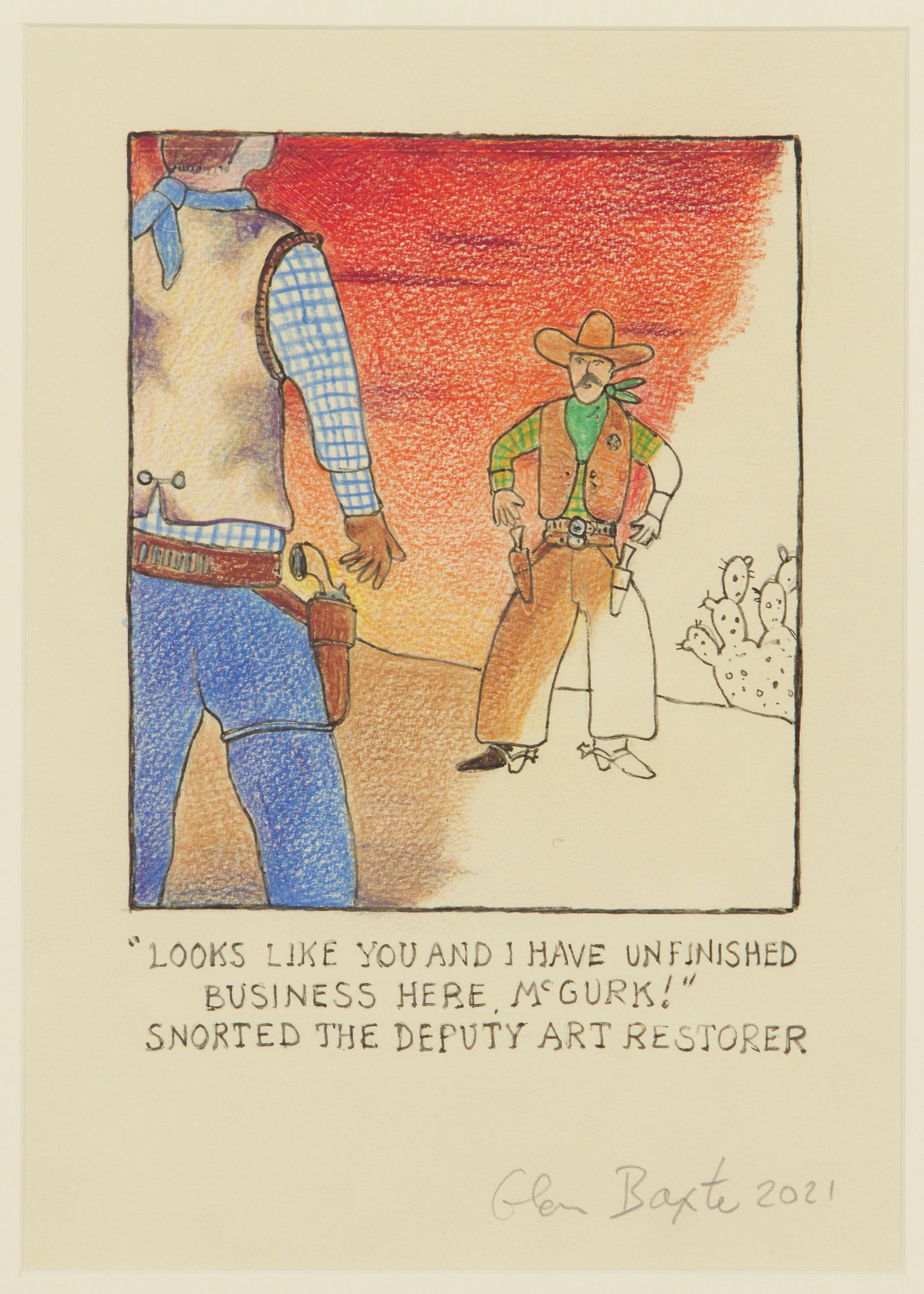
- Glen Baxter
- "Looks like you and I have unfinished business here McGurk!" snorted the deputy art restorer , 2021
- Ink and pencil on paper
-
- 37 ×
- 24.5 × cm
- 14 9/16 ×
- 9 5/8 × inches
- unframed
- 47.5 ×
- 36 ×
- 1.5 × cm
- 18 11/16 ×
- 14 3/16 ×
- 9/16 × in
- framed
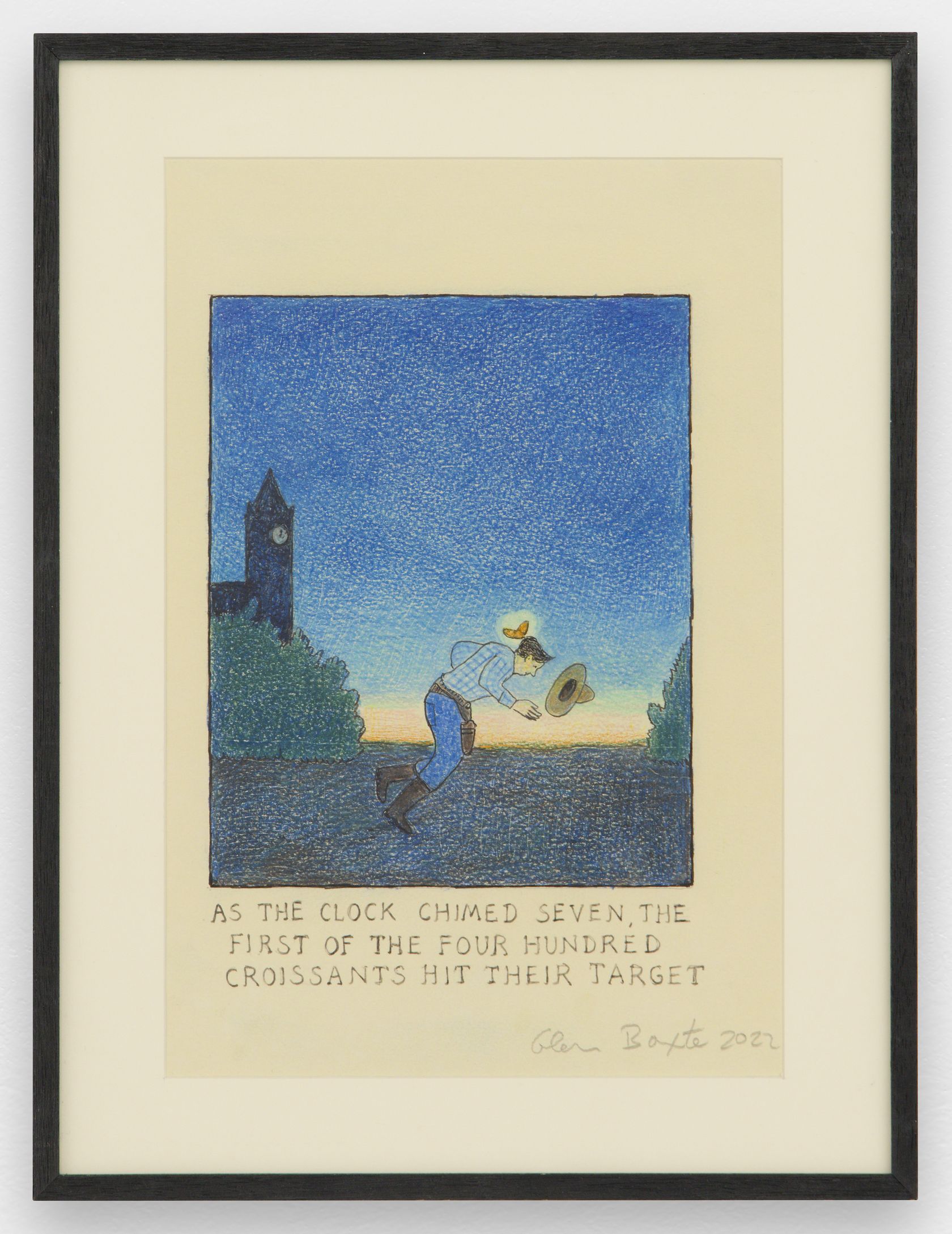
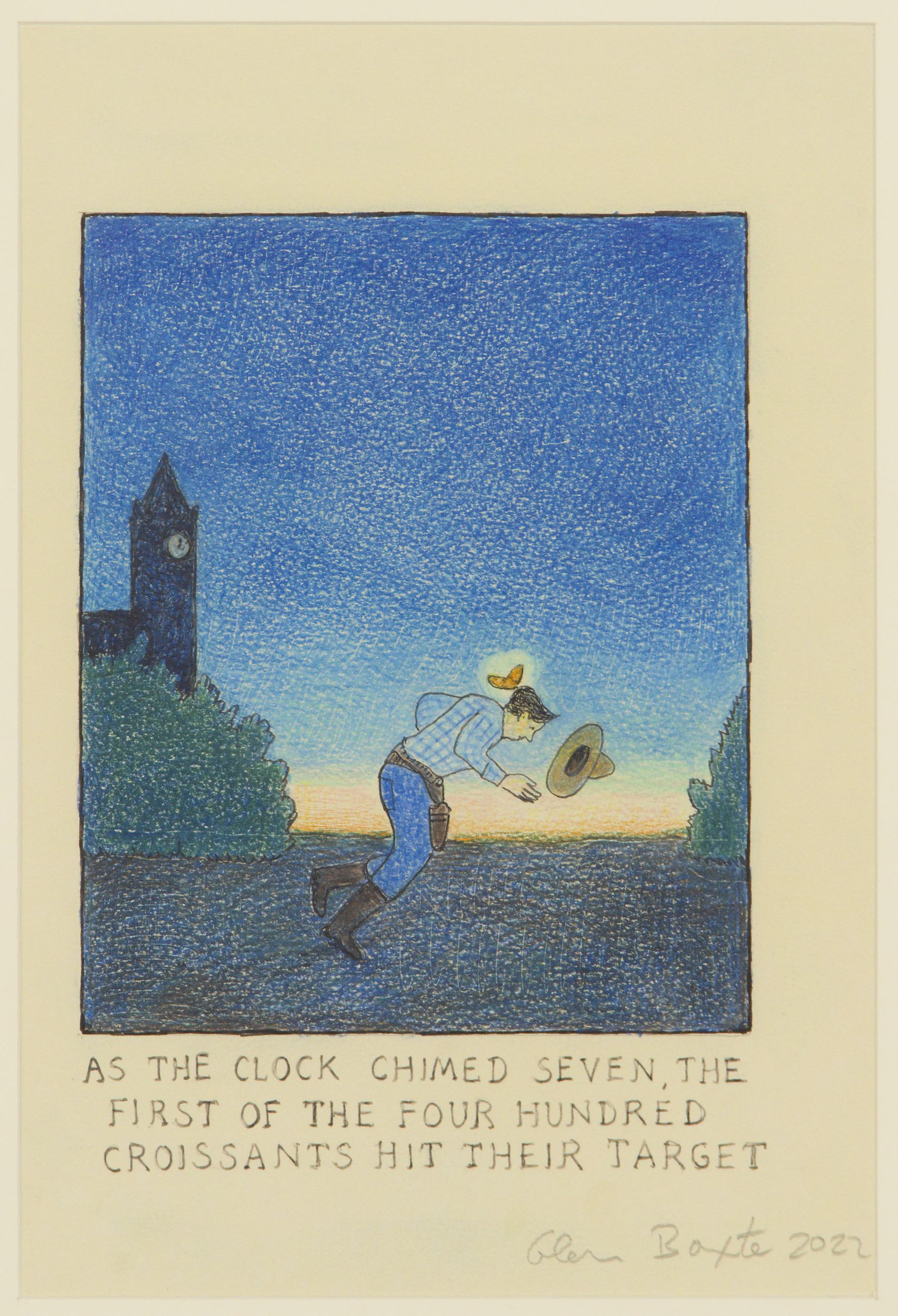
- Glen Baxter
- As the clock chimed seven, the first of the four hundred croissants hit their target , 2022
- Ink and pencil on paper
-
- 37 ×
- 24.5 × cm
- 14 9/16 ×
- 9 5/8 × inches
- unframed
- 47.5 ×
- 36 ×
- 1.5 × cm
- 18 11/16 ×
- 14 3/16 ×
- 9/16 × in
- framed
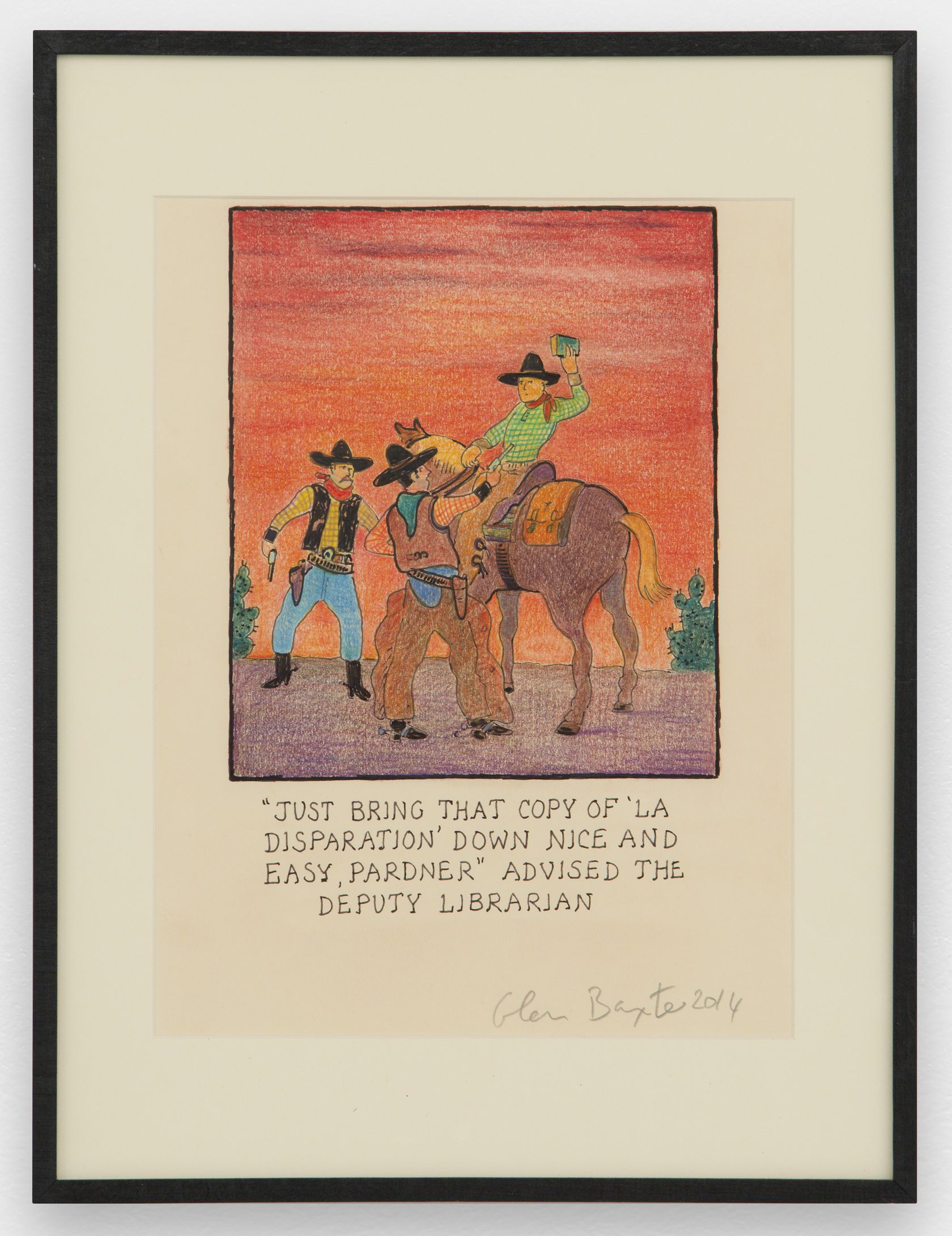
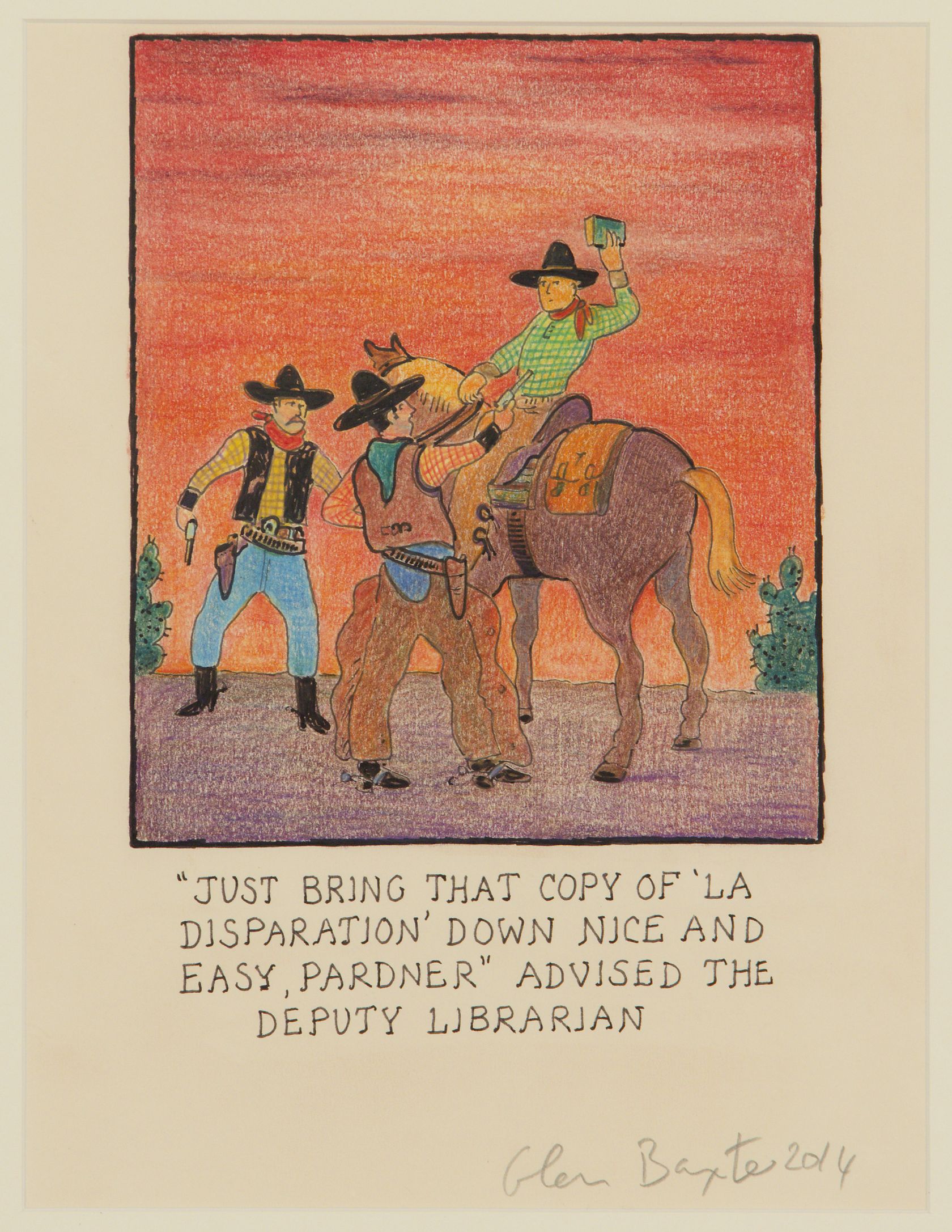
- Glen Baxter
- "Just bring that copy of 'La disparition' down nice and easy, pardner" advised the diputy librarian , 2014
- Ink and pencil on paper
-
- 37 ×
- 24.5 × cm
- 14 9/16 ×
- 9 5/8 × inches
- unframed
- 47.5 ×
- 36 ×
- 1.5 × cm
- 18 11/16 ×
- 14 3/16 ×
- 9/16 × in
- framed
Since the 1990s, Françoise Pétrovitch has produced one of the most powerful bodies of work on the French art scene. Amongst the numerous media she has explored—ceramics, glass, ink washes, painting, print and video—drawing retains pride of place. In constant dialog with the artists who have preceded her, she has been able to measure herself against the incontrovertible motifs of “high art”—Saint Sebastian, still lifes, etc. Pétrovitch’s art reveals an ambiguous world, willingly transgressive, playing with conventional boundaries and eluding any interpretation. Intimacy, fragments of life and disappearance, alongside the themes such as the double, transition and cruelty run through her work, which is inhabited by animals, flowers and beings, and whose atmosphere fluctuates between light and dark, rarely leaving the spectator unmoved.
She has enjoyed numerous solo exhibitions both in France and abroad, as in the Fonds Hélène et Édouard Leclerc in Landerneau and the Bibliothèque nationale de France, Paris, in 2022, and the Musée de la Vie romantique, Paris, in 2023. In 2018, she was the first contemporary artist to be awarded a solo exhibition at the Louvre-Lens. Over the past few years, Pétrovitch has produced monumental wall drawings and large format ensembles, for the Galerie des Enfants at the Centre Pompidou, the West Bund Museum, Shanghai, or for the Ballets du Nord Company. Her works are included in many private and public collections, most notably the Centre Pompidou, Paris (FR), the Voorlinden Museum, Wassenaar (NL), the National Museum of Women in the Arts, Washington D.C. (US), the Musée Jenisch, Vevey (CH), the Musée d’Art Moderne et Contemporain of Saint-Etienne (FR) and of Strasbourg (FR), the MAC VAL (FR), the Salomon and Guerlain Foundations as well as Emerige Endowment Fund.
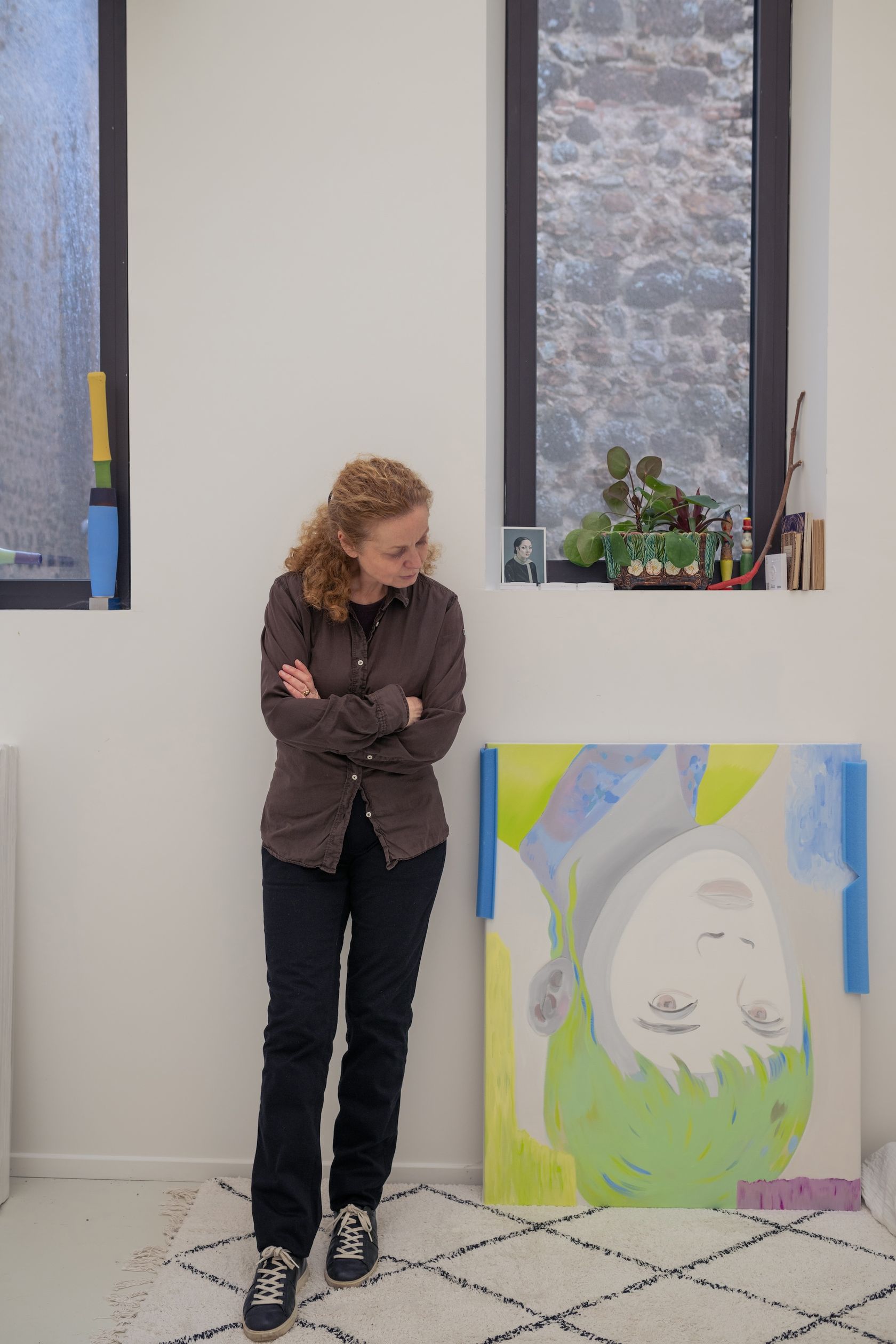
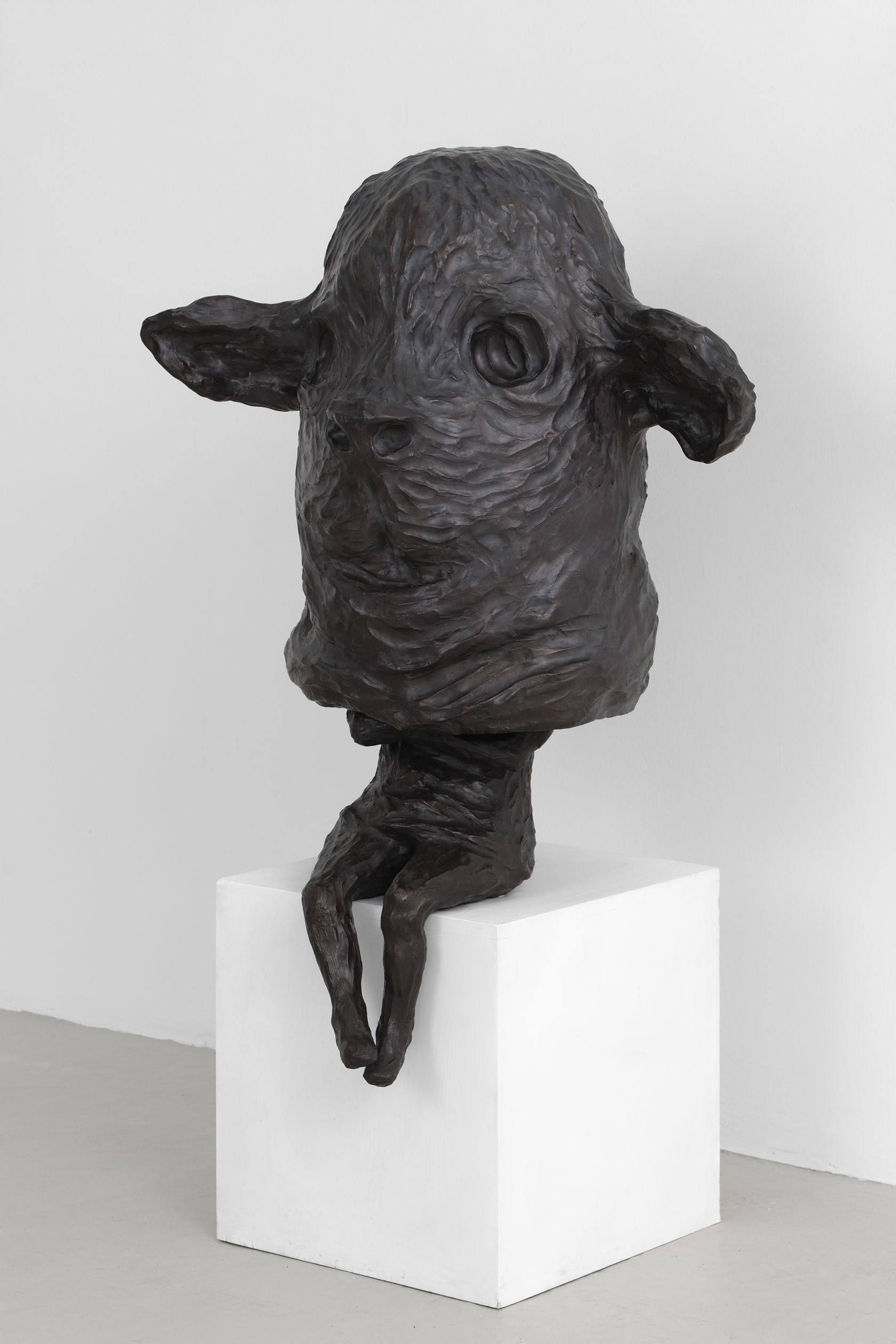
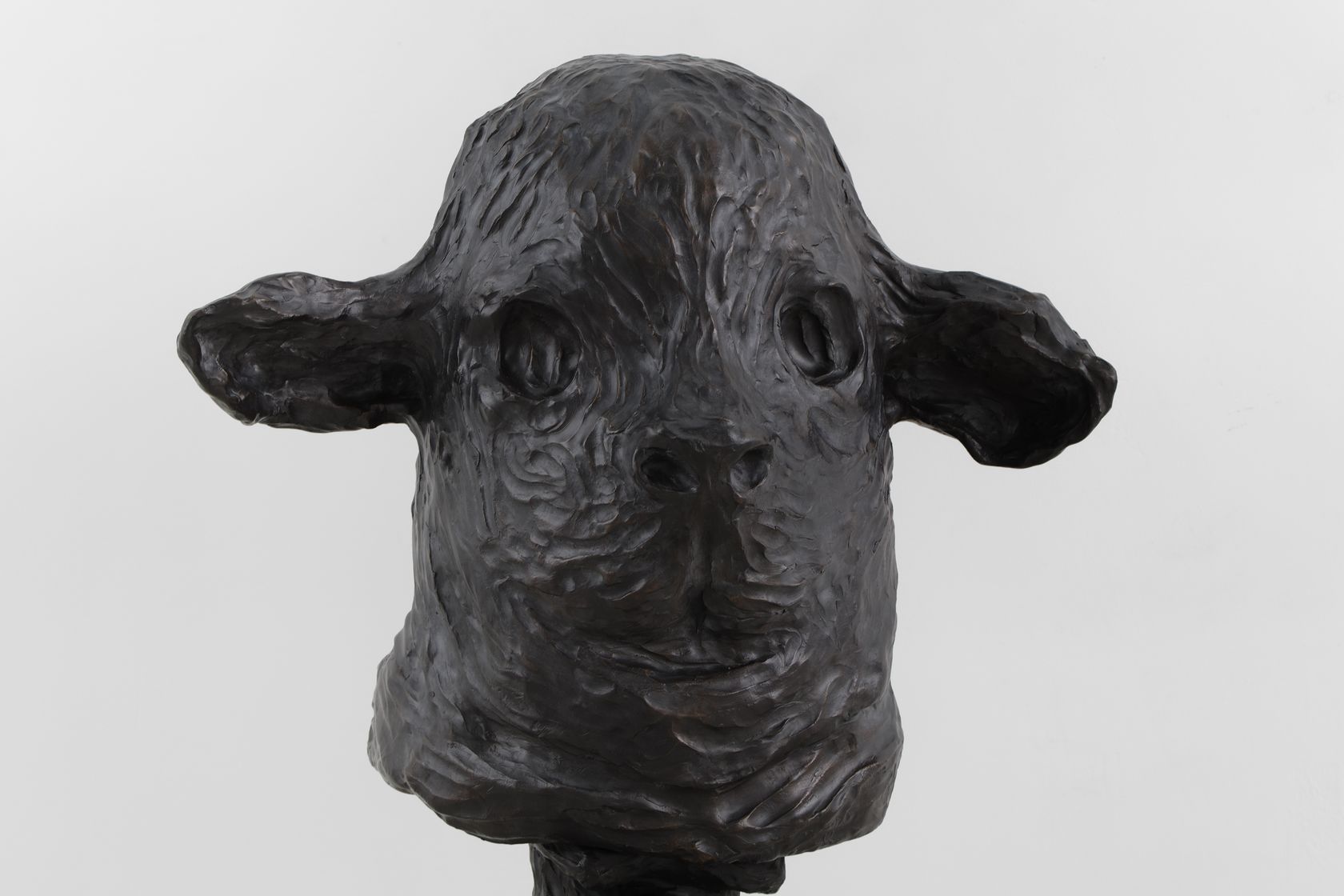
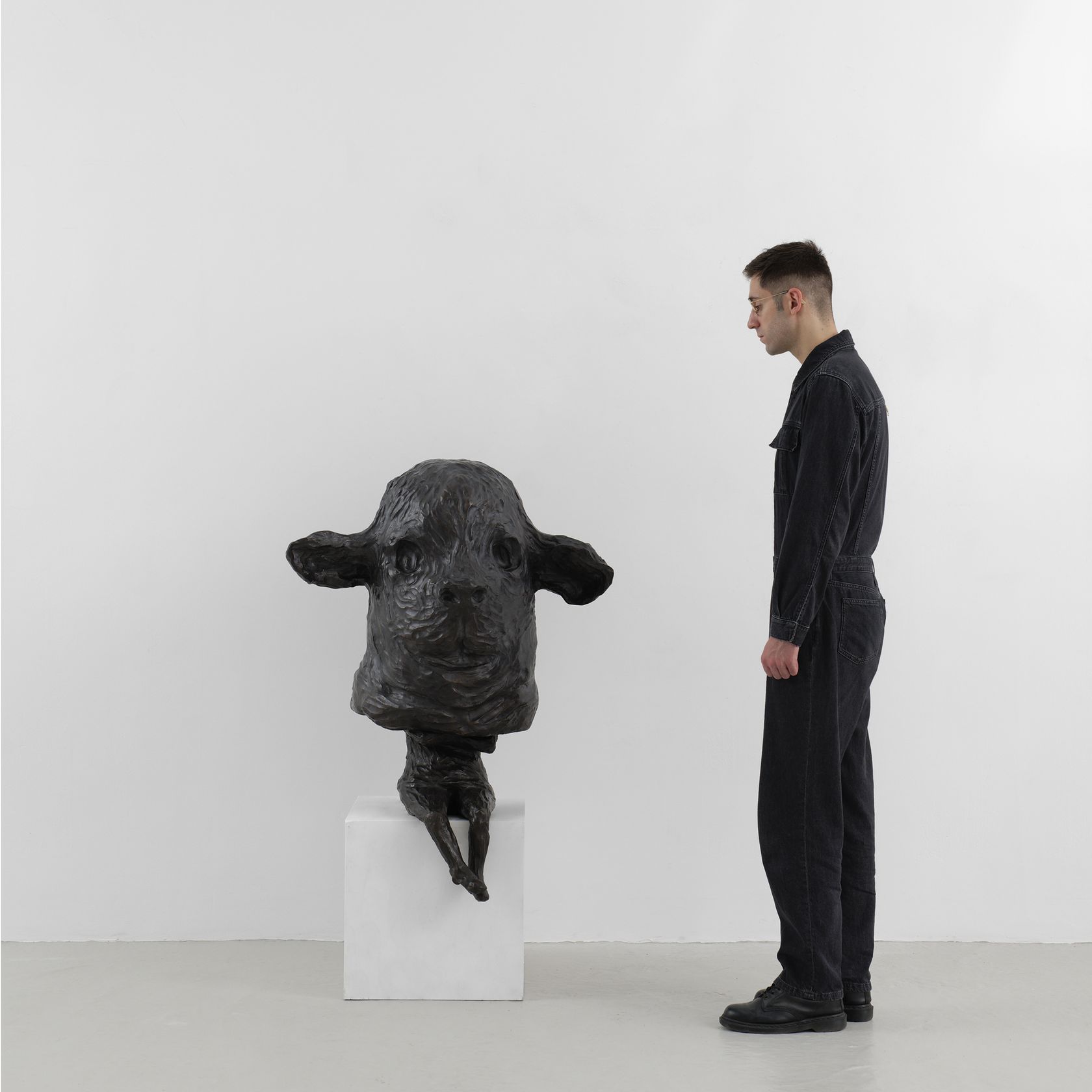
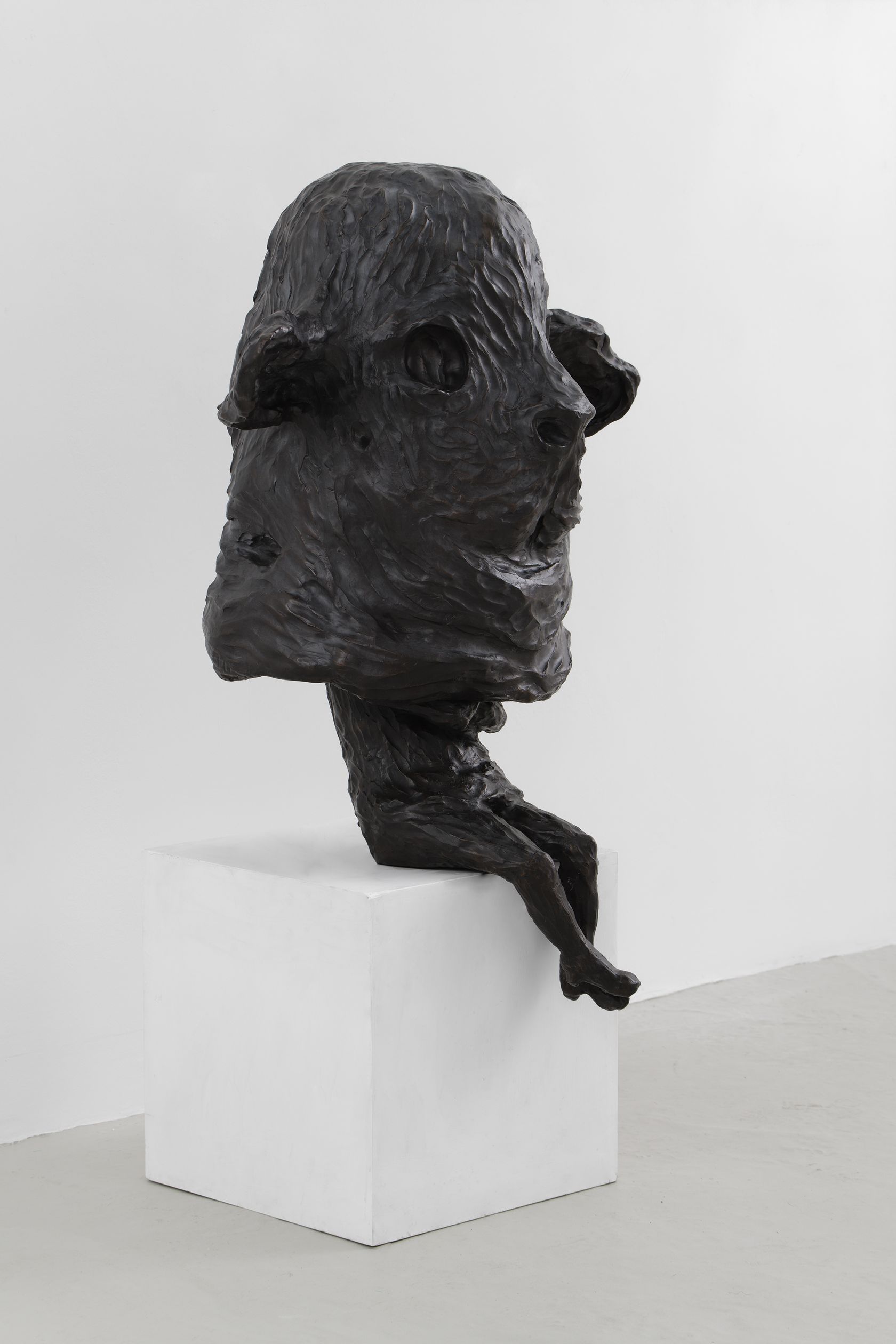
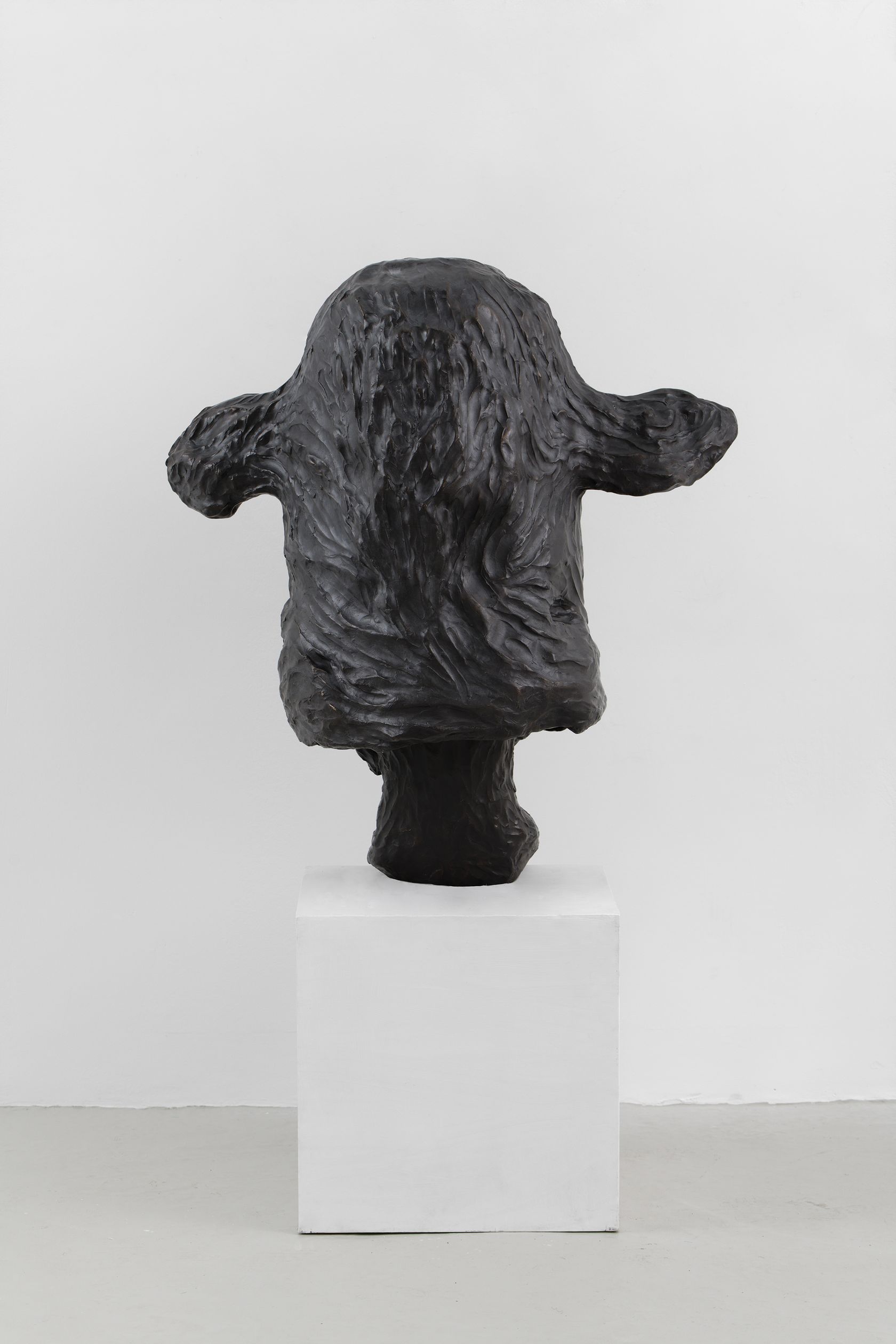
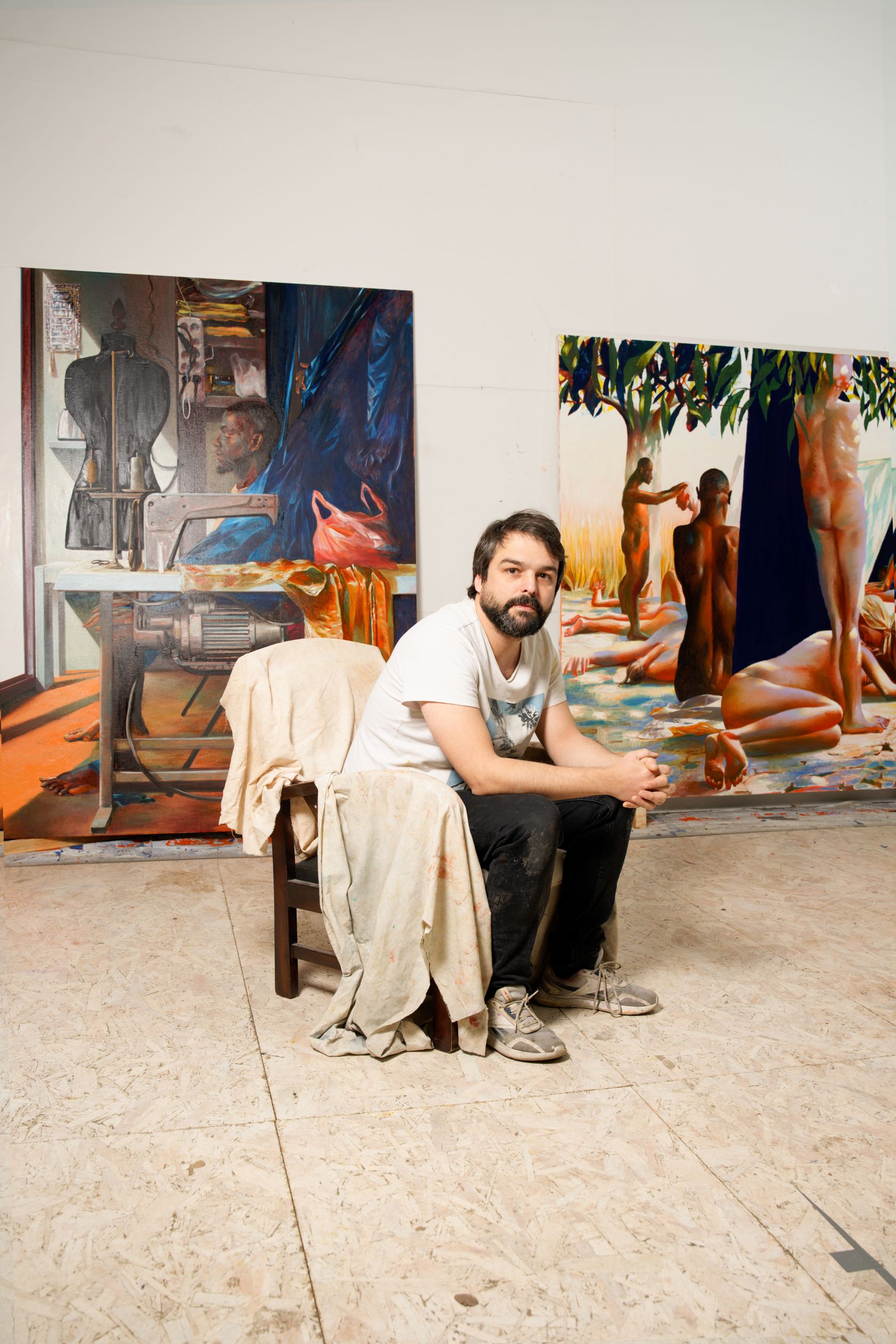
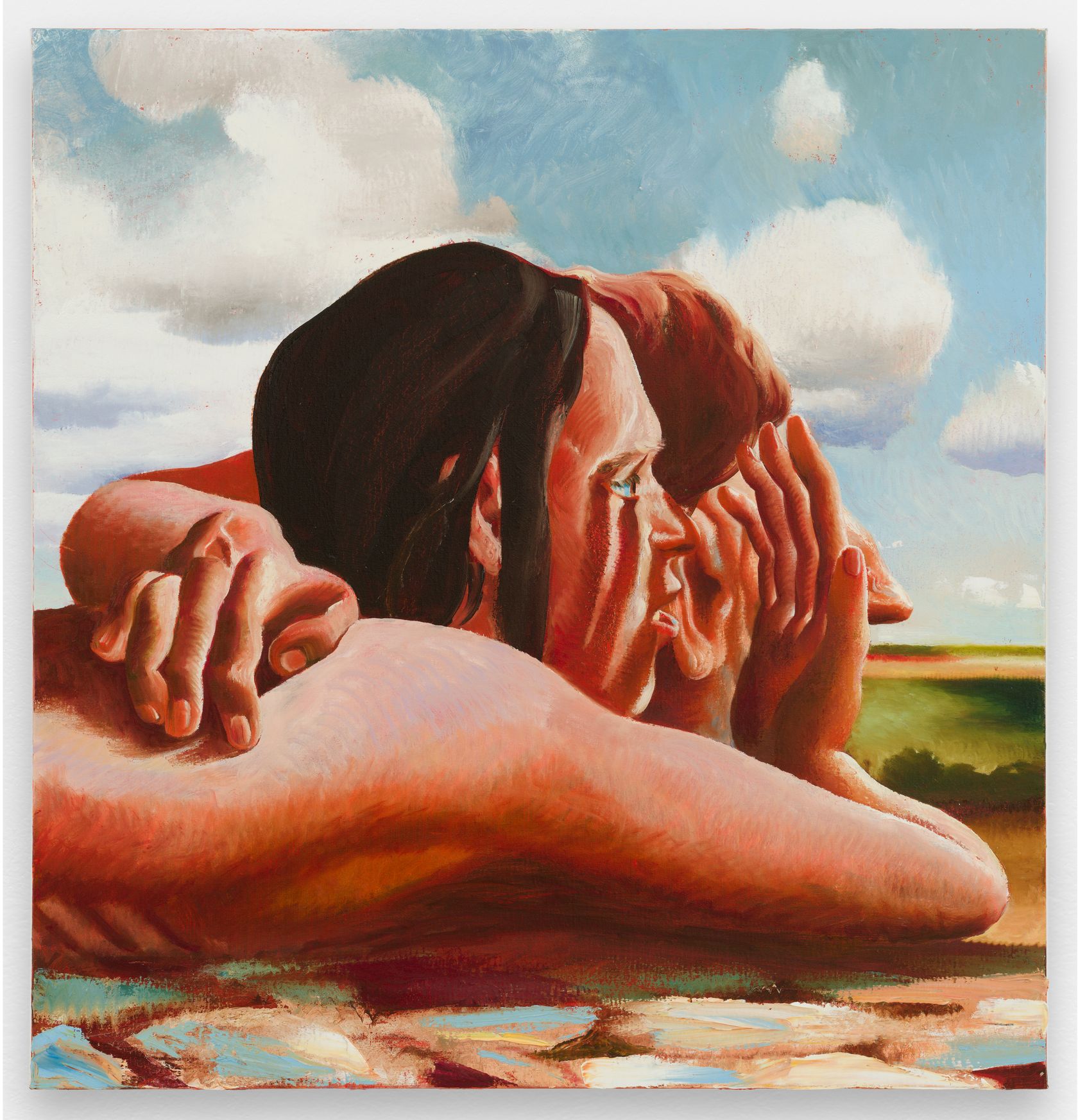
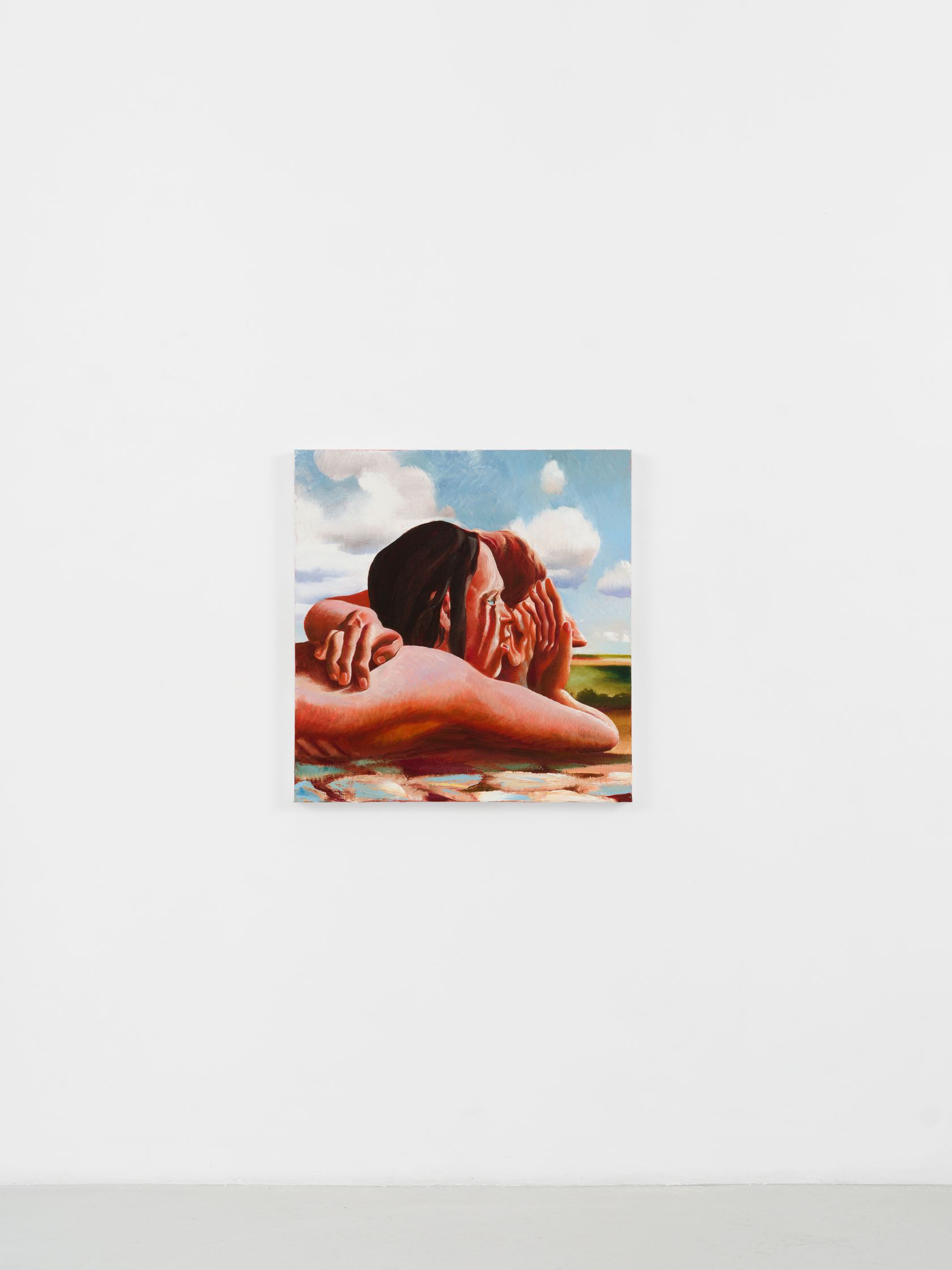
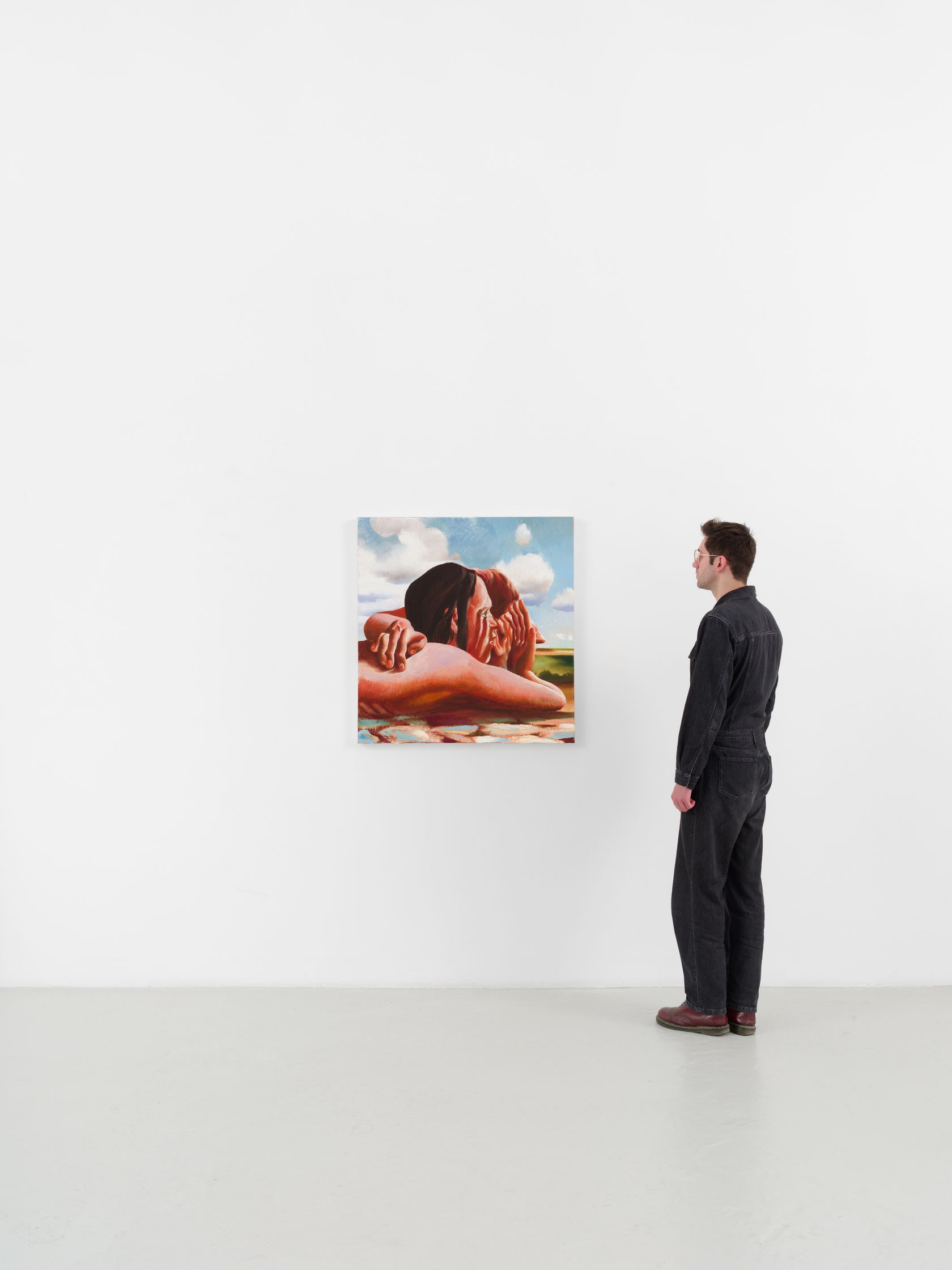
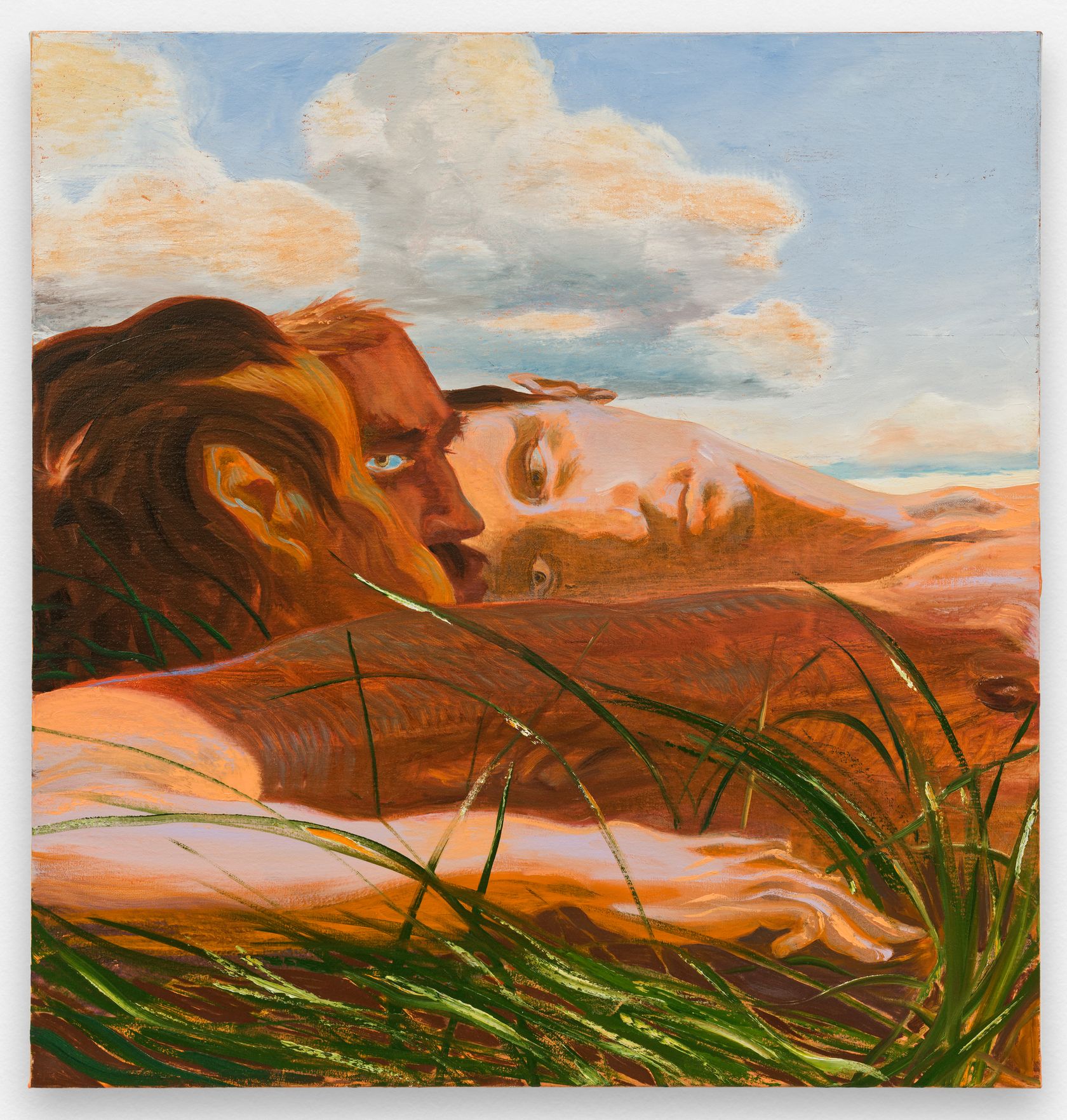
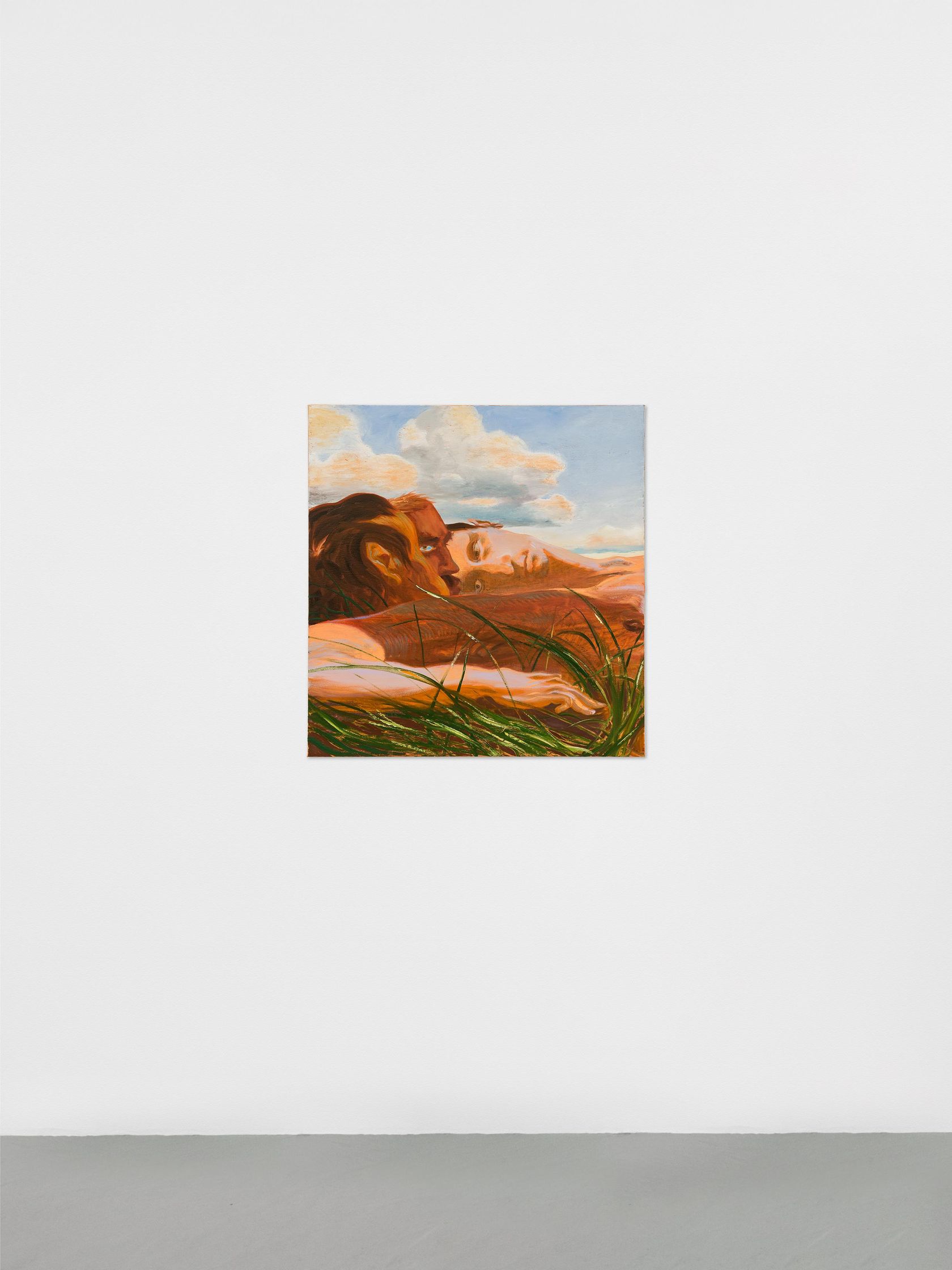
Born in Versailles in 1980, Laurent Proux lives and works in Paris. In his painting and drawing, Laurent Proux produces powerful and original imagery that seeks through his formal choices to resolve the questions raised by his subjects. Described by some as a realist due to the subjects he depicts—industrial machinery, workstations, sexualized bodies, etc.—his style finds its emancipation through his never-ending exploration of pictorial solutions, the integration of aberrations, bringing planes into collision, the use of artificial colors, all freeing his oeuvre from the opposition between figuration and abstraction. He approaches the human form through fragments, exaggeration and the use of silhouettes to create a kind of body-cum-machine, politicized and under assault, often disturbing and occasionally sentimental. His canvases take the form of a stage, in an altered perspective and the artist addresses the spectator with a visual and intellectual enigma running through the image.
Laurent Proux’s first institutionnal solo exhibition took place at the Musée de l’Abbaye in Saint-Claude (FR) in 2025. His oeuvres are included in the collections of the National Center for Visual Arts (CNAP), the Occitan, Limousin and Nouvelle-Aquitaine regional contemporary art collections (FRAC) and the Paris Municipal Collection (FMAC). His work has been exhibited at the Mana Contemporary in Chicago (US), the Shanghai Art Museum (CN), the Moscow Center for Contemporary Art (RU), the Musée d’Art Contemporain in Lyon (FR), the Limousin FRAC in Limoges (FR), at the Lieu Commun in Toulouse (FR) and at the Musée d'Art moderne et contemporain de l'Abbaye Sainte-Croix aux Sables-d'Olonne (FR). Laurent Proux was a resident of the Casa de Velázquez in Madrid (ES).
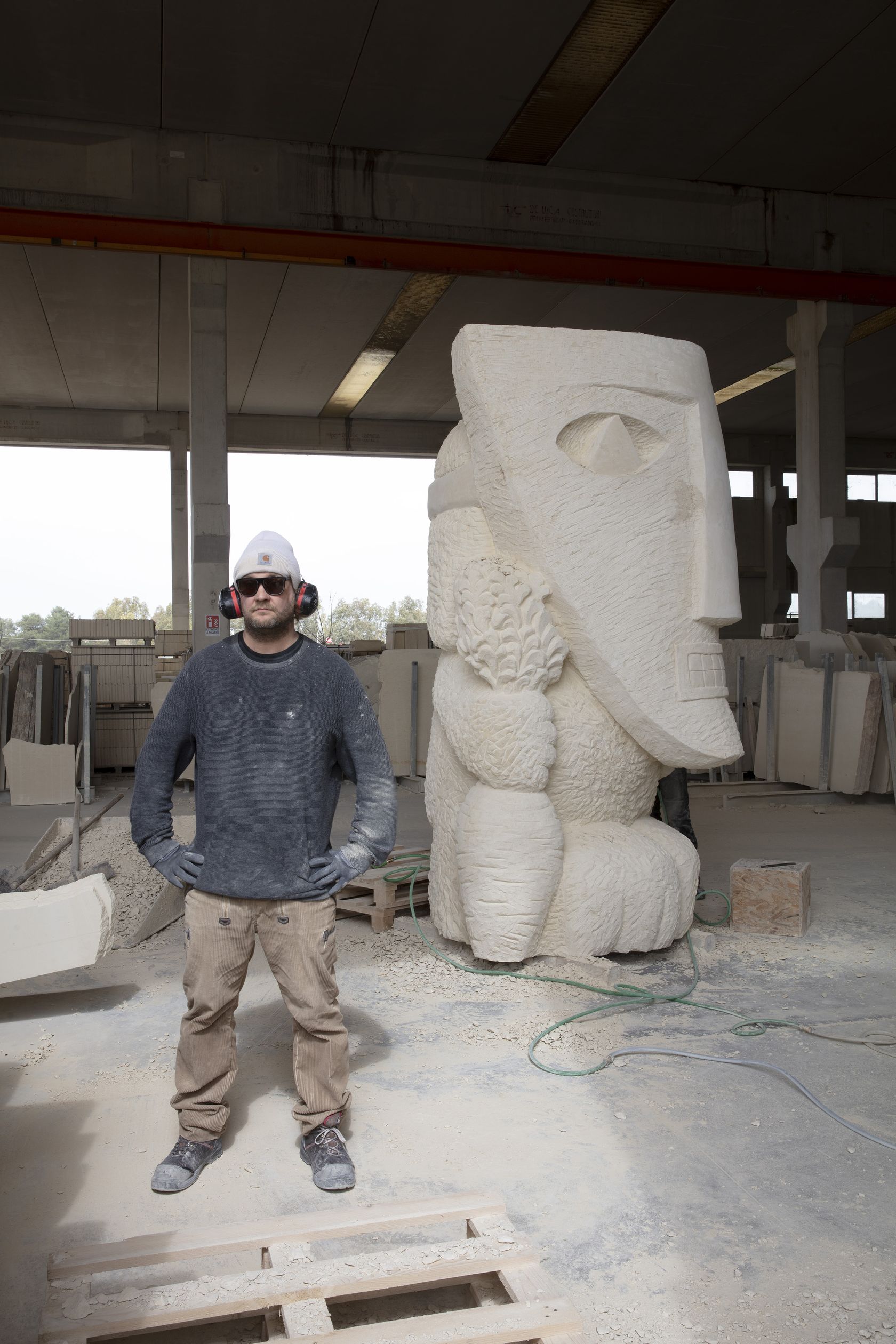
Stefan Rinck’s stone figures form a motley and comical community of, for the most part, animals, chimeras and monsters. They wear costumes and masks; are endowed with particular symbols or characteristics, some bear the names of heroes of Greek mythology or of legend. Rinck’s sculpted figures make up a discordant but related assembly of non-humans: they come from elsewhere, an archaic imaginary world, woven from myths and legends. With his collection of fauna, the artist is using a technique typical of the Middle Ages: sculpting his figures directly from stone.
Rinck’s sculptures remind us of the figures of Roman art, which populate the columns and tympana of churches. These are grotesque figures, in which we recognize the vitalist comedy typical of medieval realism which could be observed during the parades of jesters and buffoons at religious and popular festivities. Yet if the Middle Ages seem to color Rinck’s art, its frame of reference in fact crystalizes around a number of “Gothic” obsessions of the Romantic kind: a taste for mythology and folk tales, for different epochs and cultures for the fantastic or figures of hubris and excess.
Stefan Rinck has had numerous solo exhibitions, most recently at the Pinakothek der Moderne in Munich and the Domaine de Chamarande (2025), as well as group exhibitions at the Musée d’Art Moderne in Paris and the MAC Marseille (2024). He has also exhibited at international fairs and biennials, including Art Basel Paris, the Artzuid Sculpture Biennial in Amsterdam (2025) and FIAC Hors les murs at the Tuileries (2019). One of his sculptures is on permanent display in Paris since 2018 (Beaupassage). In 2019, he was selected among 100 Sculptors of Tomorrow, published by Thames & Hudson.
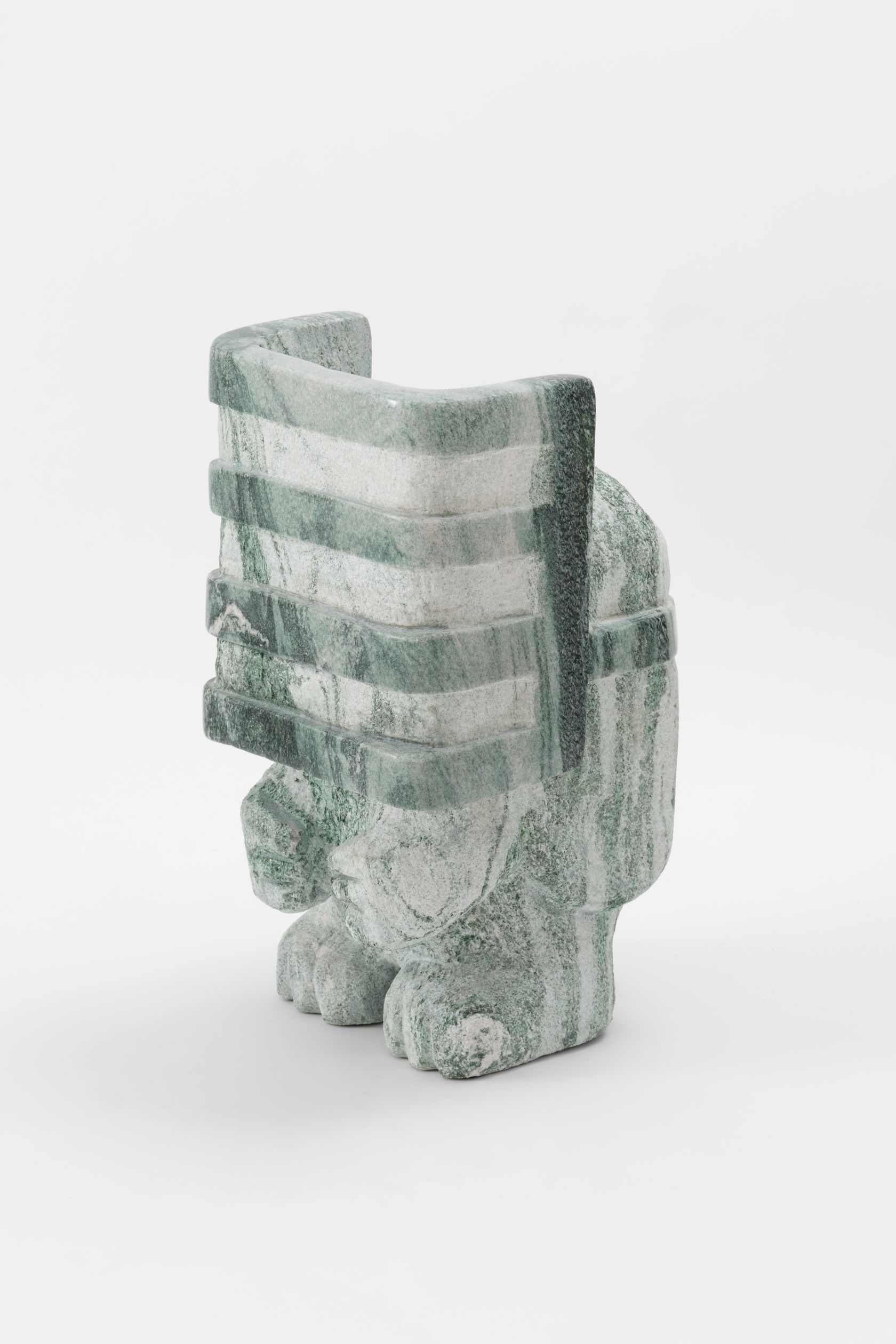
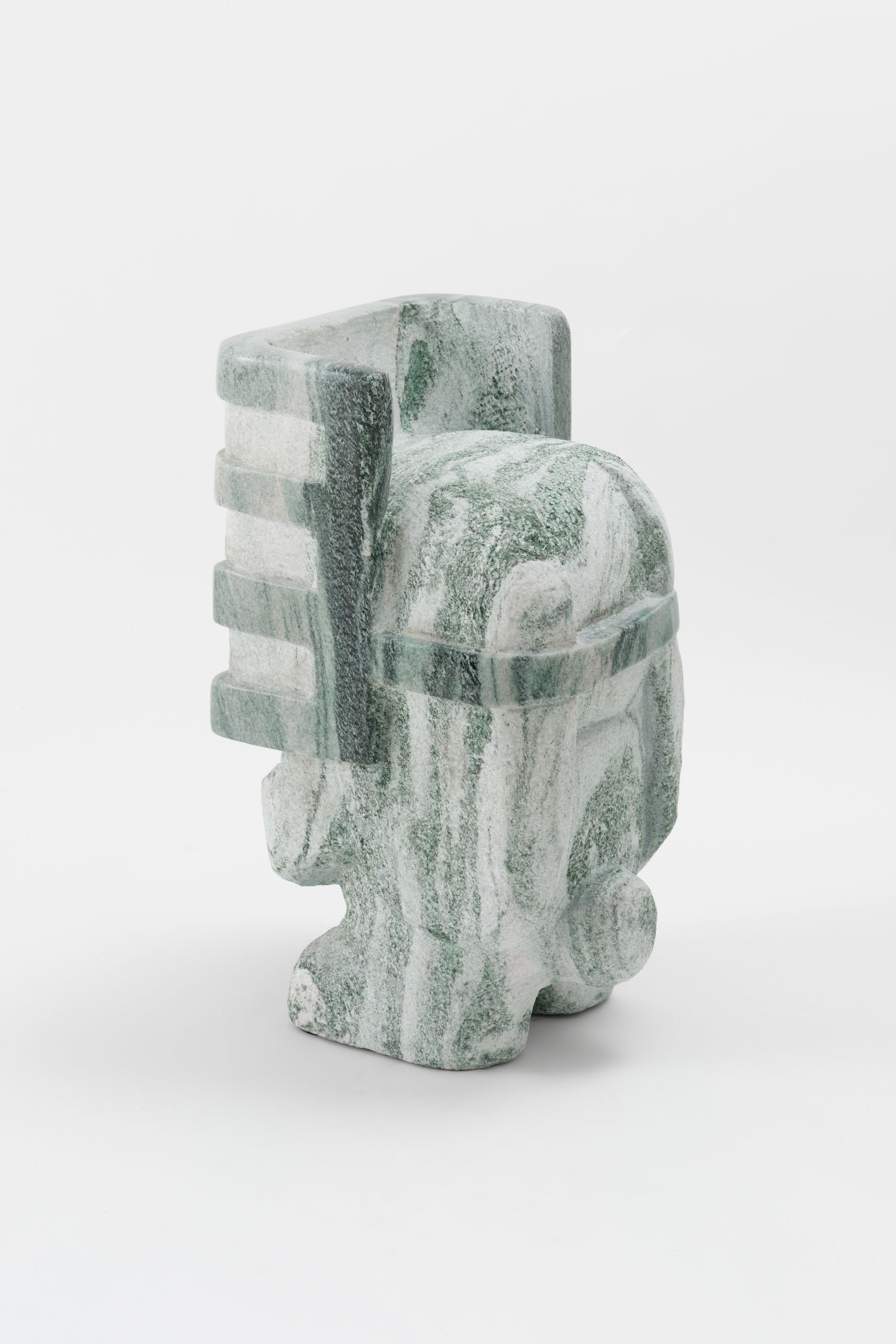
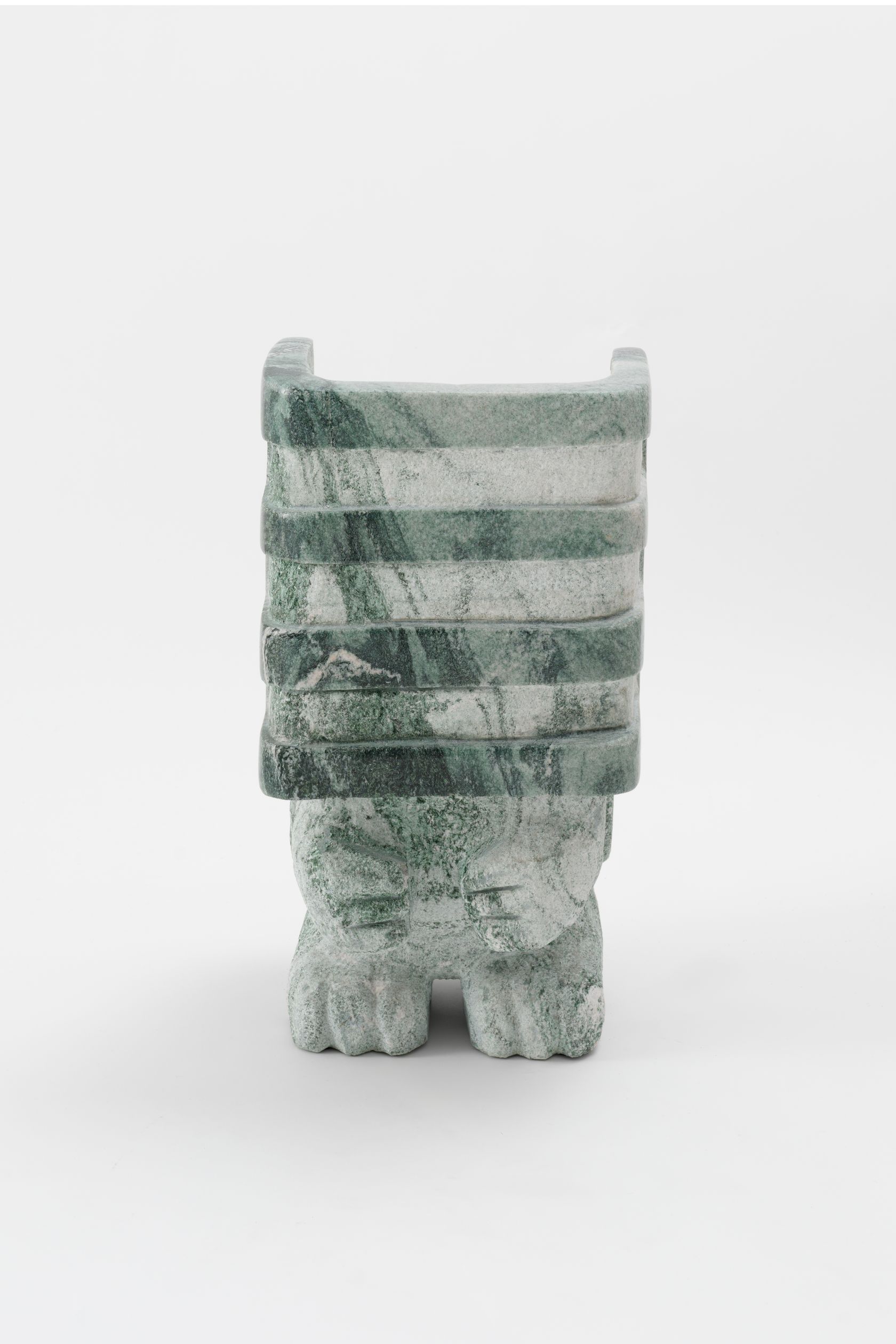
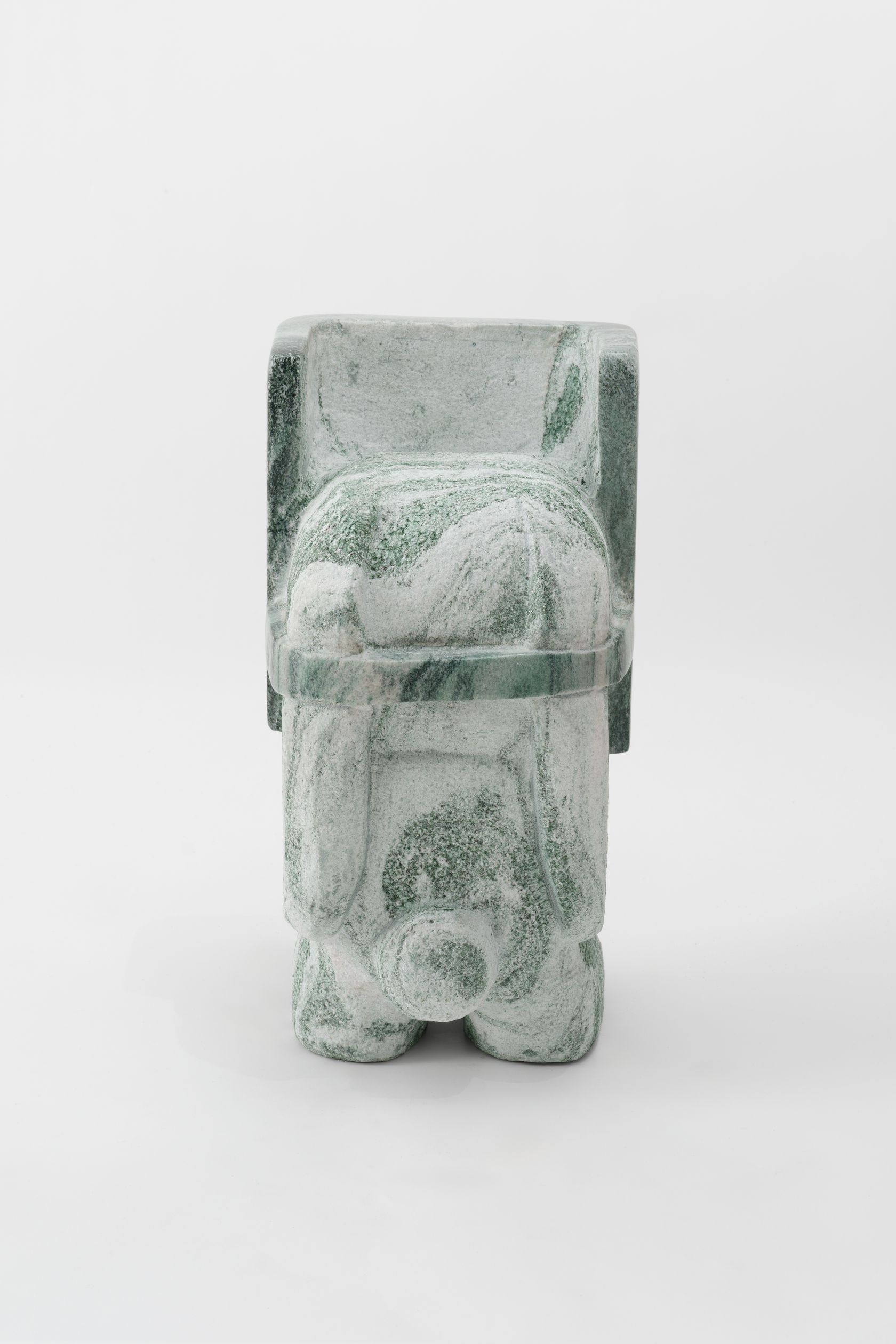
- Stefan Rinck
- Der Kelte , 2025
- Quartzite, Atlantis
-
- 47.5 ×
- 25 ×
- 28 × cm
- 18 11/16 ×
- 9 13/16 ×
- 11 × inches
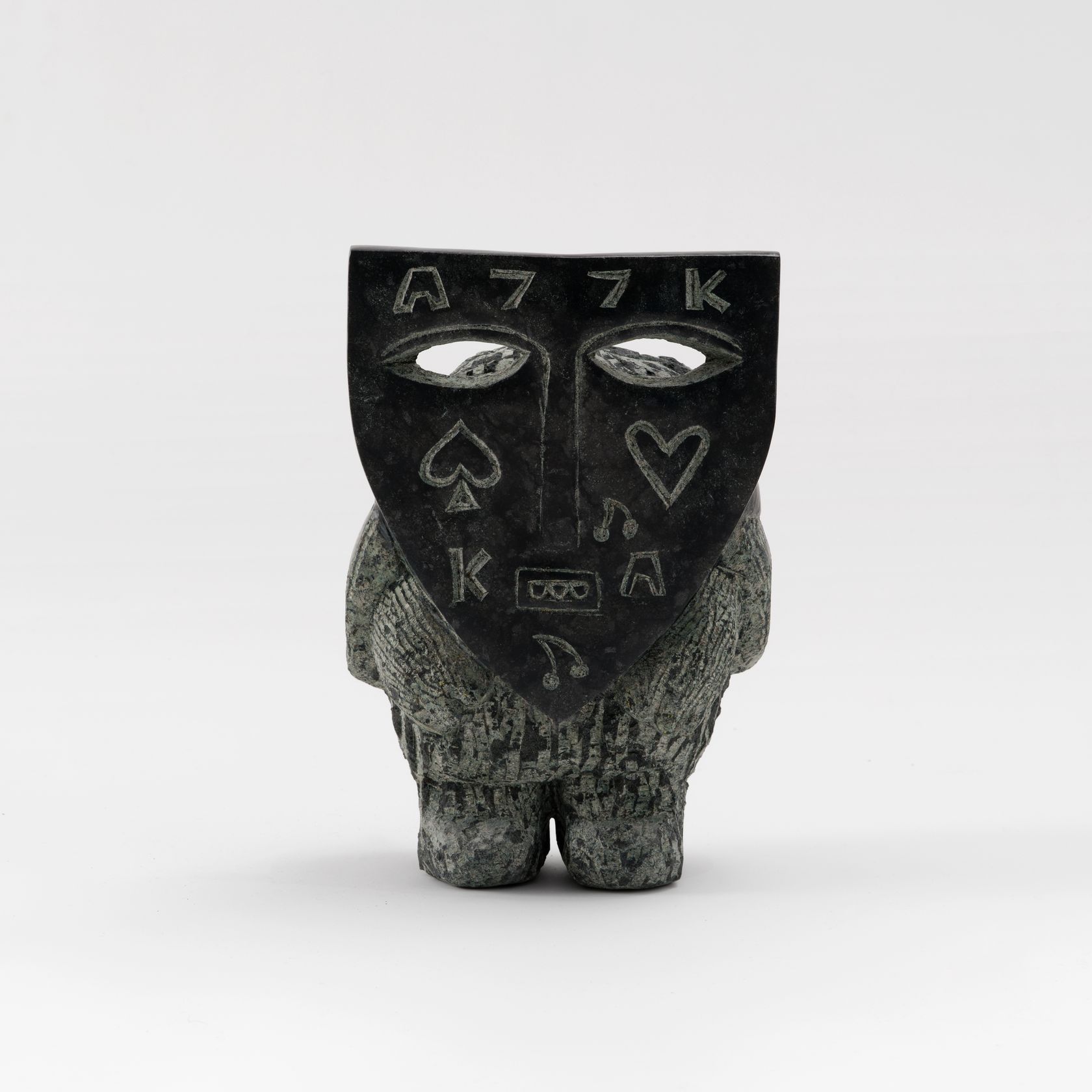
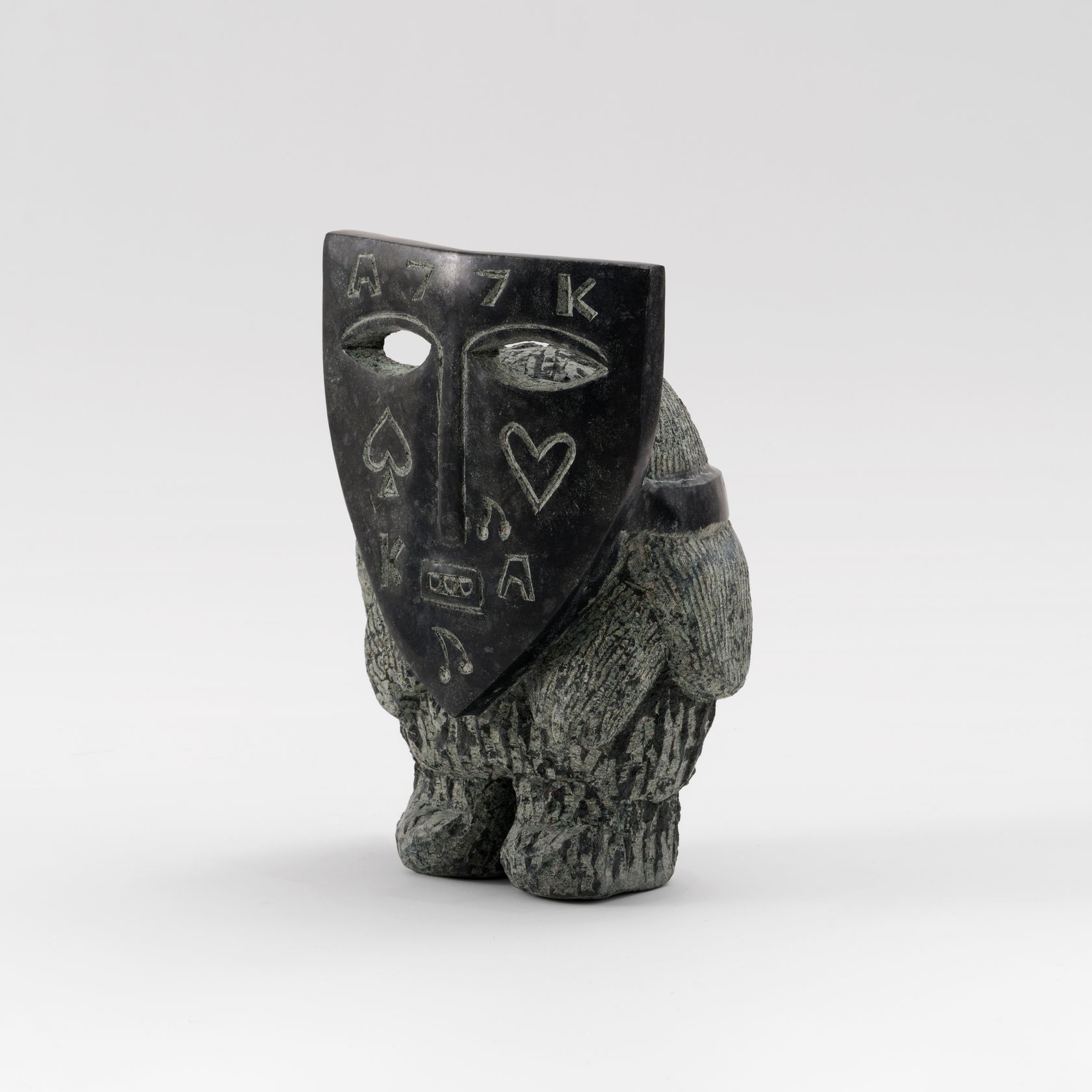
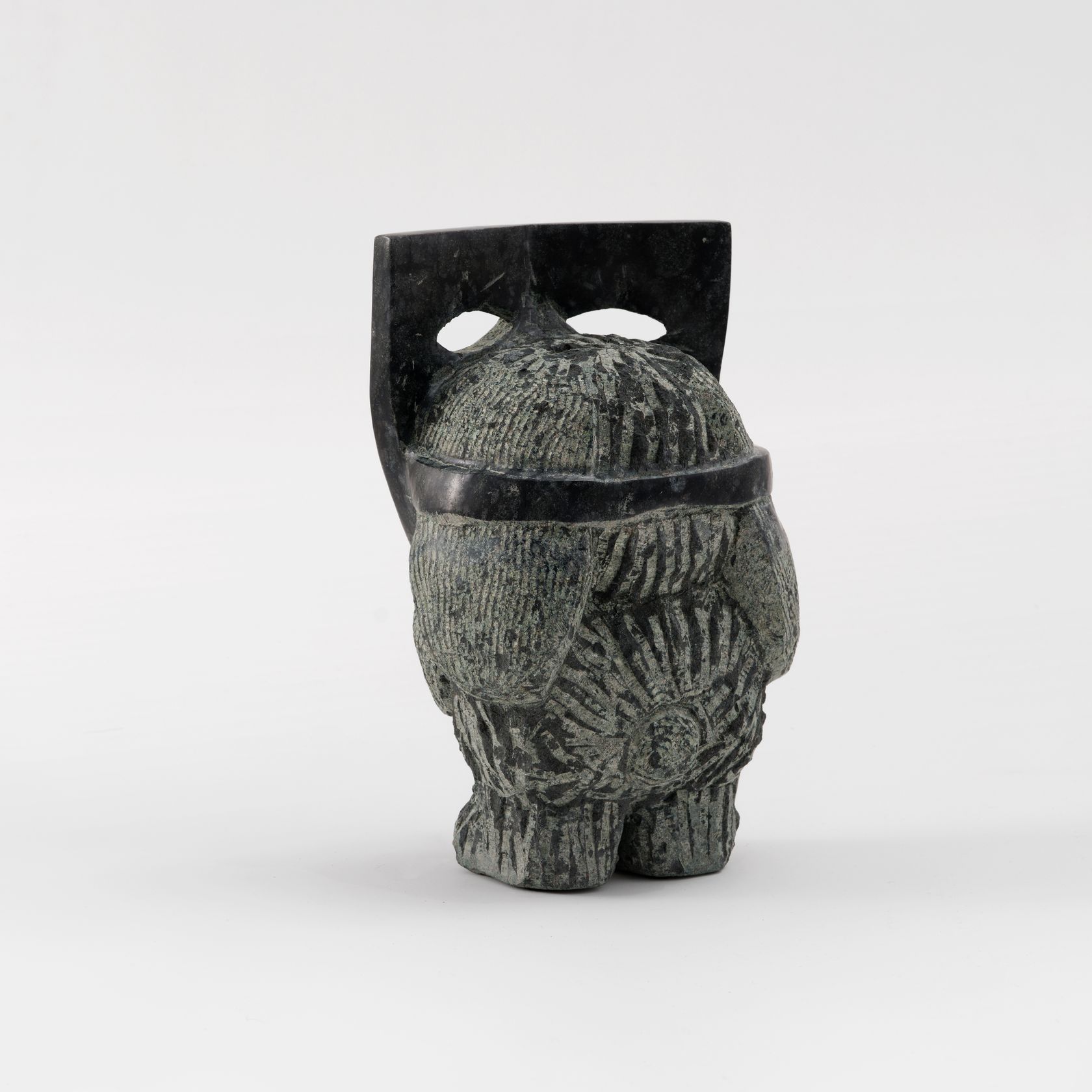
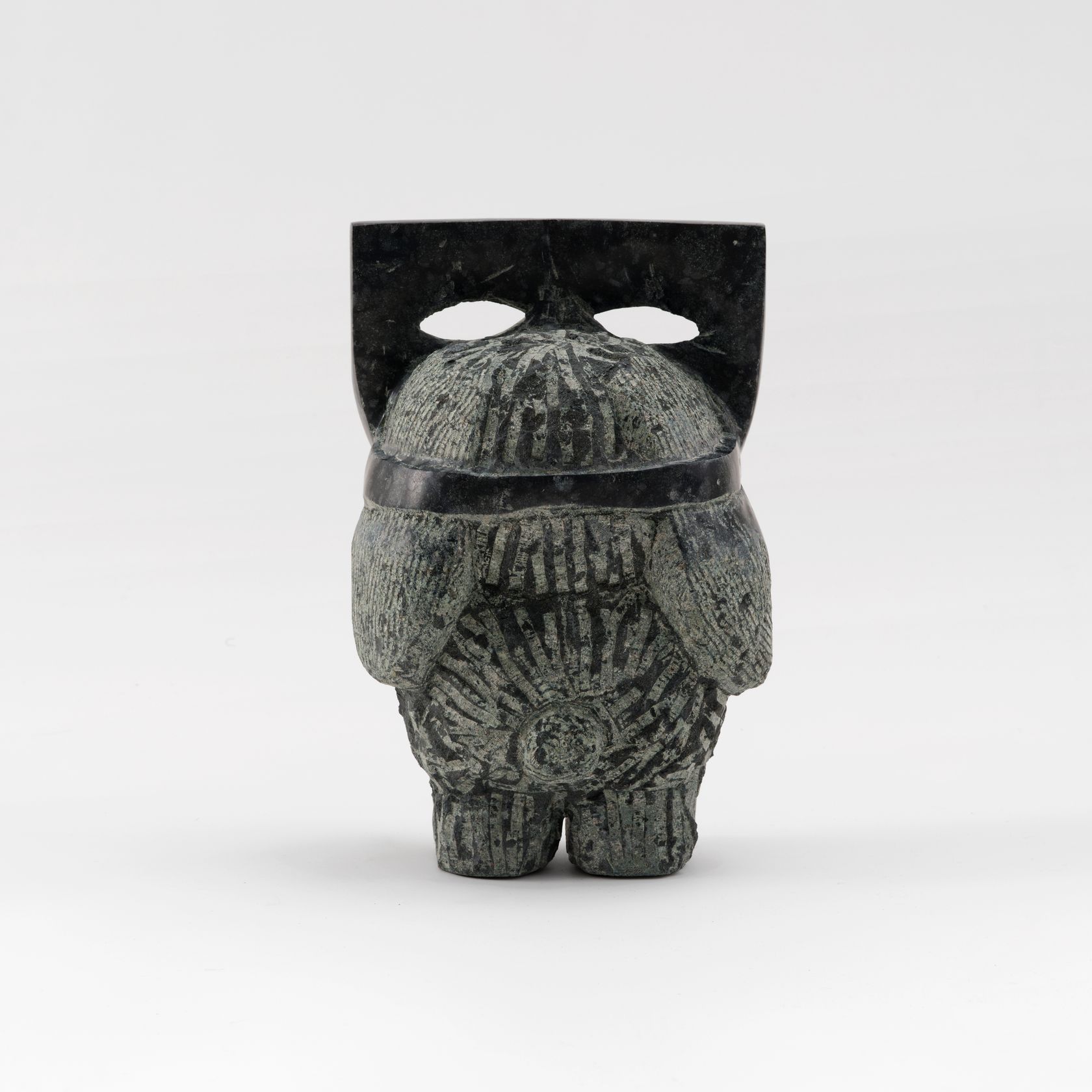
- Stefan Rinck
- The Gambler , 2025
- Diabase
-
- 34 ×
- 23 ×
- 15 × cm
- 13 3/8 ×
- 9 1/16 ×
- 5 7/8 × inches
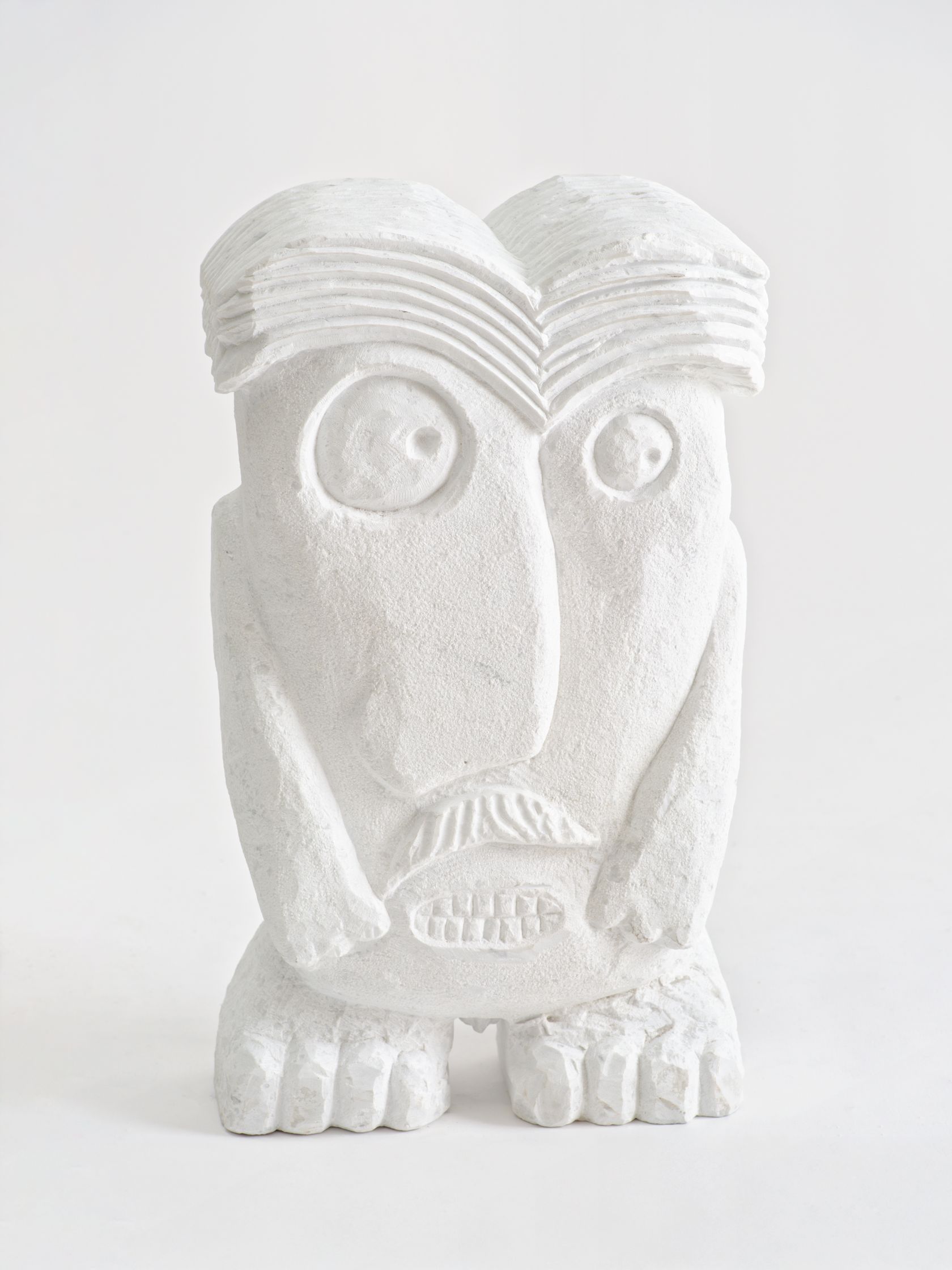
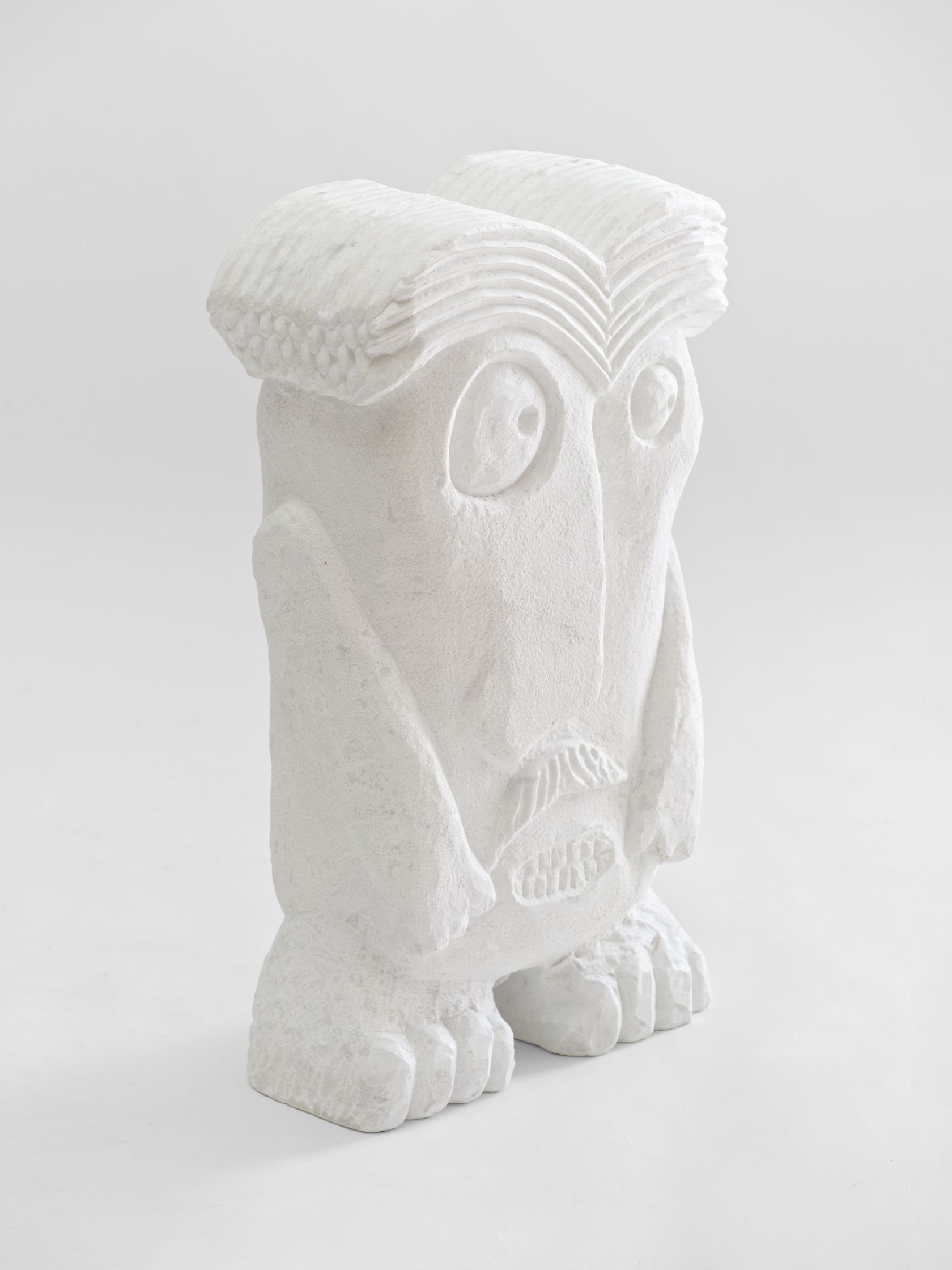
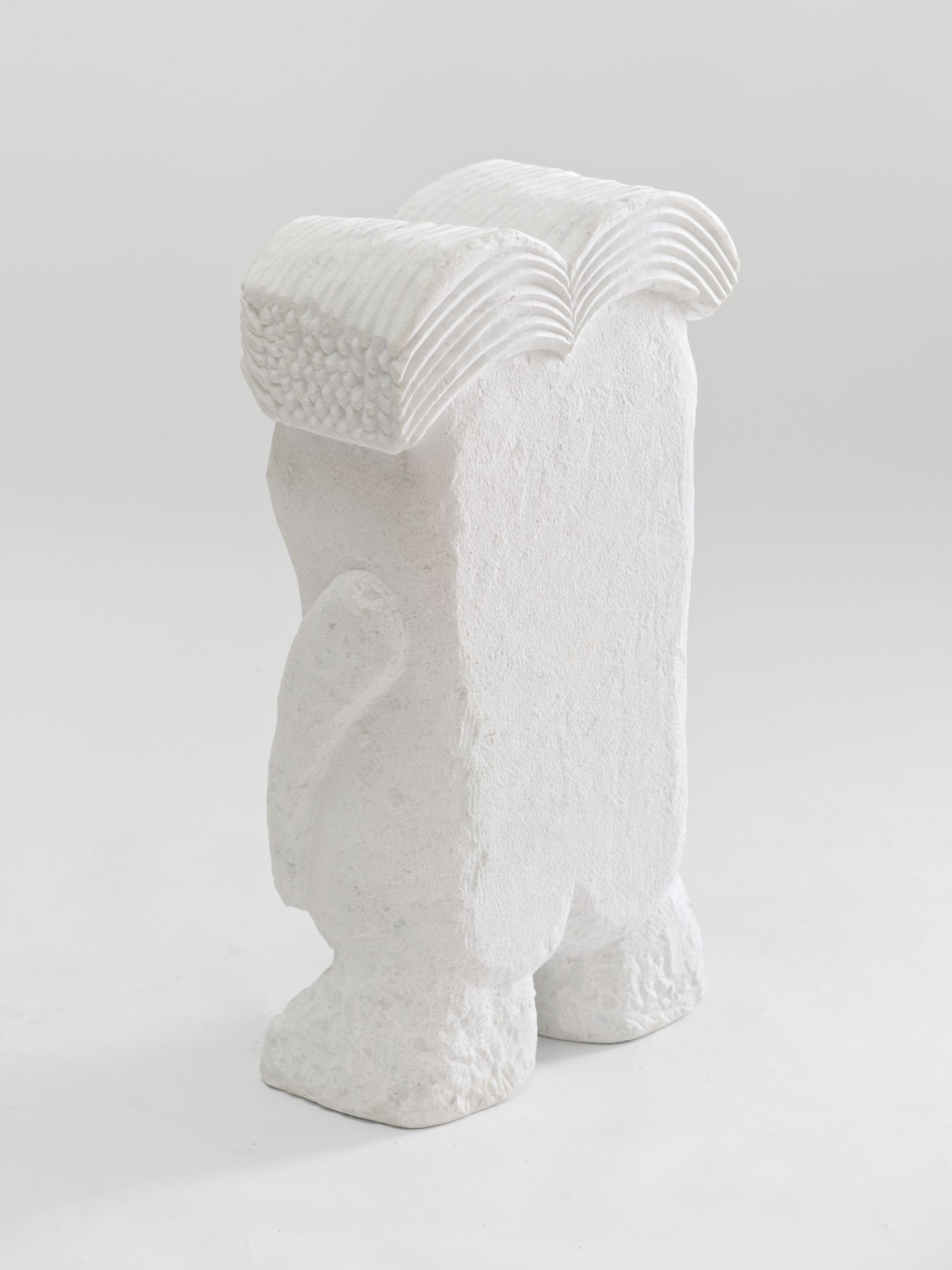
- Stefan Rinck
- Bookhead , 2021
- Marble
-
- 65 ×
- 37 ×
- 18 × cm
- 25 9/16 ×
- 14 9/16 ×
- 7 1/16 × inches
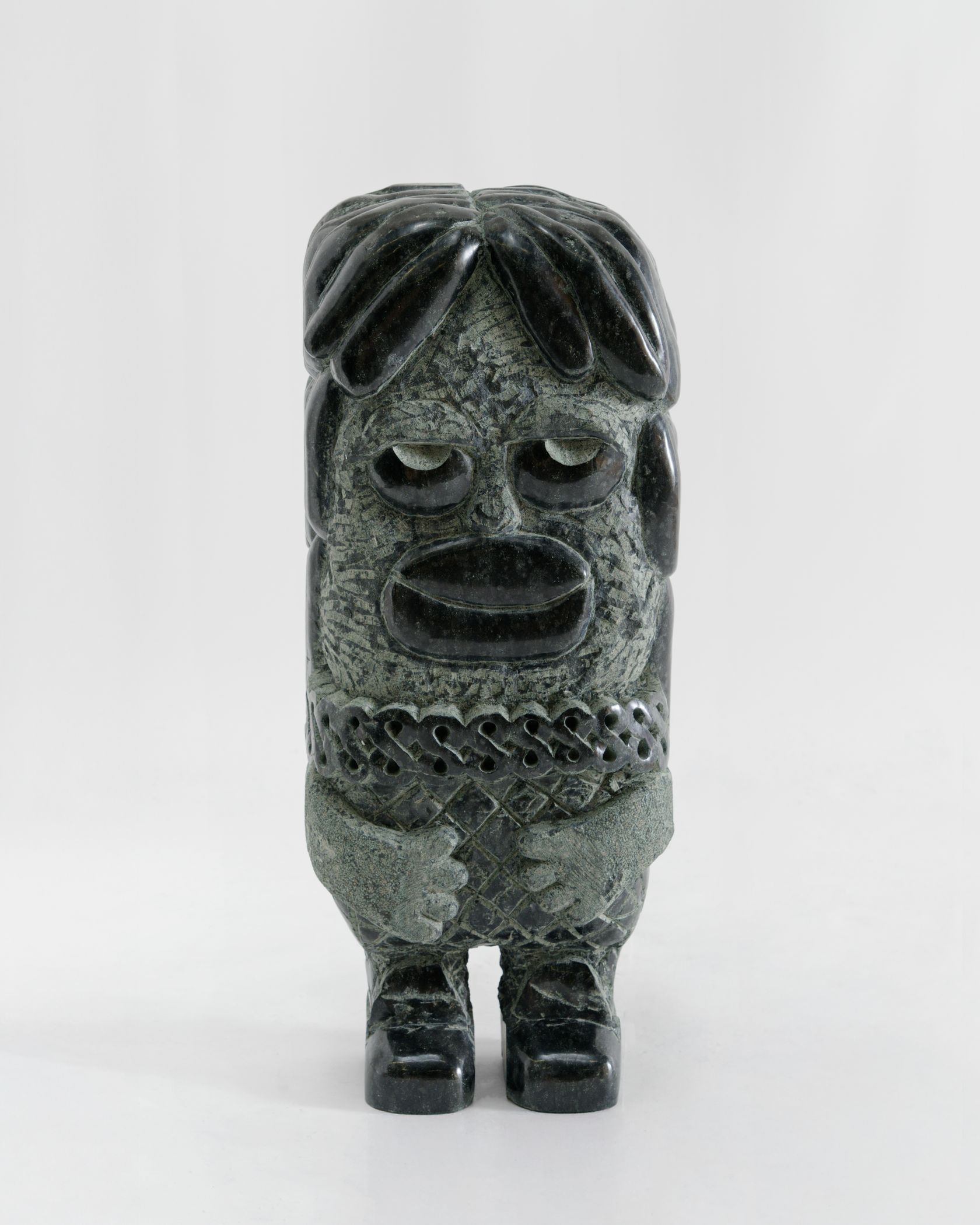
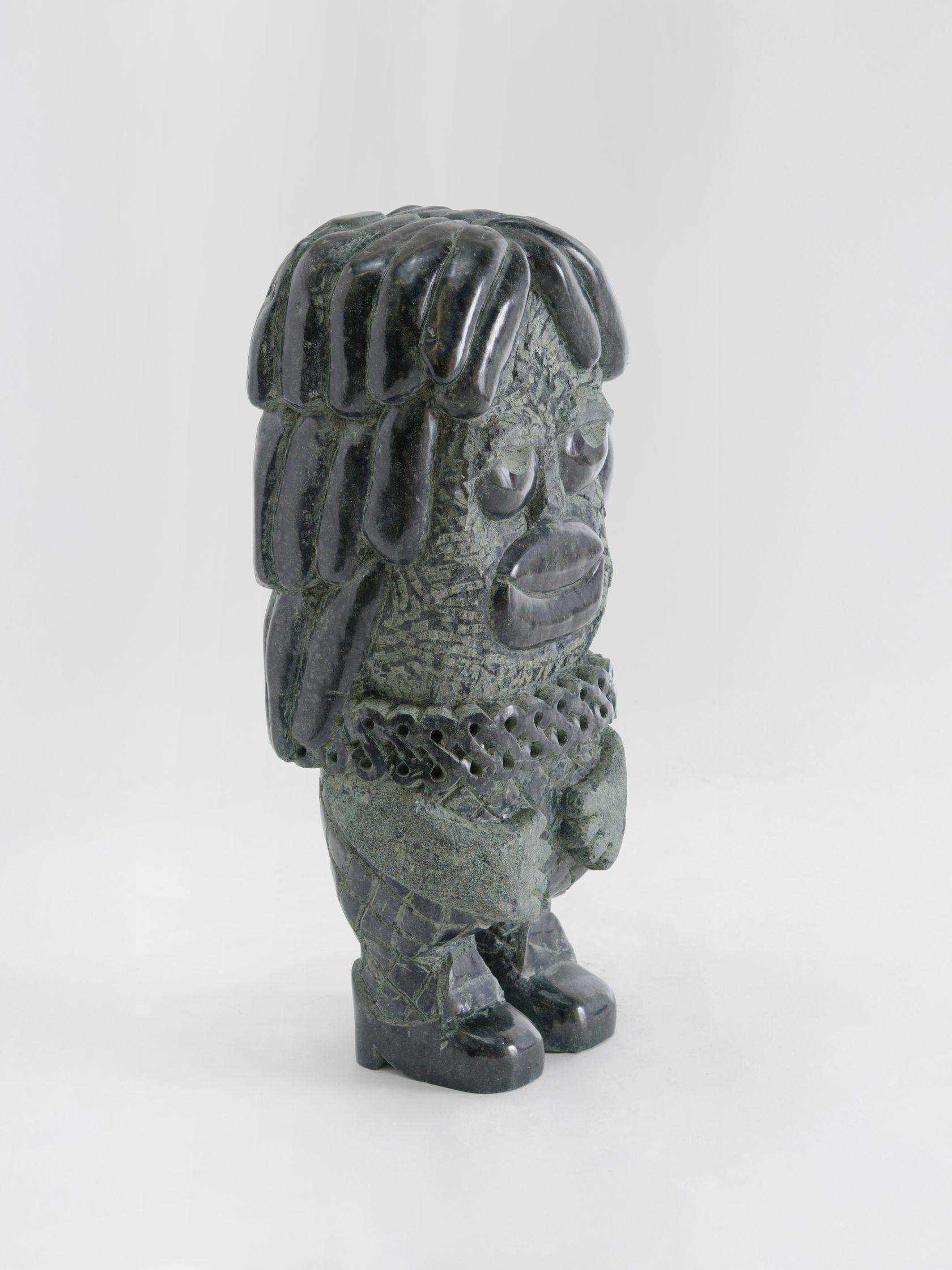
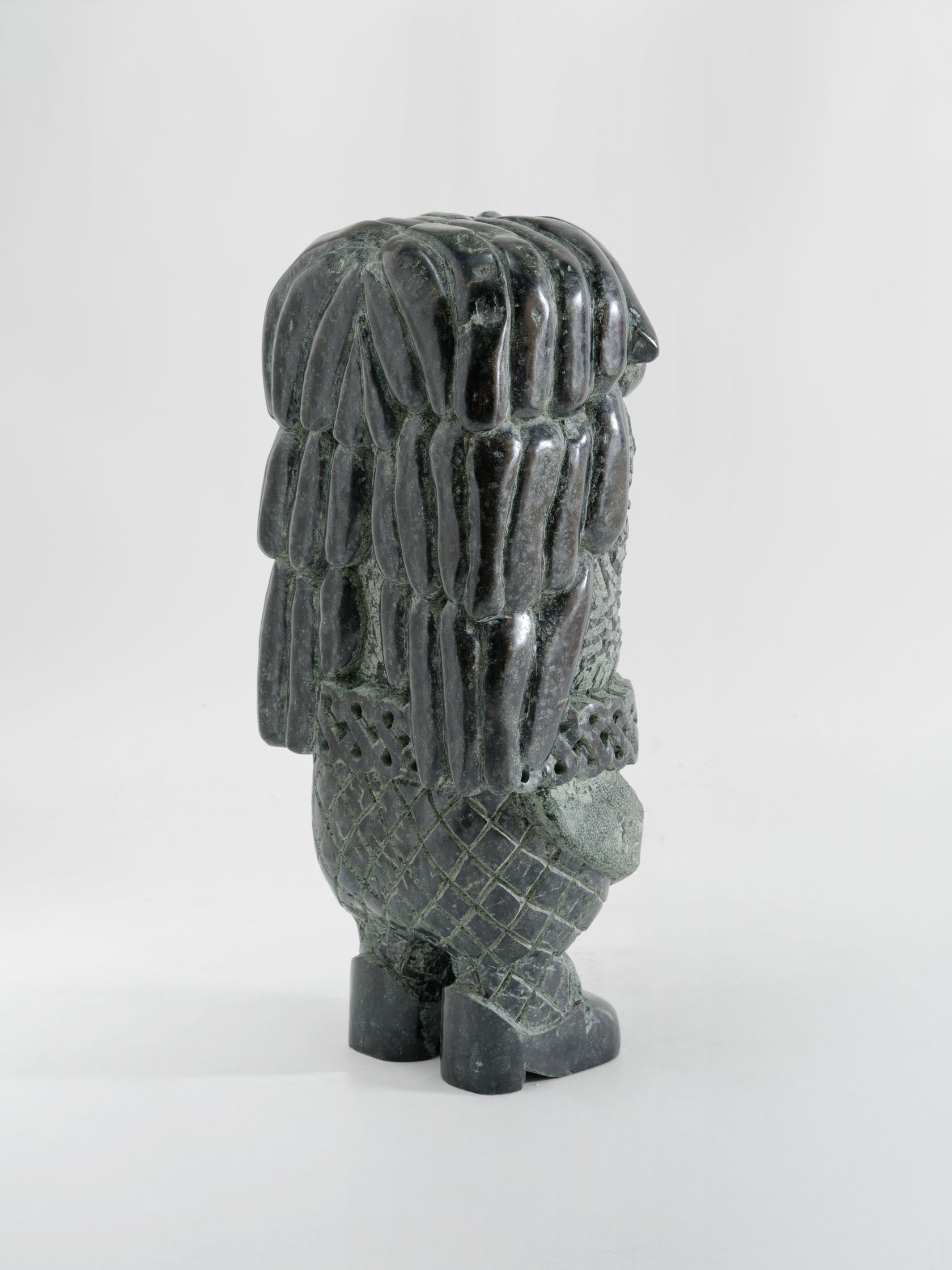
- Stefan Rinck
- Chevalier de Betoncourt , 2022
- Diabase
-
- 78 ×
- 32 ×
- 23 × cm
- 30 11/16 ×
- 12 5/8 ×
- 9 1/16 × inches
Xie Lei chose painting through personal conviction, as it opens up a pathway towards a language capable of expressing his sensory universe and a field of experimentation that allows him to delve into the specificity of this medium in the contemporary world. His work always starts with a basis in reality before taking flight to explore uncertain or ambiguous realms that are transformed by his imagination. Most of his paintings refer to murky or disturbing situations, discreetly linked to literary or cinematographic memories or drawn from a profound crucible of personal emotions. His work dwells on the complexity of events and situations and above all their ambiguity and the tensions they foster. His recent painting intrigues through its exploration of a world in-between sleep and death. The colors are somber but shift towards the luminous and the powerful. Xie Lei’s painting is singular in that it offers up an alternative perception of time: in a salutary manner, it suggests a slowing of the spectator’s gaze and an escape from the intoxicating world of immediacy and constant acceleration.
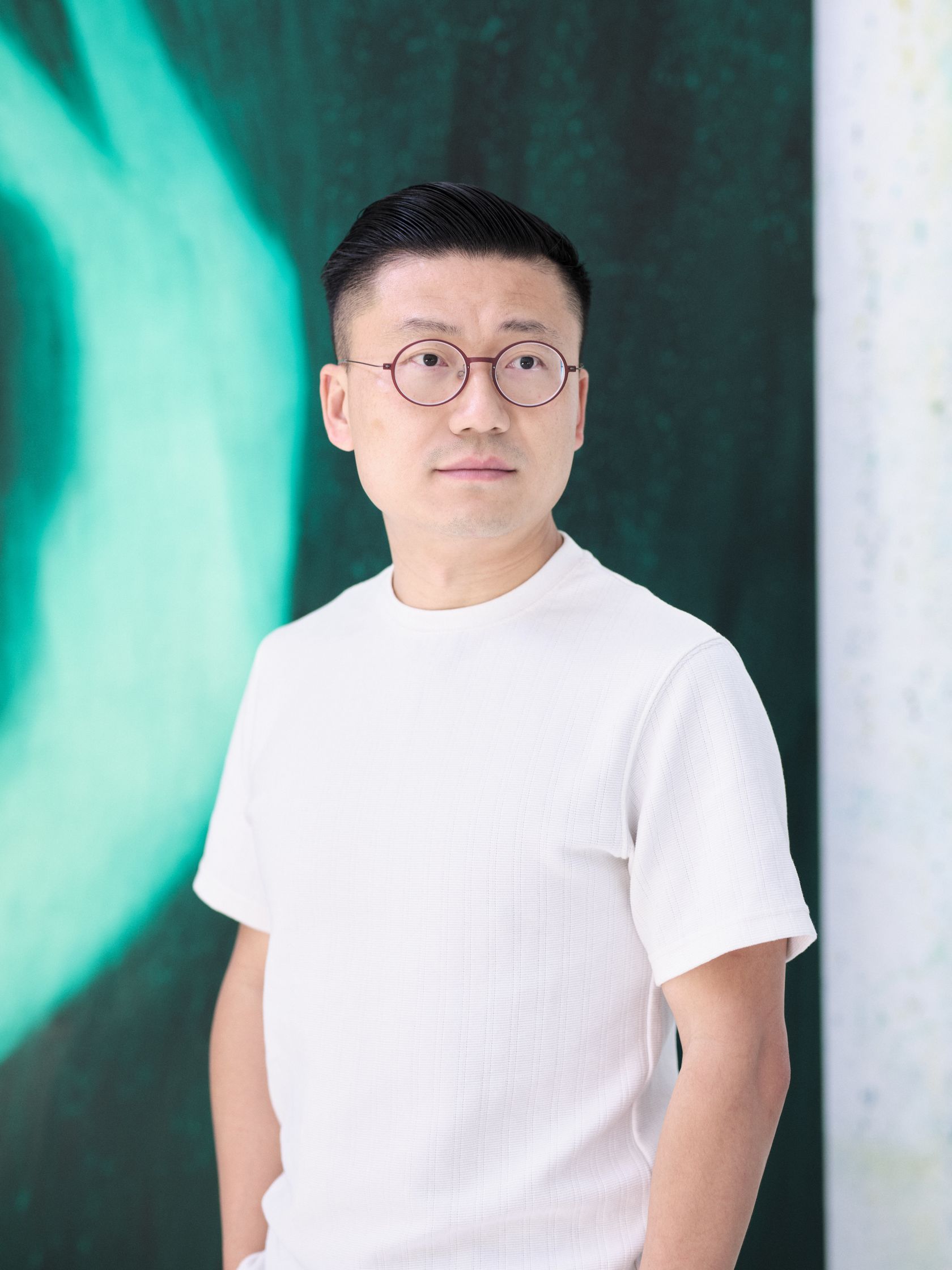
Xie Lei (b. 1983 in China) has lived and worked in Paris since 2006. He graduated from the CAFA in Beijing then the ENSBA in Paris. He is the winner of the 2025 Marcel Duchamp Prize. His works have been exhibited in numerous institutions: Louis Vuitton Foundation, Paris (FR); MO.CO, Montpellier (FR); CAPC, Bordeaux (FR); Villa Noailles, Hyères (FR); Collection Lambert, Avignon (FR); MAC VAL, Vitry-sur-Seine (FR); Langen Foundation, Neuss (DE); Musée National d’Histoire d’Immigration, Paris (FR); Ricard Foundation, Paris (FR). His oeuvres feature in many collections such as the Thyssen-Bornemisza Art Contemporary, MAC VAL, Albertina Museum and X Museum. Xie Lei was resident at the Casa de Velázquez, Madrid (2020-2021) and at the Villa Medici, Roma (2024).
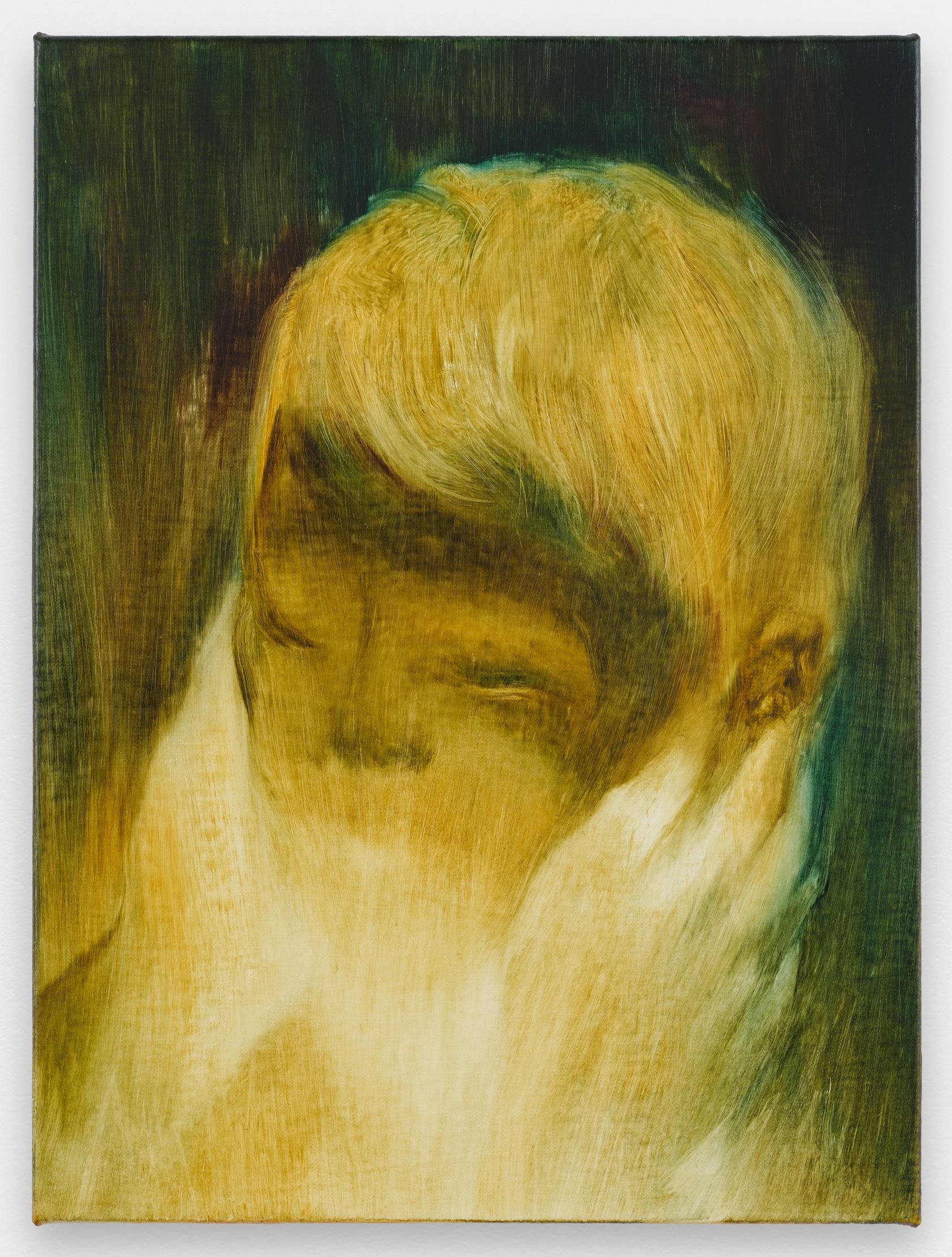
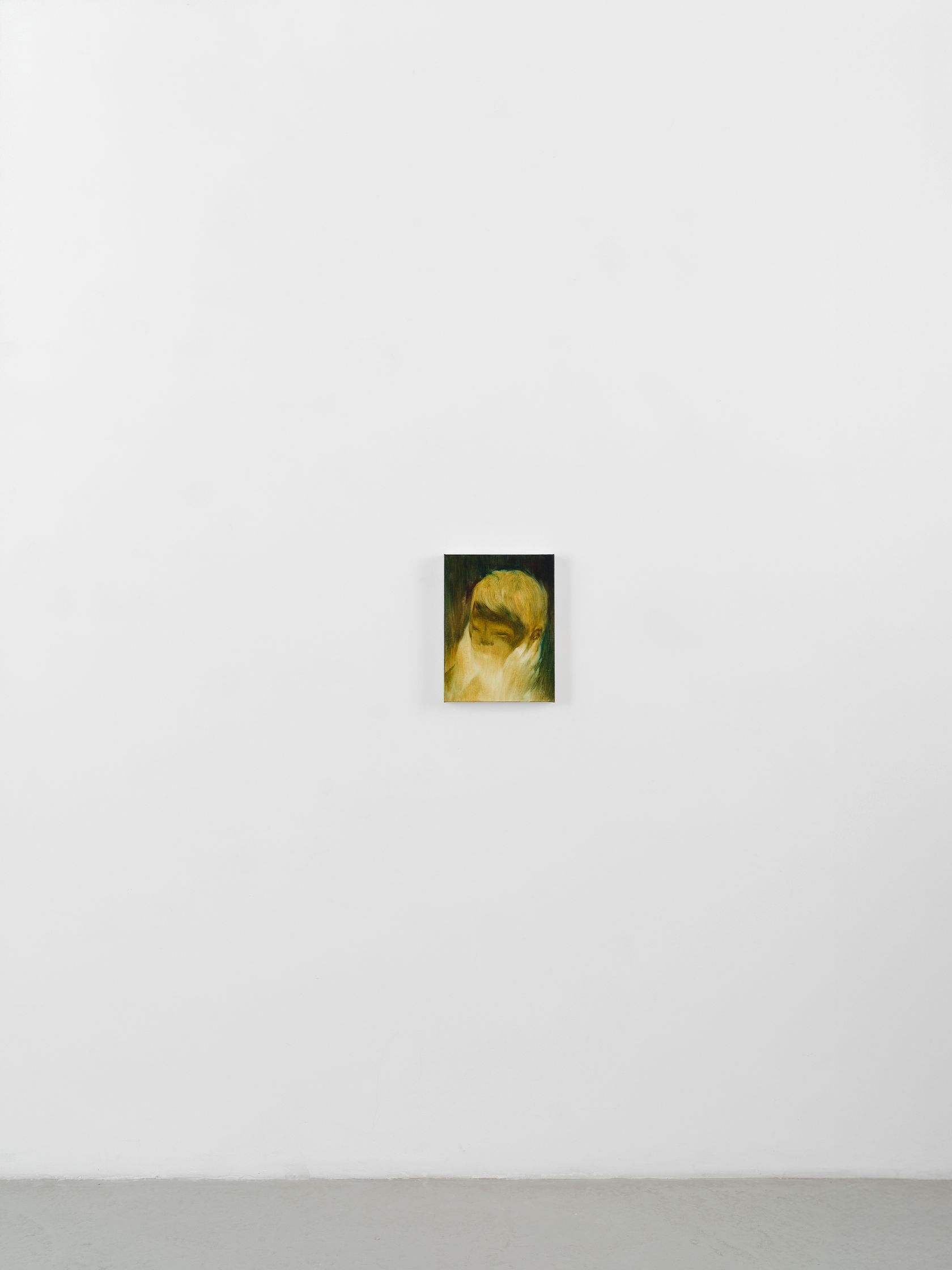
- Xie Lei
- Idol I , 2026
- Oil on canvas
-
- 40 ×
- 30 × cm
- 15 3/4 ×
- 11 13/16 × inches
- unframed
- 42 ×
- 32 ×
- 6 × cm
- 16 9/16 ×
- 12 5/8 ×
- 2 3/8 × in
- framed
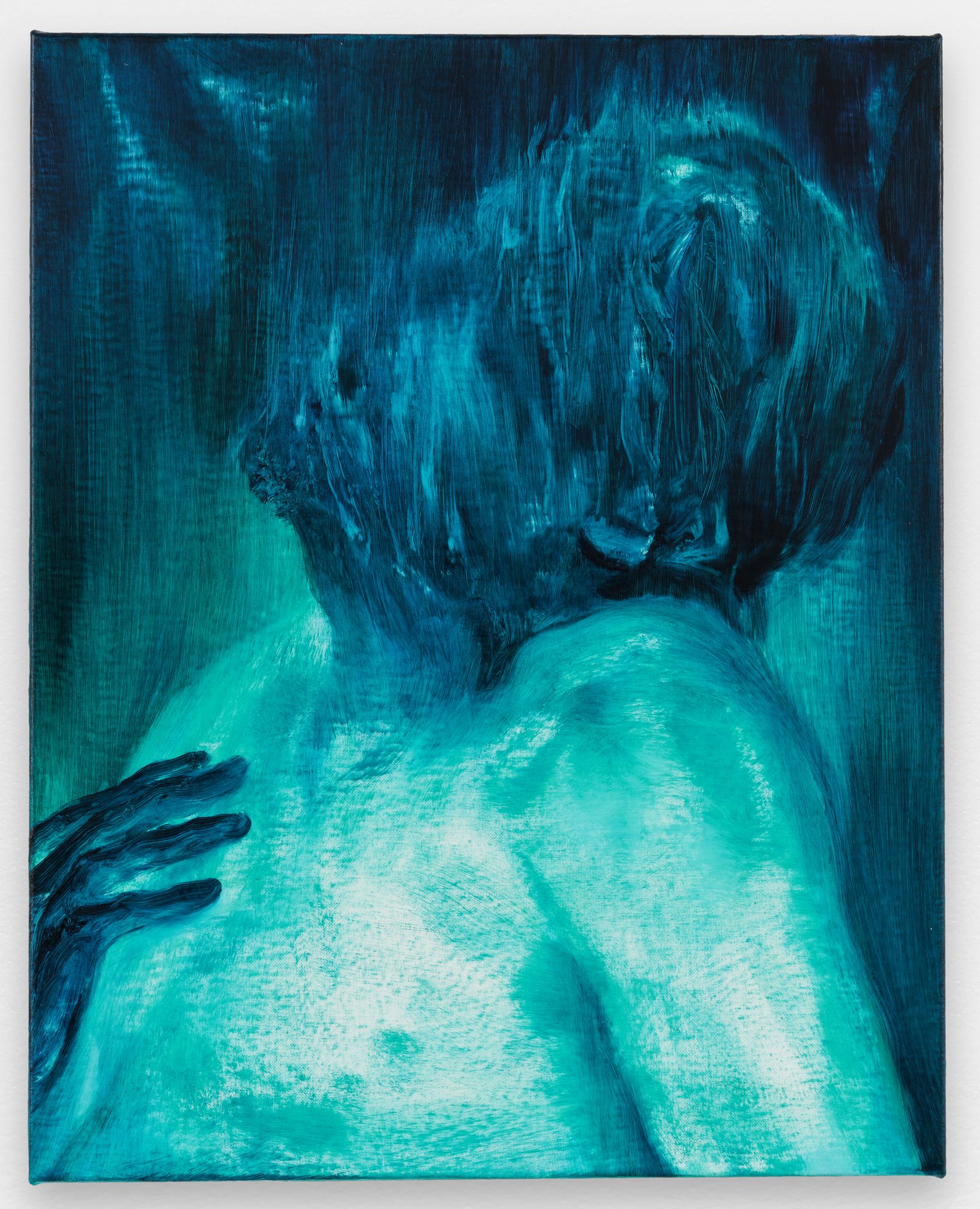
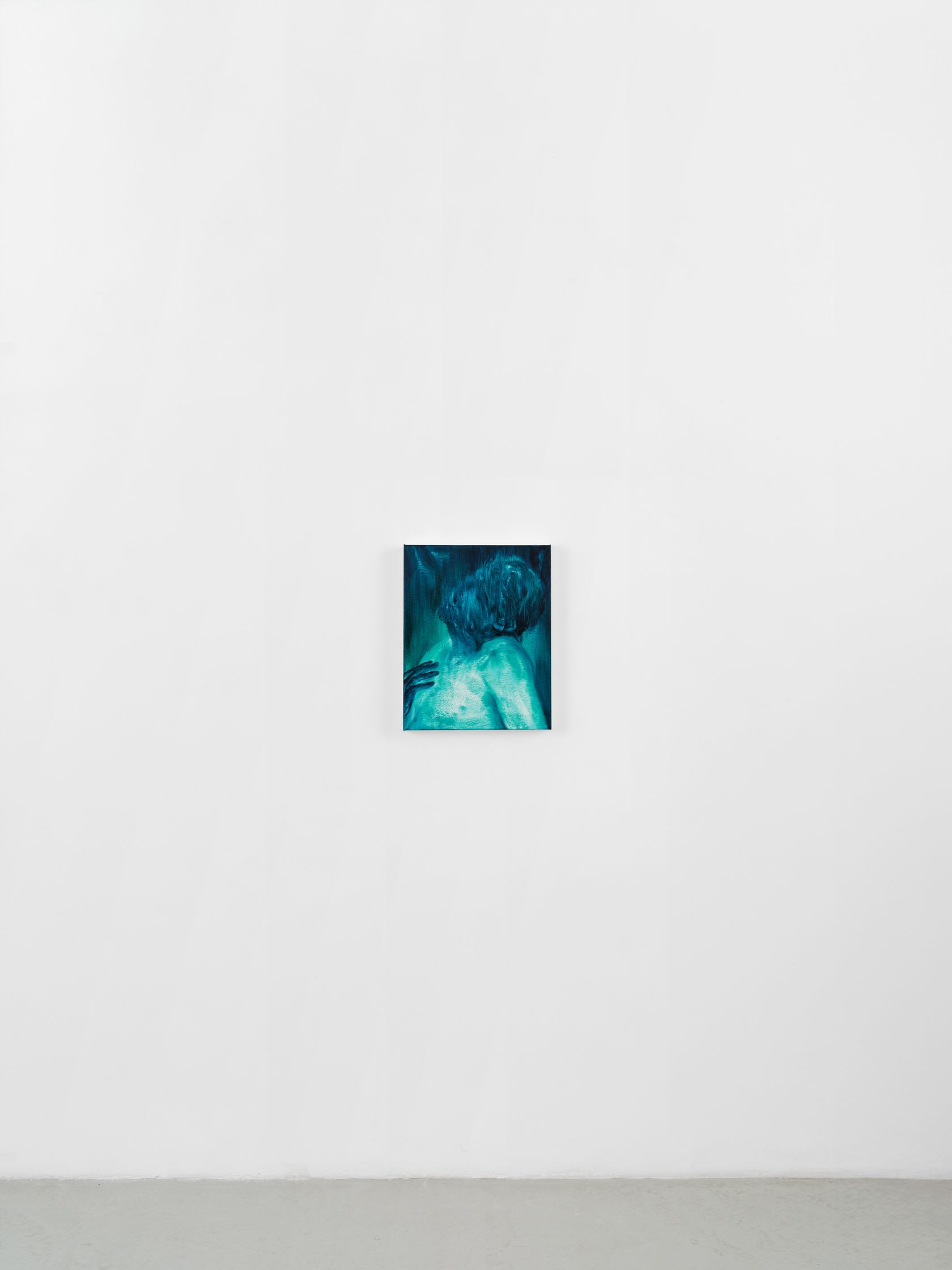
- Xie Lei
- Devotion , 2026
- Oil on canvas
-
- 50 ×
- 40 × cm
- 19 11/16 ×
- 15 3/4 × inches
- unframed
- 52.5 ×
- 42 ×
- 6 × cm
- 20 11/16 ×
- 16 9/16 ×
- 2 3/8 × in
- framed