To learn more about available works, please provide your contact information
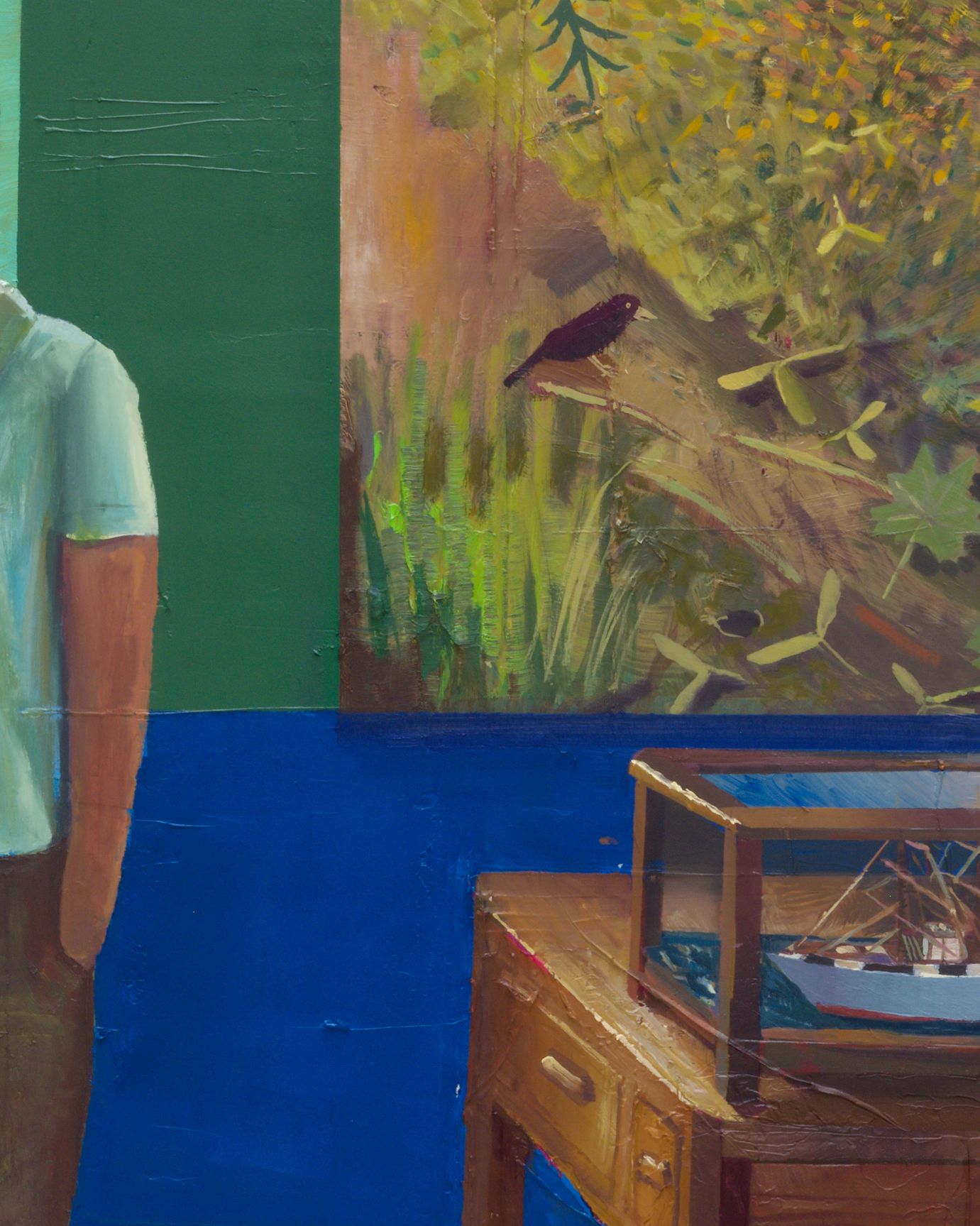
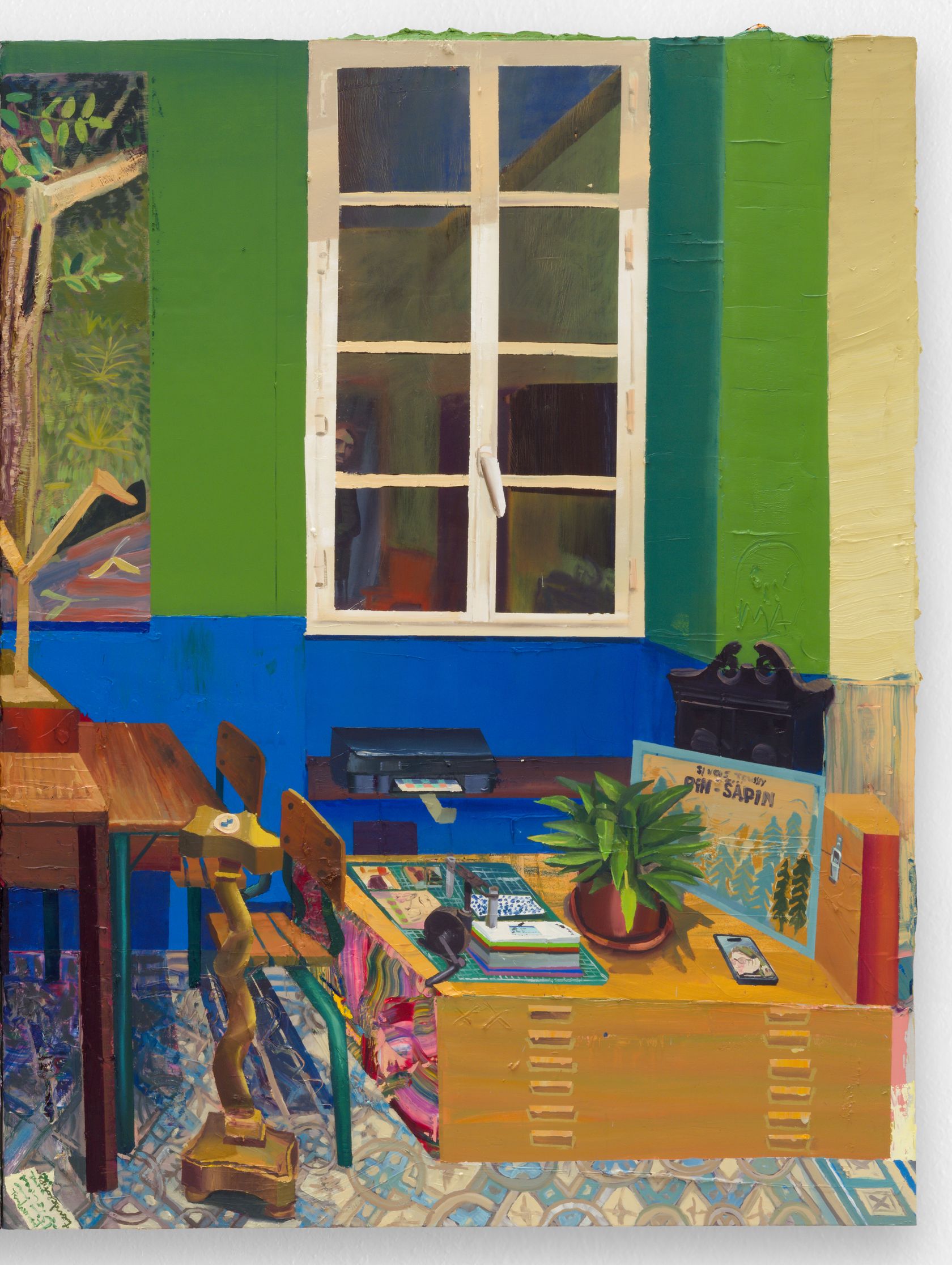
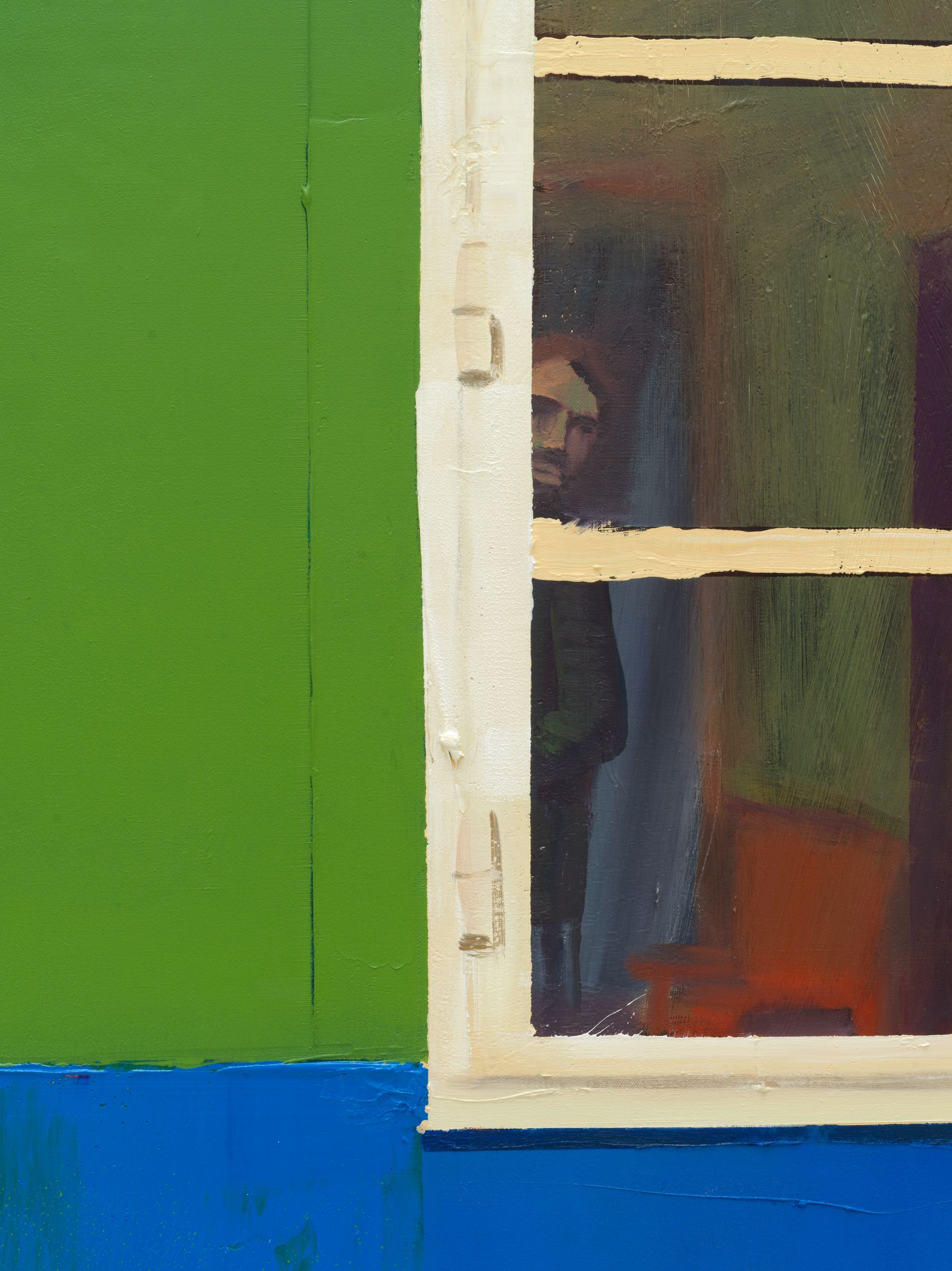
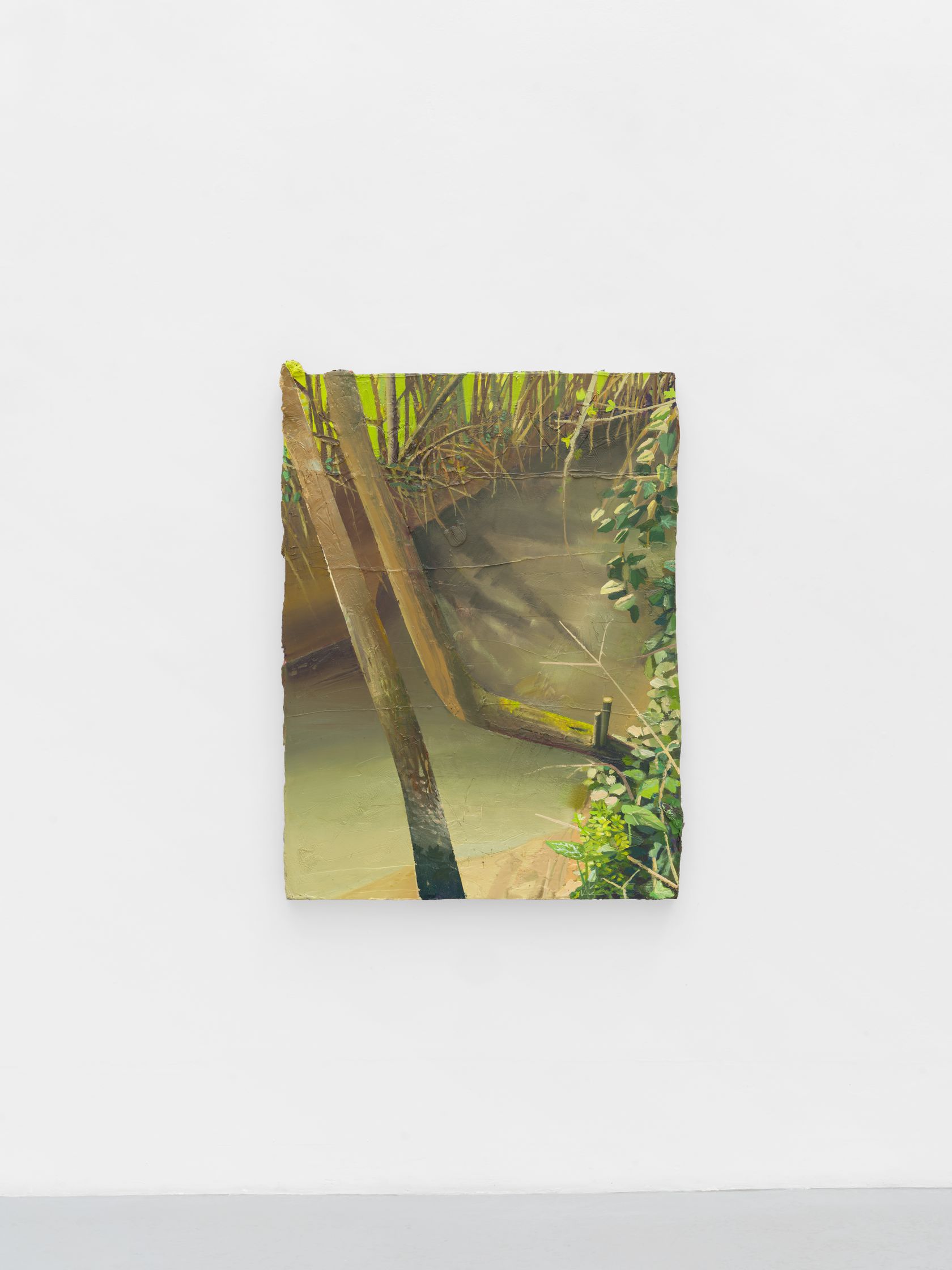
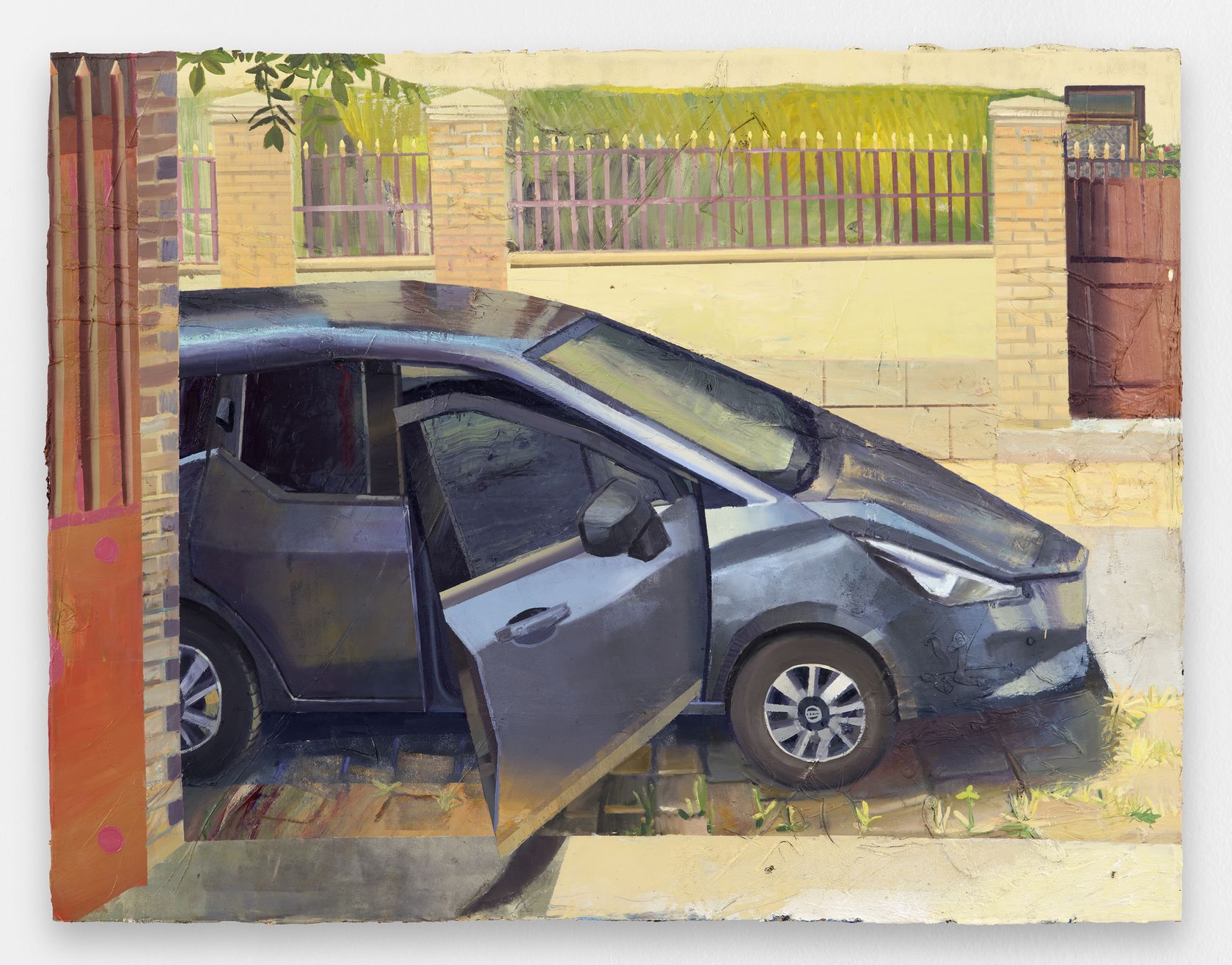
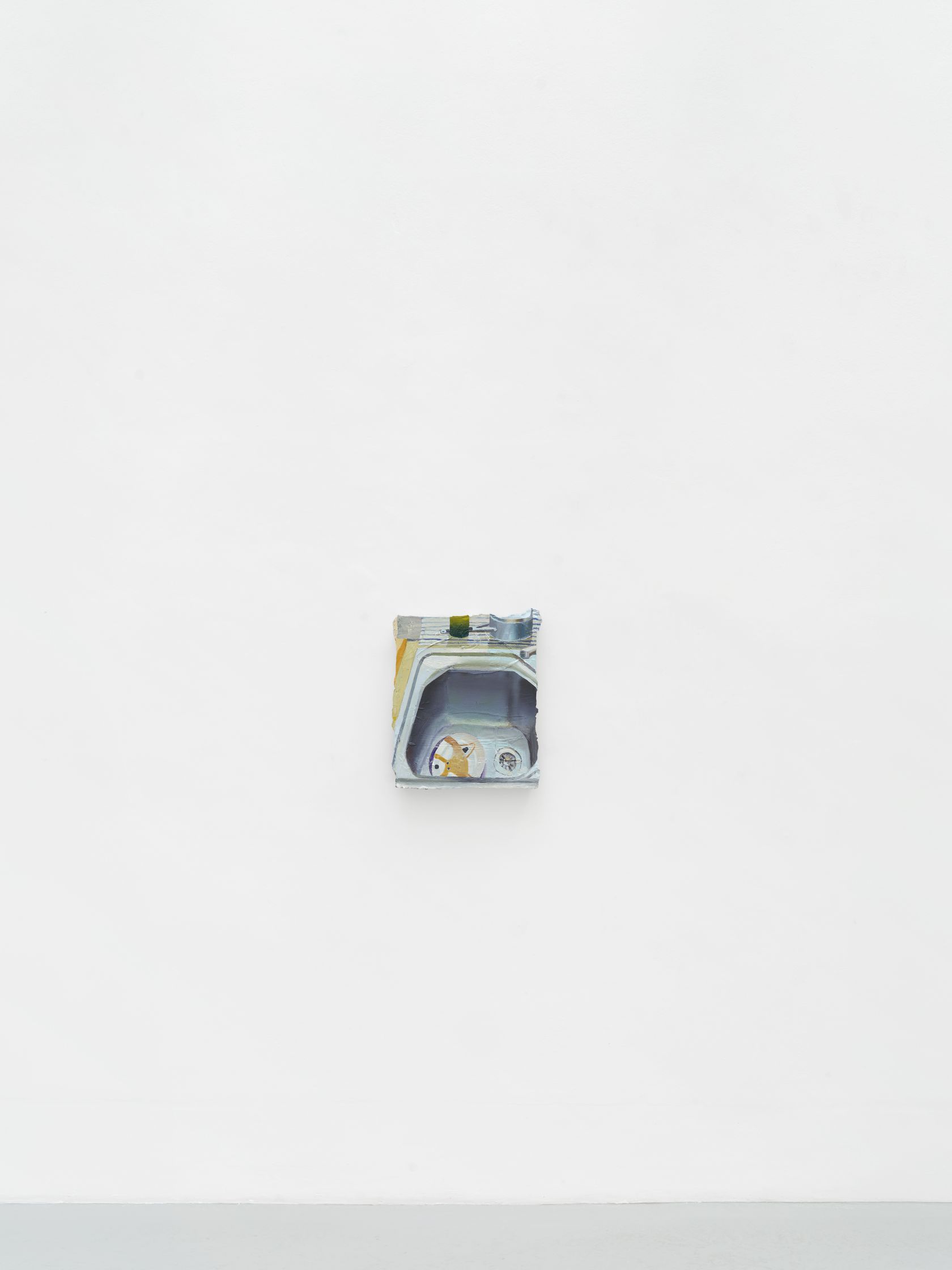
For his first exhibition at Semiose, Mathieu Cherkit presents fifteen paintings that share a unity of place, all originating in or around his home-studio. This apparent coherence is above all a pretext for a pictorial investigation into the question of viewpoints. The house is merely a context, a point of departure, and its objects elements of composition. Each painting engages with the act of looking—where the gaze settles, and how painting reconstructs it. The artist aggregates, combines, articulates and merges the movements of the body with the trajectory of the eyes, turning familiar, everyday space into a site of continually renewed visual experiences.
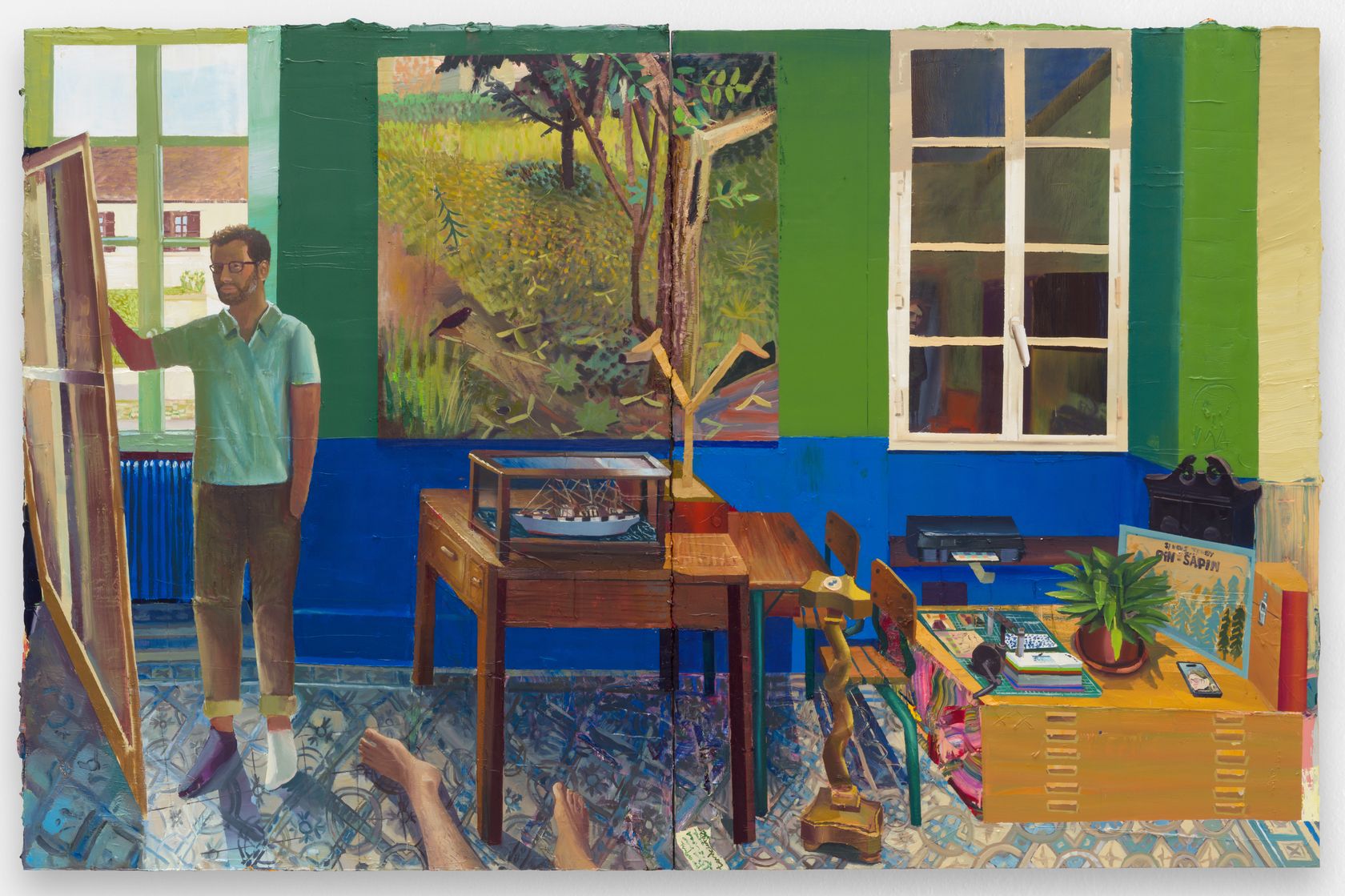
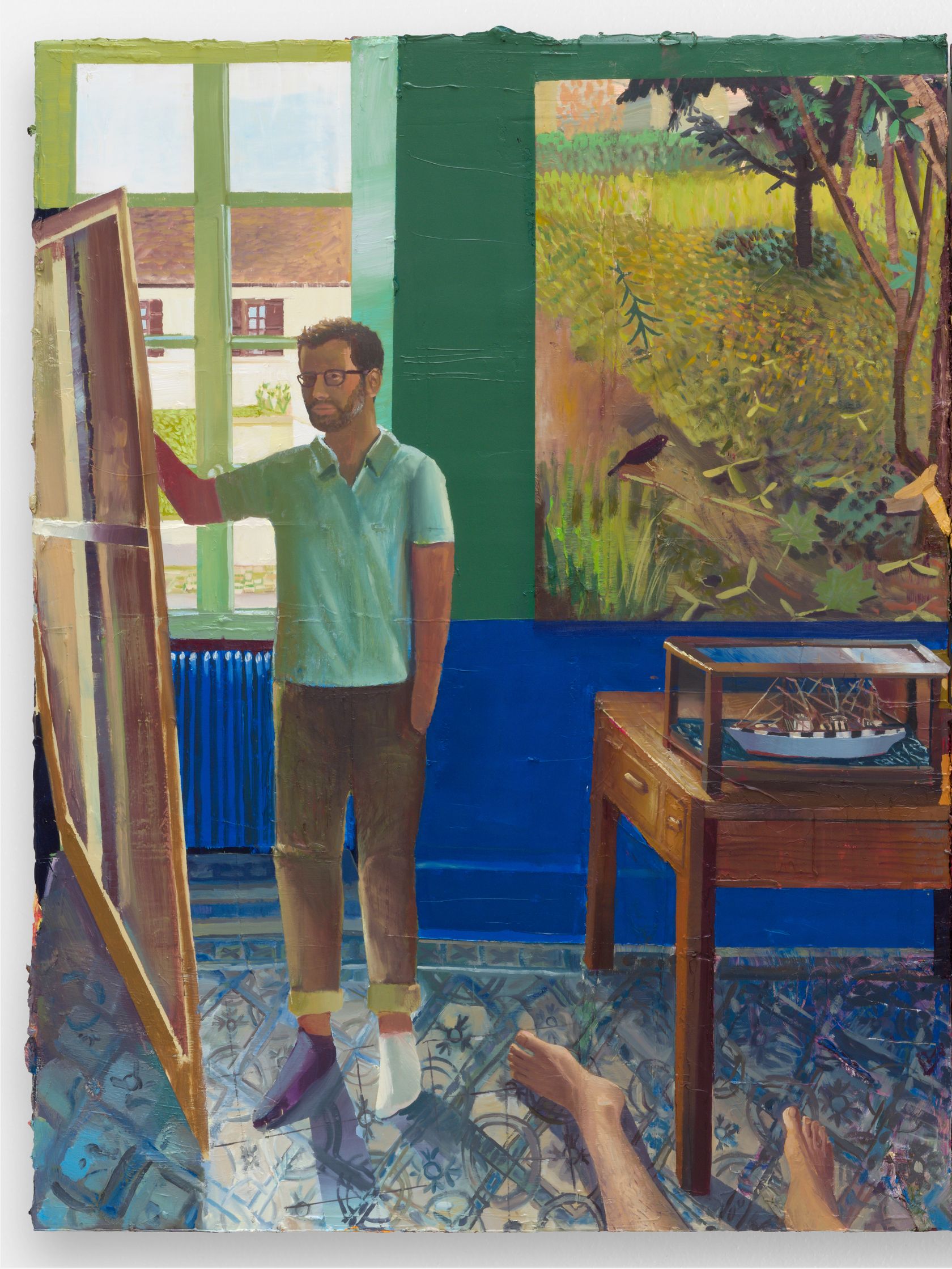
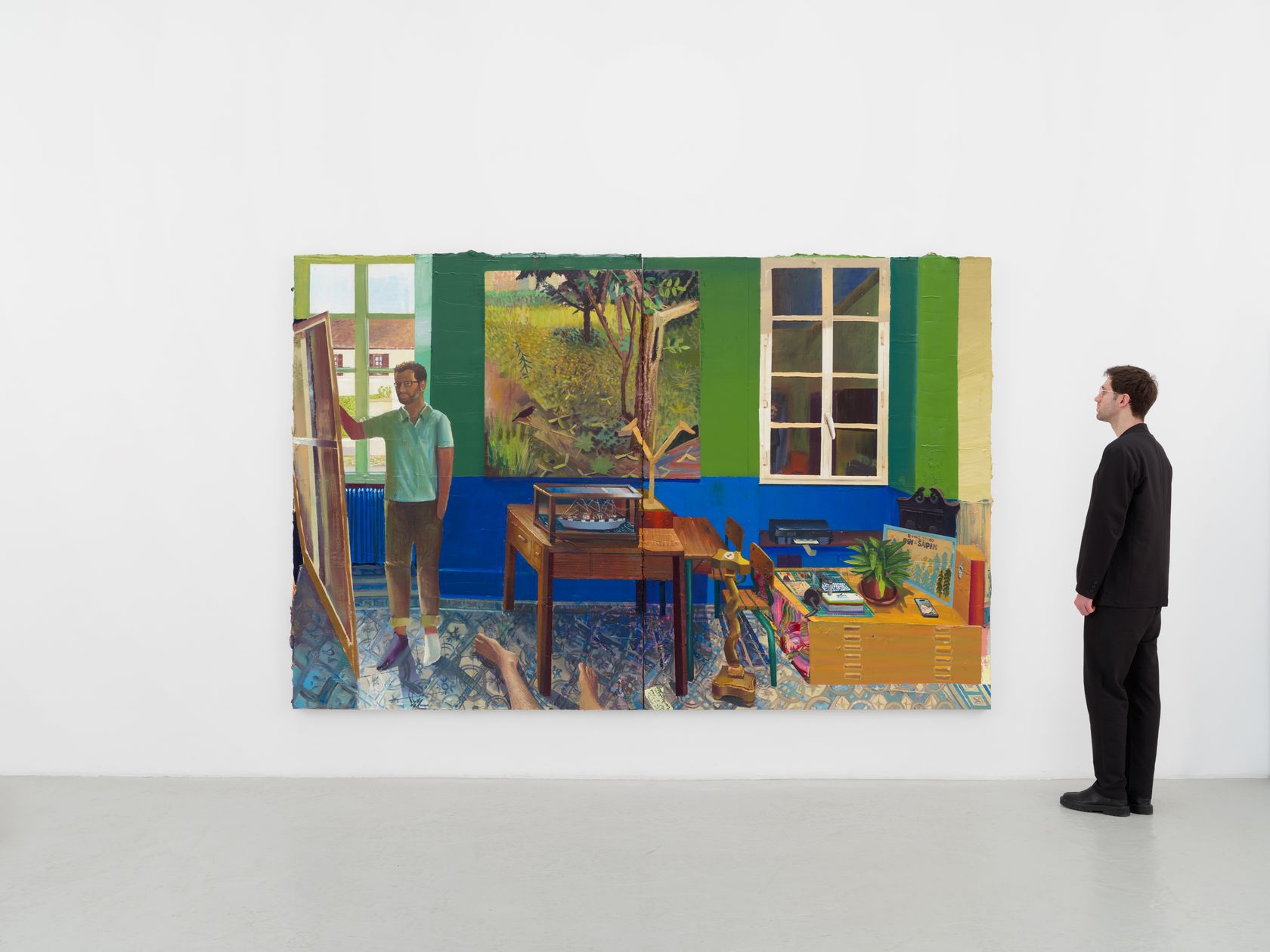
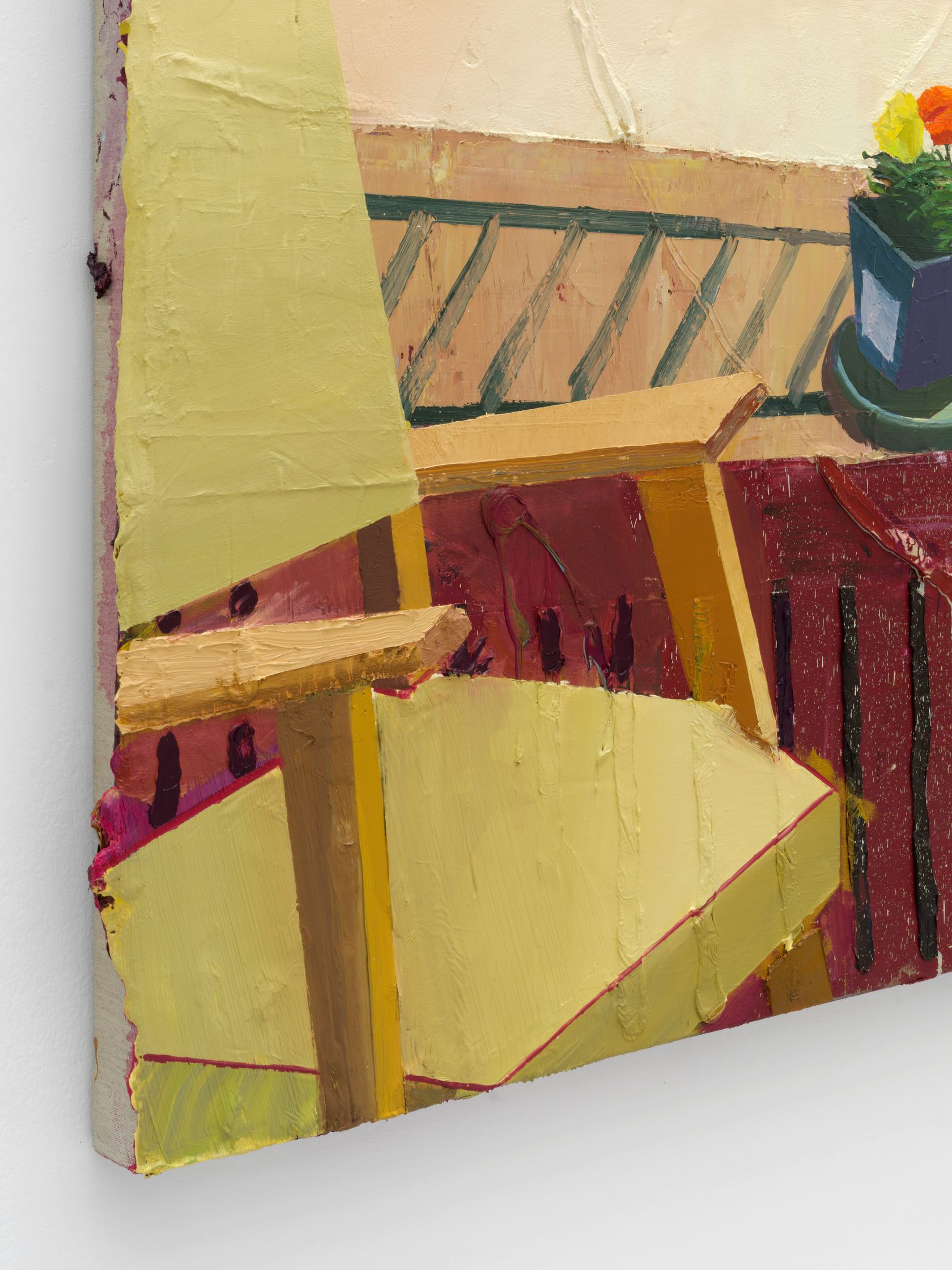
This plurality of viewpoints stems first of all from the temporality of the paintings’ execution. Beginning in the middle of the day, they are painted according to a precise method: each section is worked on at the same time of day in order to benefit from consistent light from one day to the next. Thus, in Sleepy Solo (2026, as are all the works in this exhibition), the flowers at the foot of the bed were painted at a set time, distinct from that of the bedspread, which, despite being close by, was painted later in the day. Each of Mathieu Cherkit’s paintings has its own internal chronology, repeated daily until the work is complete. The diptych Tendrement makes even more tangible this progression of gestures over the course of the day and as the work advances: its left-hand section, in daylight, gradually spills into the right-hand panel, which was painted later, in the dimness of evening.
- Mathieu Cherkit
- Tendrement , 2026
- Oil on canvas
-
- 211 ×
- 325 × cm
- 83 1/16 ×
- 127 15/16 × inches
- Mathieu Cherkit
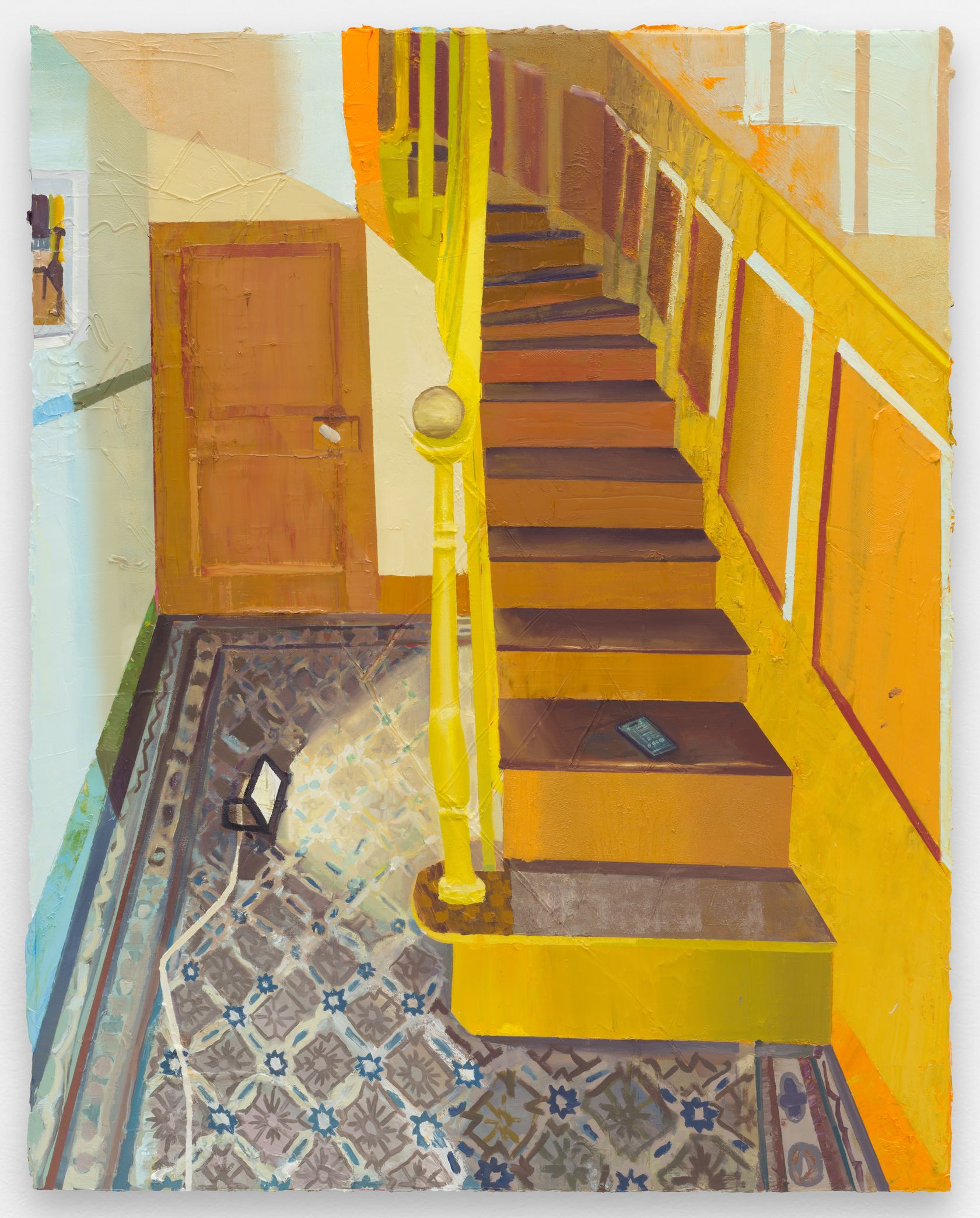
- Yelo Flow , 2026
- Oil on canvas
-
- 190 ×
- 150 × cm
- 74 13/16 ×
- 59 1/16 × inches
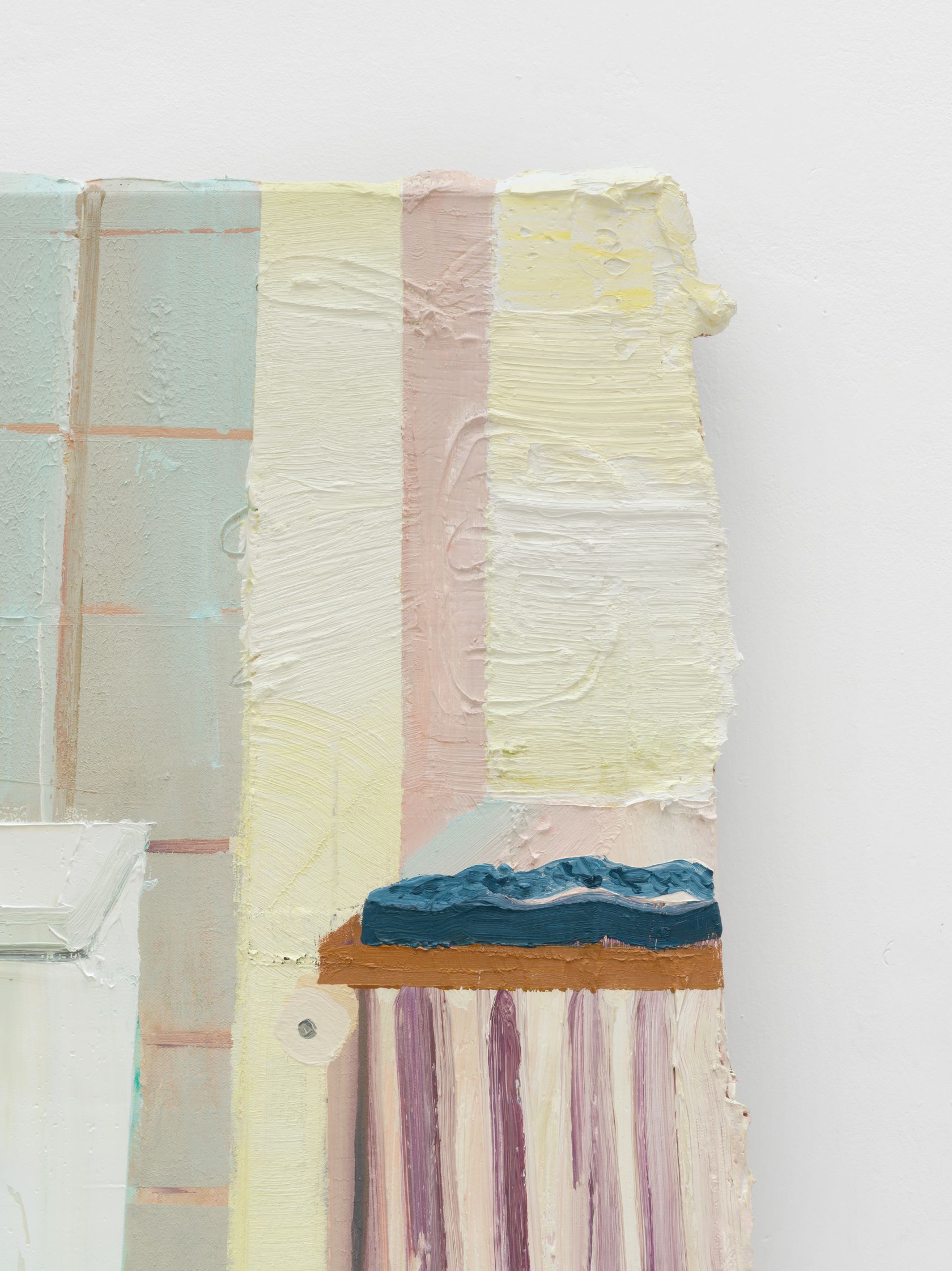
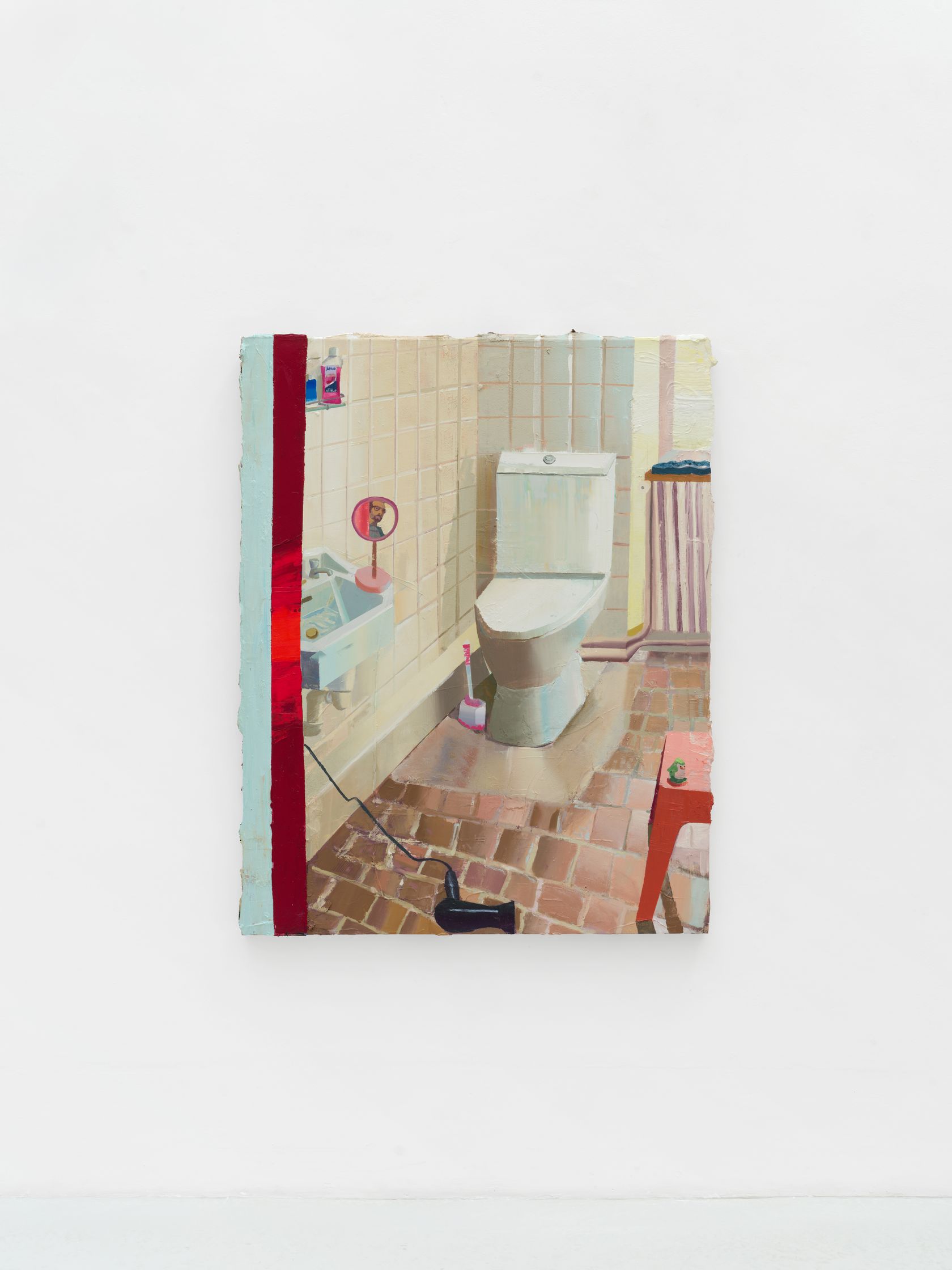
- Mathieu Cherkit
- La toilette , 2026
- Oil on canvas
-
- 146 ×
- 114 × cm
- 57 1/2 ×
- 44 7/8 × inches
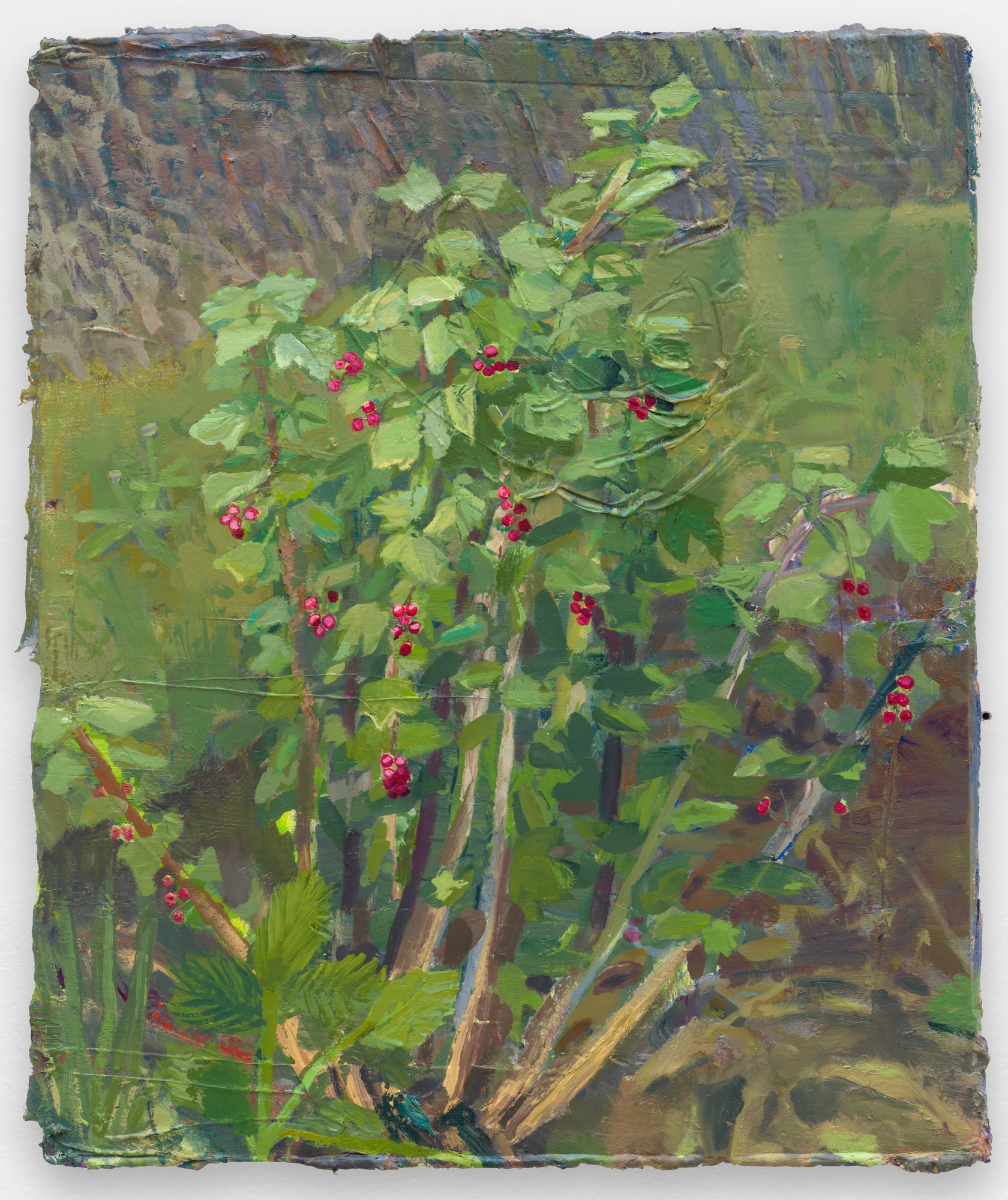
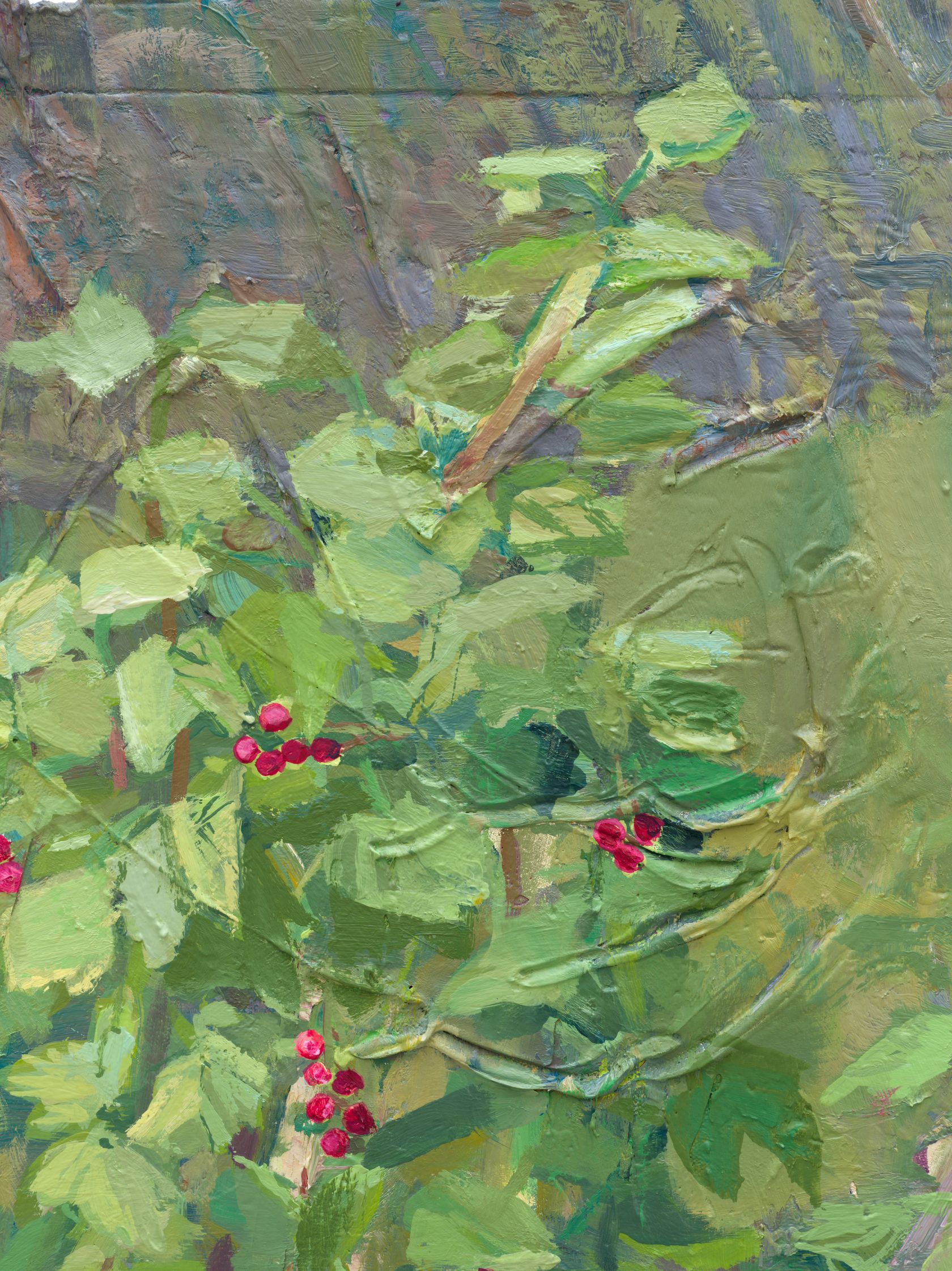
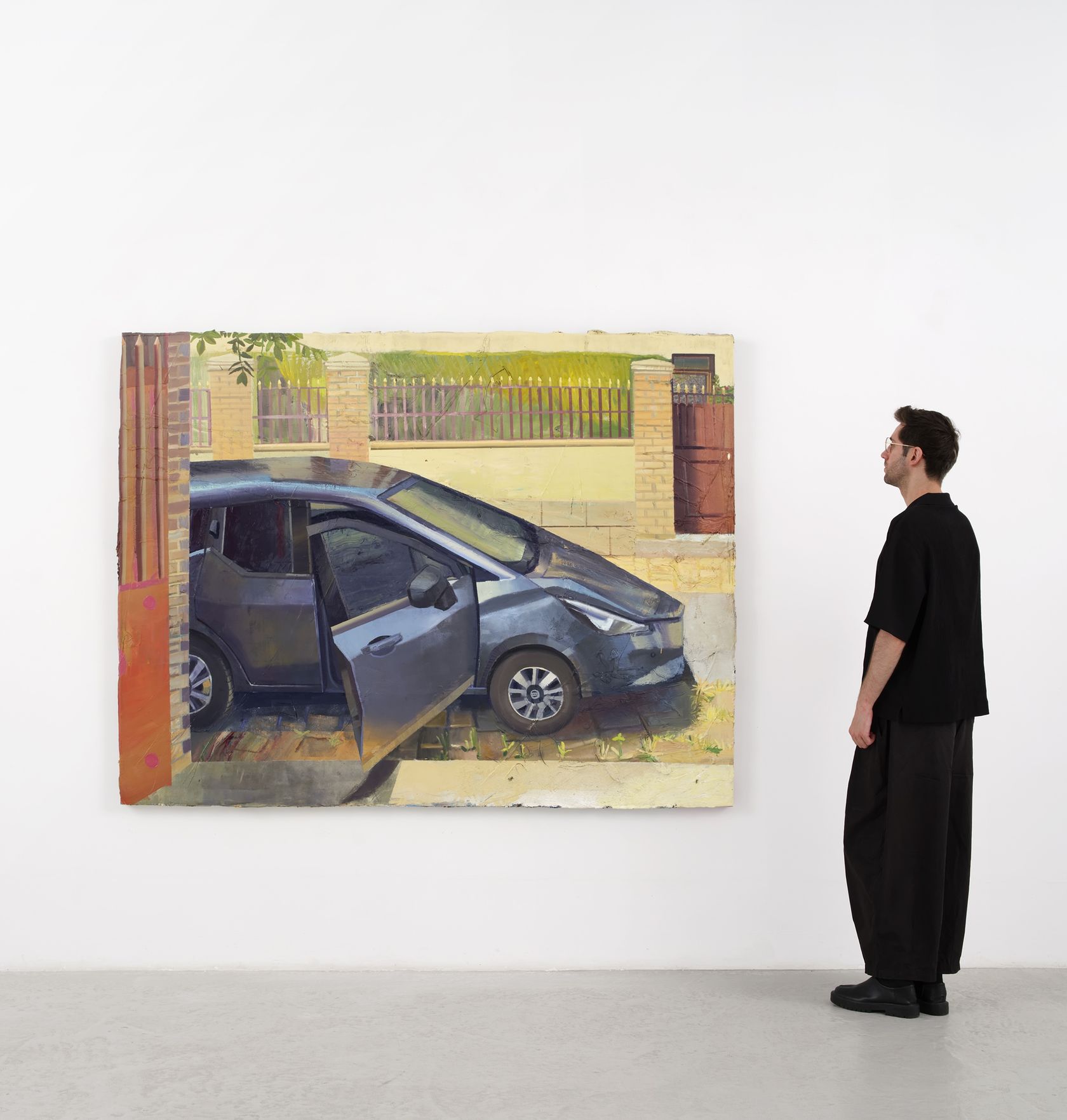
- Mathieu Cherkit
- Forteresse , 2026
- Oil on canvas
-
- 162 ×
- 211 × cm
- 63 3/4 ×
- 83 1/16 × inches
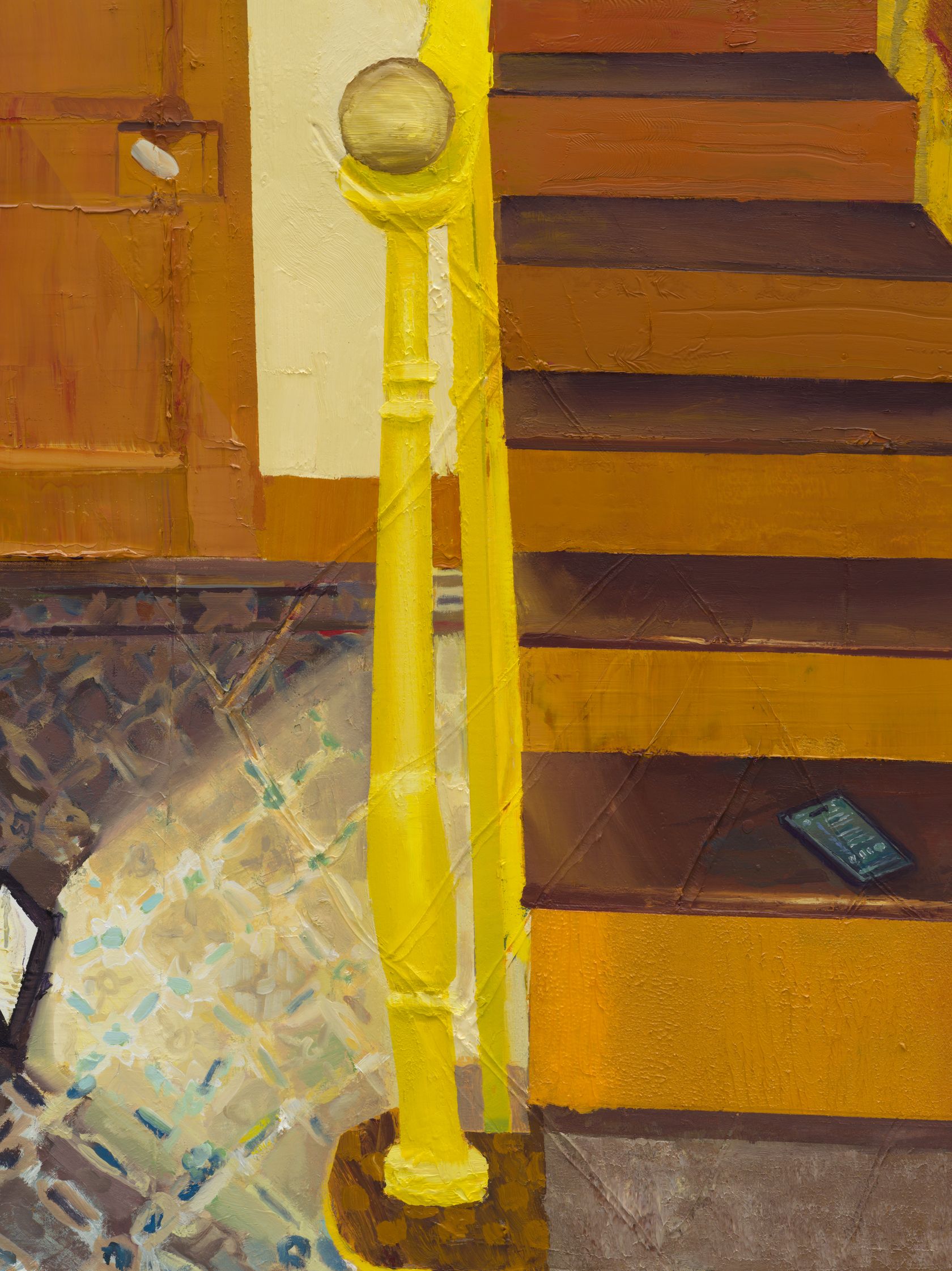
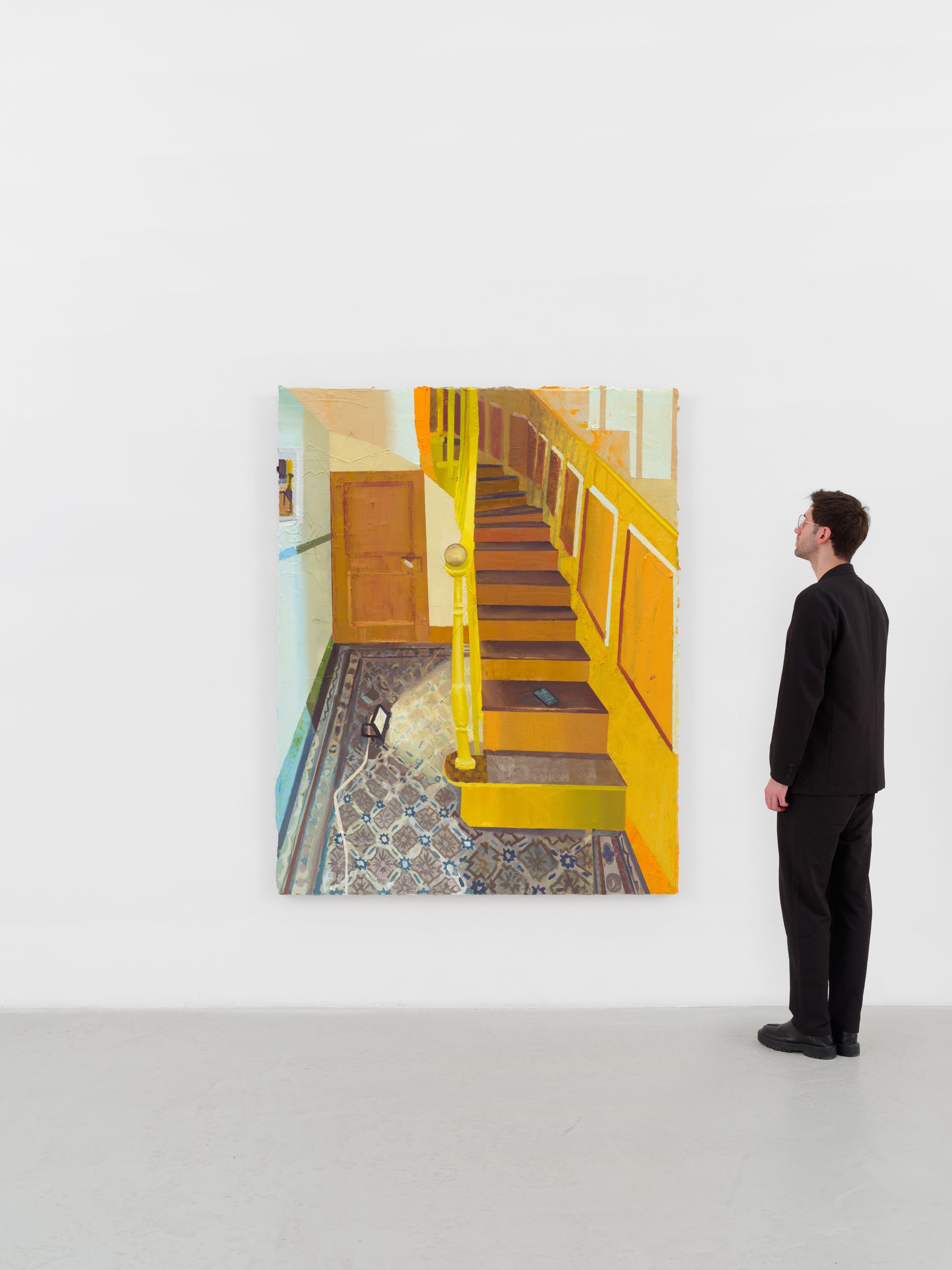
Dispensing with photography, Mathieu Cherkit works back and forth between memory, his sketches and observations made on site. The sketch allows him to establish the overall structure, planes and colours in broad strokes, while some works can be painted directly in front of the subject. For Yelo Flow, for instance, the easel was taken out of the studio and positioned facing the staircase. There was no need for a preparatory sketch, given how frequently this motif recurs throughout his work. For Mathieu Cherkit, the rightness of the viewpoint matters more than its exact replication. For this reason, when transferring a subject from sketchbook to canvas, the artist does not use a grid. None of his paintings bear a direct proportional relationship to reality: each one seeks instead to remain faithful to the artist’s perception and impressions.
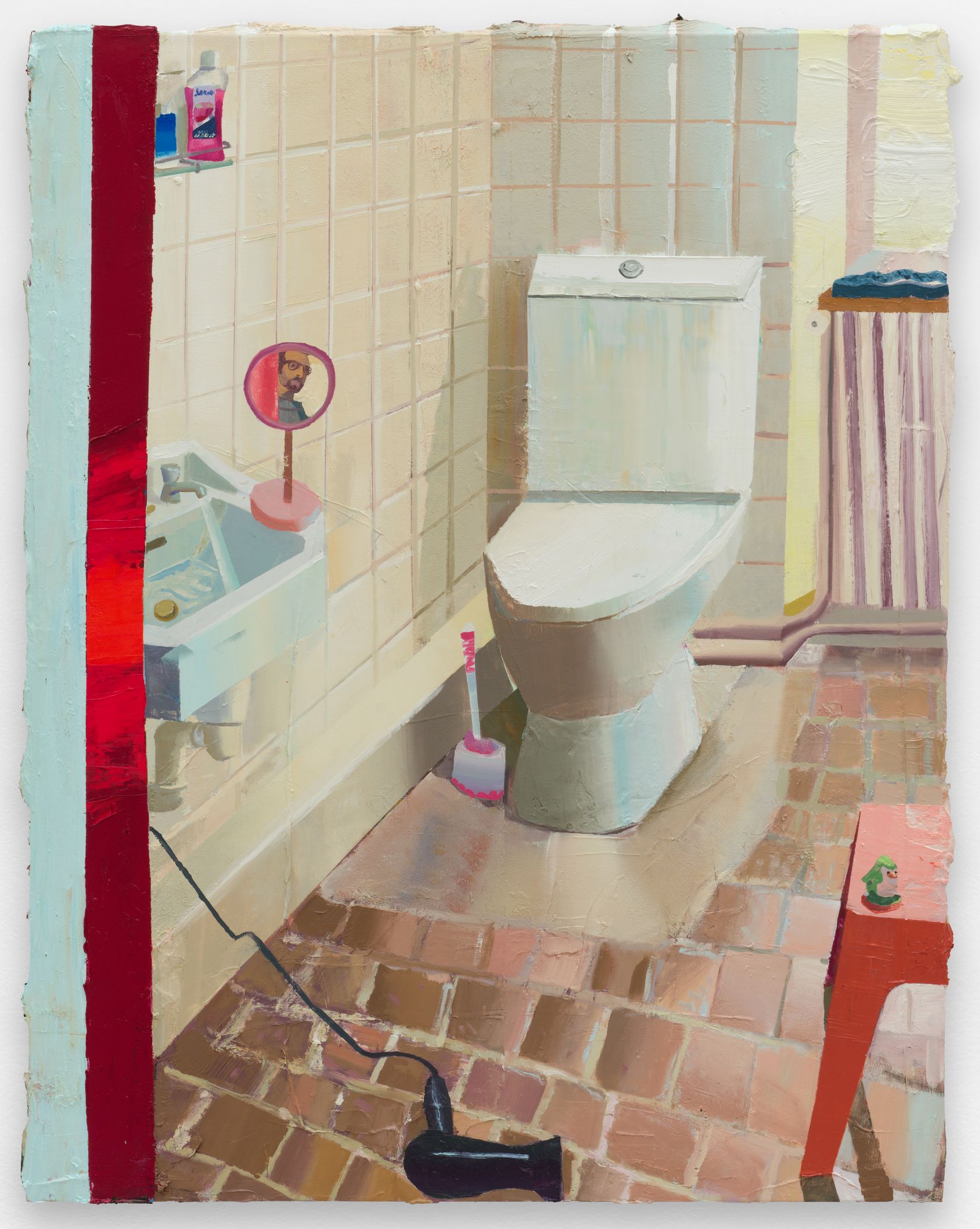
Throughout, perspective is askew—or rather, it is multiple. Hybrid perspectives within a single painting can also be understood as the meeting of different eye levels: that of the adult painter and that of a child who might catch sight of an object while standing on tiptoe. Mathieu Cherkit’s works thus evoke the peculiar experience of being a child, moving through and inhabiting spaces that seem disproportionately high and disproportionately large, climbing onto every piece of furniture, finding every object a source of curiosity and discovering that it can be diverted from its original function.
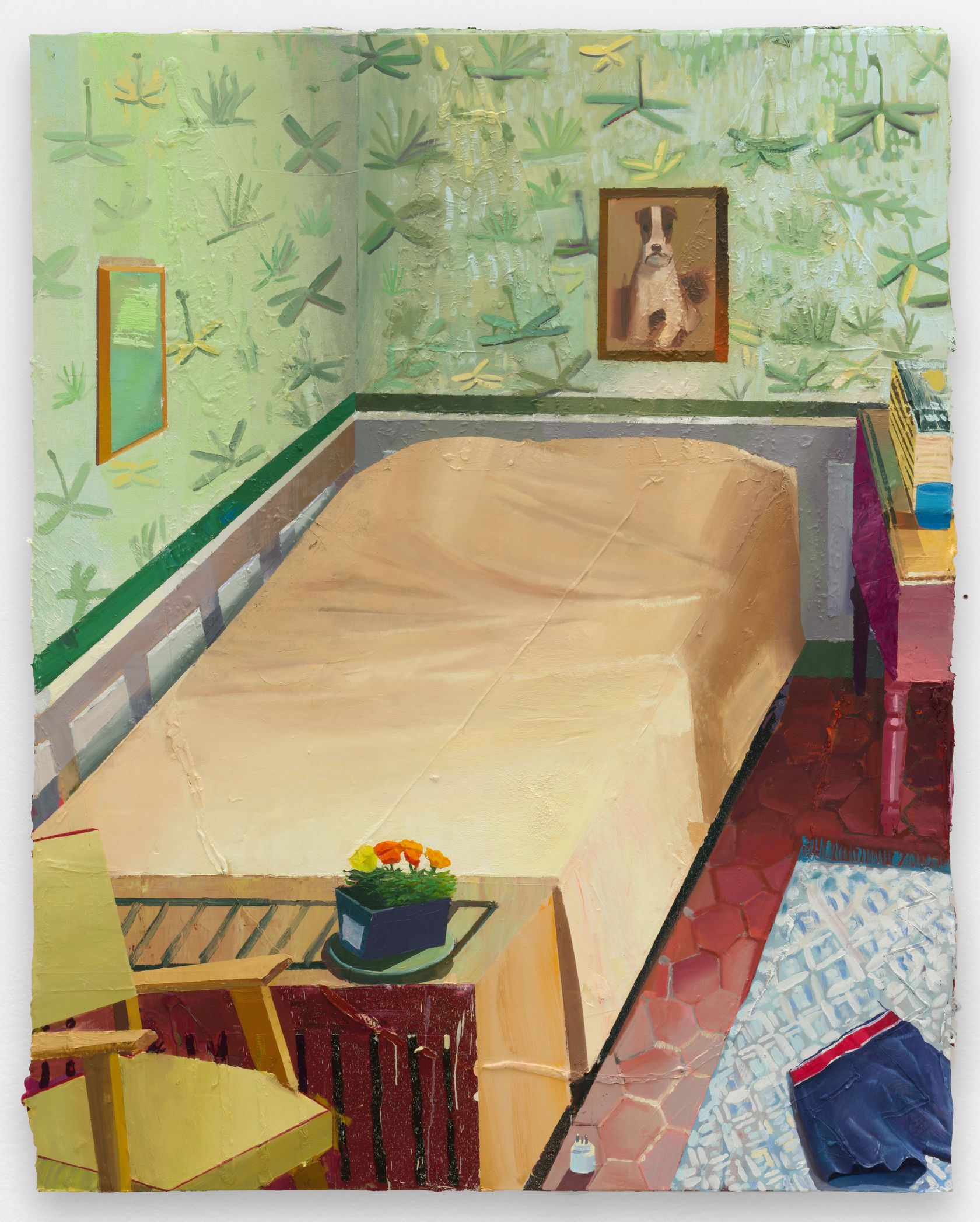
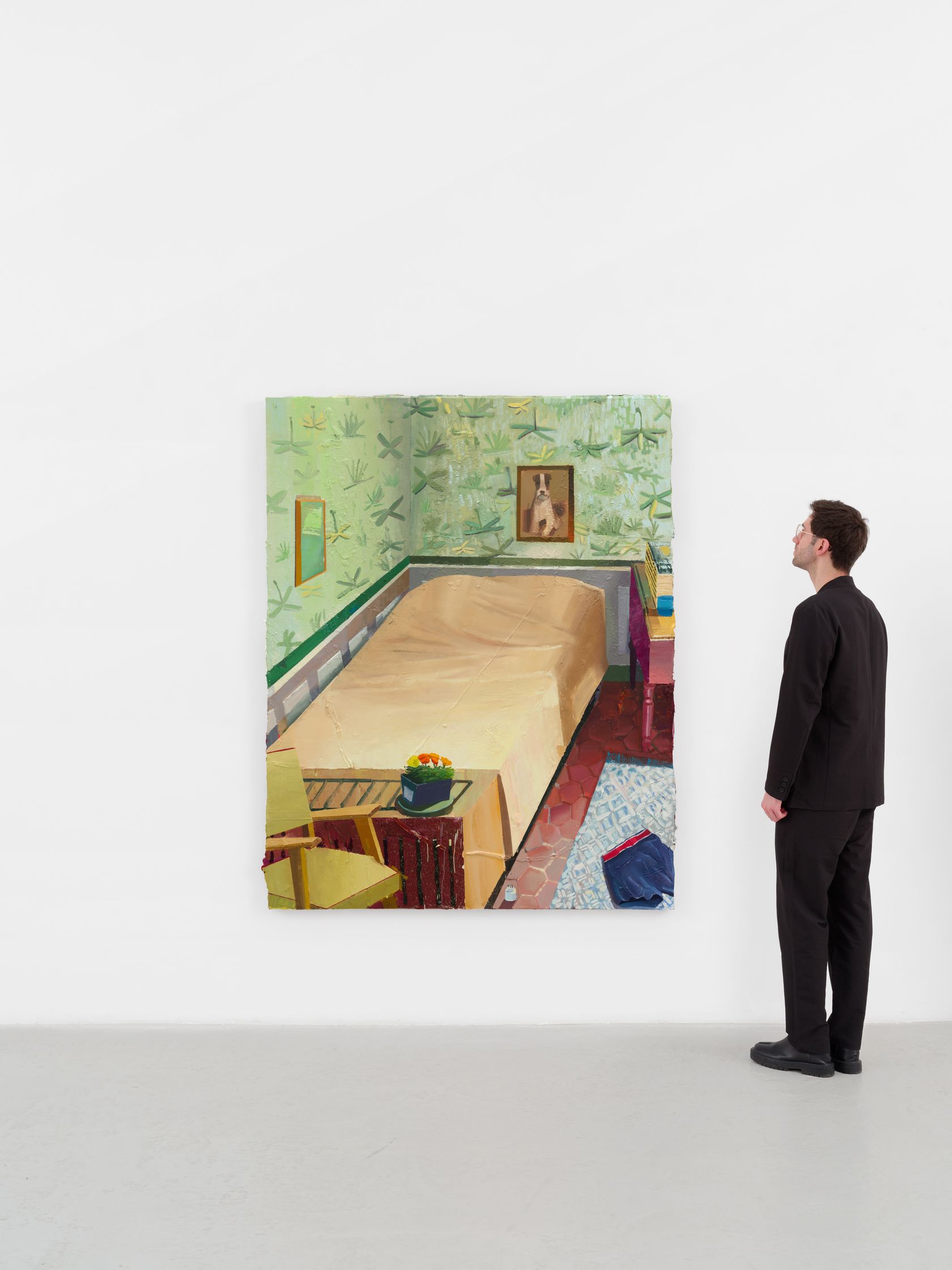
- Mathieu Cherkit
- Sleepy solo , 2026
- Oil on canvas
-
- 190 ×
- 150 × cm
- 74 13/16 ×
- 59 1/16 × inches
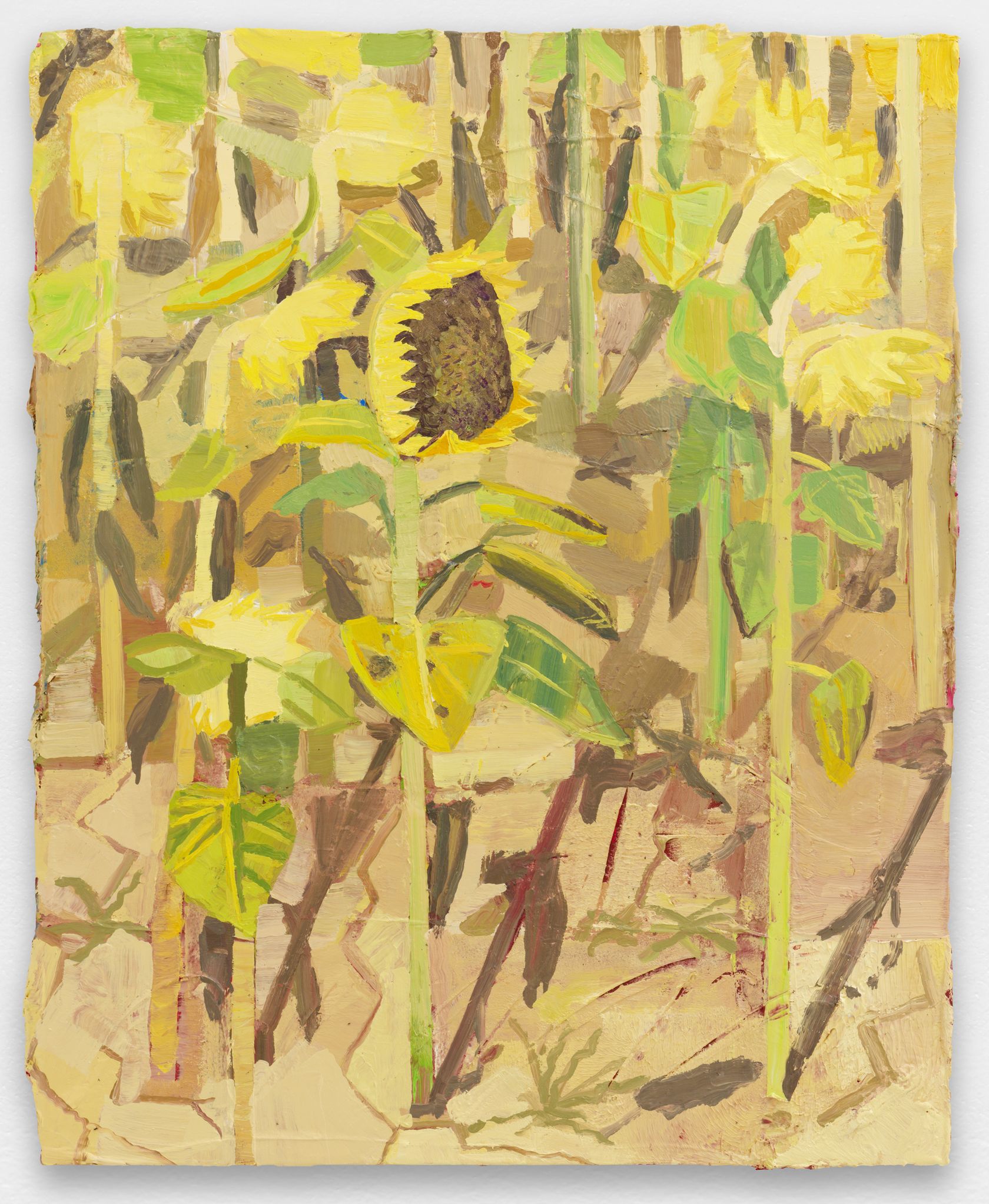
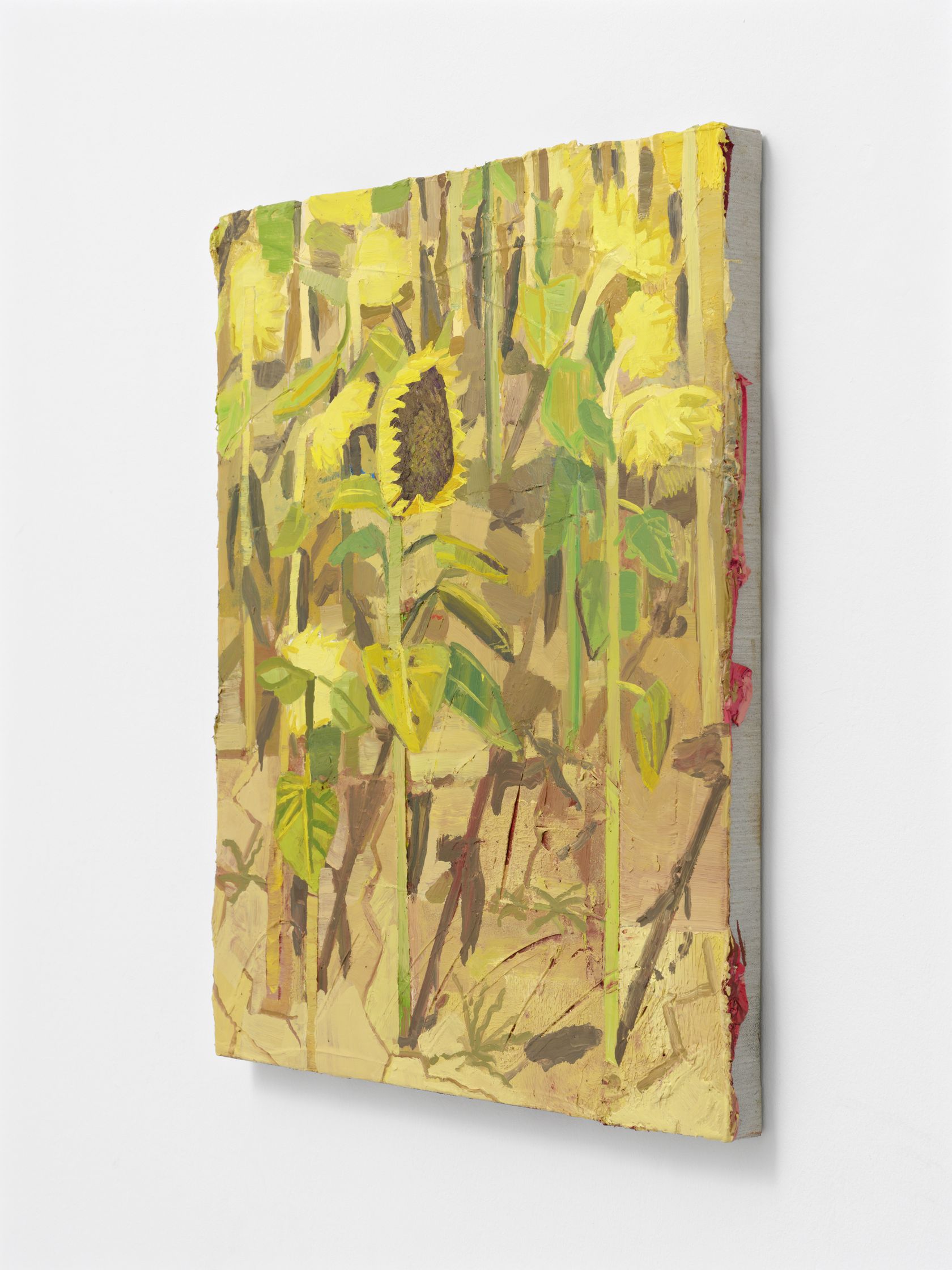
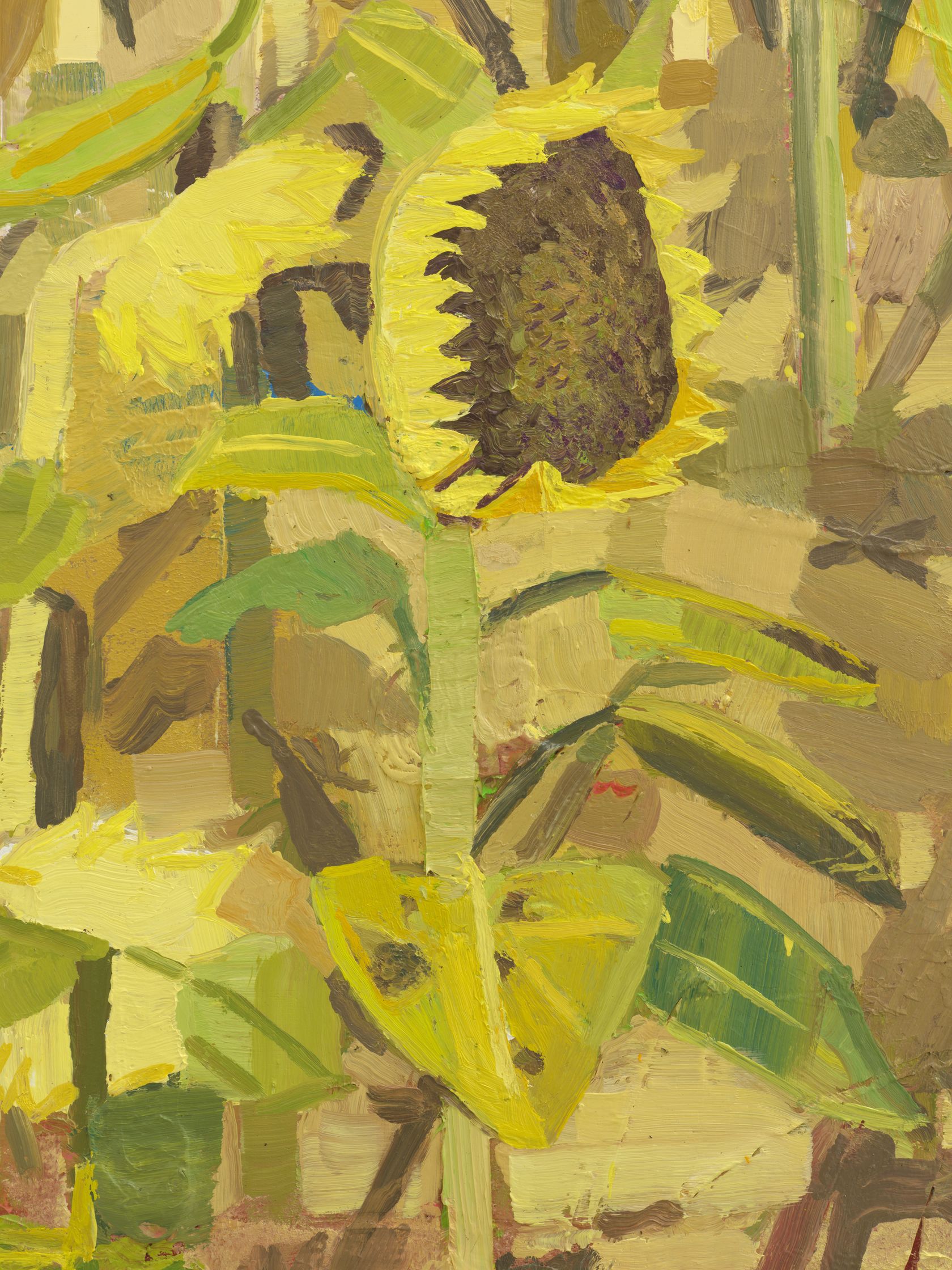
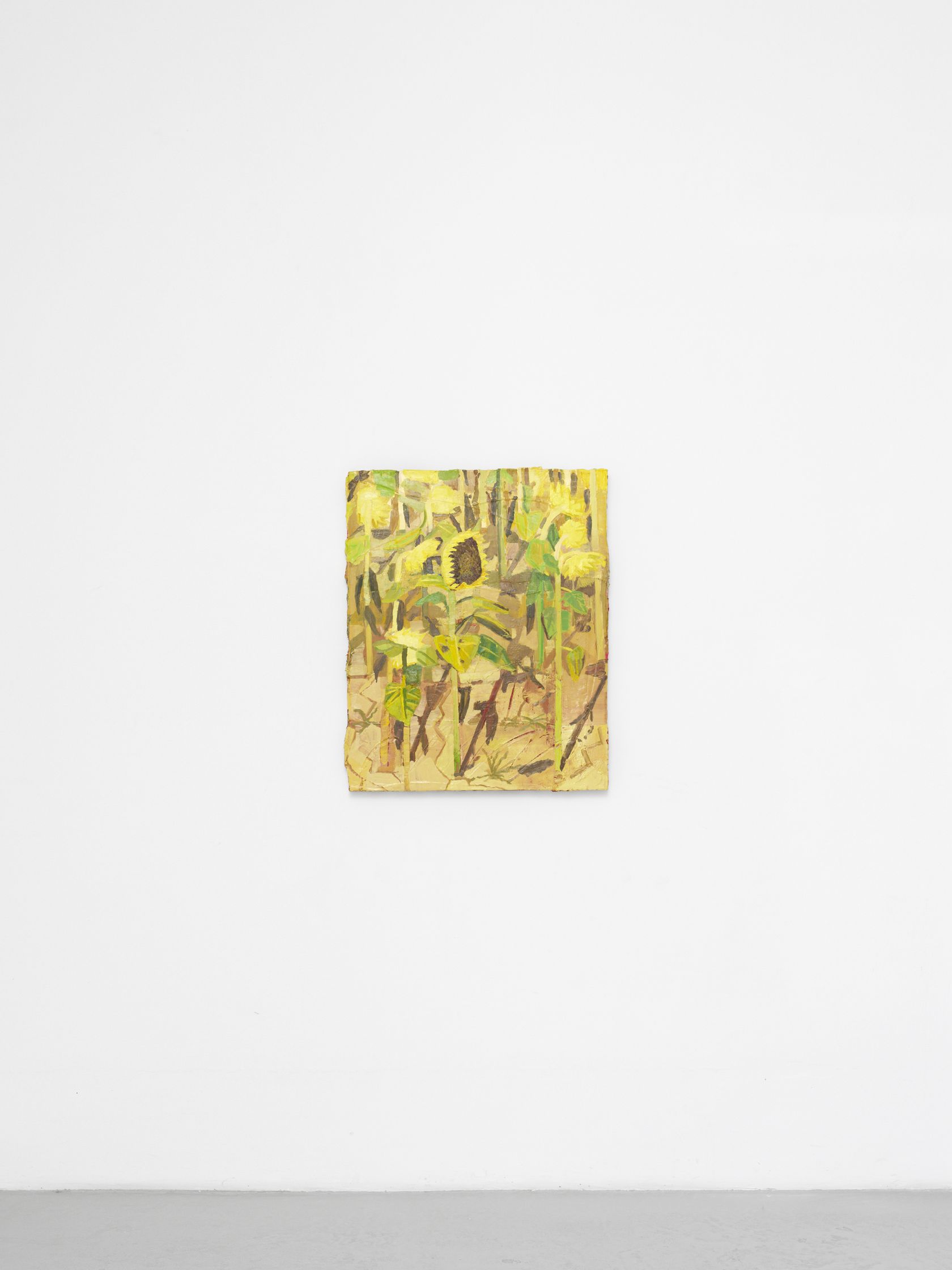
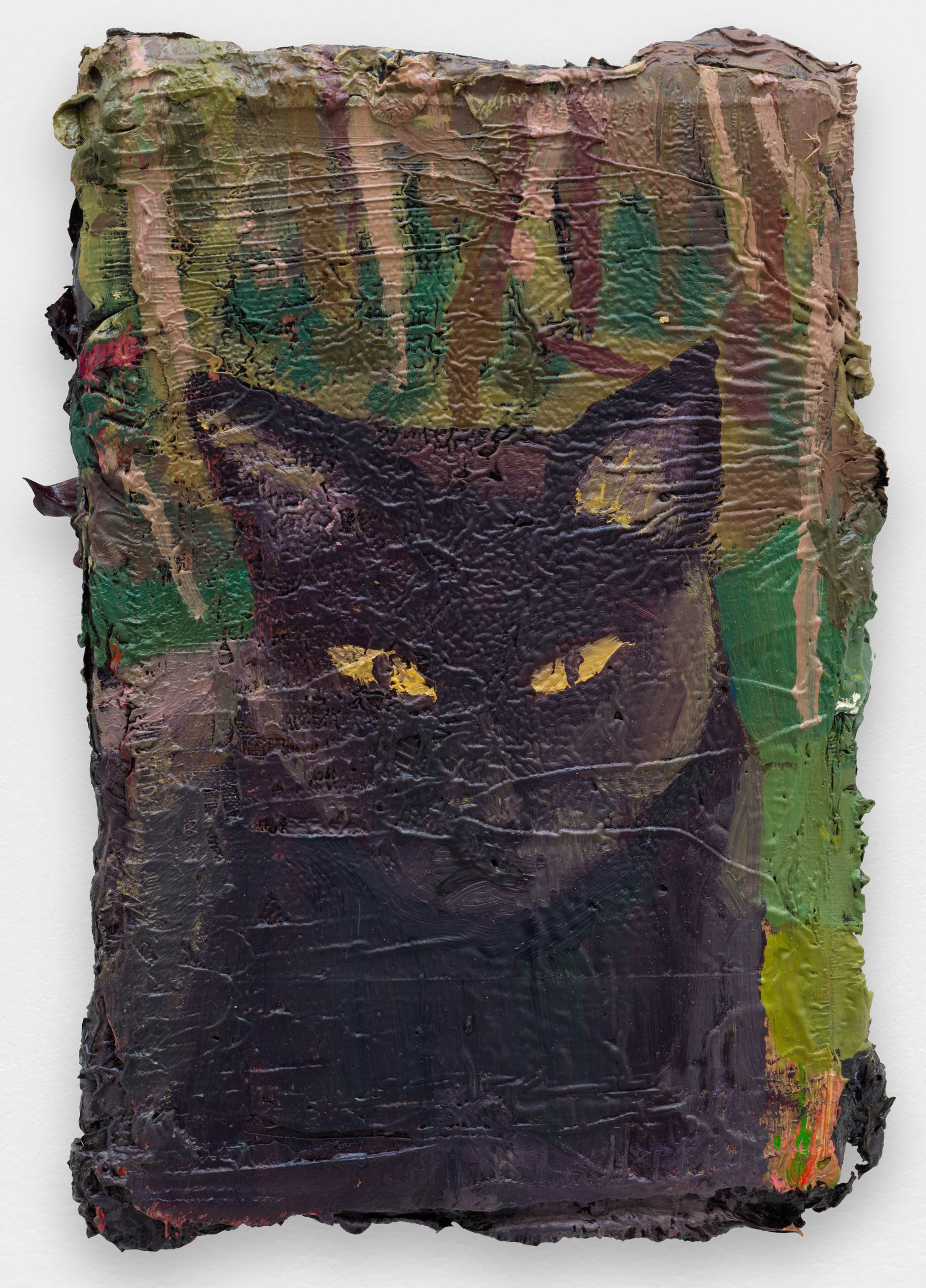
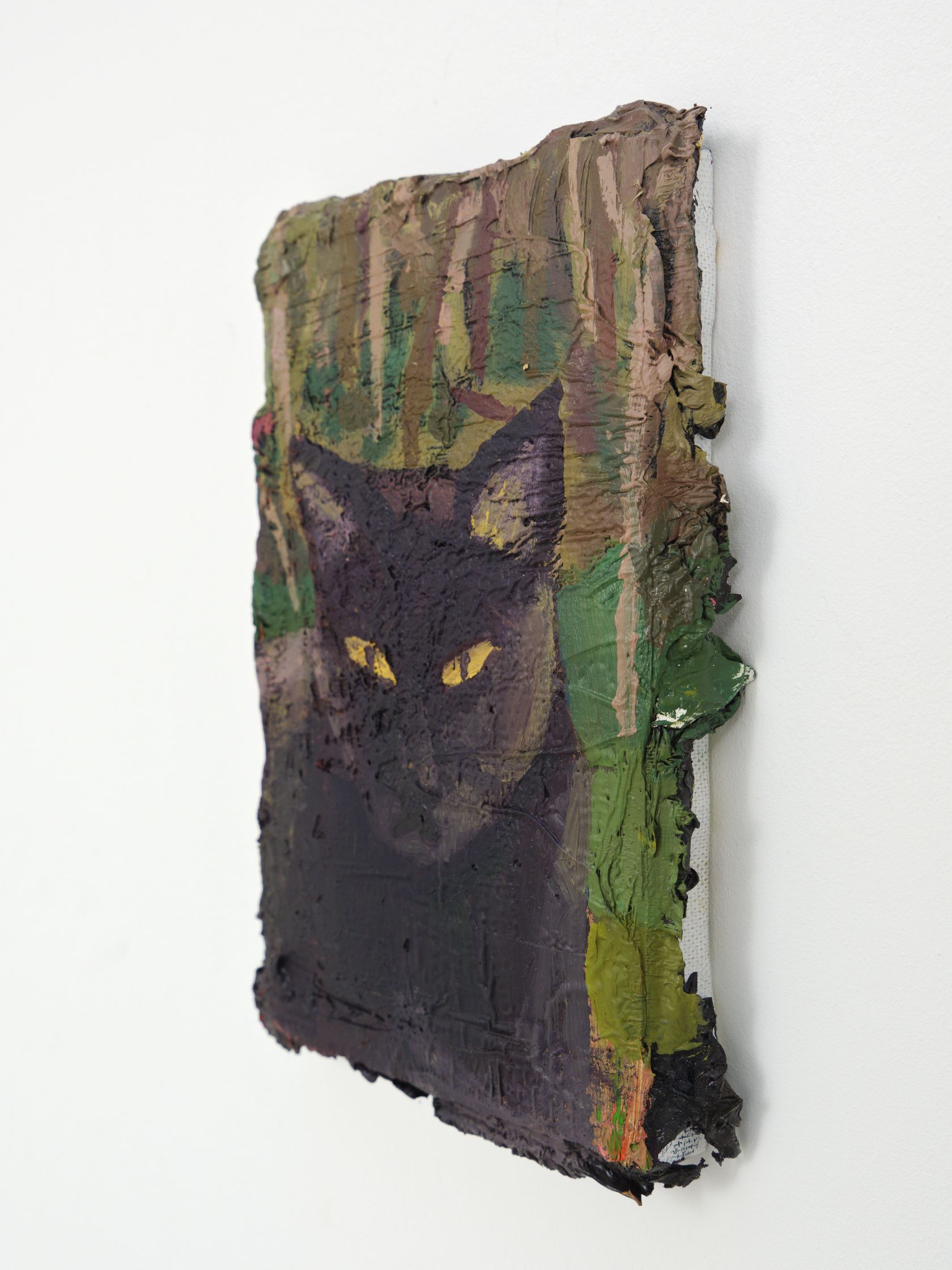
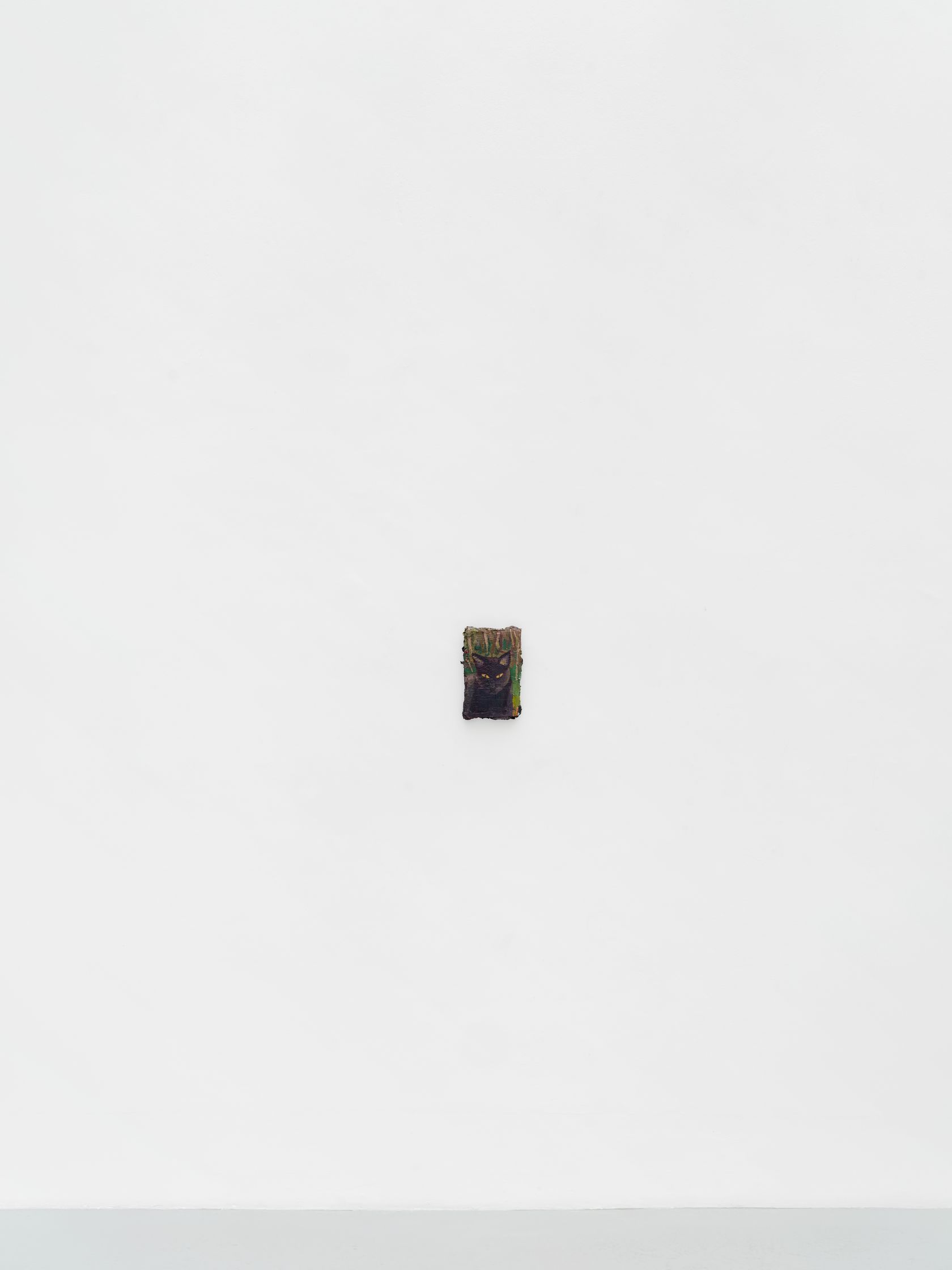
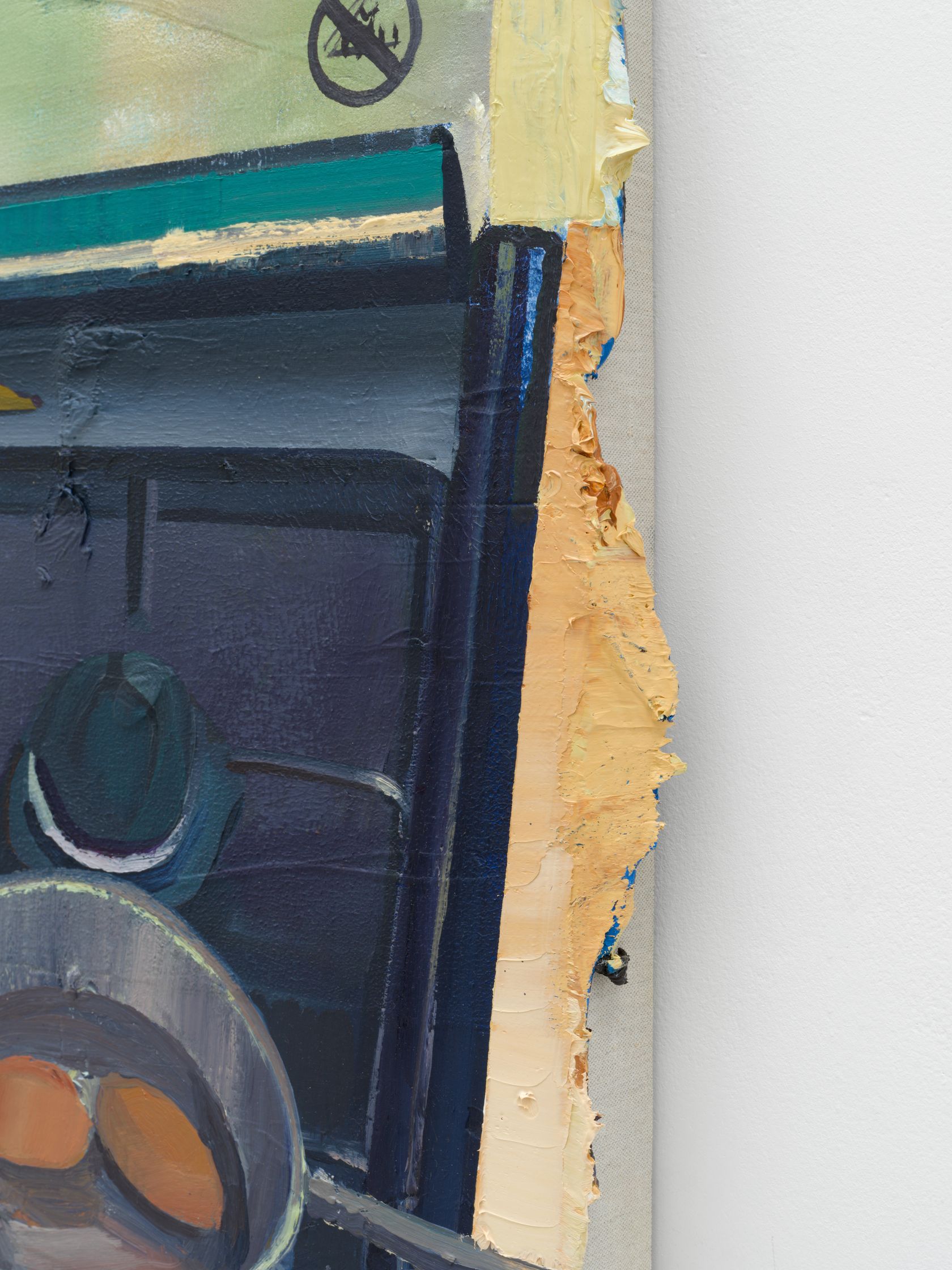
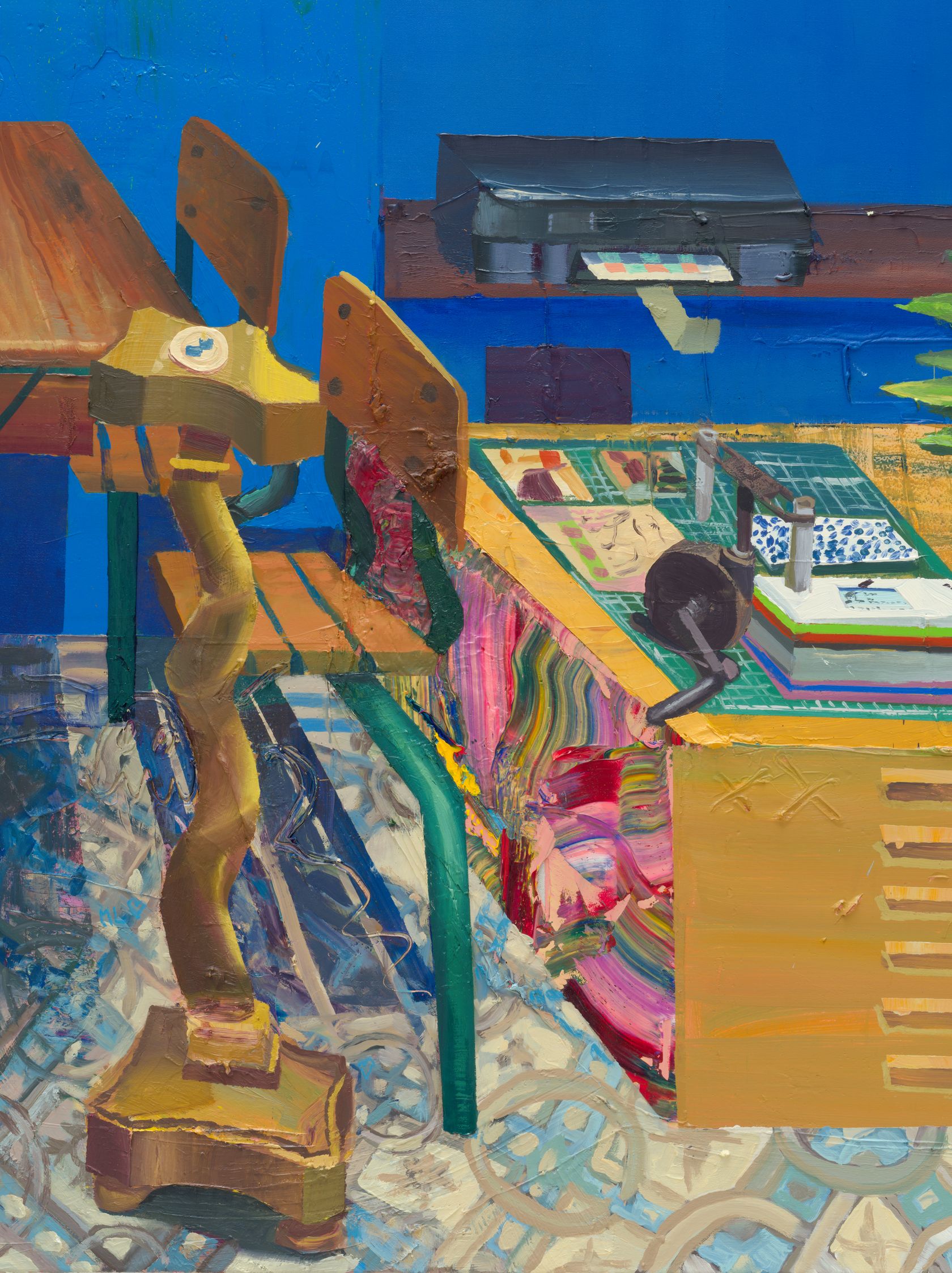
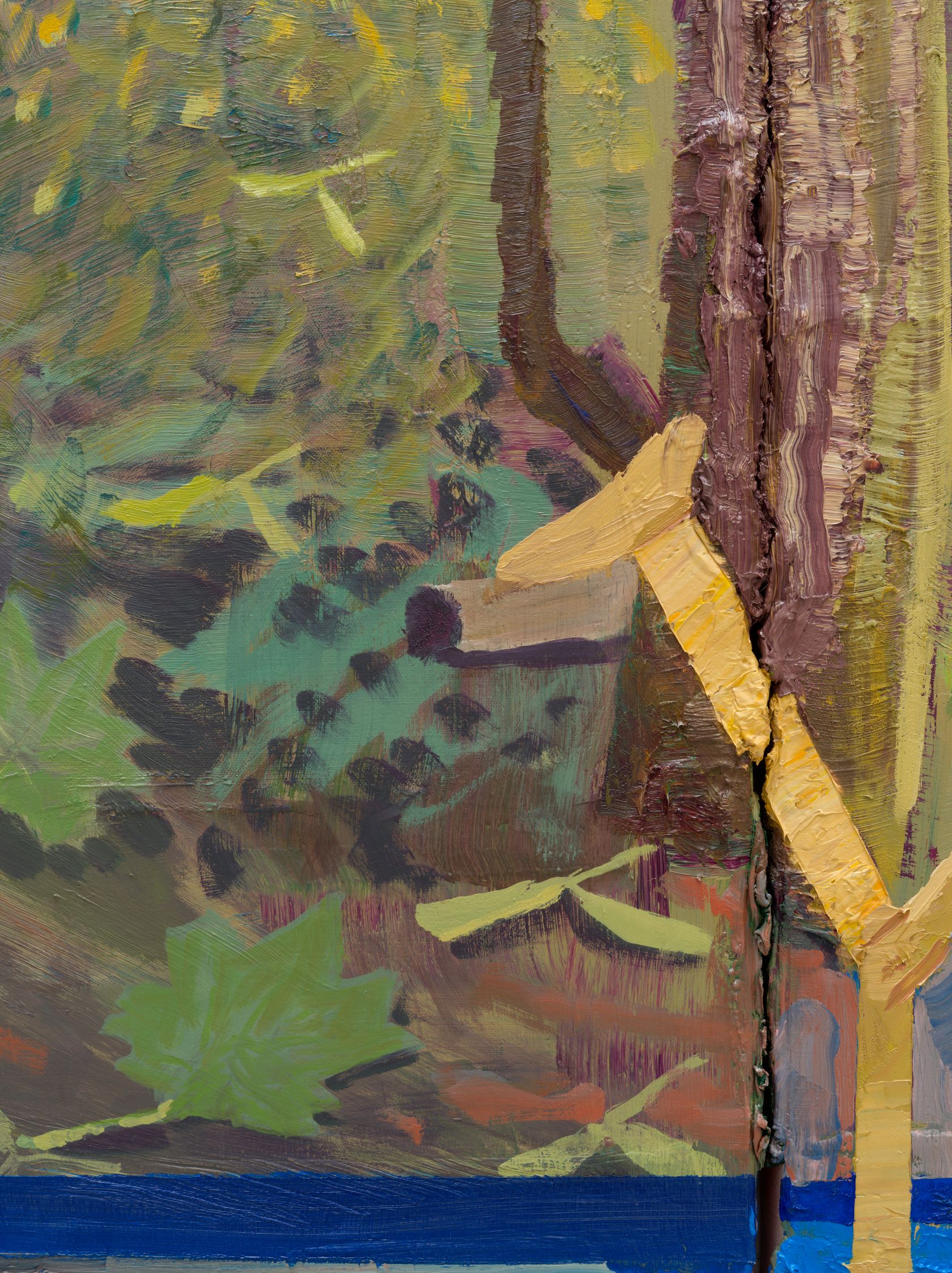
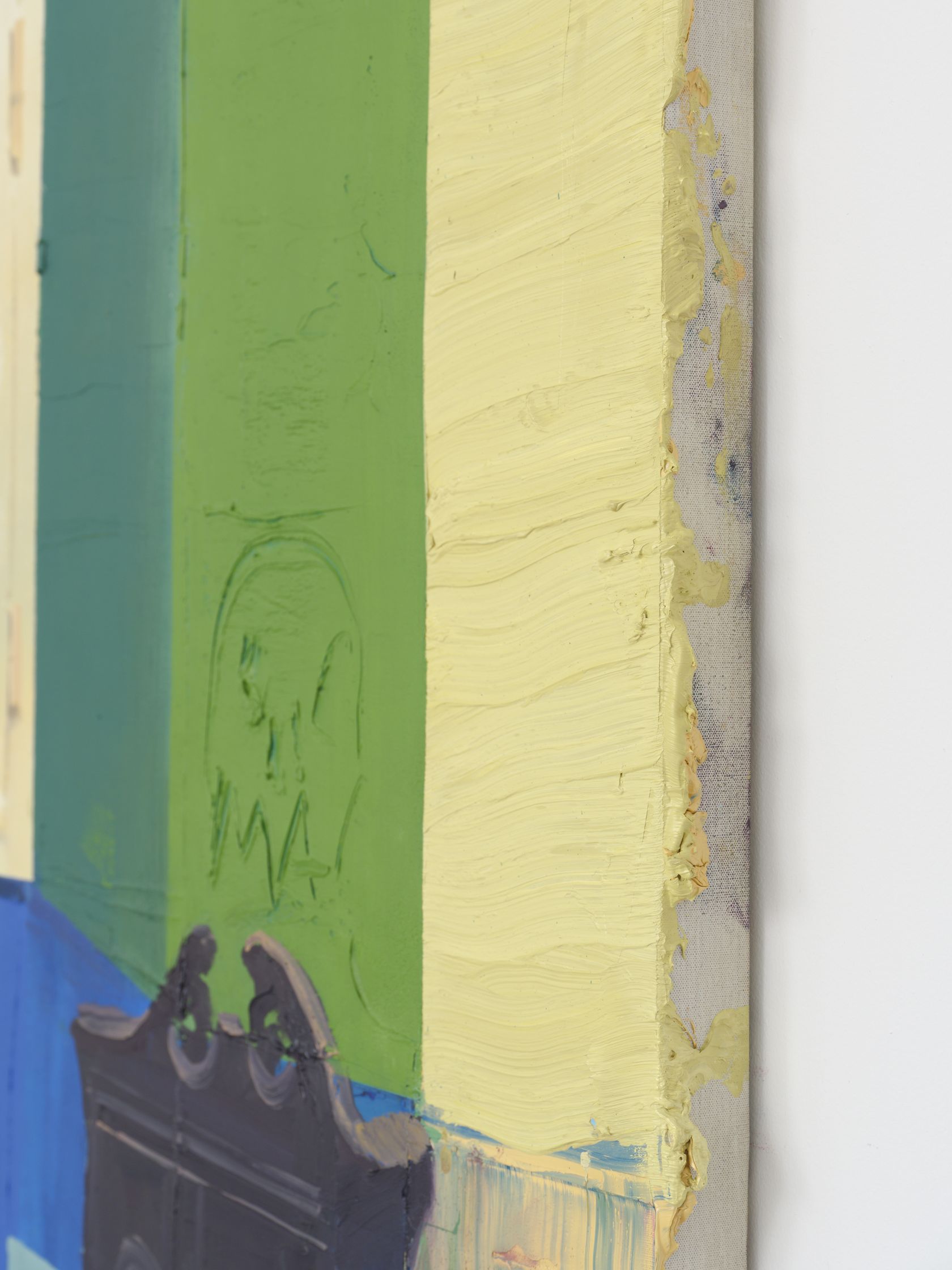
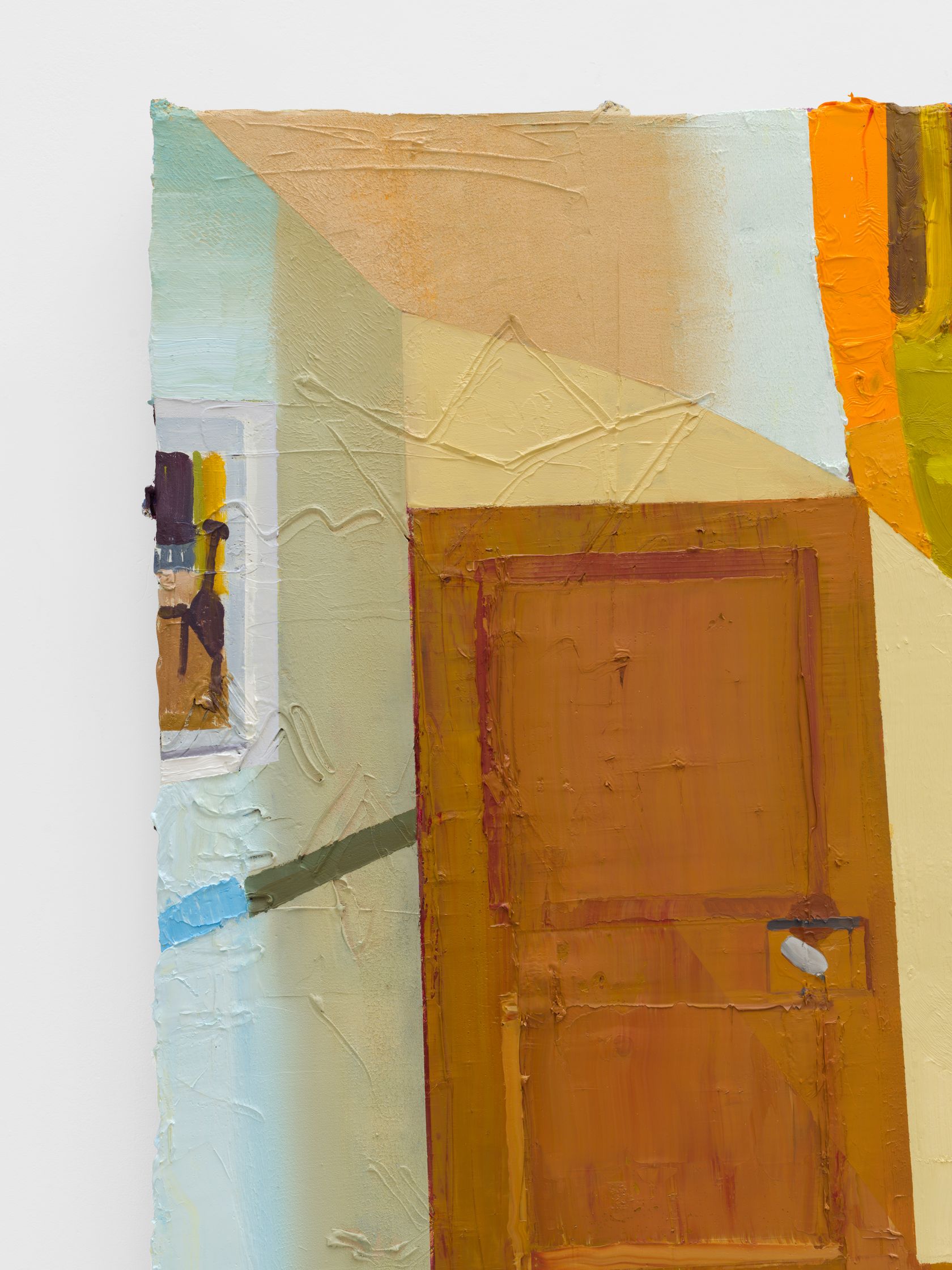
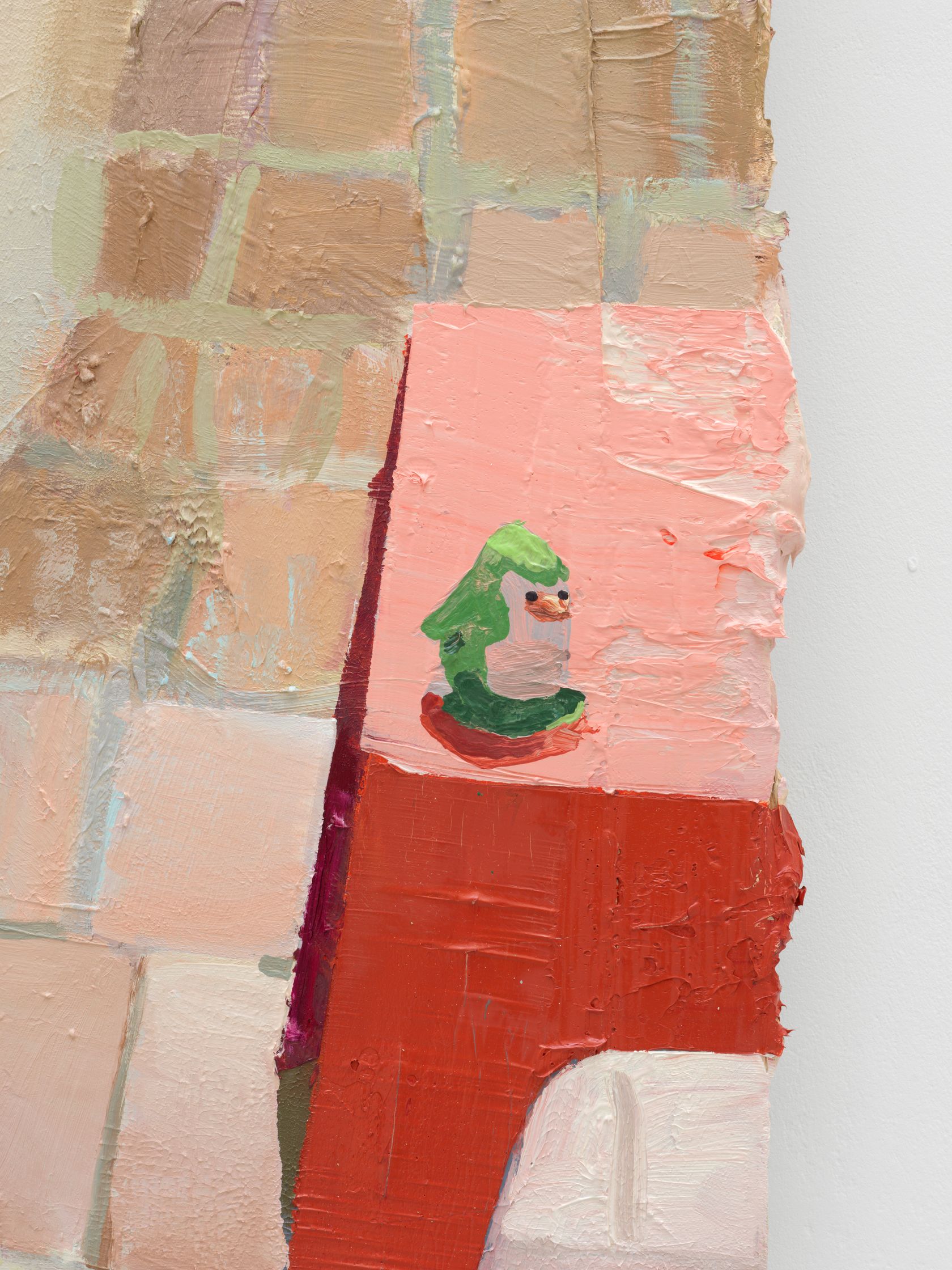
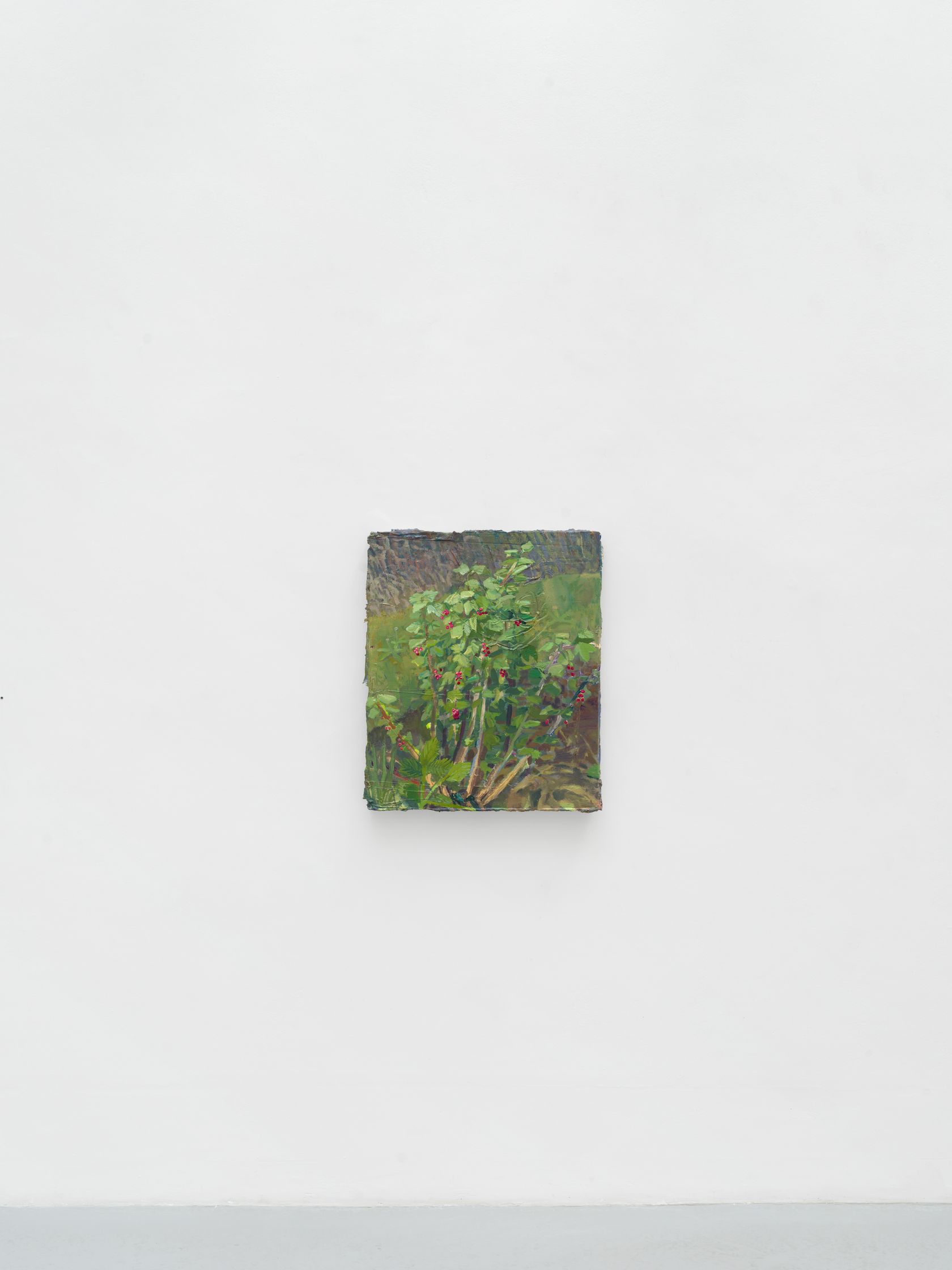
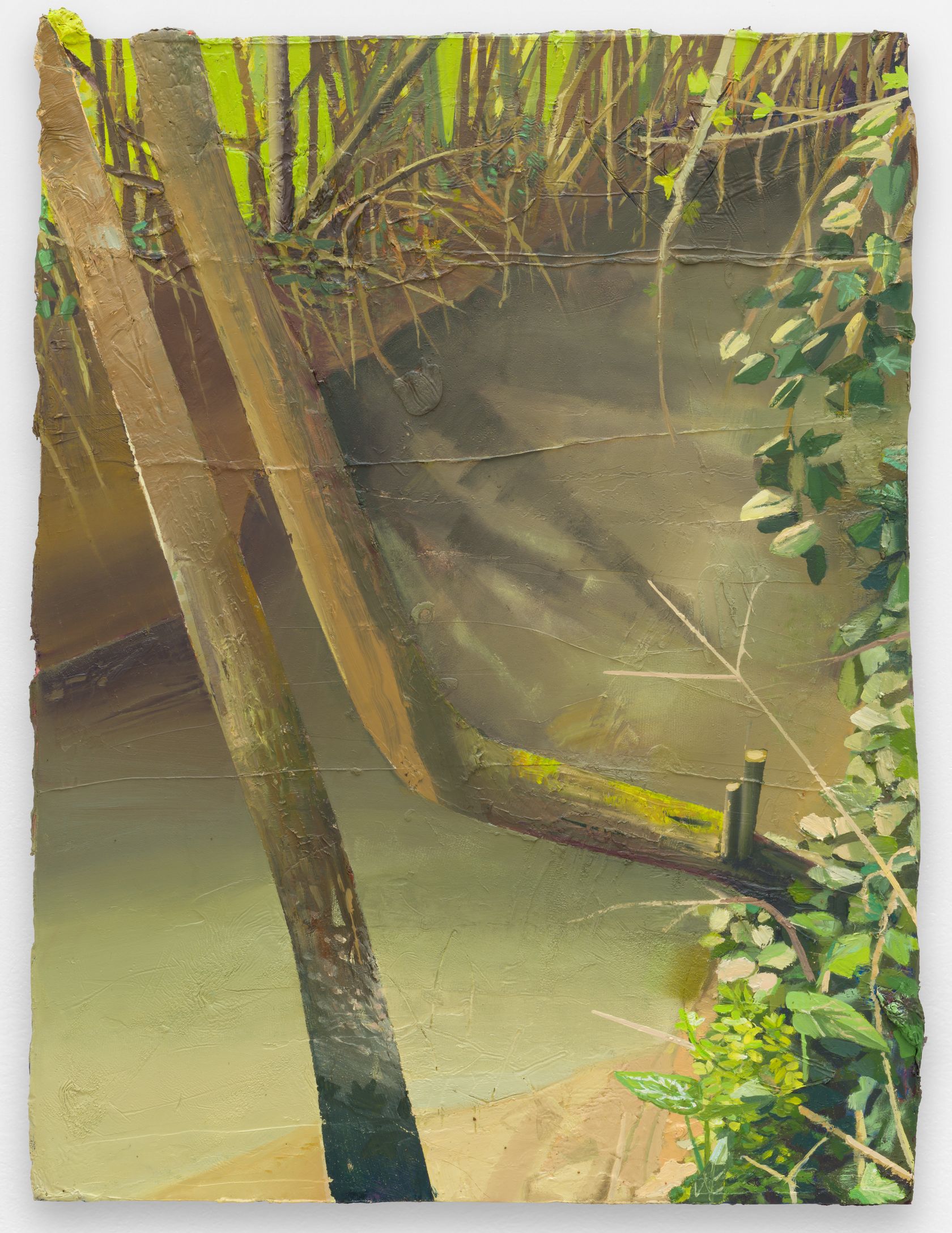
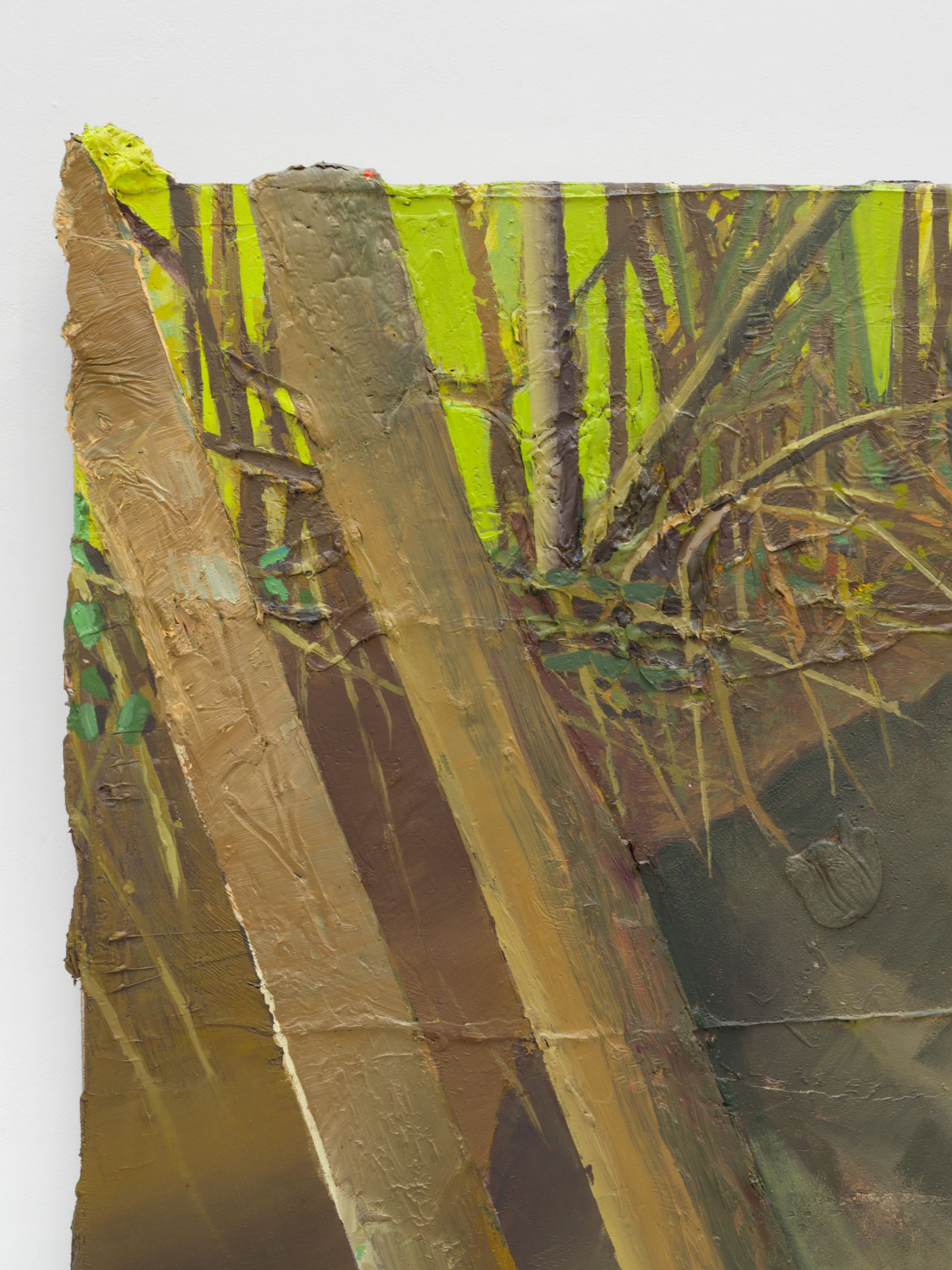
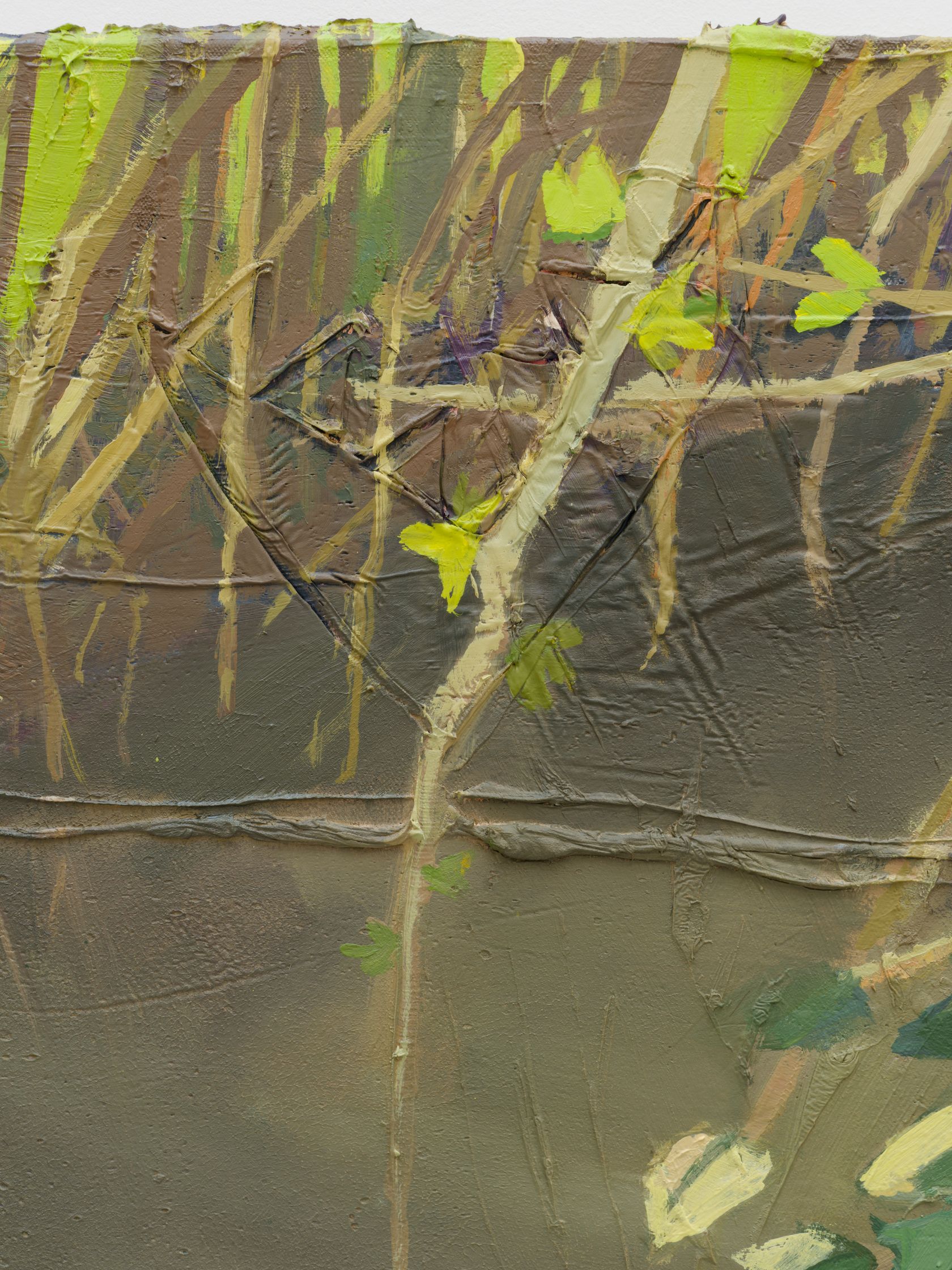
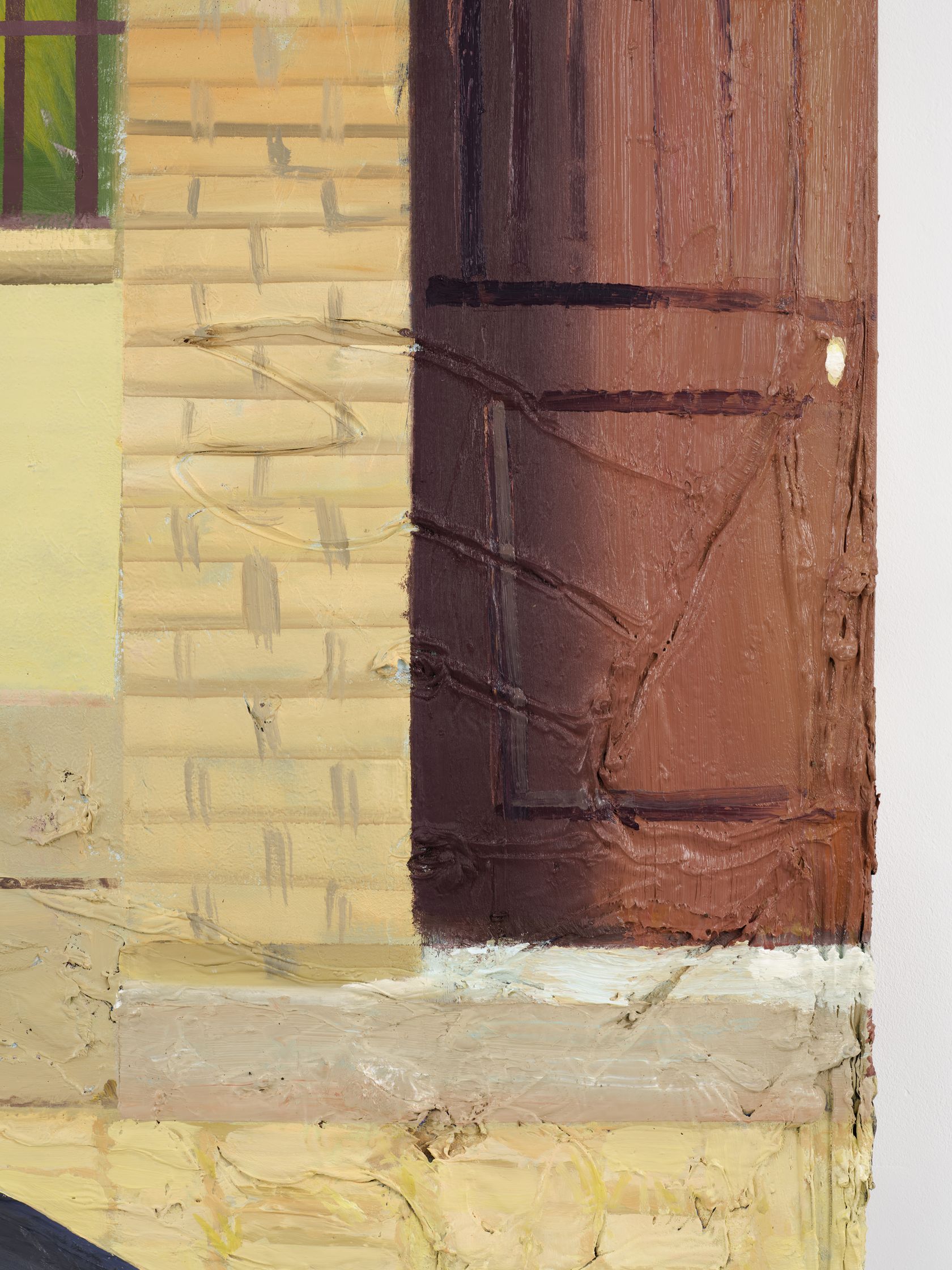
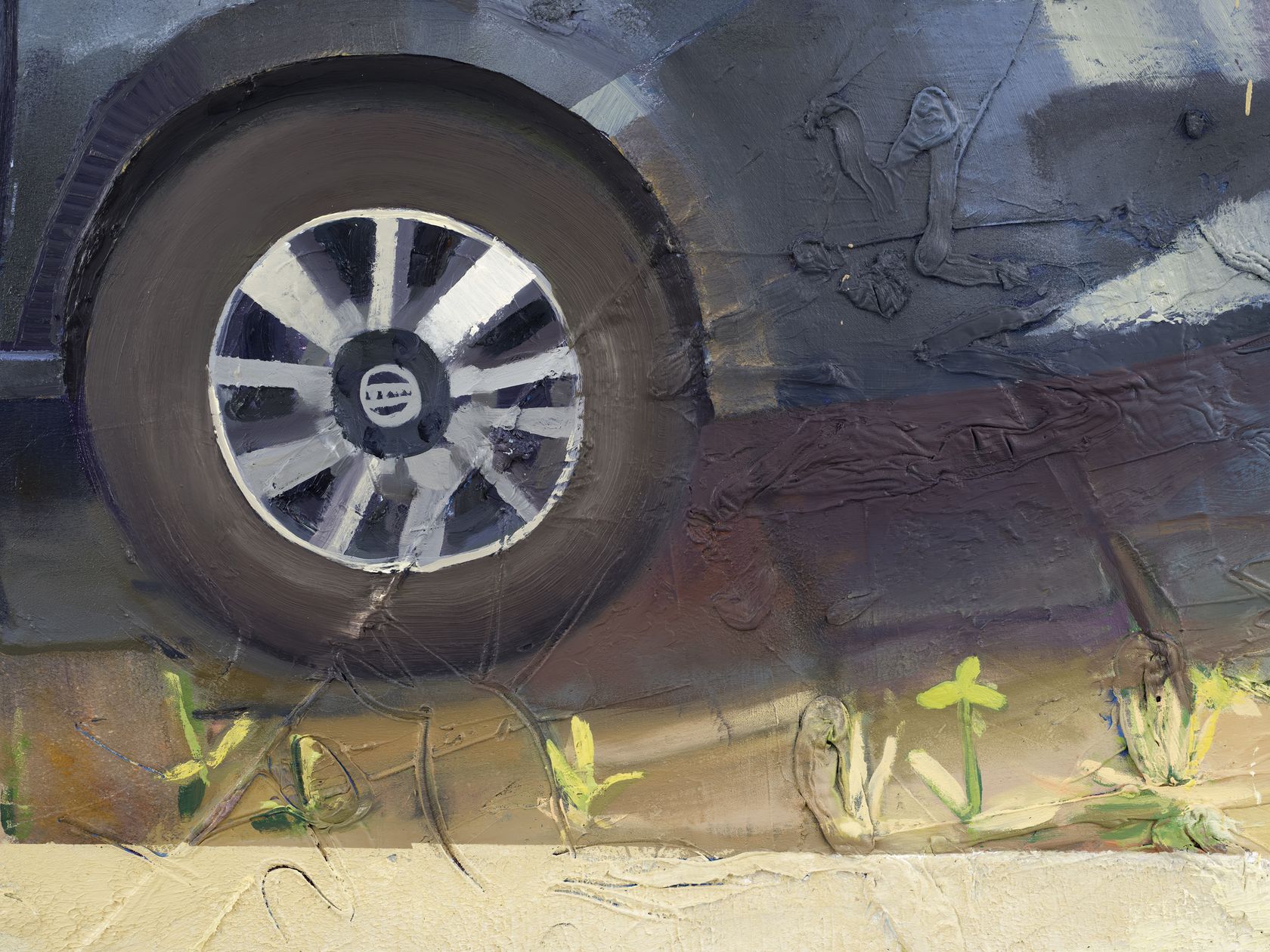
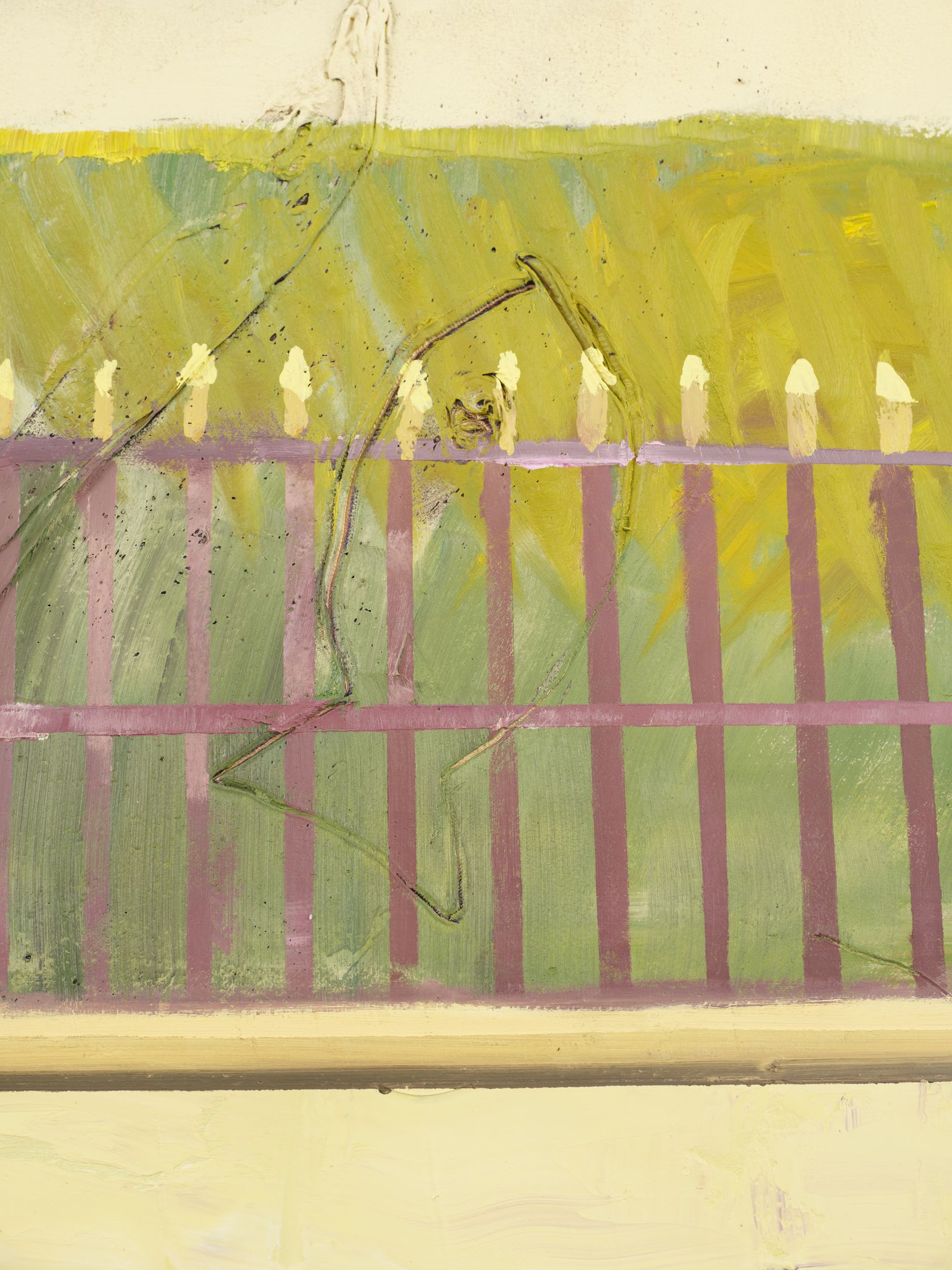
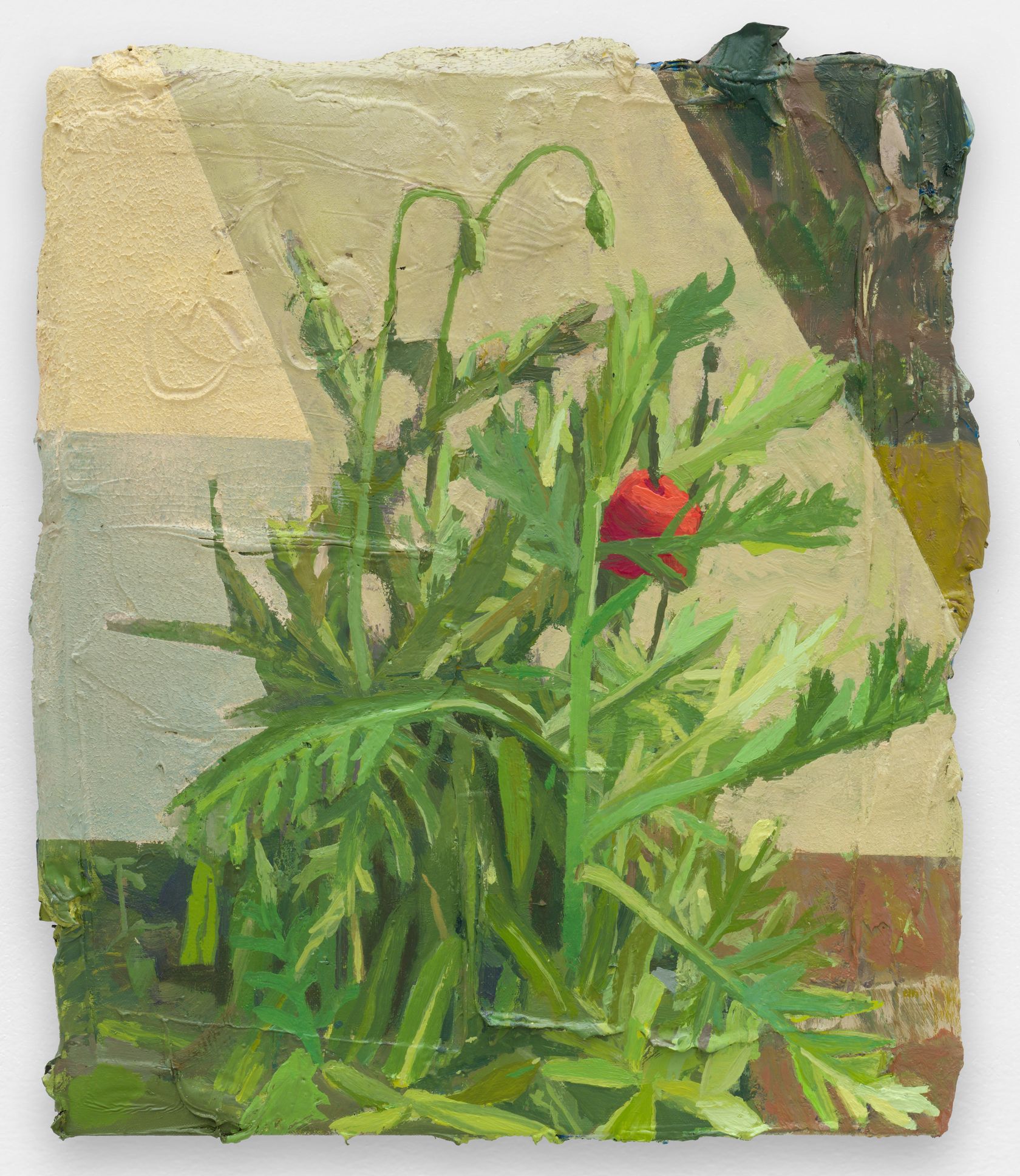
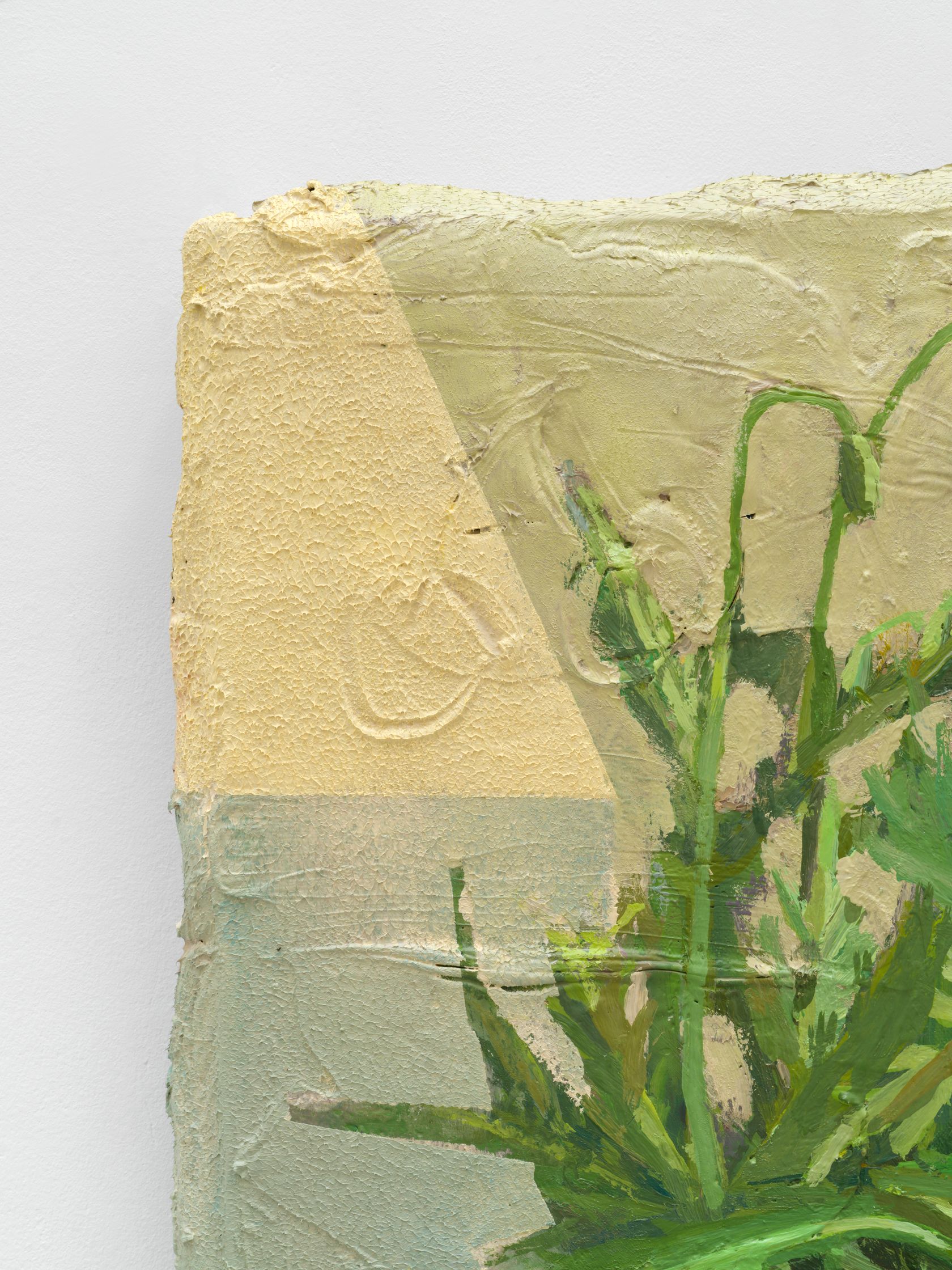
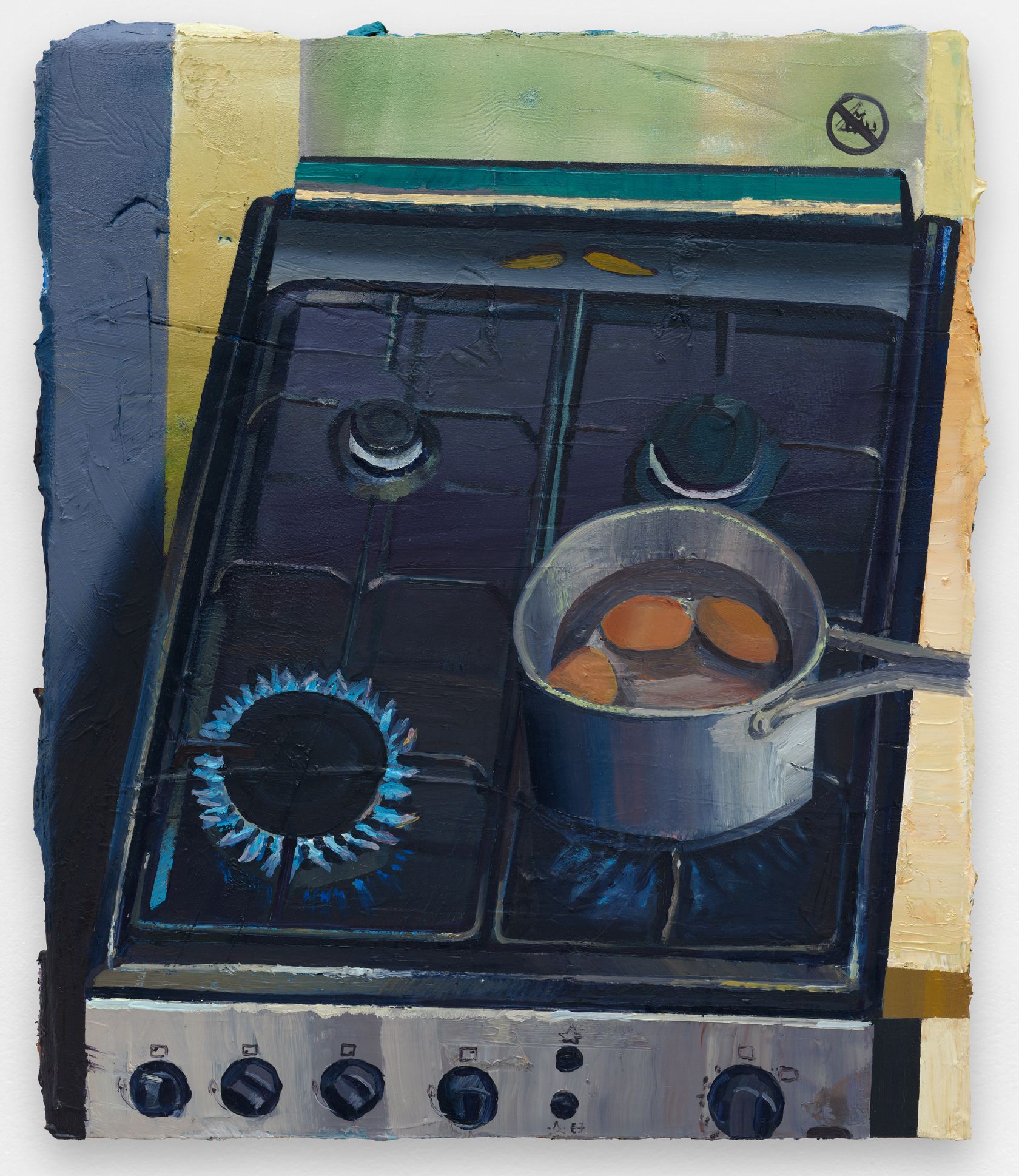
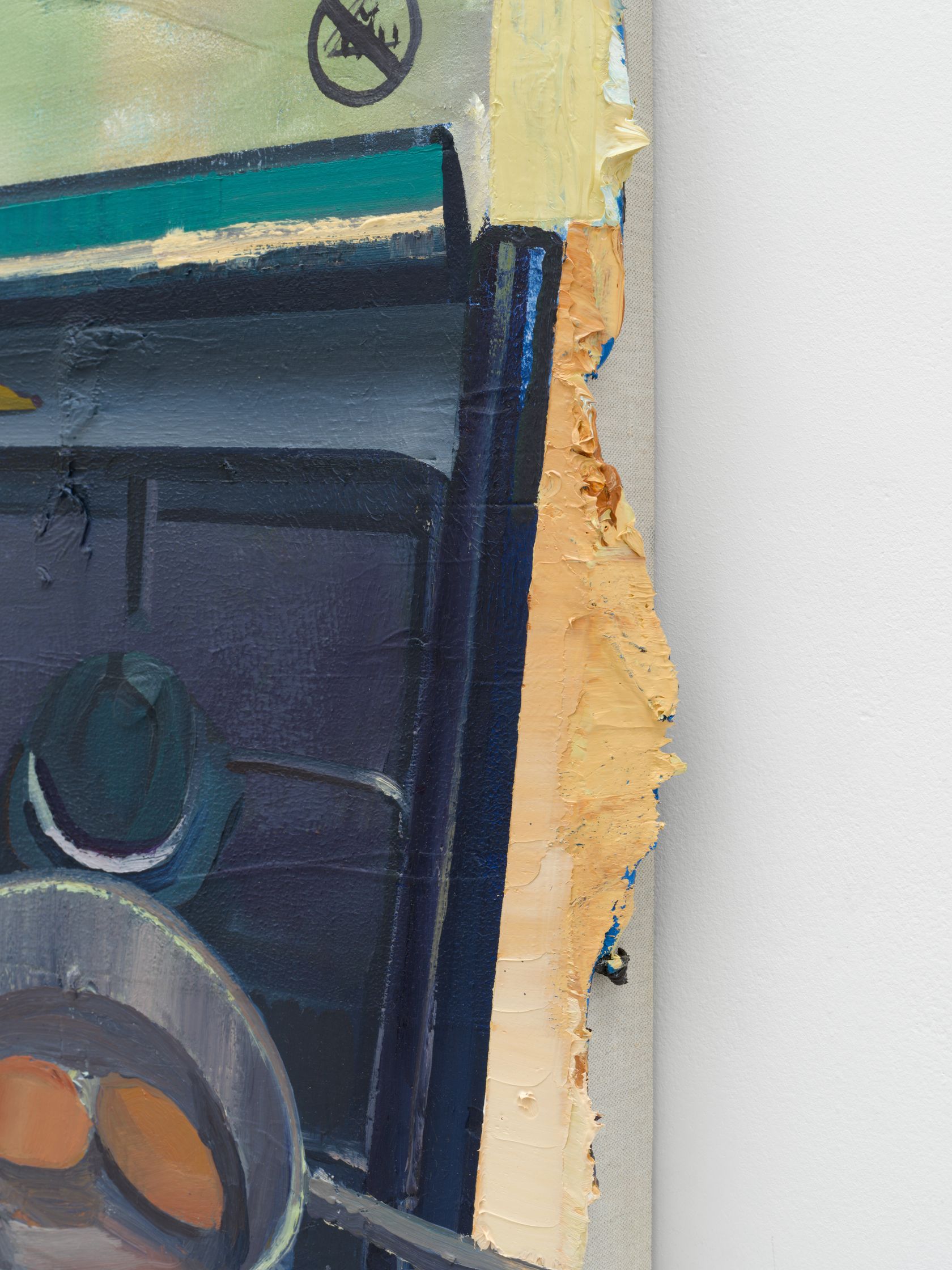
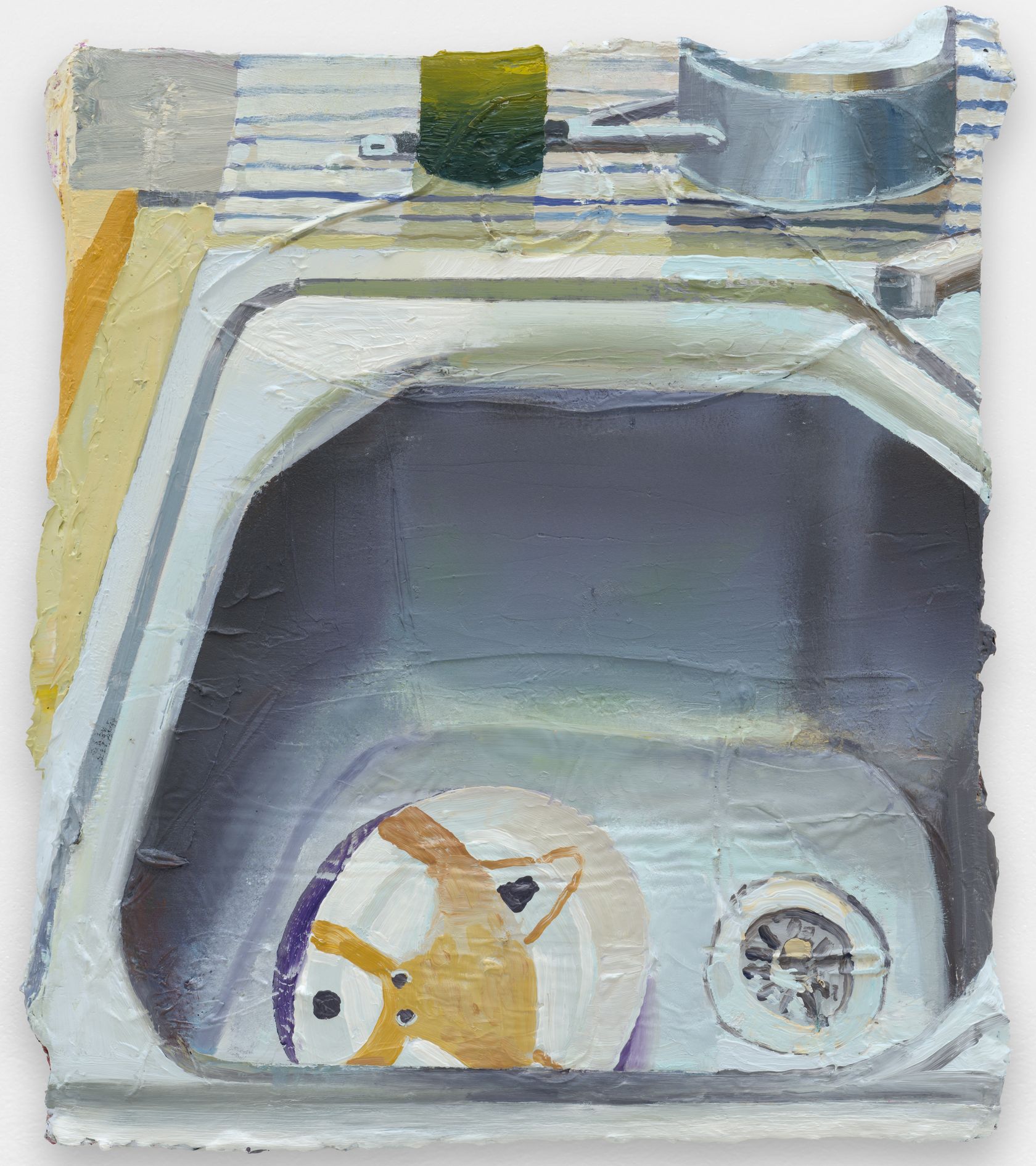
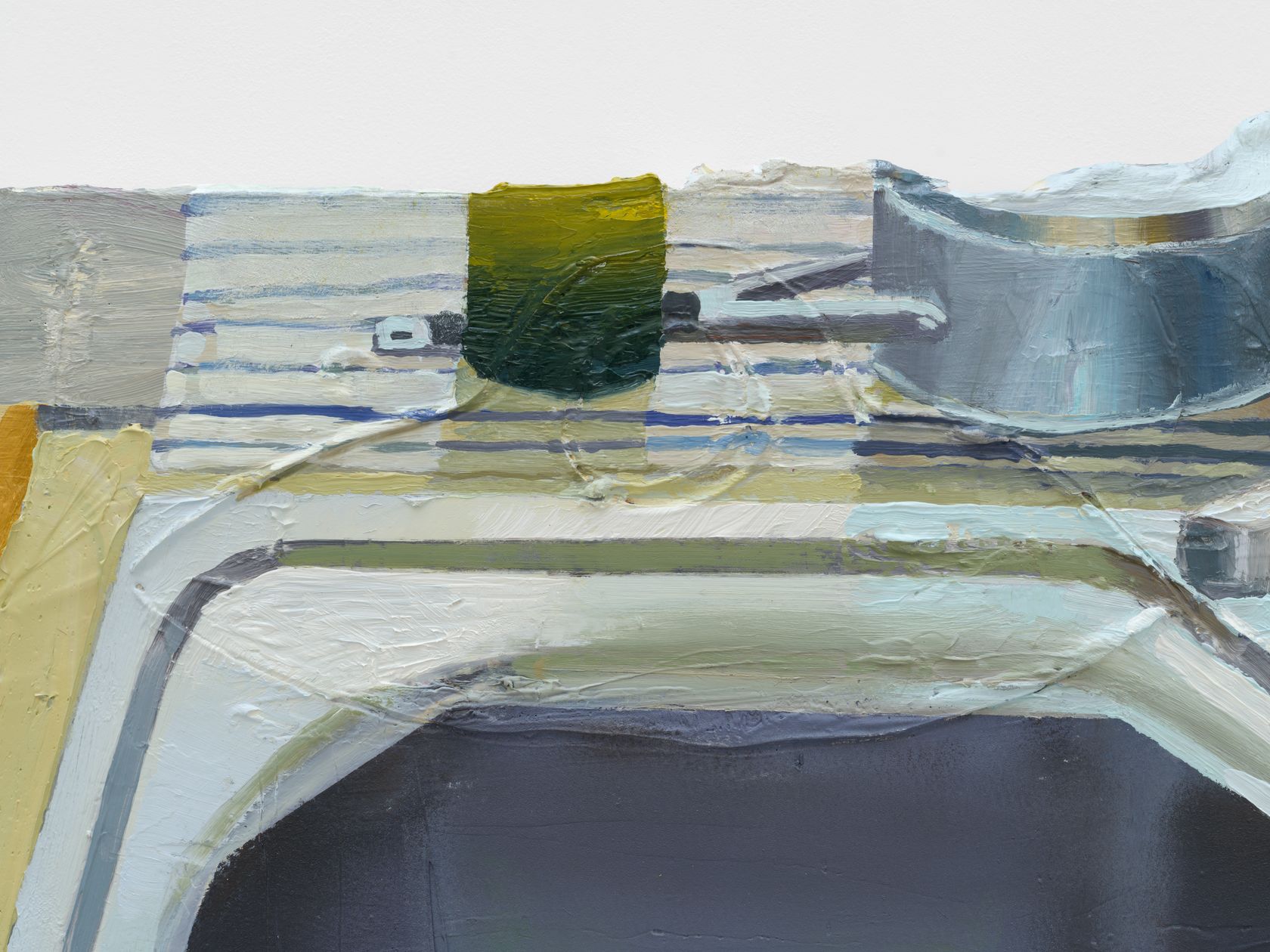
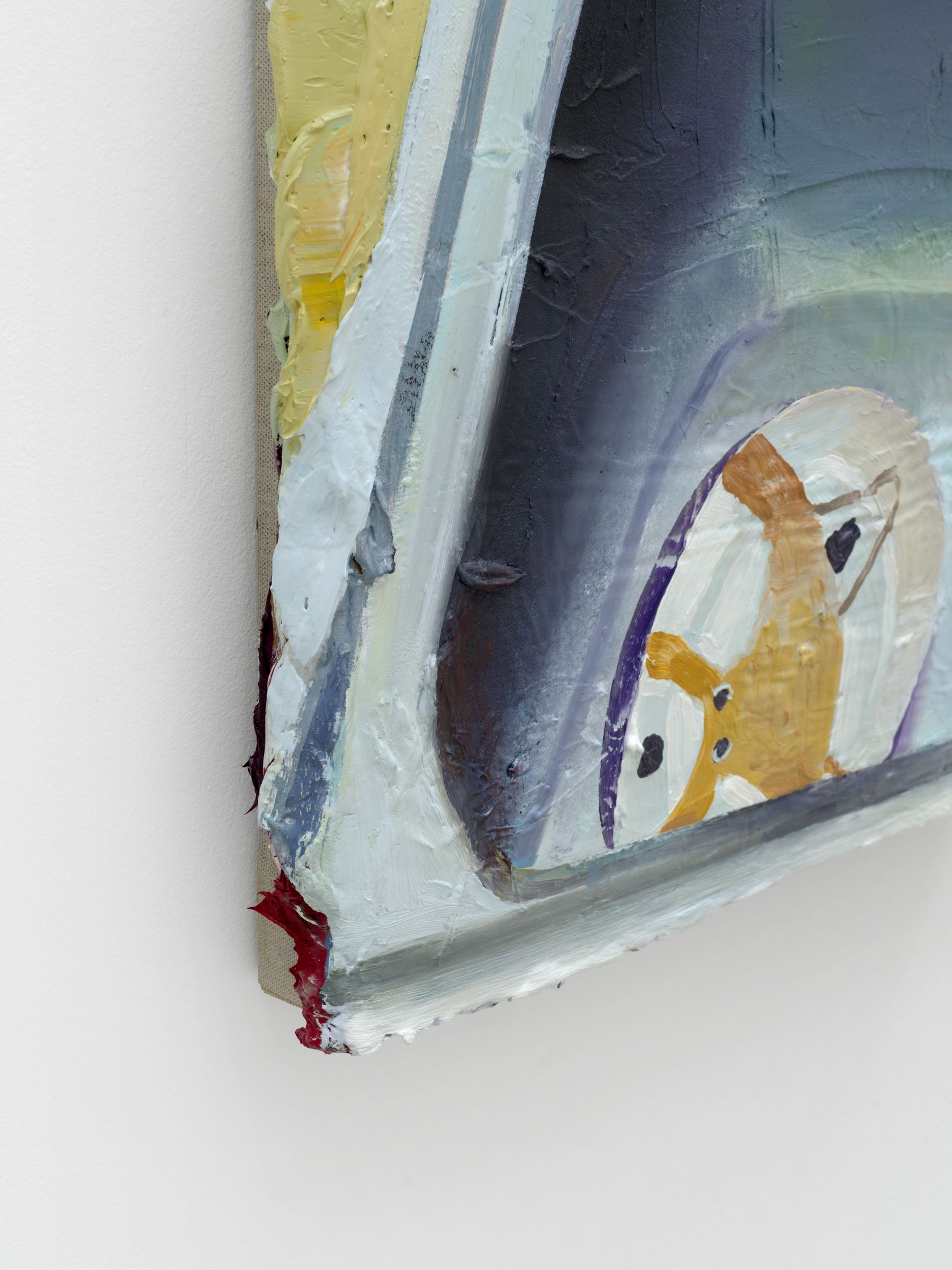
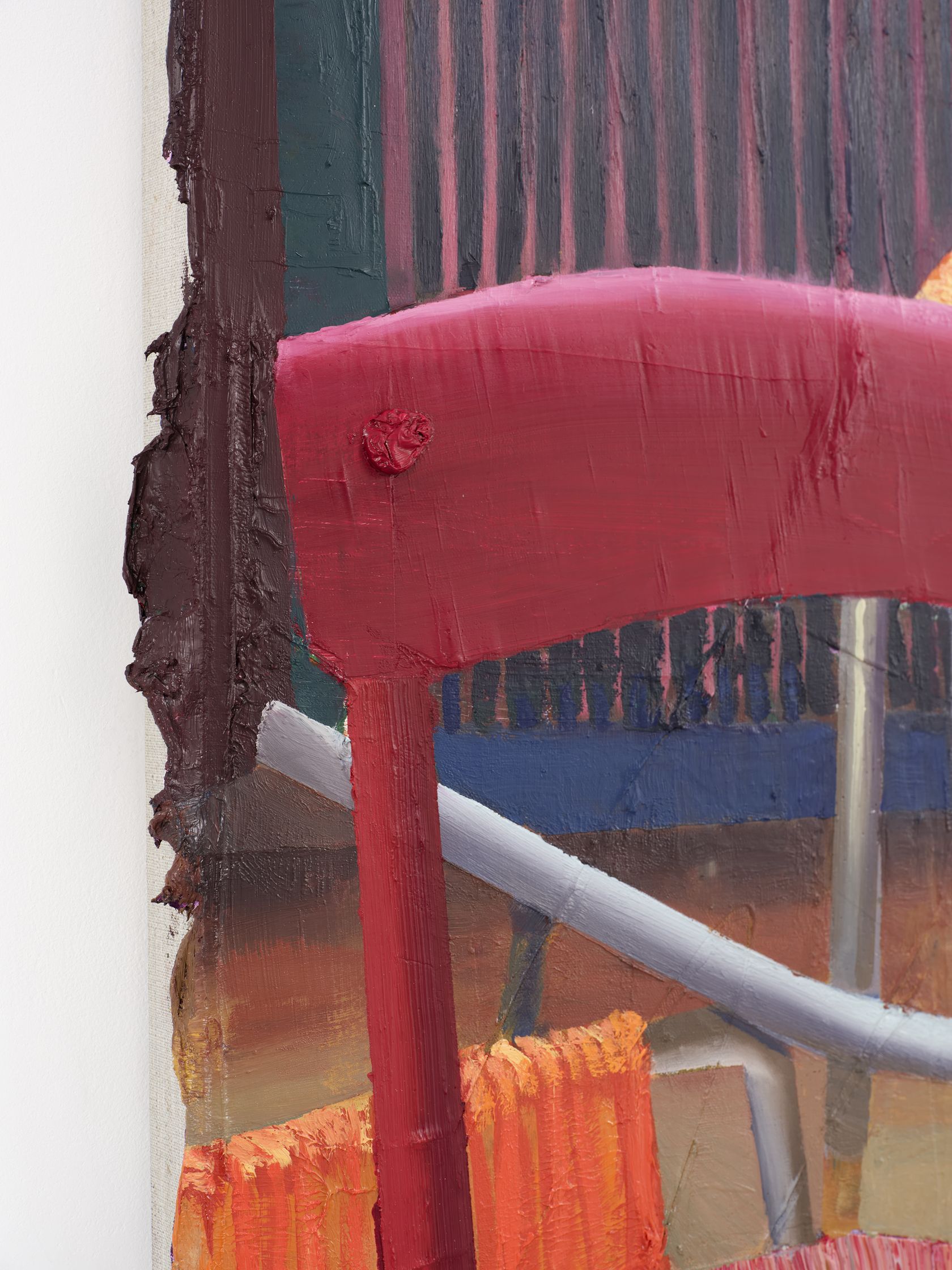
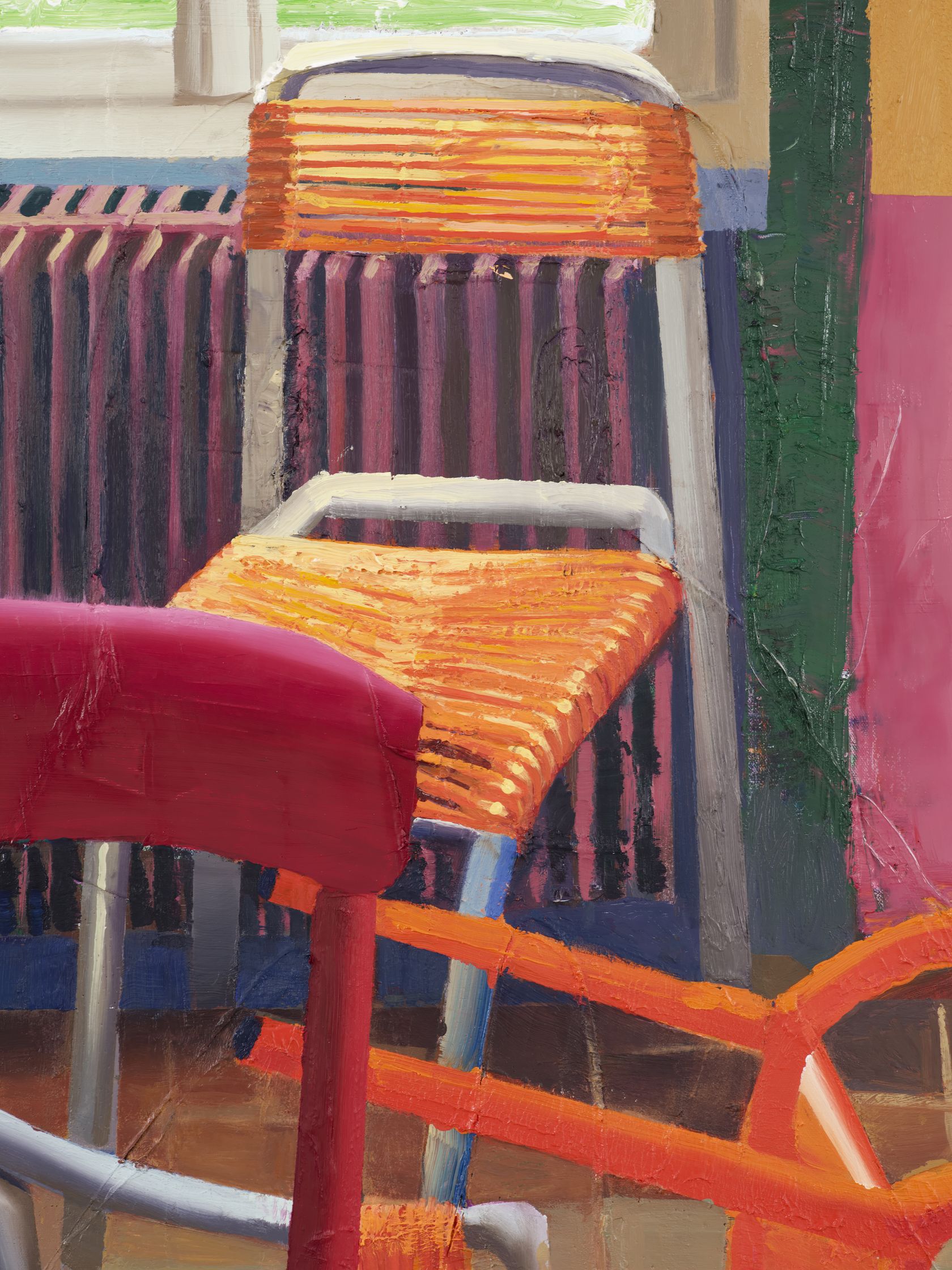
Each of Mathieu Cherkit’s paintings reveals a close attention to framing. In his practice, which plays with the thickness of the paint and spills beyond the sharp edges of the stretcher, one senses how central the question of the frame is. Working in this way also raises questions of the object and the fragment, and thus of the relationship between the painted image and materiality—that of the things represented, or of painting itself. The thickness of the paint, which allows for revisions, complicates the rendering of detail, since the grain of the canvas has disappeared beneath successive layers.
It has been written that Mathieu Cherkit’s work is figurative, that, at the same time, it borrows from abstraction, and that, ultimately, it depicts his domestic environment. These observations, each of which offers a way of approaching part of his pictorial production, focus on what is represented, whereas it is the paintings as a whole that deserve to be considered. Perhaps it is by attending to their dimensions that we can best approach the investigation pursued by Mathieu Cherkit: each format is chosen because it corresponds to the scale of one of the objects represented. What is at stake is less the realism of the gaze than the singular relationship between the format of the object and the format of its representation. From this practice, in which the canvas is scaled to the object, itself distorted by the successive viewpoints brought to bear upon it, emerges a sense of strangeness. With their interwoven planes and receding contours, as though the paint itself were running, these everyday scenes place the viewer in a hallucinatory state, scrutinized in turn by the yellow eyes of Chat Noir.
— Camille Richert
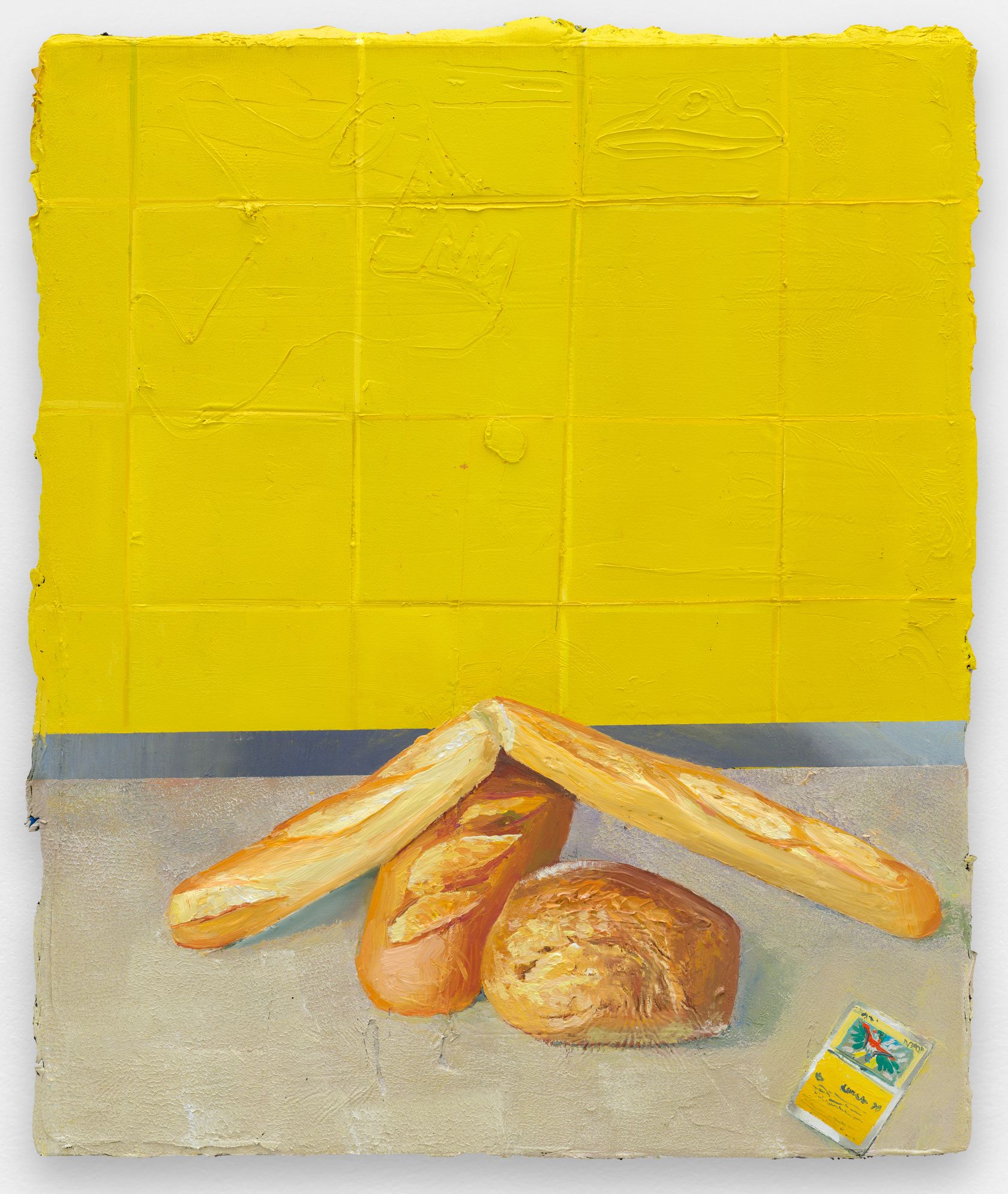
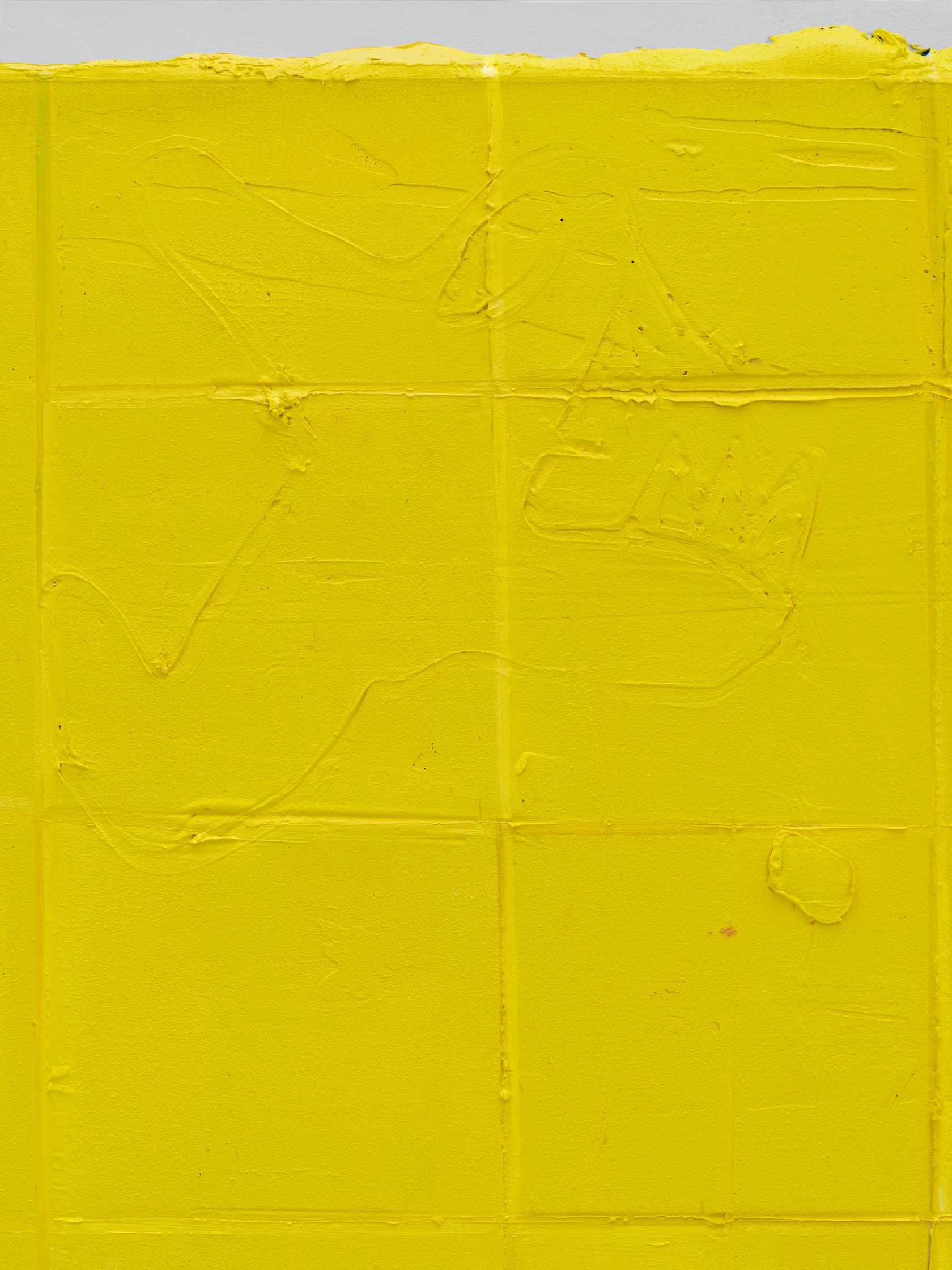
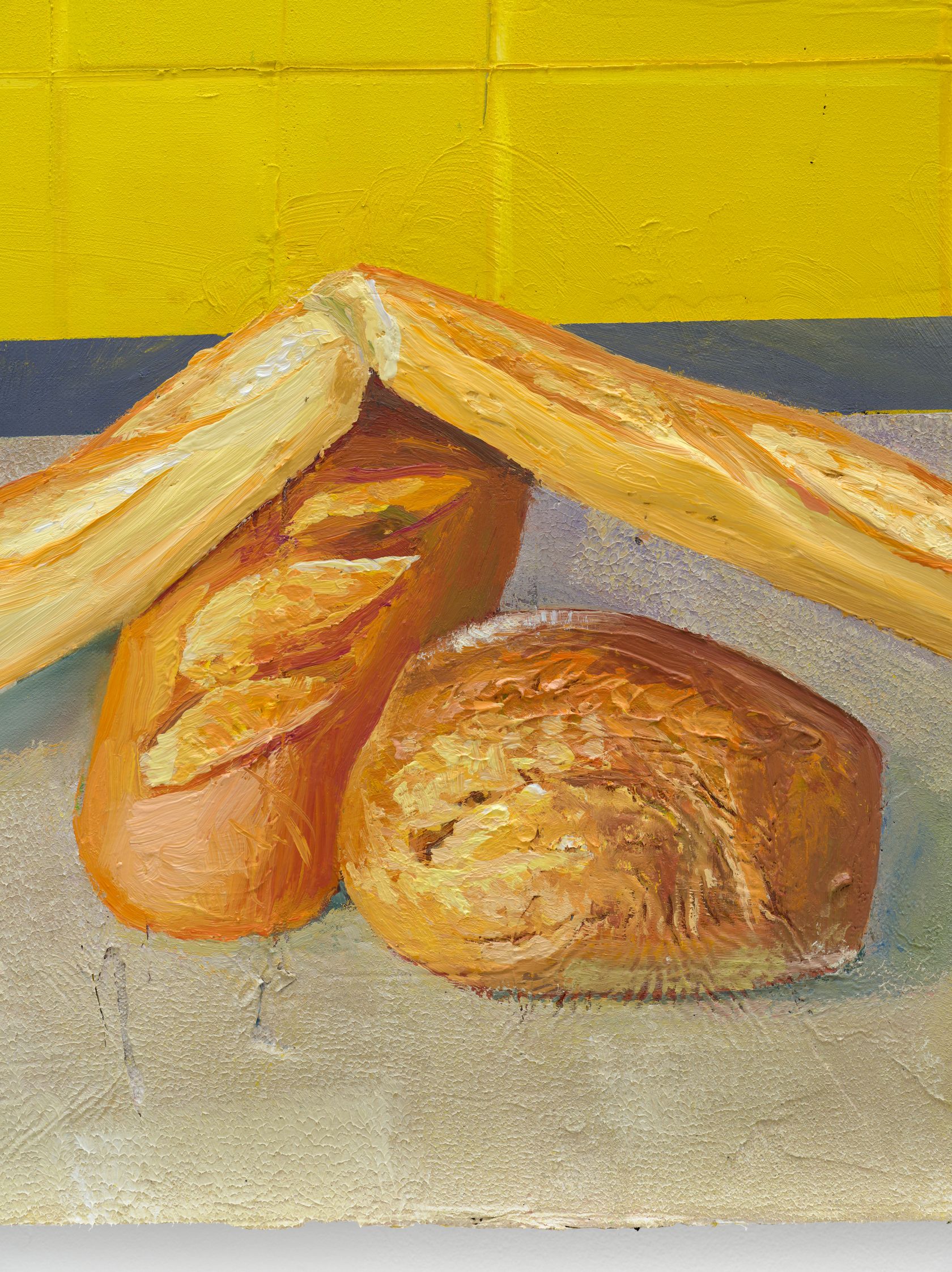
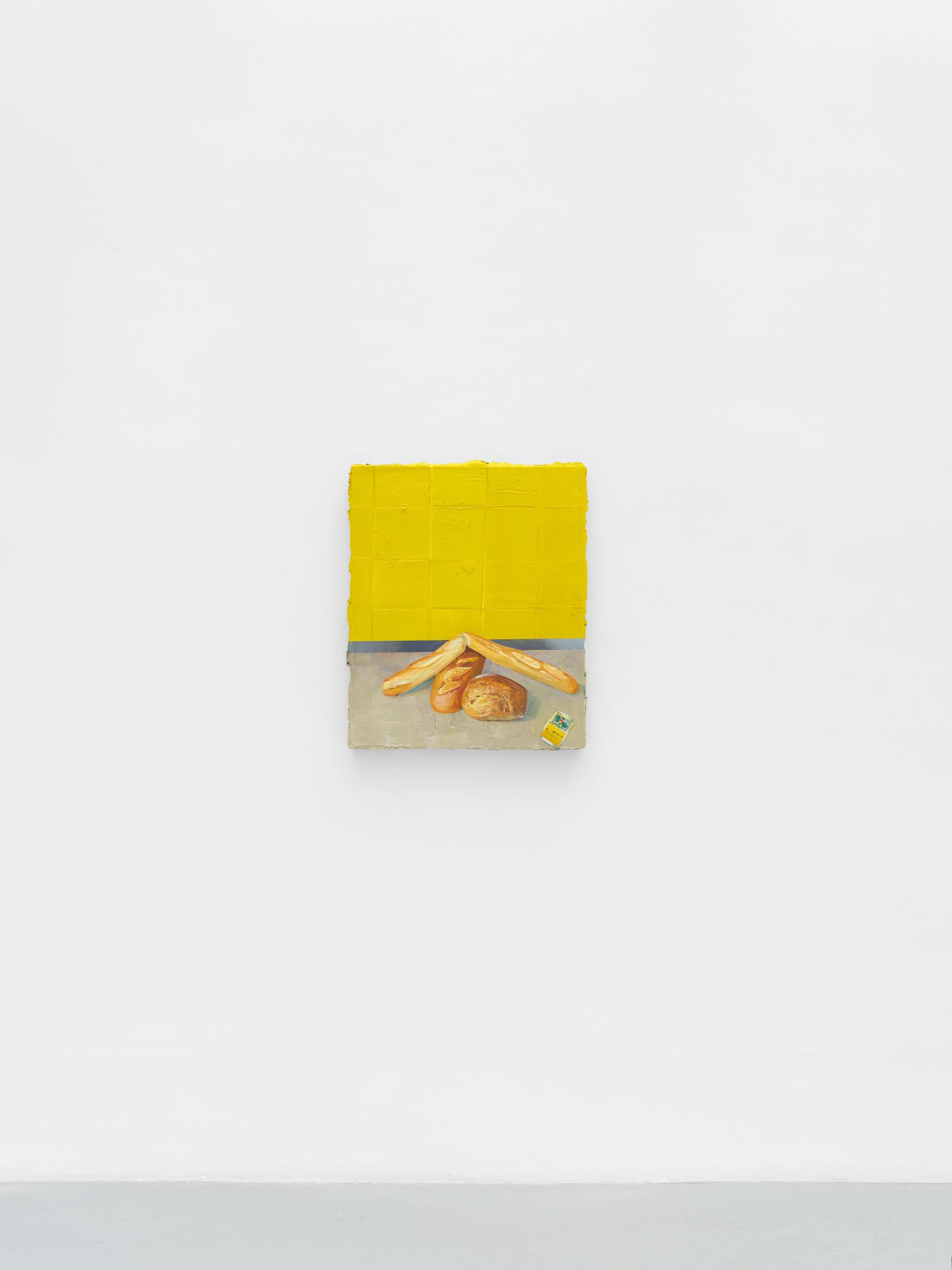
- Mathieu Cherkit
- Du pain et du jaune , 2026
- Oil on canvas
-
- 73 ×
- 61 × cm
- 28 3/4 ×
- 24 × inches
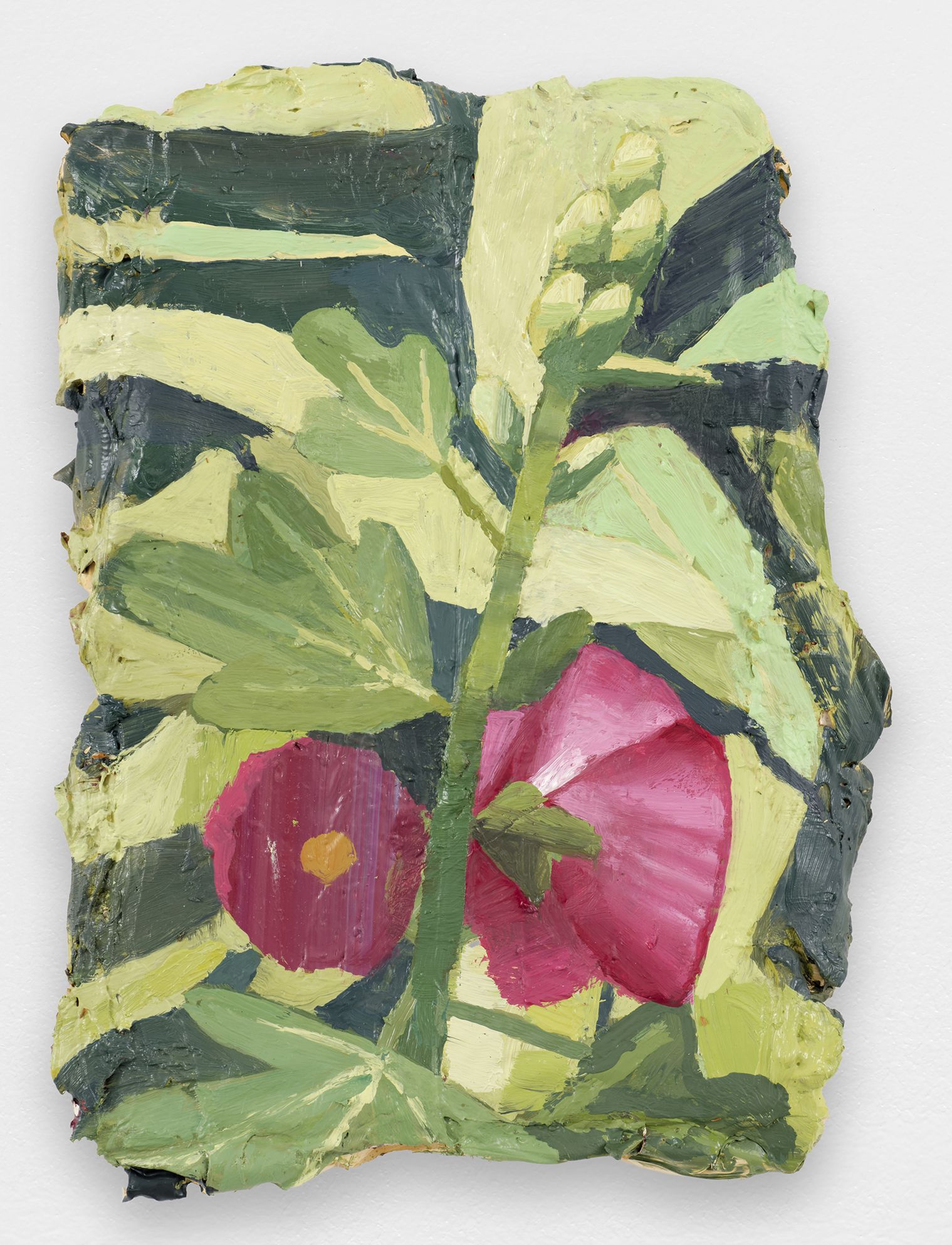
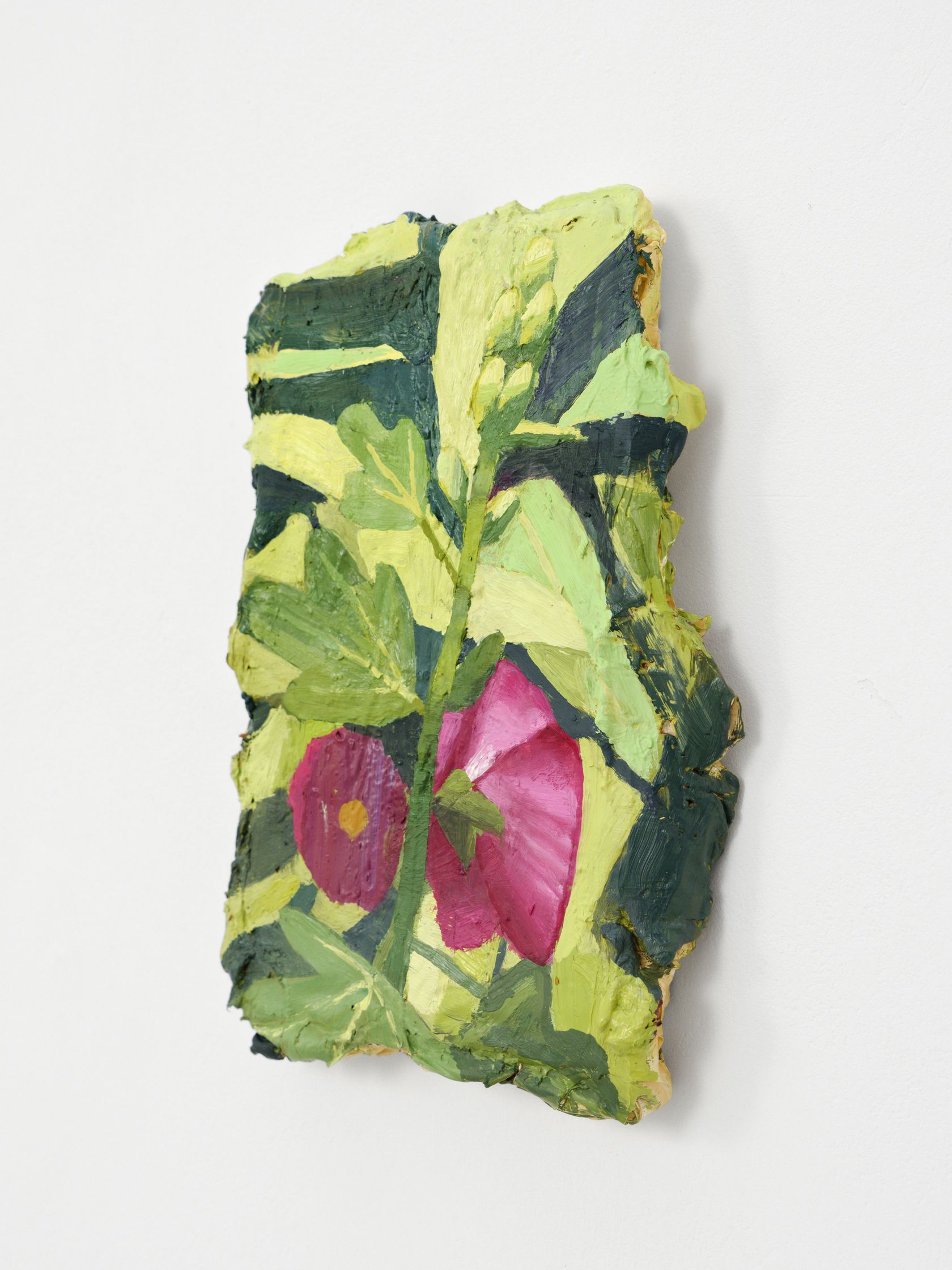
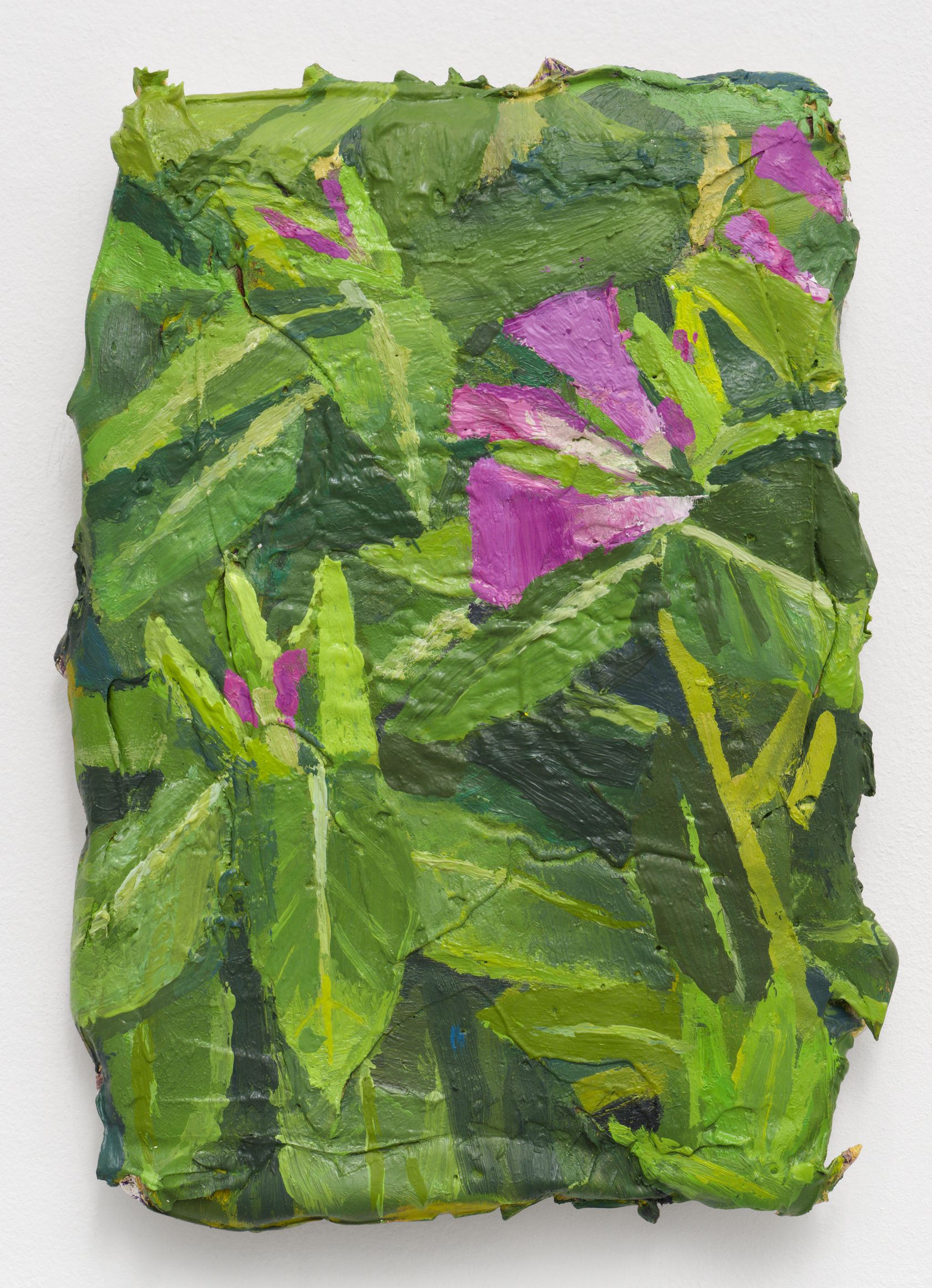
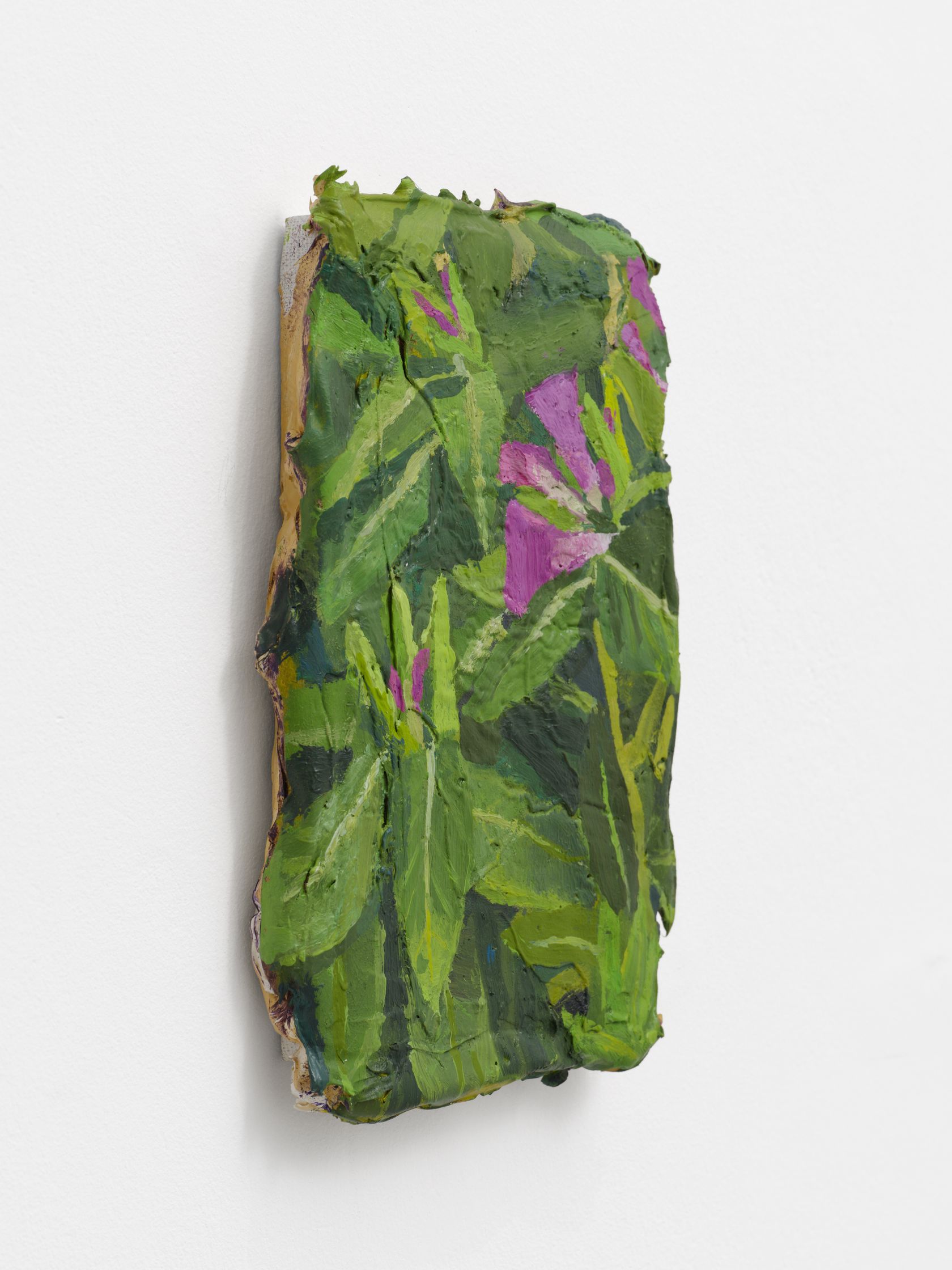
- Mathieu Cherkit
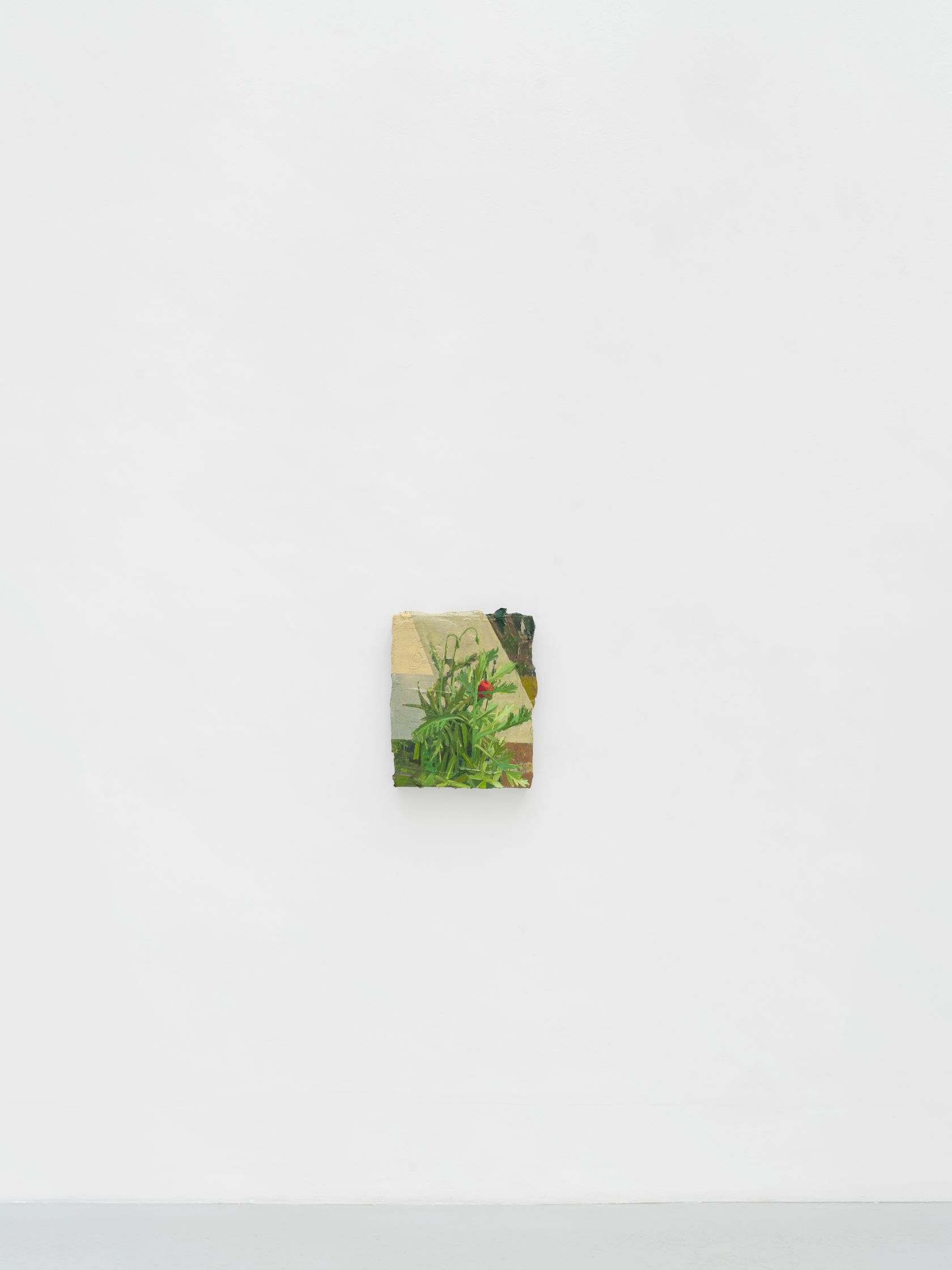
- Mirabilis jalapa , 2026
- Oil on canvas
-
- 22 ×
- 14 × cm
- 8 11/16 ×
- 5 1/2 × inches
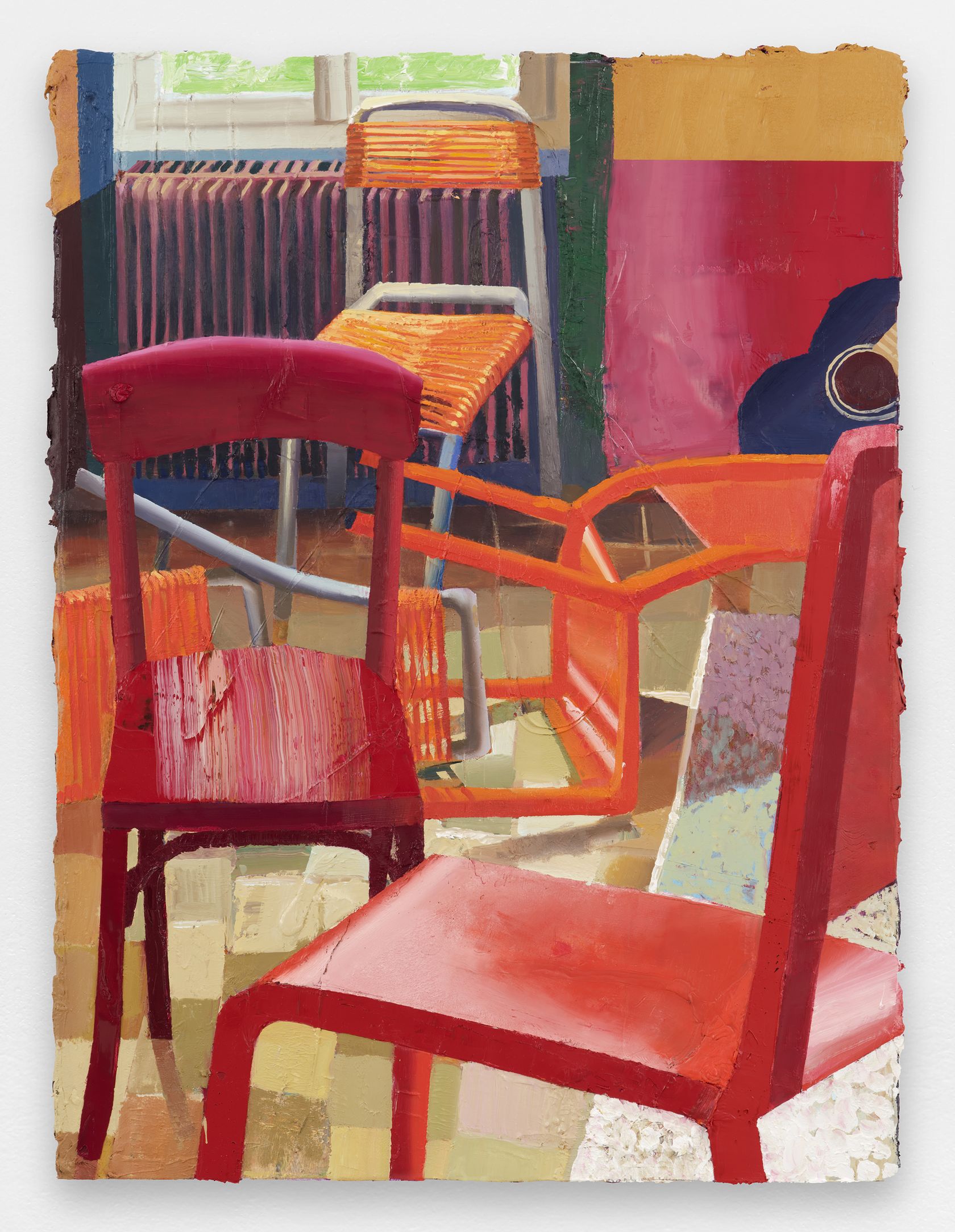
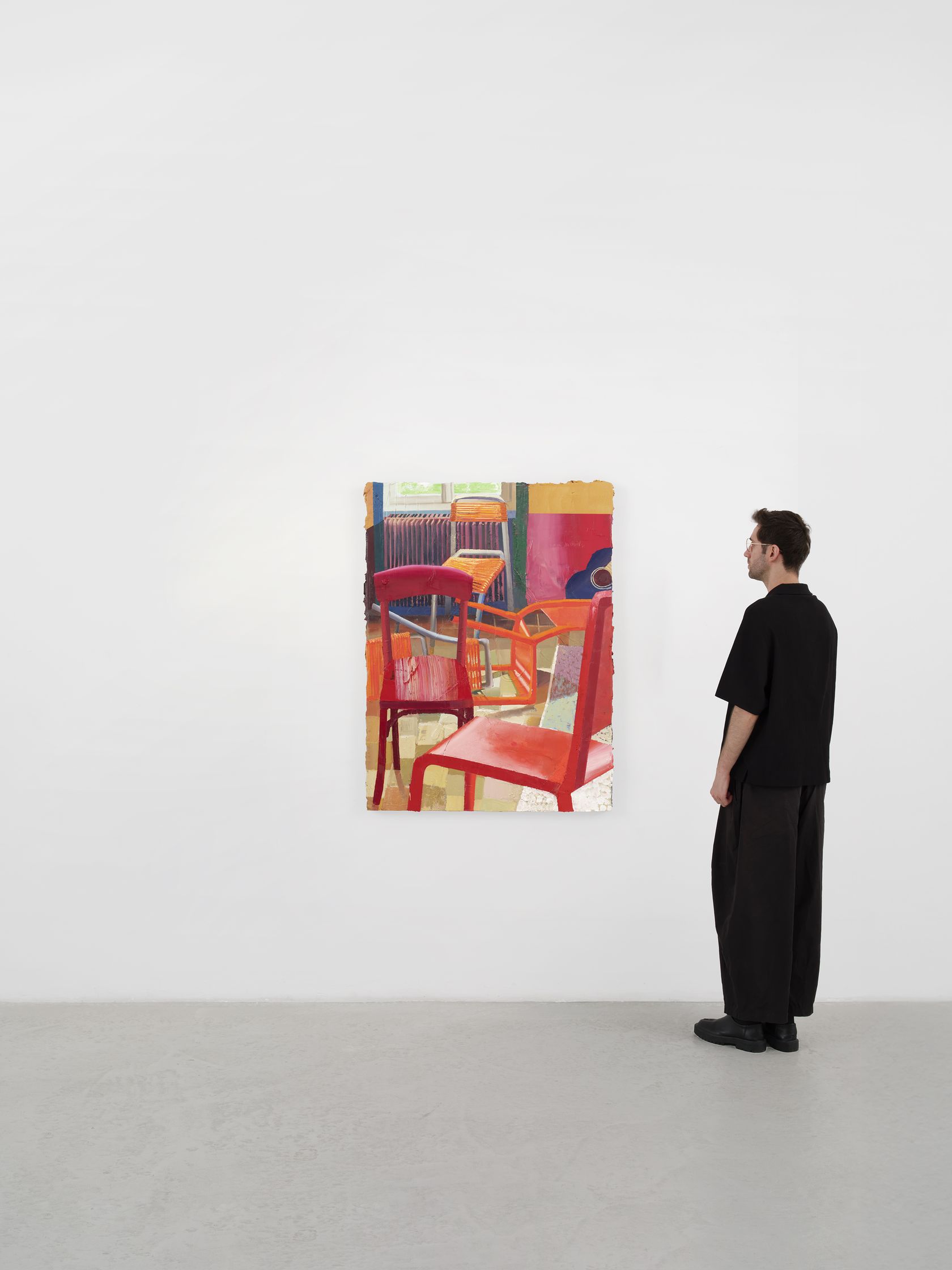
- Mathieu Cherkit
- Red Glitch , 2026
- Oil on canvas
-
- 130 ×
- 97 × cm
- 51 3/16 ×
- 38 3/16 × inches
The interior scenes painted by Mathieu Cherkit are disarmingly familiar, exploring domestic life in all its trivial familiarity. Even in his self-portraits and his street, garden and plant paintings, we are struck by a strange sense of déjà vu. Yet, despite his rendering of the smallest details down to the anecdotal, his painting seems suddenly to shift into a more historical and metaphysical dimension: historical, when he cites his predecessors in the field of painting, in particular those who produced abstract works, even though his own are viscerally figurative; metaphysical, through its temporal and spatial kaleidoscope, disrupting perspective and intersecting planes in the manner of the Cubists. It is from this painting, with its subjects captured directly in thick impasto, that the Mathieu Cherkit’s tender and constantly amazed gaze on his daily life ultimately emerges.
Born in Paris in 1982 and currently living in Vallery (Yonne department in central France), Mathieu Cherkit graduated from the Nantes School of Fine Arts and the Hochshule für Grafik und Buchkunst in Leipzig, and has become a major figure of the emerging generation of French figurative painters. He was a finalist for the Jean-François Prat Prize (2013), the Science-Po Prize for Contemporary Art (2013) and the Antoine Marin Prize (2011). His works are included in numerous public collections—the Centre National des Arts Plastiques, the Museum of Modern Art in Paris, the MO.CO., the Musée Estrine in Saint-Rémy de Provence and the Musée des Avelines in Saint-Cloud. They also feature in private collections such as the Salomon Foundation and the Colas Foundation in France, as well as the Caldic Collection / Voorlinden Museum and the AkzoNobel Art Foundation in the Netherlands.