To learn more about available works, please provide your contact information
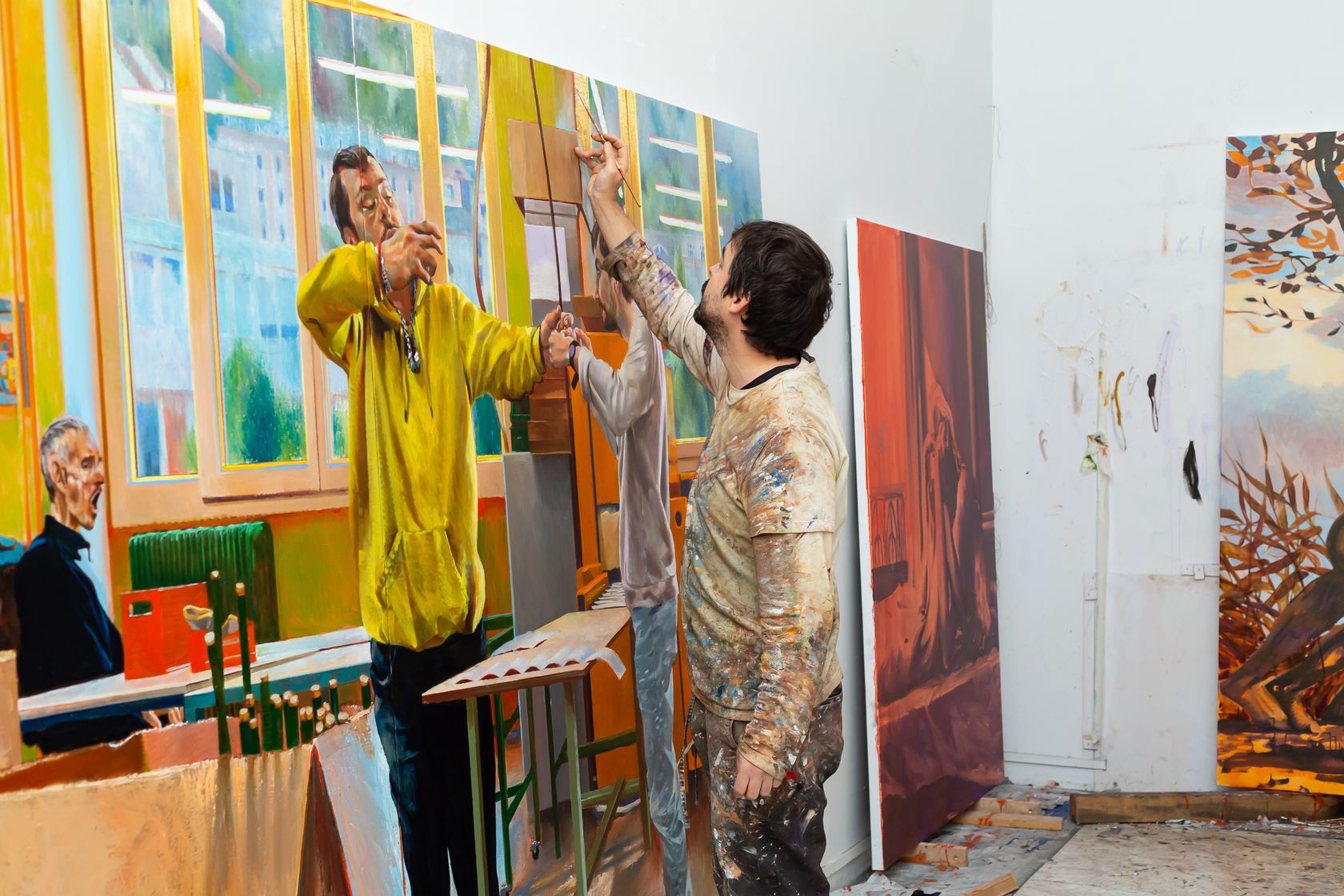
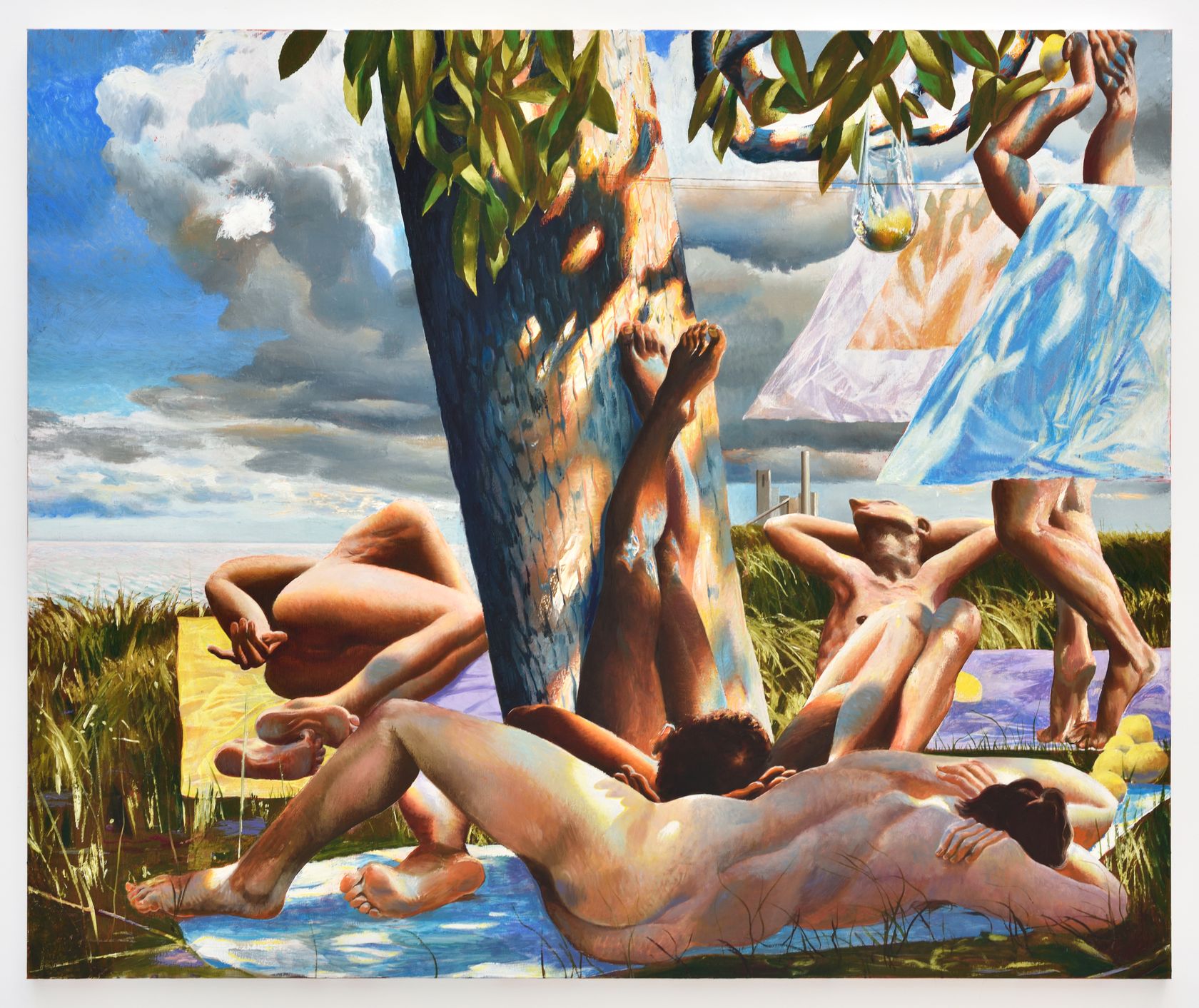
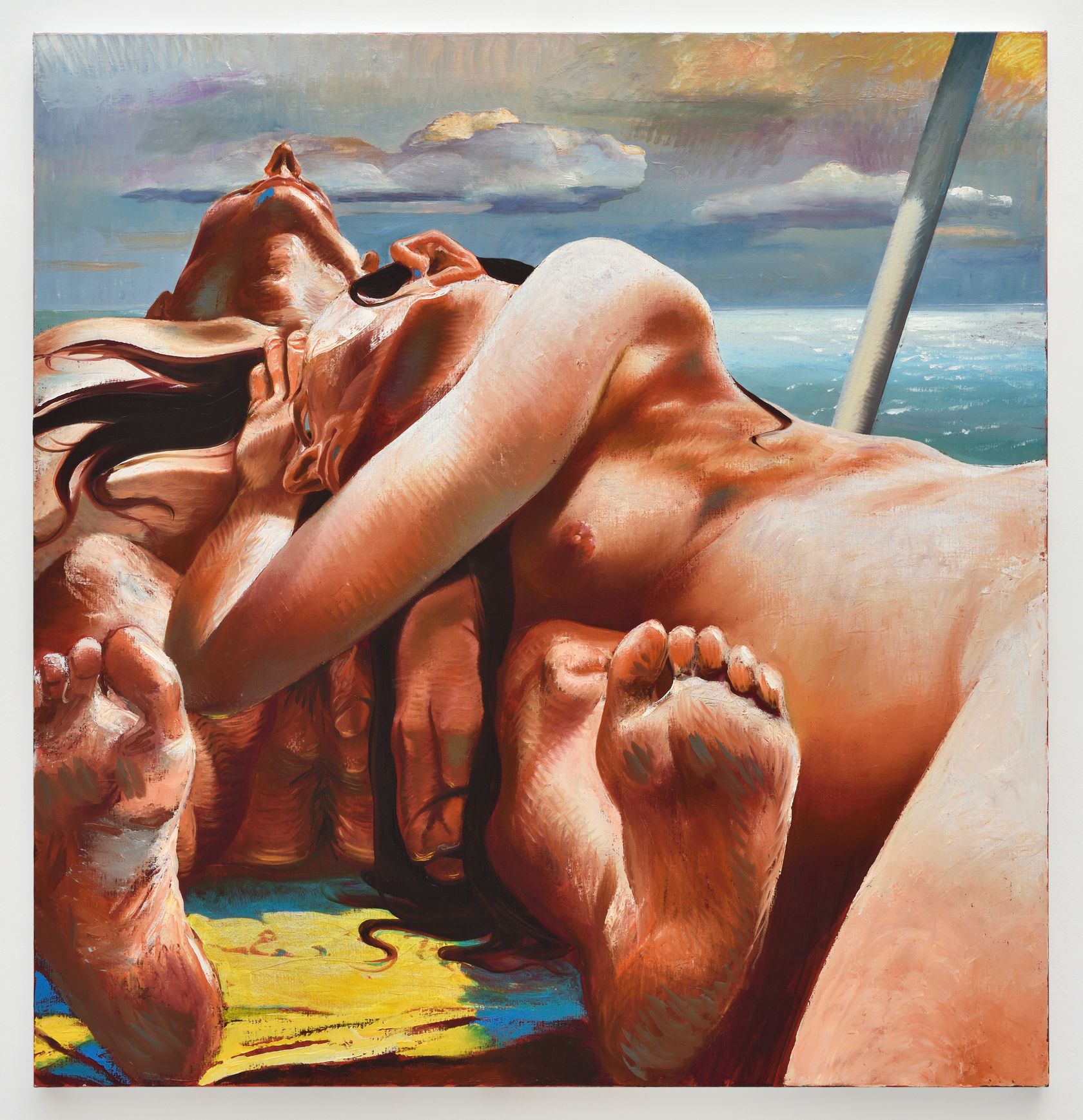
Often, with Laurent Proux’s painted bodies, we are not quite sure who owns which limb; there is an overall delightful confusion or a sort of organic pooling. The bodies made available come together and hybridise. Plugging in on each other, connecting their emotions via a caress or an embrace, they escape conventional desire-induced projections. Something from the Mannerist legacy runs through these pictures, namely in these particularly extravagant melees of bodies reminiscent, for example, of Bronzino’s in An Allegory with Venus and Cupid (c. 1545, National Gallery, London).
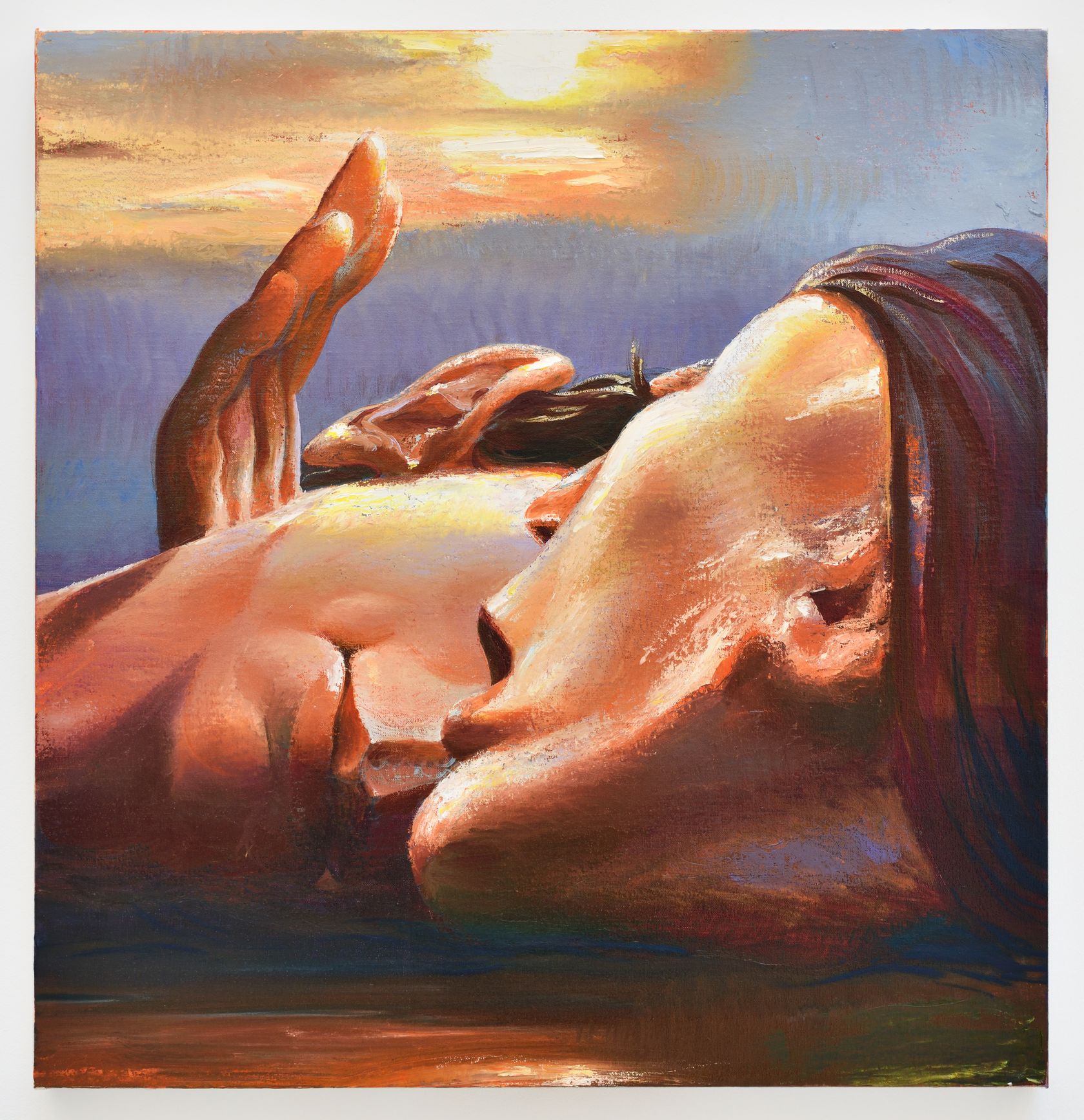
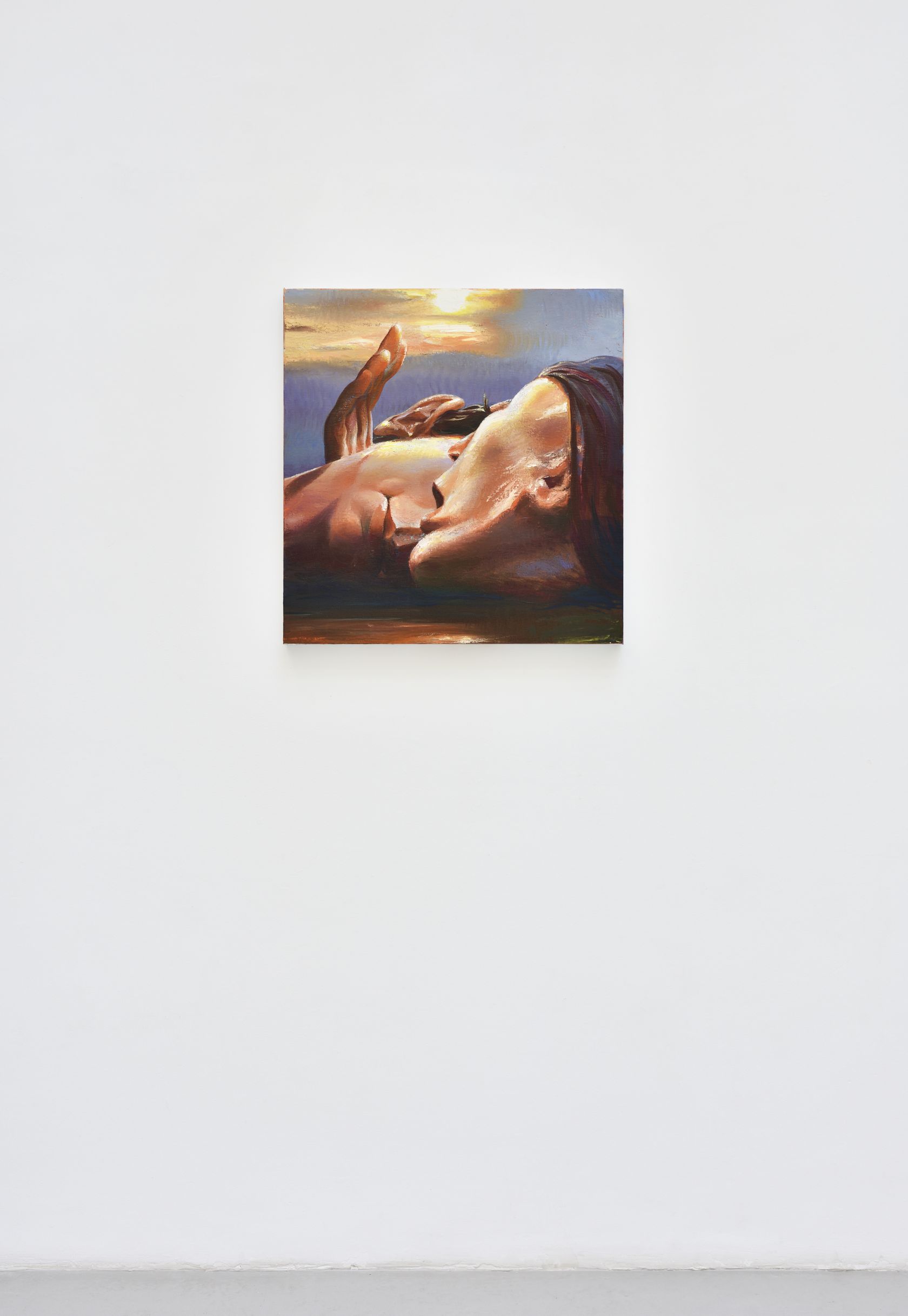
- Laurent Proux
- Sunset Tears , 2025
- Oil on canvas
-
- 62 ×
- 65 ×
- 3.5 × cm
- 24 7/16 ×
- 25 9/16 ×
- 1 3/8 × inches
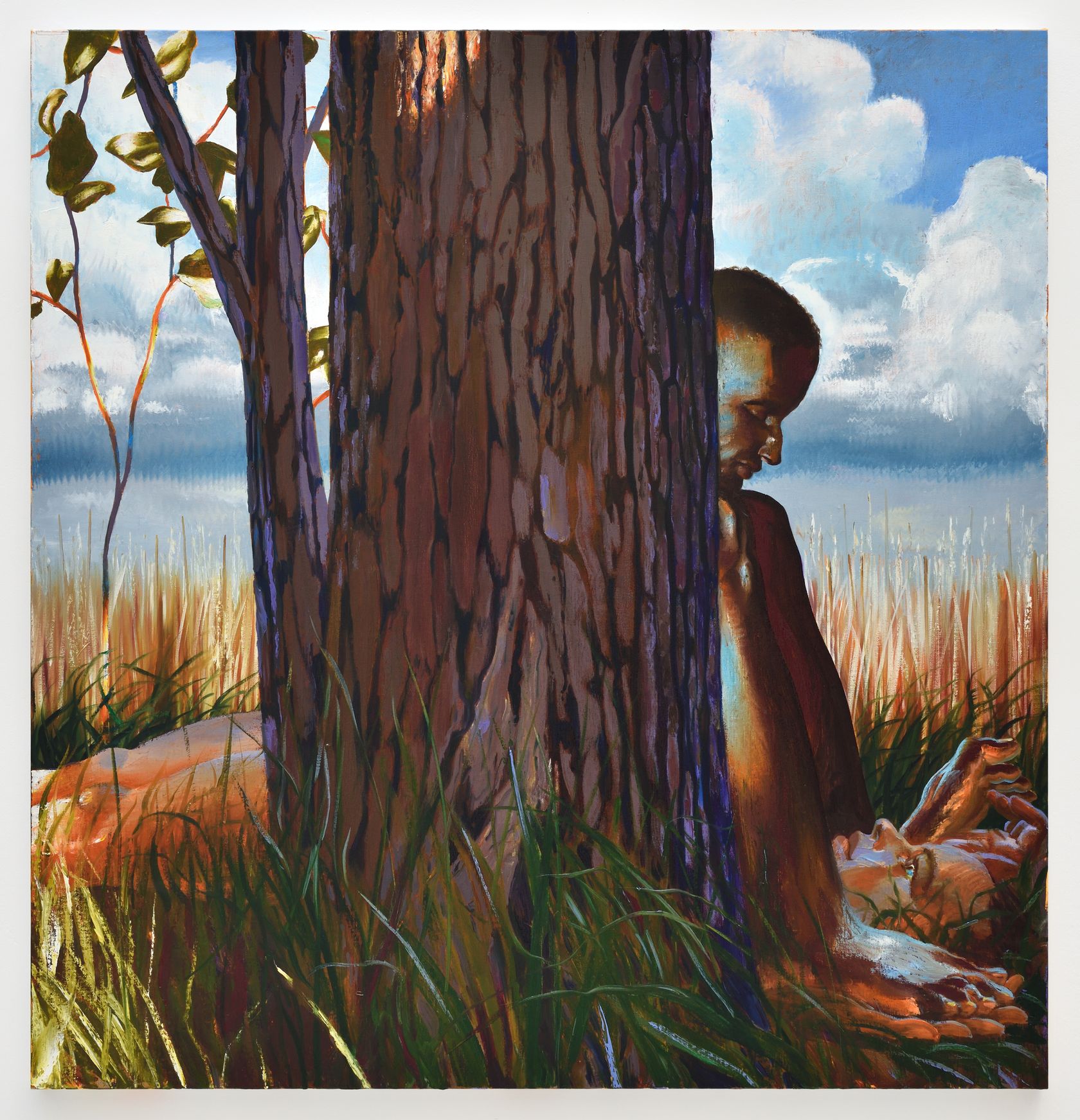
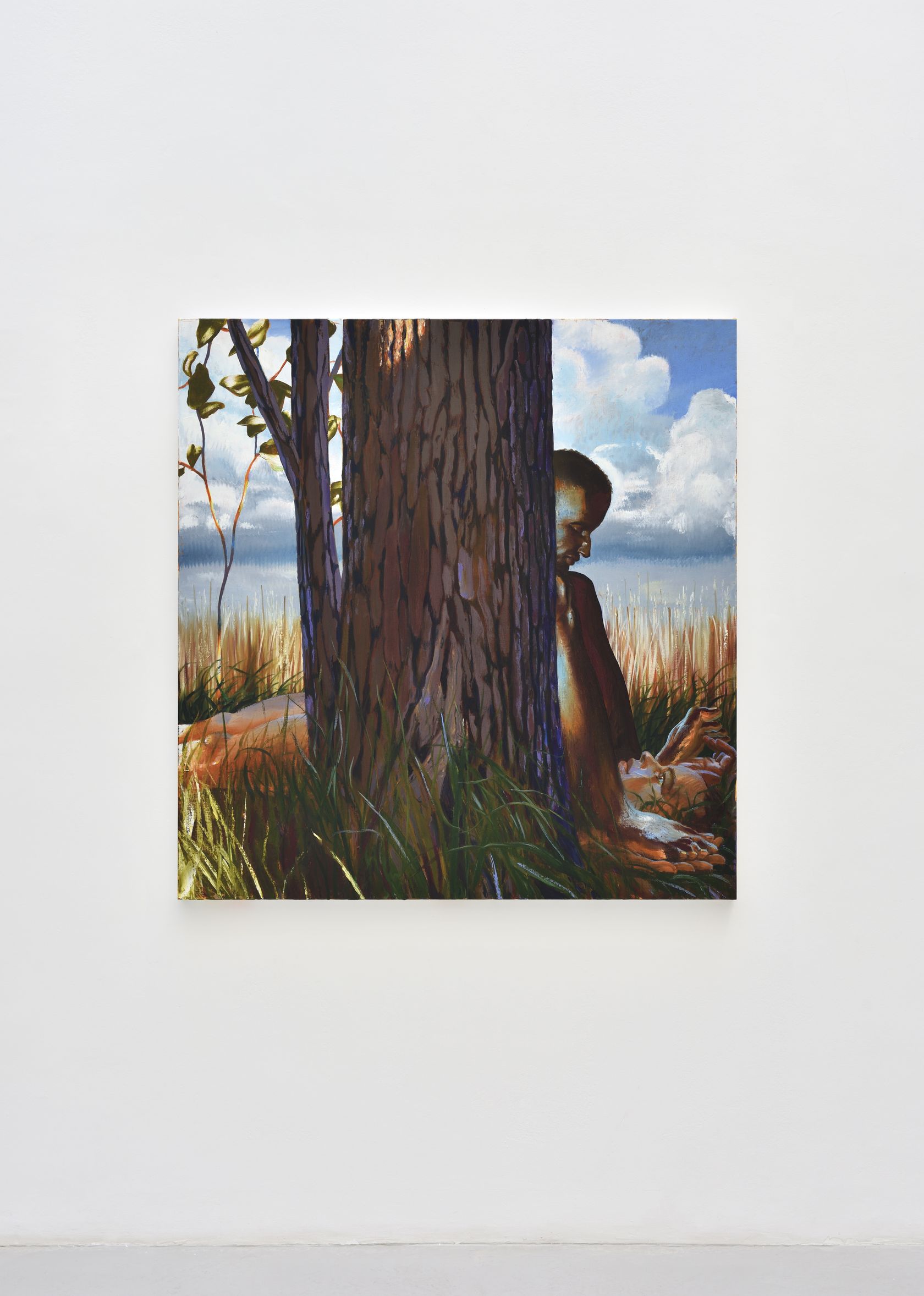
- Laurent Proux
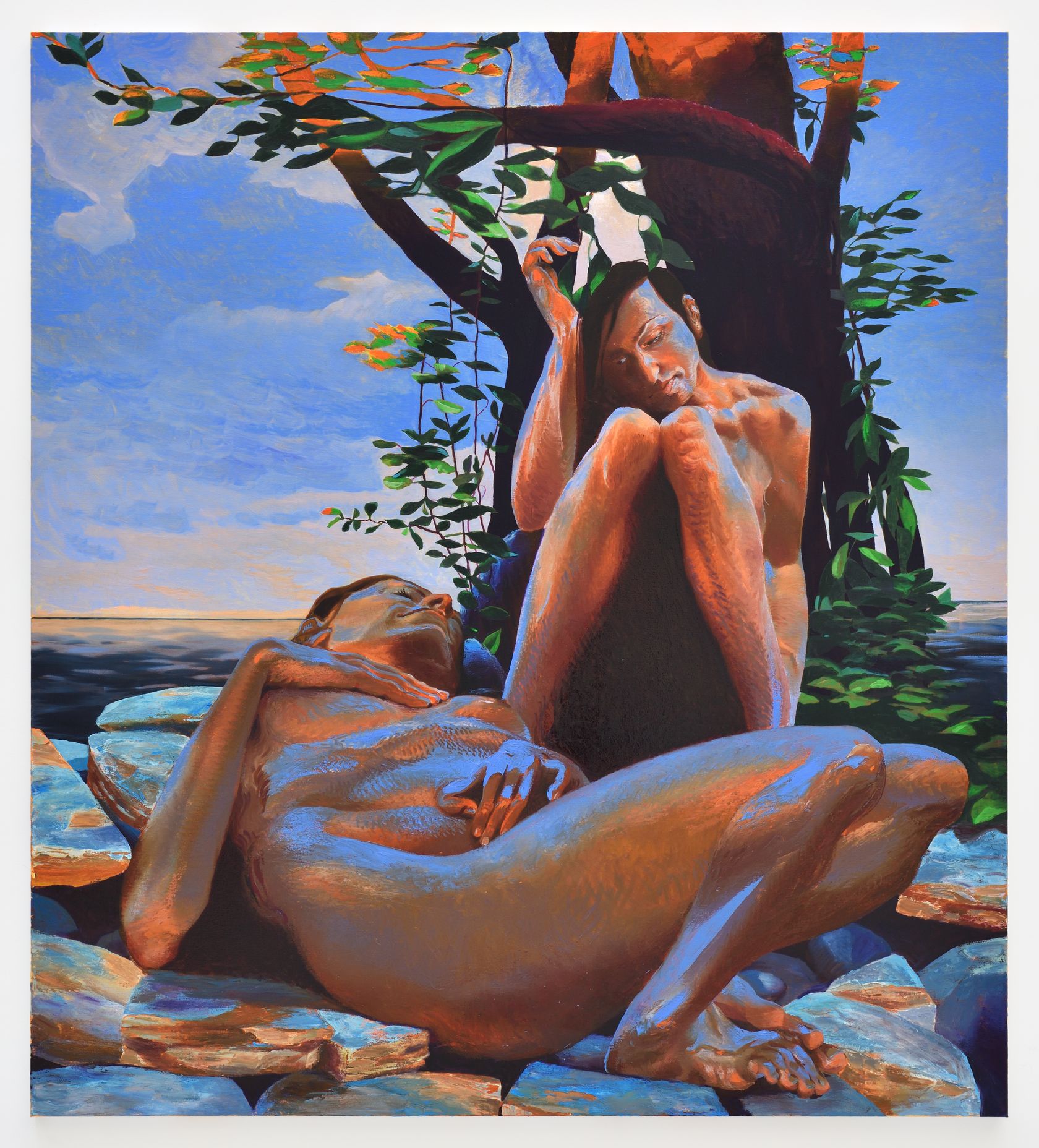
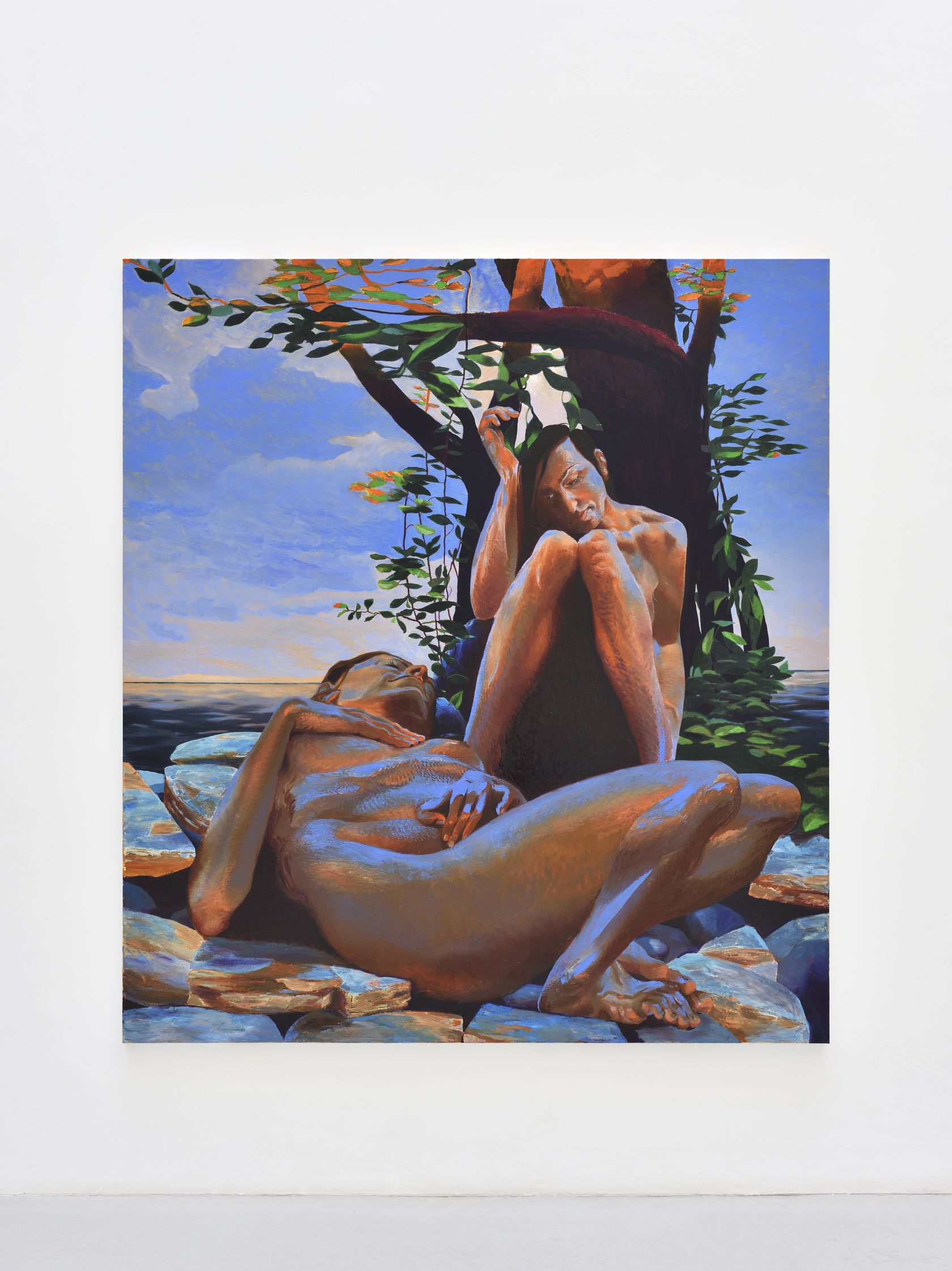
- At the End of the Garden , 2025
- Oil on canvas
-
- 130 ×
- 125 × cm
- 51 3/16 ×
- 49 3/16 × inches
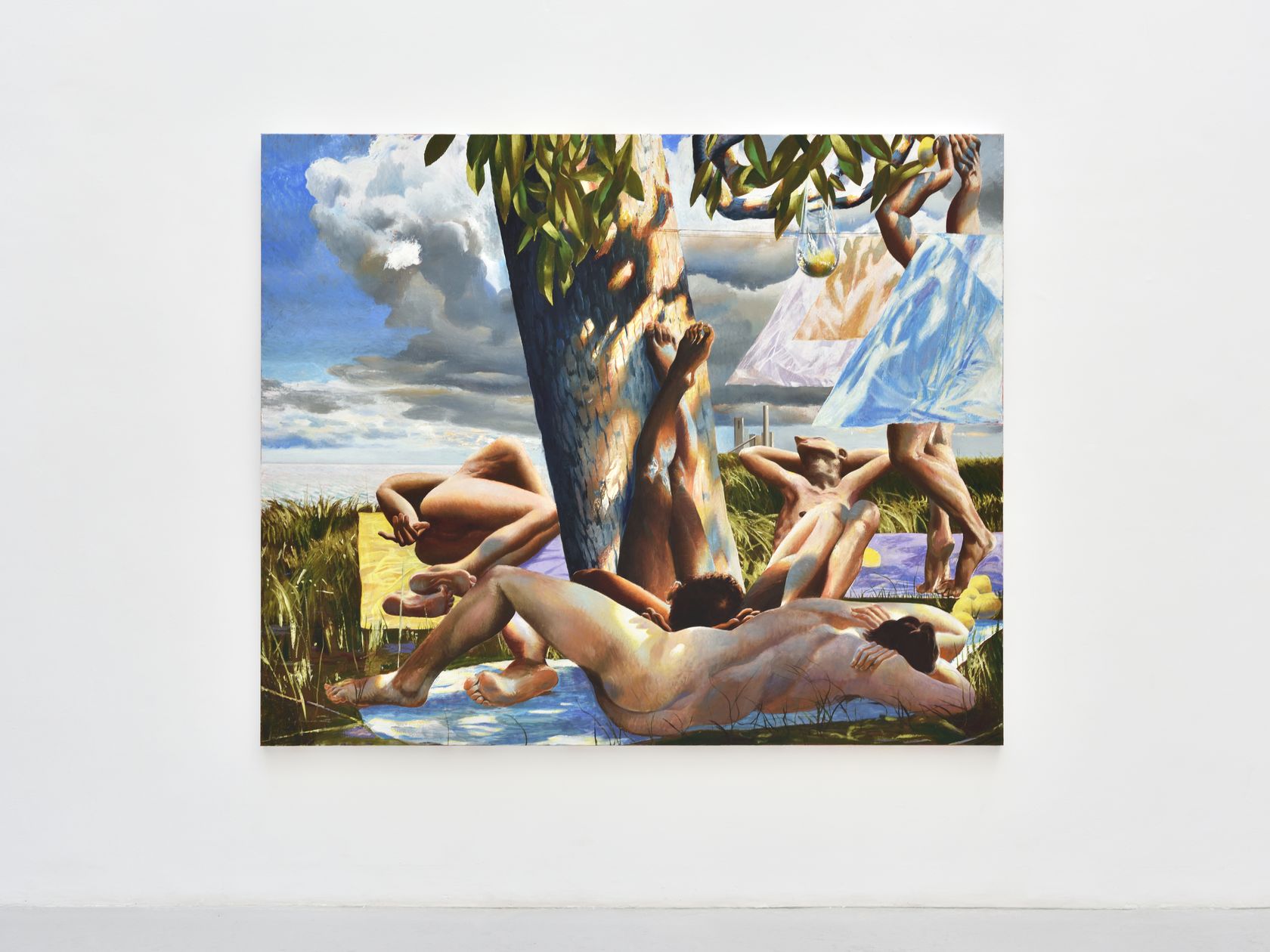
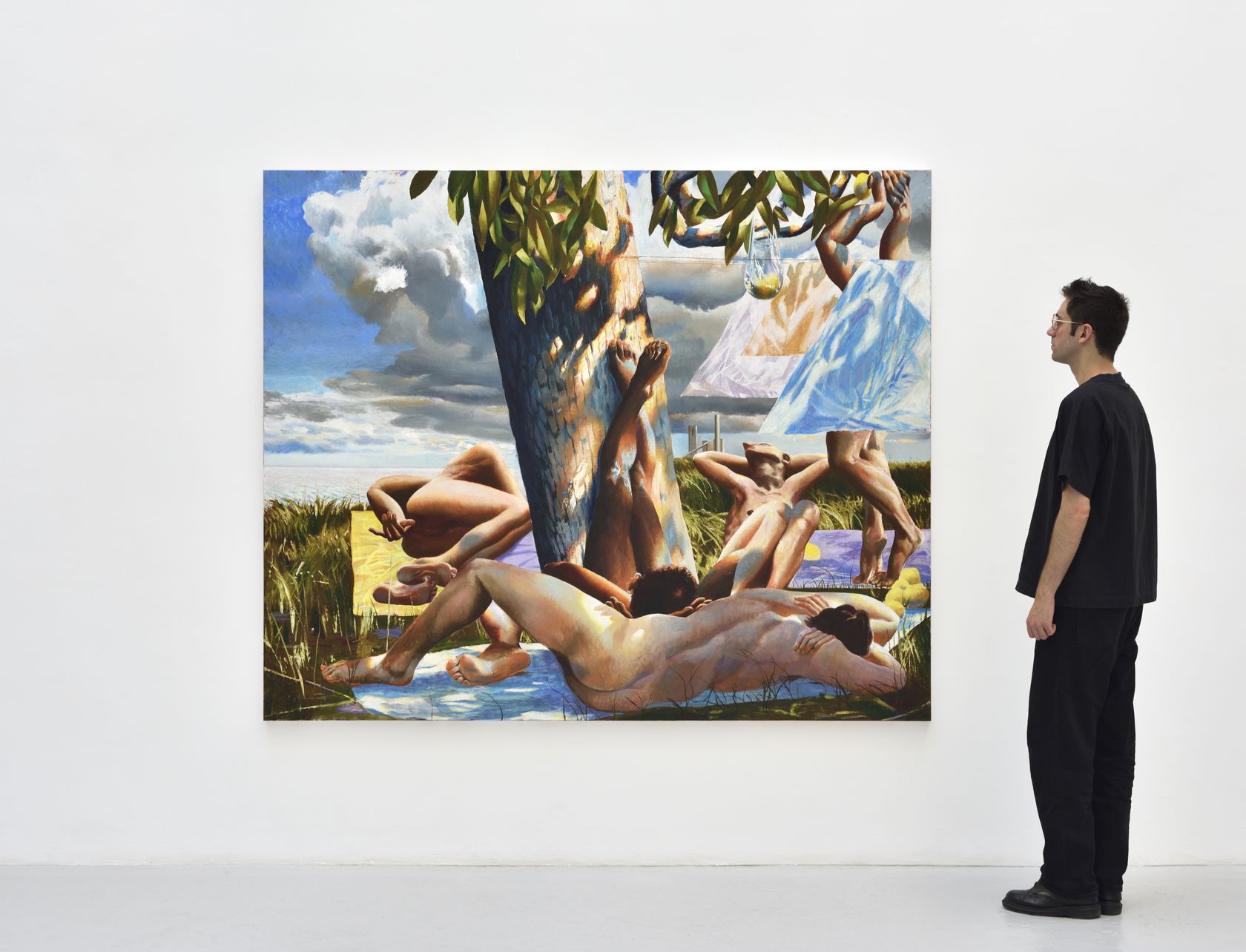
“I believe that man dreams only so as not to stop seeing”, wrote Goethe in Elective Affinities (1809). We wish we could have access to Laurent Proux’s painted figures’ dreams to see through their eyes. How do we know they are dreaming? They are absent from the natural world around them. If we pay attention, what surrounds them could not be identified as what we usually call, in the West, nature, which would be in opposition to the culture represented by these creatures adopting such non-ergonomic postures.
Paying thorough attention to the German Romantics’ thought, the philosopher Jean-Luc Nancy described dreams, in the collection The Fall of Sleep (2007), as the culmination of the individual’s absorption in something other than him-/herself: the body, finally free, lets itself go, and rather than oppose the world, it becomes the world. Perhaps it is this becoming that we are witnessing, as we are hypnotised in front of these Laurent Proux canvases where figures do not appear amidst grasses or at the foot of a tree: they combine, belong to each other, redouble their artifice by contagion, they express themselves, as it were, into each other.
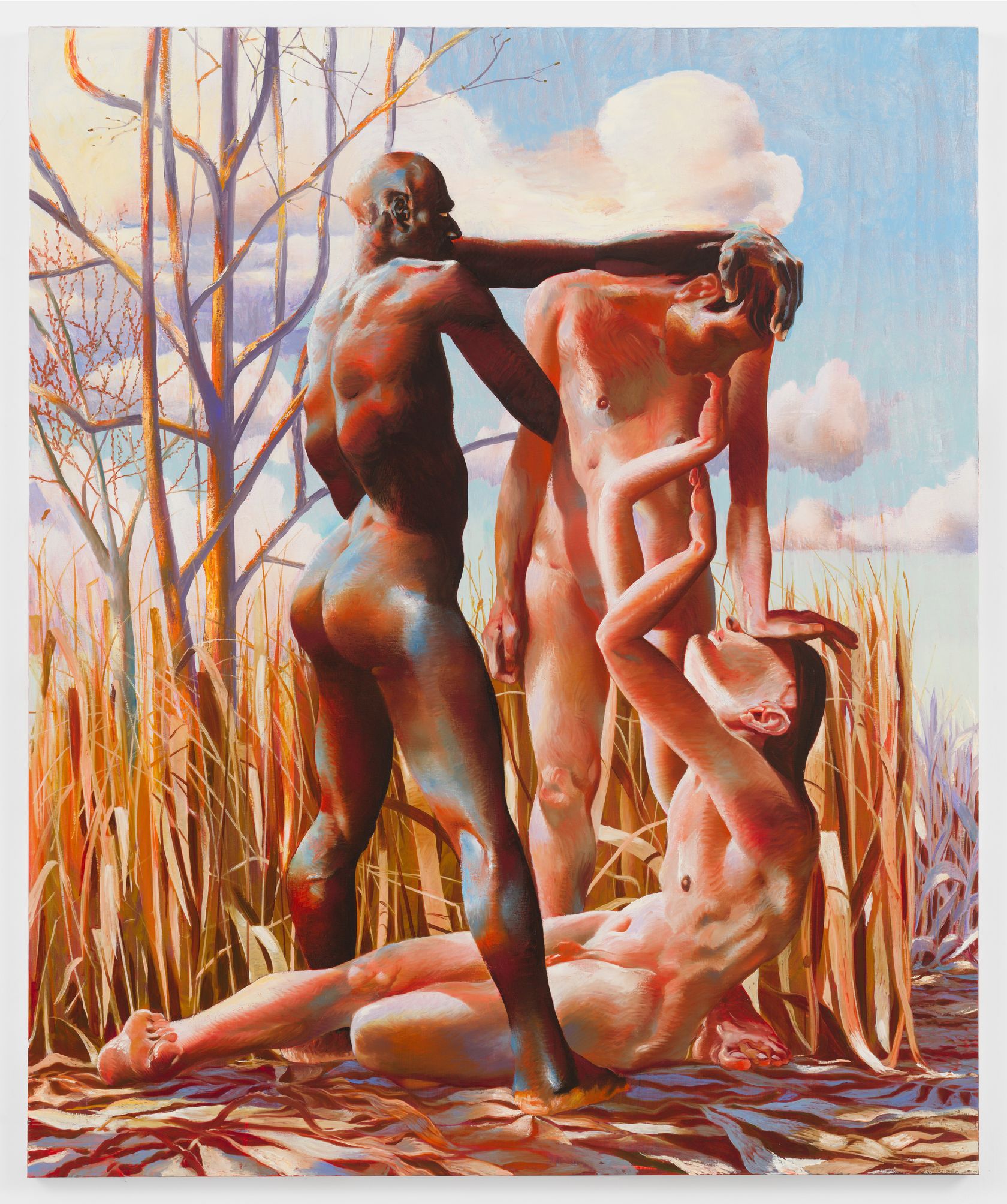
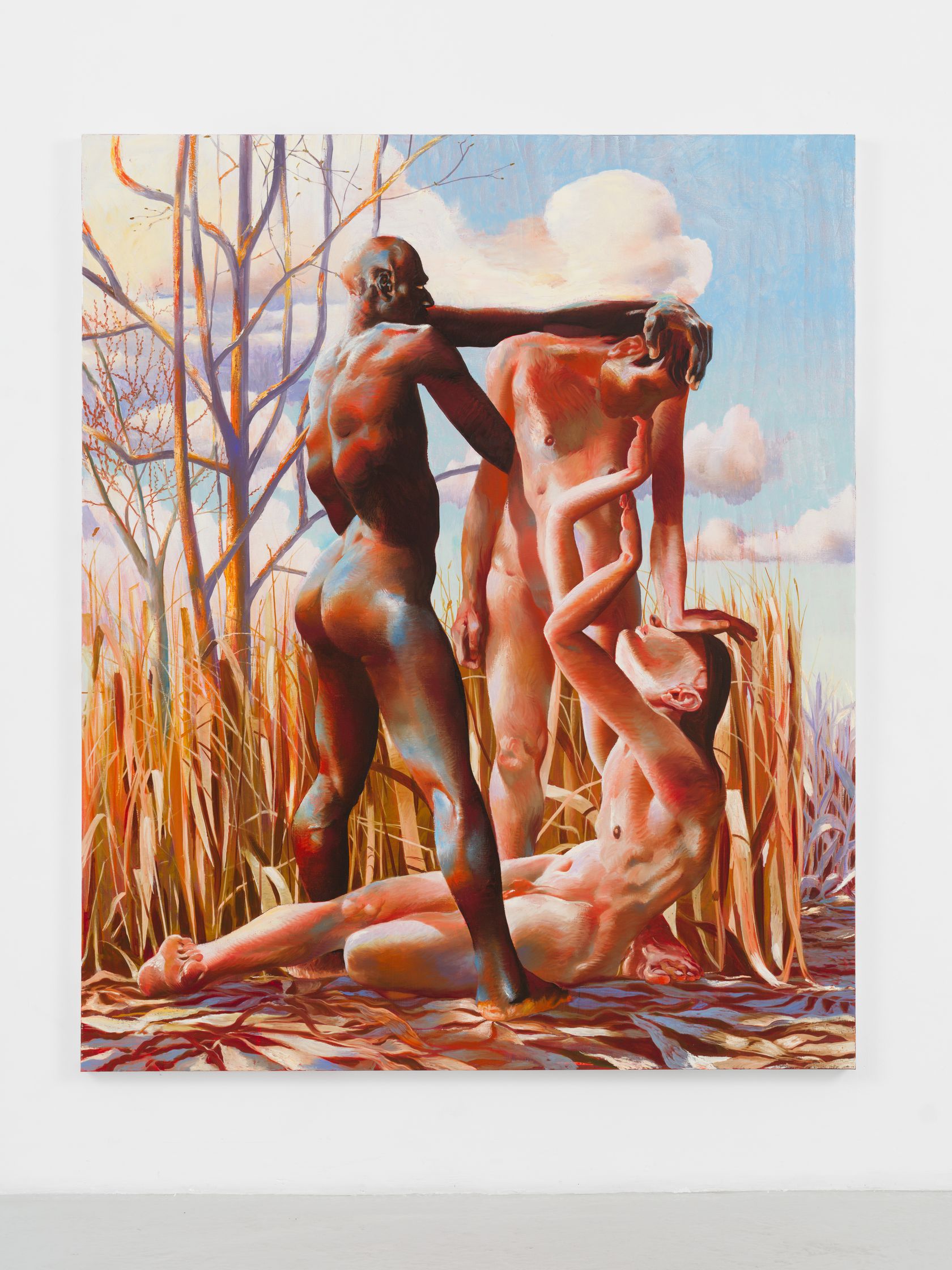
- Laurent Proux
- Duel , 2025
- Oil on canvas
-
- 220 ×
- 182 ×
- 3.5 × cm
- 86 5/8 ×
- 71 5/8 ×
- 1 3/8 × inches
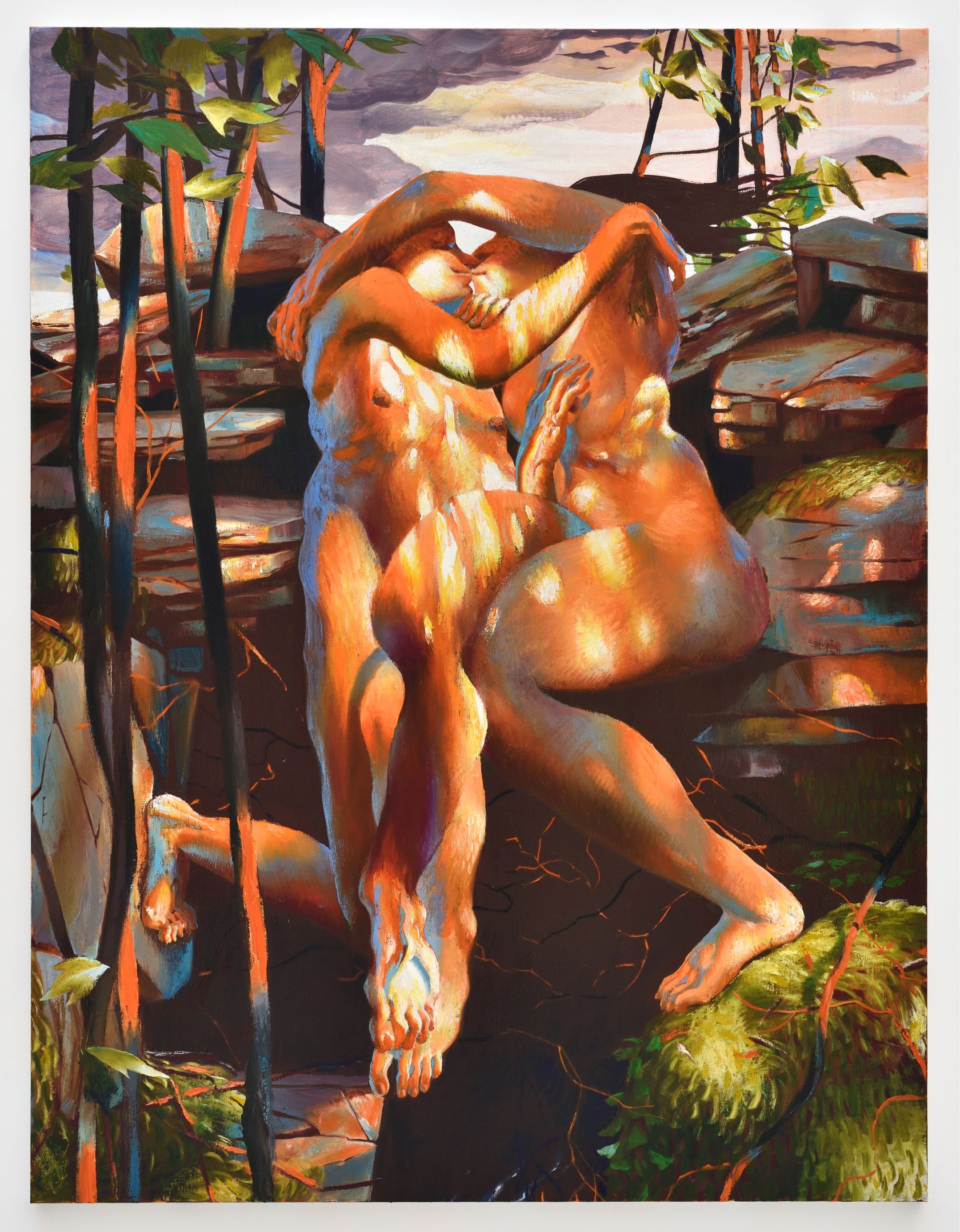
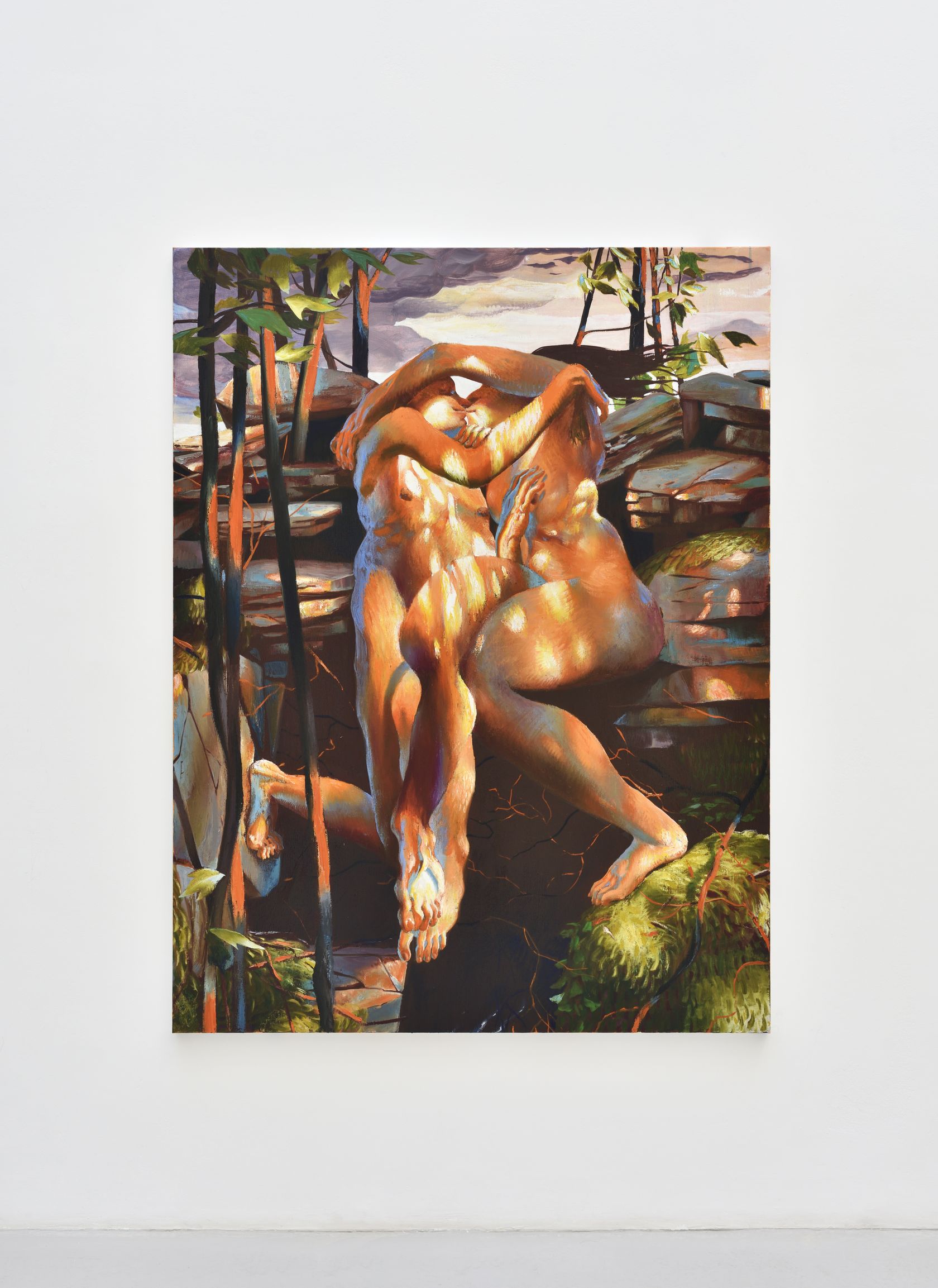
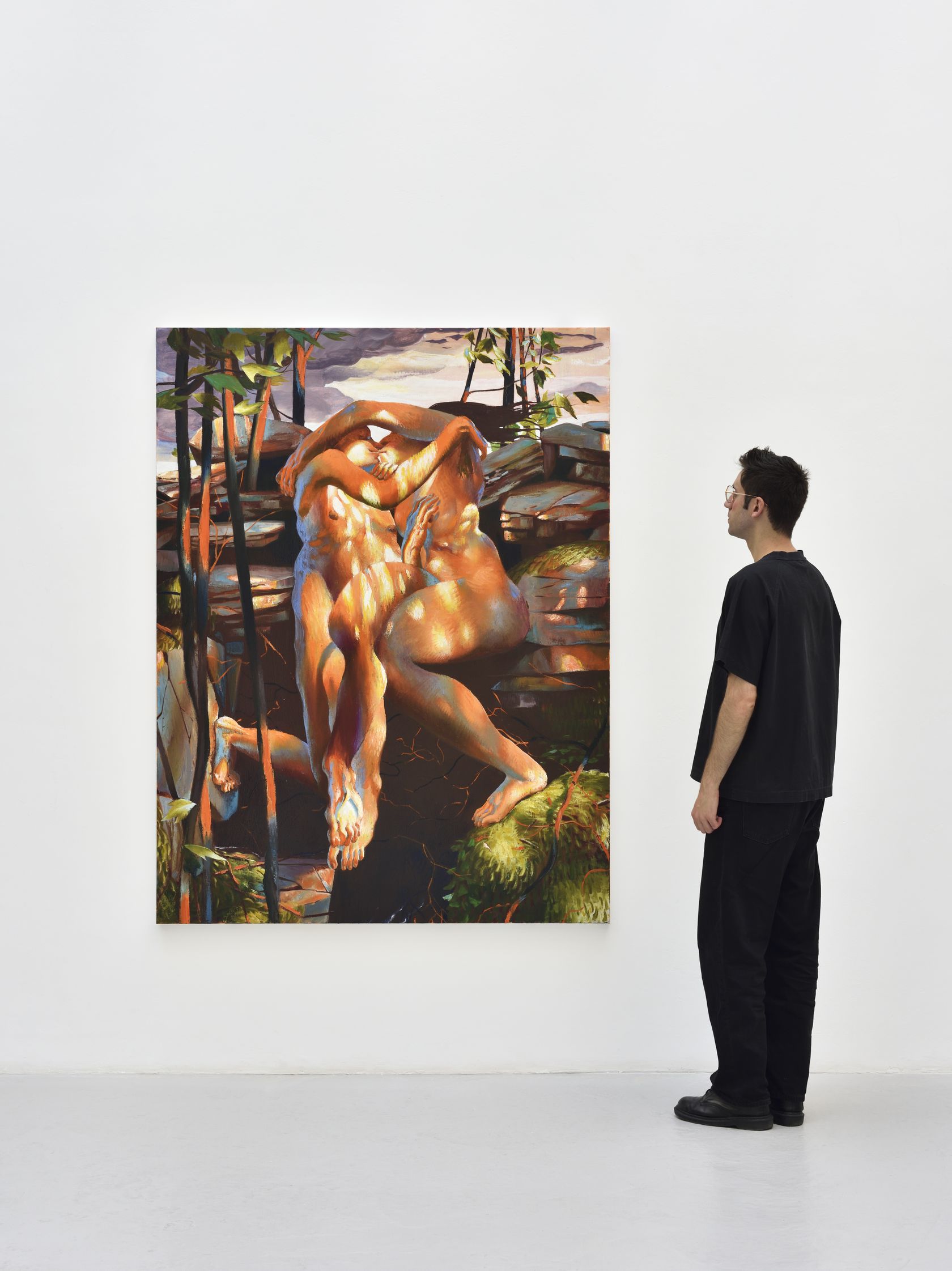
- Laurent Proux
- Kaleidoscope , 2025
- Oil on canvas
-
- 184 ×
- 140 × cm
- 72 7/16 ×
- 55 1/8 × inches
These characters are dreaming up a world that is far less innocent than the nudes in full light by the bent tree, or those that we saw in the retrospective L’Arbre et la Machine at the Musée de l’Abbaye in Saint-Claude (8 February – 28 September 2025). We can no longer believe in their complete casualness. Time no longer stands still. The geometry has become complex, orchestrating a great battle à la Uccello where everywhere undergrowth branches clash and crack. As for the bodies, they use up the as yet empty space. Something has just happened: something is slipping, the intertwined group. Imminence is becoming paint. And Laurent Proux puts us, the viewers, in front of this undecidable world fragment, fascinating in its details of multiple crevices, creating for us, near the lovers, a lit-up path. It is up to us to see the escape.
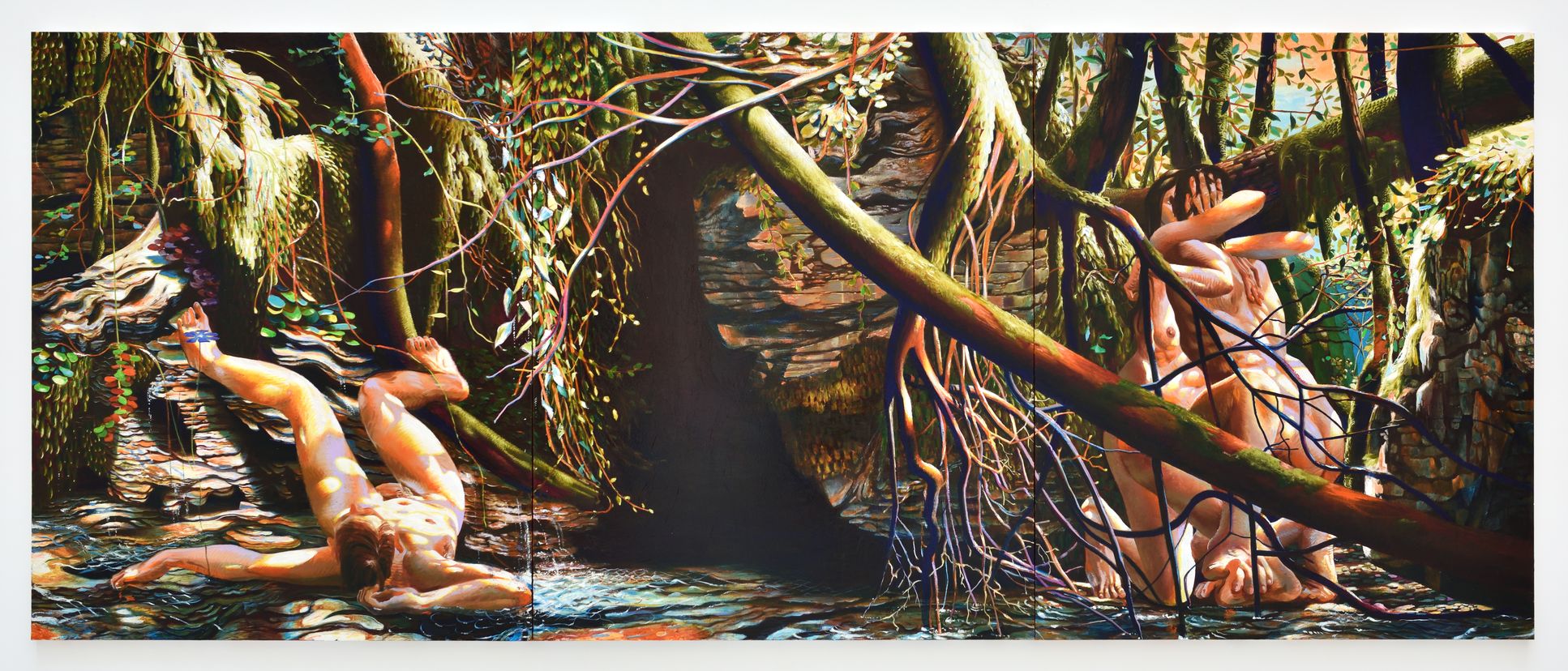
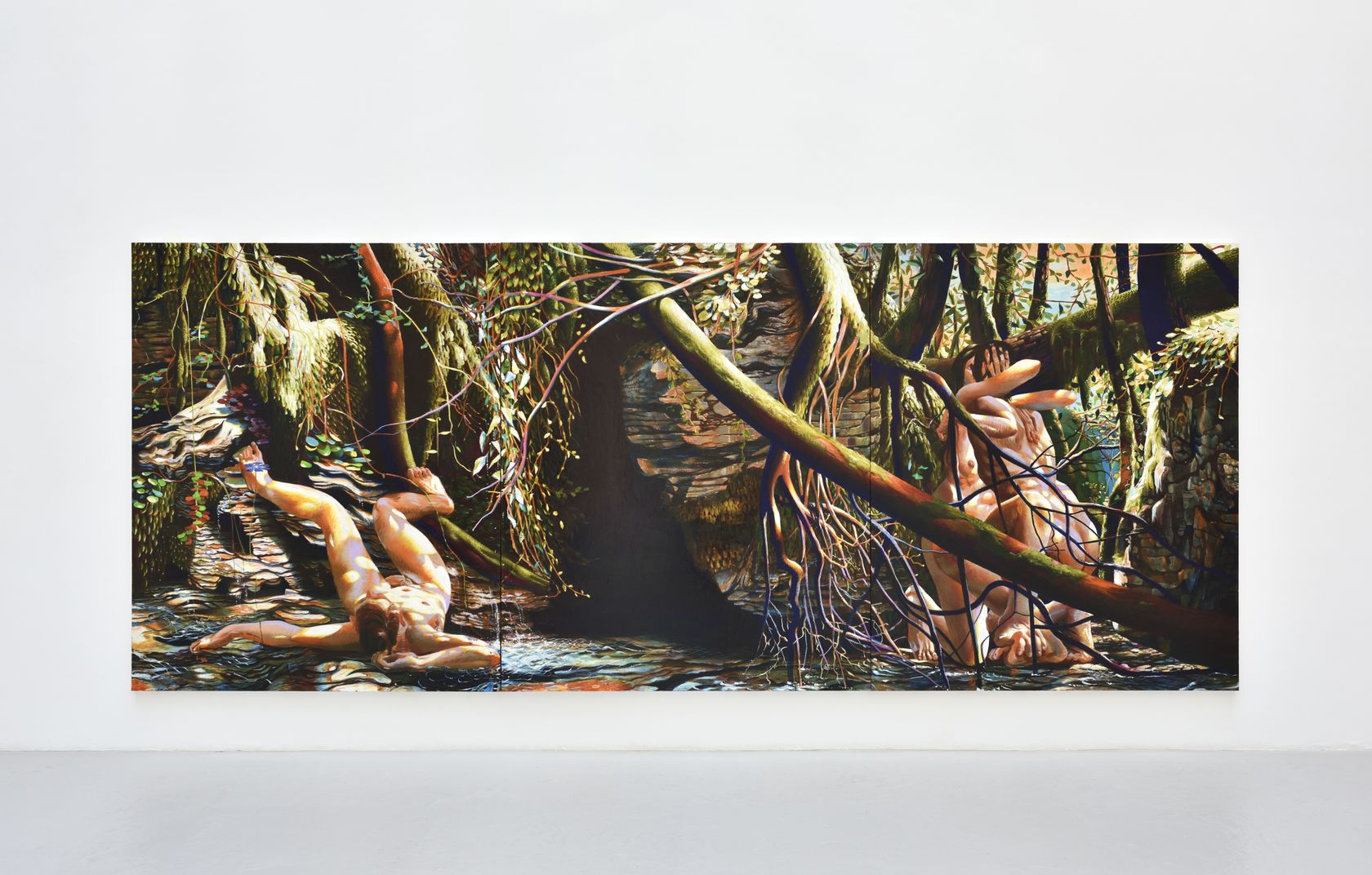
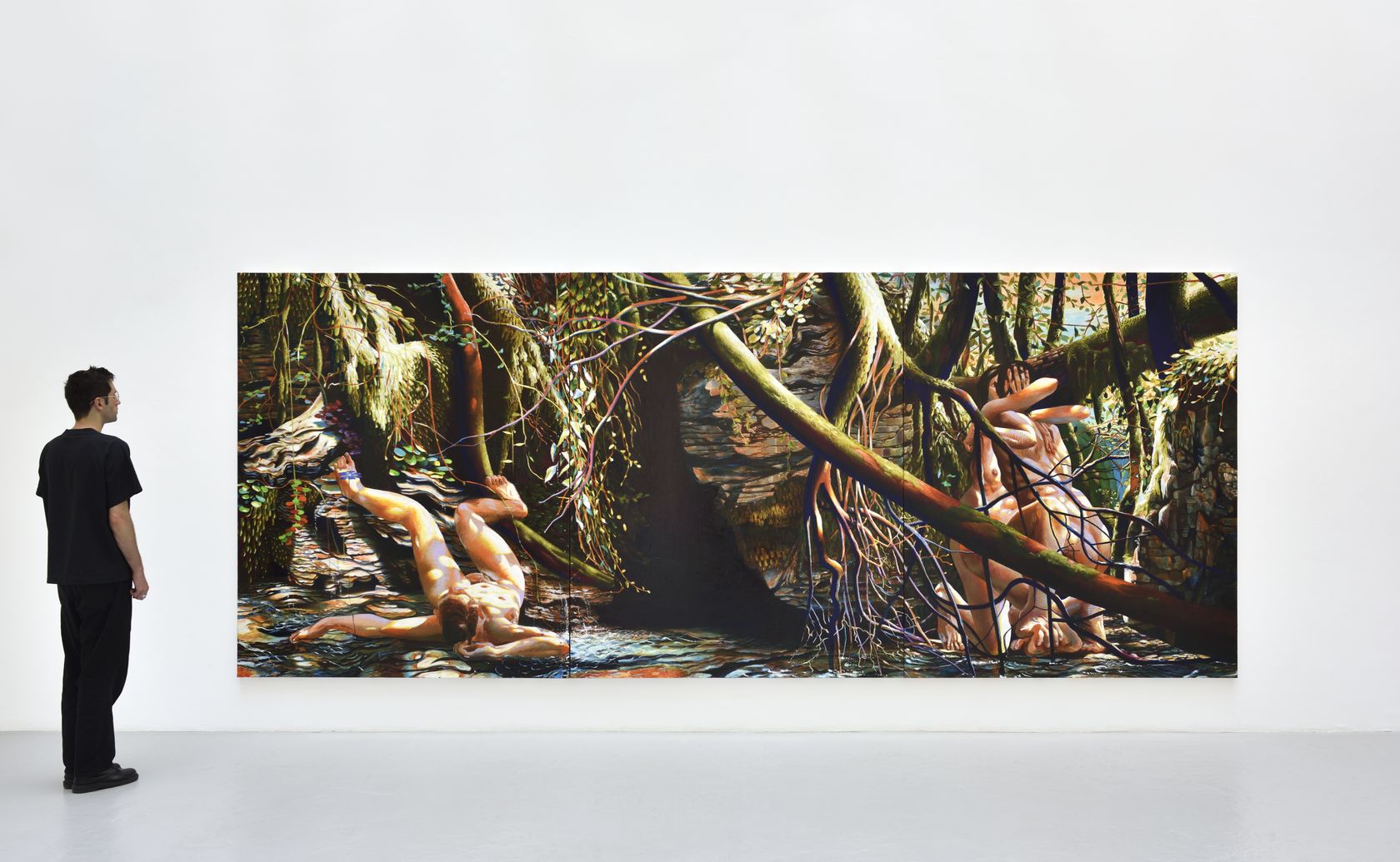
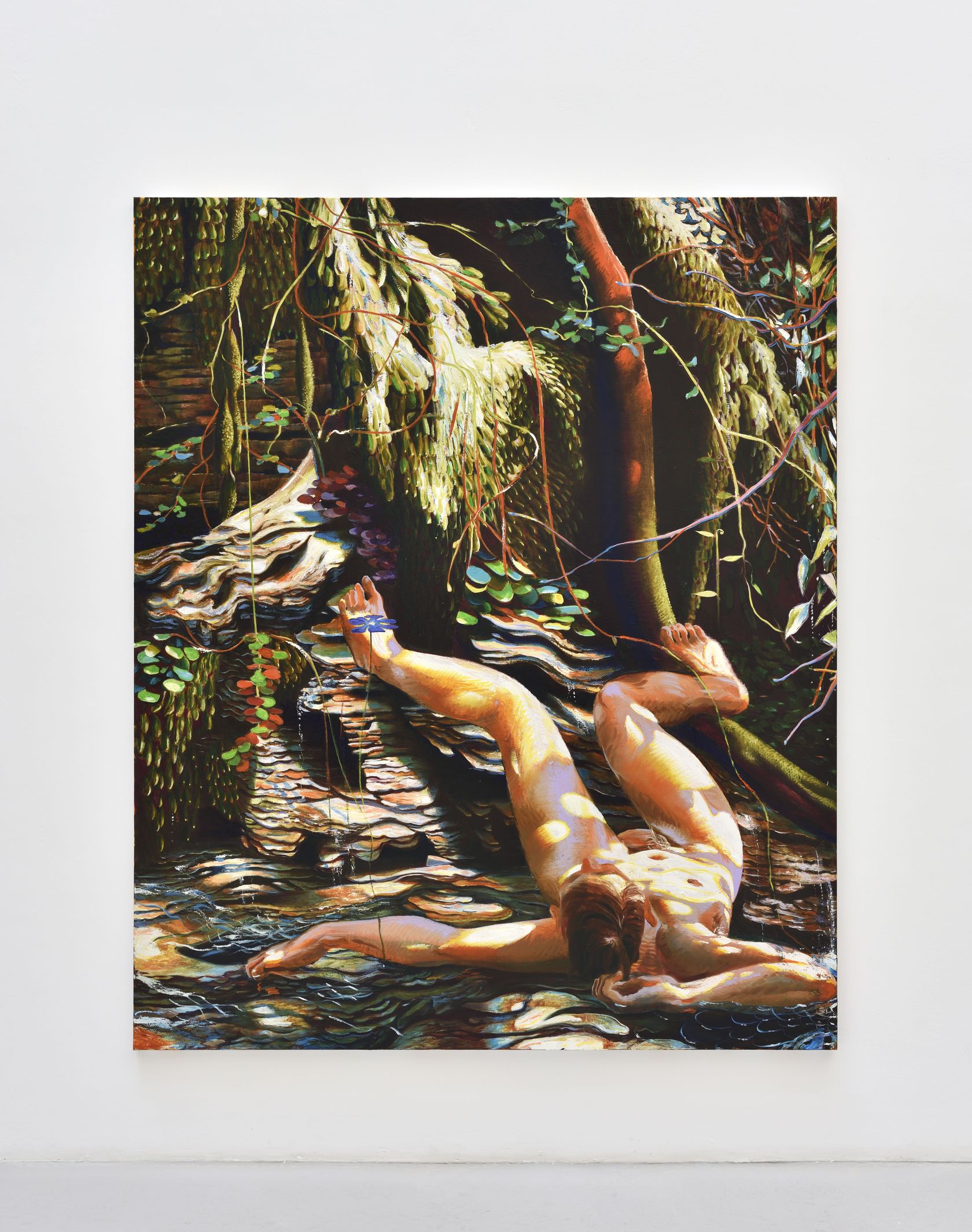
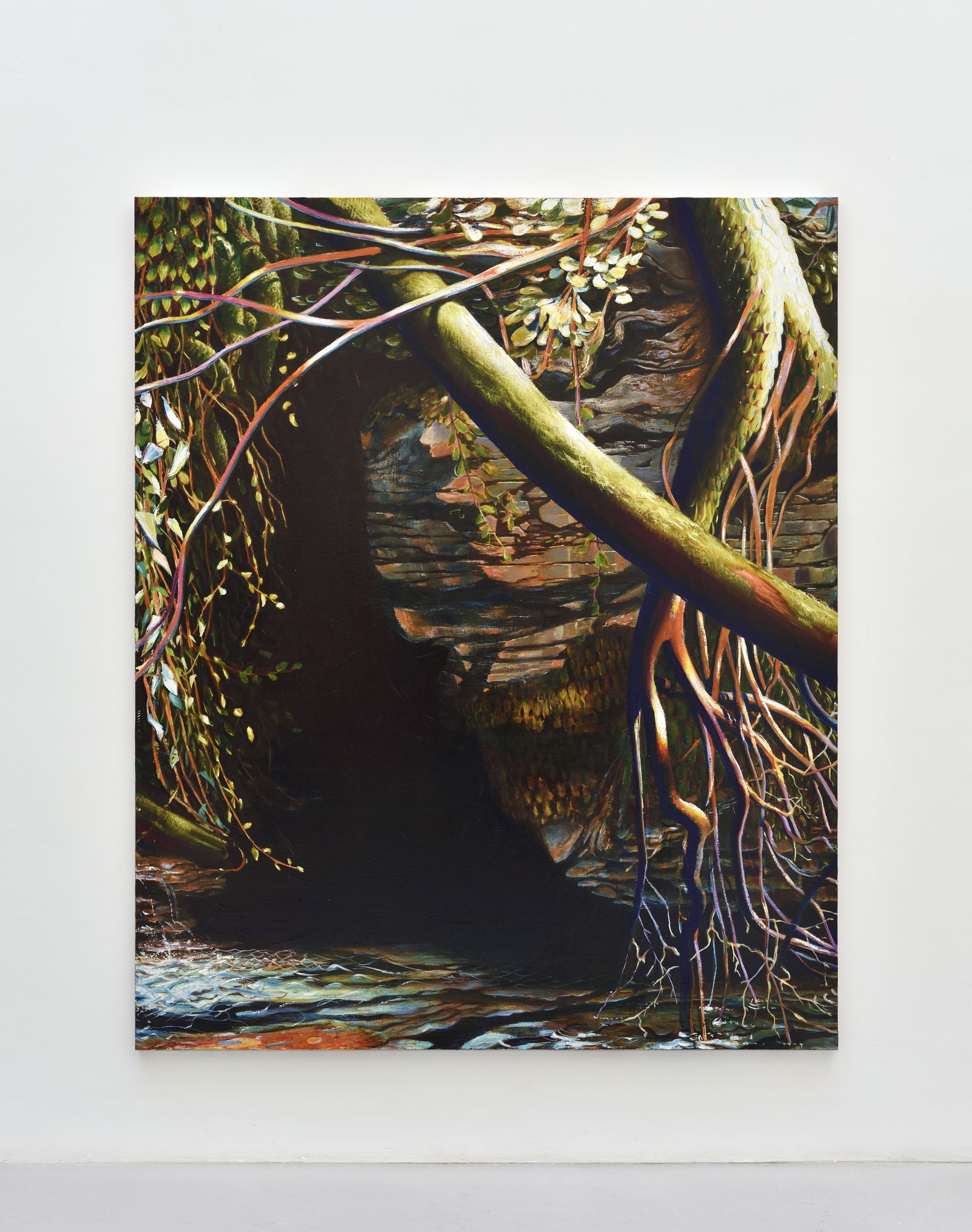
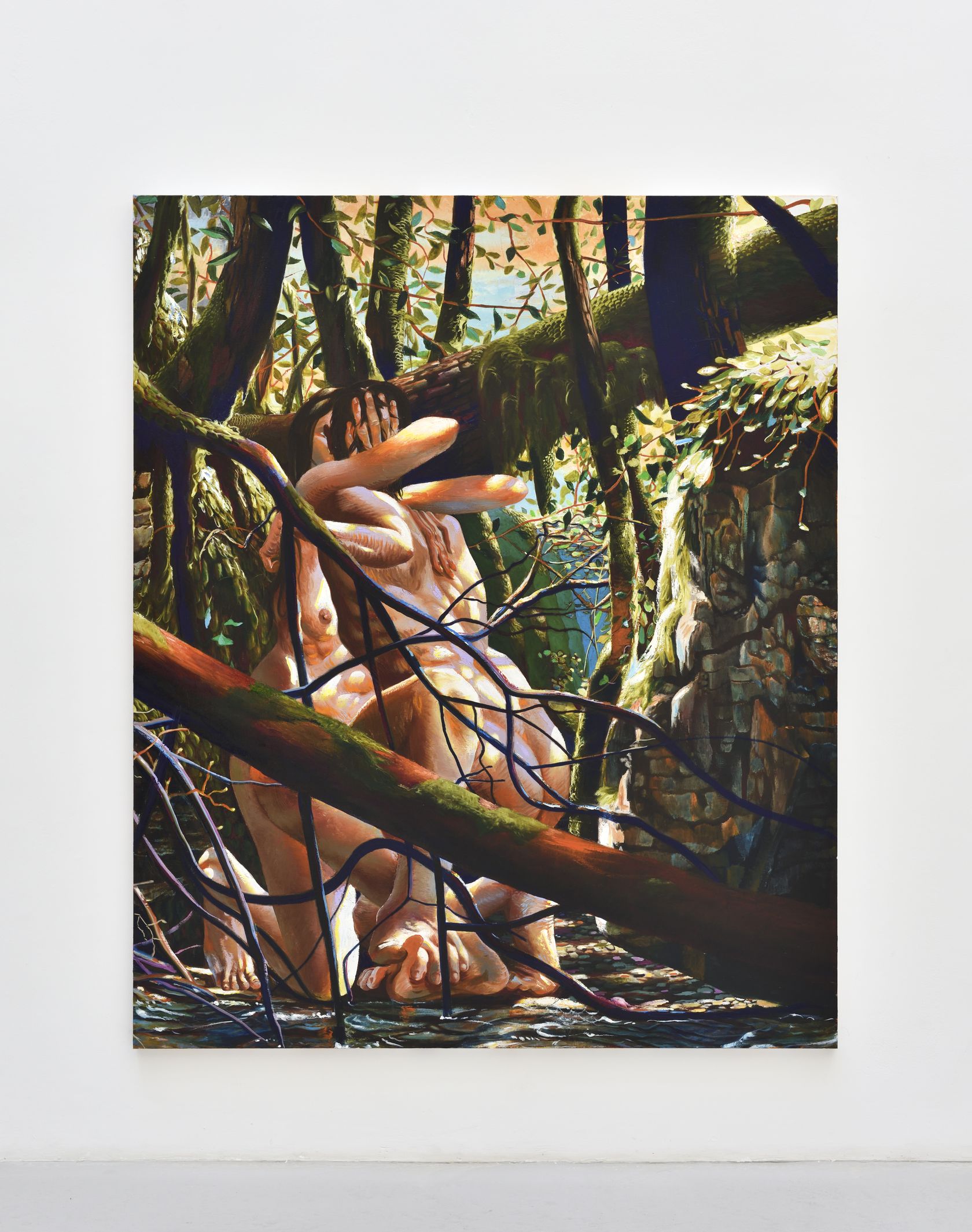
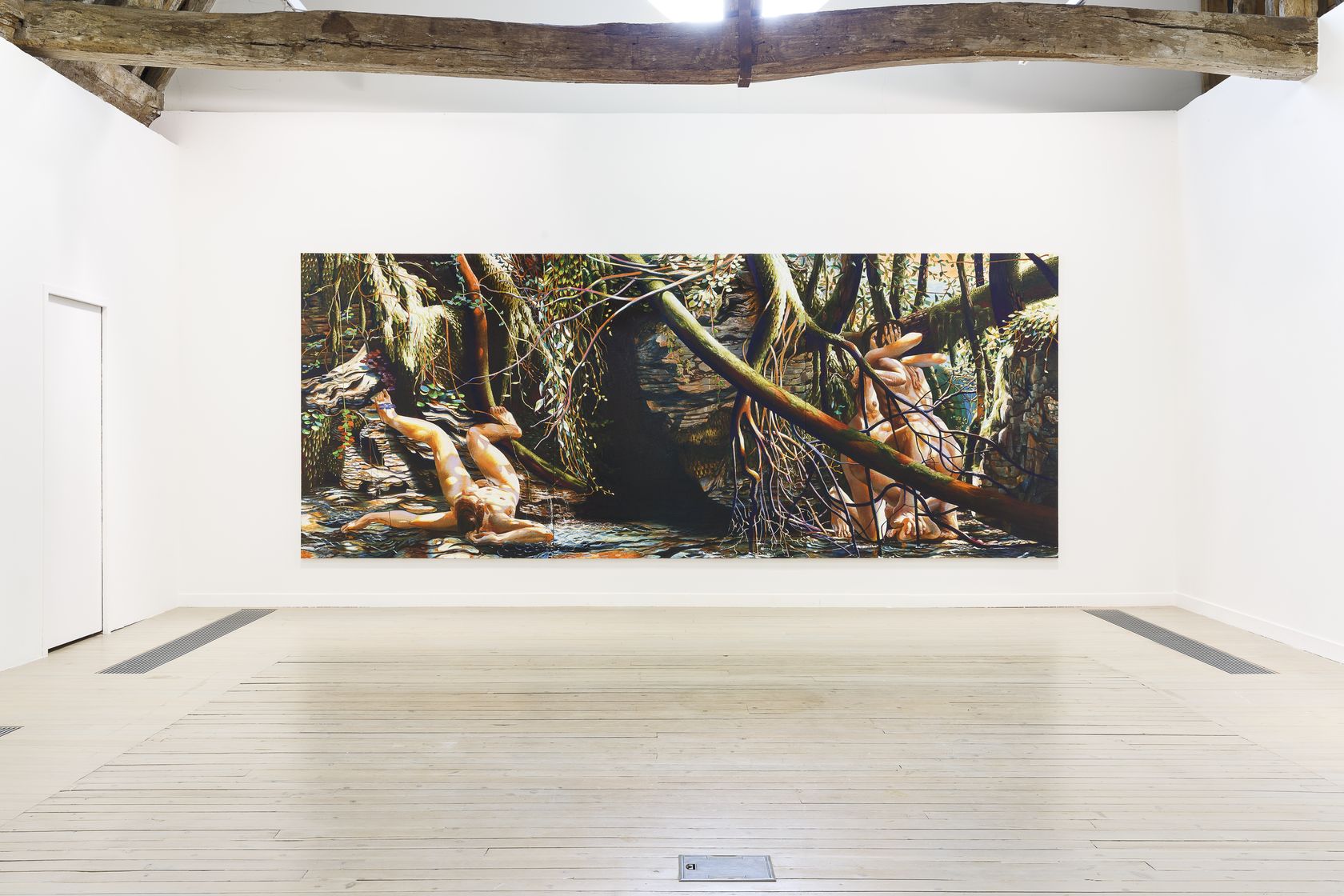
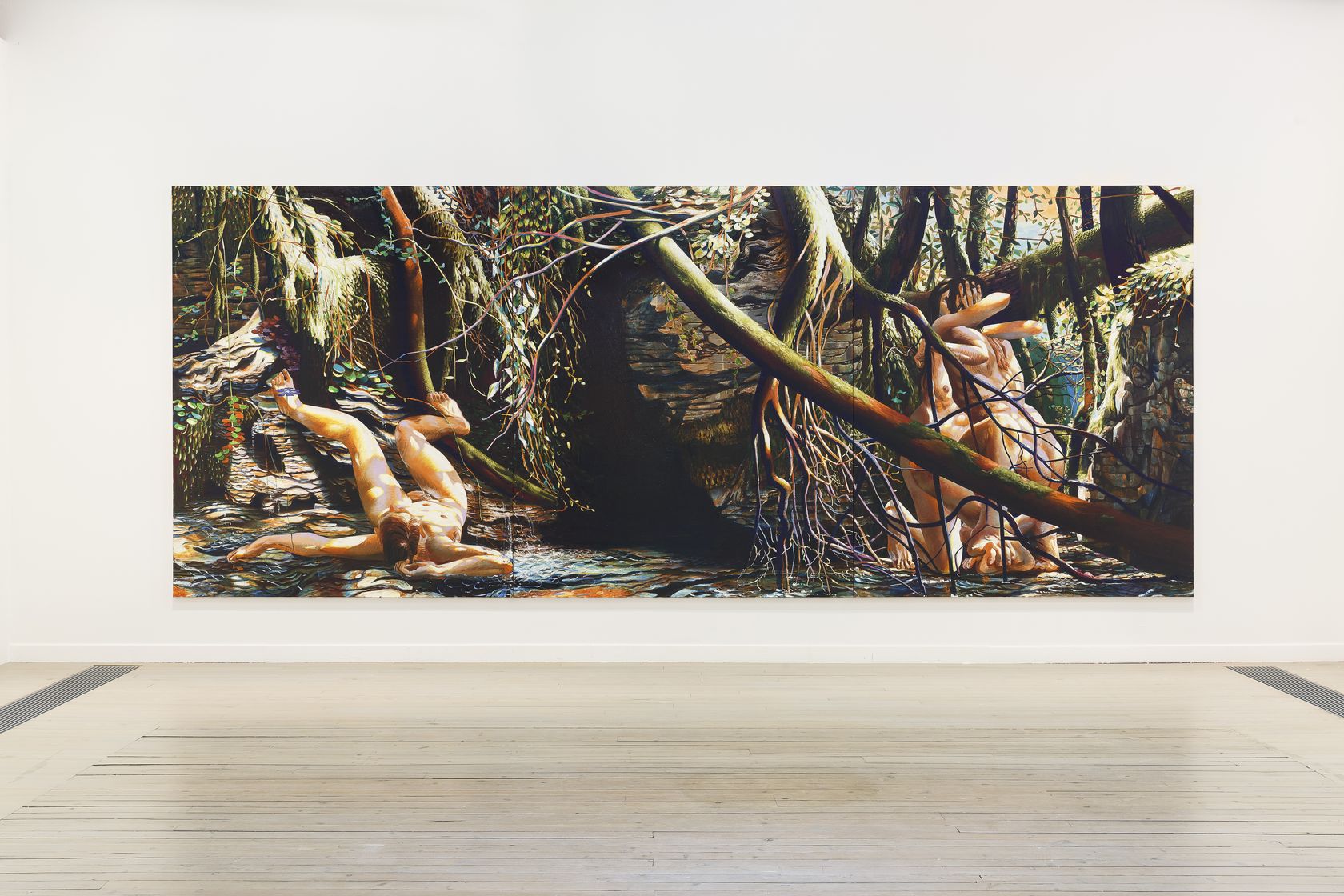
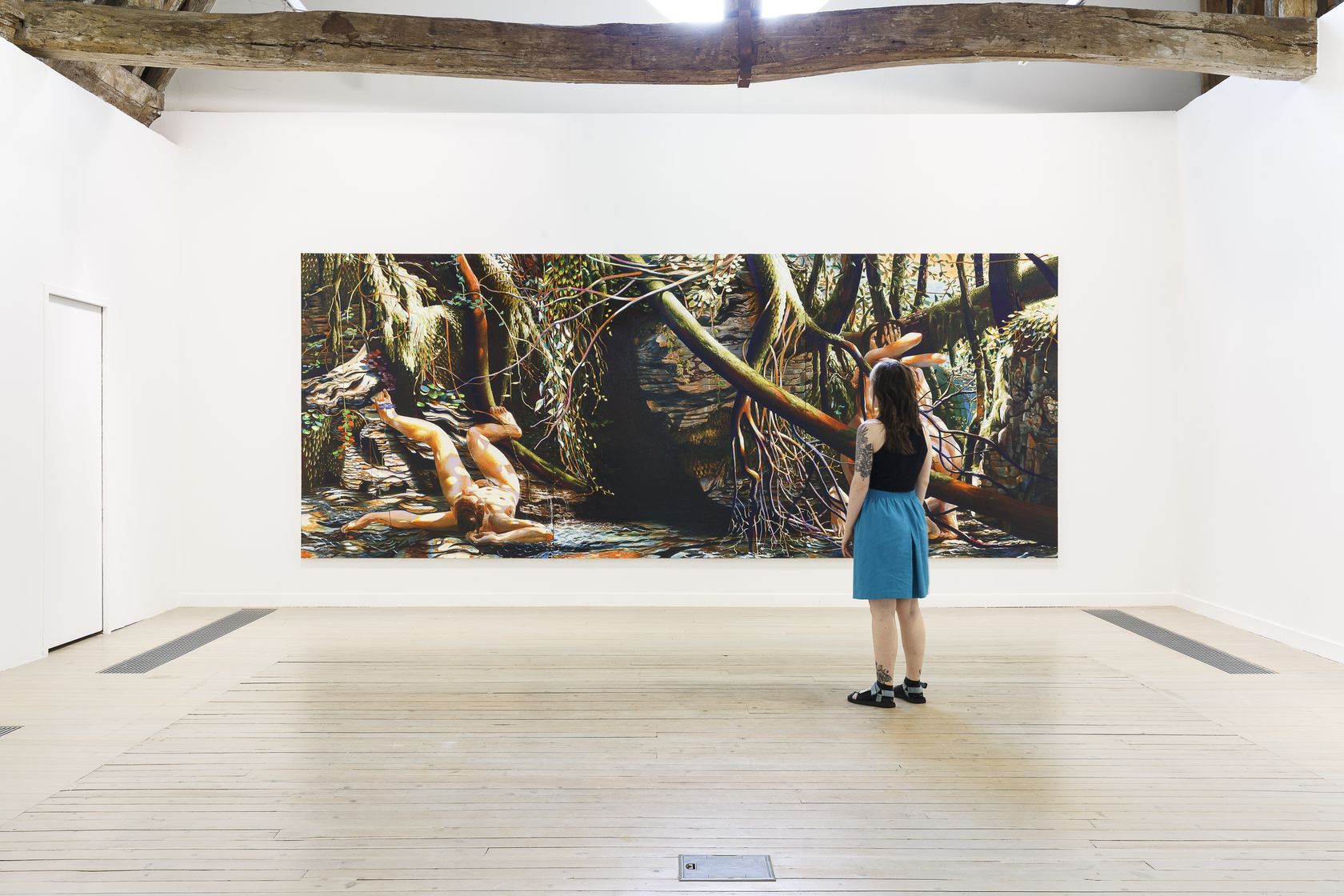
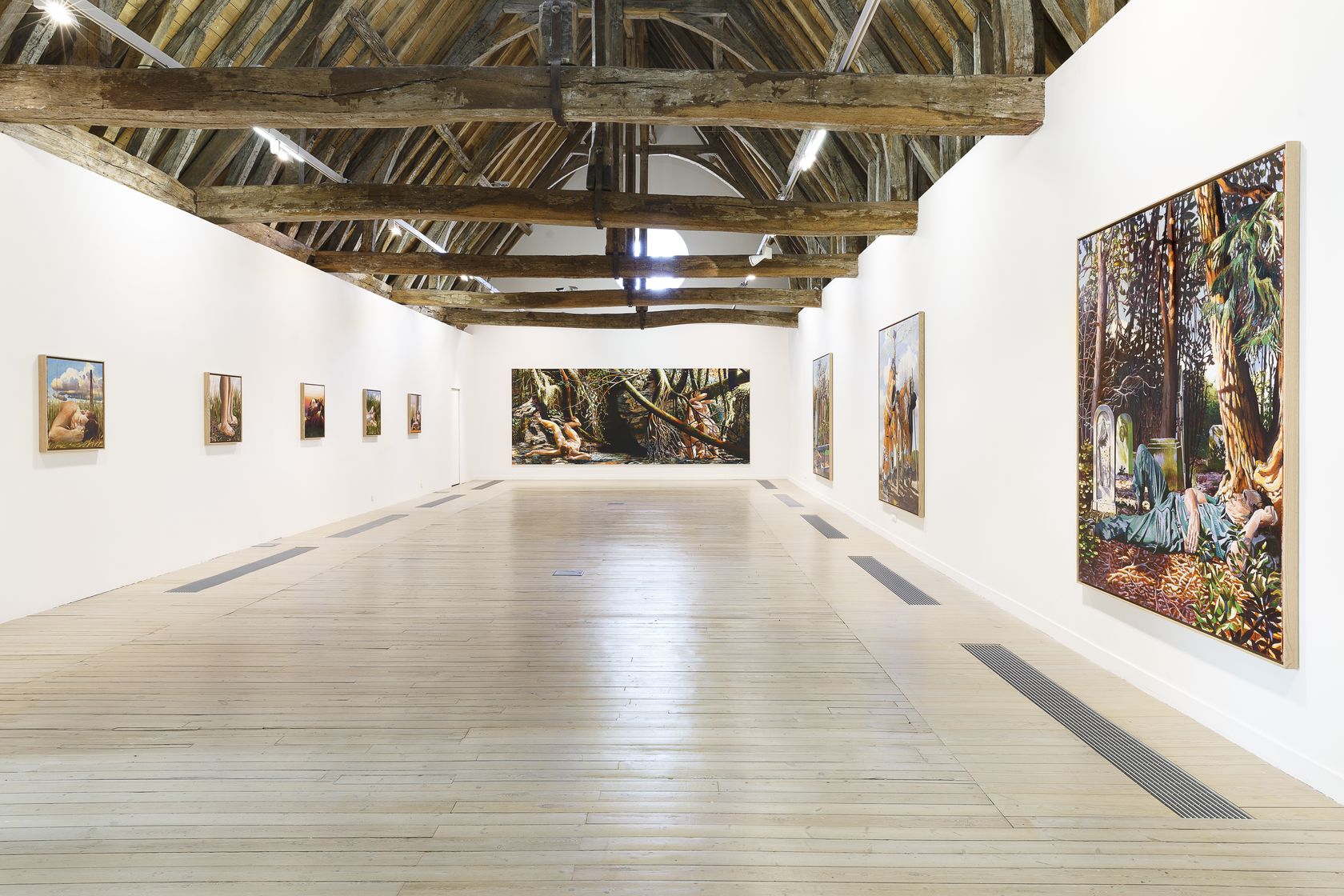
- Laurent Proux
- The Nature Poem , 2025
- Oil on canvas
-
- 220 ×
- 182 × cm
- 86 5/8 ×
- 71 5/8 × inches
- each
- 220 ×
- 546 × cm
- 86 5/8 ×
- 214 15/16 × inches
- Laurent Proux
- To the night , 2025
- Oil on canvas
-
- 200 ×
- 180 ×
- 3.5 × cm
- 78 3/4 ×
- 70 7/8 ×
- 1 3/8 × inches
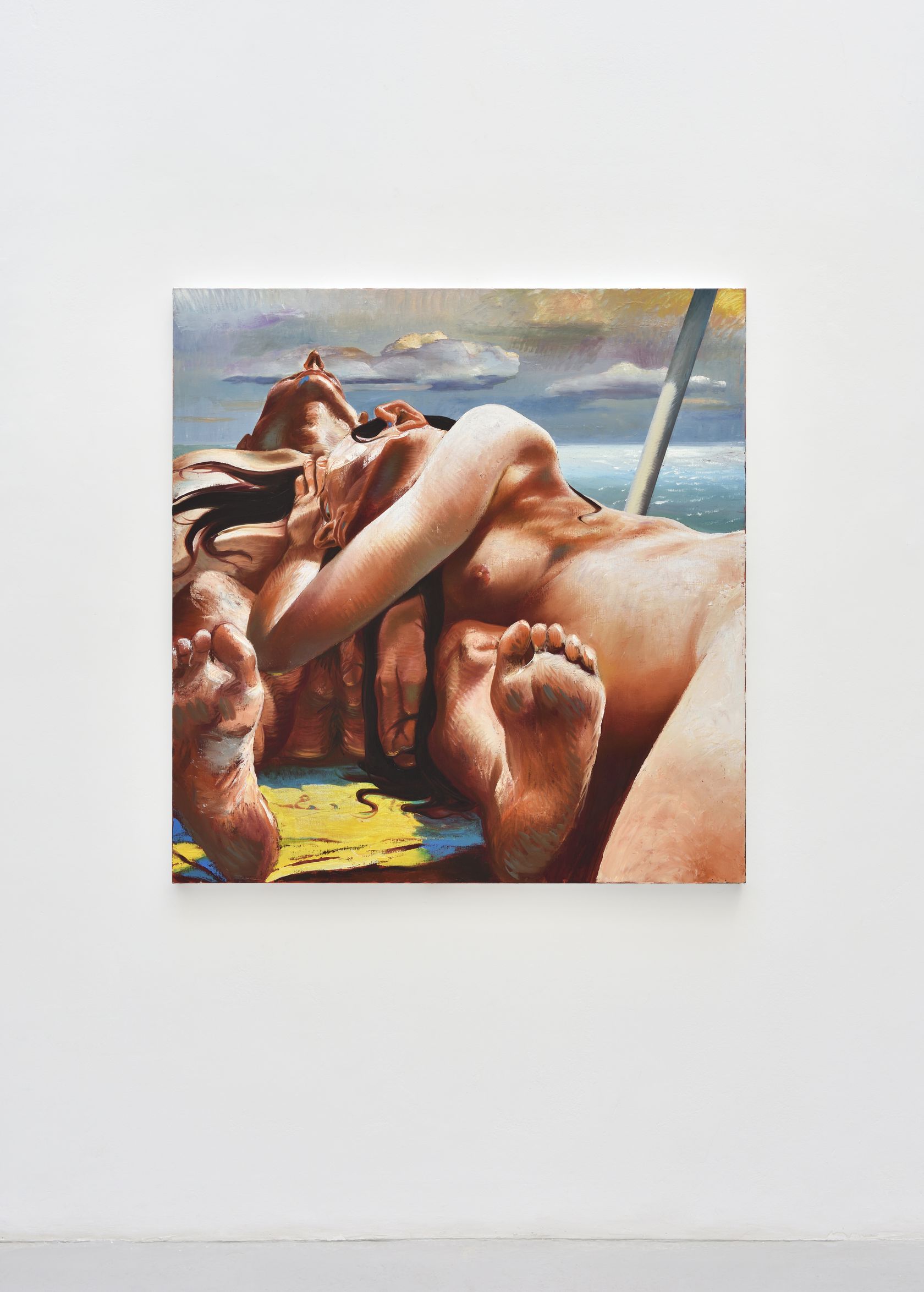
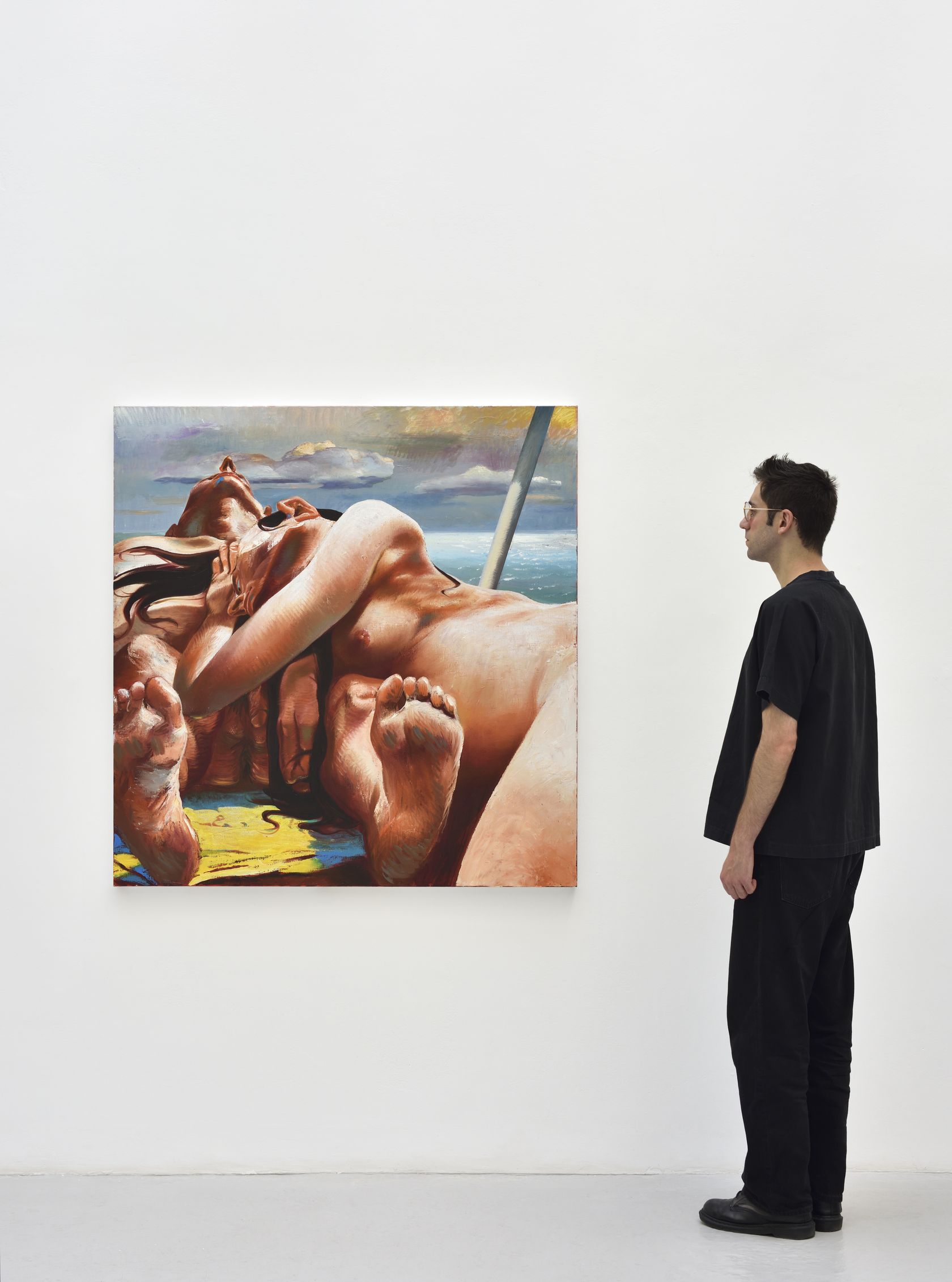
- Laurent Proux
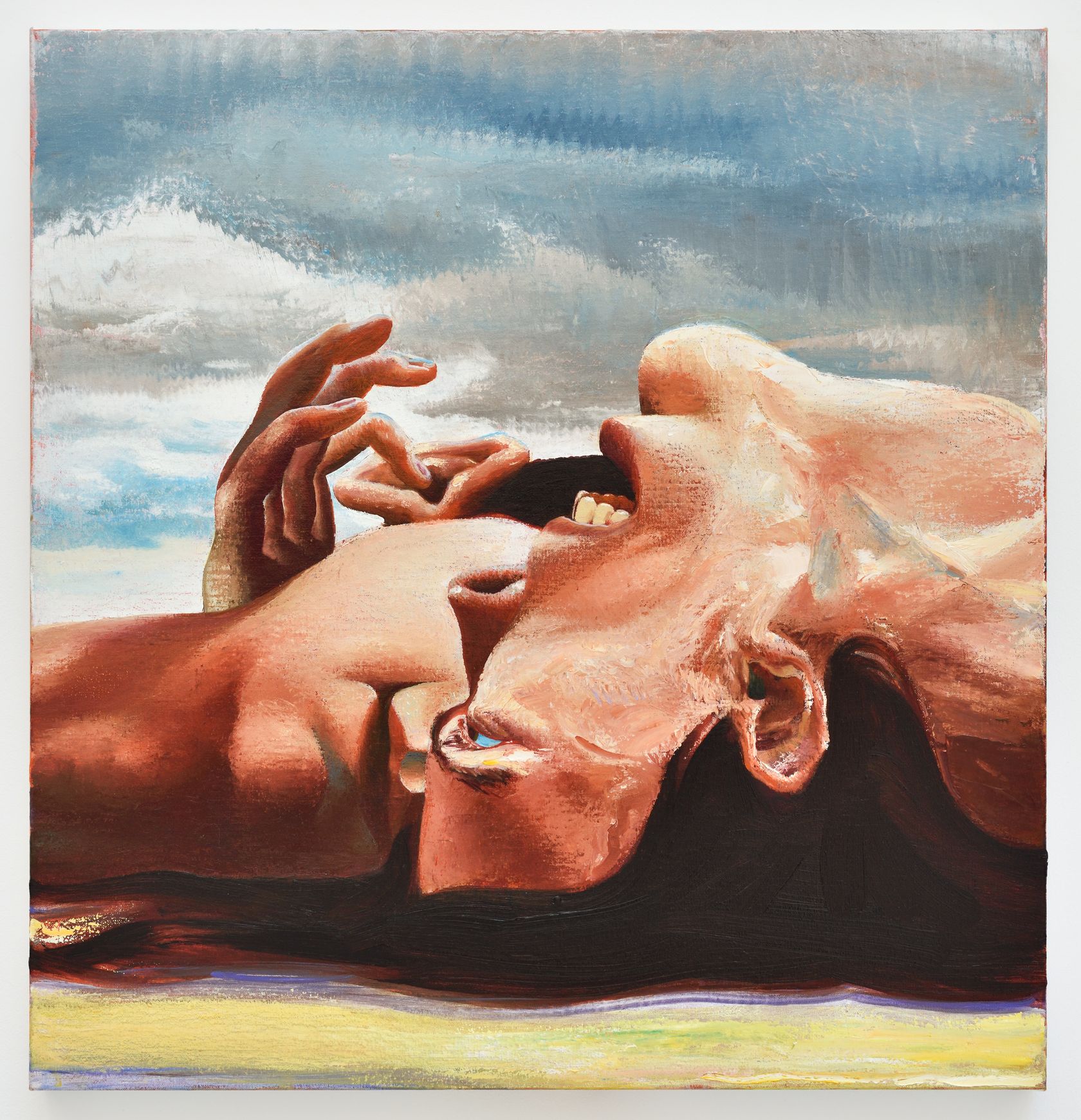
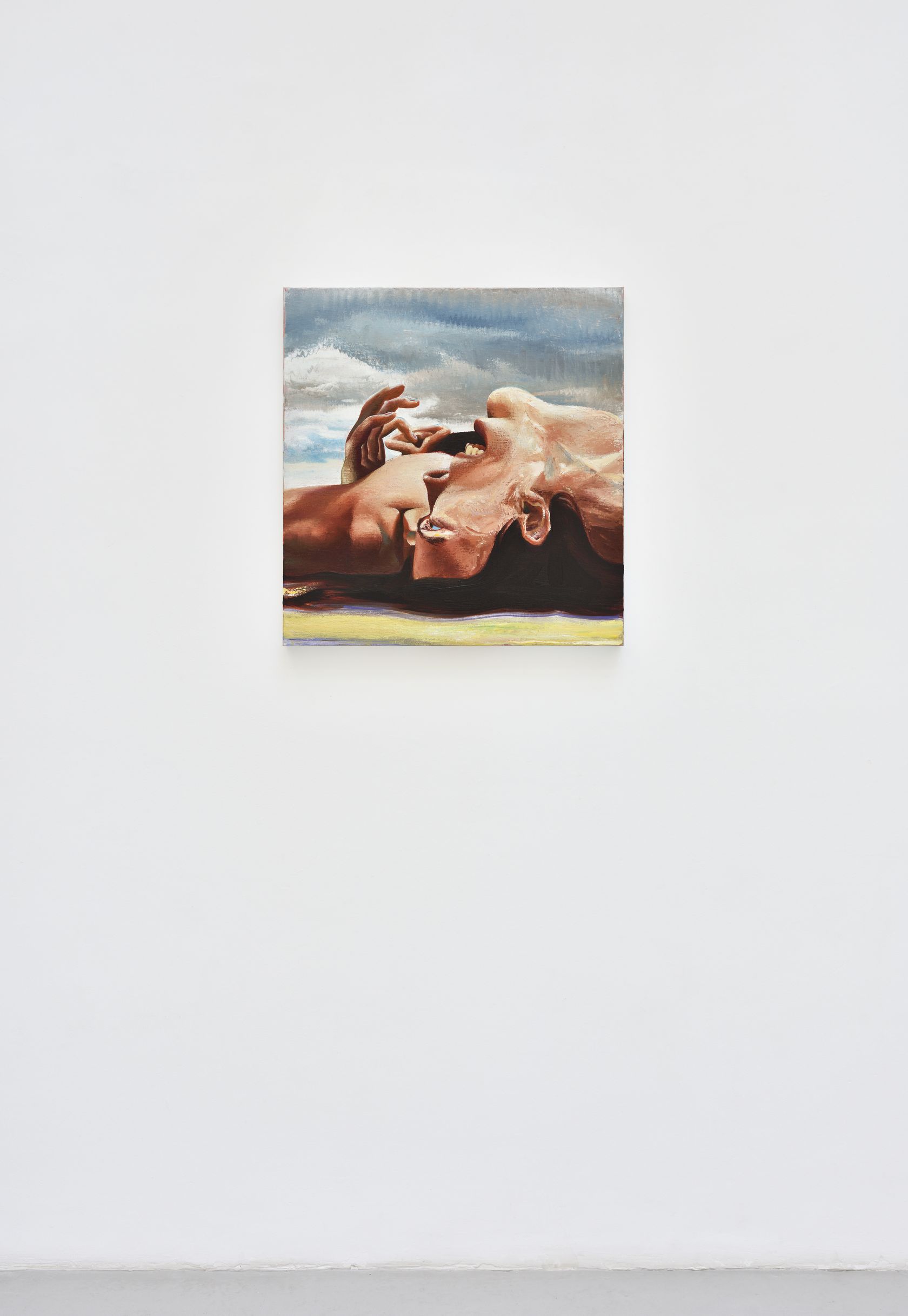
- Stormy Delight , 2025
- Oil on canvas
-
- 130 ×
- 125 ×
- 3.5 × cm
- 51 3/16 ×
- 49 3/16 ×
- 1 3/8 × inches
Born in Versailles in 1980, Laurent Proux lives and works in Paris. In his painting and drawing, Laurent Proux produces powerful and original imagery that seeks through his formal choices to resolve the questions raised by his subjects. Described by some as a realist due to the subjects he depicts—industrial machinery, workstations, sexualized bodies, etc.—his style finds its emancipation through his never-ending exploration of pictorial solutions, the integration of aberrations, bringing planes into collision, the use of artificial colors, all freeing his oeuvre from the opposition between figuration and abstraction. He approaches the human form through fragments, exaggeration and the use of silhouettes to create a kind of body-cum-machine, politicized and under assault, often disturbing and occasionally sentimental. His canvases take the form of a stage, in an altered perspective and the artist addresses the spectator with a visual and intellectual enigma running through the image.
Laurent Proux’s first institutionnal solo exhibition is taking place at the Musée de l’Abbaye in Saint-Claude (FR) in 2025. His oeuvres are included in the collections of the National Center for Visual Arts (CNAP), the Occitan, Limousin and Nouvelle-Aquitaine regional contemporary art collections (FRAC) and the Paris Municipal Collection (FMAC). His work has been exhibited at the Mana Contemporary in Chicago (US), the Shanghai Art Museum (CN), the Moscow Center for Contemporary Art (RU), the Musée d’Art Contemporain in Lyon (FR), the Limousin FRAC in Limoges (FR), at the Lieu Commun in Toulouse (FR) and at the Musée d'Art moderne et contemporain de l'Abbaye Sainte-Croix aux Sables-d'Olonne (FR). Laurent Proux was a resident of the Casa de Velázquez in Madrid (ES).