
To learn more about available works, please provide your contact information
Art Monte-Carlo
Booth C6
July 7-9, 2025
with Helene Appel
Amélie Bertrand
Oli Epp
Fiza Khatri
Anne Neukamp
Françoise Pétrovitch
Présence Panchounette
Stefan Rinck
Moffat Takadiwa
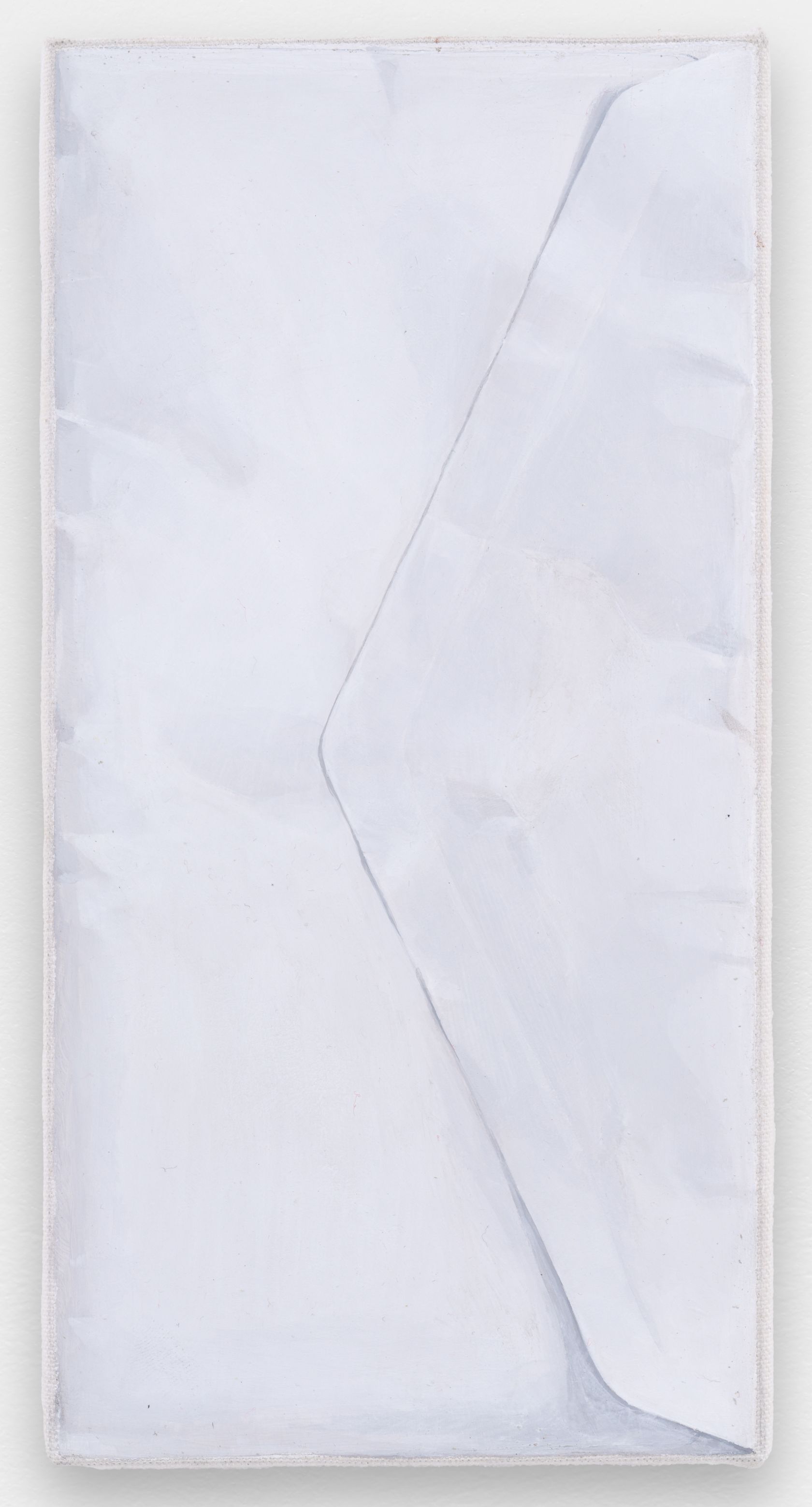
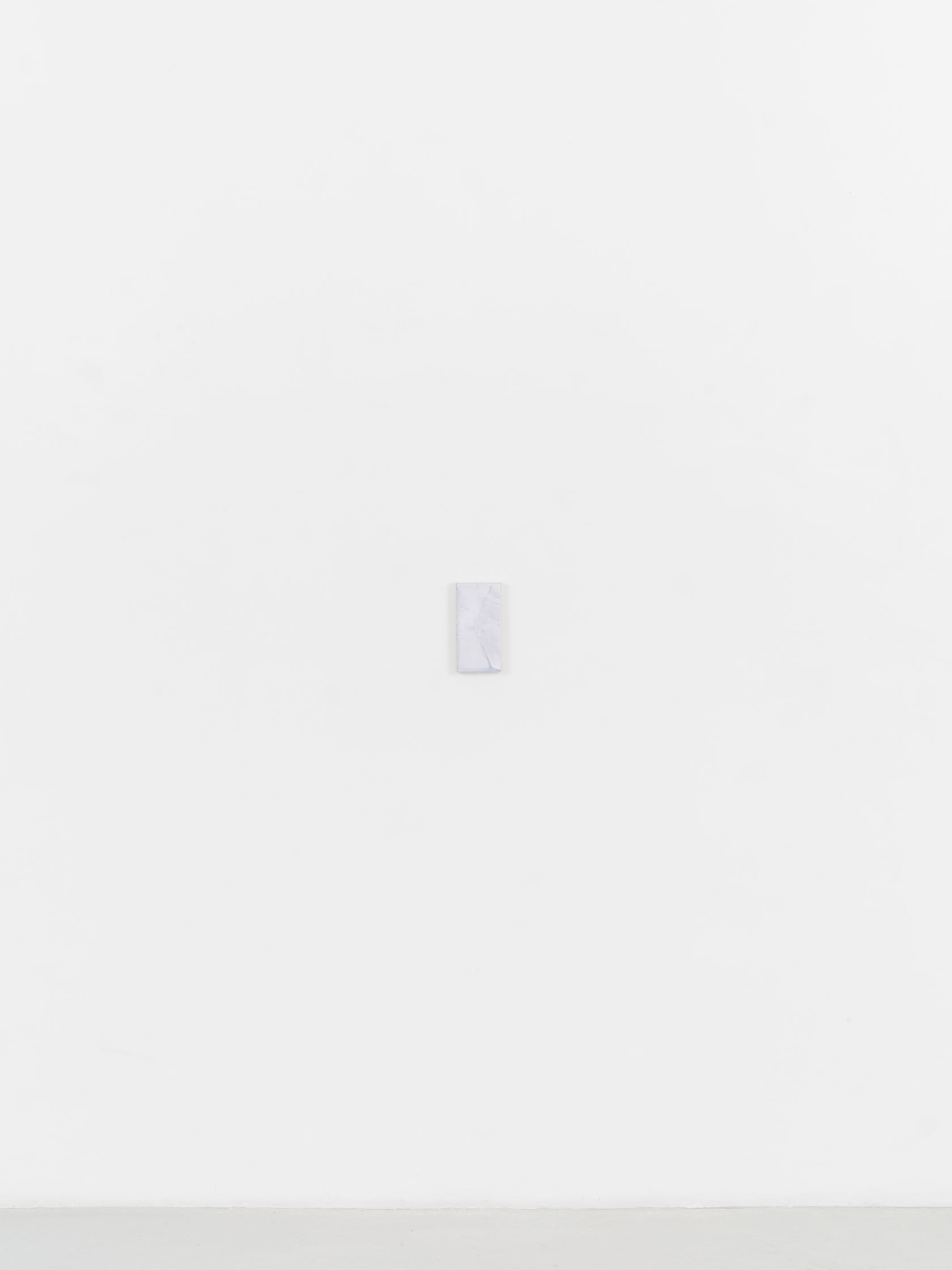
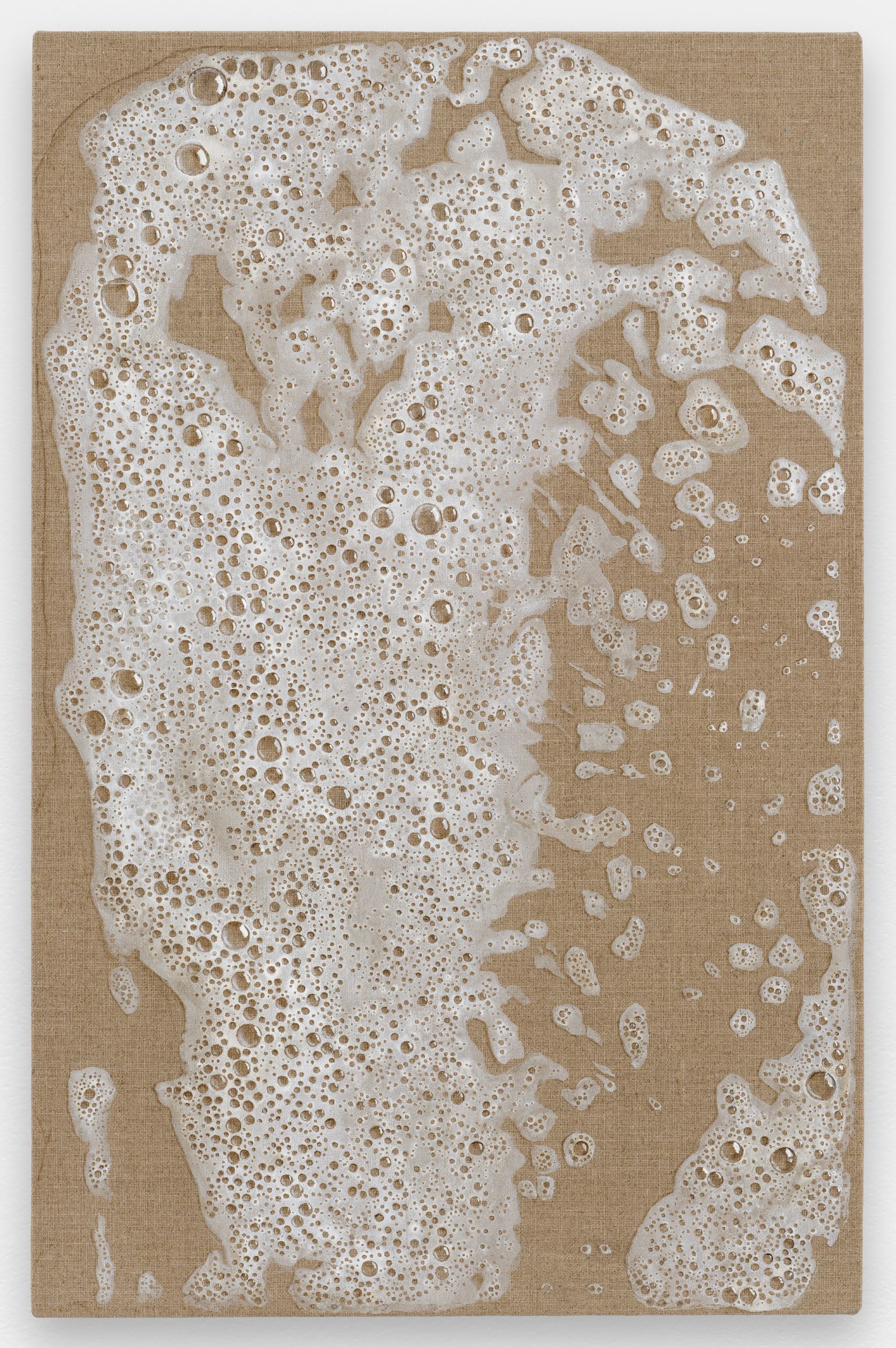
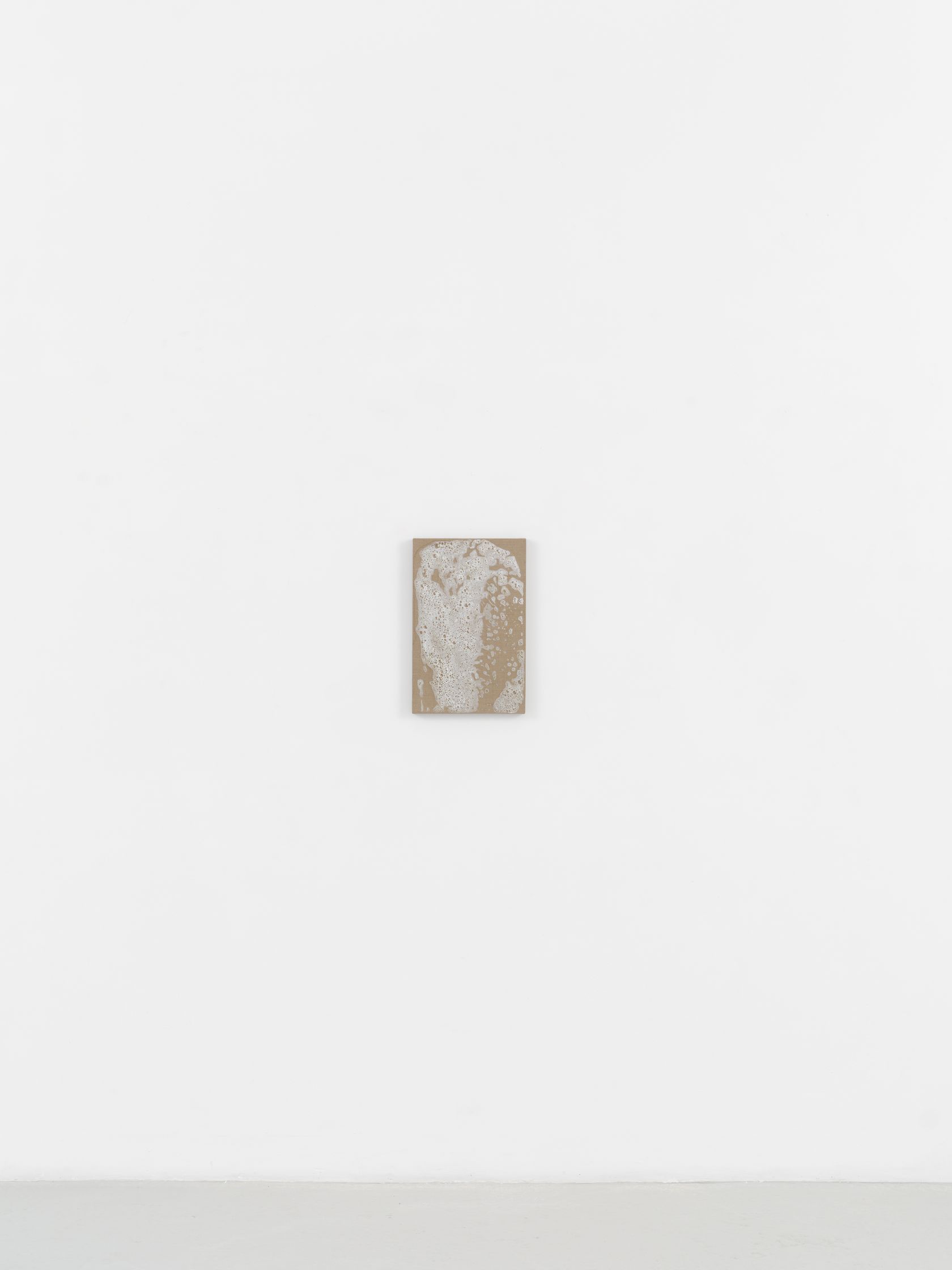
Helene Appel imparts a real presence to the life-sized subjects she paints on raw linen canvas. The formats and techniques she uses for each painting are dictated by the subjects themselves. Embracing even the most trivial details, her works put forward a vision stripped to its essentials and far removed from any moral or metaphysical interpretation. The unvarnished truth of everyday objects is captured with unrelenting realism, preserving the perfection of the moment. There is no attempt to manipulate the eye in a trompe-l’oeil manner, instead our gaze is encouraged to seek out the inherent aesthetic qualities of twigs, soapy water, fishing nets, envelopes or chopped fennel… The apparent simplicity of bringing to life these objects through painting, opens the door to the most profound exploration of the relationship between art and reality. Or to put it more simply: “What you see is what you get… but take a better look at what you see.”
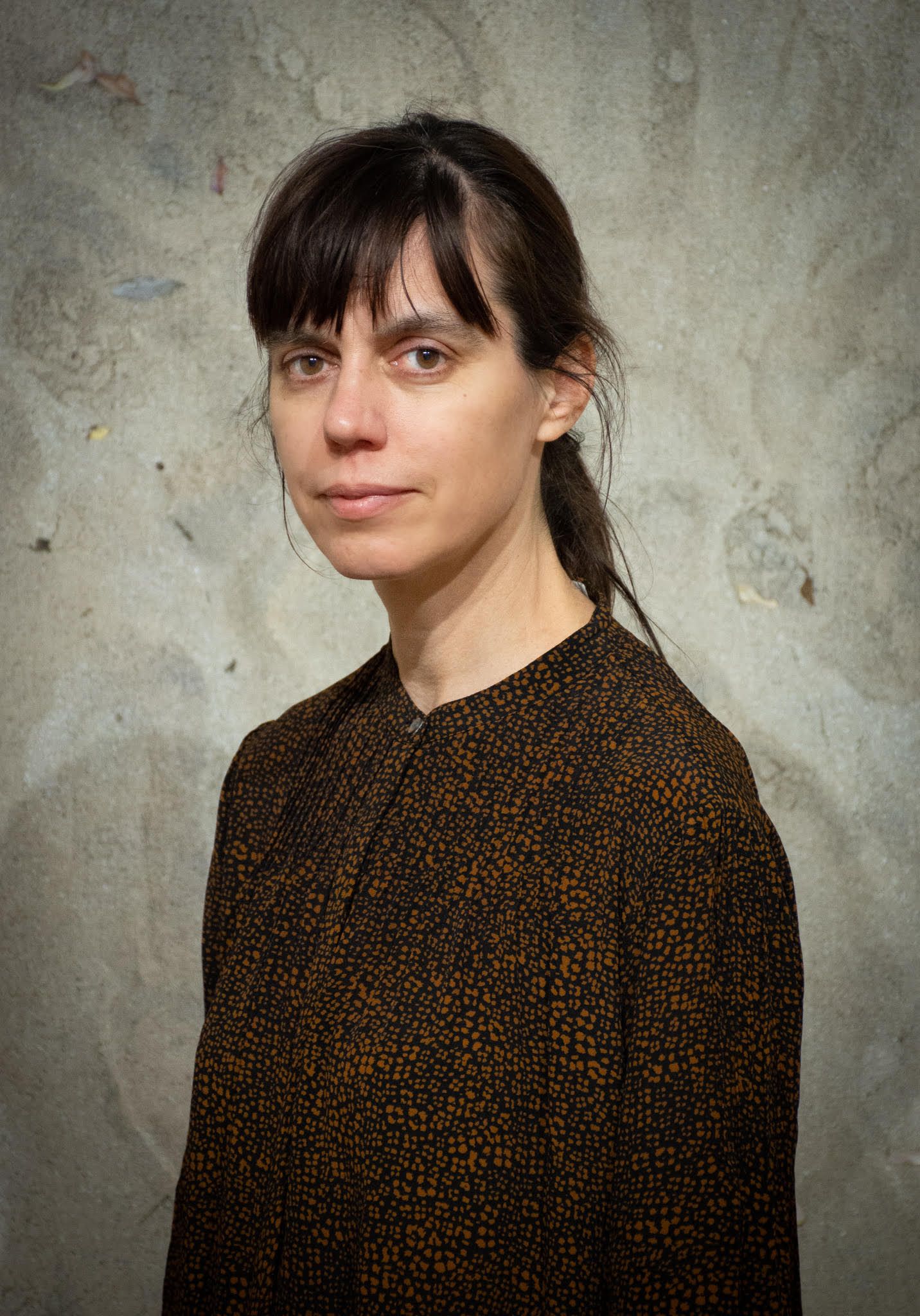
Helene Appel was born in 1976 in Karlsruhe (Germany) and currently lives and works in Berlin. She is a graduate of the Hamburg School of Art and the Royal College of Art in London. Her work has been exhibited at the Museo Marino Marini in Florence, at the Drawing Room and the Hamburger Kunsthalle in Hamburg, at the Städtische Galerie in Delmenhorst and at the Thalie Foundation in Brussels. Her paintings feature in numerous public and private collections such as the National Museum of Contemporary Art in Greece, La Gaia in Italy, the Olbricht Collection in Germany and at Touchstones, Rochdale in the UK.
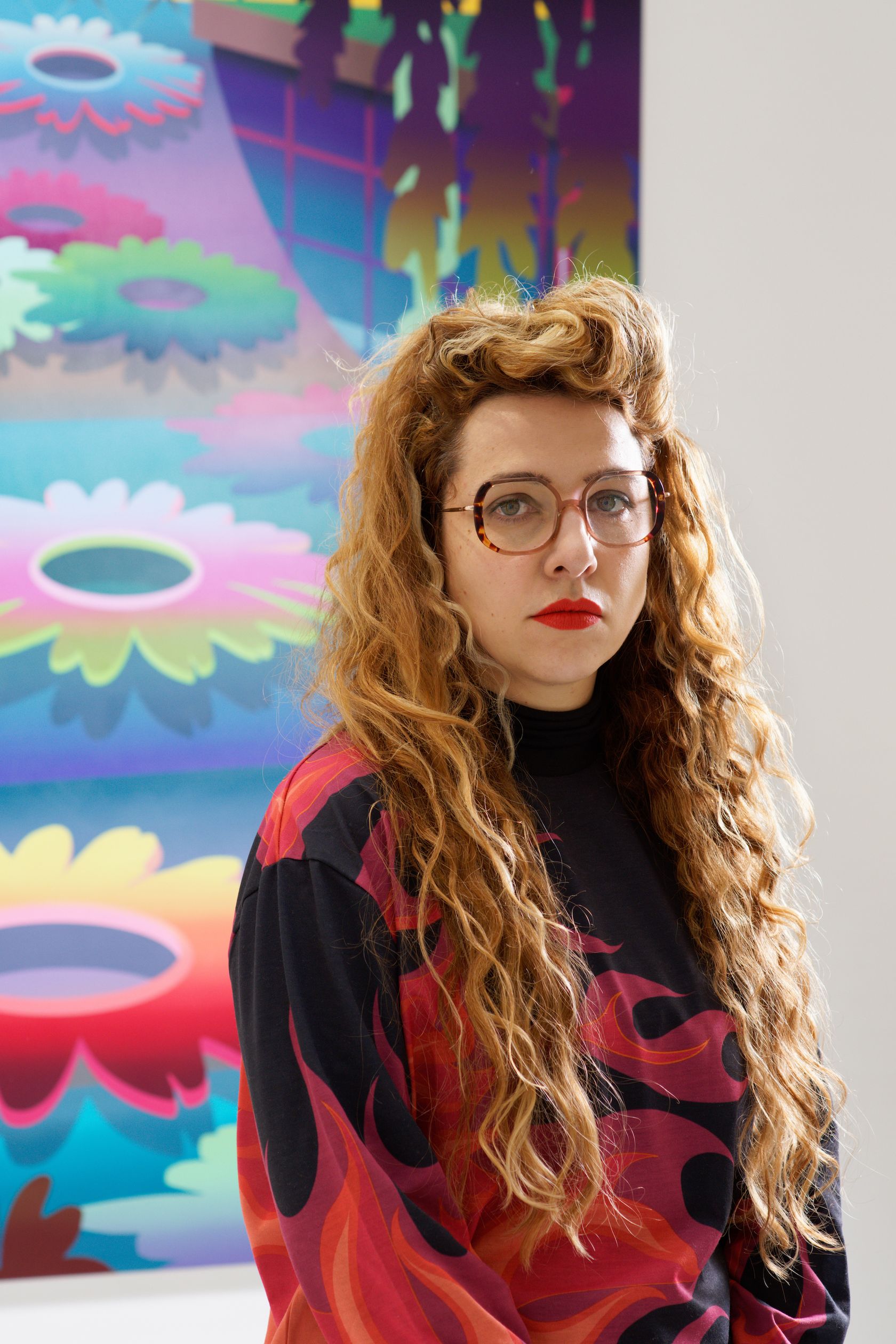
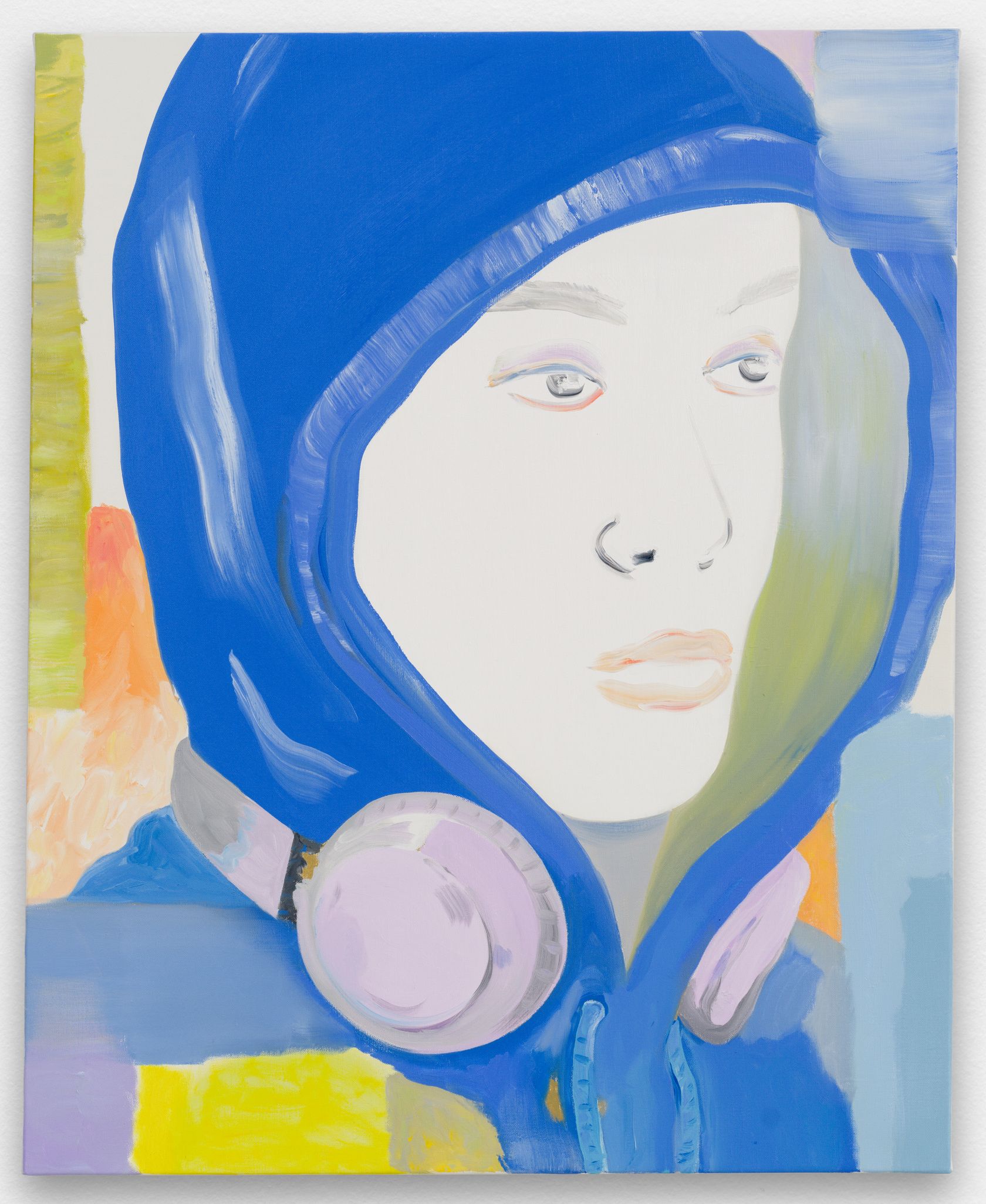
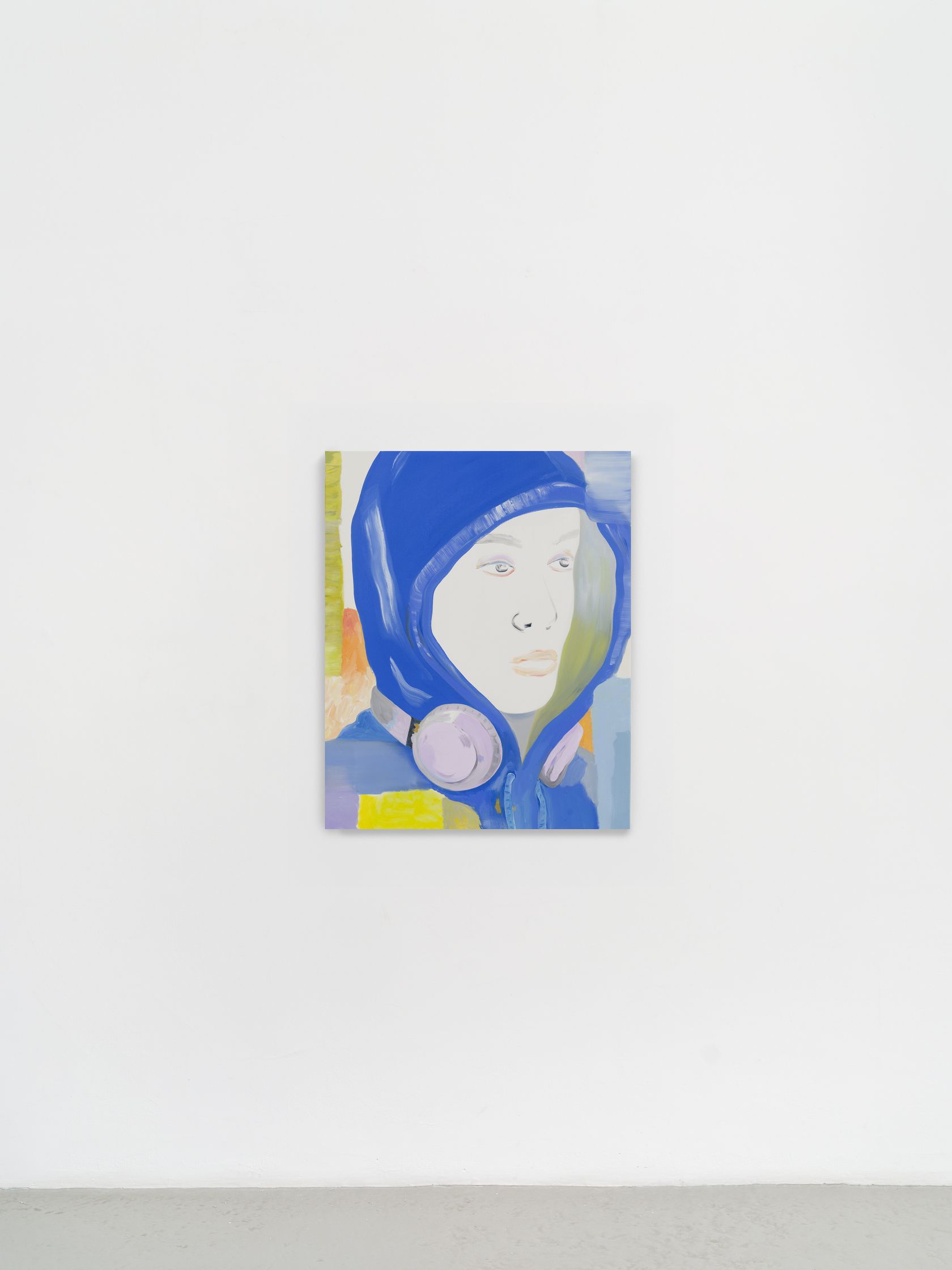
By means of her impeccably smooth execution, Amélie Bertrand (born in 1985) is able to distance herself from ideal landscapes inspired by nature, and shape decors that fall somewhere between dreams and nightmares. The planes and surfaces of her works are assembled in a complex and meticulous manner, branching out into skewed perspectives and shallow horizons. All kinds of materials and motifs typical of our era saturate her compositions: OSB, laminates, wire mesh, tiles, fleecing, chains, foliage, camouflage etc. Colors are applied in gradients, yet always as a single layer, as if trapped on the surface of an impenetrable screen. Amélie Bertrand creates an atmosphere of déjà-vu, a contemporary ambience that is both psychological and physical within the confined space of the painting. As the missing link between Giotto and West Coast art, Amélie Bertrand combines the great traditions with synthetic psychedelia, transforming contemporary visual culture into carefully controlled constructs of flat tints.
In 2024, a monographic exhibition of Amélie Bertrand took place at the Musée de l’Orangerie in Paris. She has recently enjoyed solo and group exhibitions at the Centre d’art contemporain de la Matmut-Daniel Havis, Saint-Pierre-de-Varengeville (FR), the Maison des arts, Malakoff (FR), the Centre d’art contemporain de Meymac (FR), the Kunstwerk Carlshütte, Büdelsdorf (DE), the Ecole Municipale des Beaux-Arts, Châteauroux and the Musée des Beaux-Arts de Dole (FR). Her oeuvres are included in public and private collections such as the Thyssen-Bornemisza Art Contemporary, the MAC VAL, Vitry-sur-Seine (FR), the CNAP, Paris (FR), the FRAC Limousin, Limoges (FR), Les Abattoirs Musée – Frac Occitanie Toulouse (FR) and the Musée de l’Abbaye Sainte Croix, Les Sables-d’Olonne (FR).
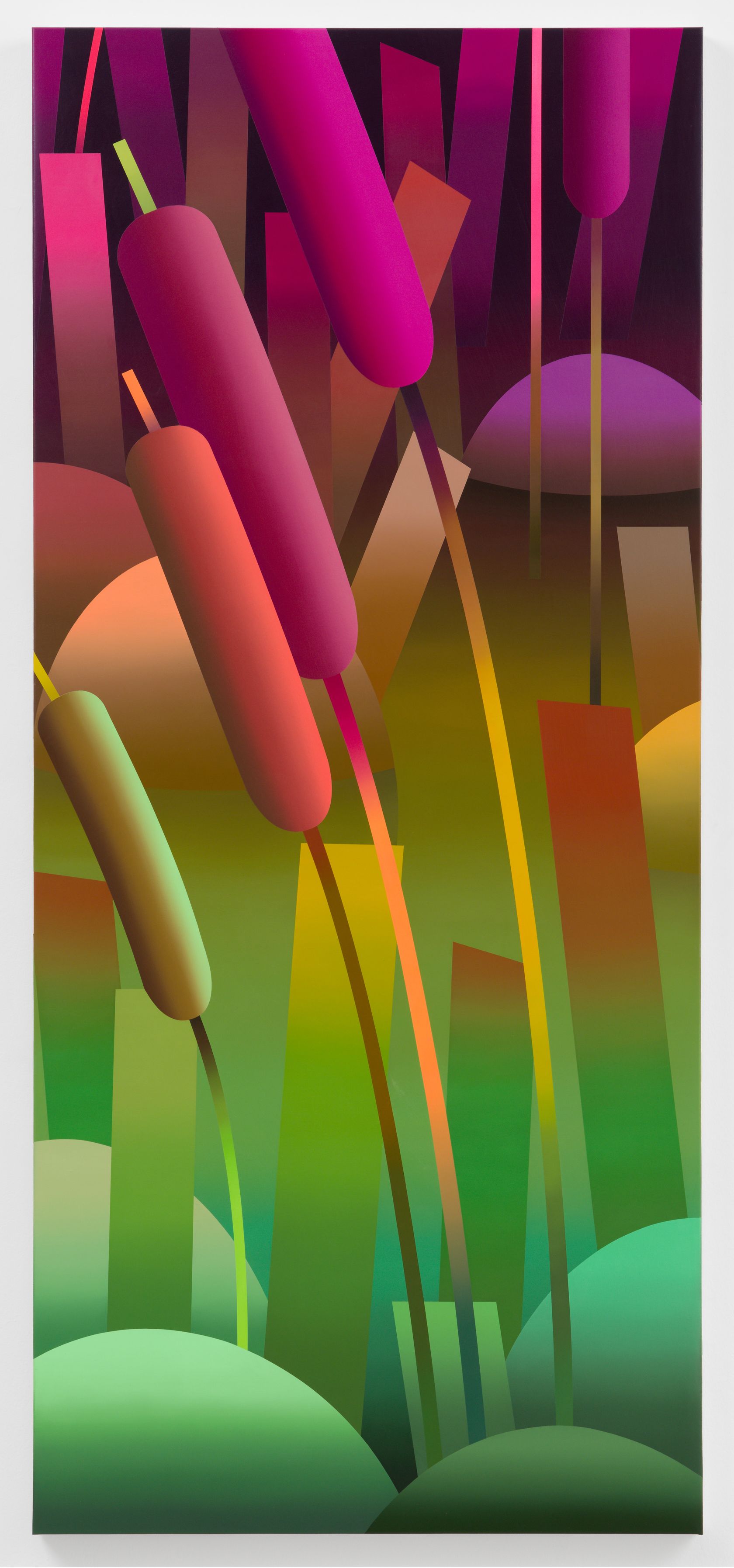
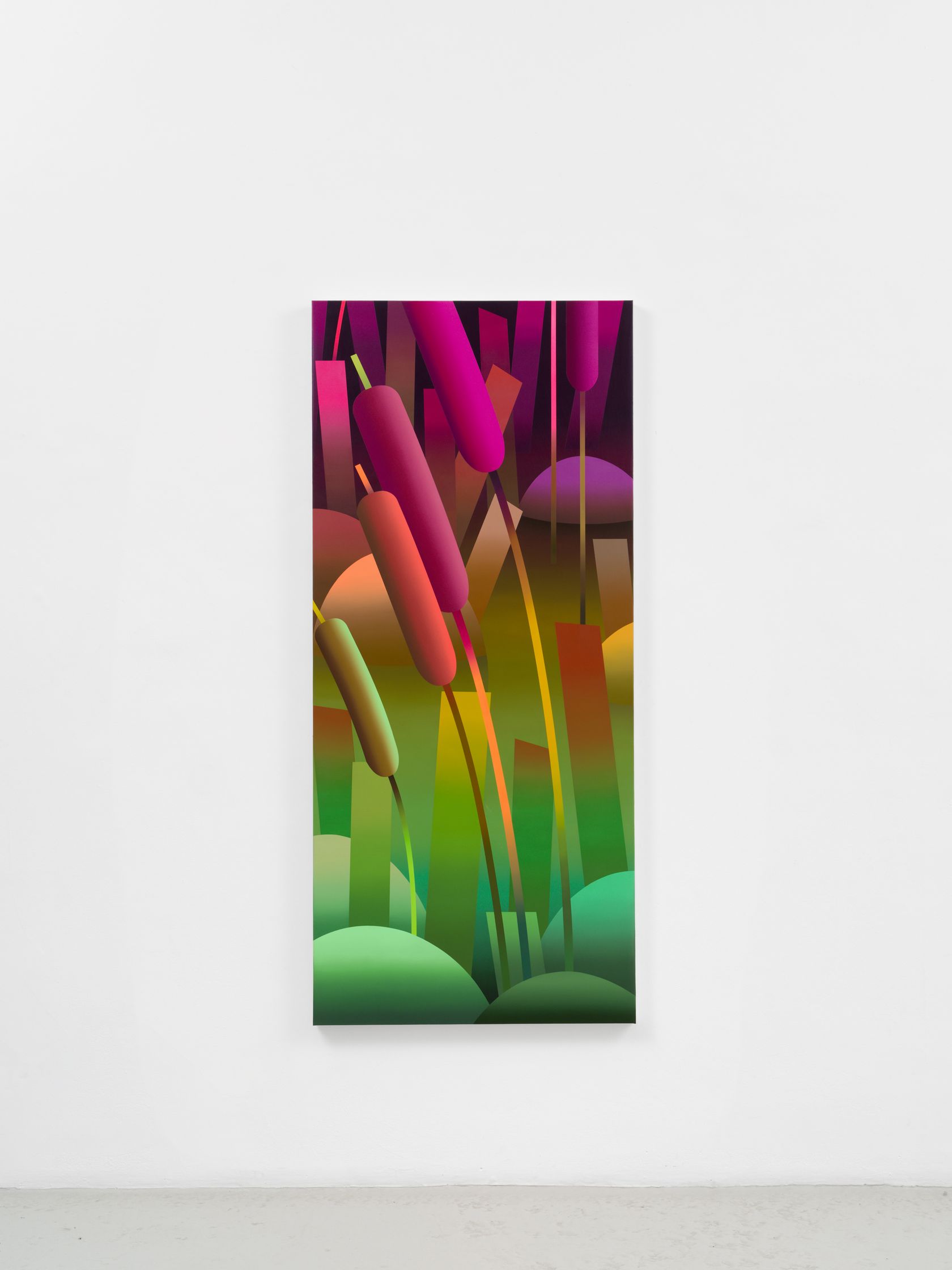
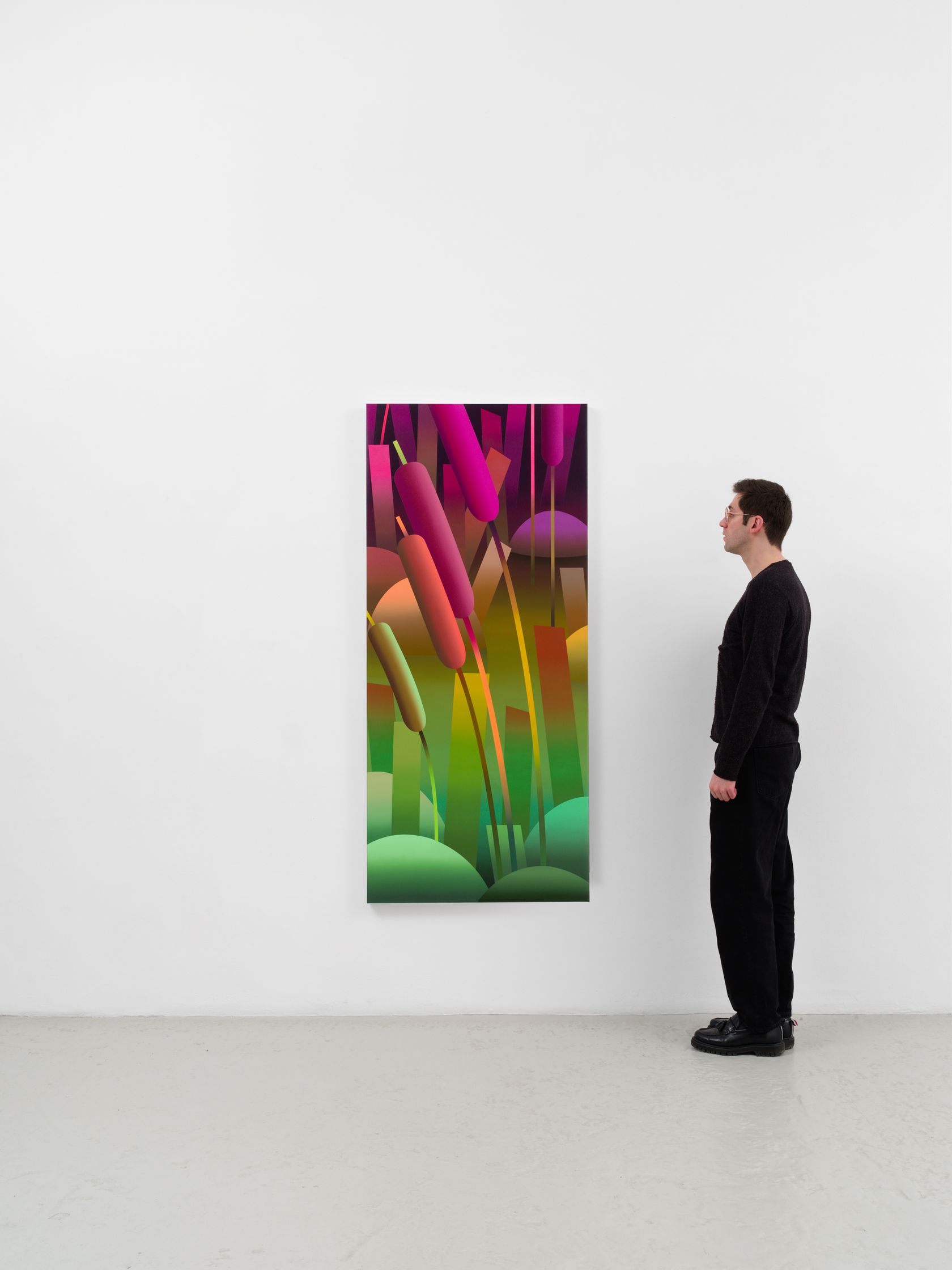
- Amélie Bertrand
- Hush , 2025
- Oil on canvas
-
- 180 ×
- 80 × cm
- 70 7/8 ×
- 31 1/2 × inches
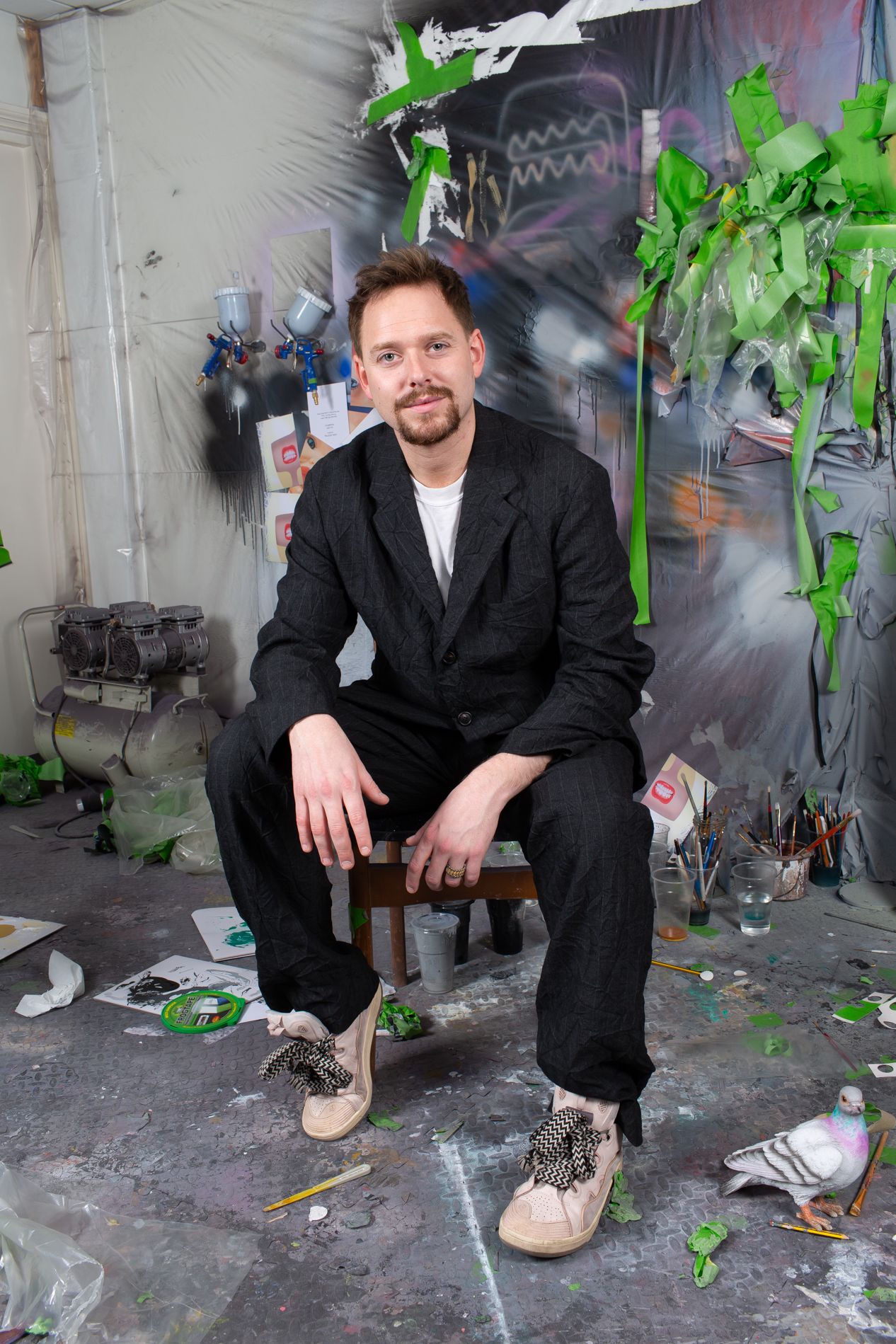
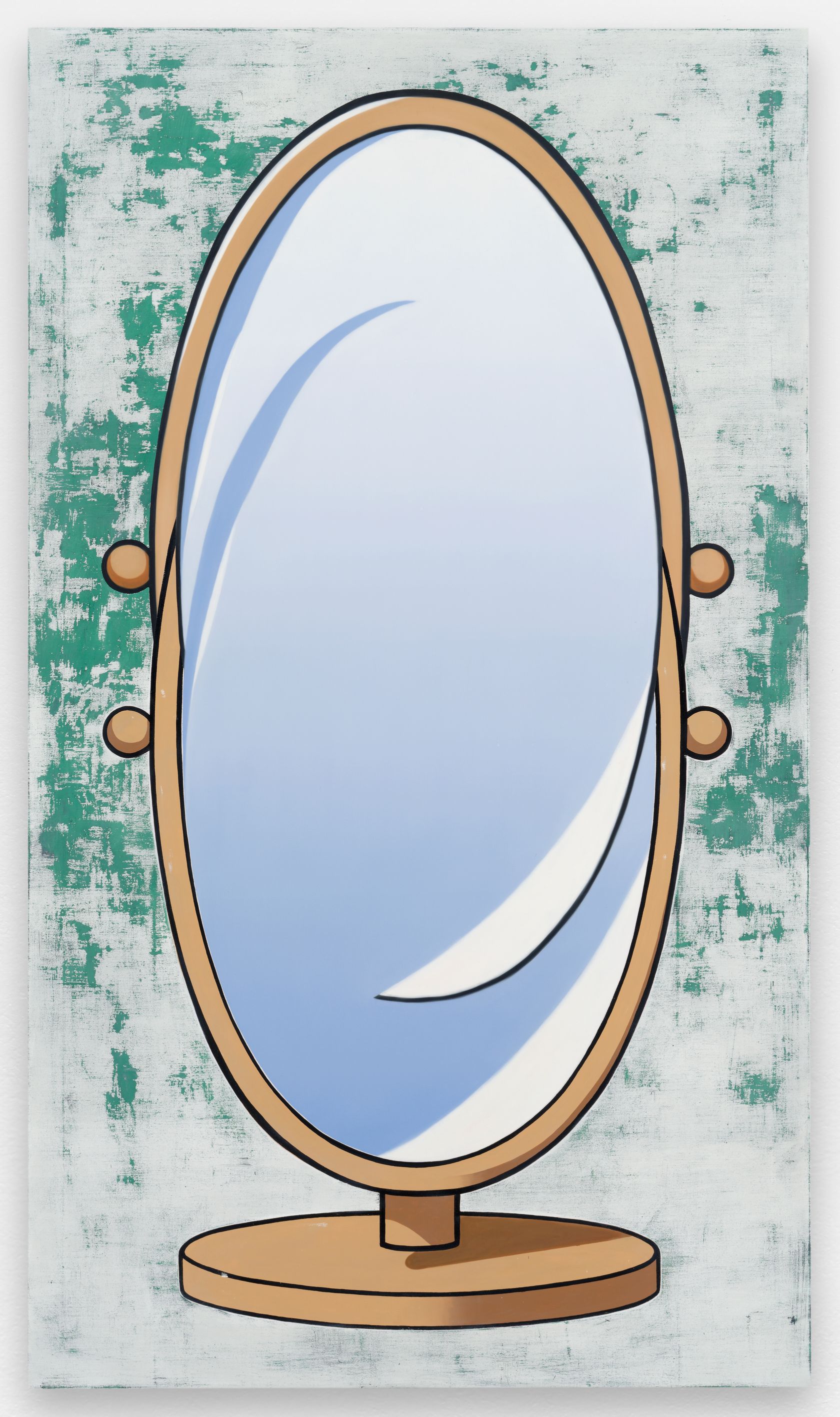
Born in 1994, Oli Epp lives and works in London. His paintings are autobiographical; sometimes confessional, sometimes irreverent and frequently handled with a humorous sense of pathos. Oli Epp focuses on situations that either involve him or others, in public and private moments that pass by as unremarkable, at a glance. But documenting these unreported tragedies in paint is, for him, an act of discovery. He wants his imagery to feel familiar to as many people as possible; to draw out the ridiculous comedy of certain shared rituals and behaviours, by economizing on the essence of the situation and creating simplified humanoid characters, which lend a sort of parody of the real world in the way that cartoons do. These avatars have oversized heads and are hermetically sealed by an absence of facial features, which is an exaggerated reflection on human interaction in the post digital age - these figures appear idiotically isolated, but adorned with earpieces, branded items of clothing and objects that are important to consumption and communication.
Oli Epp uses the visual language of branding and interplay between graphic and painterly surfaces to create optical confusion, echoing the way that our real and digital lives are merged.
Graduated from the City & Guilds of London Art School in 2017, Oli Epp has received numerous awards and residencies. In 2018, Semiose organised his first gallery solo exhibition.
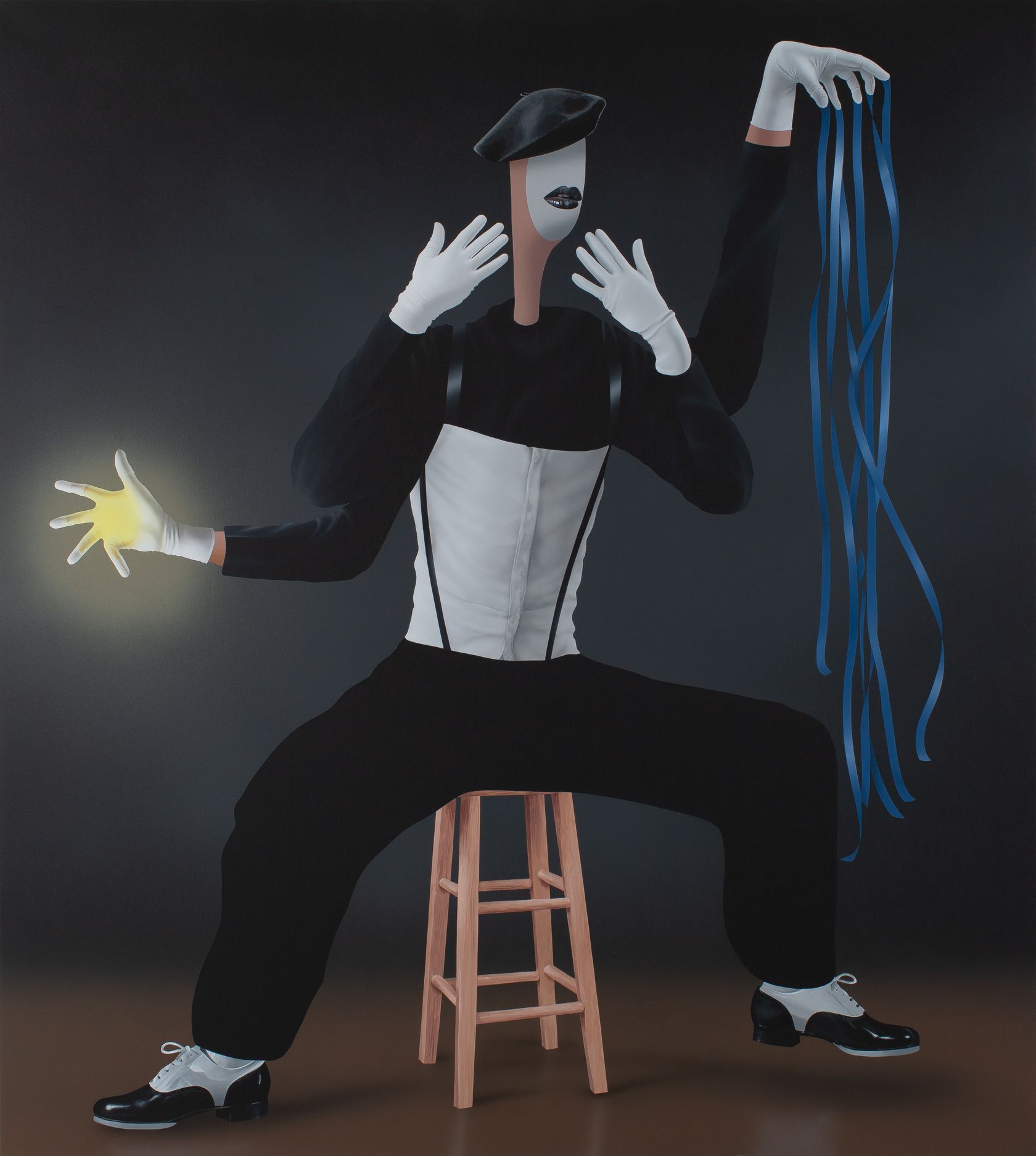
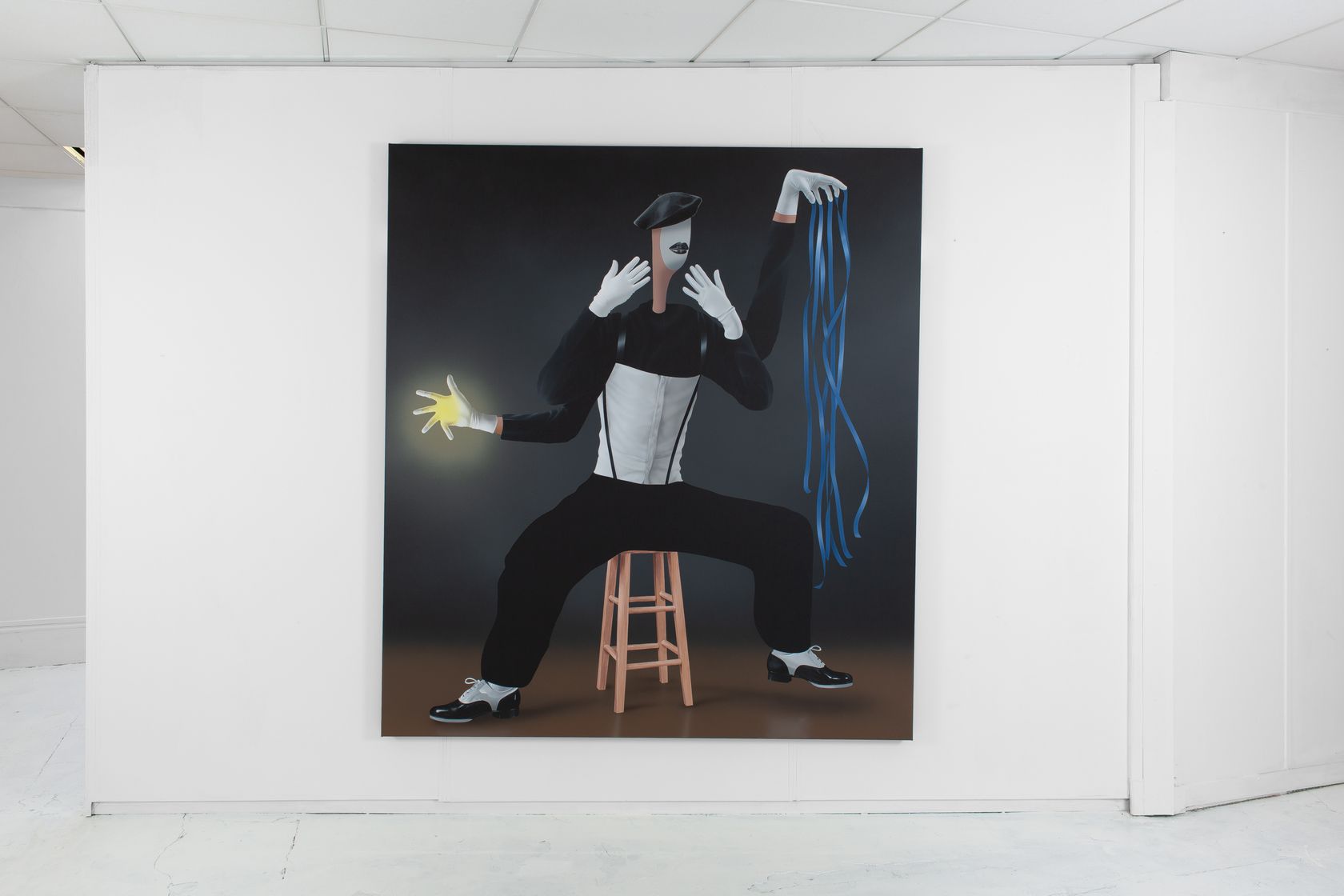
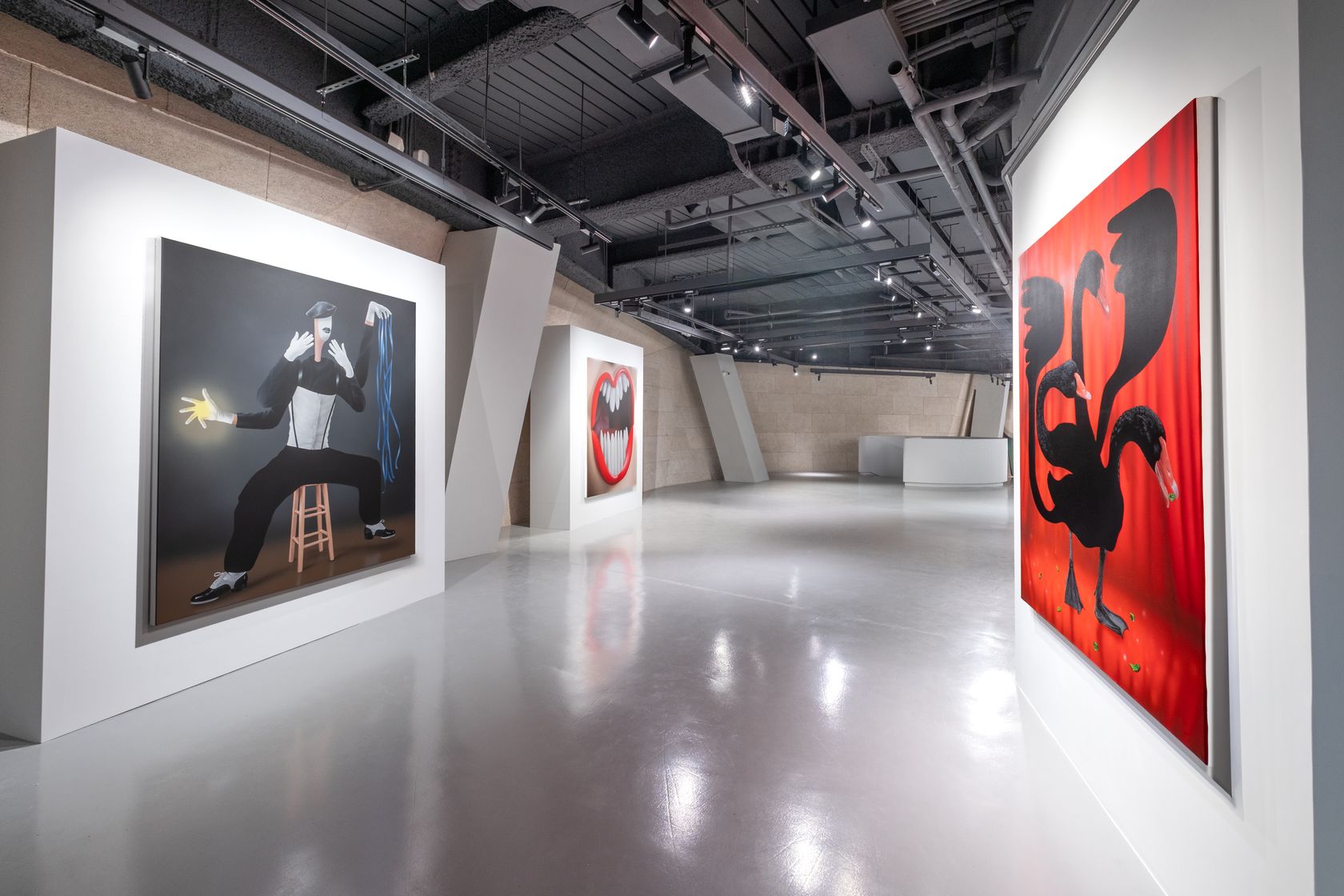
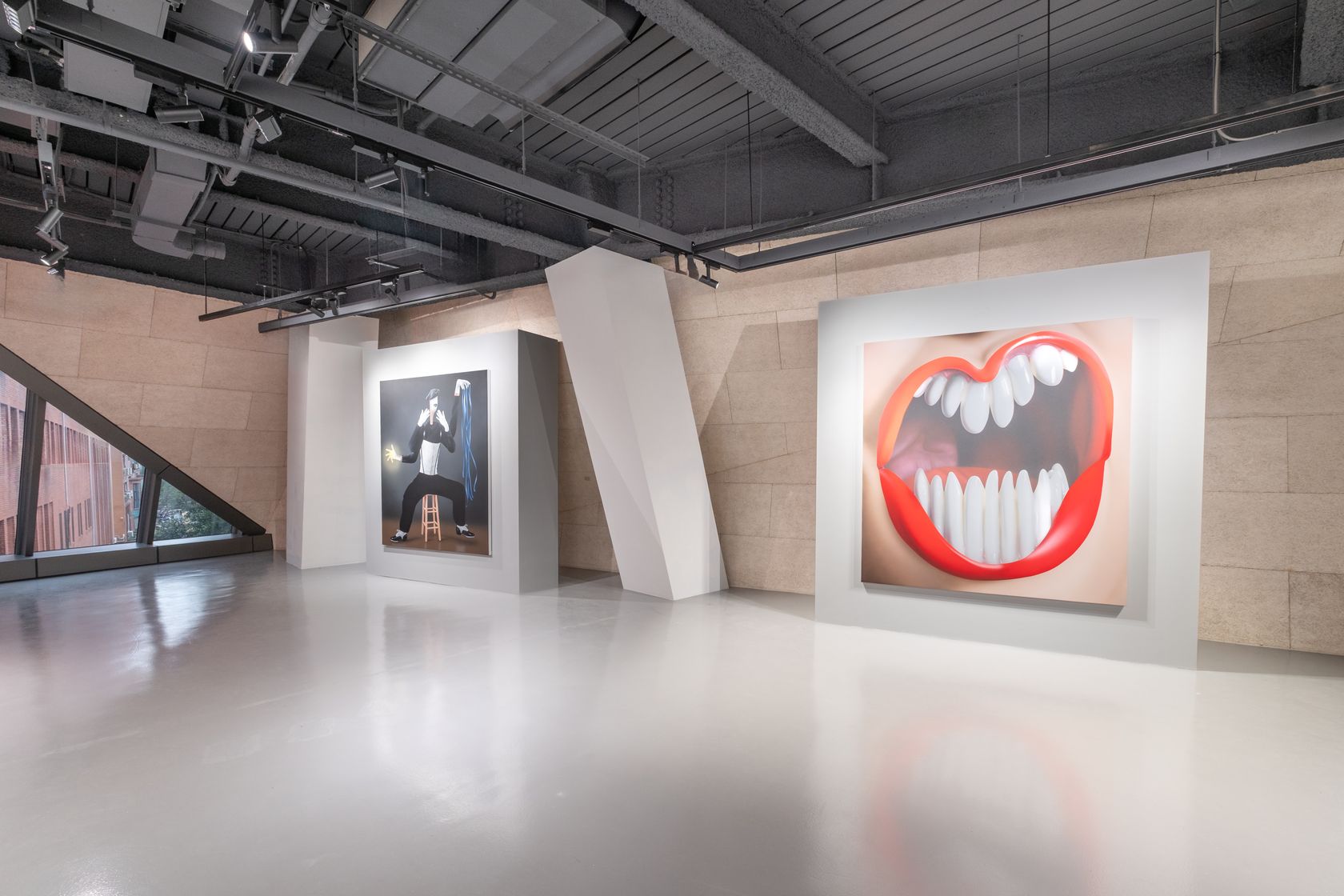
- Oli Epp
- Forecast , 2025
- Oil and acrylic on canvas
-
- 200 ×
- 180 × cm
- 78 3/4 ×
- 70 7/8 × inches
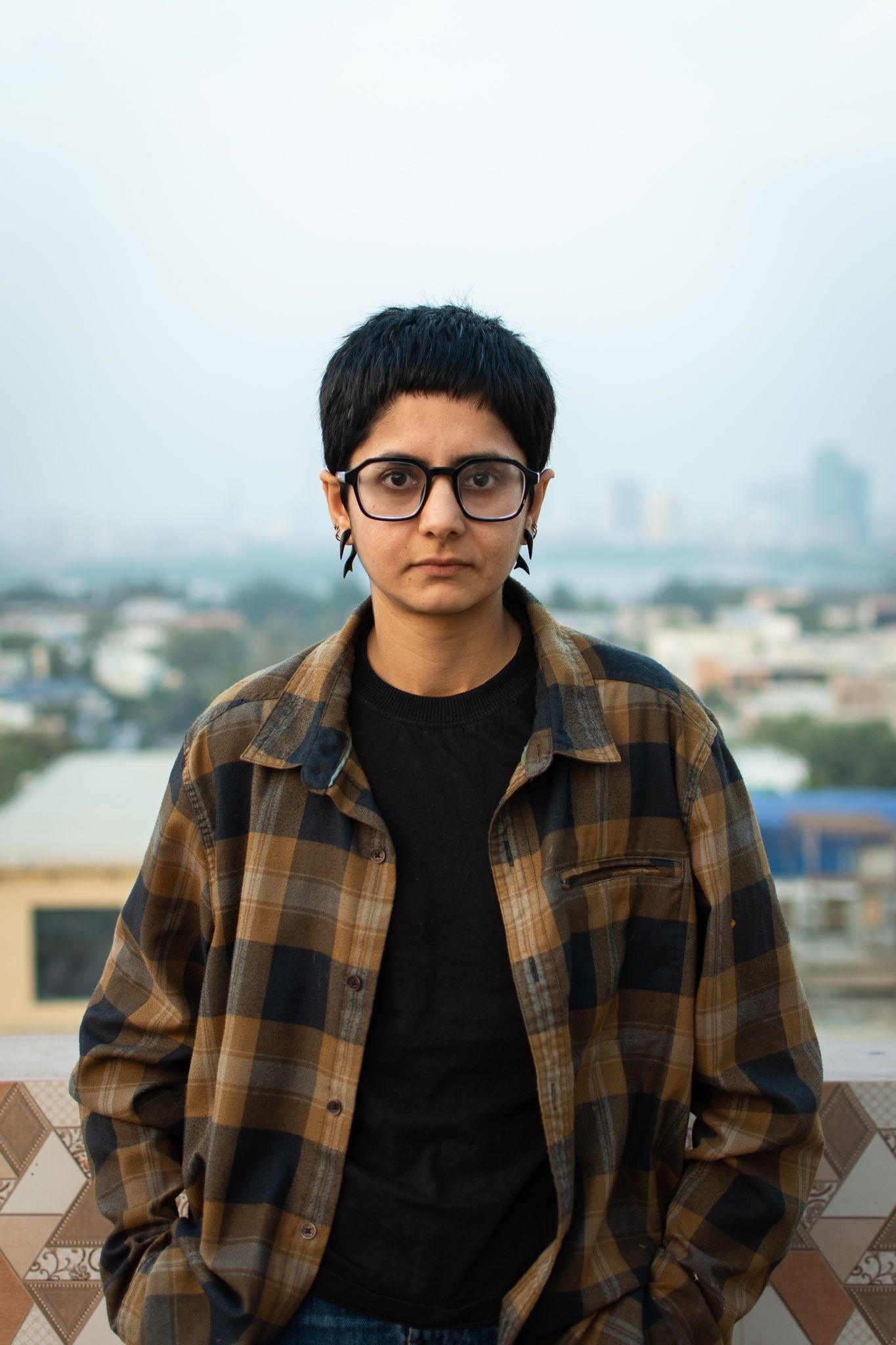
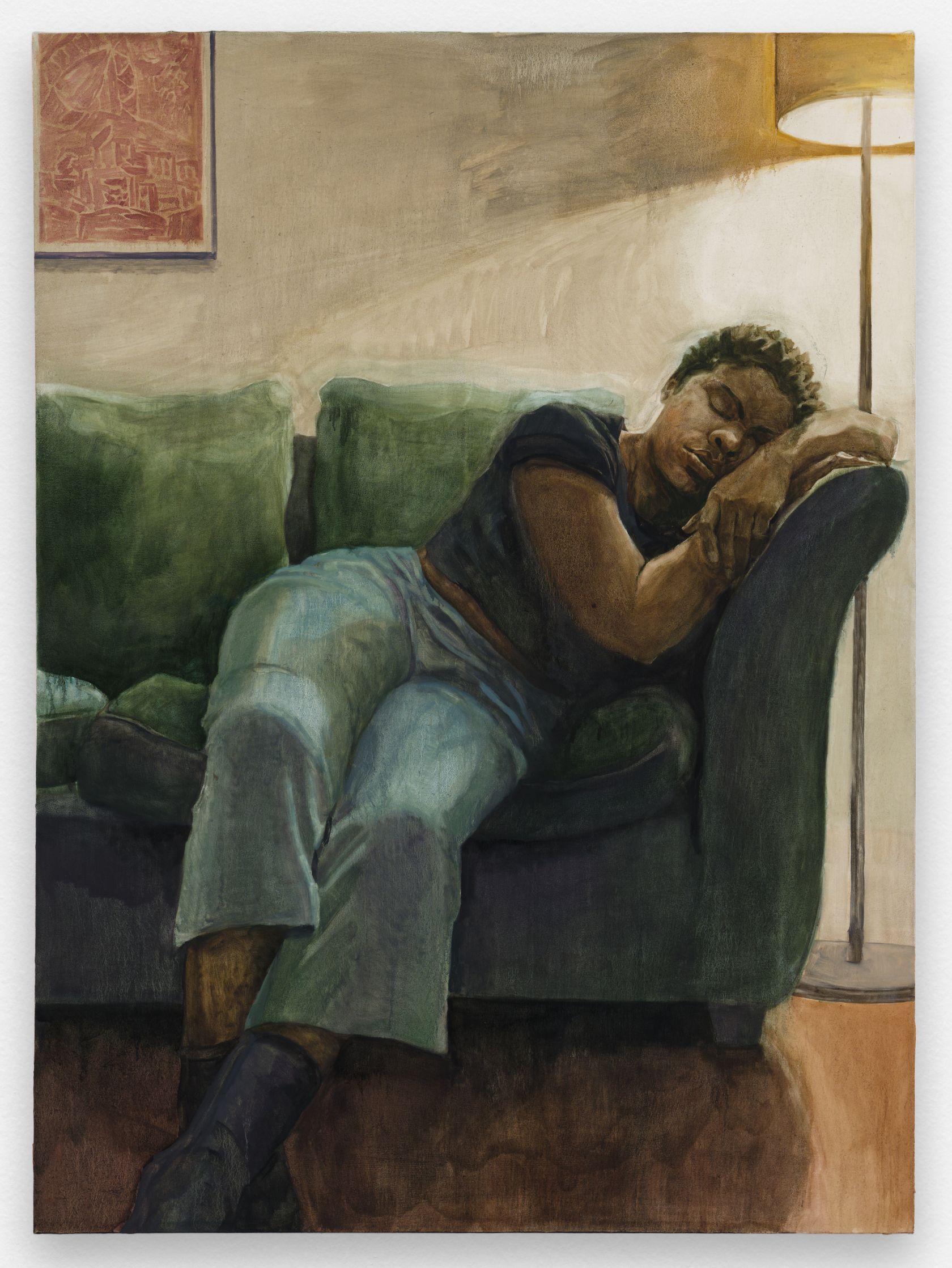
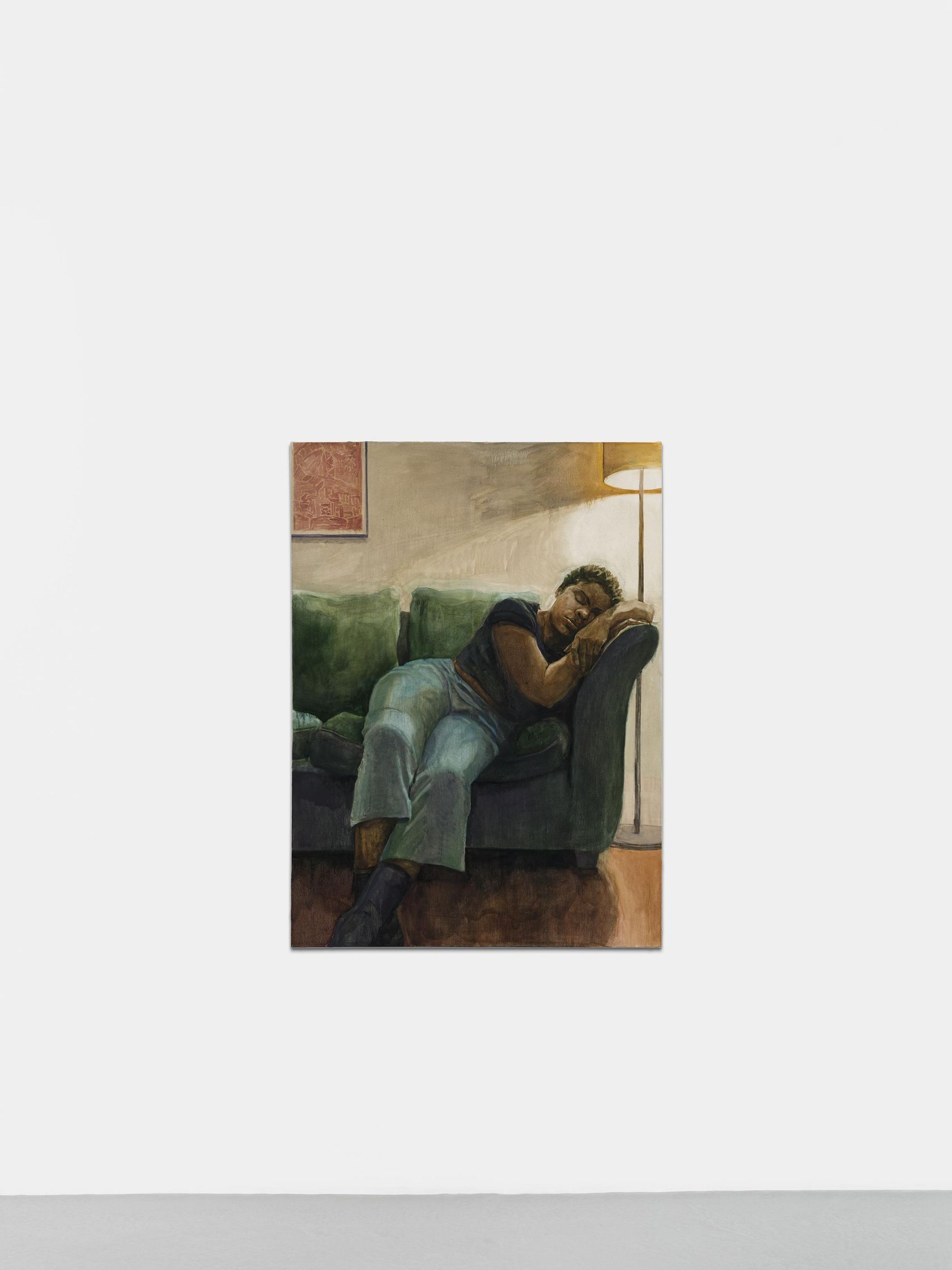
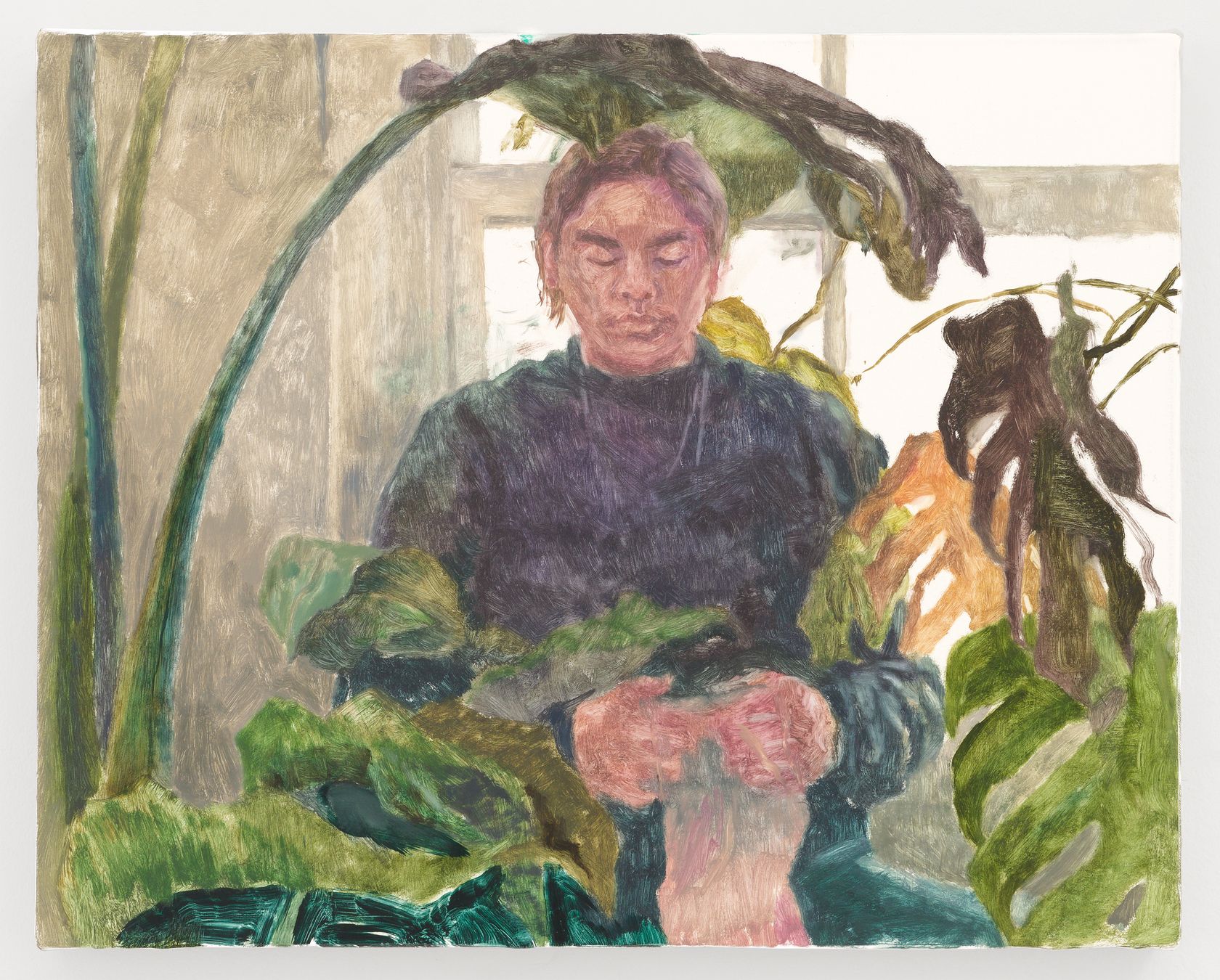
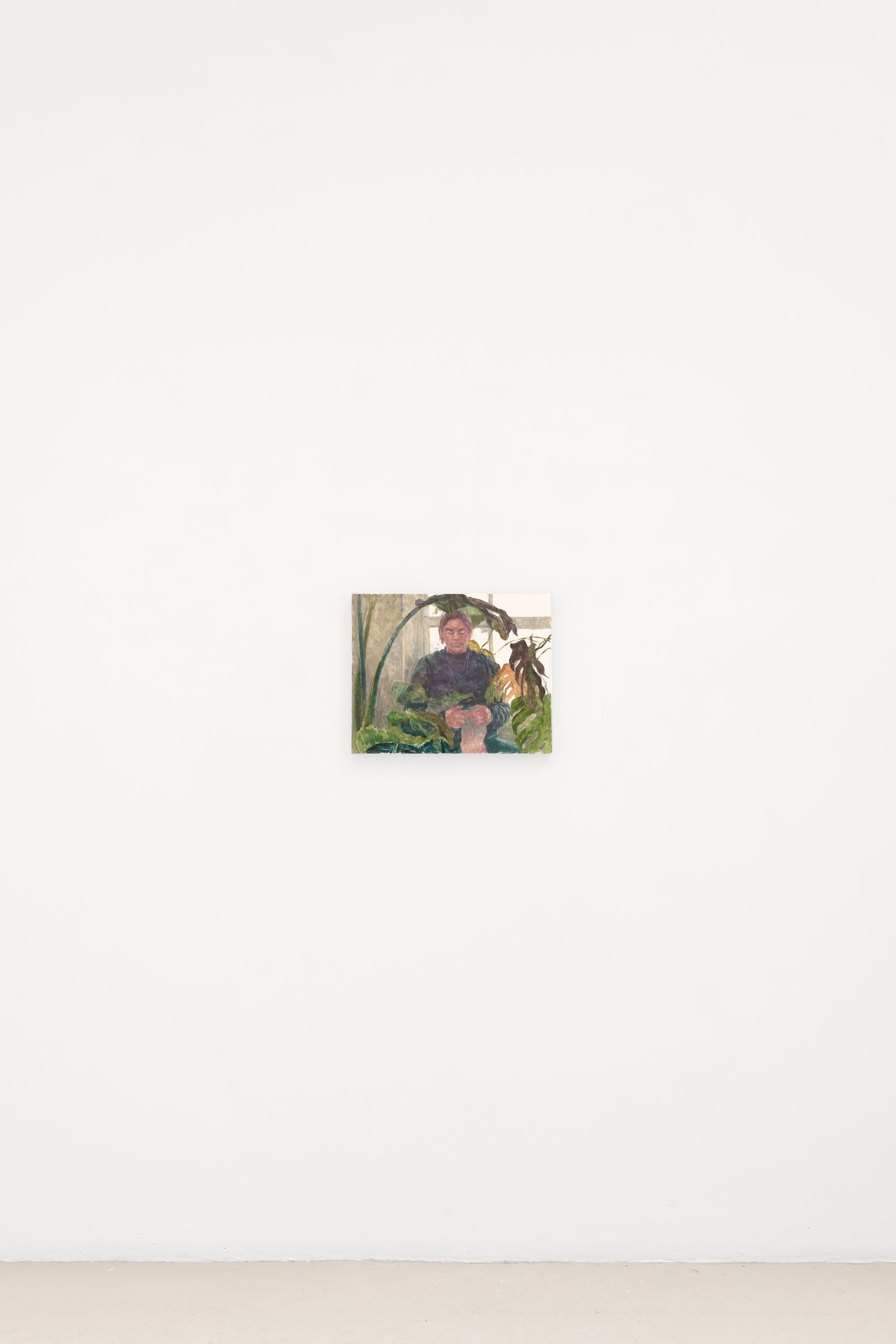
Fiza Khatri is a Pakistani artist based in the United States, whose works intertwine lived experience and cultural history with great intricacy. In their oeuvre, lush nature, wildlife and humans cohabit, the latter often represented in moments of intimacy or contemplation.
Depicting emotionally imbued everyday objects and situations, their paintings offer their subjects visibility within a benevolent universe. The pictorial space encompasses a terrain of social ecology that emphasizes the links between the intimate and the political, celebrating the vibrant interweaving of living things.
Drawing inspiration from the romantic style of precious Rājput miniatures, Khatri eliminates perspective, lending greater importance to the continuity between background and foreground. In their painting, Khatri often combines the use of an airbrush—to obtain a blurred effect that evokes optical distortion—and oil paint, which allows extreme precision alongside the impression of a sketch that has been captured with rapid brushstrokes.
Fiza Khatri was born in Karachi (Pakistan) in 1992 and currently lives in New Haven, Connecticut (USA). In 2023, they graduated from the Yale School of Art with an MFA in Painting and Printmaking. Khatri’s works have been exhibited in Asia, North America and in the UK by galleries such as Jhaveri Contemporary, Perrotin, Grimm and Micki Meng and they will be taking part in the forthcoming Lahore Biennale. While living in Pakistan, Khatri was engaged with curating and organising in relation to feminist and queer communities.
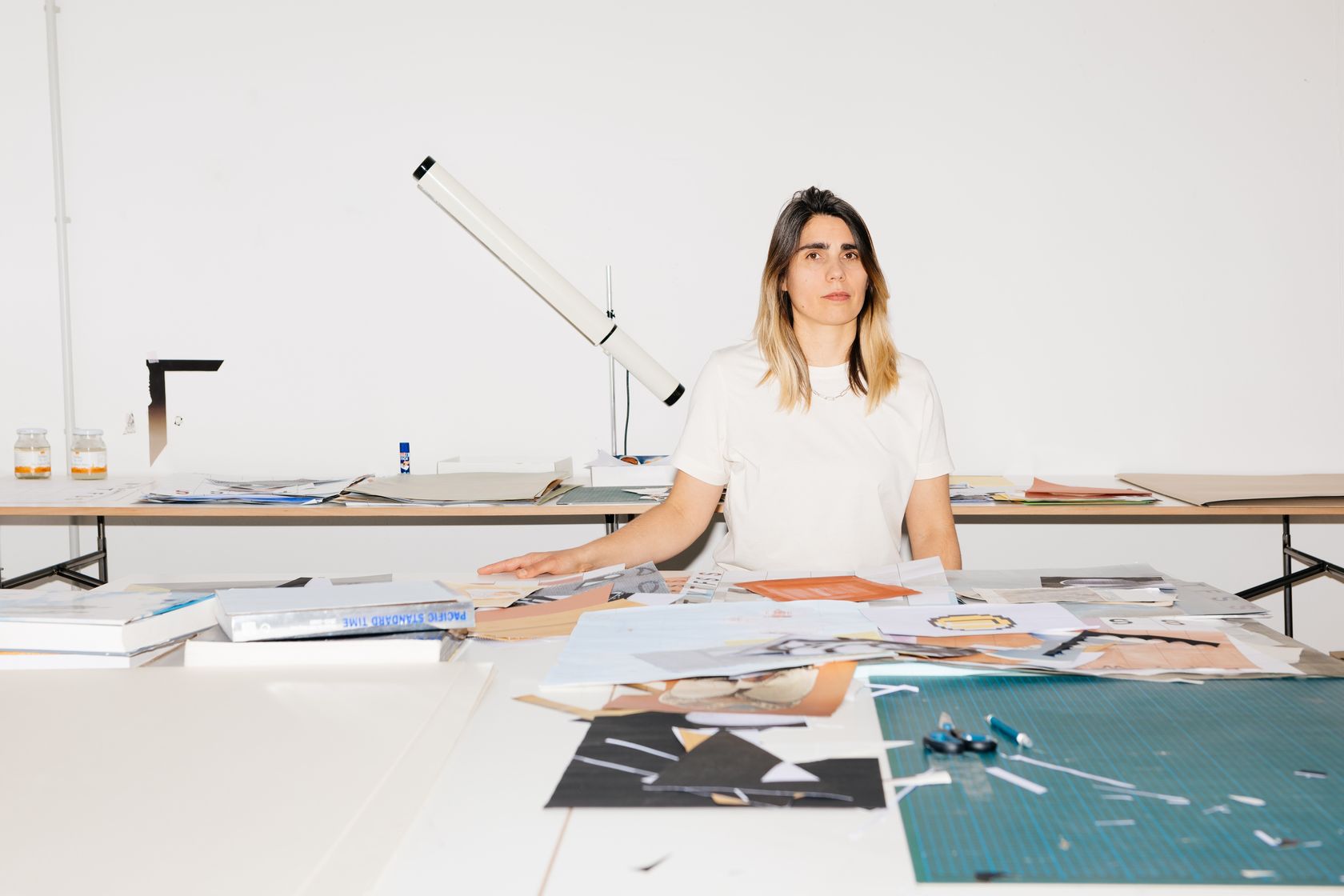
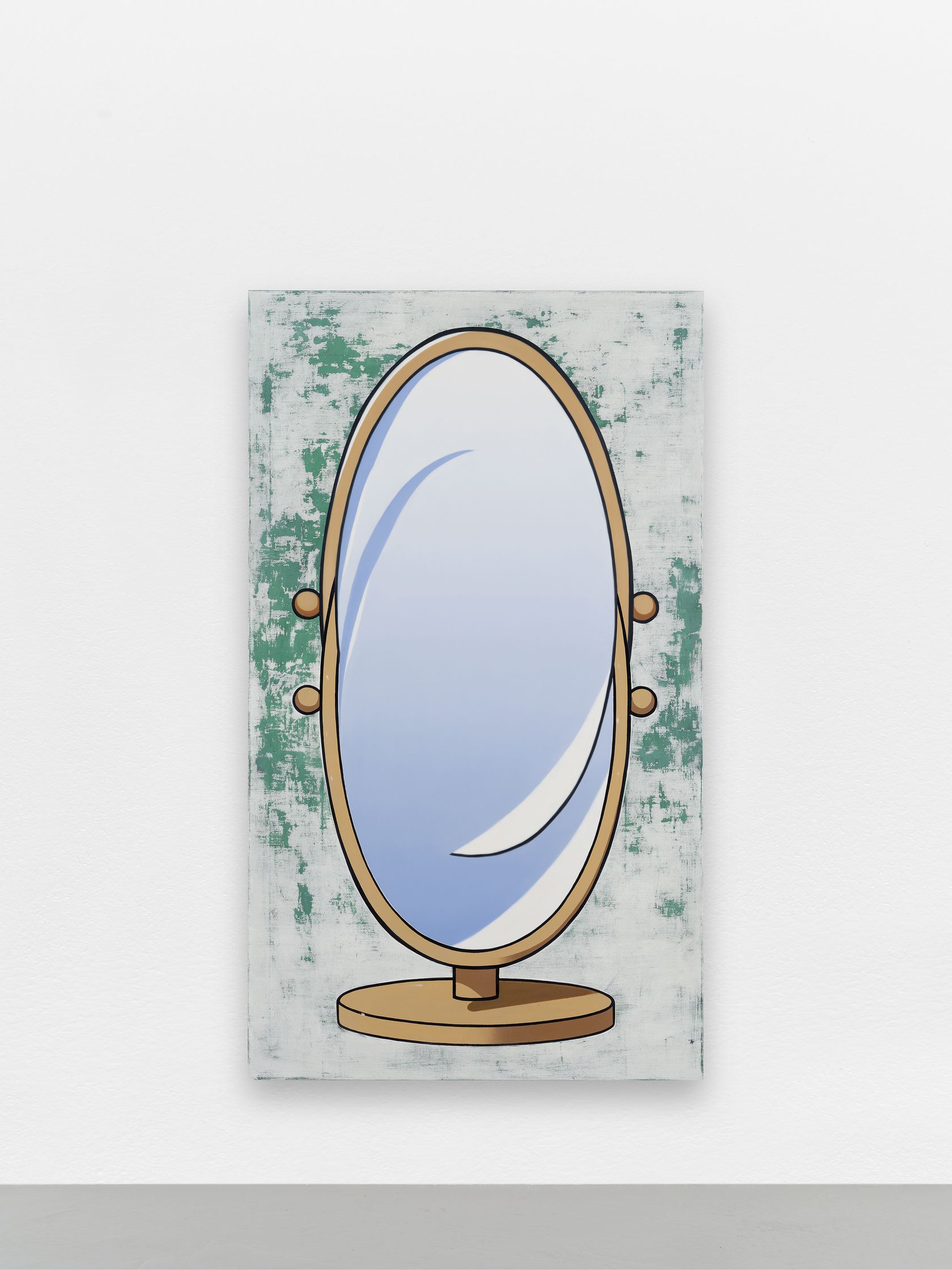
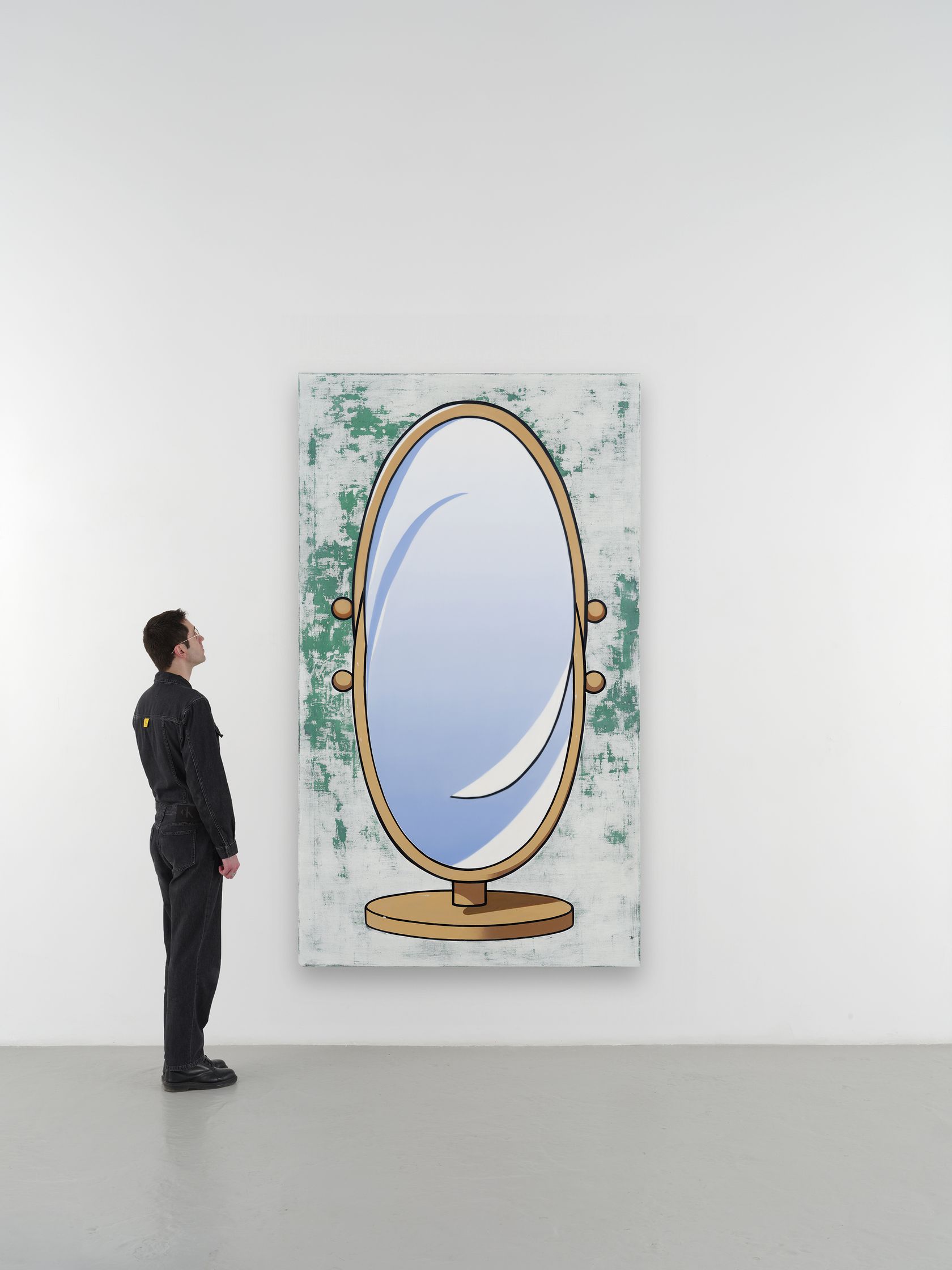
Anne Neukamp’s art befuddles the viewer’s gaze through its critical interrogation of the media scene of our times. In obfuscating and hybridizing the symbols employed by the communications sector, her paintings empty them of any capacity to clarify or convey information. More playful or mischievous than deceptive, they oblige the viewer to reconsider his or her image-reading habits. Thus, removed from their original sense, these motifs seem on the verge of capitulation in the quasi-monochrome swathes of color that surround them. Anne Neukamp draws on a great variety of registers and techniques—oil, egg-tempera and acrylic—and is at ease bringing together diverse traditions on the same canvas. The implicit meanings and figurative associations scattered across her paintings encourage us to place our trust in the intelligence of her conceptual approach, without ever abandoning contemplation, in in its most fundamental sense.
Born in 1976, Anne Neukamp lives and works in Berlin. She graduated from the School of Fine Arts in Dresden, where she now teaches, and has also taken part in the international residency program of the ISCP in New York. Her works have been widely exhibited at the Léopold Hoesch Museum in Düren and the Ludwig Museum in Budapest (2023), at the Beaux-Arts de Paris (as part of the exhibition We Paint! in 2022), at the University of the Arts | Rosenwald Wolf Gallery in Philadelphia (2018), at the KW in Berlin and the Kunstverein in Oldenburg (2013), as well as at the Palais de Tokyo for the fifth Jean-François Prat Prize (2016). Her works figure in numerous private and public collections, most notably at the Musée des Beaux-Arts in Rennes, the Rochechouart Museum, the Société Générale Collection, and those of the Bredin-Prat Endowment Fund and Moulin Family Endowment Fund – Lafayette Anticipations.
- Anne Neukamp
- Sprout , 2025
- Oil, tempera and acrylic on cotton
-
- 260 ×
- 150 × cm
- 102 3/8 ×
- 59 1/16 × inches
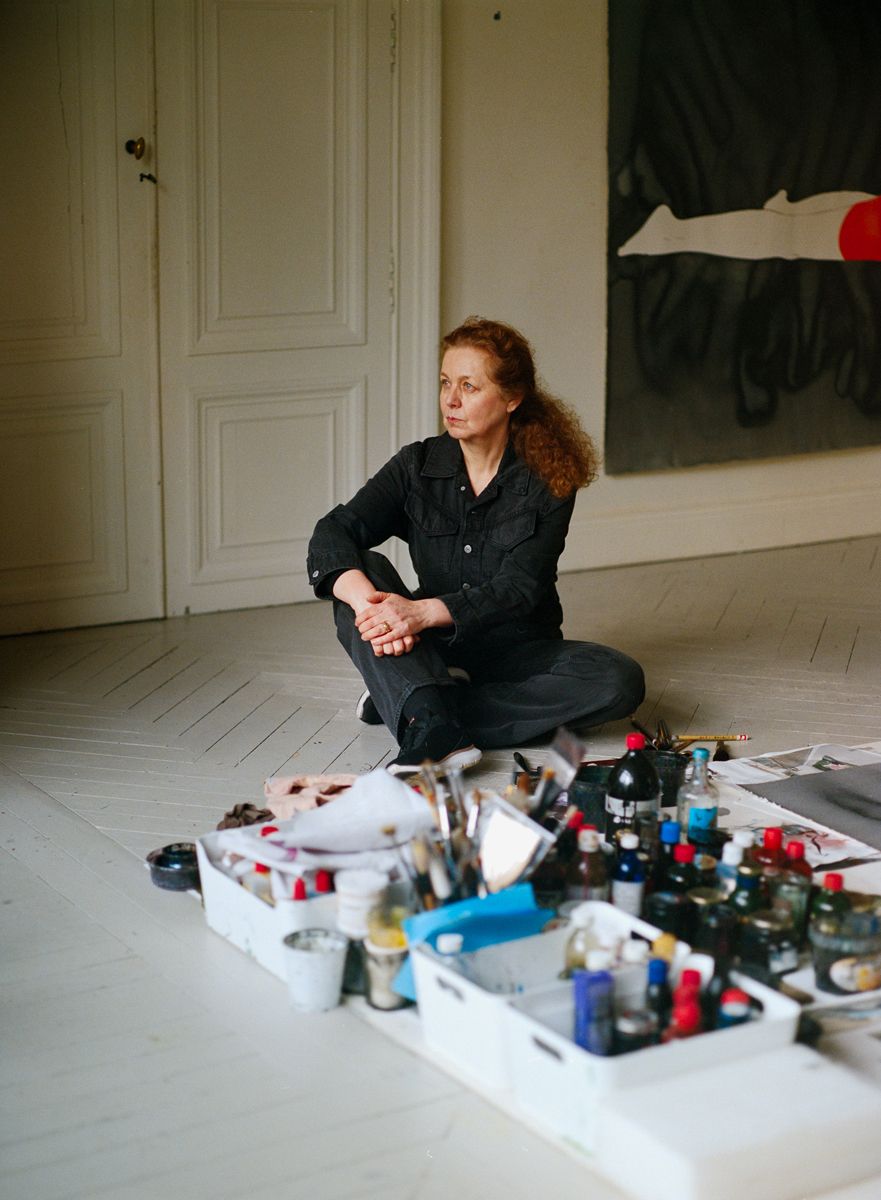
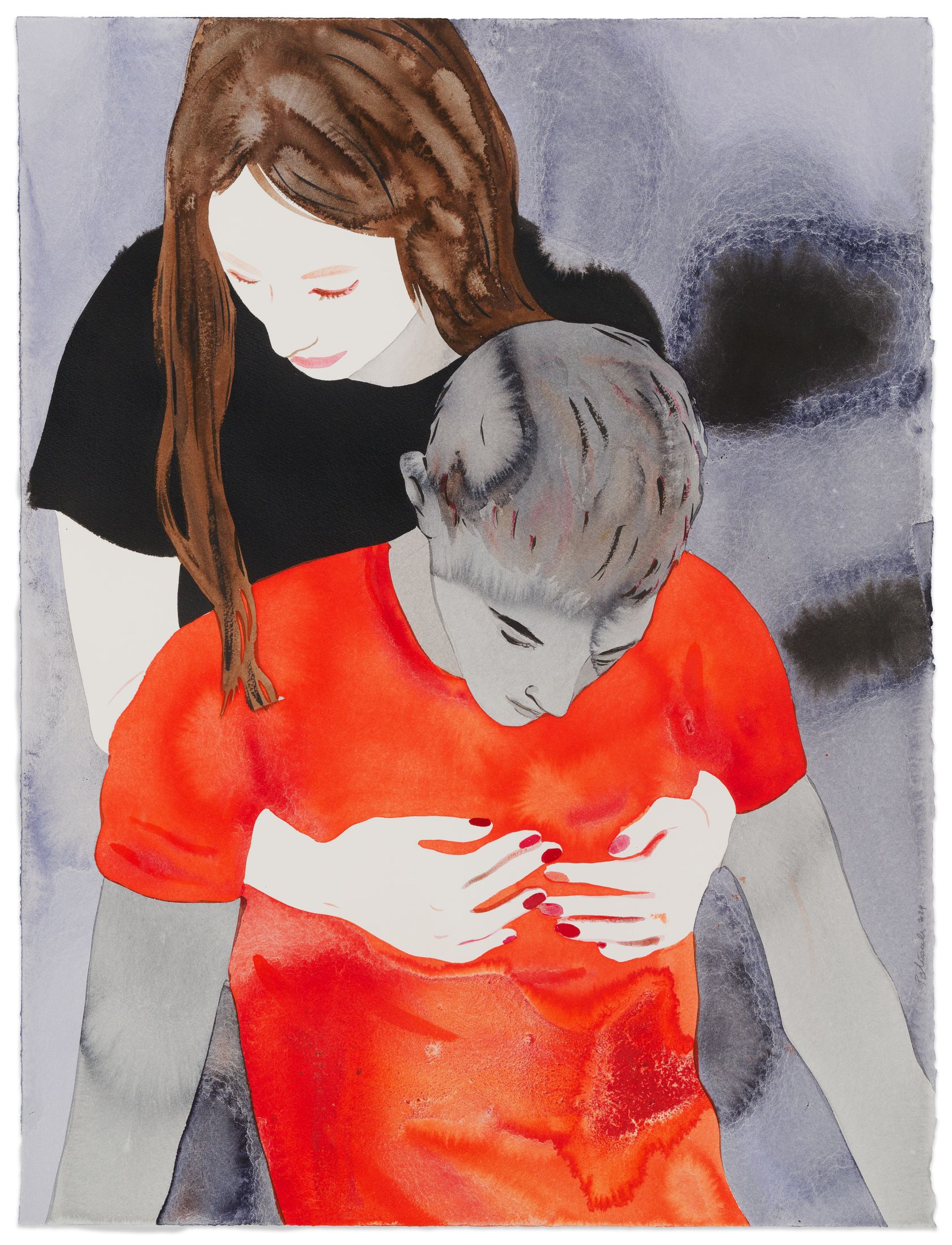
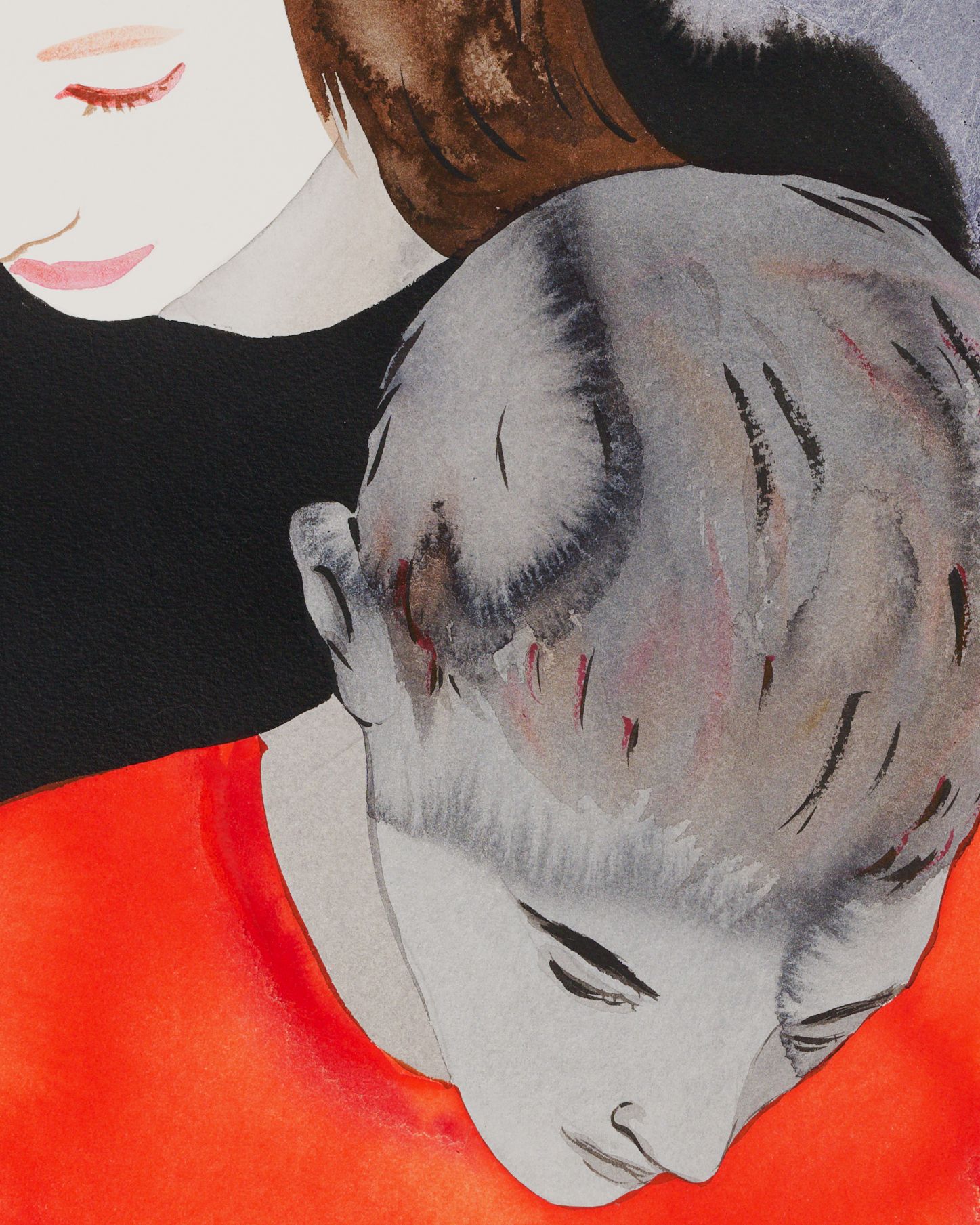
Since the 1990s, Françoise Pétrovitch has produced one of the most powerful bodies of work on the French art scene. Amongst the numerous media she has explored—ceramics, glass, ink washes, painting, print and video—drawing retains pride of place. In constant dialog with the artists who have preceded her, she has been able to measure herself against the incontrovertible motifs of “high art”—Saint Sebastian, still lifes, etc. Pétrovitch’s art reveals an ambiguous world, willingly transgressive, playing with conventional boundaries and eluding any interpretation. Intimacy, fragments of life and disappearance, alongside the themes such as the double, transition and cruelty run through her work, which is inhabited by animals, flowers and beings, and whose atmosphere fluctuates between light and dark, rarely leaving the spectator unmoved.
She has enjoyed numerous solo exhibitions both in France and abroad, as in the Fonds Hélène et Édouard Leclerc in Landerneau and the Bibliothèque nationale de France, Paris, in 2022, and the Musée de la Vie romantique, Paris, in 2023. In 2018, she was the first contemporary artist to be awarded a solo exhibition at the Louvre-Lens. Over the past few years, Pétrovitch has produced monumental wall drawings and large format ensembles, for the Galerie des Enfants at the Centre Pompidou, the West Bund Museum, Shanghai, or for the Ballets du Nord Company. Her works are included in many private and public collections, most notably the Centre Pompidou, Paris (FR), the Voorlinden Museum, Wassenaar (NL), the National Museum of Women in the Arts, Washington D.C. (US), the Musée Jenisch, Vevey (CH), the Musée d’Art Moderne et Contemporain of Saint-Etienne (FR) and of Strasbourg (FR), the MAC VAL (FR), the Salomon and Guerlain Foundations as well as Emerige Endowment Fund.
Between 1969 and 1990, the Présence Panchounette collective banzaï-attacked the art world with an onslaught of press releases, fliers, irreverent mailing and butthead deeds. Primally active in Bordeaux, the group spread its action on to the international art scene, whose aesthetic hypocrisies and ideological taboos it pinned down with jovial ferocity. Celebrating the “chounette spirit”, they promoted an apologia of the worst, riding on a real trivial pursuit, supporting the vulgar versus the seriousness of “modernity”. Présence Panchounette would stand out, fighting against the values and tastes championed by the most influential cultural circles of that time. But, bad omen, the bravado of the Bordeaux-based collective would also anticipate movements born in the Eighties, like Appropriation and Neoconceptual art, which, as such, would find their place gently and comely in the historical official bios or genealogies. Concerned with not smothering its verve in the pernicious Pandora trunk of compromise and mendacity, Présence Panchounette turned its back on honours and remained stone deaf to the attracting songs of institutional sirens, until it announced its disbanding in 1990.
In 2008, the CAPC in Bordeaux hosted the first comprehensive survey of Présence Panchounette’s work, followed more recently by the retrospectives held at the Garage Cosmos in Brussels, the Lieu Commun and the CIAM La Fabrique in Toulouse. Their works have been shown at Musée national d’art moderne - Centre Pompidou, Musée d’Art Moderne de la Ville de Paris, Paris (FR), Power Station of Art, Shanghai (CN), Kunsthalle Darmstadt (DE), MAMCO, Geneva (CH), CAPC, Bordeaux (FR). Their works are held in the collections of the Musée national d’art moderne - Centre Pompidou, Musée d’art moderne de la Ville de Paris, Fondation Cartier, Paris (FR), MAC VAL, Vitry-sur-Seine (FR) and numerous FRACs.
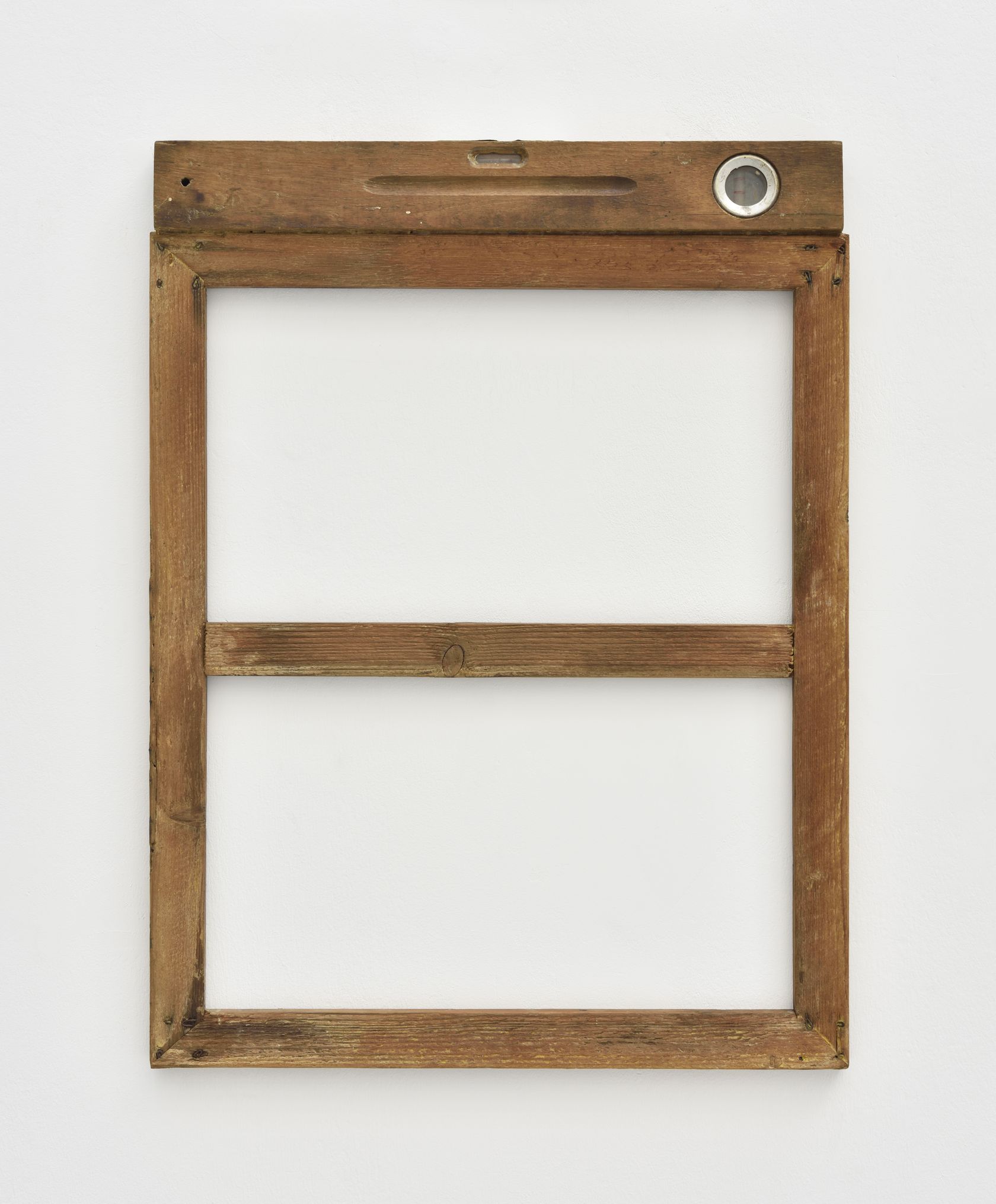
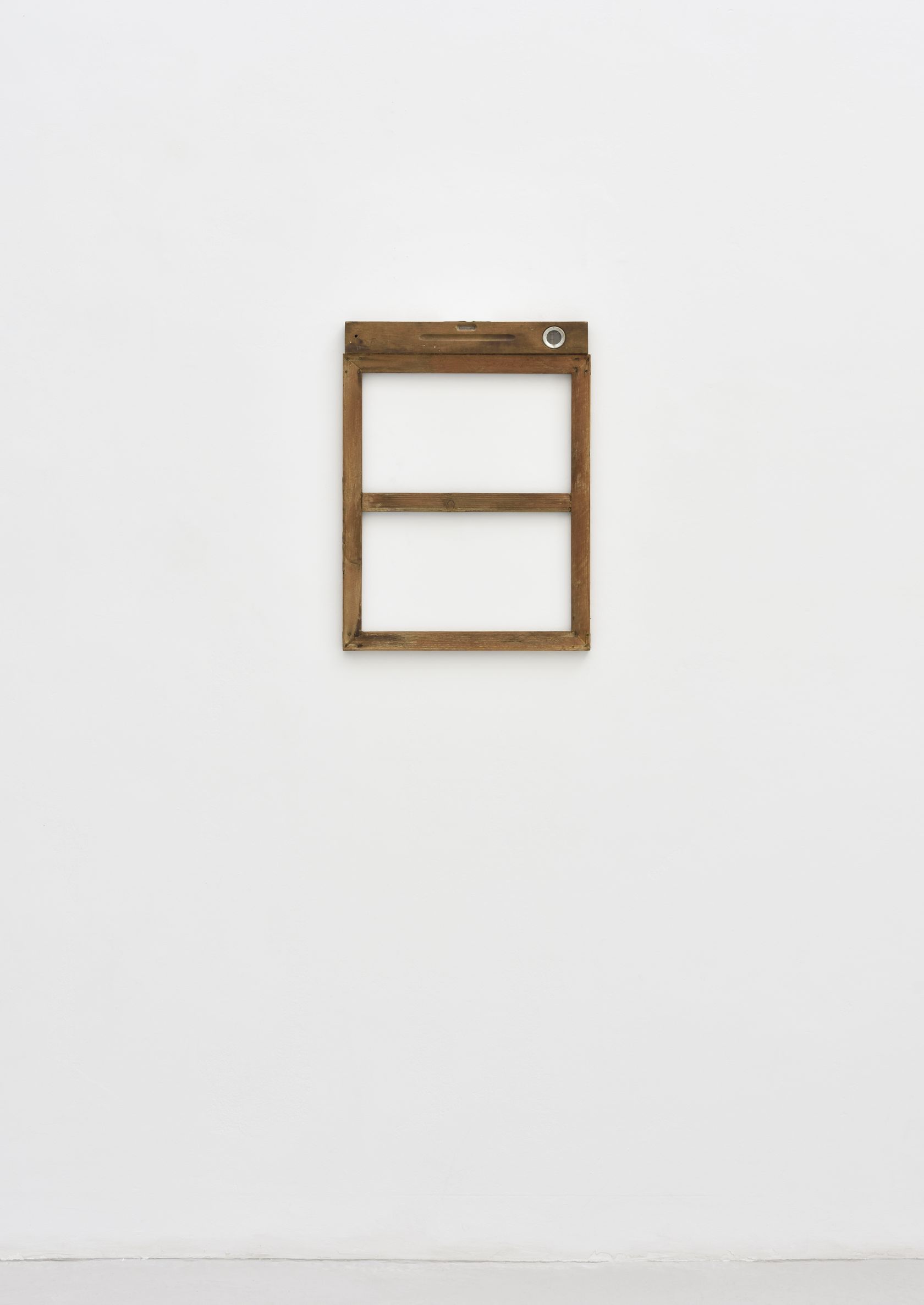
- Présence Panchounette
- Sculpture à niveau bois , 1989
- Wooden spirit level and frame
-
- 61 ×
- 46 × cm
- 24 ×
- 18 1/8 × inches
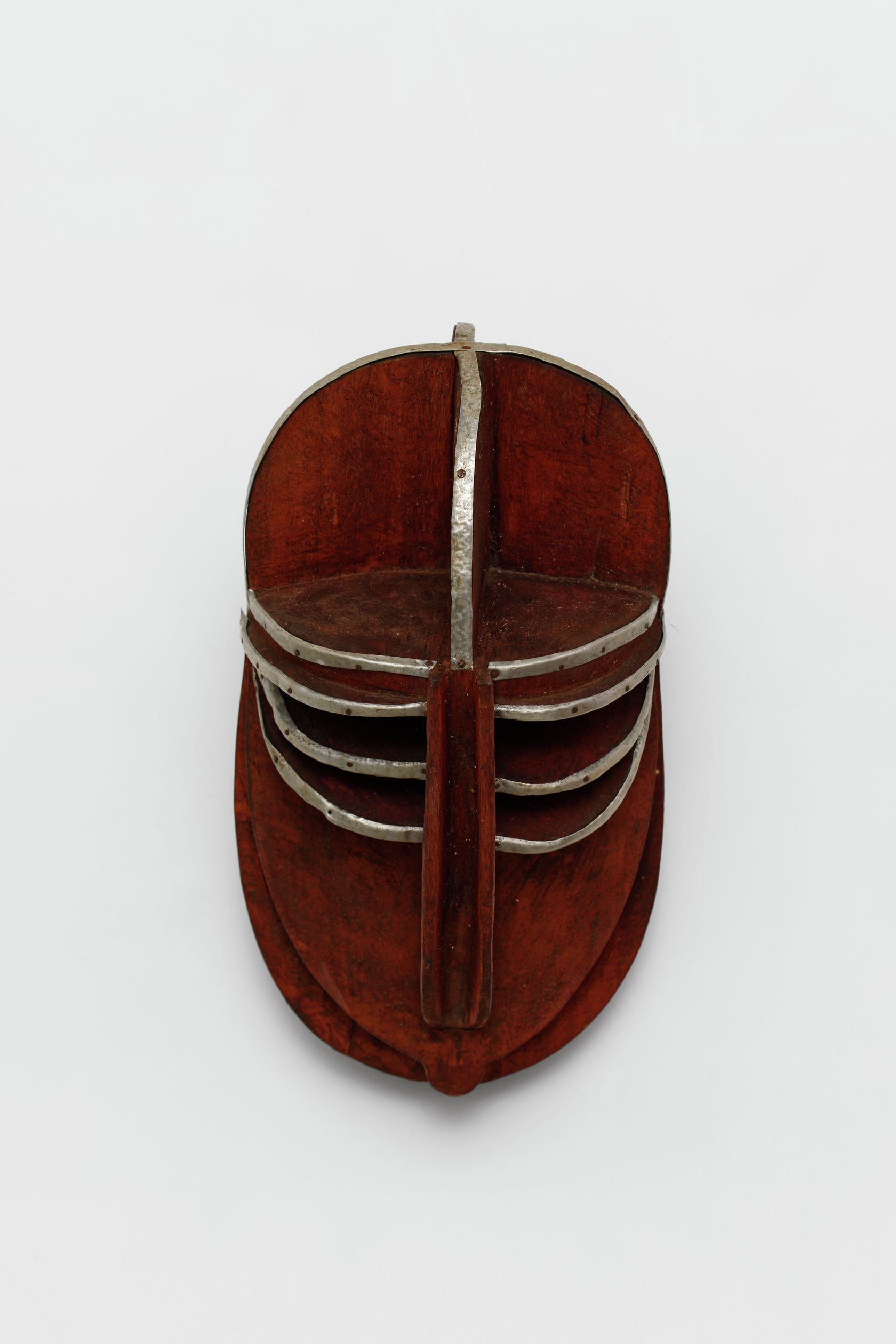
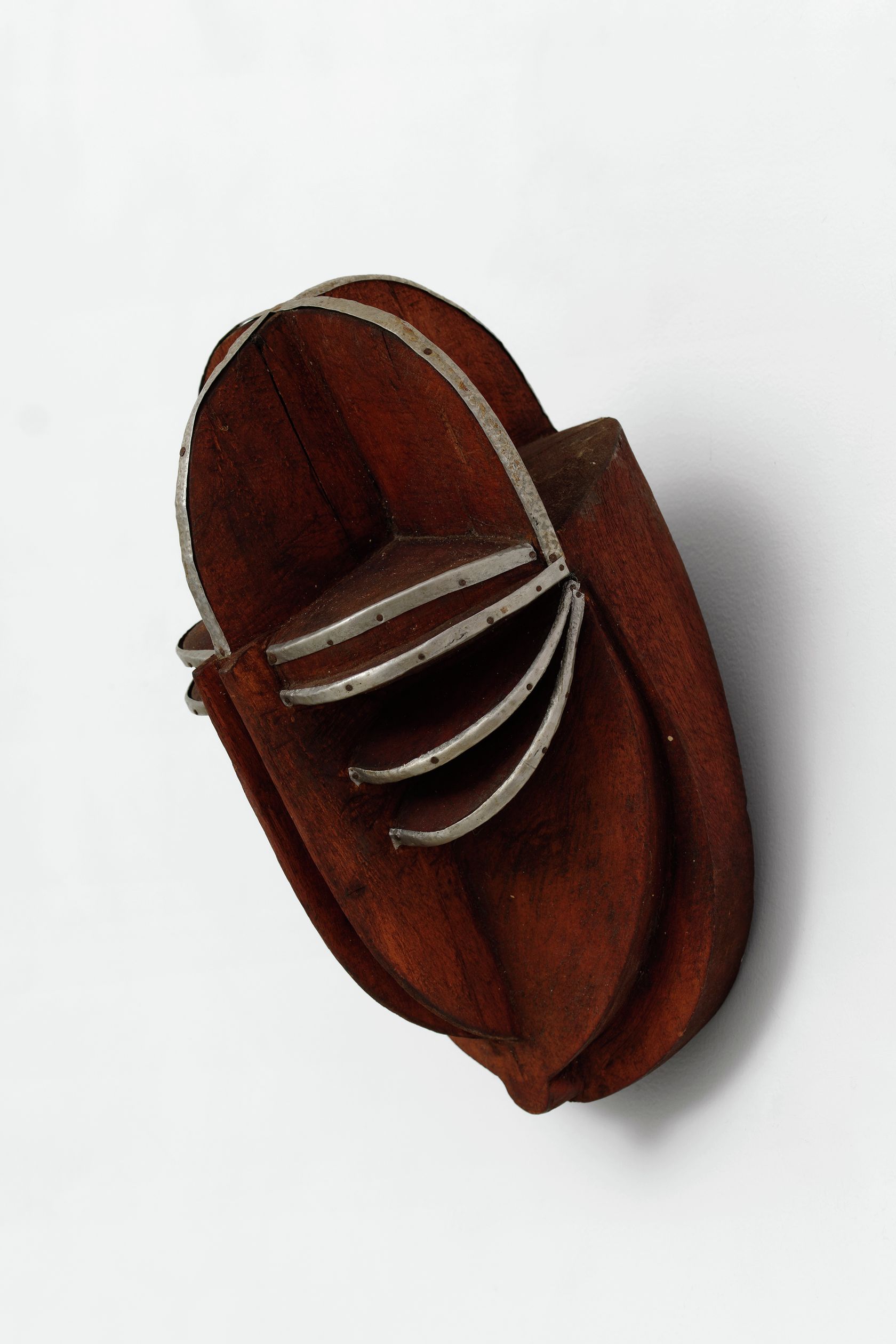
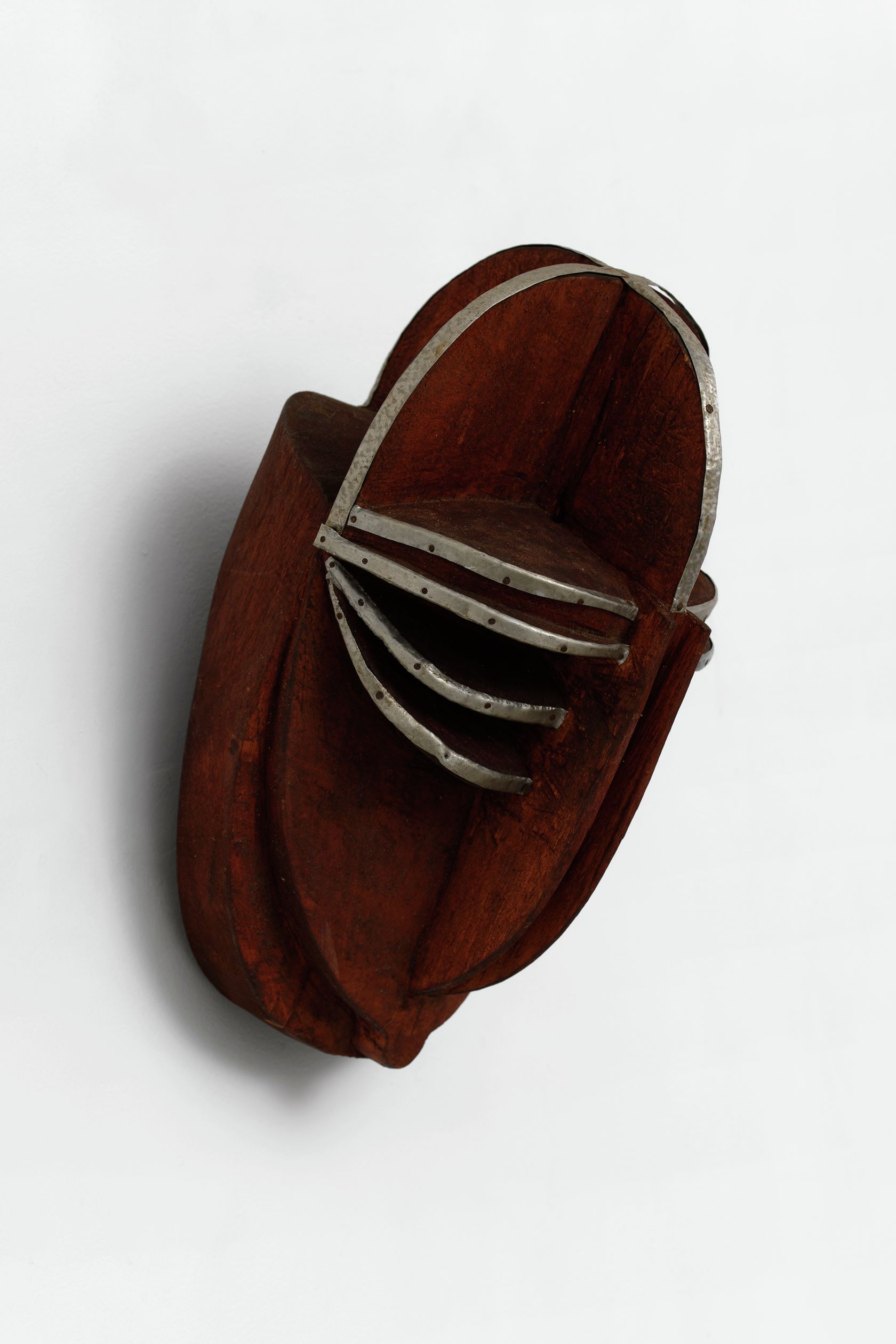
- Présence Panchounette
- Neo Pevsner ou Retour à l’envoyeur , 1985
- Exotic wood and iron (by a traditionnal African sculptor in Conakry, Guinea)
-
- 37 ×
- 20 × cm
- 14 5/8 ×
- 7 7/8 × inches
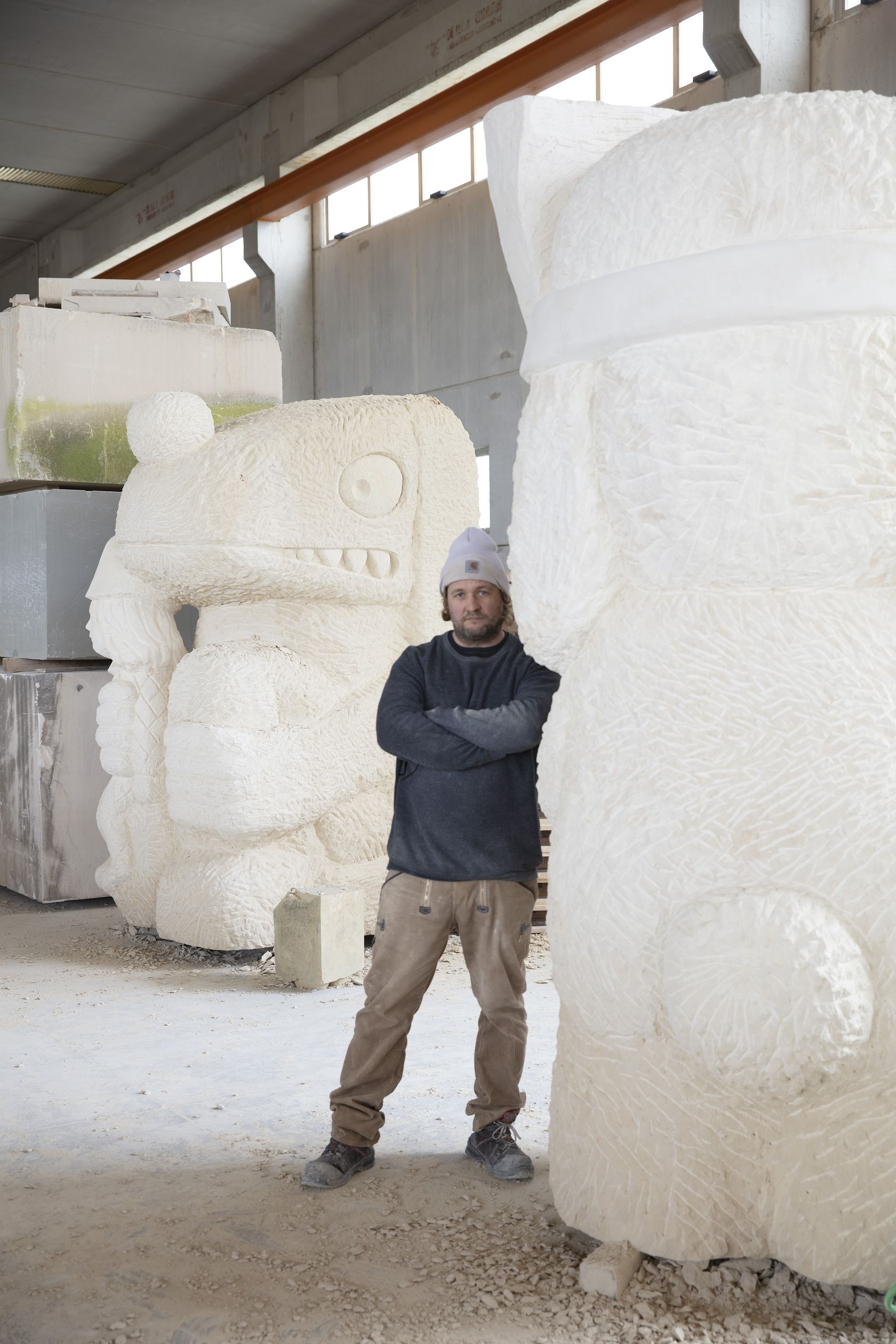
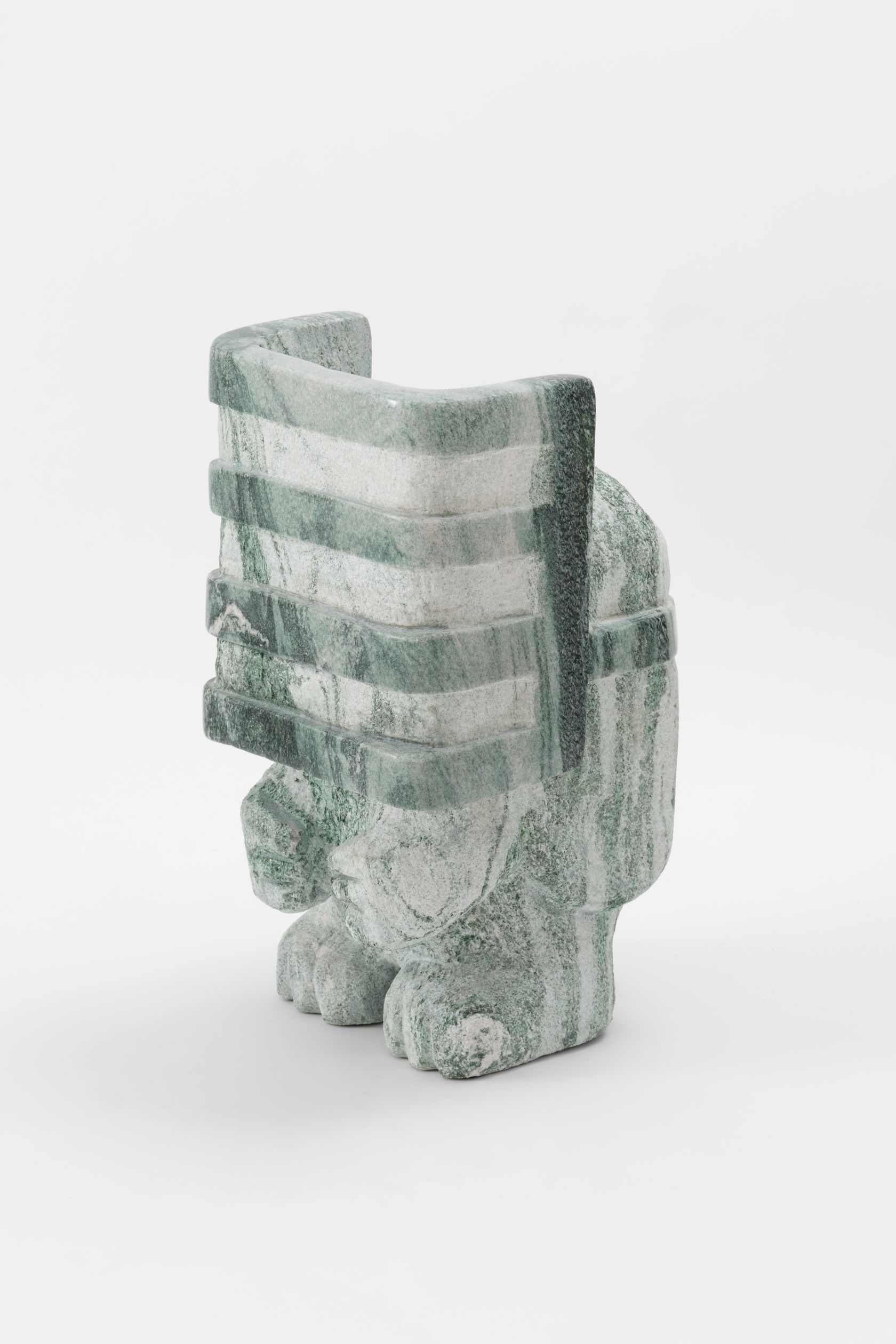
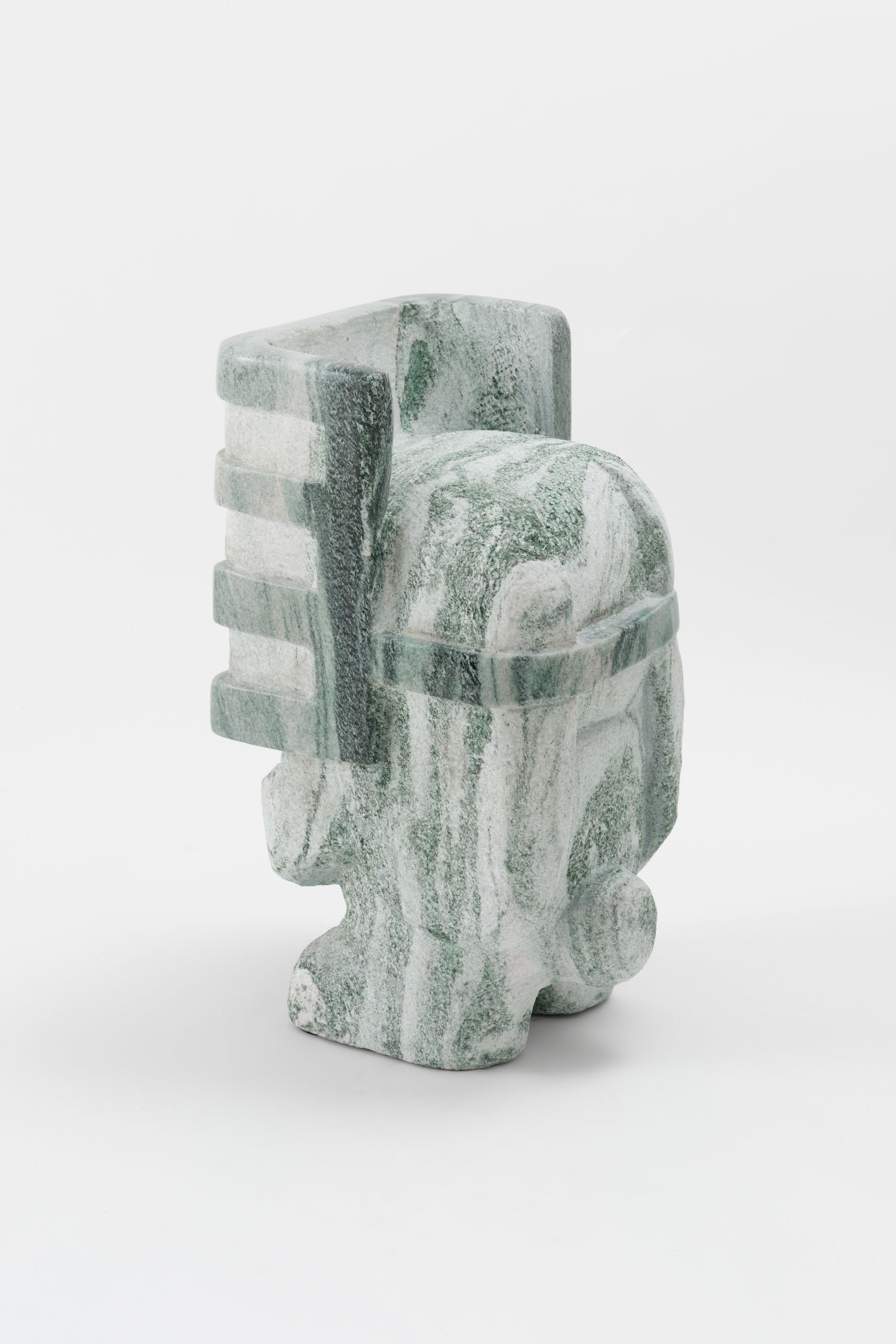
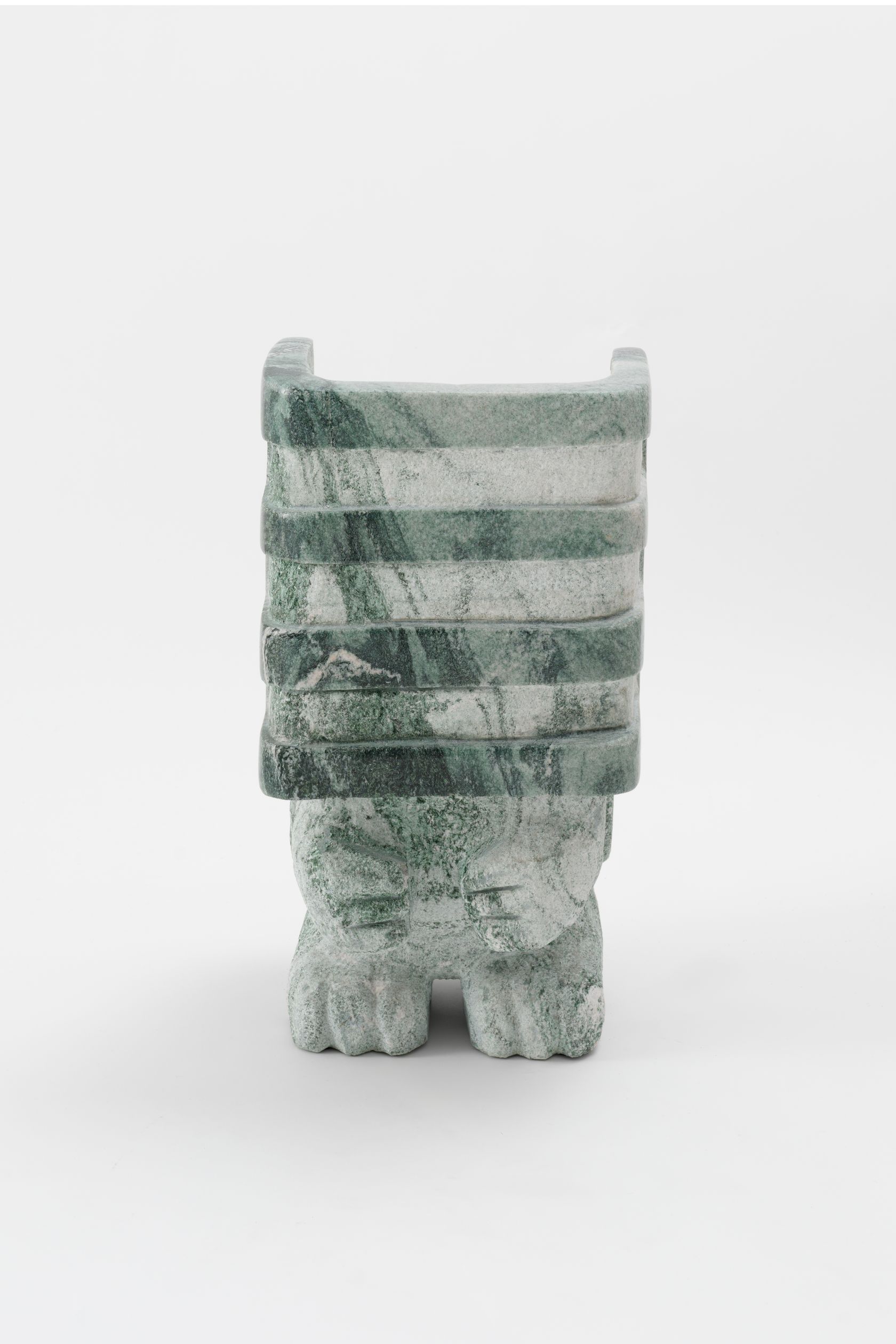
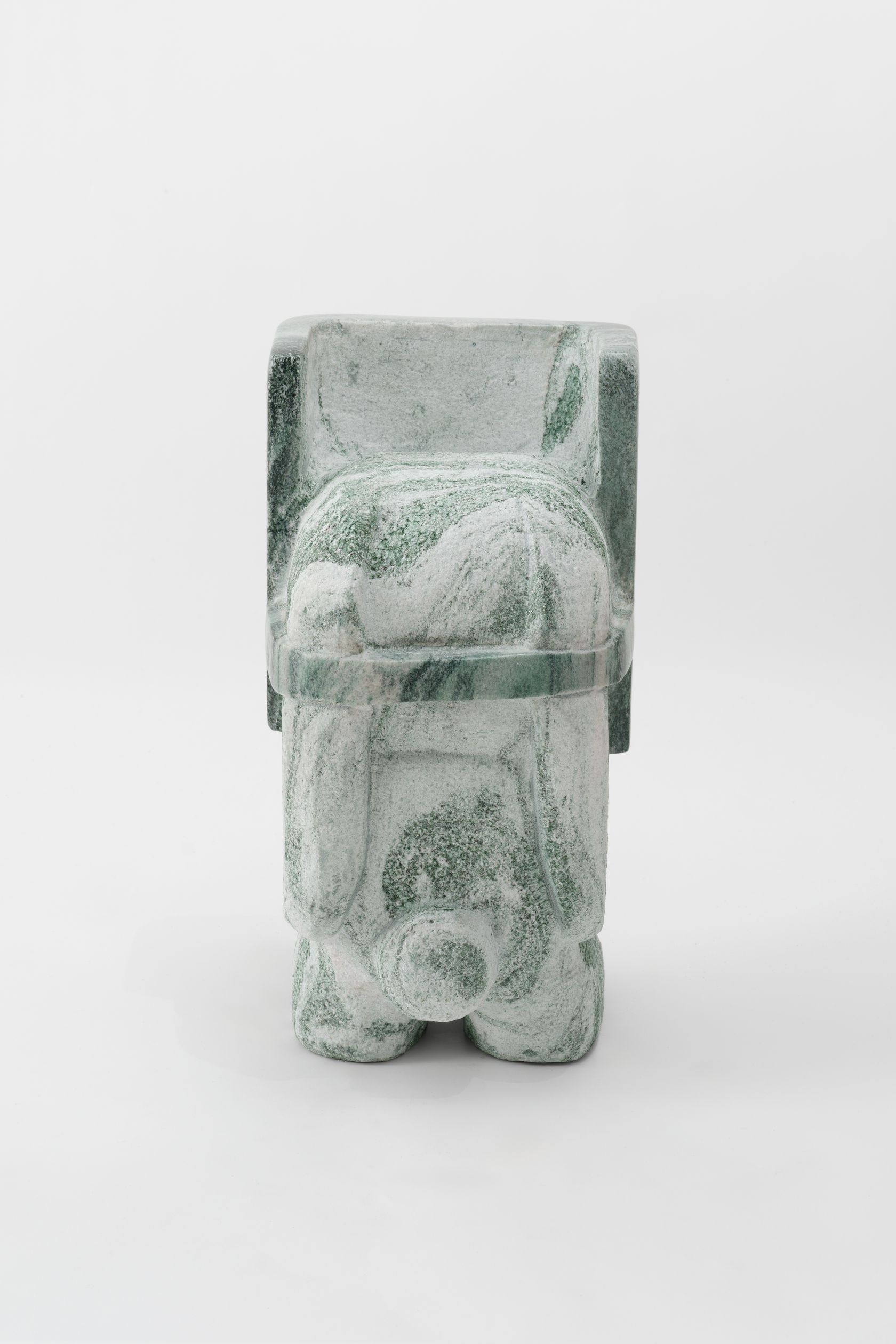
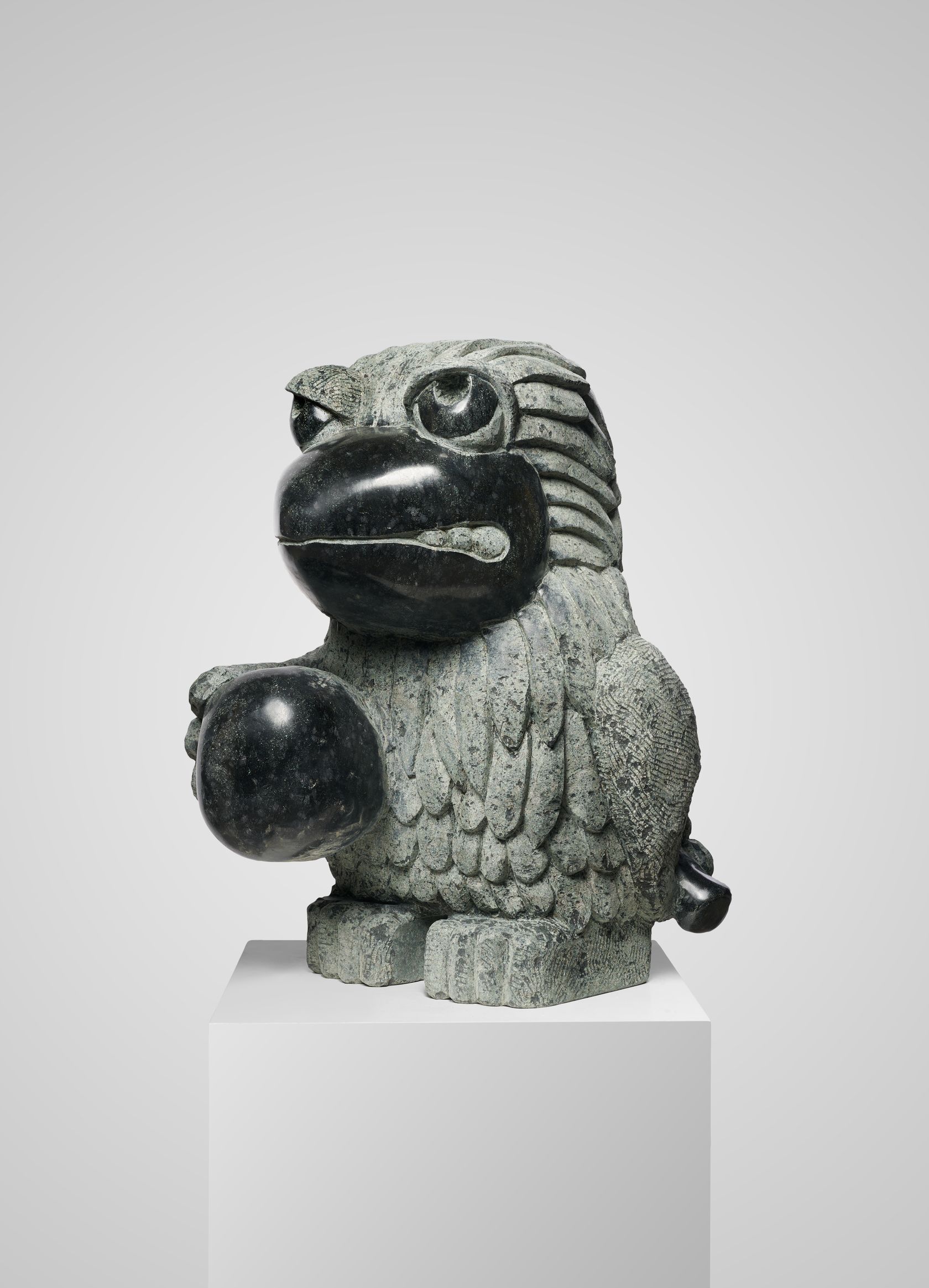
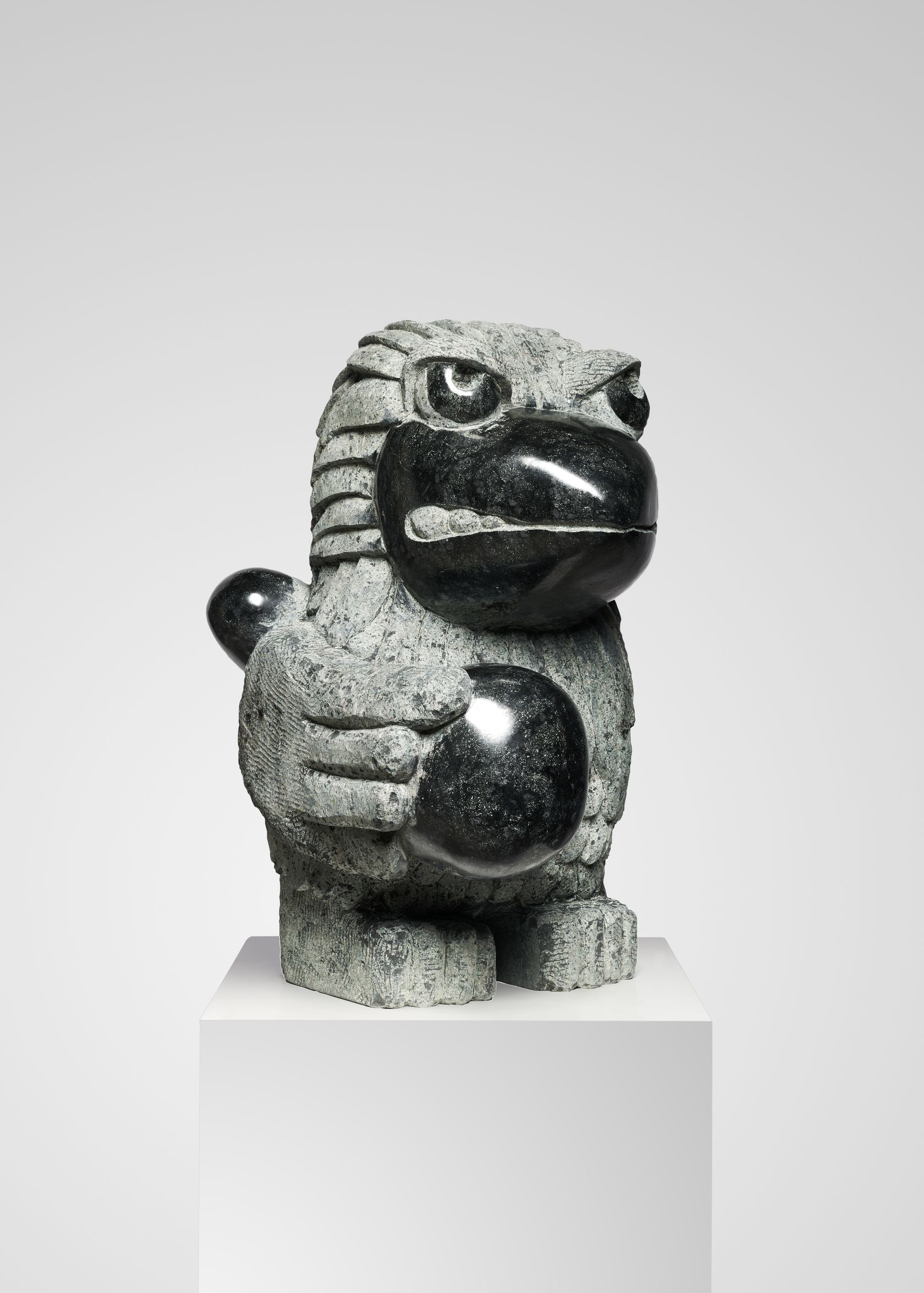
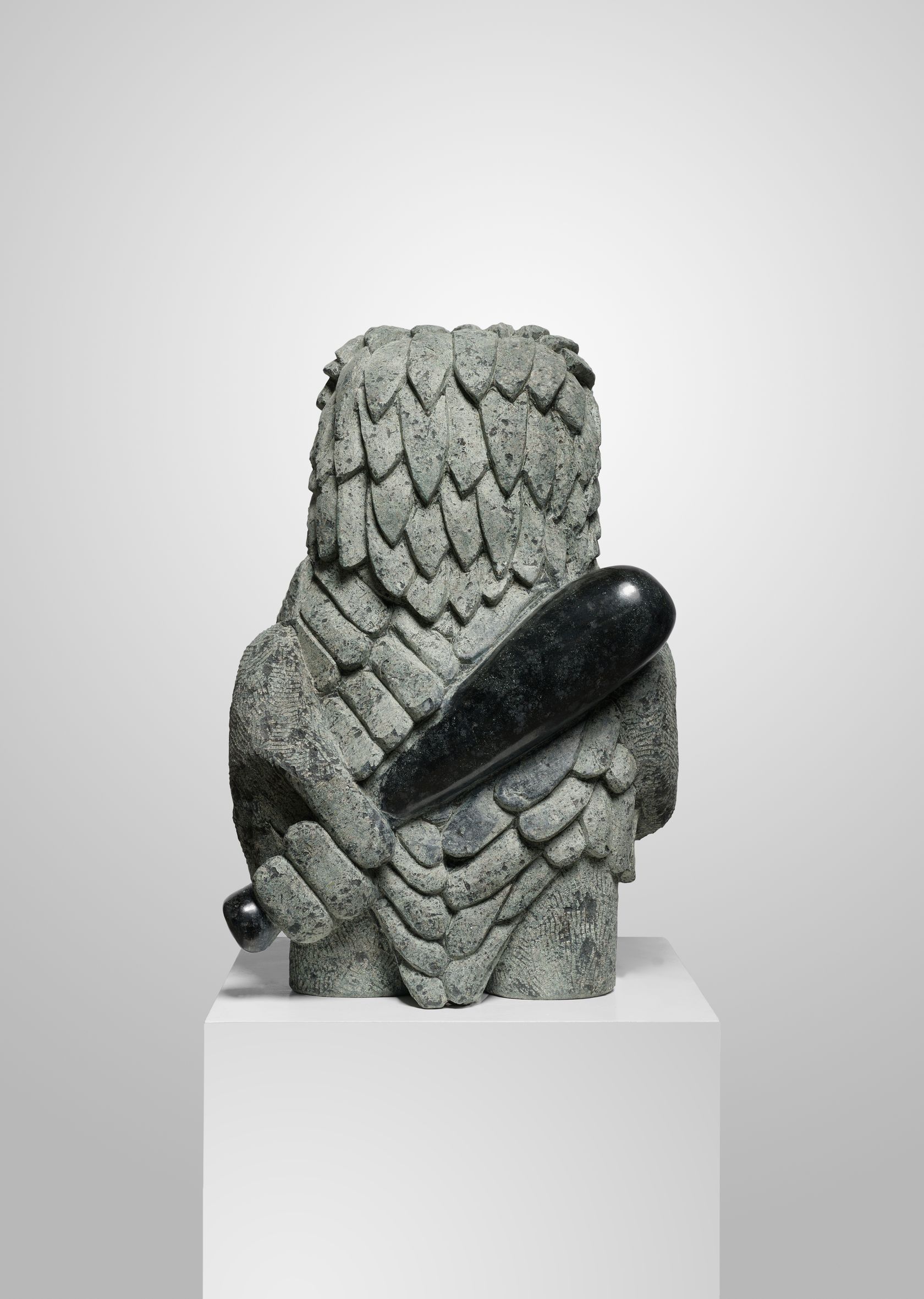
Stefan Rinck’s stone figures form a motley and comical community of, for the most part, animals, chimeras and monsters. They wear costumes and masks; are endowed with particular symbols or characteristics, some bear the names of heroes of Greek mythology or of legend. Rinck’s sculpted figures make up a discordant but related assembly of non-humans: they come from elsewhere, an archaic imaginary world, woven from myths and legends. With his collection of fauna, the artist is exploring a comical, imaginary yet realistic vein, breathing new life into its iconography, using a technique typical of the Middle Ages: sculpting his figures directly from stone.
Rinck’s sculptures remind us of the figures of Roman art, which populate the columns and tympana of churches. They share the same morphology and style, the hybrid aspect of the chimera and monster. These are grotesque figures, in which we recognize the vitalist comedy typical of medieval realism which could be observed during the parades of jesters and buffoons at religious and popular festivities. Yet if the Middle Ages seem to color Rinck’s art, its frame of reference in fact crystalizes around a number of “Gothic” obsessions of the Romantic kind: a taste for mythology and folk tales, for different epochs and cultures for the fantastic or figures of hubris and excess.
Stefan Rinck’s work has been subject to many exhibitions in Athens, Berlin, Brussels, Los Angeles, Madrid, Munich, Paris and features in the collections of the Frac Corse, Corte, (FR), the CBK Rotterdam (NL) and the Museum De Hallen, Haarlem (NL). In 2018, the work The mangust of Beauvais is installed permanently in the city of Paris at 53-57 rue de Grennelle (Beaupassage). In 2019, Stefan Rinck is part of the 100 Sculptors of Tomorrow published by Thames & Hudson.
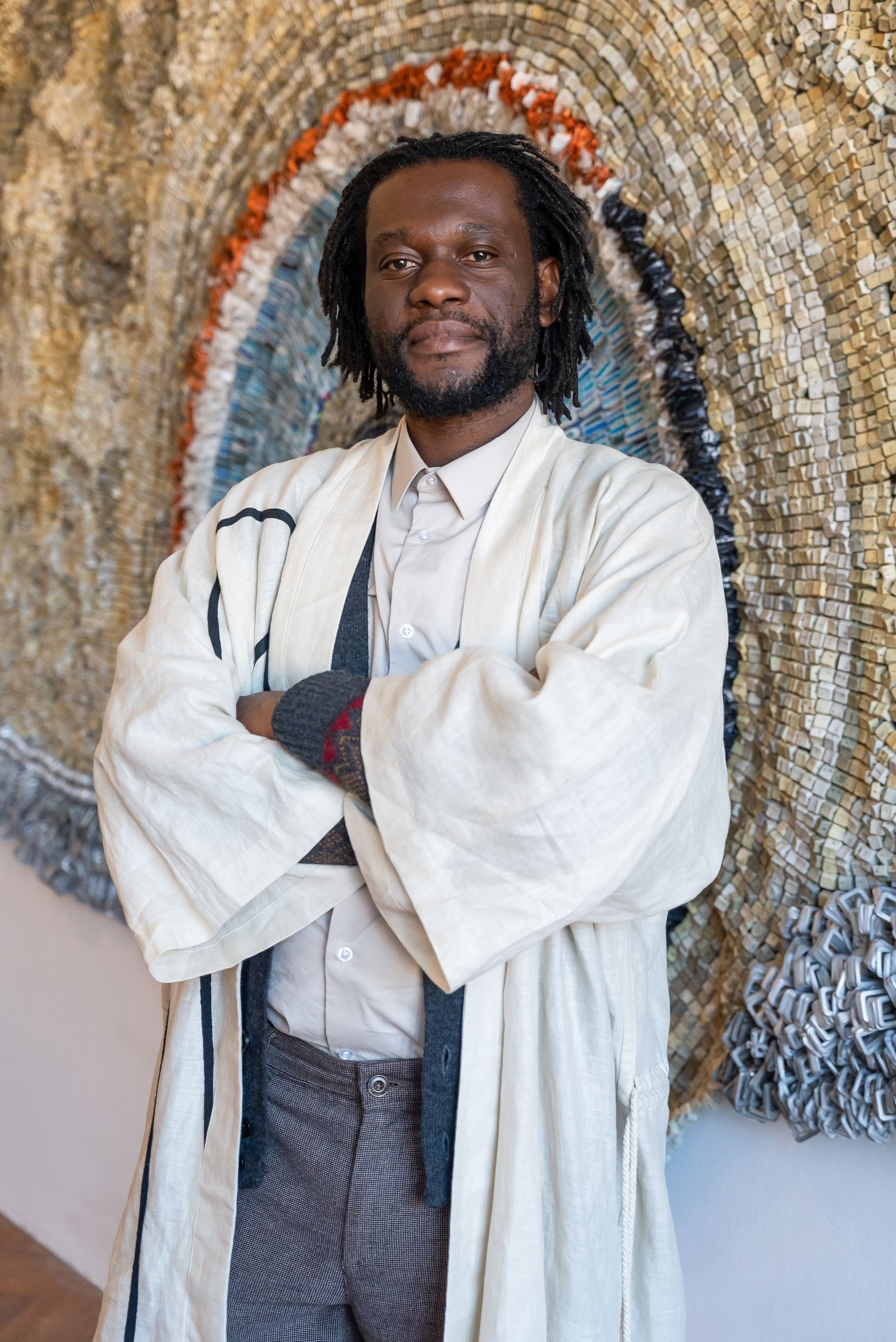
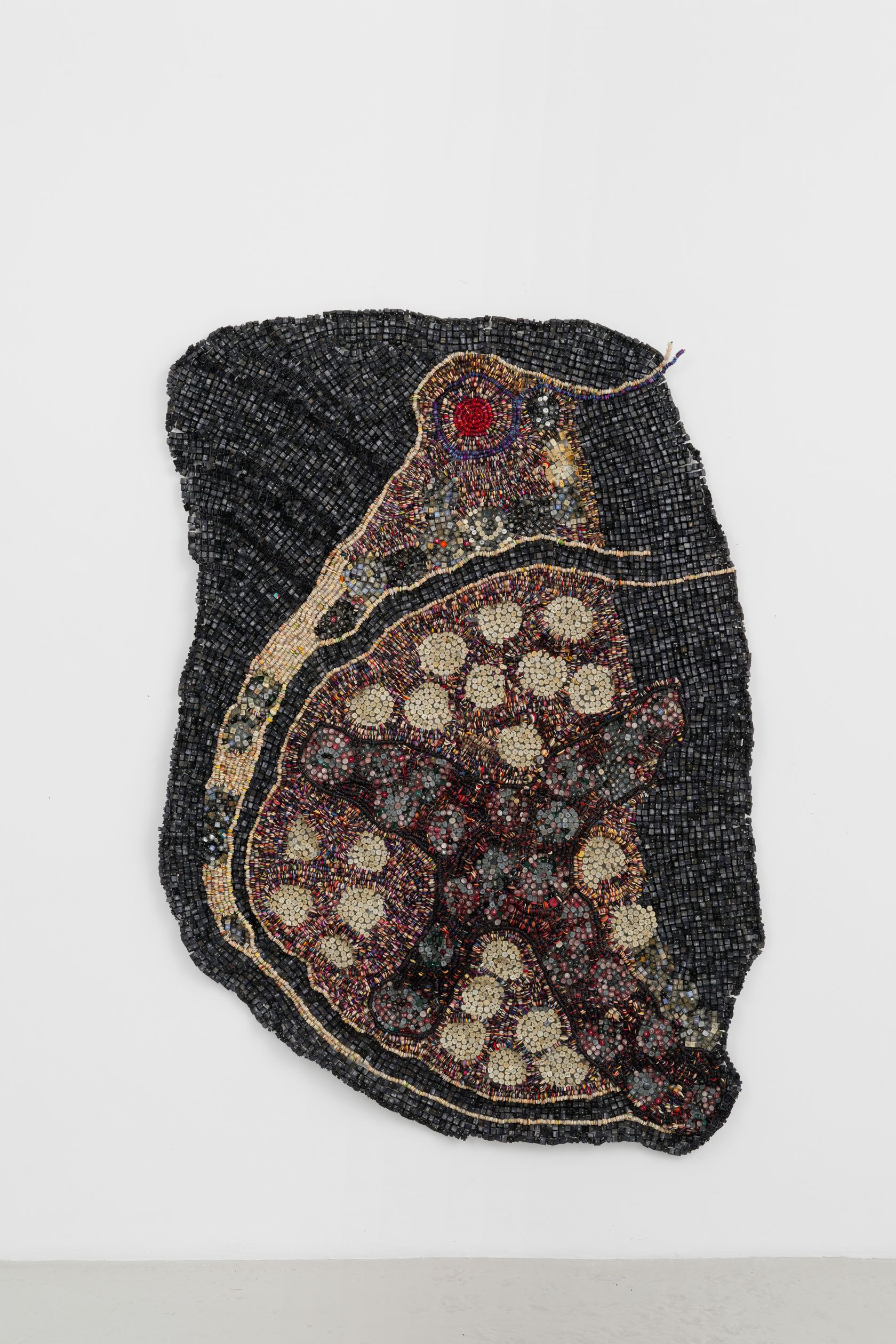
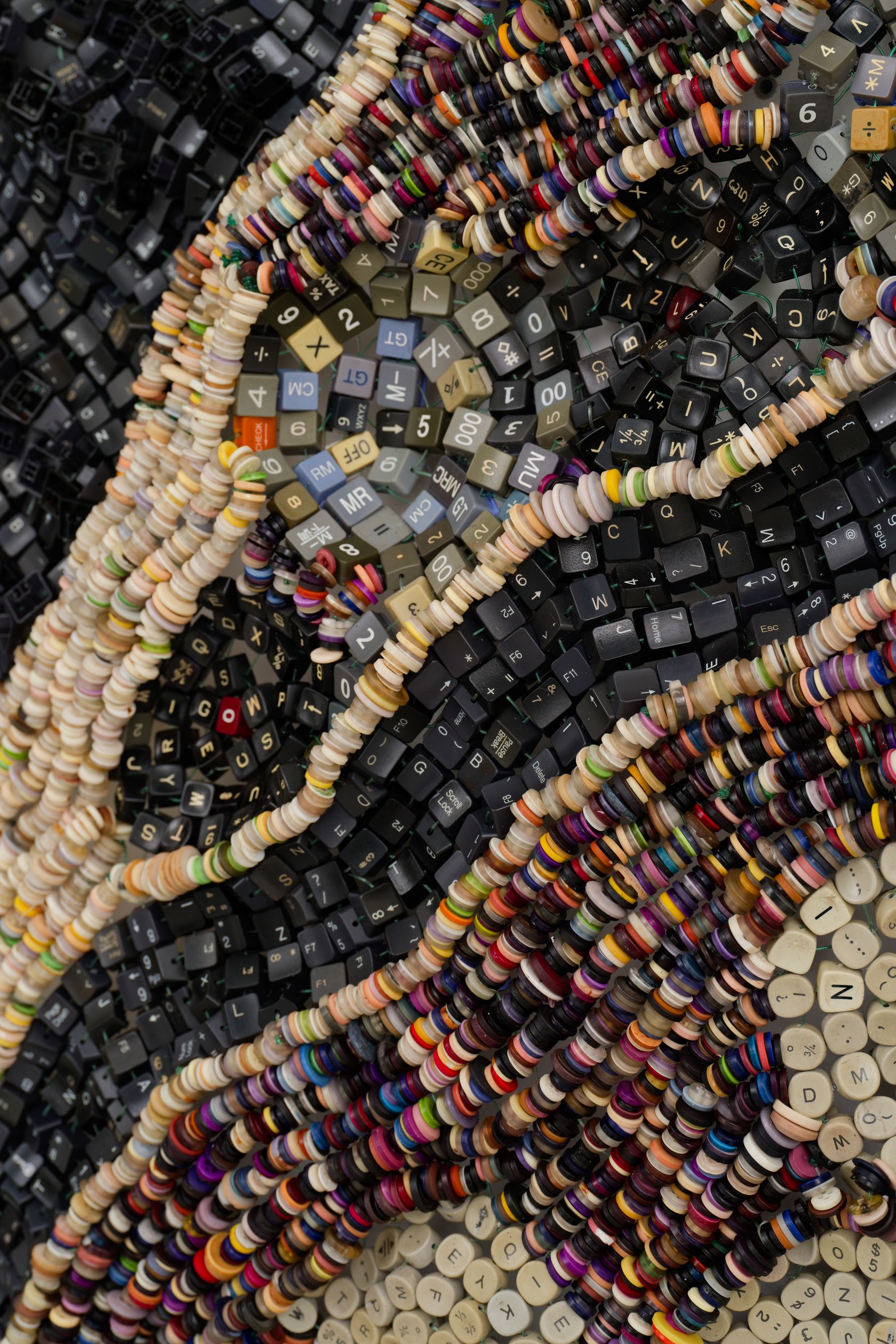
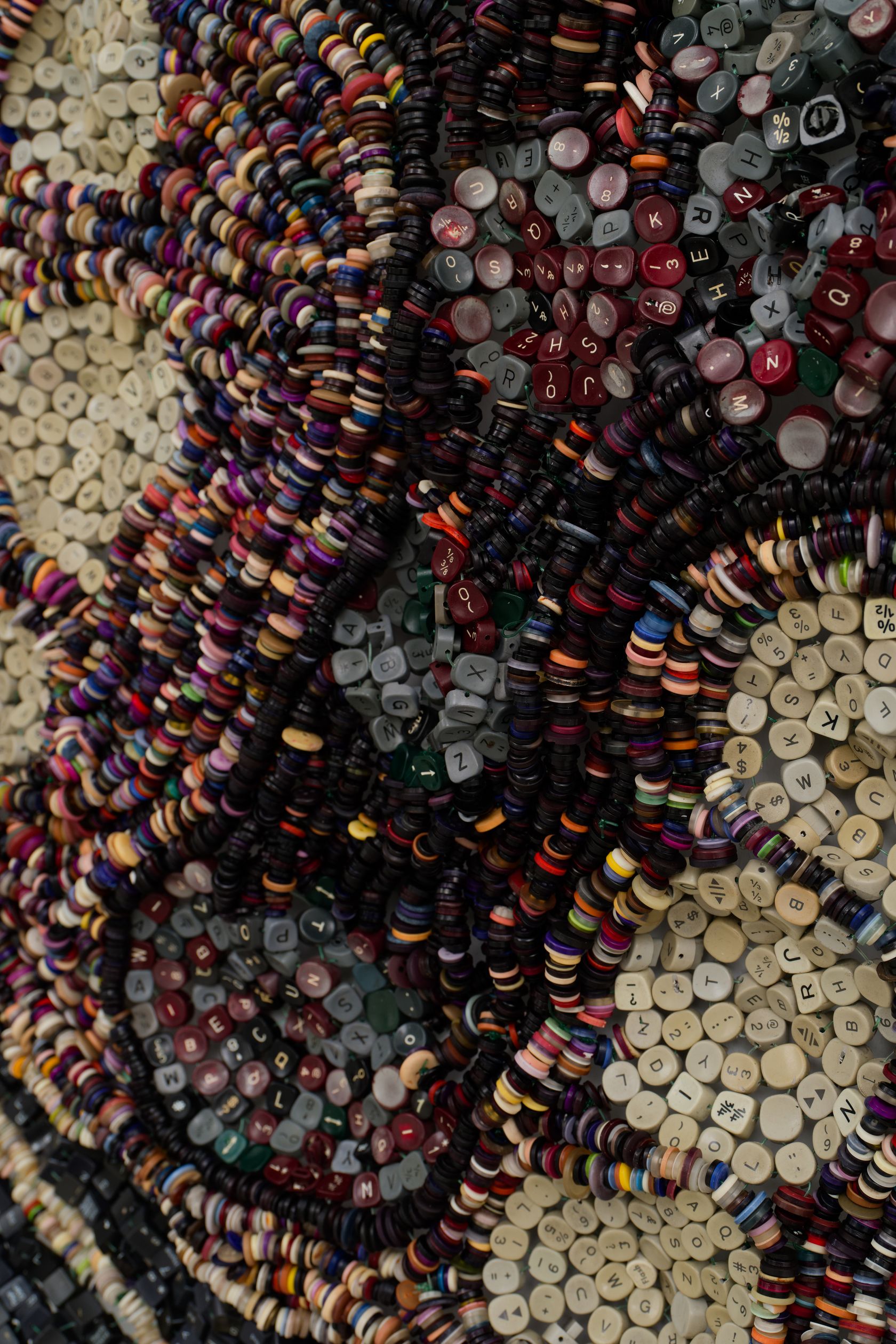
Moffat Takadiwa creates large format sculptures from materials found on garbage dumps, notably computer parts, plastic bottle-caps, toothbrushes and toothpaste tubes. After gathering great quantities of these objects and sorting them by color and shape, the artist weaves these discarded scraps into rich wall hangings. Once suspended, these post-industrial fabrics, through their intricate beauty, acquire an aura of ritual or totemic artifacts.
Born in 1983, Moffat Takadiwa lives and works on the outskirts of Harare in Mbare, one of the largest recycling centers in the country and an important hub for the informal economy. Belonging to the post-independence generation, his work reflects his preoccupation with issues such as consumerism, inequality, post-colonialism and the environment. Since the earliest days of his artistic career, he has used his practice as a platform for the rehabilitation of his community, working with young local artists and designers, with a view to founding the world first artistic center based on the use of reclaimed materials.
The National Gallery of Zimbabwe, Harare, staged a major solo exhibition of Moffat Takadiwa in 2023. In 2024, he had his first solo exhibition in a French institution at the Galerie Édouard Manet, Gennevilliers, and represents Zimbabwe at the 60th Biennale di Venezia alongside five other artists. He exhibited his works in major institutions abroad as well, most notably at the Craft Contemporary (US), during the exhibition organized by Jeffrey Deitch and Gagosian at the Moore Building in Miami (US), at the ARoS Kunstmuseumat, Aarhus (DK), the MACAAL, Marrakesh (MA) and the Arnhem Museum (NL).
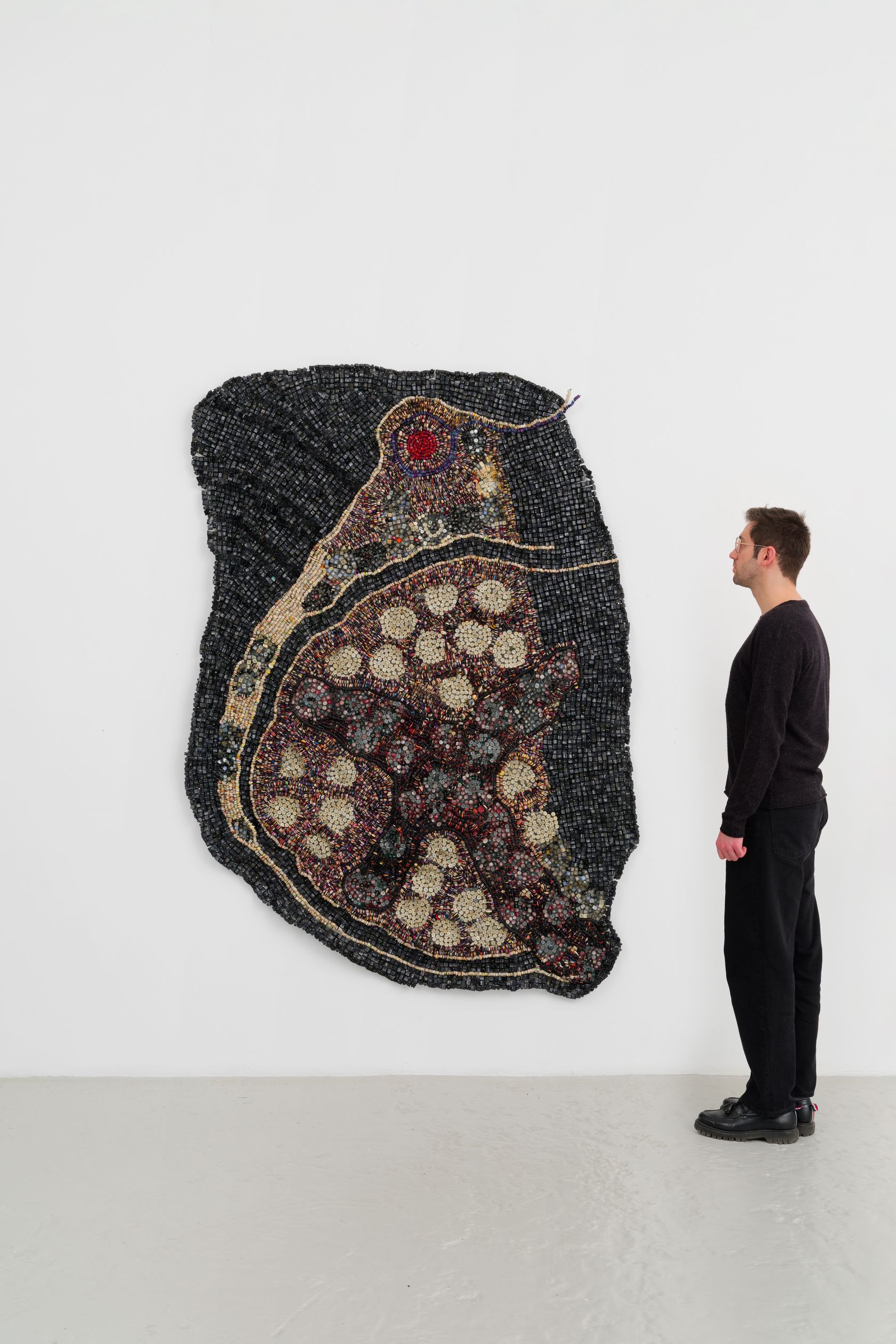
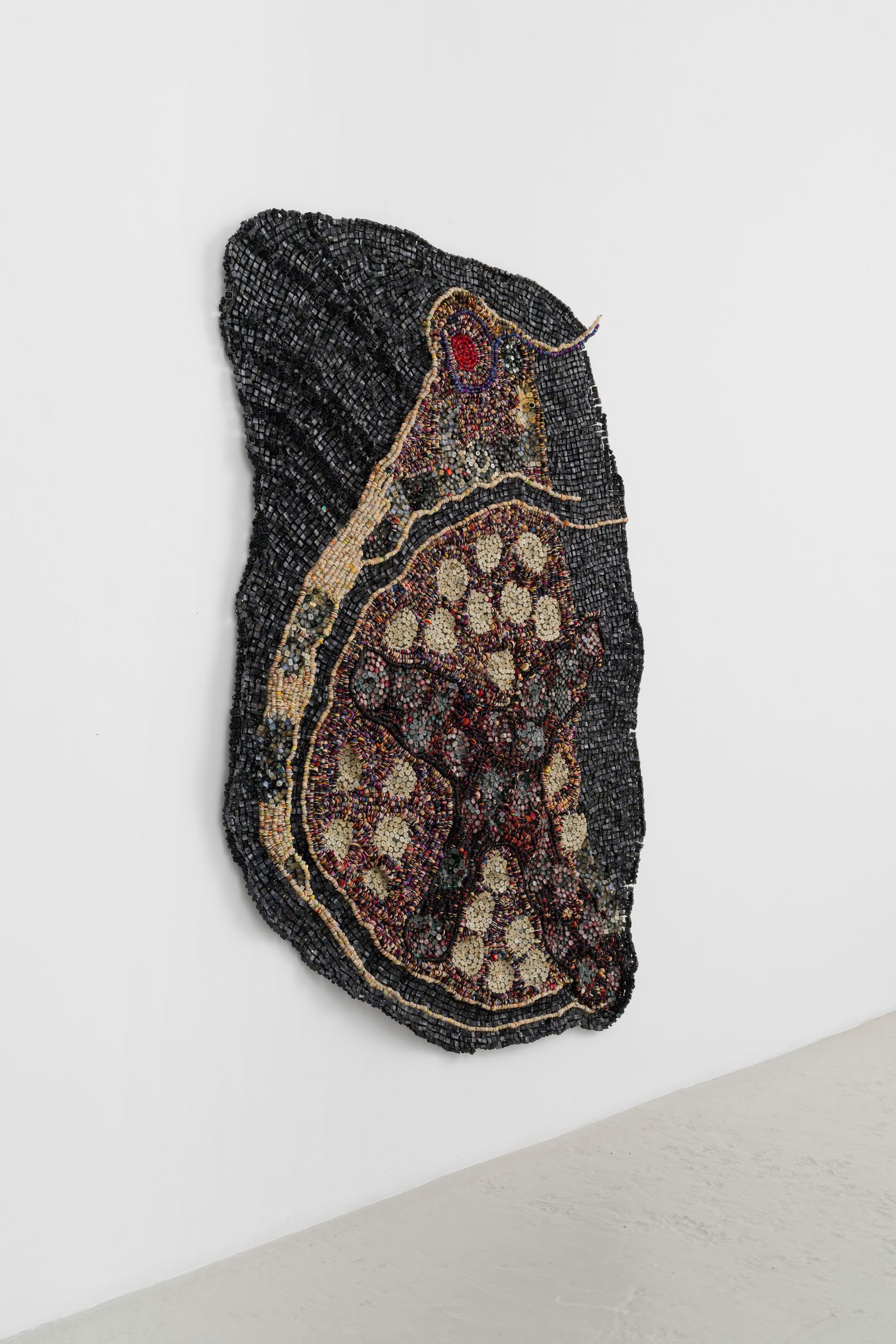
- Moffat Takadiwa
- Foreign Democracy , 2025
- Plastic computer keyboard keys and buttons
-
- 224 ×
- 160 ×
- 3 × cm
- 88 3/16 ×
- 63 ×
- 1 3/16 × inches
Couleurs !
Art Monte-Carlo x Centre Pompidou
cur. Didier Ottinger
Booth D1
July 7-9, 2025
with Hugo Capron
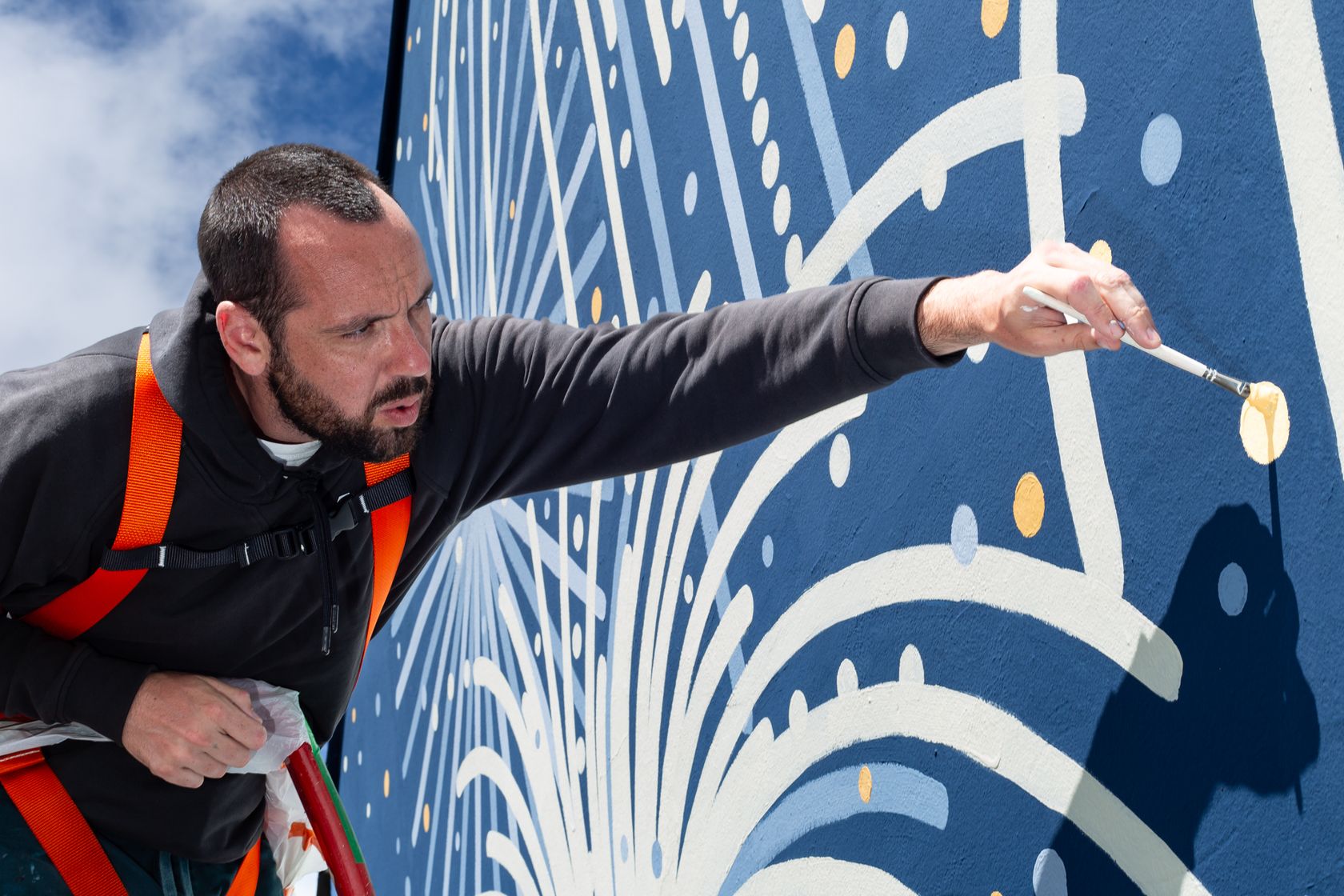
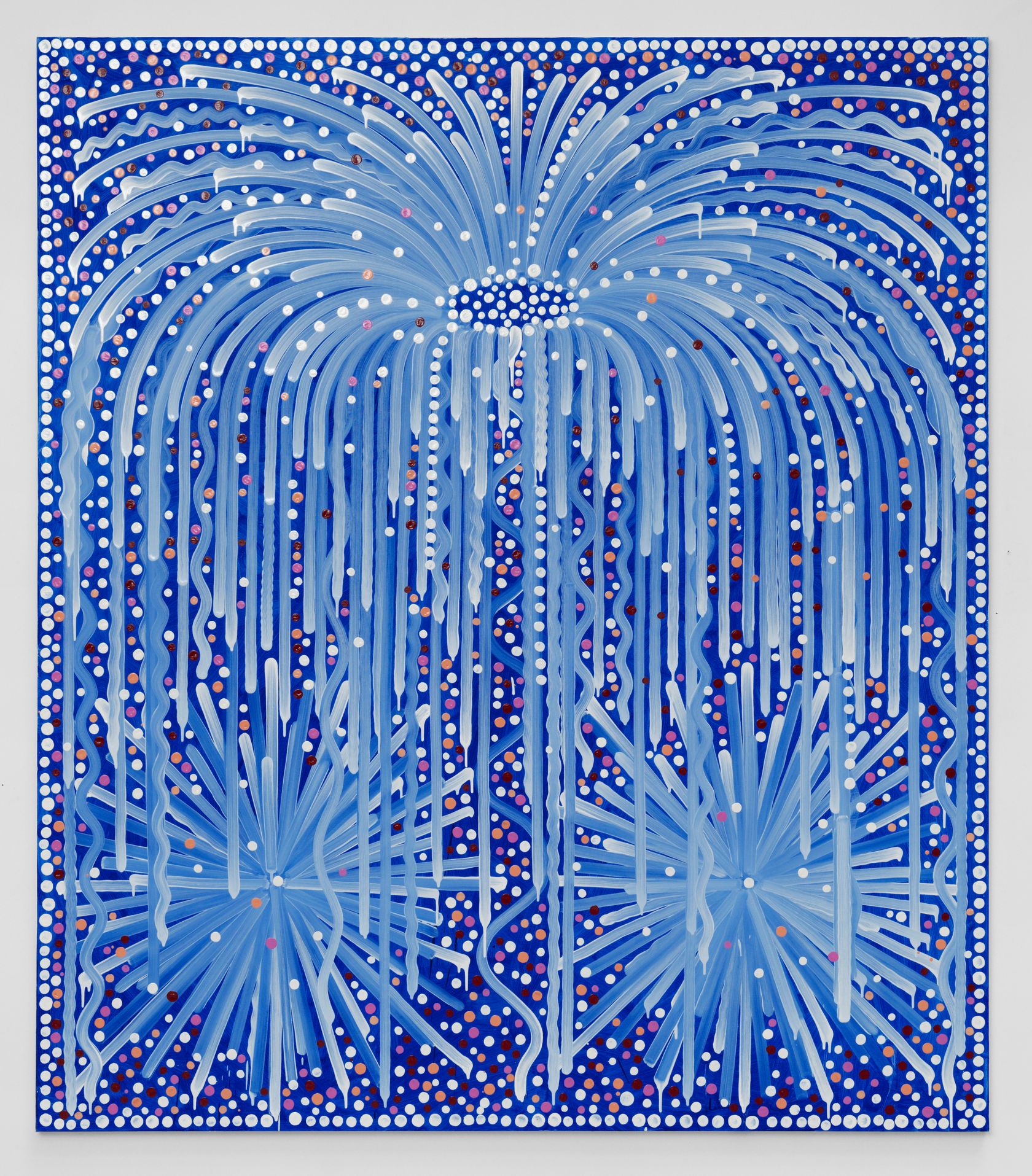
With a background in printing, Hugo Capron's painting is based on the pleasure of reproducing the same image in long series that seek to exhaust all the possibilities of variation. His paintings are generally produced in one go and without repentance, but are nevertheless based on precise technical equations. Long interested in the correspondences between a volume of paint and a surface of canvas to be covered, his return from the Kujoyama Villa in 2019 led to a breaking point. His works began to represent subjects that were often classical and anonymous, borrowed from the history of etching or the history of painting.
Hugo Capron’s palettes are the result of fine investigations among suppliers from all over the world in search of the most accurate shades. On the canvas, they reveal themselves in a whole range of materials, juices and luminous extra thickness which emphasise the speed of execution. The gesture is almost calligraphic, it is a mixture of commas and loops.
Hugo Capron (b. 1989) lives and works in Dijon (FR). He graduated from the Ecole Nationale Supérieure d'Art et de Design, Dijon (FR). In 2021, he is the winner of the 8th edition of the Emerige Revelation Grant. His work has been exhibited in numerous individual and collective shows at the Hôtel des Arts, Toulon (FR), the Centre Régional d’Art Contemporain de Montbéliard (FR), the Collection Yvon Lambert, Avignon (FR), the Frac Bourgogne, Dijon (FR) and at Consortium, Dijon (FR). His work features in a large number of French and international, public and private collections.
- Hugo Capron
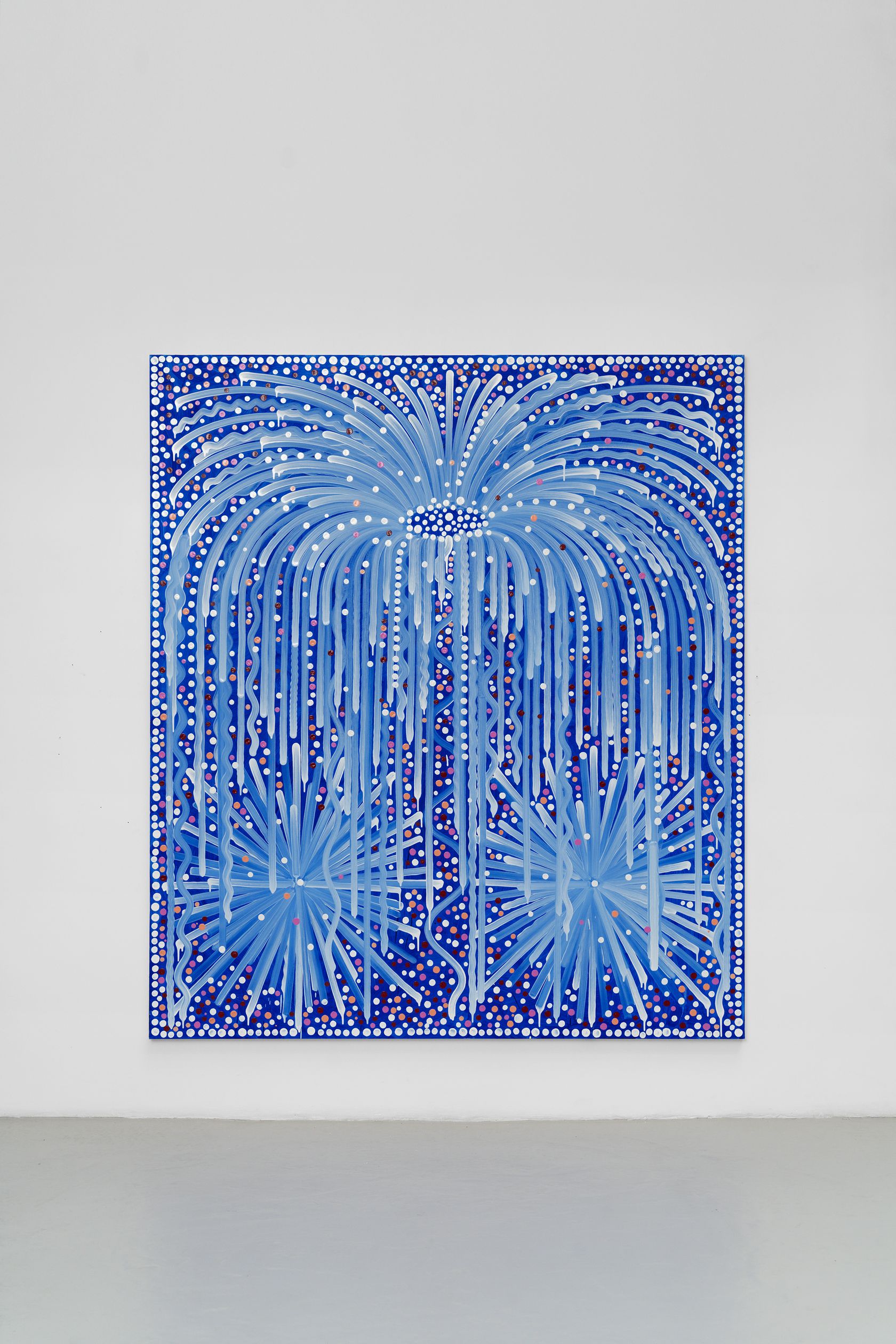
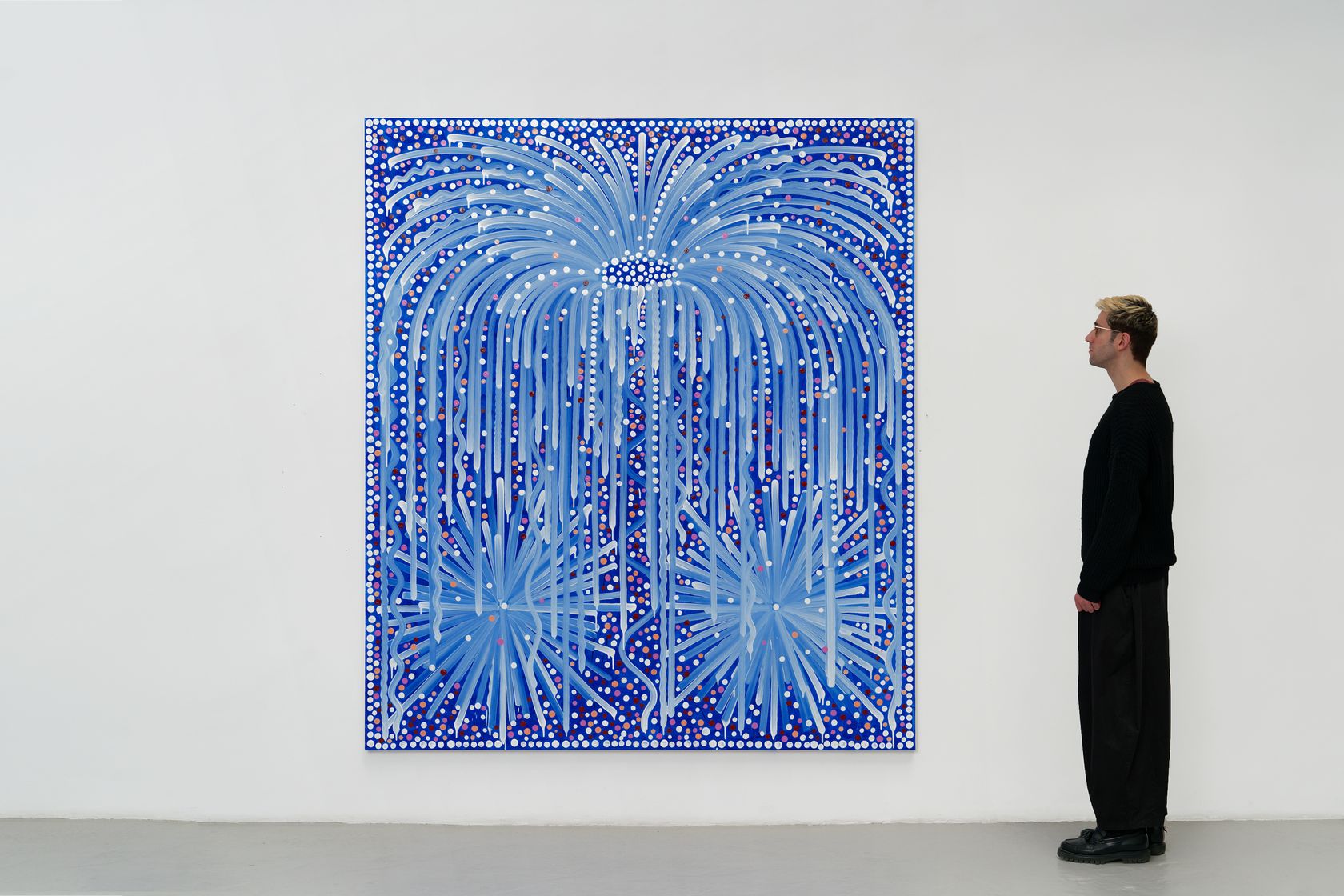
- Feu d'artifice (Méditerranée) , 2024
- Oil on canvas
-
- 230 ×
- 200 ×
- 3.5 × cm
- 90 9/16 ×
- 78 3/4 ×
- 1 3/8 × inches