
To learn more about available works, please provide your contact information
Art Monte-Carlo
Booth D5
April 29 - May 1st, 2026
with Glen Baxter
Amélie Bertrand
Hugo Capron
Françoise Pétrovitch
Laurent Proux
Stefan Rinck
Moffat Takadiwa
Gert & Uwe Tobias
Justin Williams
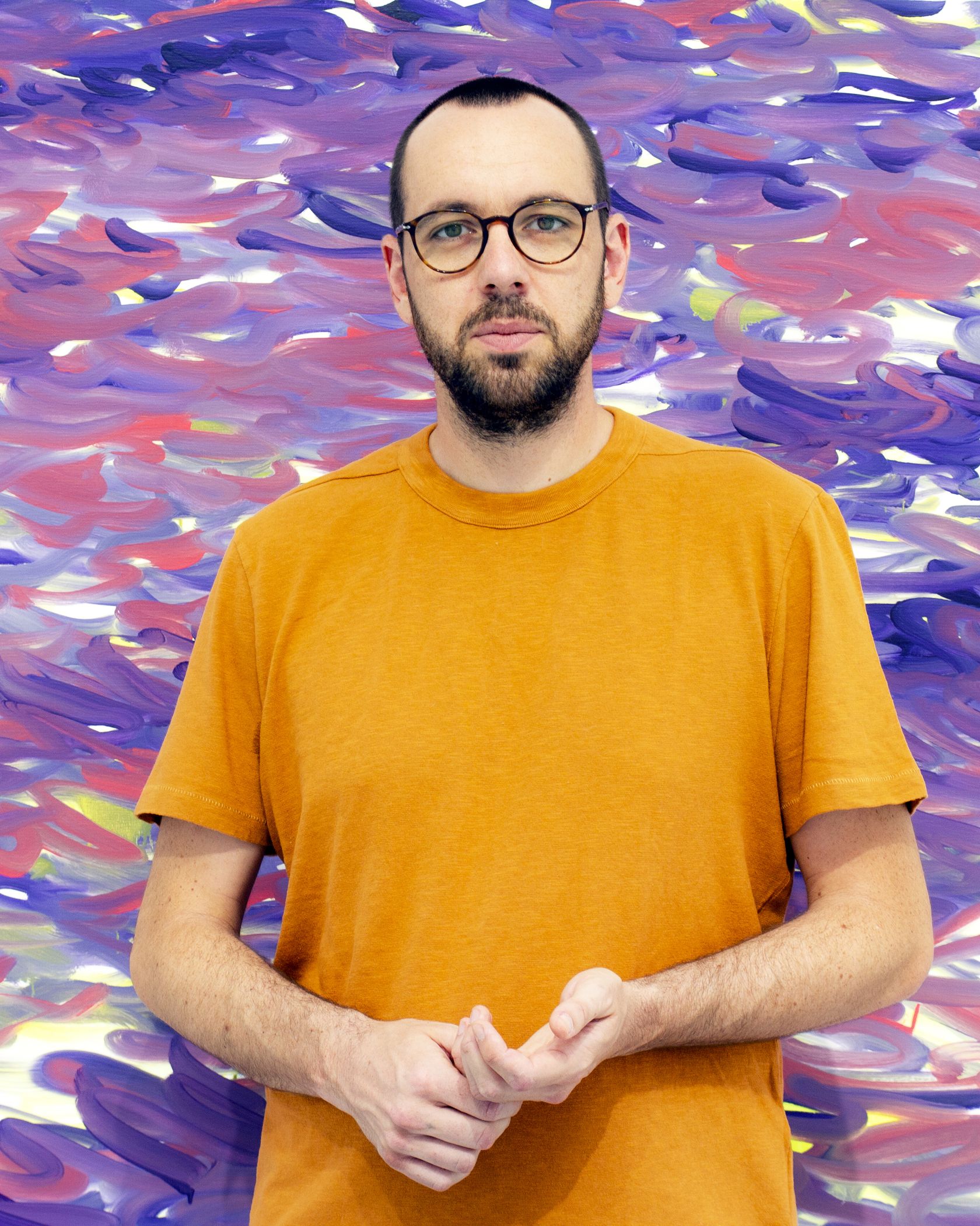
With a background in printing, Hugo Capron's painting is based on the pleasure of reproducing the same image in long series that seek to exhaust all the possibilities of variation. His paintings are generally produced in one go and without repentance, but are nevertheless based on precise technical equations. Long interested in the correspondences between a volume of paint and a surface of canvas to be covered, his return from the Kujoyama Villa in 2019 led to a breaking point. His works began to represent subjects that were often classical and anonymous, borrowed from the history of etching or the history of painting.
Hugo Capron’s palettes are the result of fine investigations among suppliers from all over the world in search of the most accurate shades. On the canvas, they reveal themselves in a whole range of materials, juices and luminous extra thickness which emphasise the speed of execution. The gesture is almost calligraphic, it is a mixture of commas and loops.
Hugo Capron (b. 1989) lives and works in Dijon (FR). He graduated from the Ecole Nationale Supérieure d'Art et de Design, Dijon (FR). In 2021, he is the winner of the 8th edition of the Emerige Revelation Grant. His work has been exhibited in numerous individual and collective shows at the Hôtel des Arts, Toulon (FR), the Centre Régional d’Art Contemporain de Montbéliard (FR), the Collection Yvon Lambert, Avignon (FR), the Frac Bourgogne, Dijon (FR) and at Consortium, Dijon (FR). His work features in a large number of French and international, public and private collections.
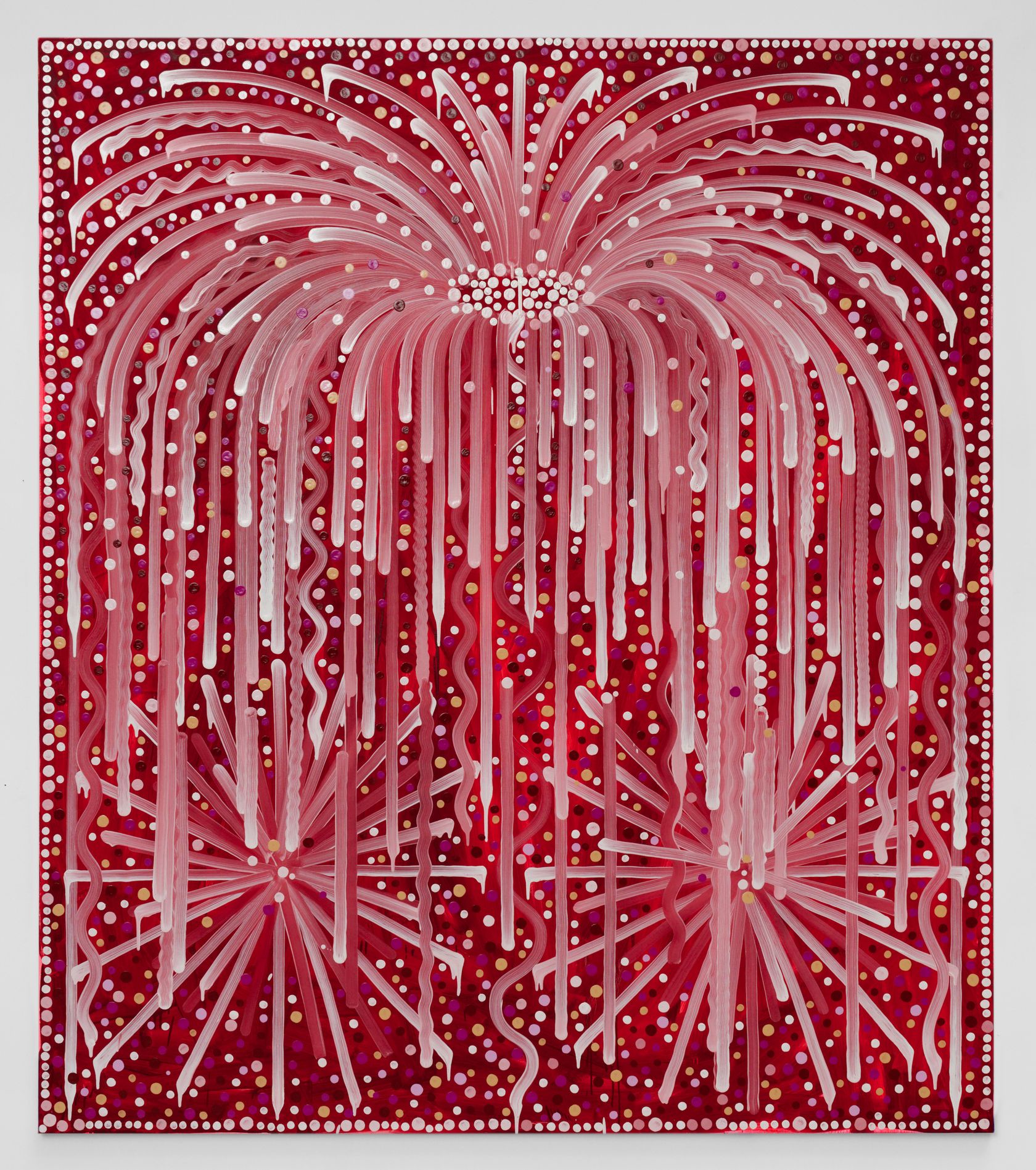
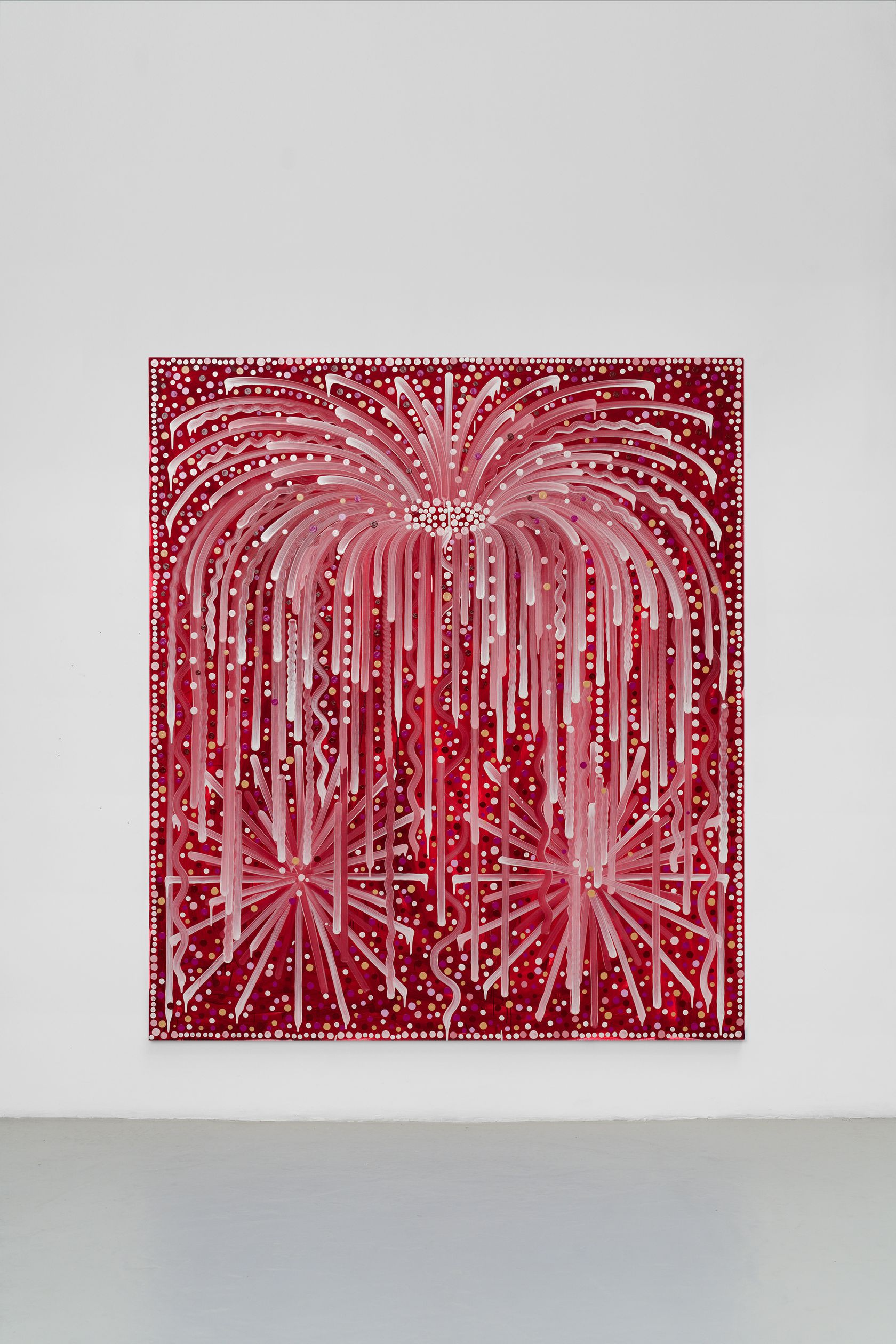
- Hugo Capron
- Feu d'artifice (Volcan) , 2024
- Oil on canvas
-
- 230 ×
- 200 ×
- 3.5 × cm
- 90 9/16 ×
- 78 3/4 ×
- 1 3/8 × inches
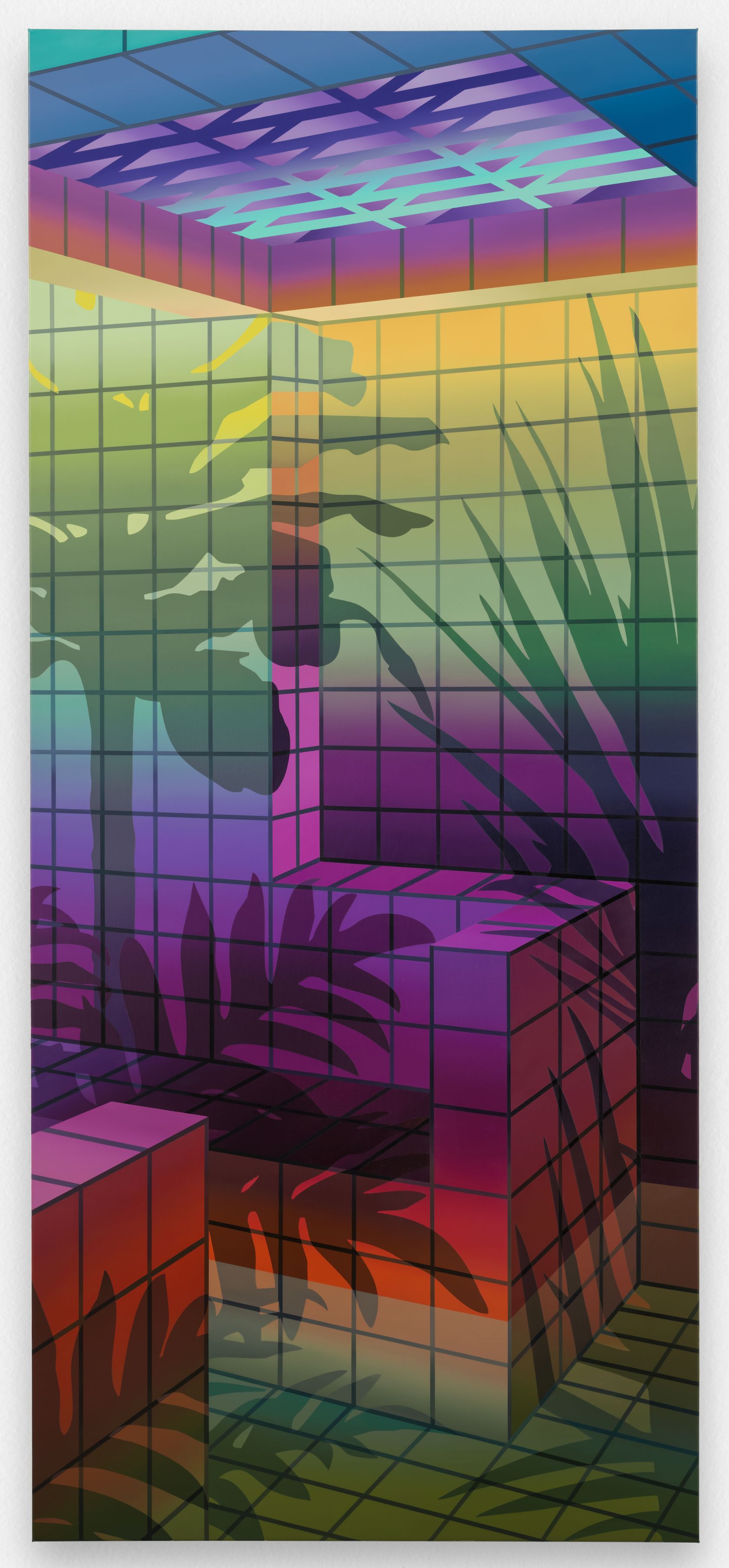
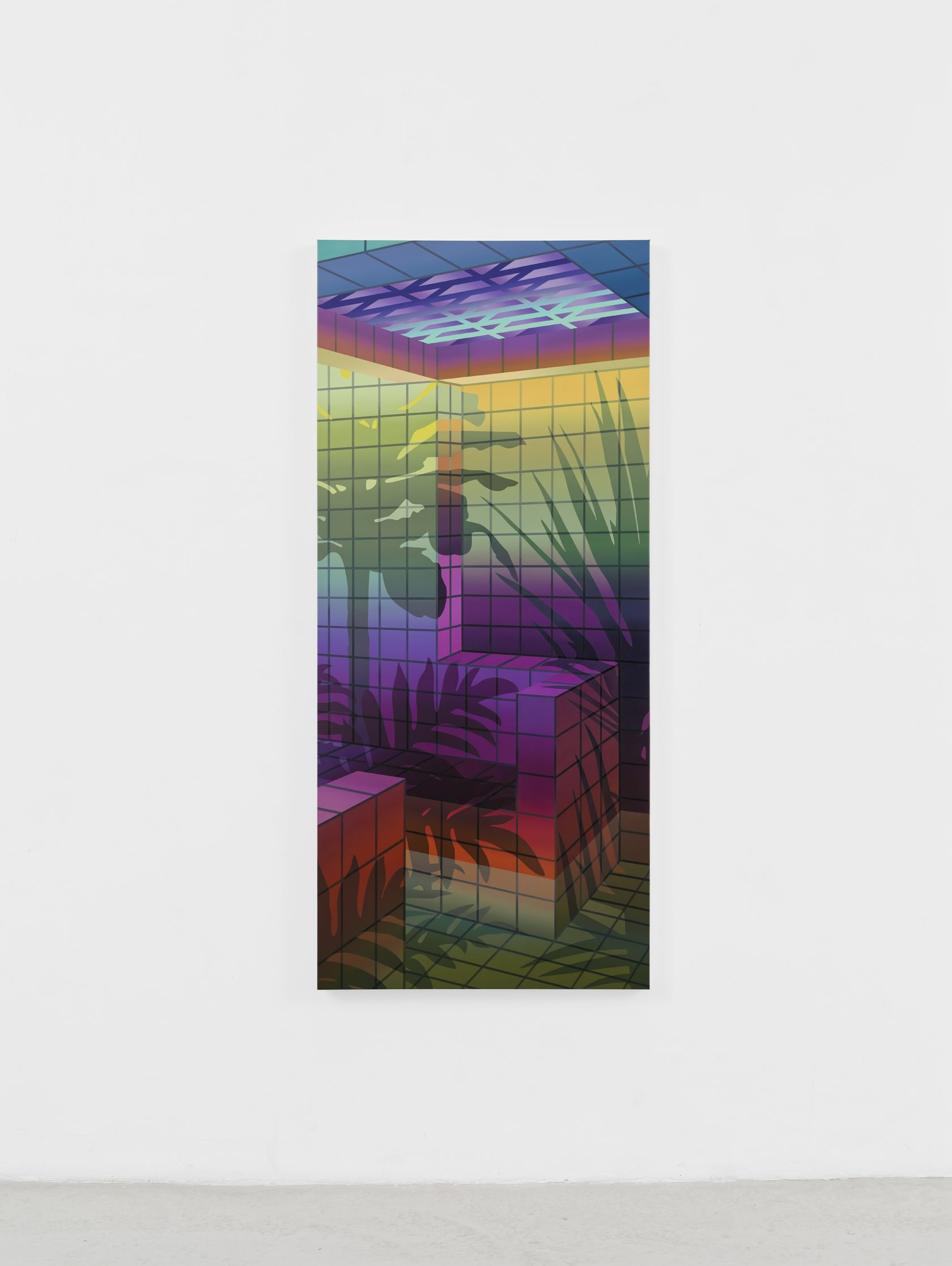
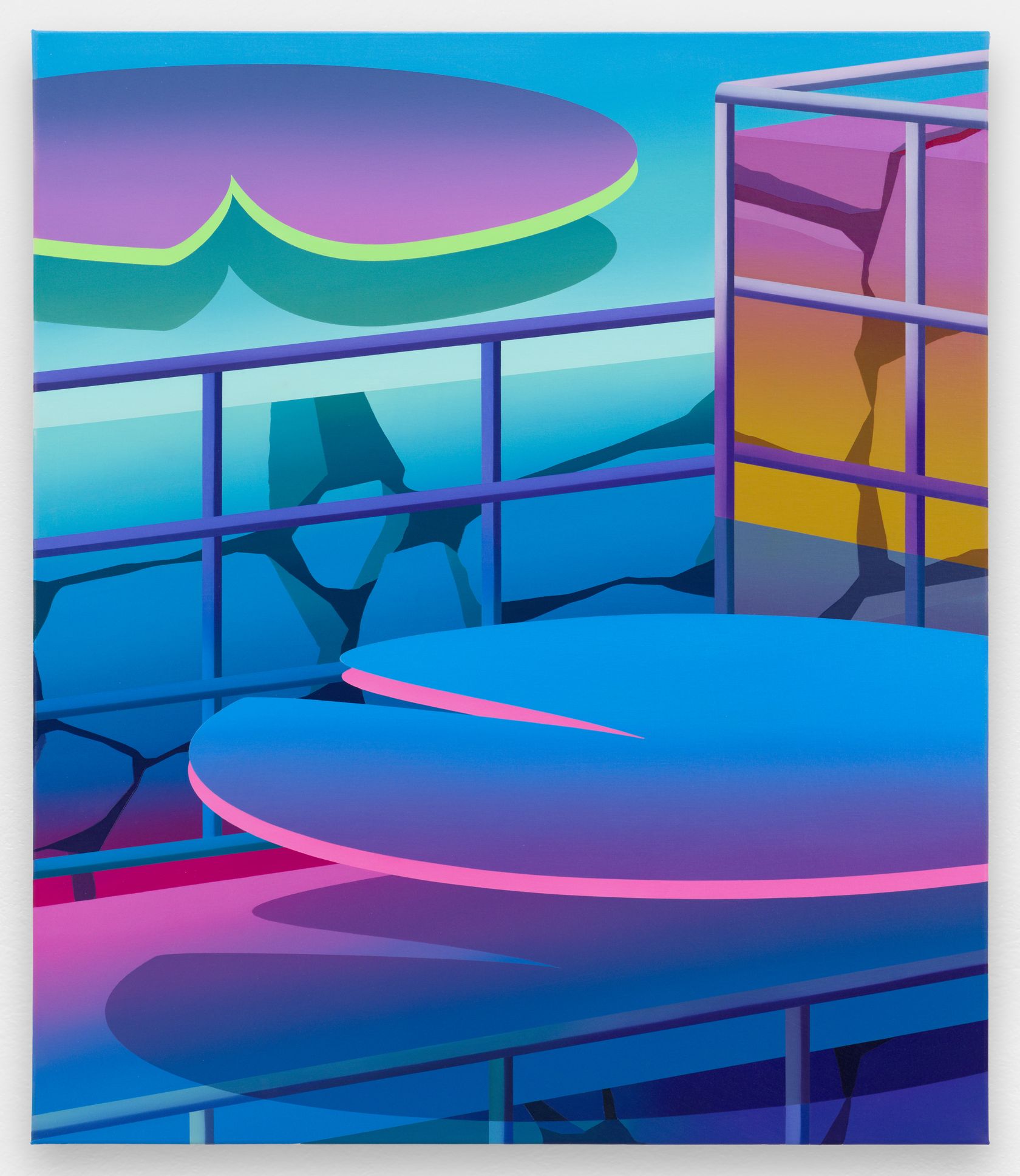
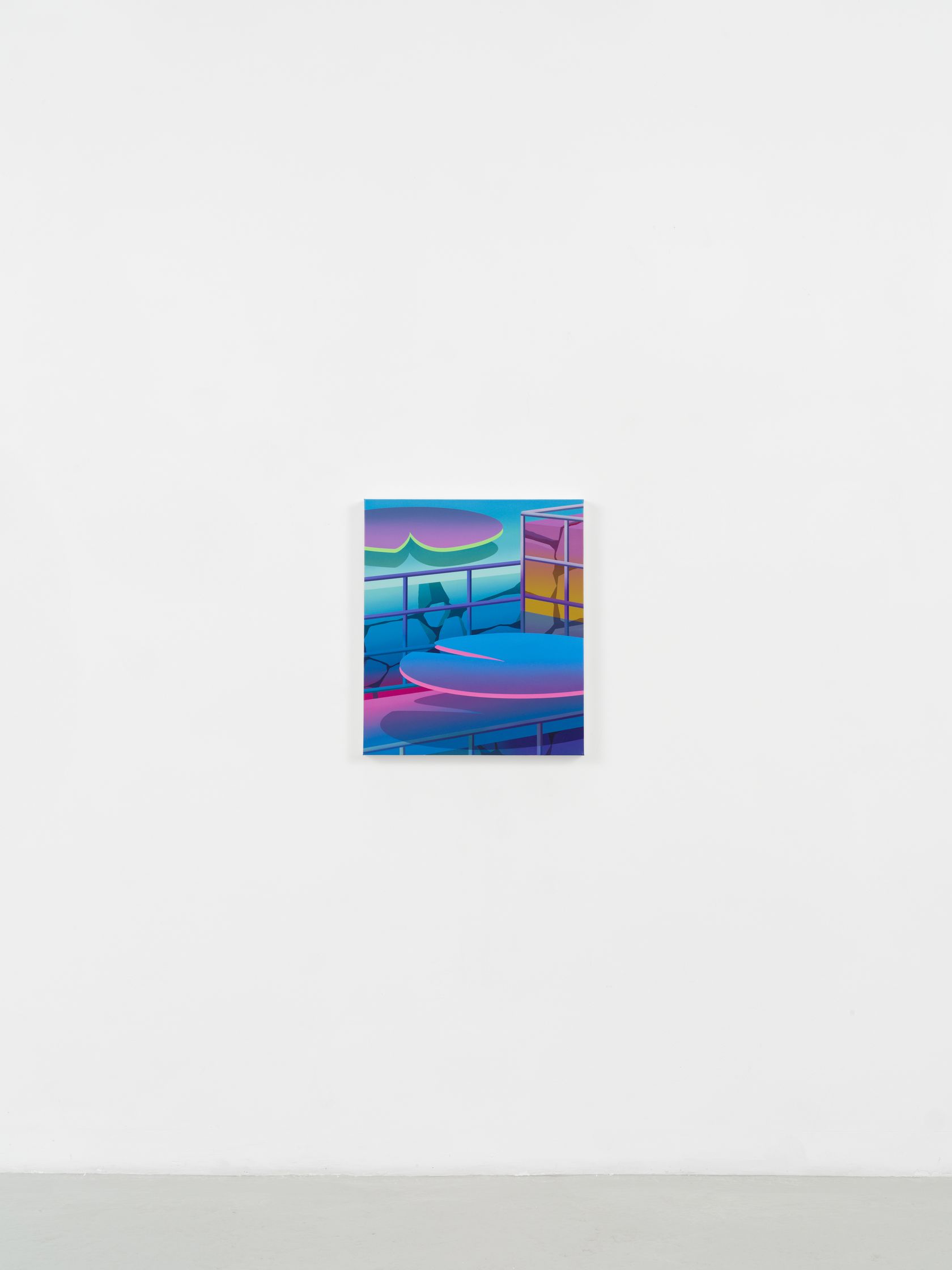
By means of her impeccably smooth execution, Amélie Bertrand (born in 1985) is able to distance herself from ideal landscapes inspired by nature, and shape decors that fall somewhere between dreams and nightmares. The planes and surfaces of her works are assembled in a complex and meticulous manner, branching out into skewed perspectives and shallow horizons. All kinds of materials and motifs typical of our era saturate her compositions: OSB, laminates, wire mesh, tiles, fleecing, chains, foliage, camouflage etc. Colors are applied in gradients, yet always as a single layer, as if trapped on the surface of an impenetrable screen. Amélie Bertrand creates an atmosphere of déjà-vu, a contemporary ambience that is both psychological and physical within the confined space of the painting. As the missing link between Giotto and West Coast art, Amélie Bertrand combines the great traditions with synthetic psychedelia, transforming contemporary visual culture into carefully controlled constructs of flat tints.
In 2024, a monographic exhibition of Amélie Bertrand took place at the Musée de l’Orangerie in Paris. She has recently enjoyed solo and group exhibitions at the Centre d’art contemporain de la Matmut-Daniel Havis, Saint-Pierre-de-Varengeville (FR), the Maison des arts, Malakoff (FR), the Centre d’art contemporain de Meymac (FR), the Kunstwerk Carlshütte, Büdelsdorf (DE), the Ecole Municipale des Beaux-Arts, Châteauroux and the Musée des Beaux-Arts de Dole (FR). Her oeuvres are included in public and private collections such as the Thyssen-Bornemisza Art Contemporary, the MAC VAL, Vitry-sur-Seine (FR), the CNAP, Paris (FR), the FRAC Limousin, Limoges (FR), Les Abattoirs Musée – Frac Occitanie Toulouse (FR) and the Musée de l’Abbaye Sainte Croix, Les Sables-d’Olonne (FR).
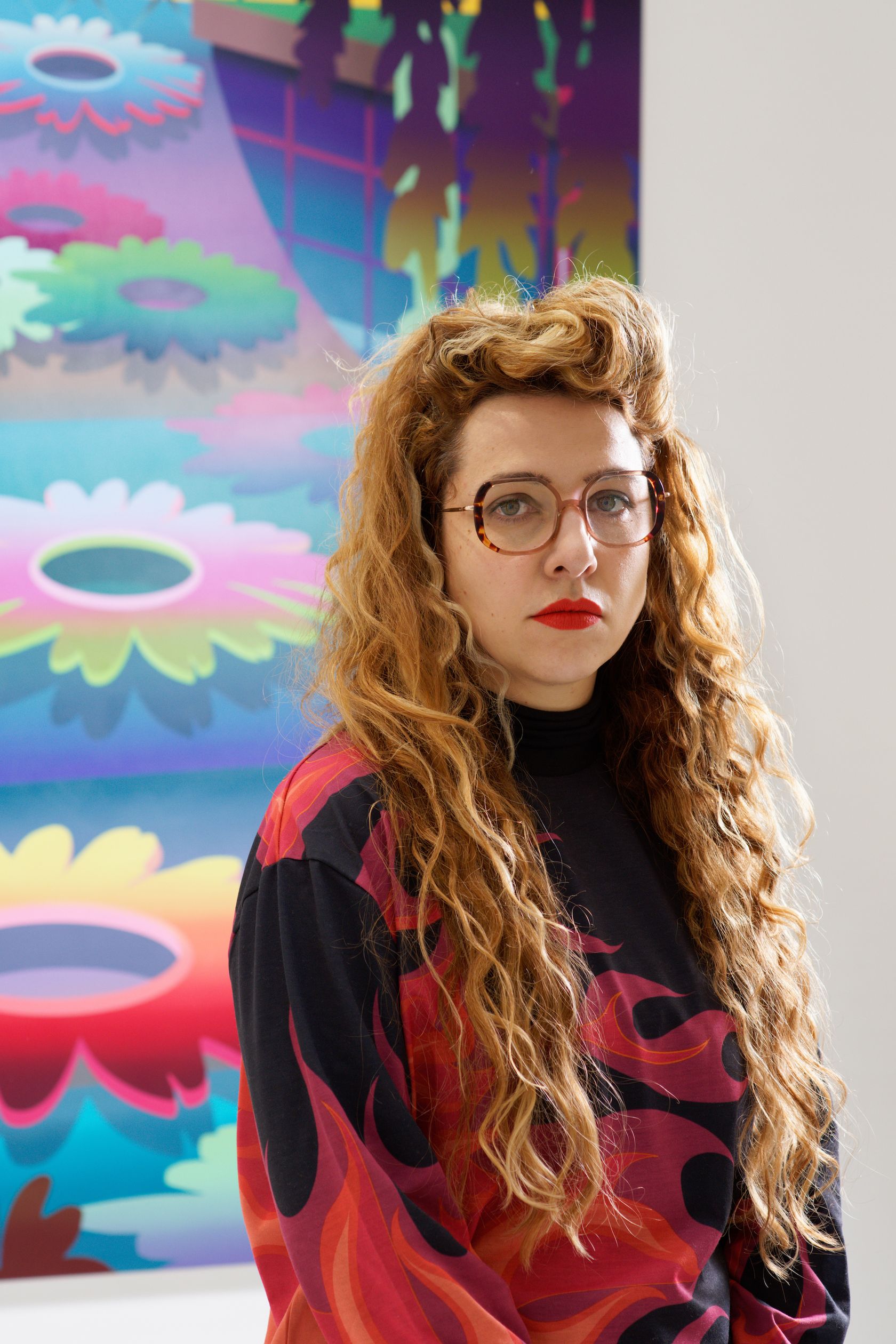
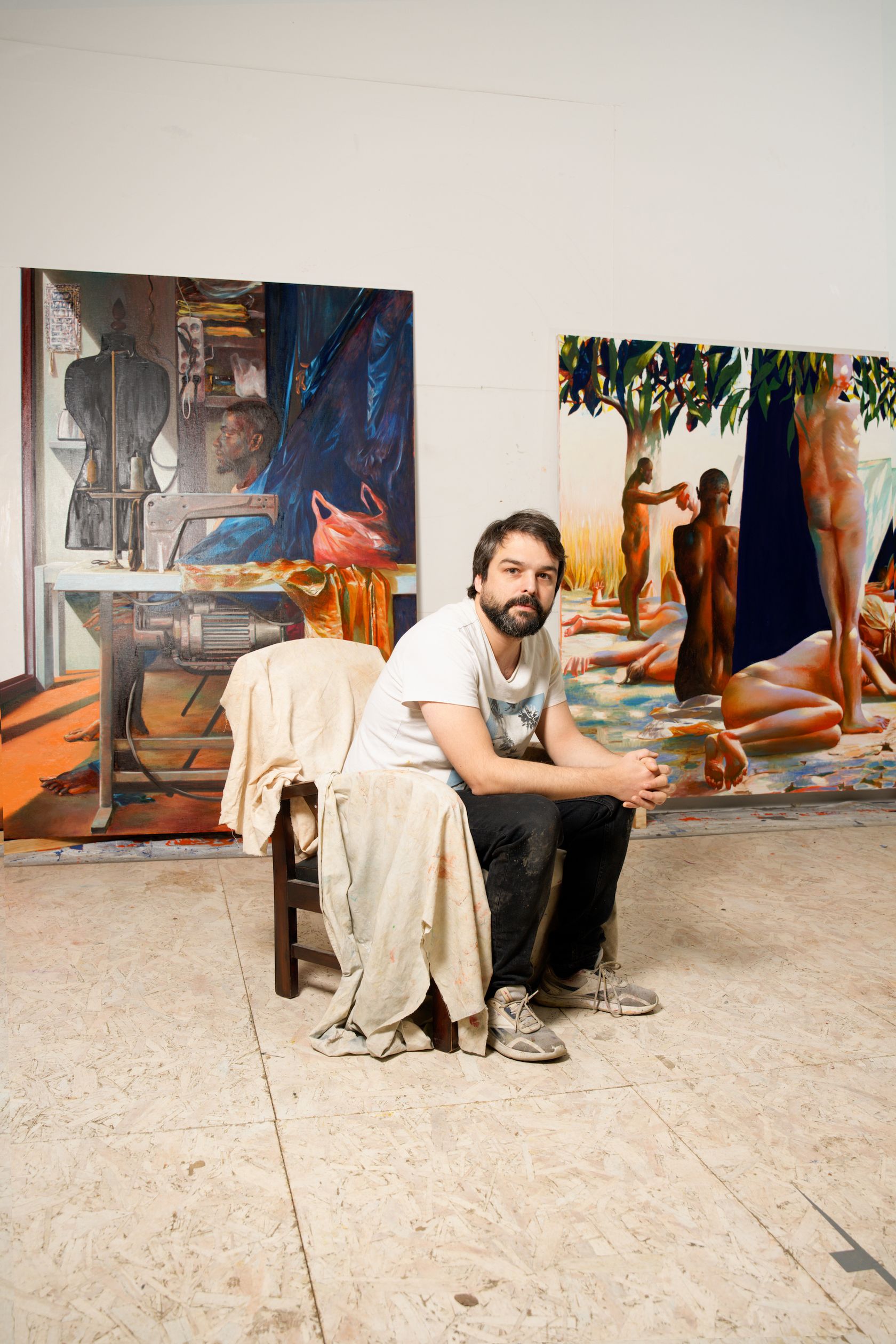
Born in Versailles in 1980, Laurent Proux lives and works in Paris. In his painting and drawing, Laurent Proux produces powerful and original imagery that seeks through his formal choices to resolve the questions raised by his subjects. Described by some as a realist due to the subjects he depicts—industrial machinery, workstations, sexualized bodies, etc.—his style finds its emancipation through his never-ending exploration of pictorial solutions, the integration of aberrations, bringing planes into collision, the use of artificial colors, all freeing his oeuvre from the opposition between figuration and abstraction. He approaches the human form through fragments, exaggeration and the use of silhouettes to create a kind of body-cum-machine, politicized and under assault, often disturbing and occasionally sentimental. His canvases take the form of a stage, in an altered perspective and the artist addresses the spectator with a visual and intellectual enigma running through the image.
Laurent Proux’s first institutionnal solo exhibition took place at the Musée de l’Abbaye in Saint-Claude (FR) in 2025. His oeuvres are included in the collections of the National Center for Visual Arts (CNAP), the Occitan, Limousin and Nouvelle-Aquitaine regional contemporary art collections (FRAC) and the Paris Municipal Collection (FMAC). His work has been exhibited at the Mana Contemporary in Chicago (US), the Shanghai Art Museum (CN), the Moscow Center for Contemporary Art (RU), the Musée d’Art Contemporain in Lyon (FR), the Limousin FRAC in Limoges (FR), at the Lieu Commun in Toulouse (FR) and at the Musée d'Art moderne et contemporain de l'Abbaye Sainte-Croix aux Sables-d'Olonne (FR). Laurent Proux was a resident of the Casa de Velázquez in Madrid (ES).
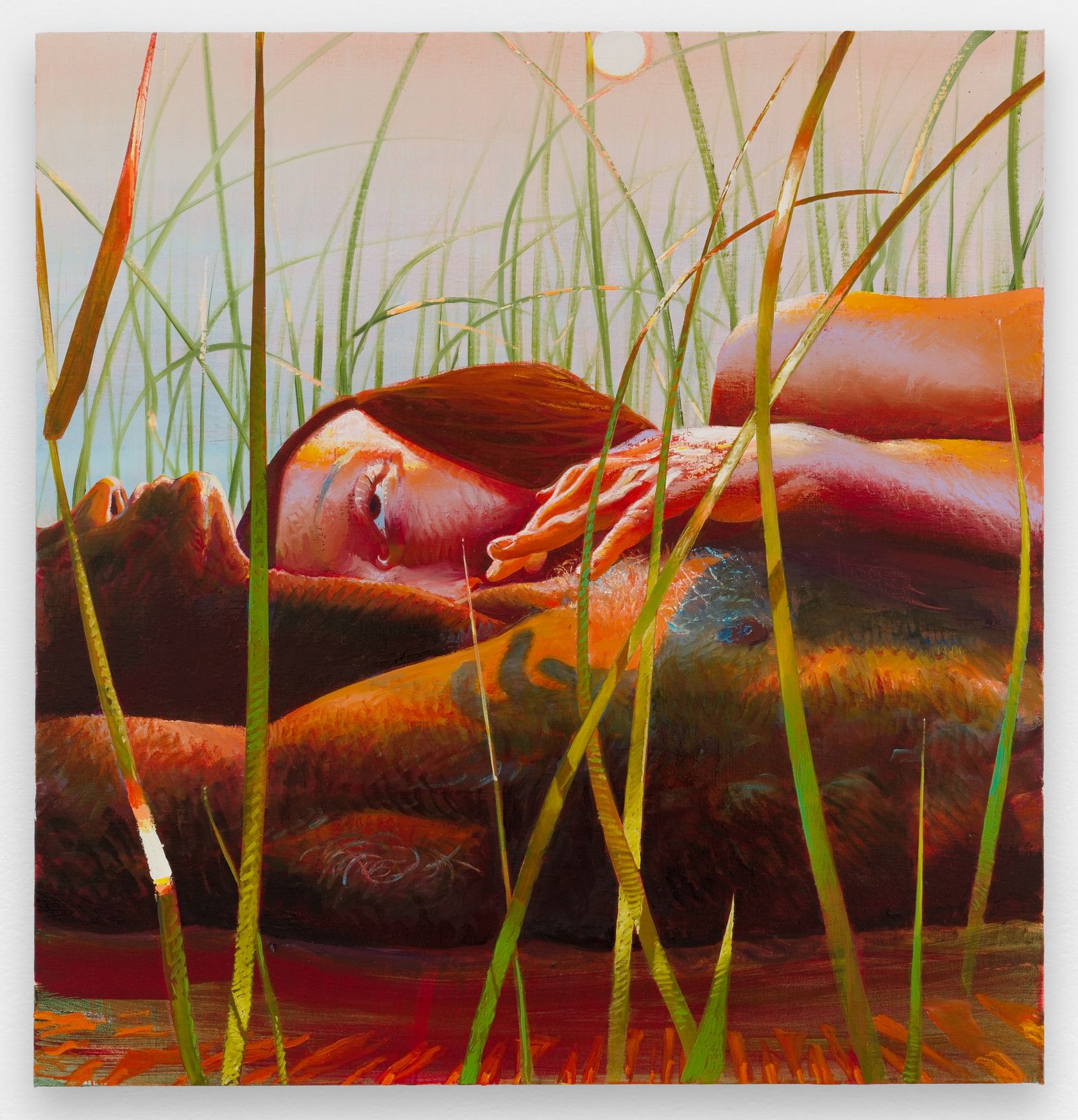
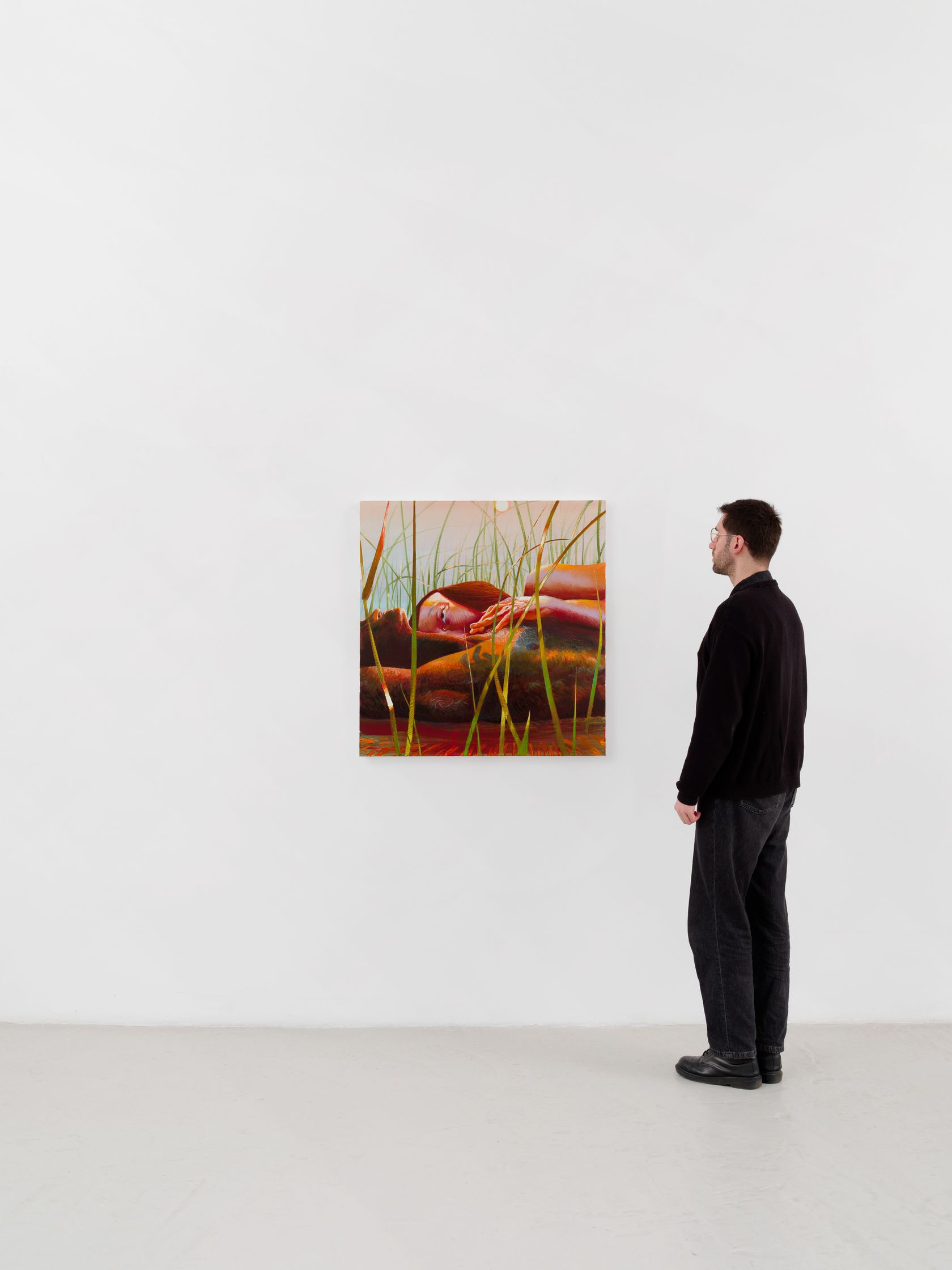
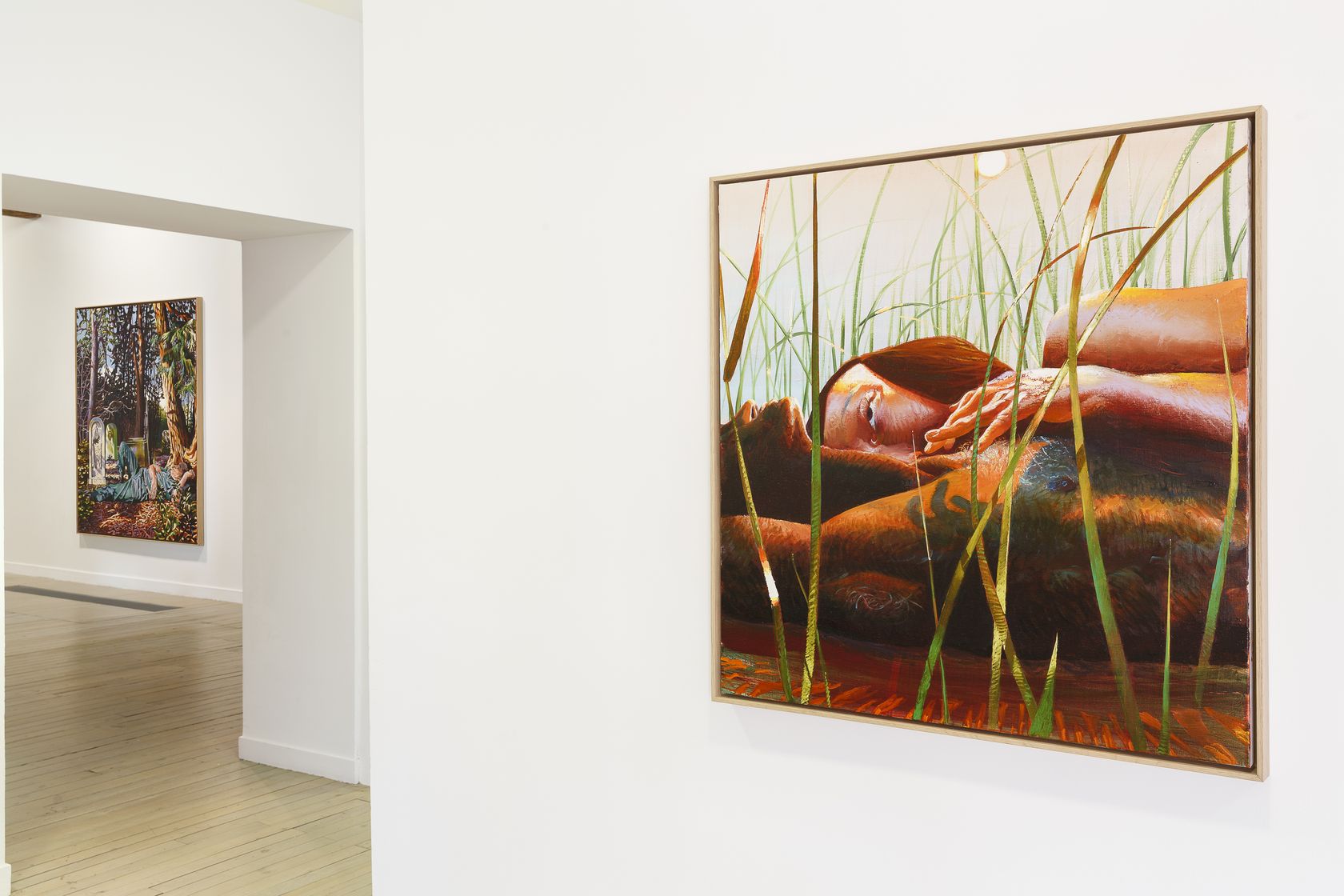
- Laurent Proux
- Fugitive , 2025
- Oil on canvas
-
- 94 ×
- 90 ×
- 3.5 × cm
- 37 ×
- 35 7/16 ×
- 1 3/8 × inches
- unframed
- 97.5 ×
- 94 ×
- 5 × cm
- 38 3/8 ×
- 37 ×
- 1 15/16 × in
- framed
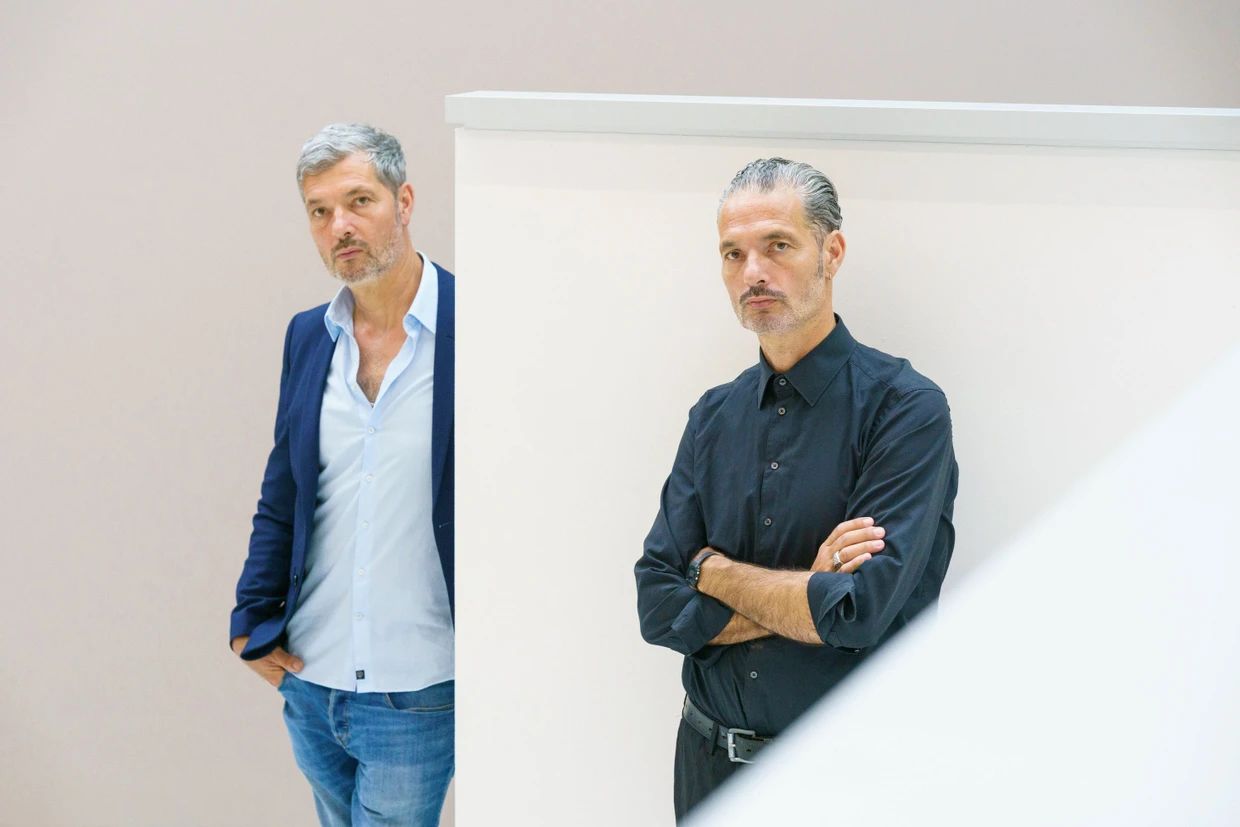
Within their practice, Gert and Uwe Tobias have revived a wide range of traditional image-making techniques—woodcut printing, low-relief sculpture, drawing using typewriters, watercolor, gouache, ceramics and lacemaking—into which they breathe new life using contemporary means. Their oeuvre is mainly influenced by the myths, costumes, crafts and commonplace motifs of their native Transylvania, subverted and fused with elements of popular culture, abstract art and contemporary graphic design. From this rich pictorial repertoire, they create a varied body of work in which legends and folk tales, carnivalesque figures and archaic elements are subject to constant metamorphoses.
Born in Romania in 1973, the twin brothers Gert and Uwe Tobias have been developing a collaborative practice since 2001. Their four-handed work bears witness to the perfect symbiosis of their individual gestures, striving towards a common goal. Today, they live and work in Cologne, Germany. The twin brothers have recently enjoyed exhibitions at the MoMA in New York, the Sprengel Museum in Hannover and the Pinakothek der Moderne, Munich, both in Germany, The Dhondt-Dhaenens Museum in Deurle, Belgium, the Whitechapel Gallery in London, the Kunstmuseum Ravensburg, Germany, the Kupferstichkabinett at the Staatliche Kunstsammelungen in Dresden, the Maramotti Collection in Reggio Emilia in Italy and the UCLA, Hammer Museum of Art in Los Angeles as well as many other venues. In 2022, they were awarded the Prix du Dessin (Drawing Prize) by the Fondation d’Art Contemporain Daniel et Florence Guerlain.
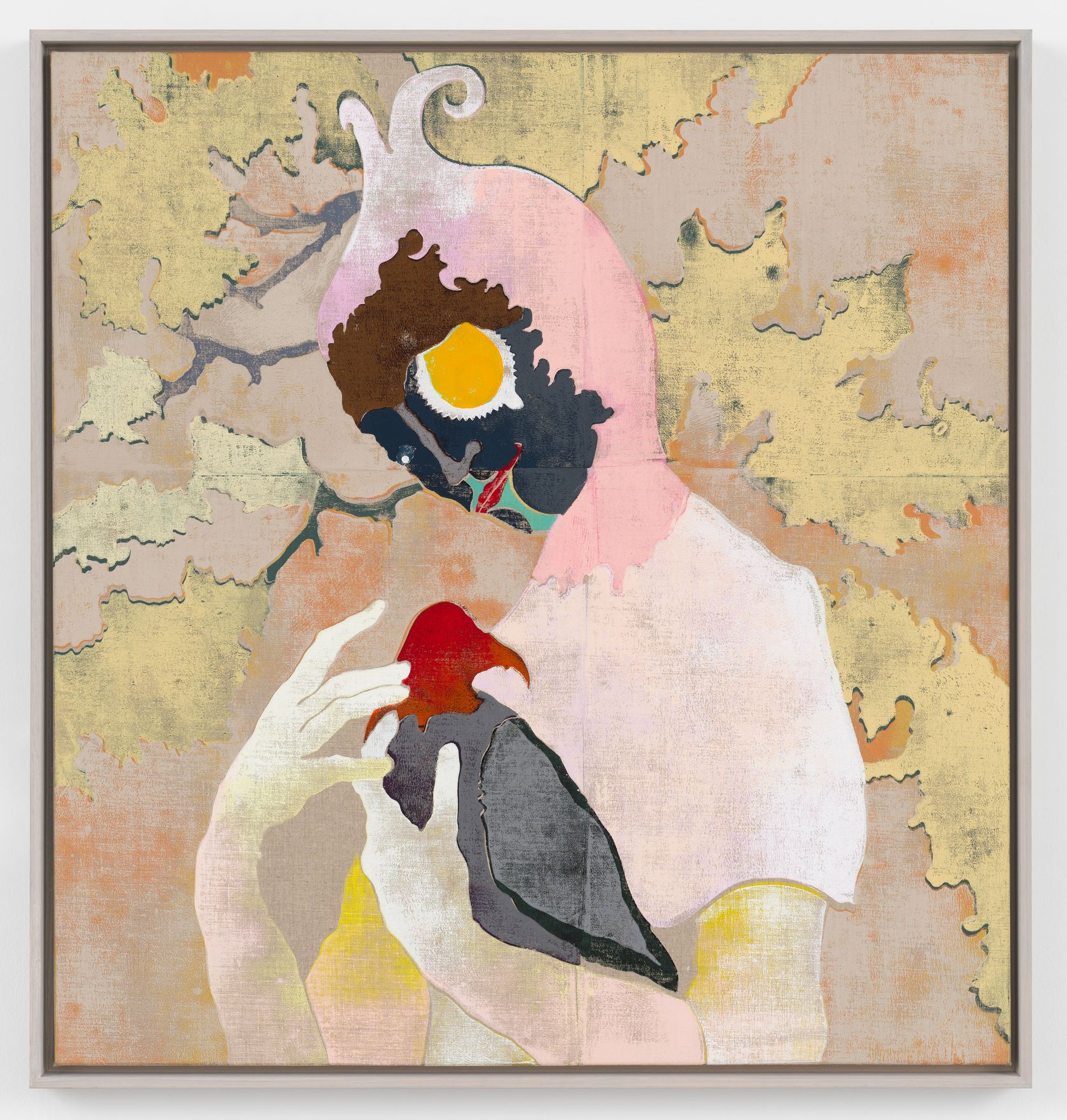
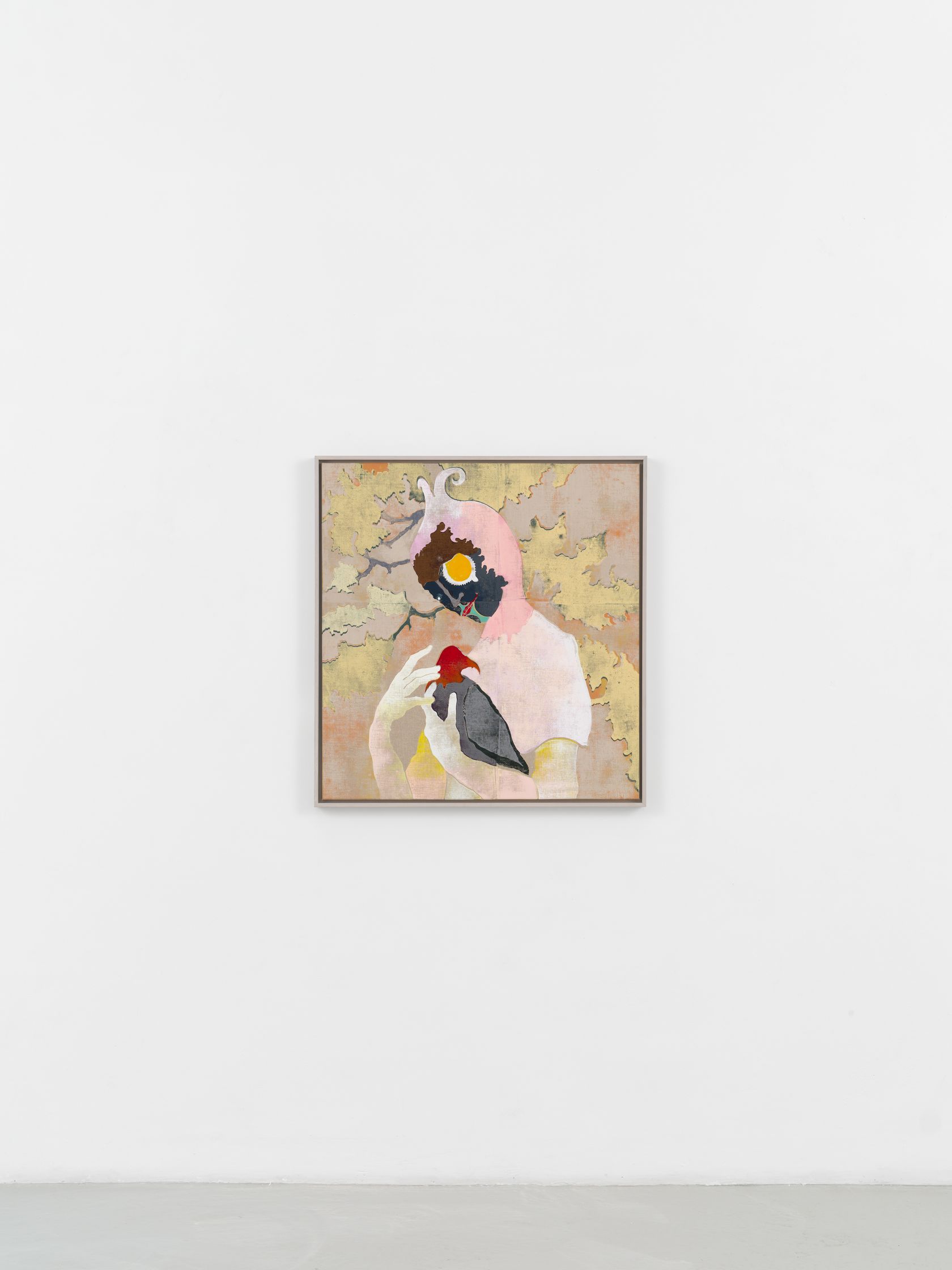
- Gert & Uwe Tobias
- Untilted , 2017
- Coloured woodcut on canvas
-
- 90 ×
- 85 × cm
- 35 7/16 ×
- 33 7/16 × inches
- unframed
- 94 ×
- 89 × cm
- 37 ×
- 35 1/16 × in
- framed
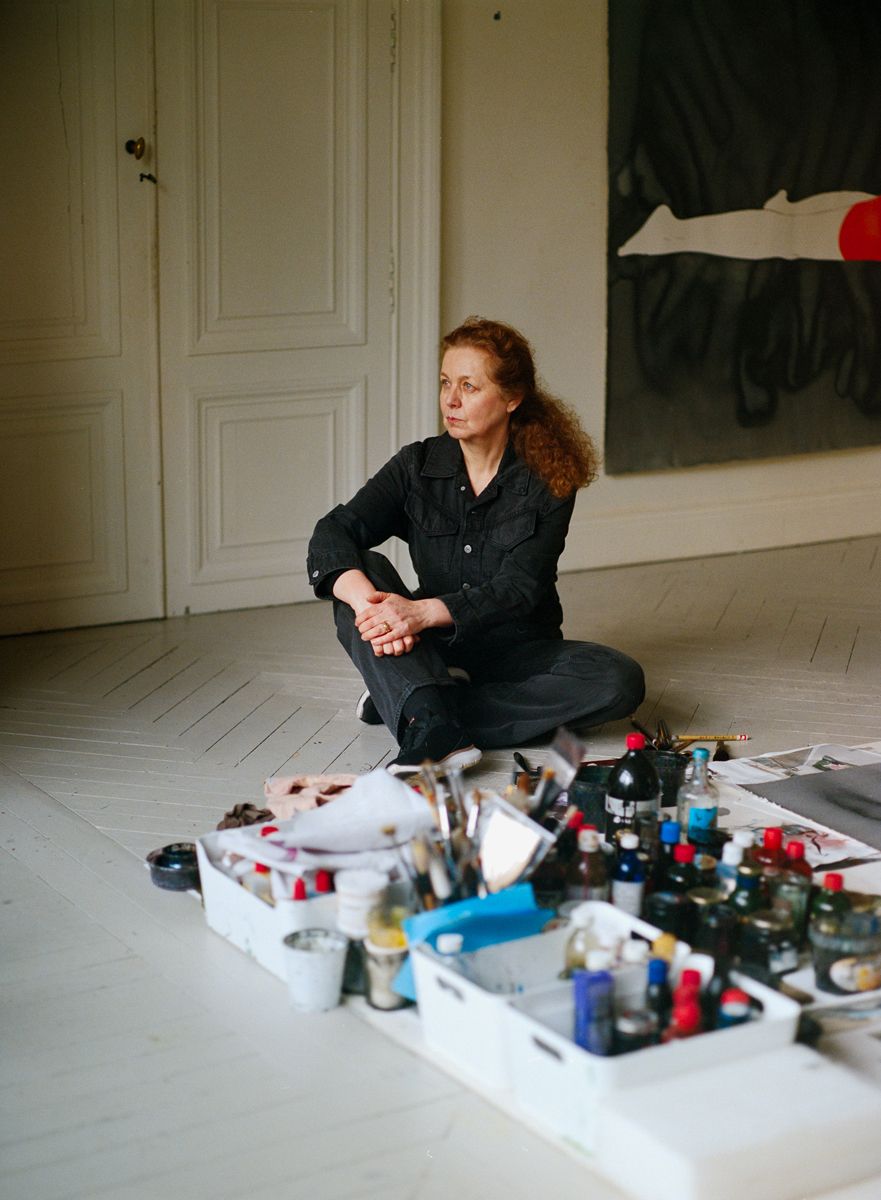
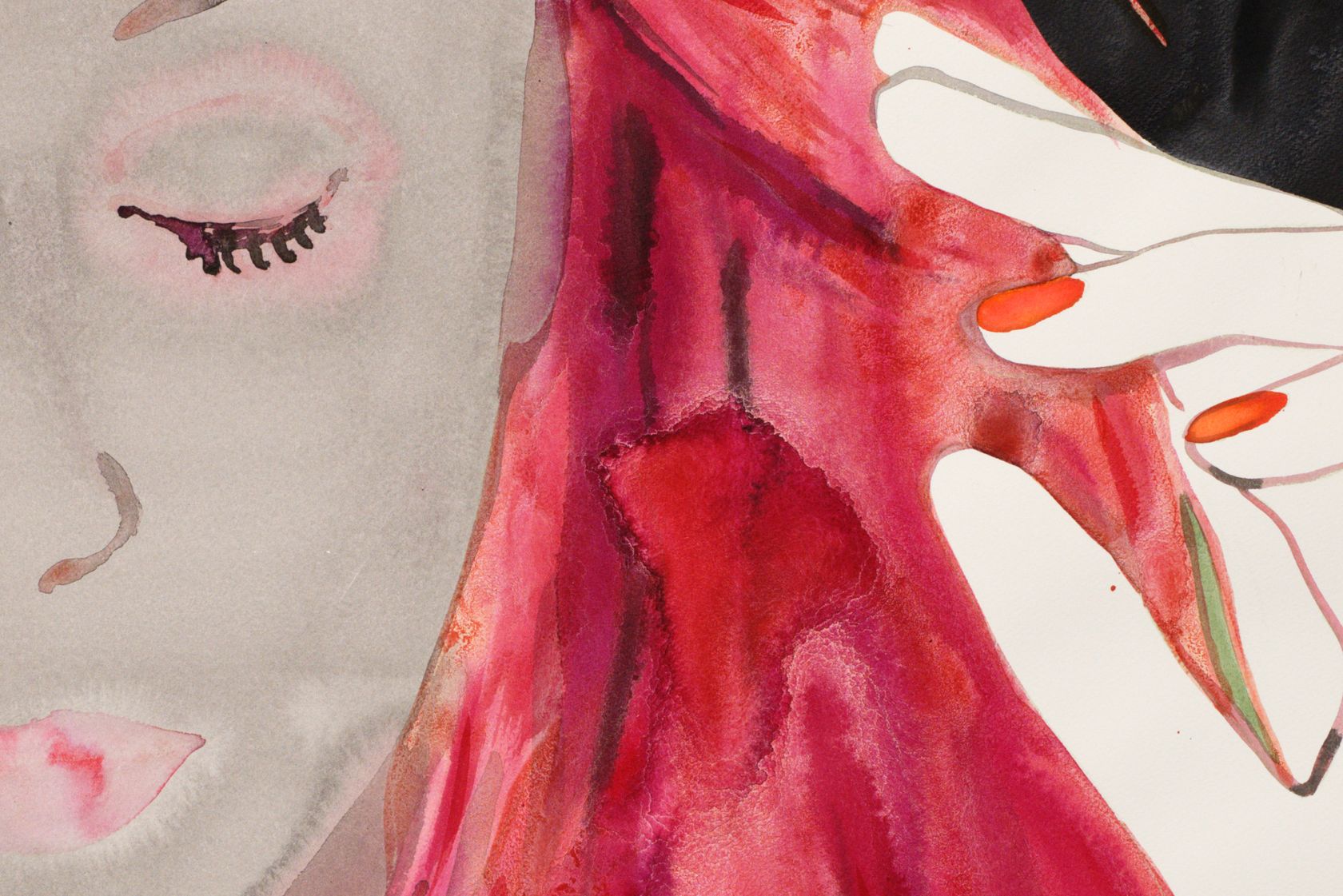
Since the 1990s, Françoise Pétrovitch has produced one of the most powerful bodies of work on the French art scene. Amongst the numerous media she has explored—ceramics, ink washes, painting, print and video—drawing retains pride of place. In constant dialog with the artists who have preceded her, she has been able to measure herself against the incontrovertible motifs of “high art”—Saint Sebastian, still lifes, etc. Pétrovitch’s art reveals an ambiguous world, willingly transgressive, playing with conventional boundaries and eluding any interpretation. Intimacy, fragments of life and disappearance, alongside the themes such as the double, transition and cruelty run through her work, which is inhabited by animals, flowers and beings, and whose atmosphere fluctuates between light and dark, rarely leaving the spectator unmoved.
She has enjoyed numerous solo exhibitions both in France and abroad, as in the Fonds Hélène et Édouard Leclerc in Landerneau and the Bibliothèque nationale de France, Paris, in 2022, and the Musée de la Vie romantique, Paris, in 2023. In 2018, she was the first contemporary artist to be awarded a solo exhibition at the Louvre-Lens. Over the past few years, Pétrovitch has produced monumental wall drawings and large format ensembles, for the Galerie des Enfants at the Centre Pompidou, the West Bund Museum, Shanghai, or for the Ballets du Nord Company. Her works are included in many private and public collections, most notably the Centre Pompidou, Paris (FR), the Voorlinden Museum, Wassenaar (NL), the National Museum of Women in the Arts, Washington D.C. (US), the Musée Jenisch, Vevey (CH), the Musée d’Art Moderne et Contemporain of Saint-Etienne (FR) and of Strasbourg (FR), the MAC VAL (FR), the Salomon and Guerlain Foundations as well as Emerige Endowment Fund.


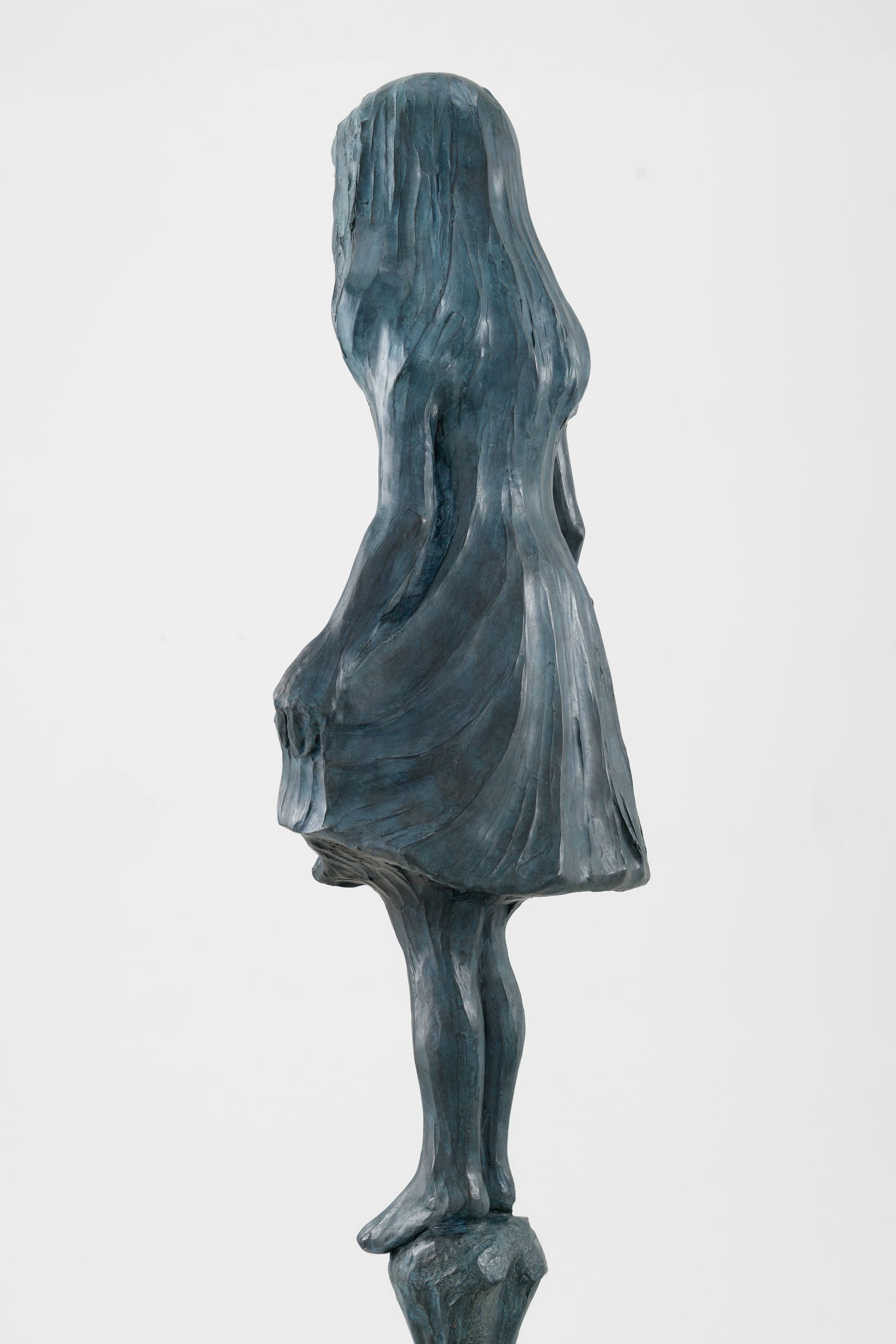


- Françoise Pétrovitch
- Sur un os , 2024
- Bronze - Edition of 8 + 4 AP
-
- 240 ×
- 48 ×
- 33 × cm
- 94 1/2 ×
- 18 7/8 ×
- 13 × inches
- 6 ×
- 70 × cm
- 2 3/8 ×
- 27 9/16 × inches
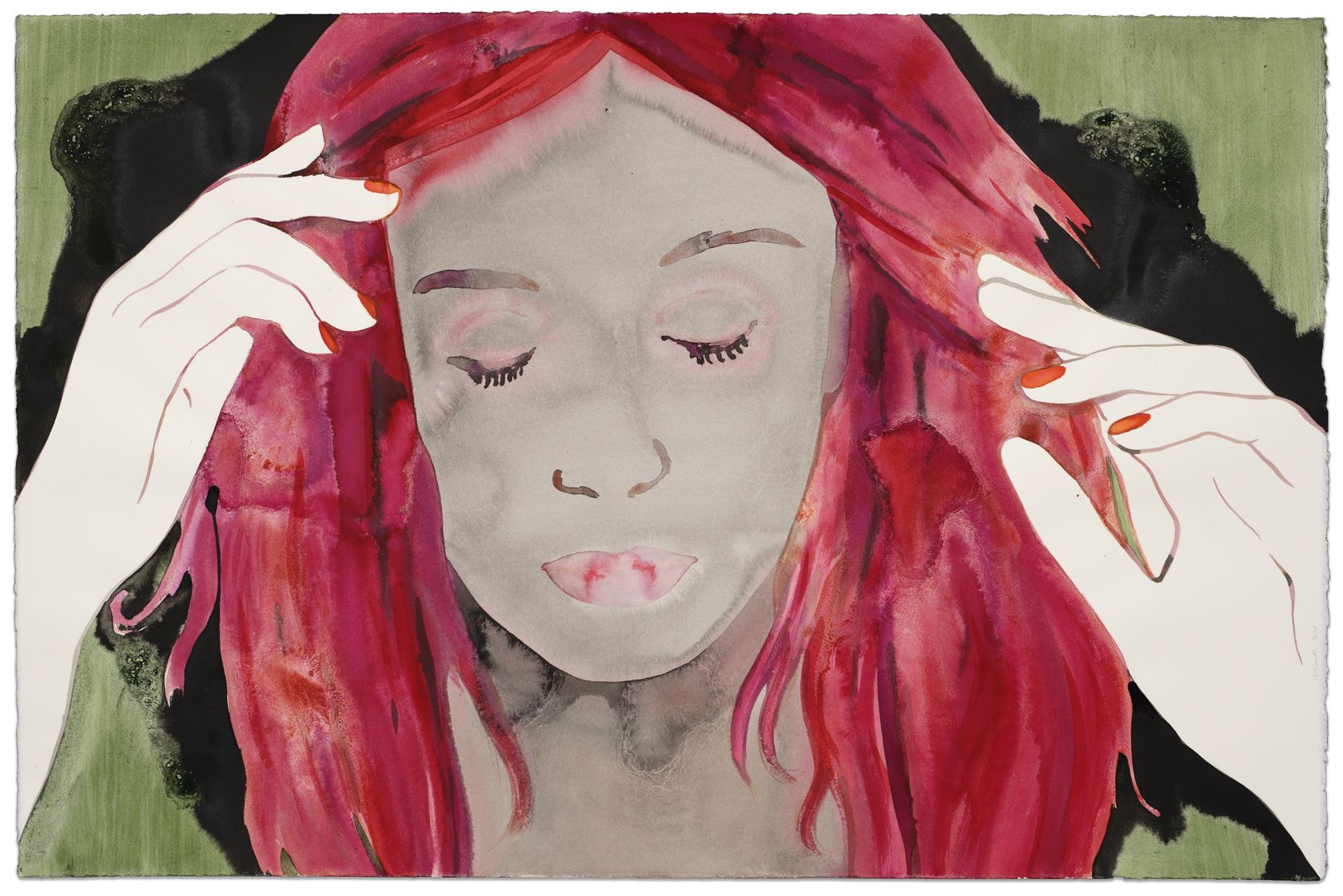
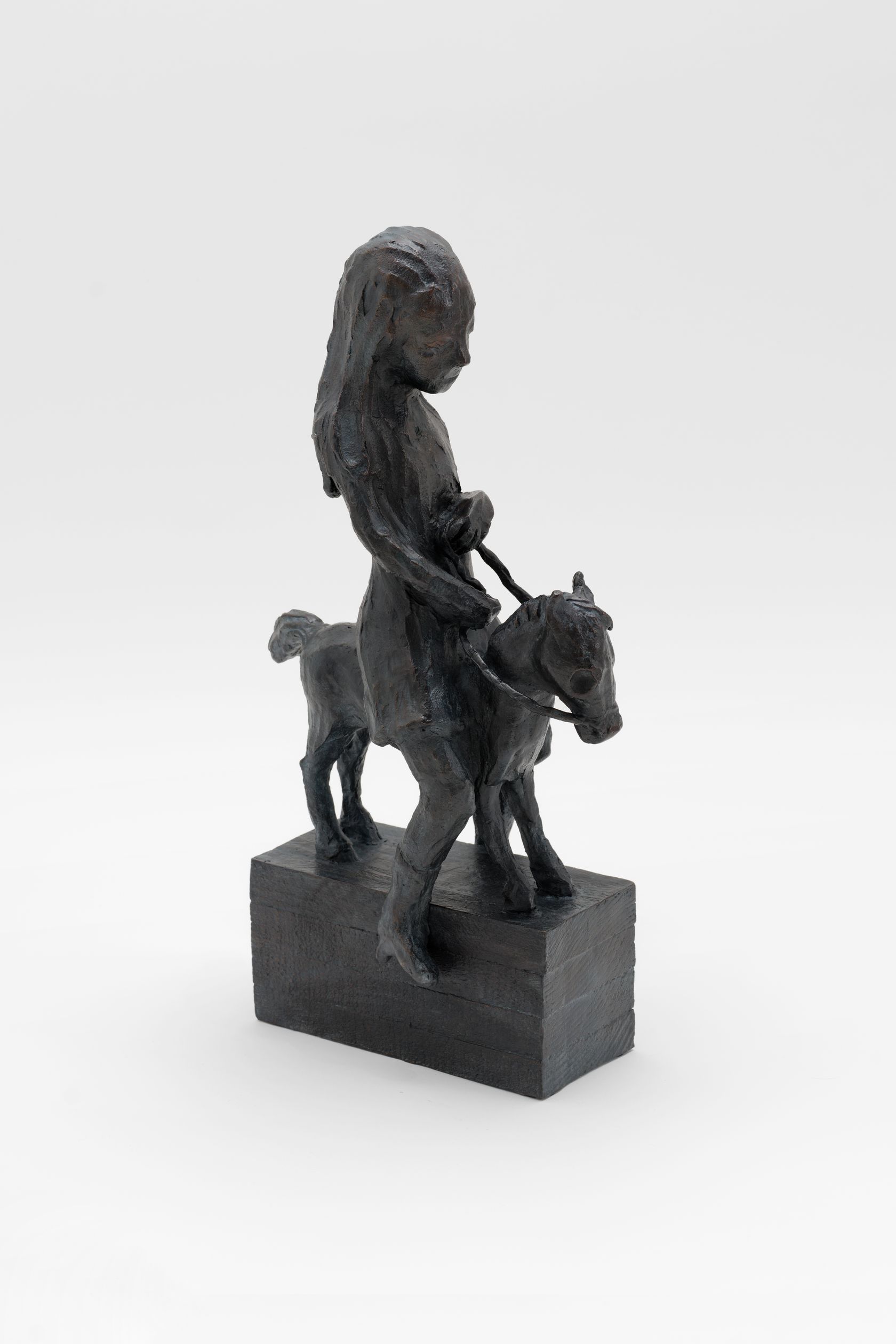
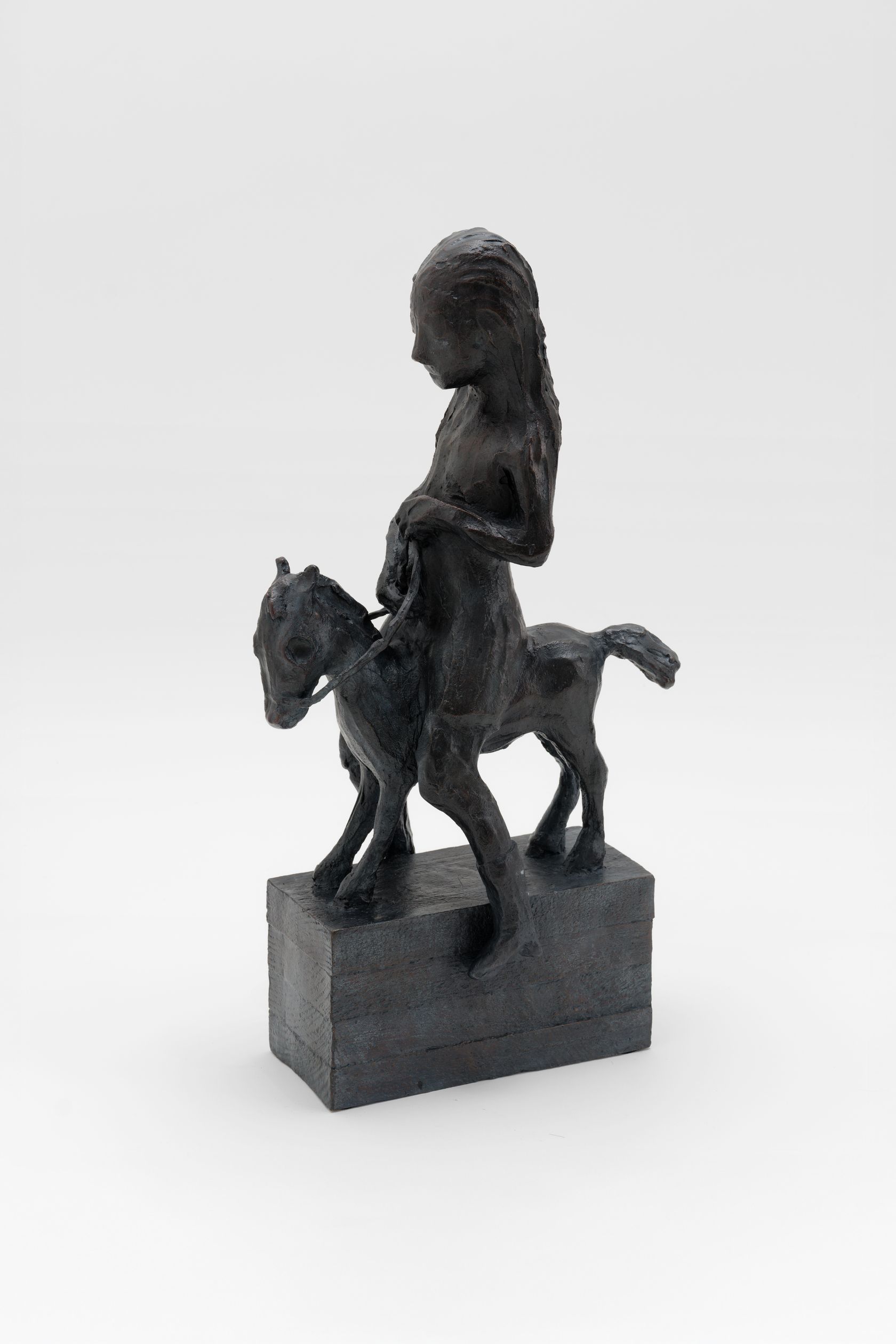
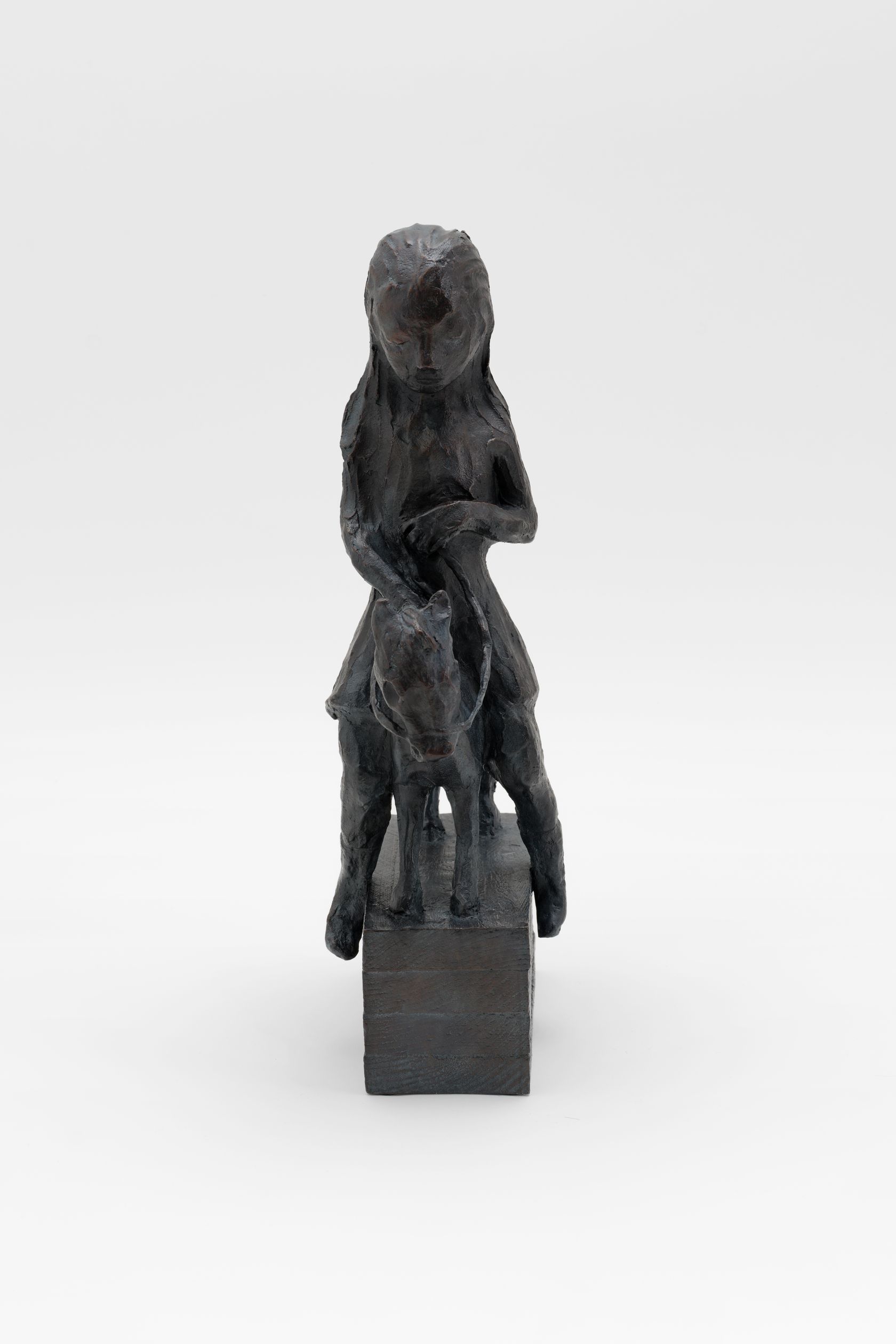
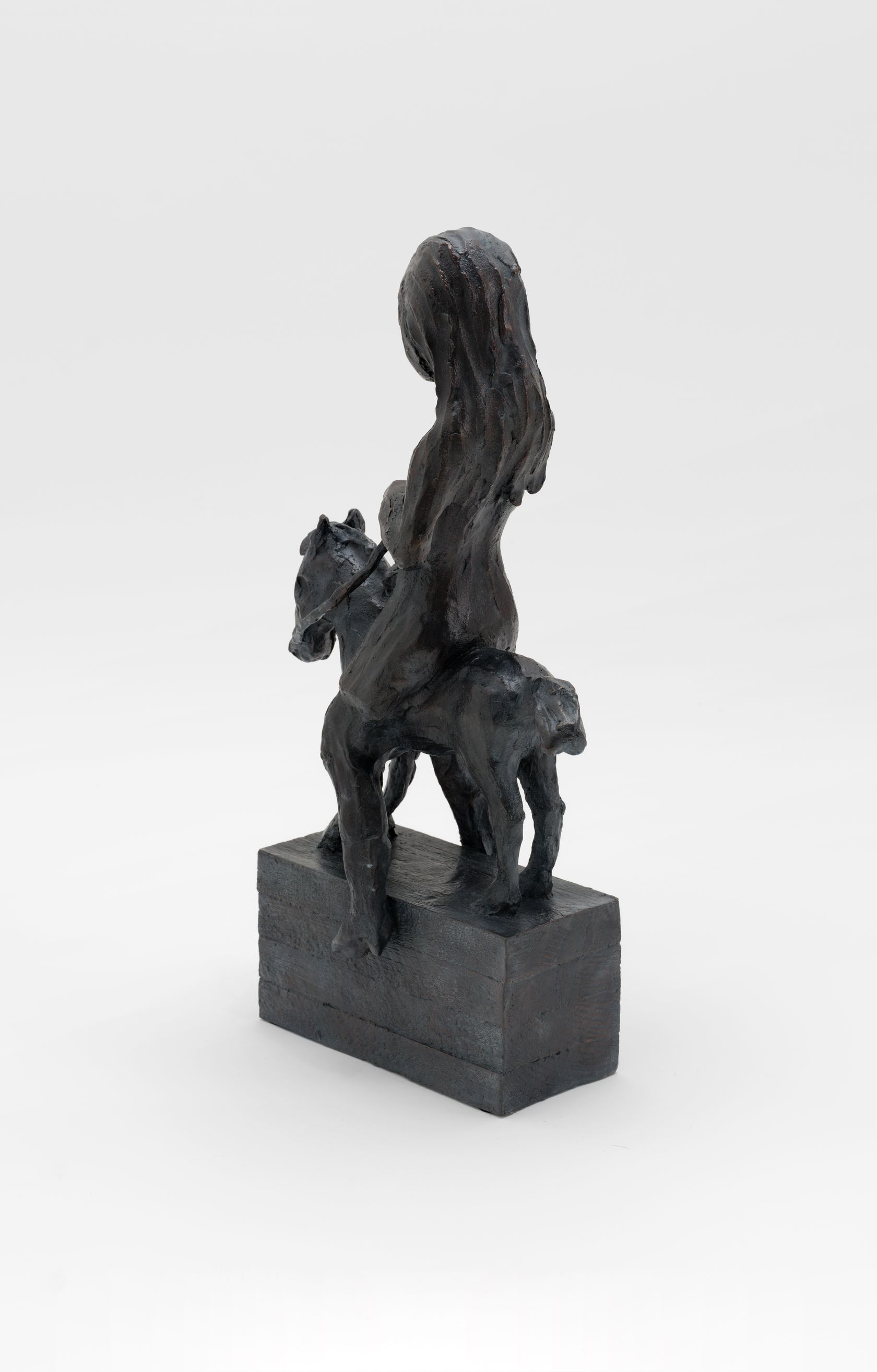
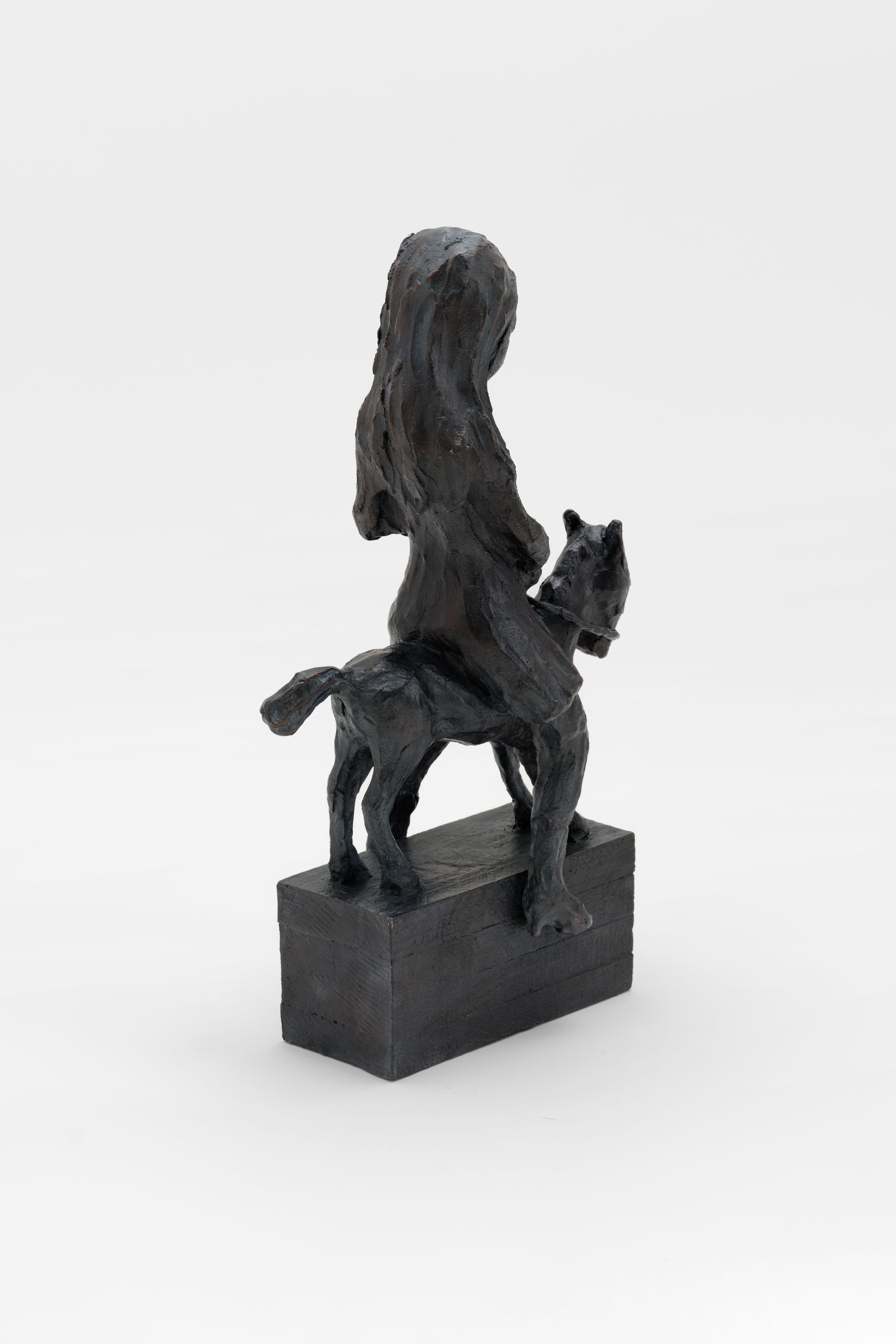
- Françoise Pétrovitch
- Cavalière , 2025
- Bronze
-
- 49 ×
- 26 ×
- 14.5 × cm
- 19 5/16 ×
- 10 1/4 ×
- 5 11/16 × inches
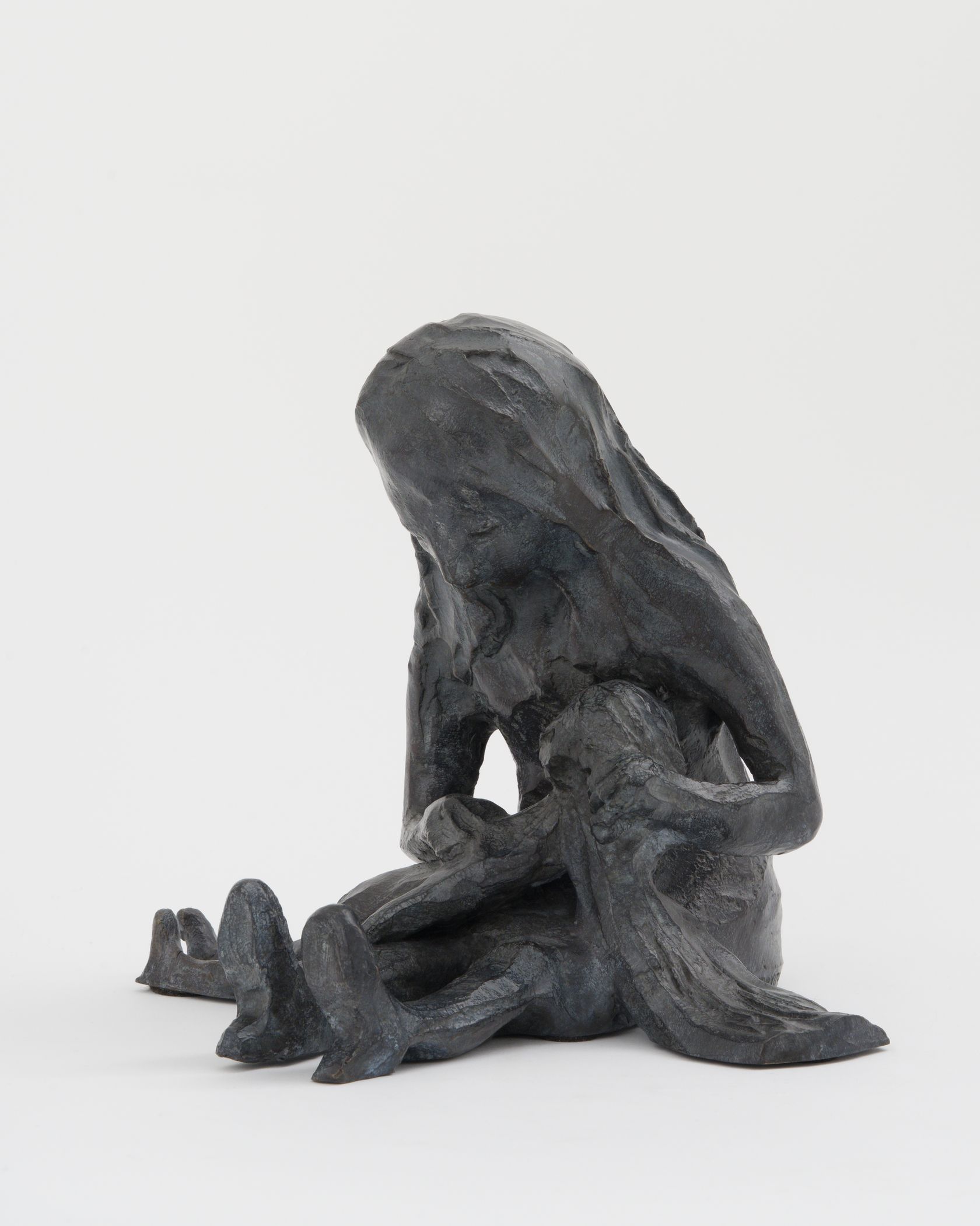
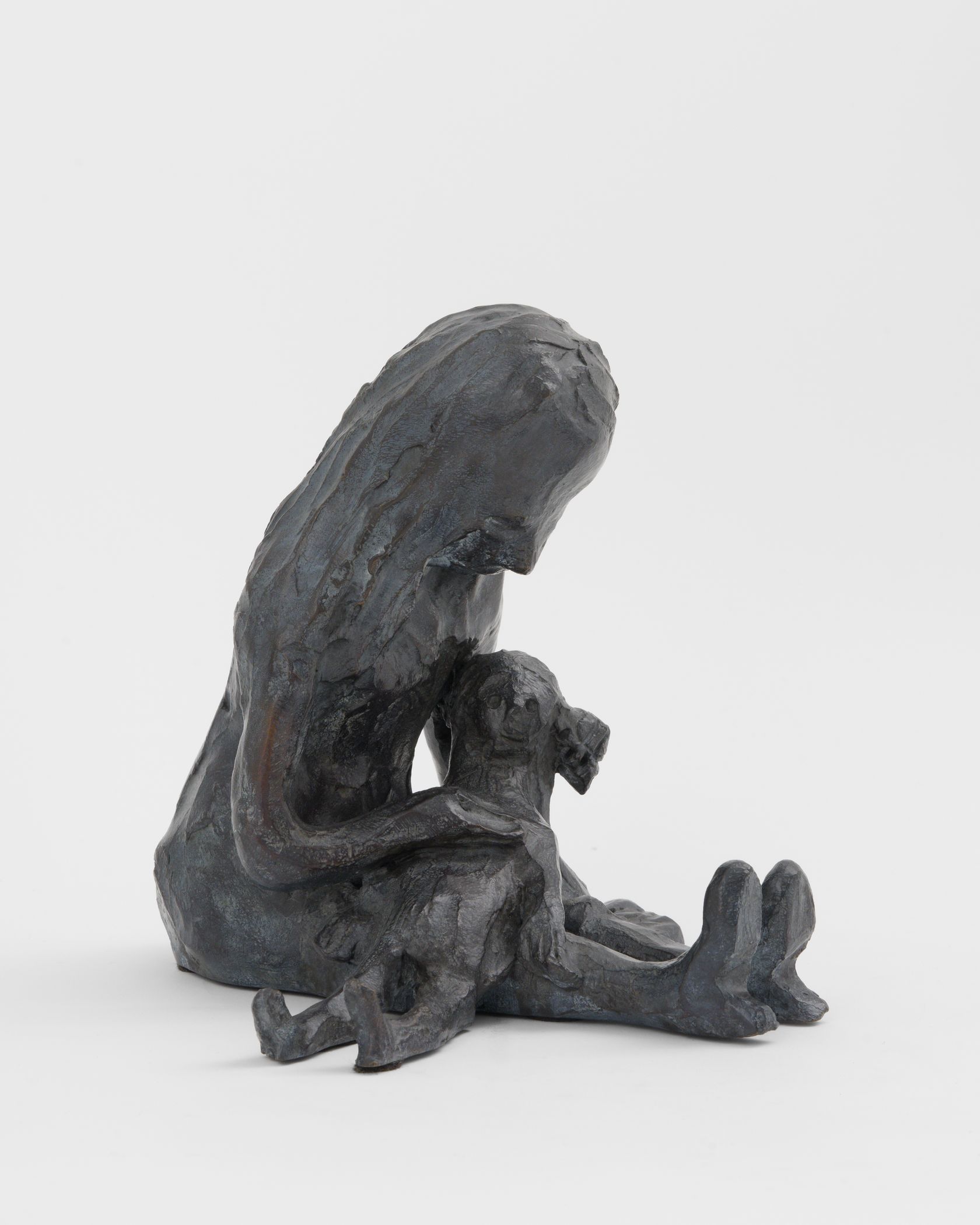
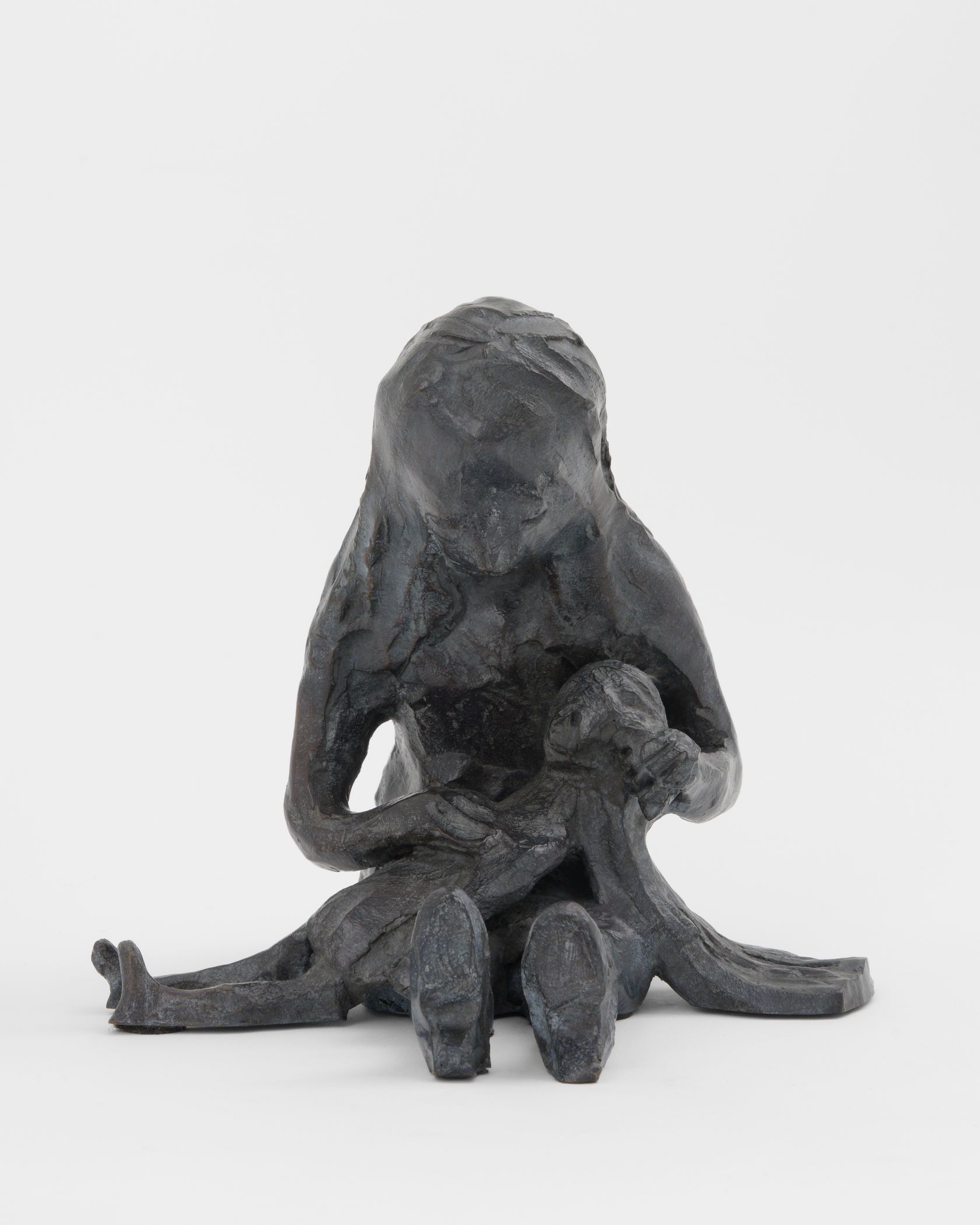
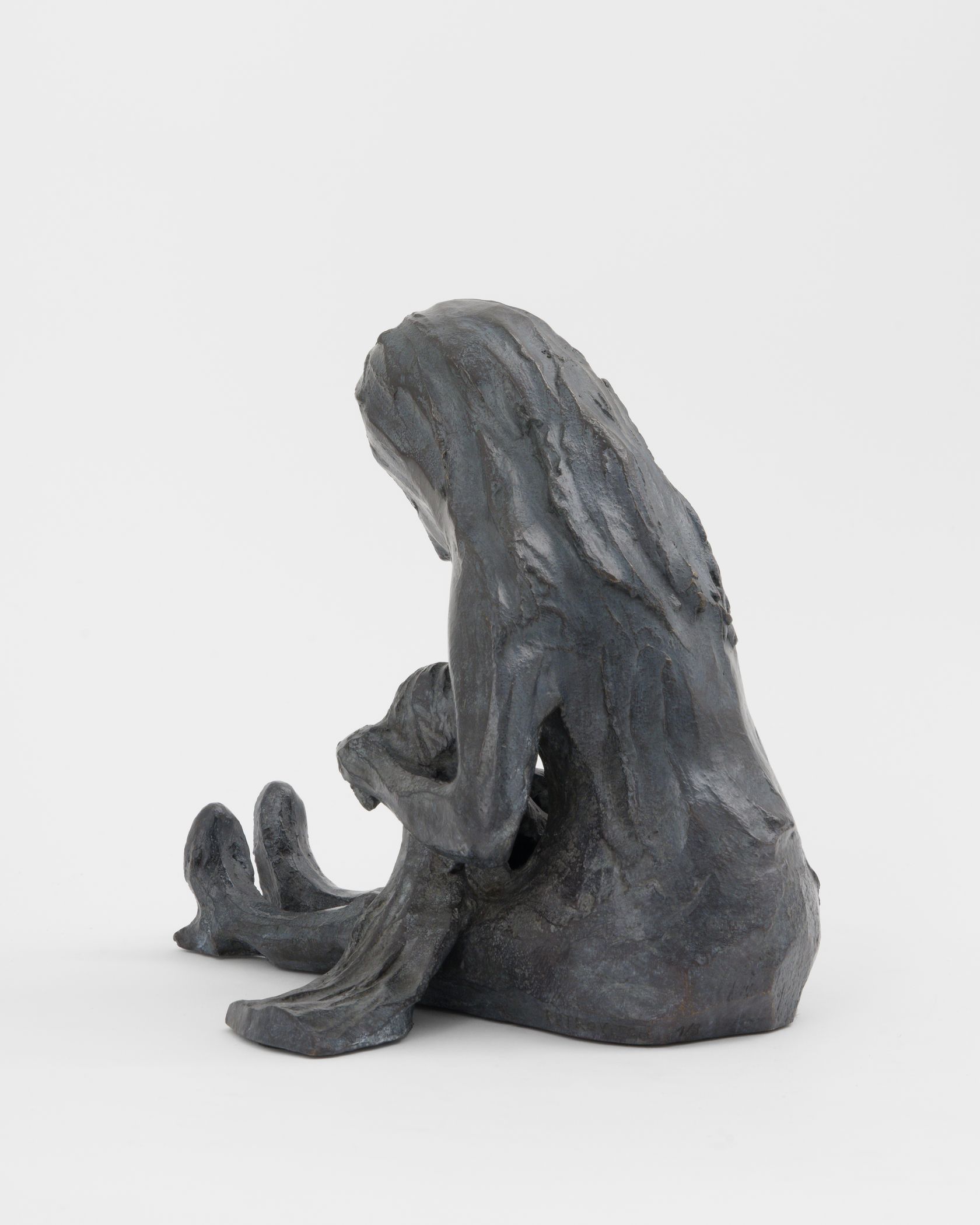
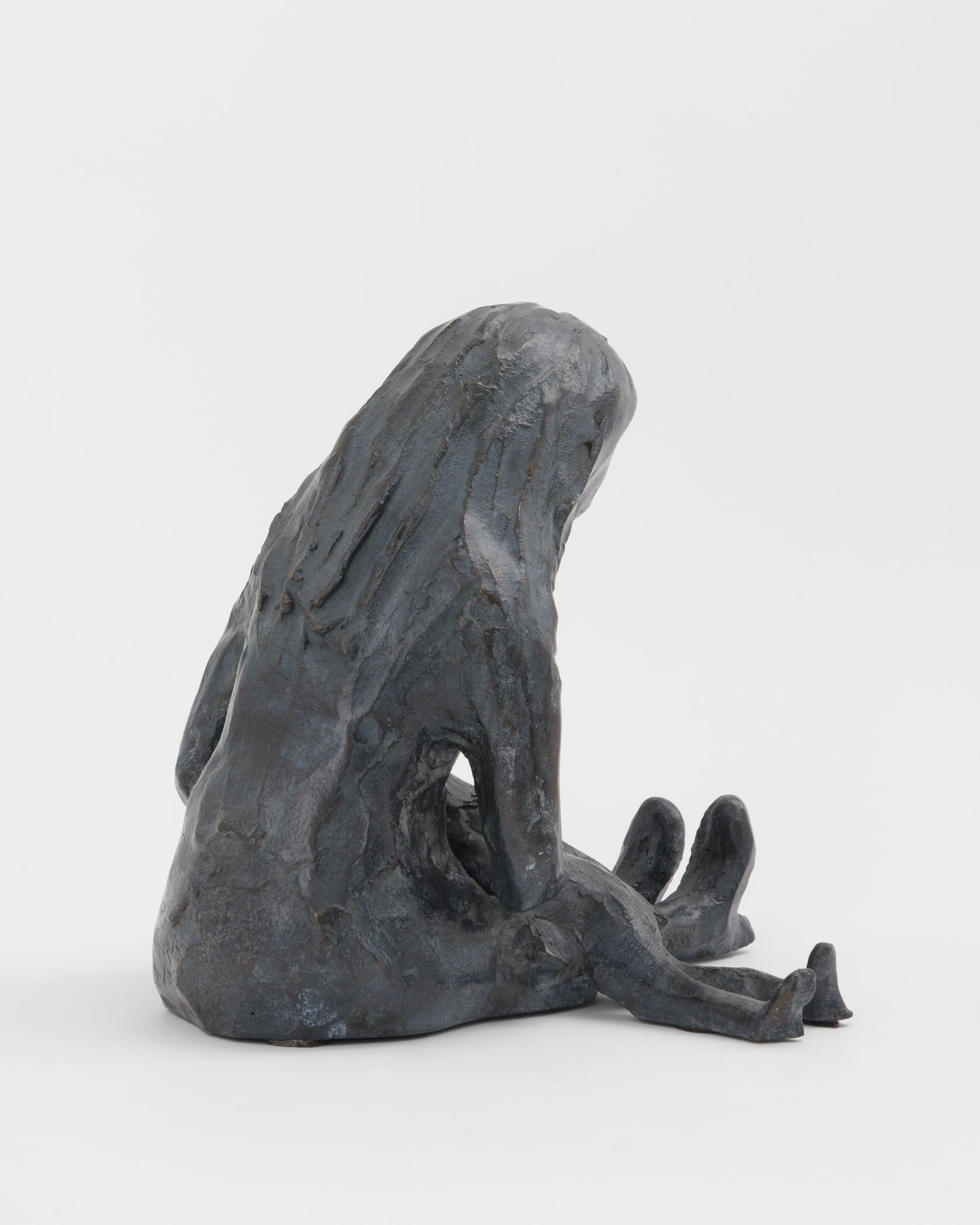
- Françoise Pétrovitch
- Coiffer , 2024
- Bronze
-
- 23.5 ×
- 25 ×
- 22 × cm
- 9 1/4 ×
- 9 13/16 ×
- 8 11/16 × inches
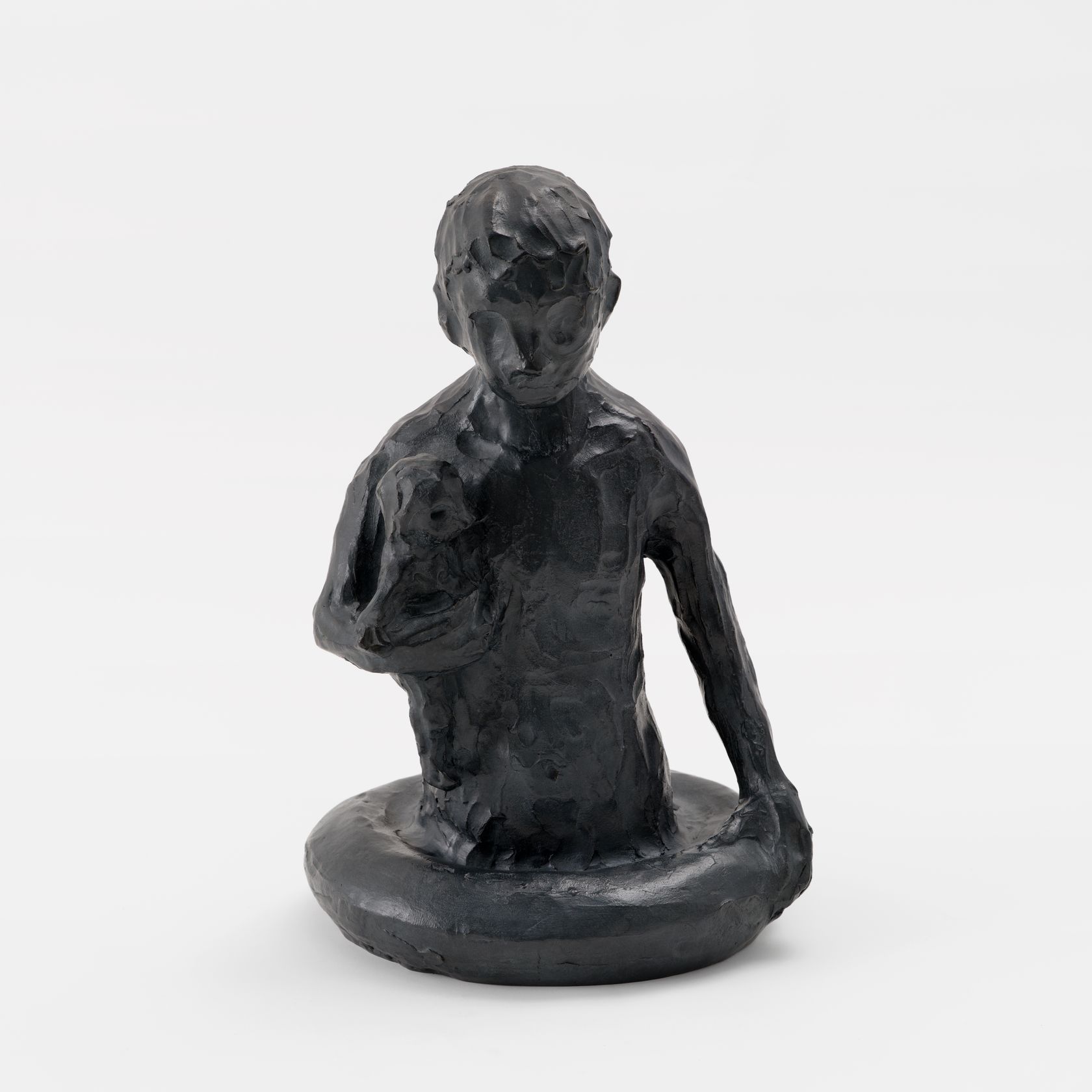
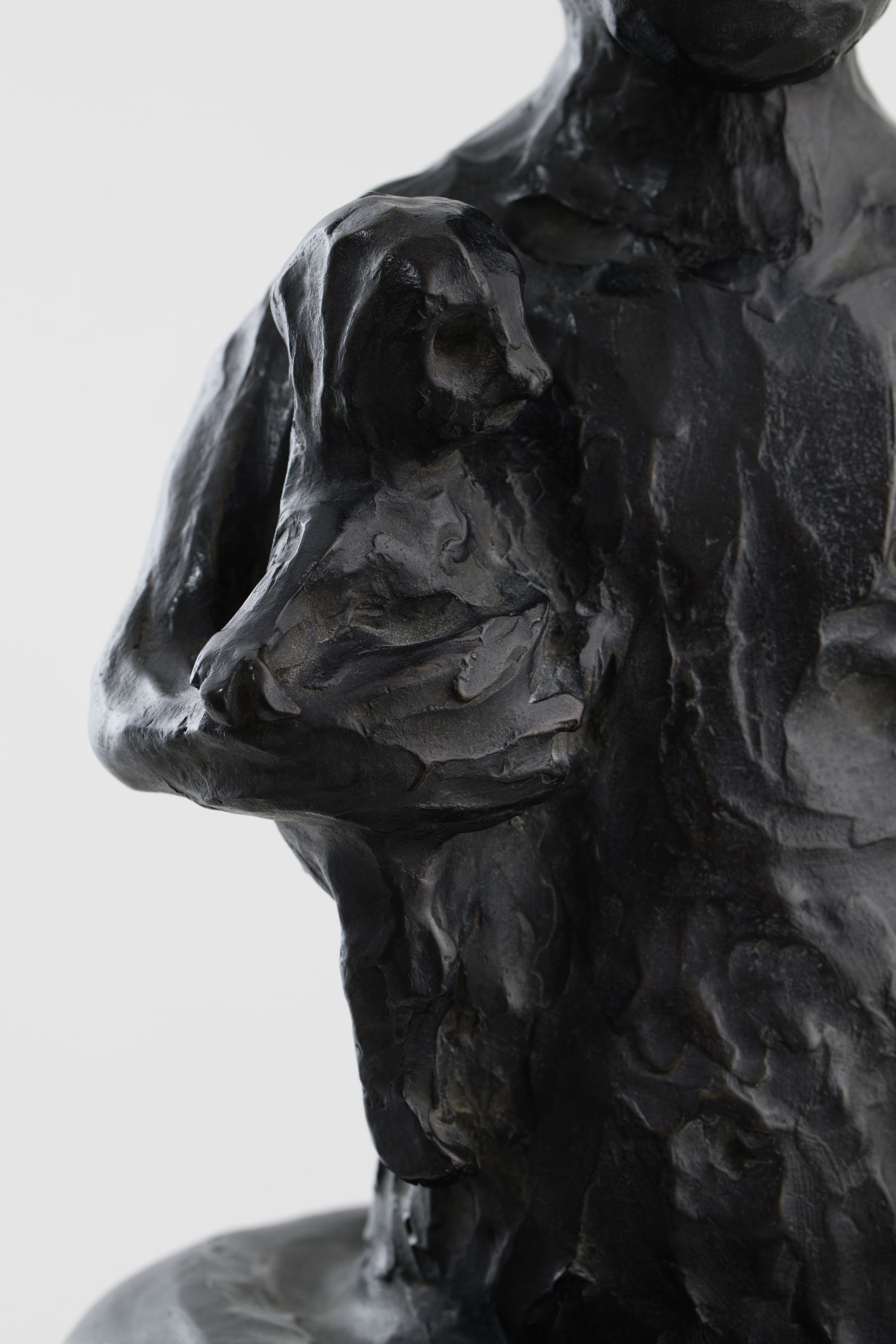
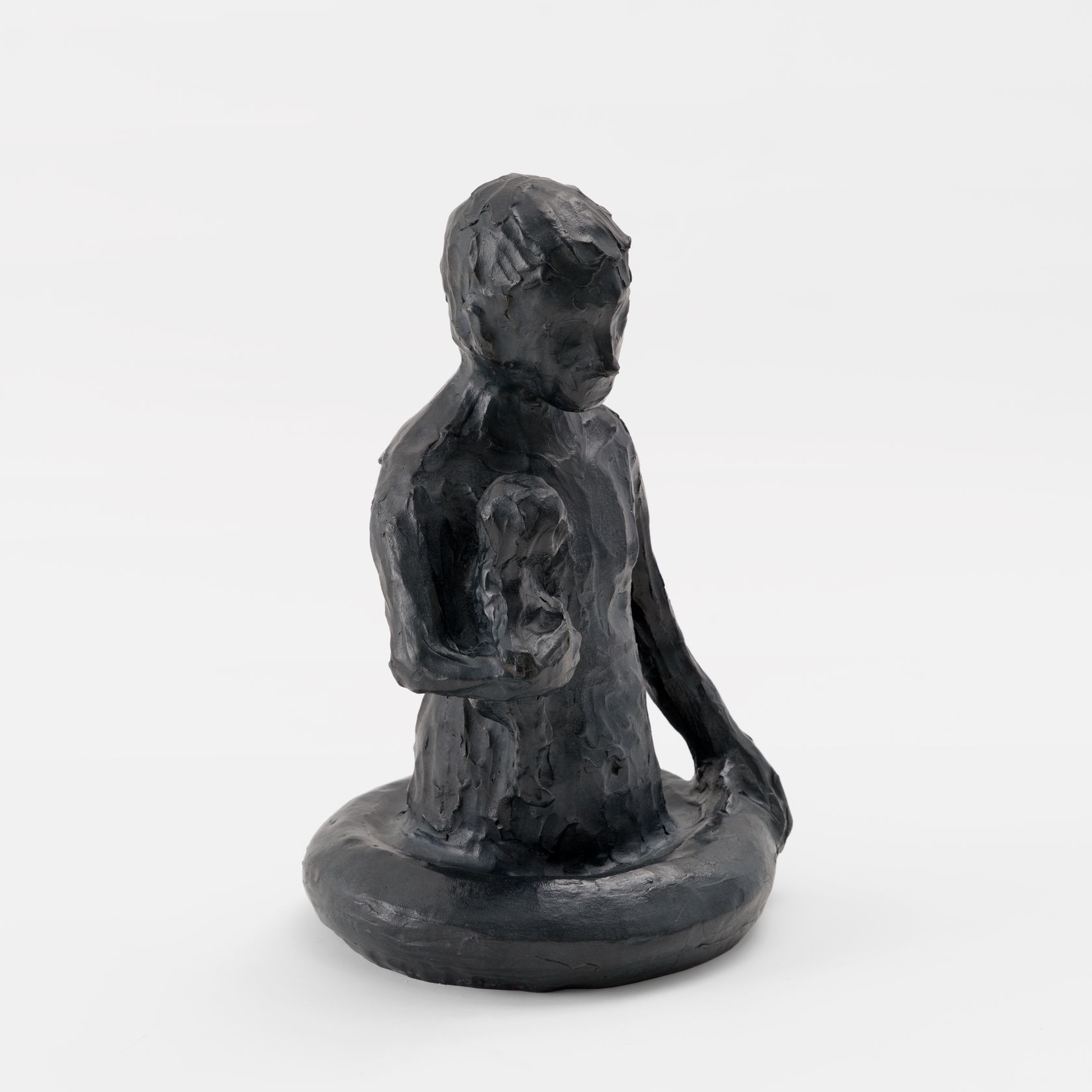
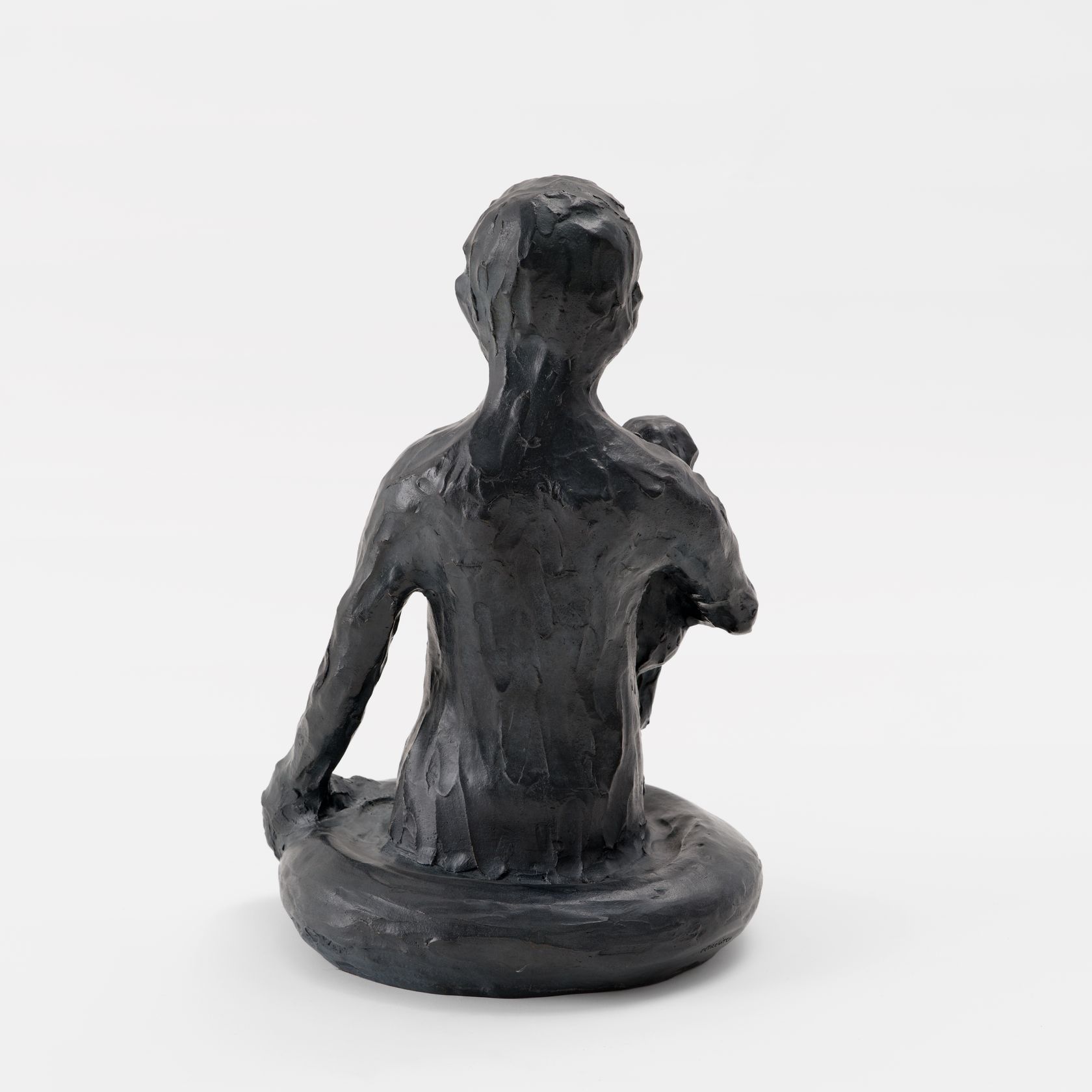
- Françoise Pétrovitch
- Garçon à la poupée , 2019
- Bronze
-
- 44.5 ×
- 27 ×
- 24 × cm
- 175 2/8 ×
- 10 5/8 ×
- 9 1/2 × inches
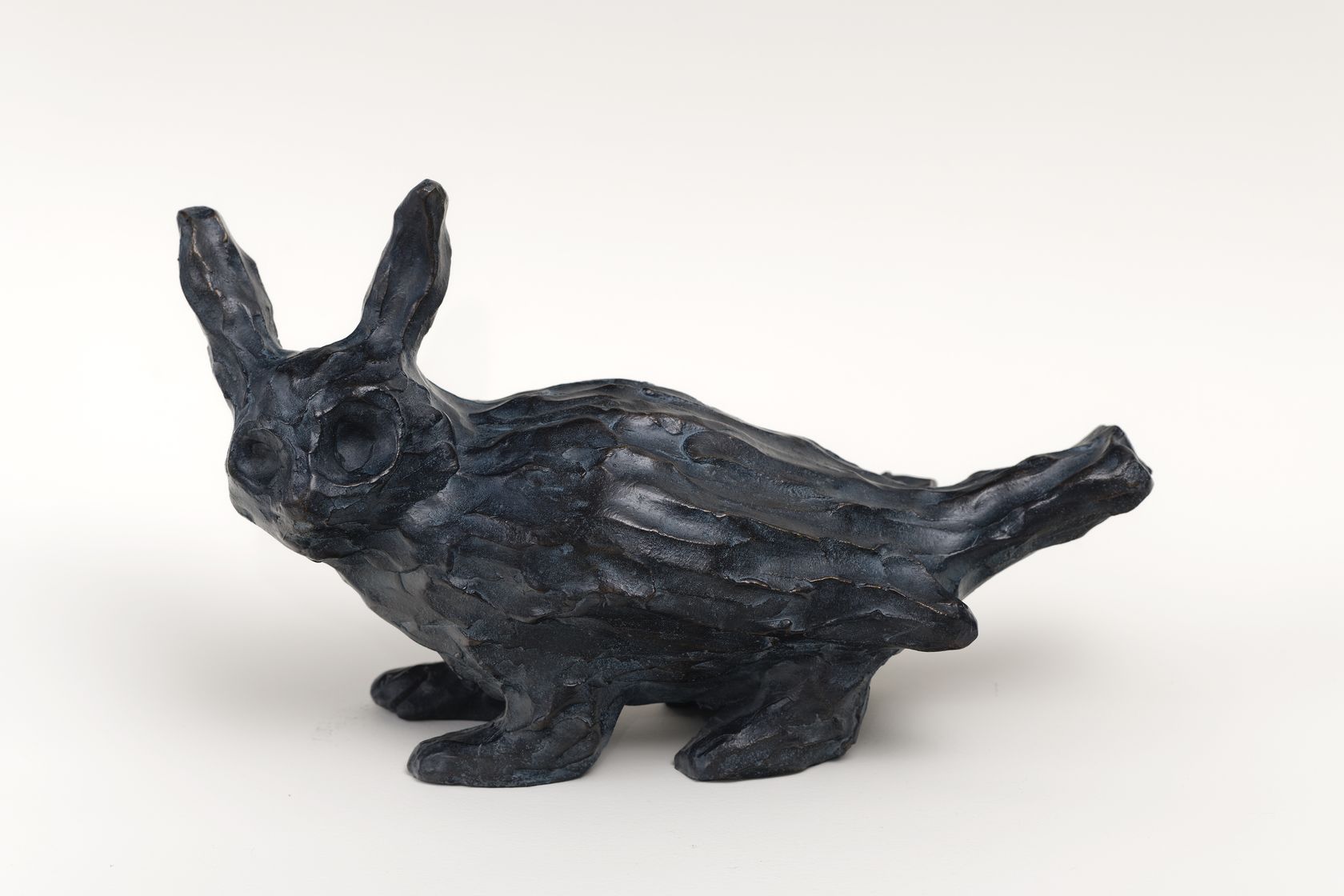
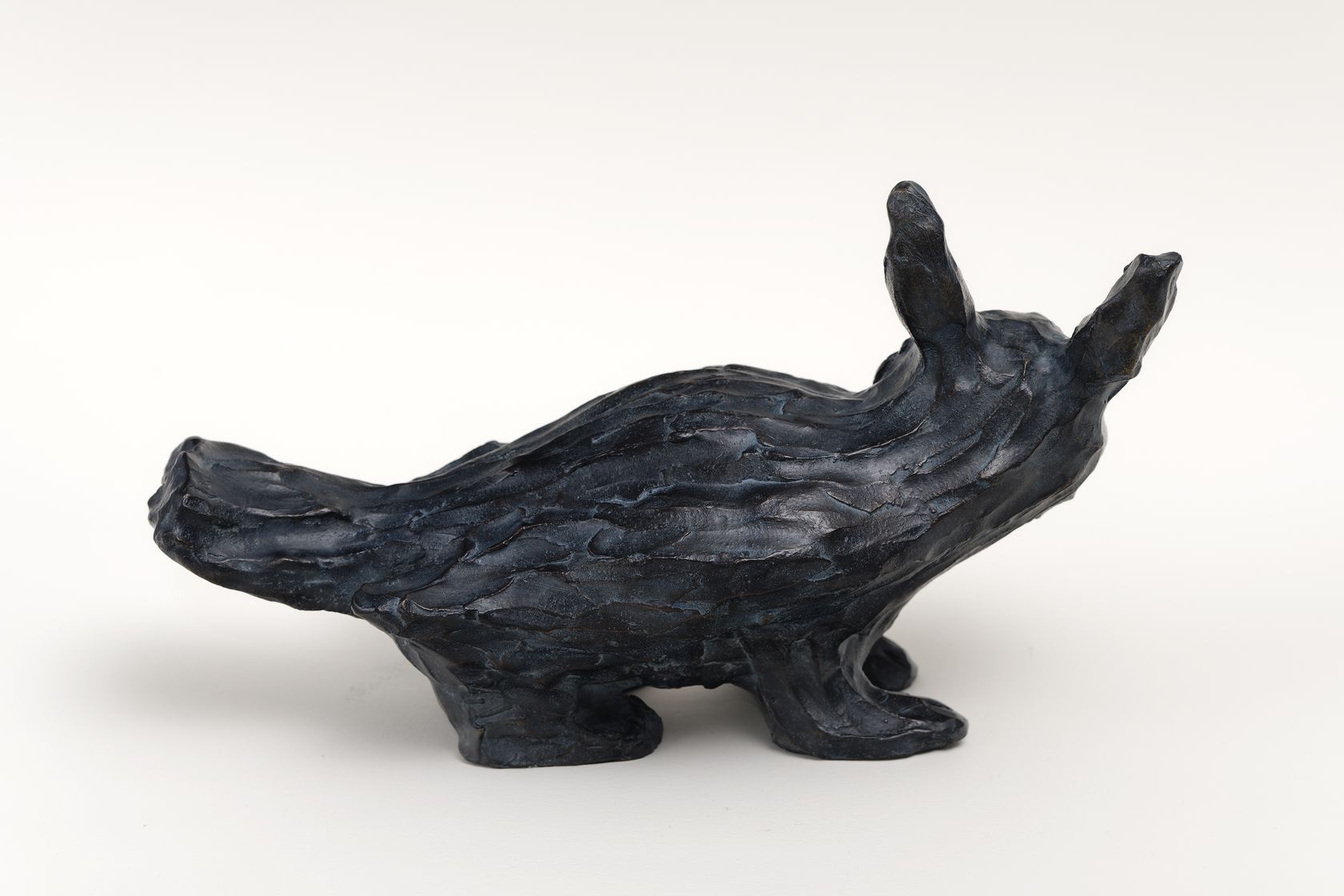
- Françoise Pétrovitch
- Lapin-Oiseau , 2018
- Bronze - Edition of 8 + 4 AP
-
- 18 ×
- 32 ×
- 14 × cm
- 7 1/8 ×
- 12 5/8 ×
- 5 1/2 × inches
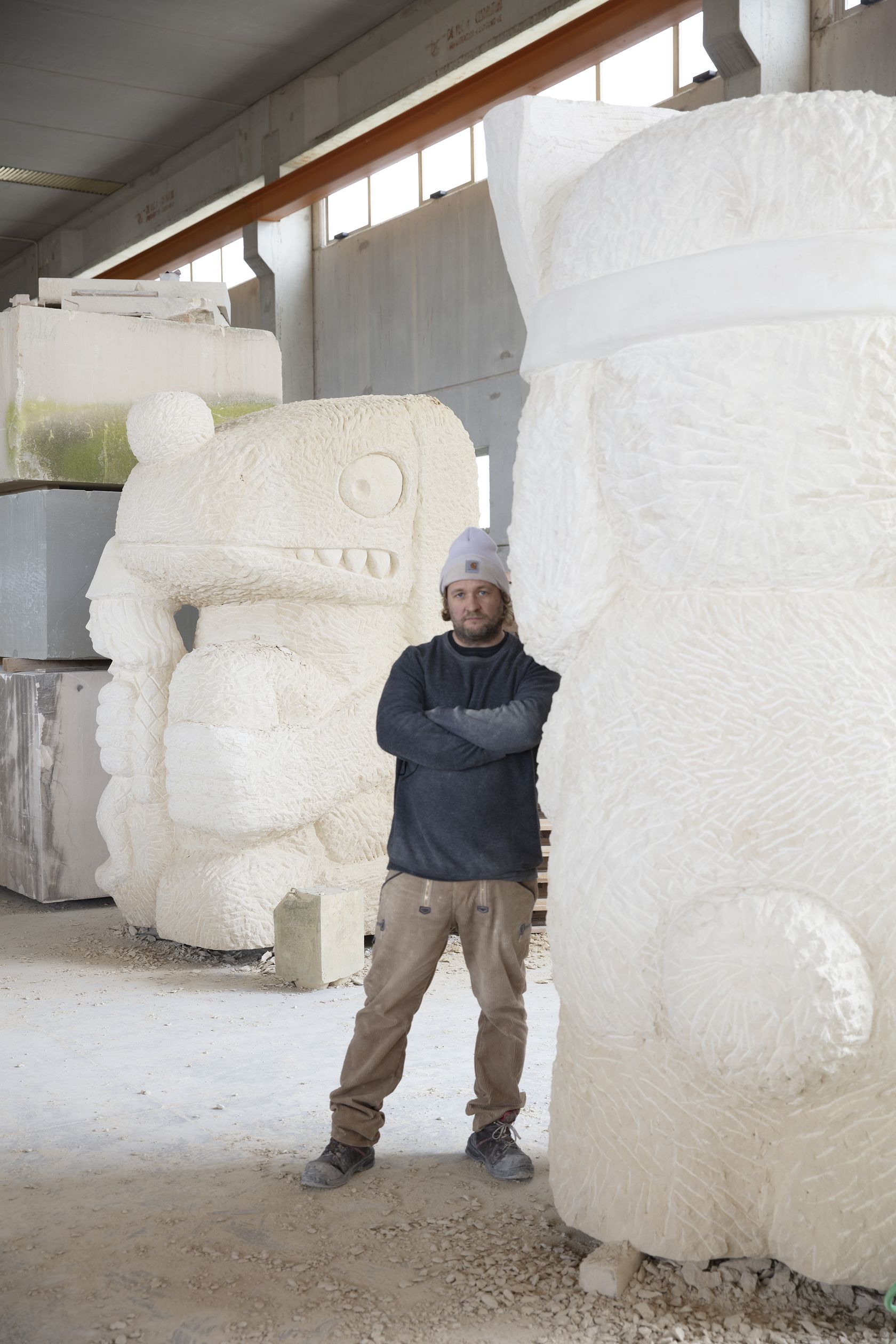
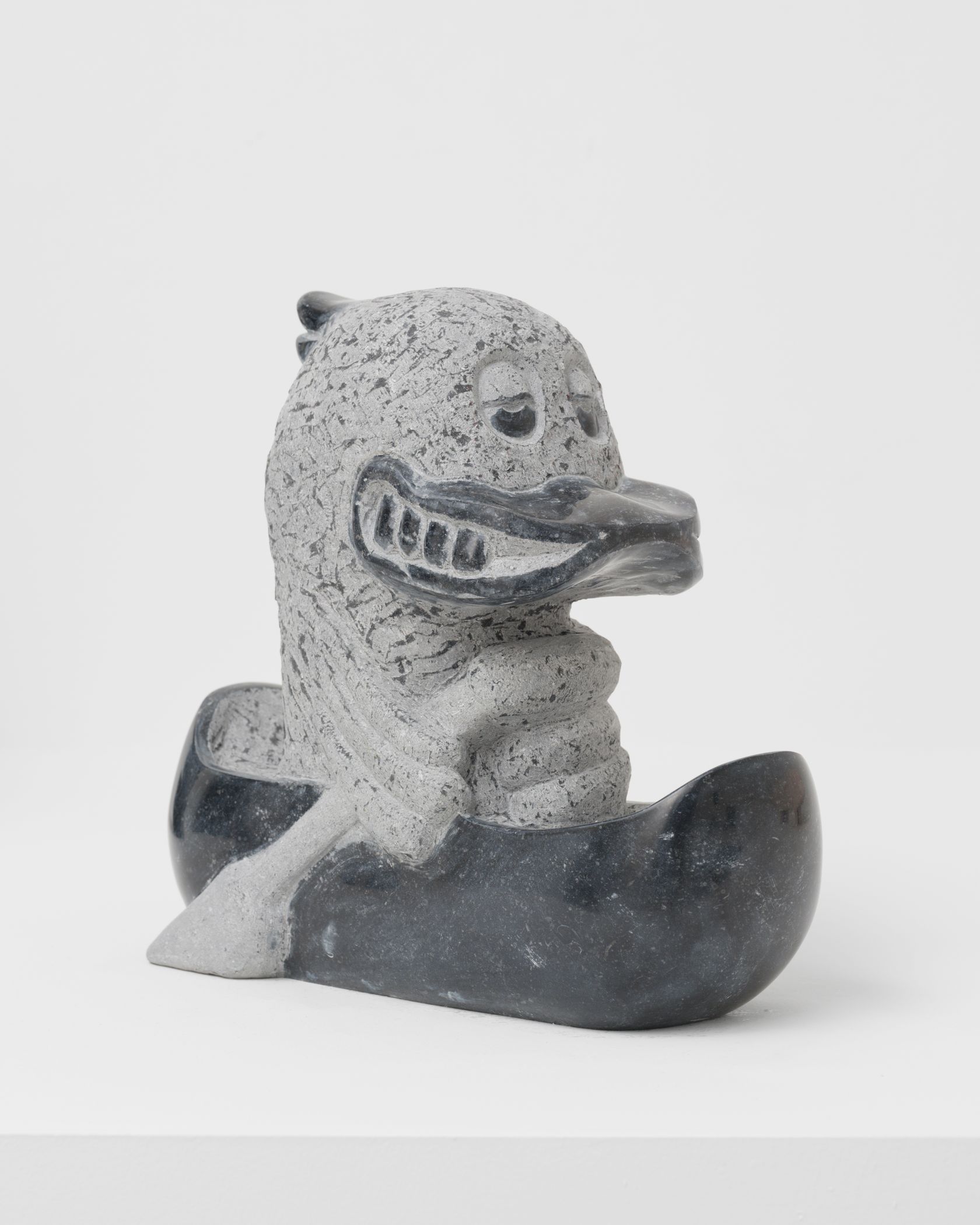
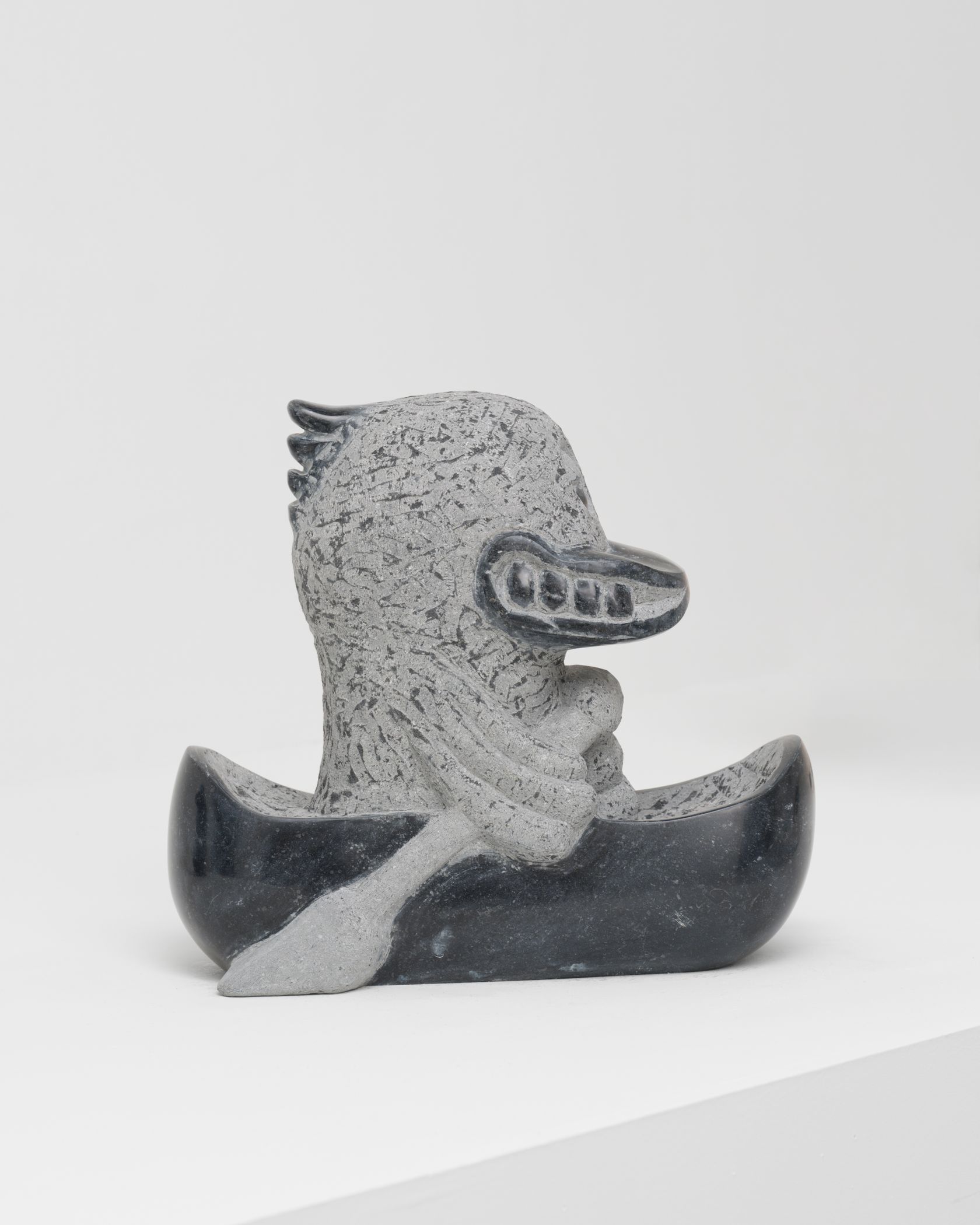
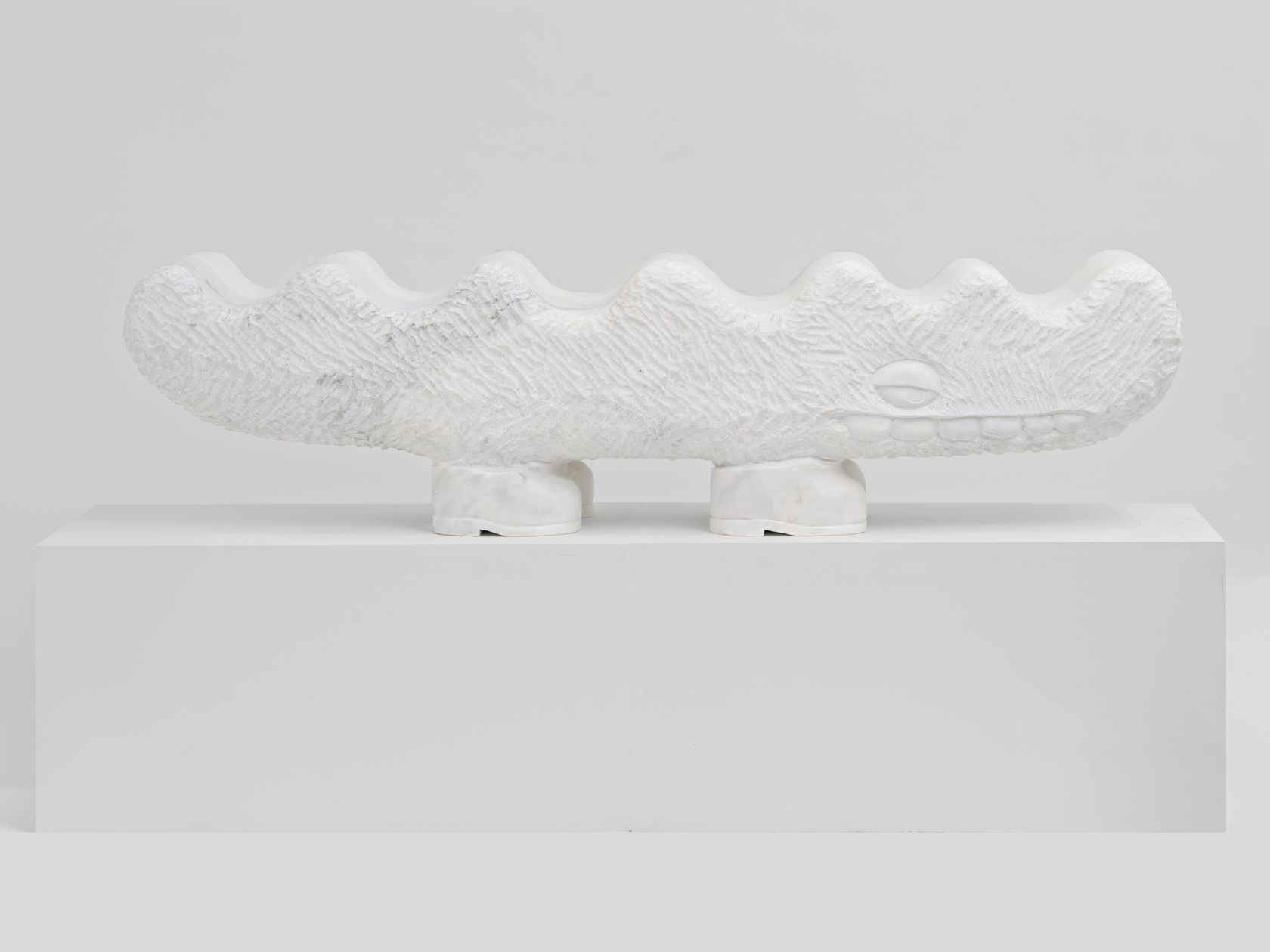
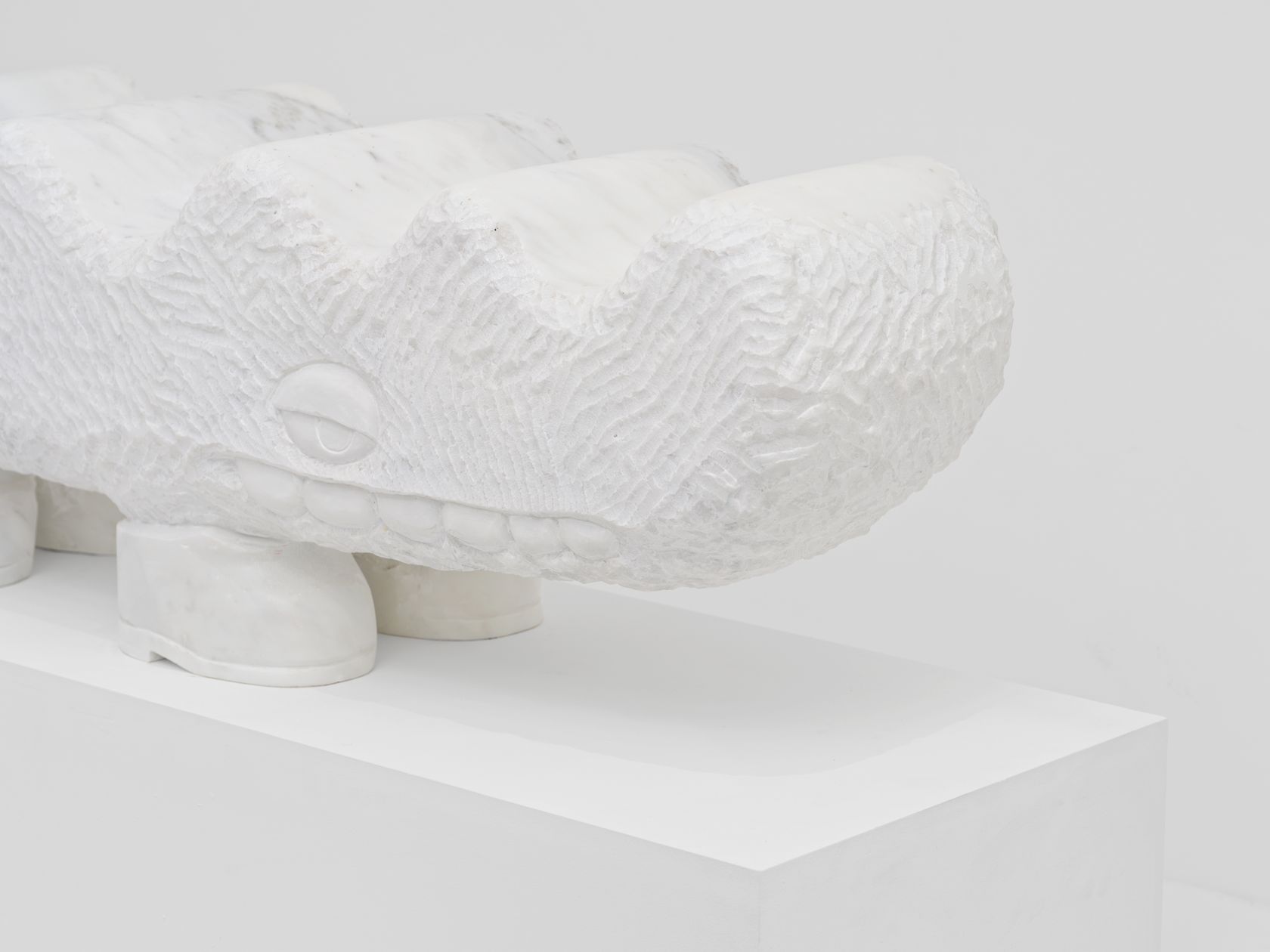
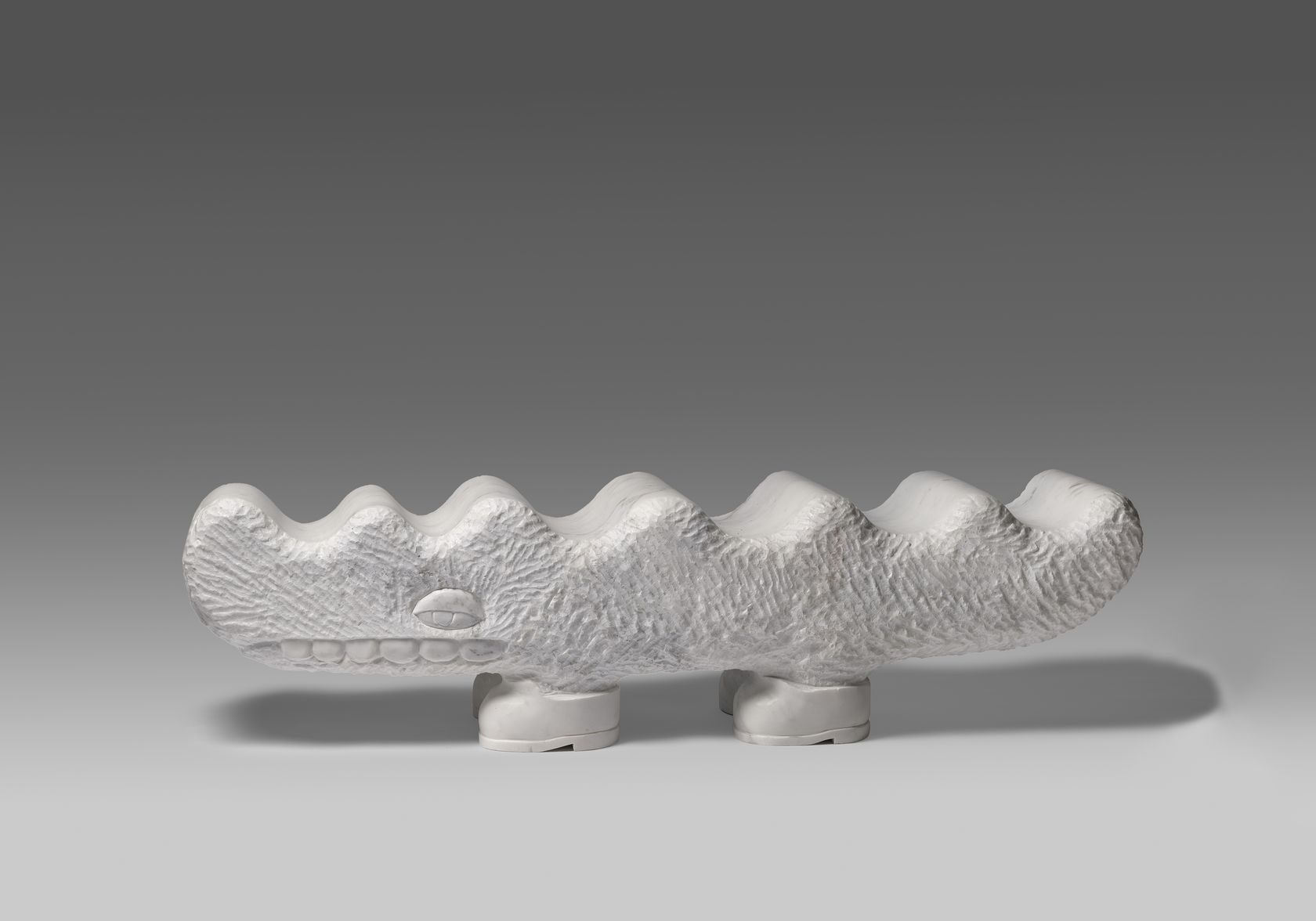
Stefan Rinck’s stone figures form a motley and comical community of, for the most part, animals, chimeras and monsters. They wear costumes and masks; are endowed with particular symbols or characteristics, some bear the names of heroes of Greek mythology or of legend. Rinck’s sculpted figures make up a discordant but related assembly of non-humans: they come from elsewhere, an archaic imaginary world, woven from myths and legends. With his collection of fauna, the artist is using a technique typical of the Middle Ages: sculpting his figures directly from stone.
Rinck’s sculptures remind us of the figures of Roman art, which populate the columns and tympana of churches. These are grotesque figures, in which we recognize the vitalist comedy typical of medieval realism which could be observed during the parades of jesters and buffoons at religious and popular festivities. Yet if the Middle Ages seem to color Rinck’s art, its frame of reference in fact crystalizes around a number of “Gothic” obsessions of the Romantic kind: a taste for mythology and folk tales, for different epochs and cultures for the fantastic or figures of hubris and excess.
Stefan Rinck has had numerous solo exhibitions, most recently at the Pinakothek der Moderne in Munich and the Domaine de Chamarande (2025), as well as group exhibitions at the Musée d’Art Moderne in Paris and the MAC Marseille (2024). He has also exhibited at international fairs and biennials, including Art Basel Paris, the Artzuid Sculpture Biennial in Amsterdam (2025) and FIAC Hors les murs at the Tuileries (2019). One of his sculptures is on permanent display in Paris since 2018 (Beaupassage). In 2019, he was selected among 100 Sculptors of Tomorrow, published by Thames & Hudson.
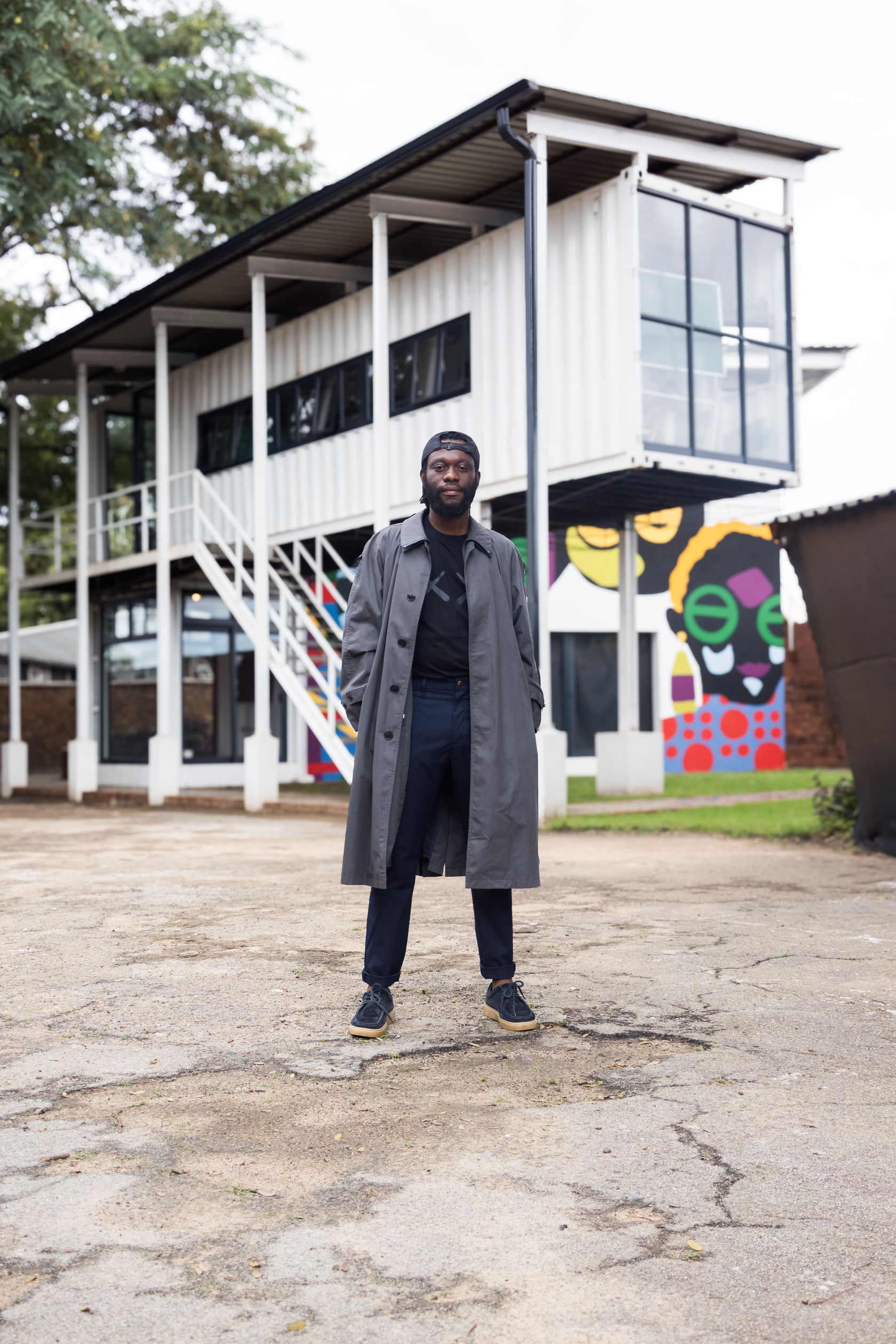
Moffat Takadiwa creates large format sculptures from materials found on garbage dumps, notably computer parts, plastic bottle-caps, toothbrushes and toothpaste tubes. After gathering great quantities of these objects and sorting them by color and shape, the artist weaves these discarded scraps into rich wall hangings. Once suspended, these post-industrial fabrics, through their intricate beauty, acquire an aura of ritual or totemic artifacts.
Born in 1983, Moffat Takadiwa lives and works on the outskirts of Harare in Mbare, one of the largest recycling centers in the country and an important hub for the informal economy. Belonging to the post-independence generation, his work reflects his preoccupation with issues such as consumerism, inequality, post-colonialism and the environment. Since the earliest days of his artistic career, he has used his practice as a platform for the rehabilitation of his community, working with young local artists and designers, with a view to founding the world first artistic center based on the use of reclaimed materials.
The National Gallery of Zimbabwe, Harare, staged a major solo exhibition of Moffat Takadiwa in 2023. In 2024, he had his first solo exhibition in a French institution at the Galerie Édouard Manet, Gennevilliers, and represents Zimbabwe at the 60th Biennale di Venezia alongside five other artists. He exhibited his works in major institutions abroad as well, most notably at the Craft Contemporary (US), during the exhibition organized by Jeffrey Deitch and Gagosian at the Moore Building in Miami (US), at the ARoS Kunstmuseumat, Aarhus (DK), the MACAAL, Marrakesh (MA) and the Arnhem Museum (NL).
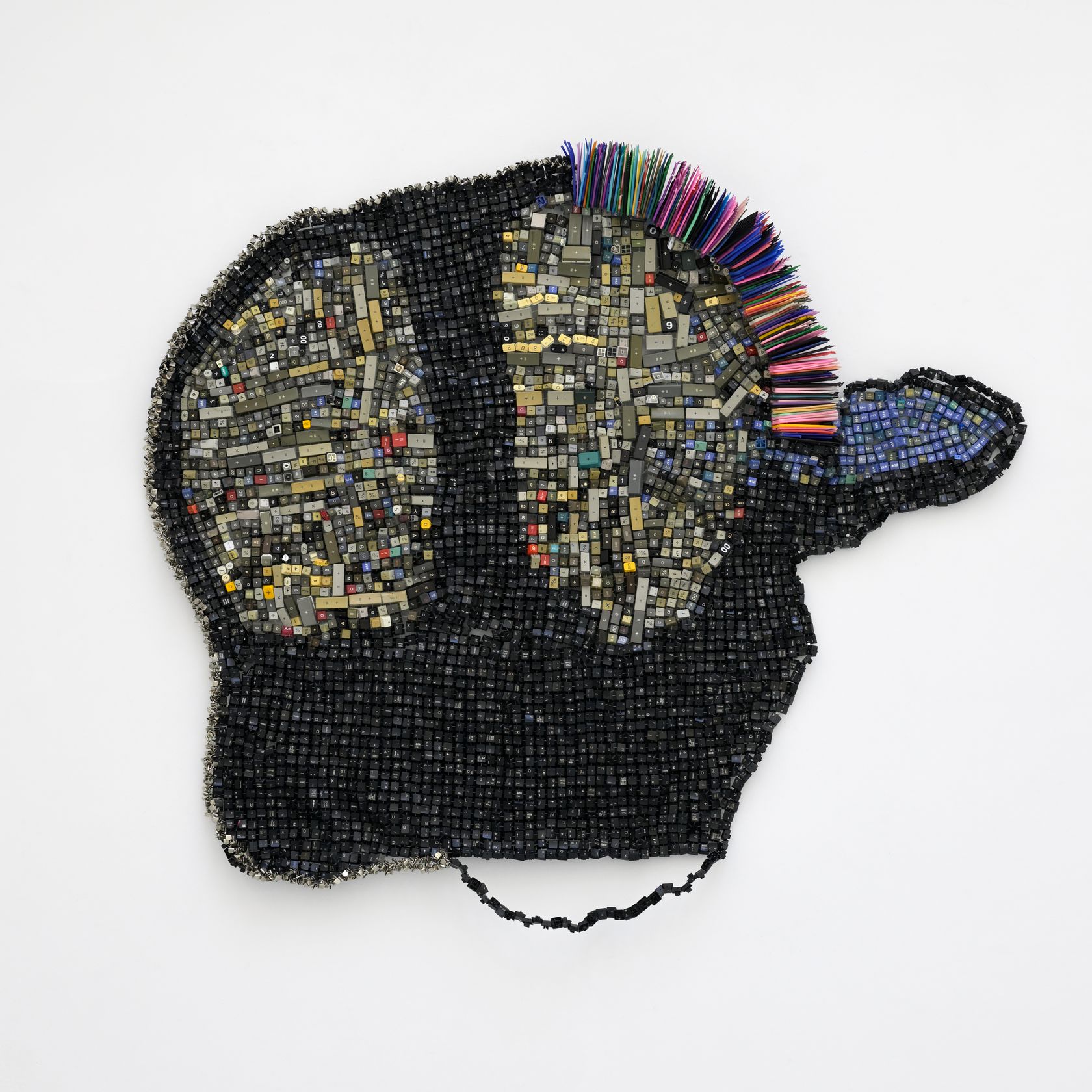
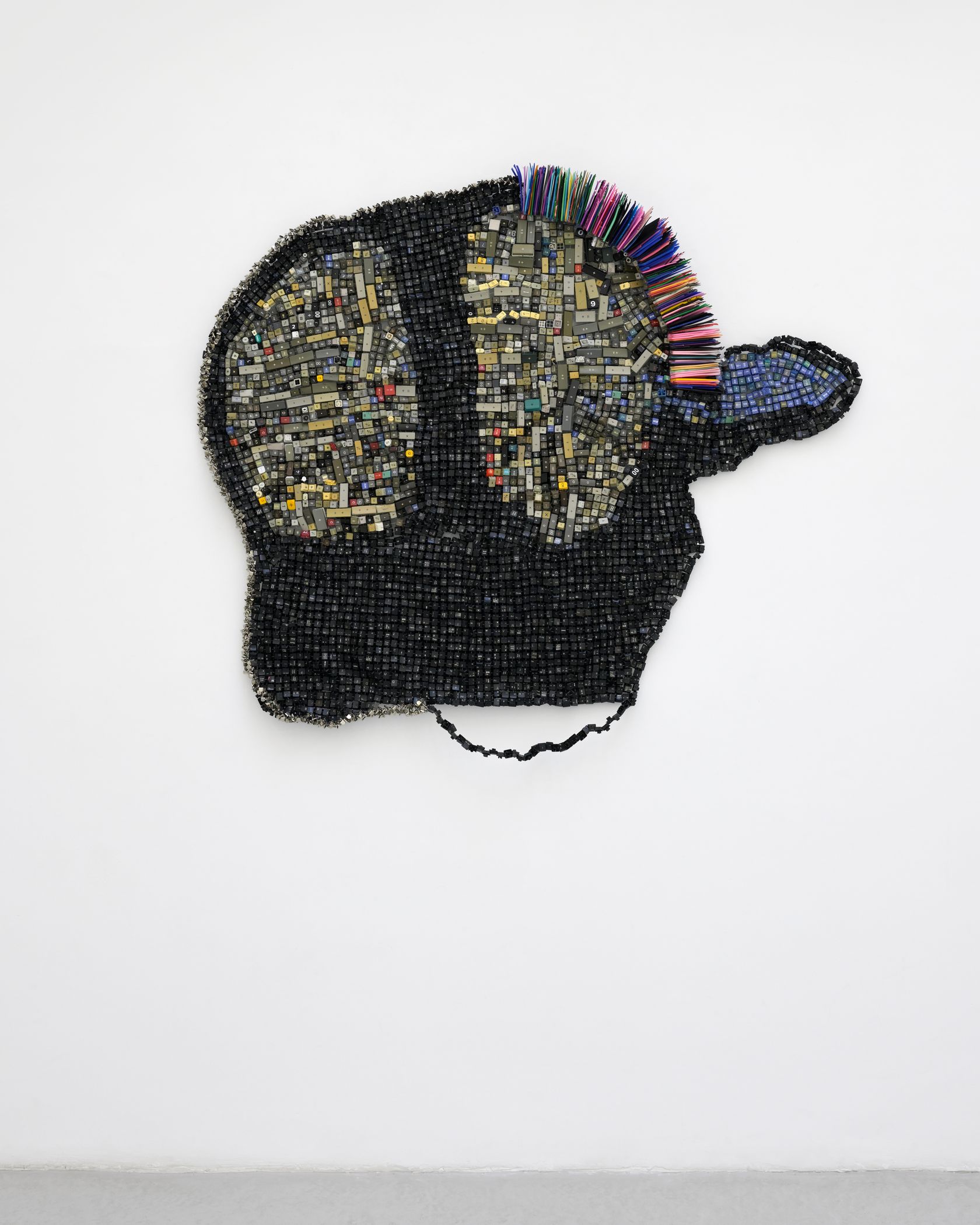
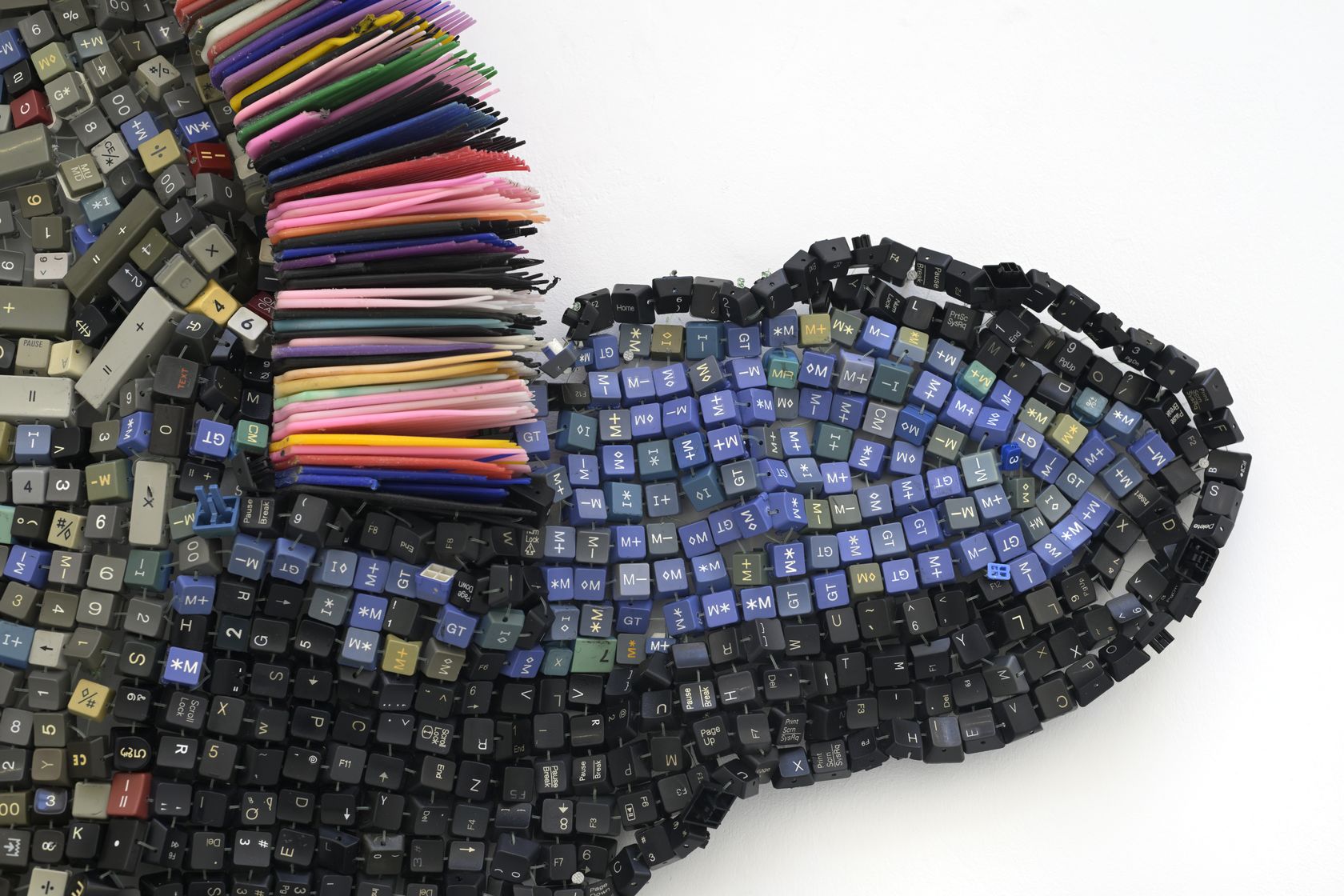
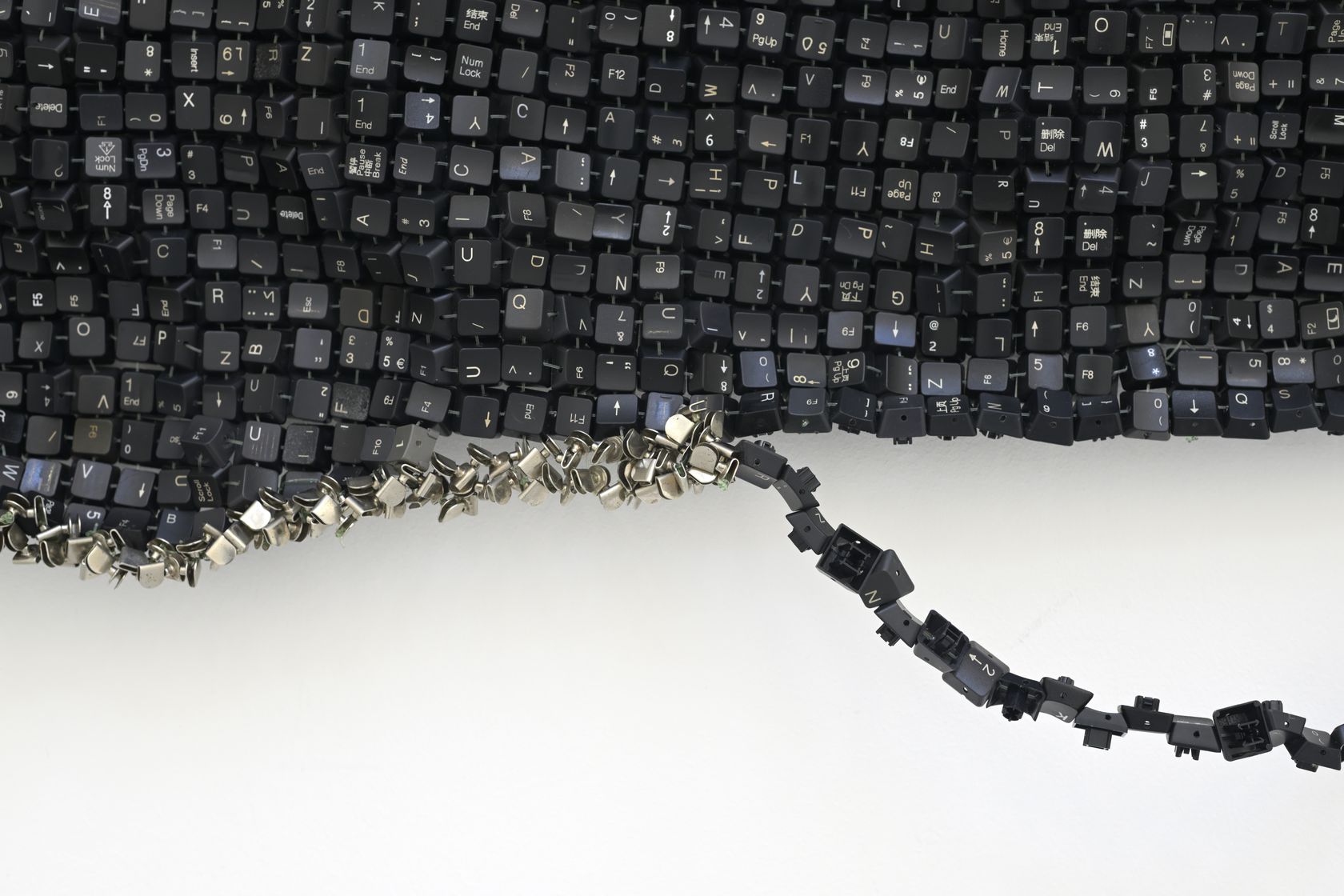
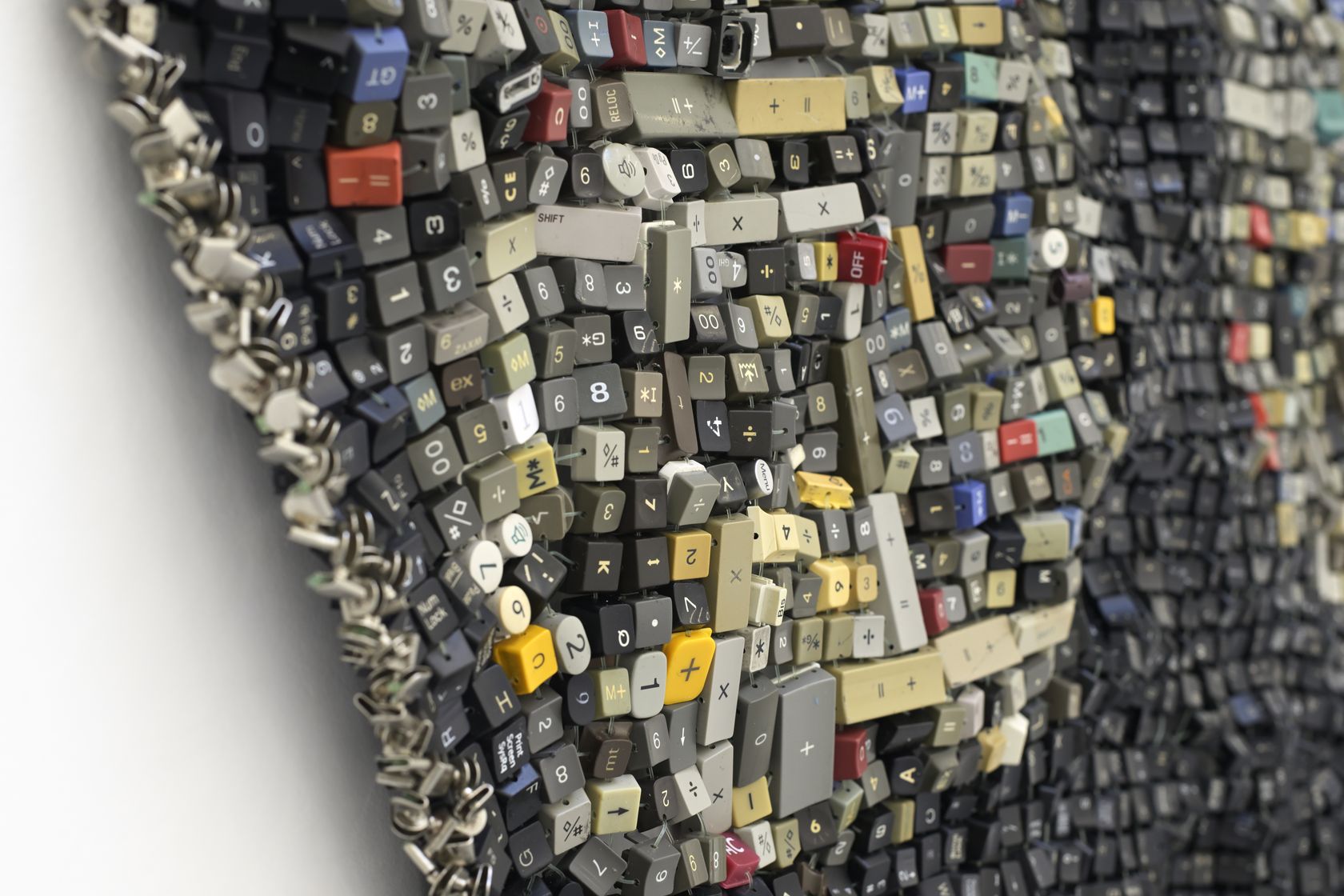
- Moffat Takadiwa
- Afro Swags , 2026
- Computer and calculator keys, toothbrushes head and combs
-
- 130 ×
- 145 × cm
- 51 3/16 ×
- 57 1/16 × inches
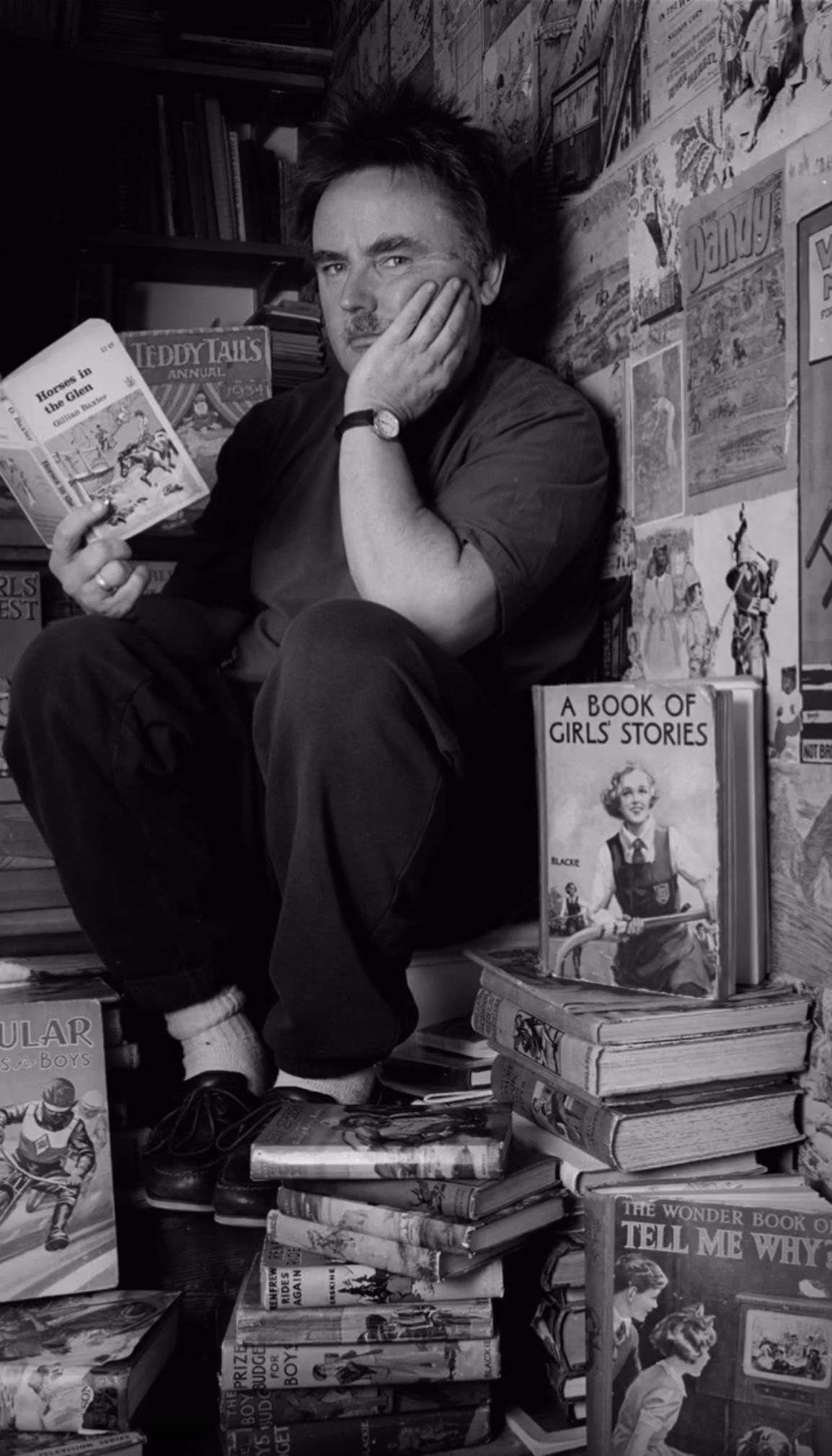
Glen Baxter’s œuvre is immediately recognisable. He has remained true to his simple and highly effective process for almost fifty years: a comic sketch is accompanied by a short, incongruous, even discordant caption. Baxter elaborates a parallel world based on a burlesque hijacking of an iconography sourced from the 1930s and 40s, which provides him with an assortment of cowboys, boy scouts and golfers in tweed. His refined prose contrasts with his seemingly outdated imagery, blending elegantly in a quest for the frisson cherished by surrealists such as de Chirico and Max Ernst. Bewilderingly nonsensical, astonishingly witty and tragi-comic, like life itself, these talkative drawings celebrate the heady rush of linguistic mishaps.
Born in 1944, in Leeds, Yorkshire, Glen Baxter attended the Leeds School of Art. After several stays in New York in the 1970s, where he was introduced to poetry through his involvement with the artistic circles of St. Mark’s Church, he finally settled in the Grosvenor Park area of South London. He taught at Goldsmiths College for around fifteen years. His work has been regularly exhibited in New York, London, Tokyo and Sidney as well as in France, where it has been shown in numerous institutions and features in around fifteen public collections including the Pompidou Centre, the National Centre for the Visual Arts (CNAP) and several Regional Contemporary Art Collections (FRACs). His oeuvres are also included in the collections of the Tate Gallery, the Victoria & Albert Museum in London and the MoMA in New York. His drawings have regularly graced the pages of the New Yorker, Vanity Fair, The Observer and Le Monde. He has also published some fifty books.
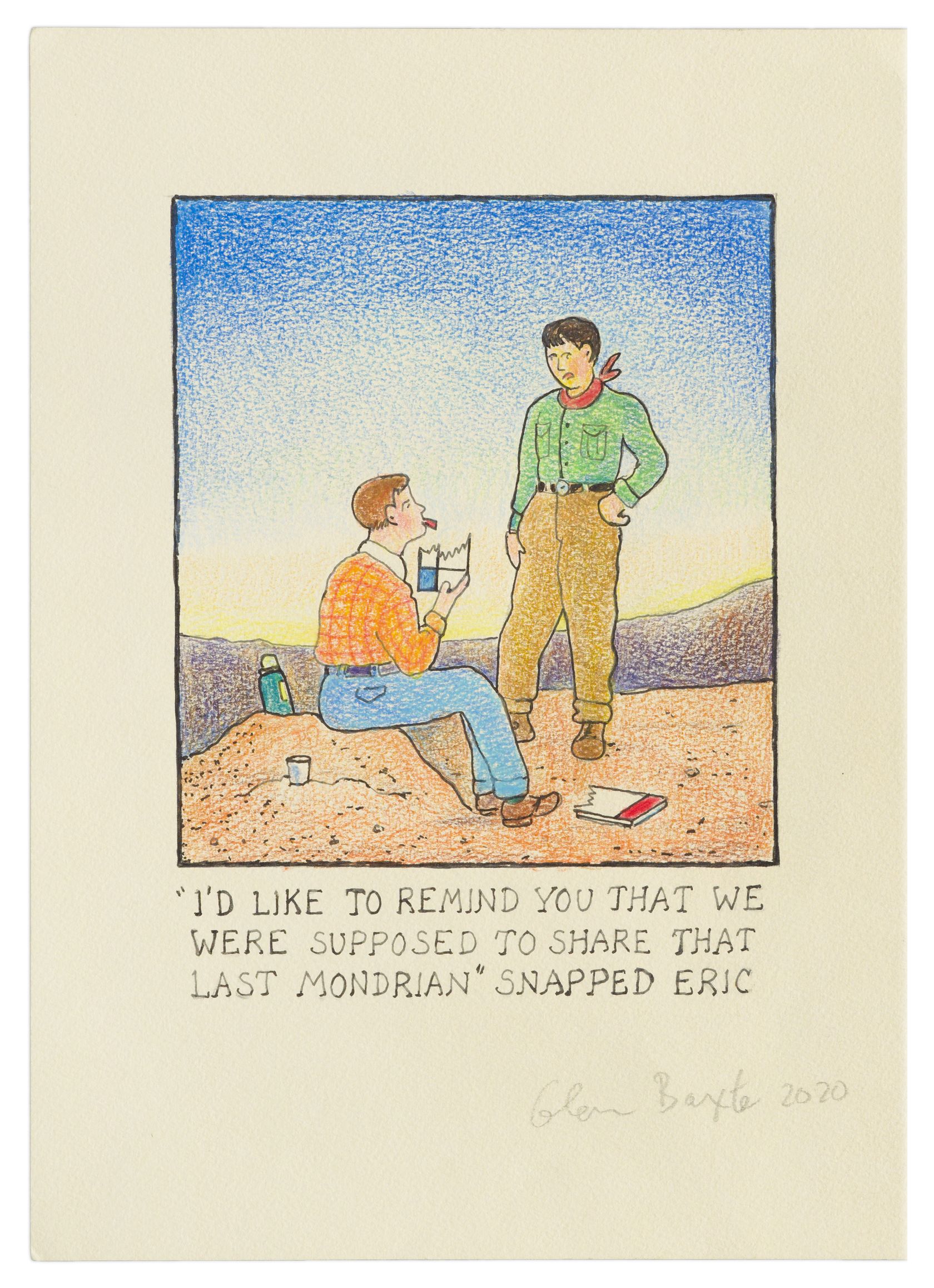
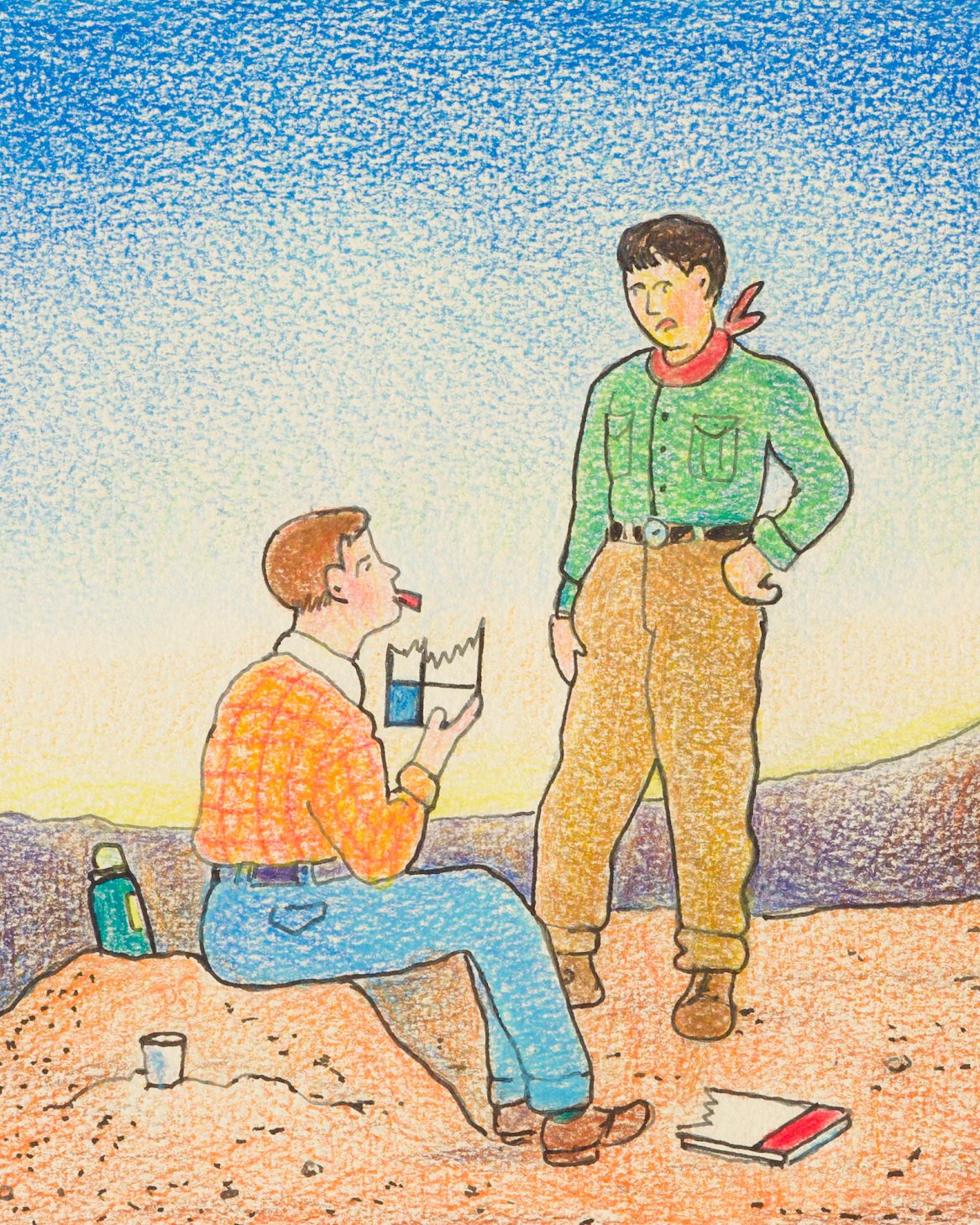
- Glen Baxter
- "I'd like to remind you that we were supposed to share that last Mondrian" snapped Eric , 2020
- Ink and pencil on paper
-
- 38 ×
- 27 × cm
- 14 15/16 ×
- 10 5/8 × inches
- unframed
- 51.5 ×
- 41.5 ×
- 3 × cm
- 20 1/4 ×
- 16 5/16 ×
- 1 3/16 × in
- framed
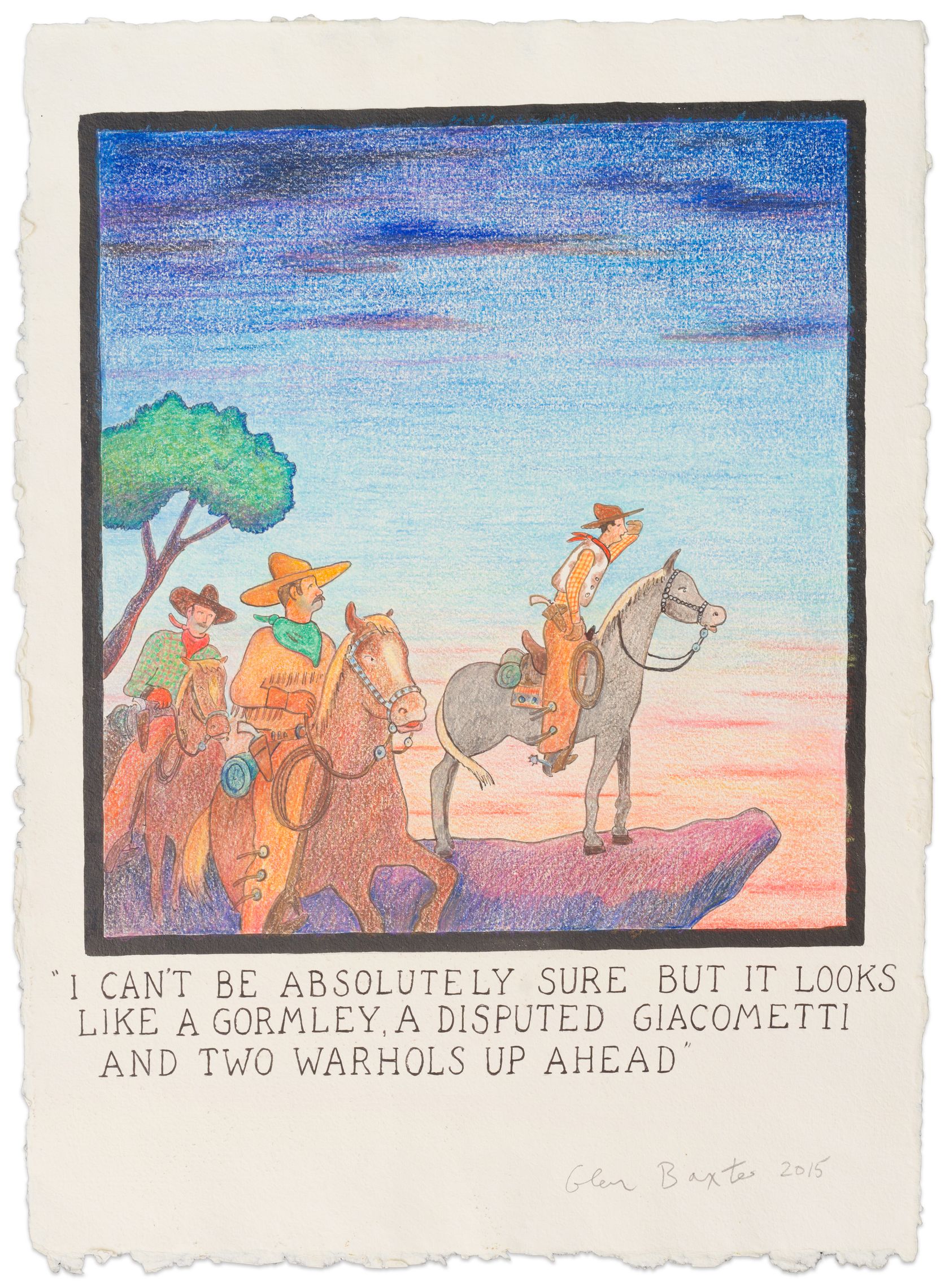
- Glen Baxter
- "I can't be absolutely sure but it looks like a Gormley, a disputed Giacometti and two Warhols up ahead" , 2015
- Ink and pencil on paper
-
- 80 ×
- 59 × cm
- 31 1/2 ×
- 23 1/4 × inches
- unframed
- 88.5 ×
- 66.5 ×
- 3 × cm
- 34 13/16 ×
- 26 3/16 ×
- 1 3/16 × in
- framed
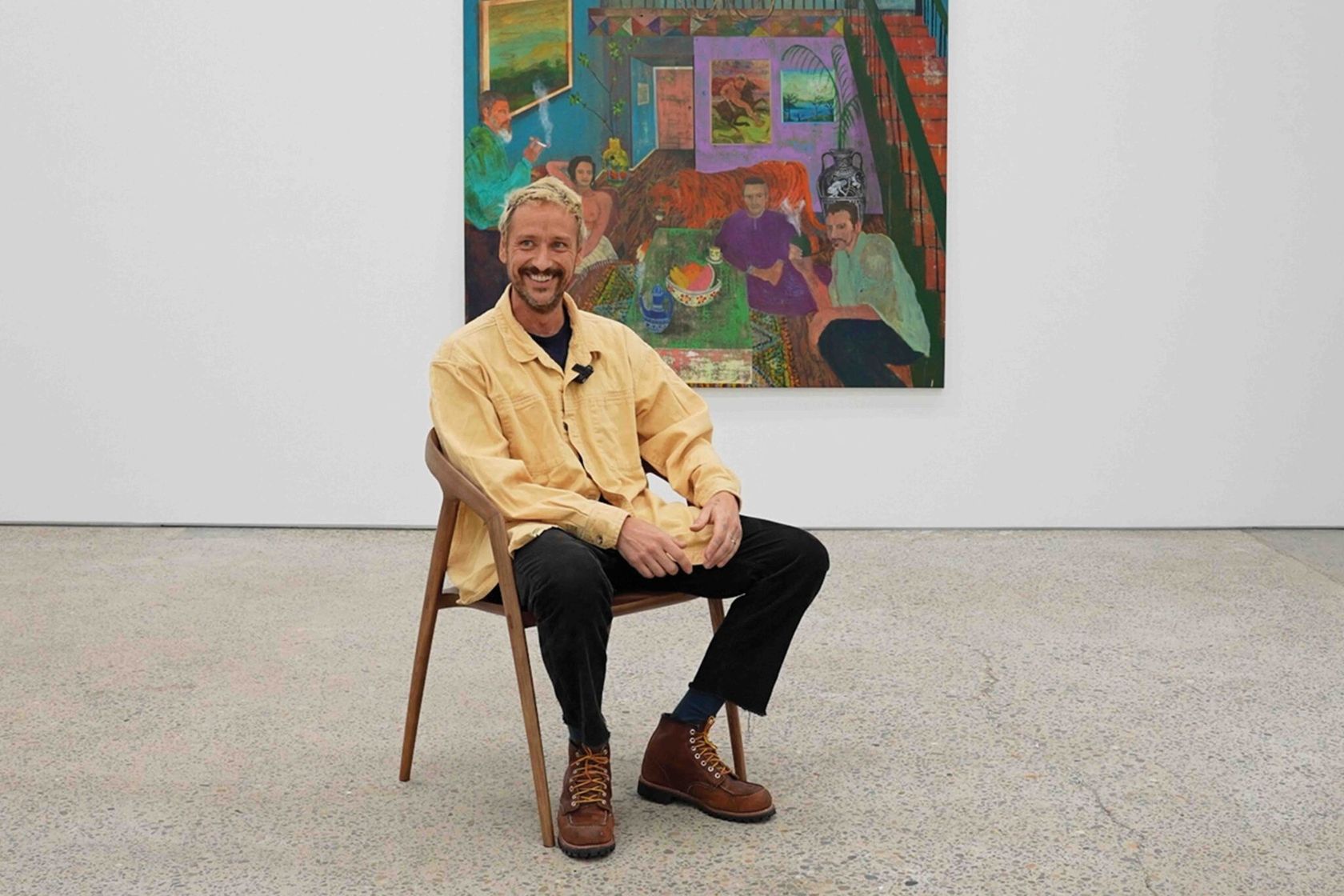
Entering Justin Williams’ painting is like nostalgically stepping into an ancestral world, suspended between myth and memory. His matt surfaces, sanded down to the grain, appear to have the same texture as an ancient wall; His palette of browns, ochres, greens and purples is illuminated by blues and yellows. Beyond their apparent naivety, his canvases reveal great sophistication, blending Outsider Art and Symbolism punctuated with decorative flourishes. Heir to his grandparents’ migration from Egypt to Australia, Justin Williams paintings explore deracination and family as well as the mysterious realms of forests and mountains. From his studio on the Sunshine Coast near Brisbane, he celebrates the rustic beauty of the world, more inspired by the fragility of life and the warmth of human connections than by any quest for the perfect line.
Born in 1984 in Melbourne, Australia, Justin Williams’ work has been the subject of numerous solo gallery exhibitions including COMA (Sydney), Forma and L’Inlassable (Paris), Roberts Projects (Los Angeles), the Vigo Gallery (London) and the Silas von Morisse Gallery (New York). In 2024, he participated in the collective exhibition New South: Recent Painting from Southern Australia at the Hazlehurst Art Center in Sydney. His works feature in major collections across the world, both public, such as the Sydney Museum of Contemporary Art, and private, including the Beth Rudin DeWoody Collection (The Bunker, USA), the Arndt Collection (Australia), the Buxton International Collection (Australia), the Xiao Museum of Contemporary Art (China) and the agnès b. Collection (Paris). His work has been widely acclaimed by the press and has appeared in numerous publications such as Juxtapoz, It’s Nice That, Art Now LA, Esquire, etc.
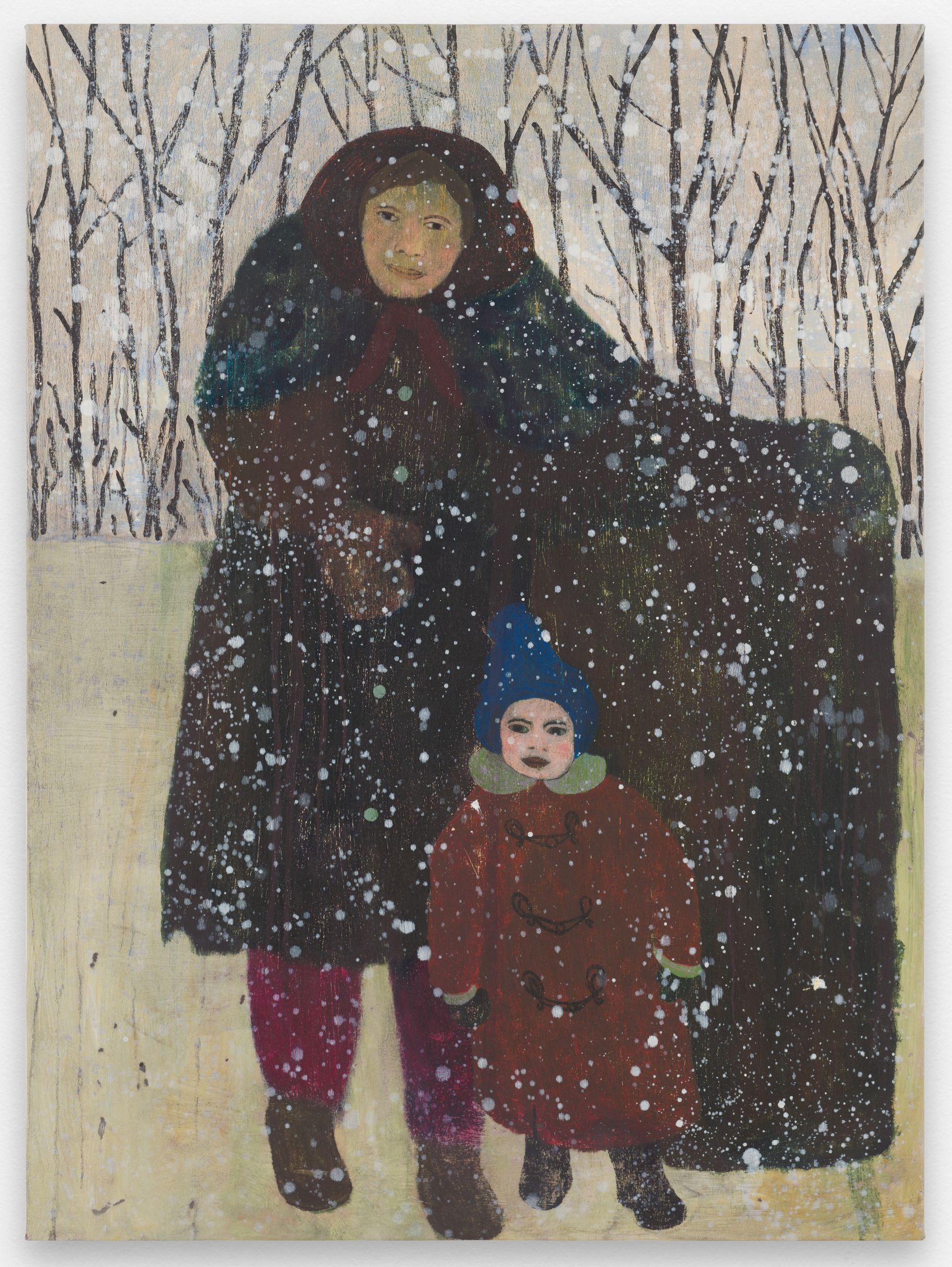
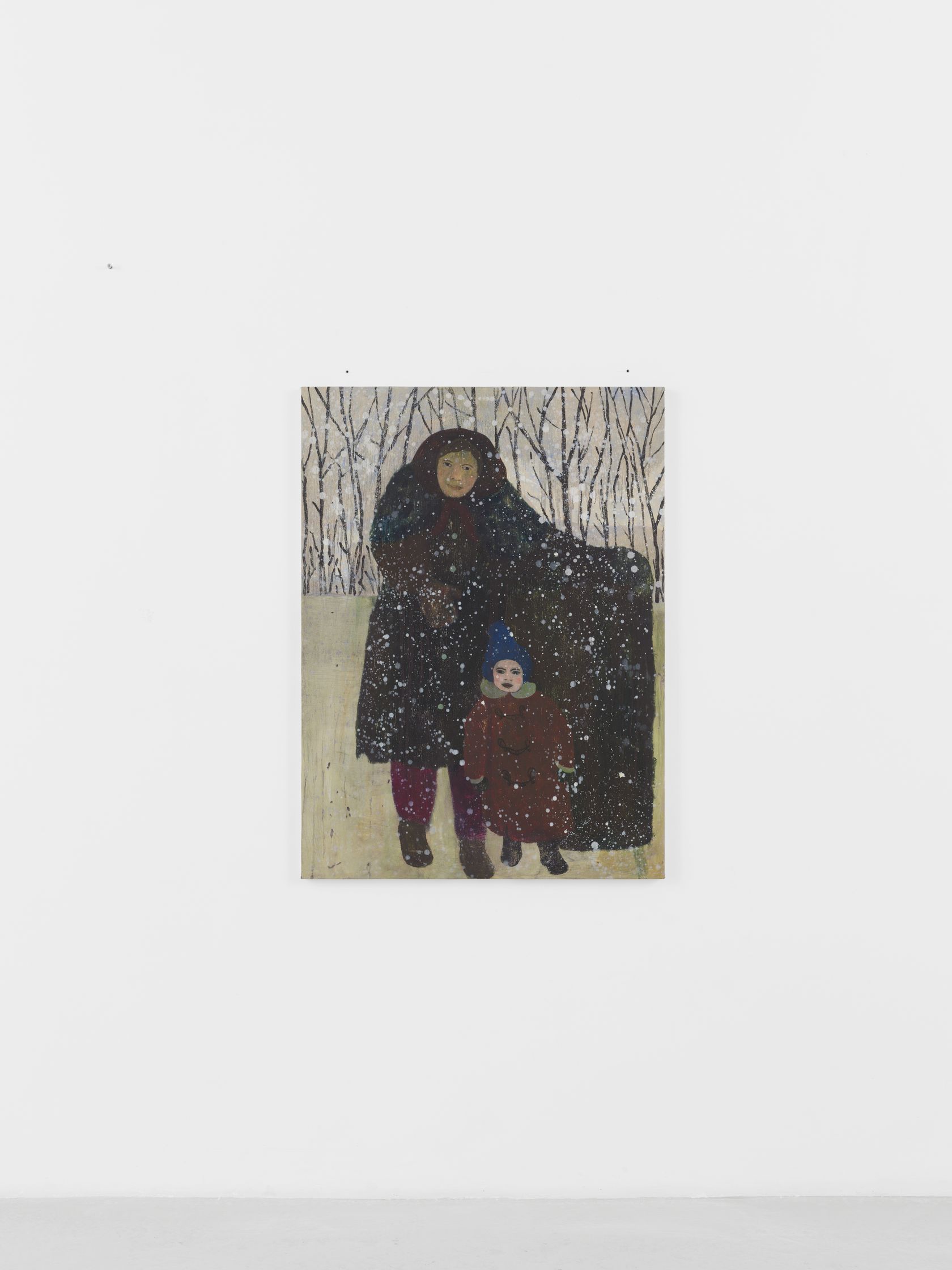
- Justin Williams
- She hid Dracaena trifasciata well , 2025
- Oil, acrylic and raw pigment on canvas
-
- 122.5 ×
- 90 ×
- 2.5 × cm
- 48 1/4 ×
- 35 7/16 ×
- 1 × inches