-
 1/7
1/7
Richard Woods, Some Shelves I Made
-
 2/7
2/7
Richard Woods, Some Shelves I Made
-
 3/7
3/7
Richard Woods, Some Shelves I Made
-
 4/7
4/7
Richard Woods, Some Shelves I Made
-
 5/7
5/7
Richard Woods, Some Shelves I Made
-
 6/7
6/7
Richard Woods, Some Shelves I Made
-
 7/7
7/7
Richard Woods, Some Shelves I Made
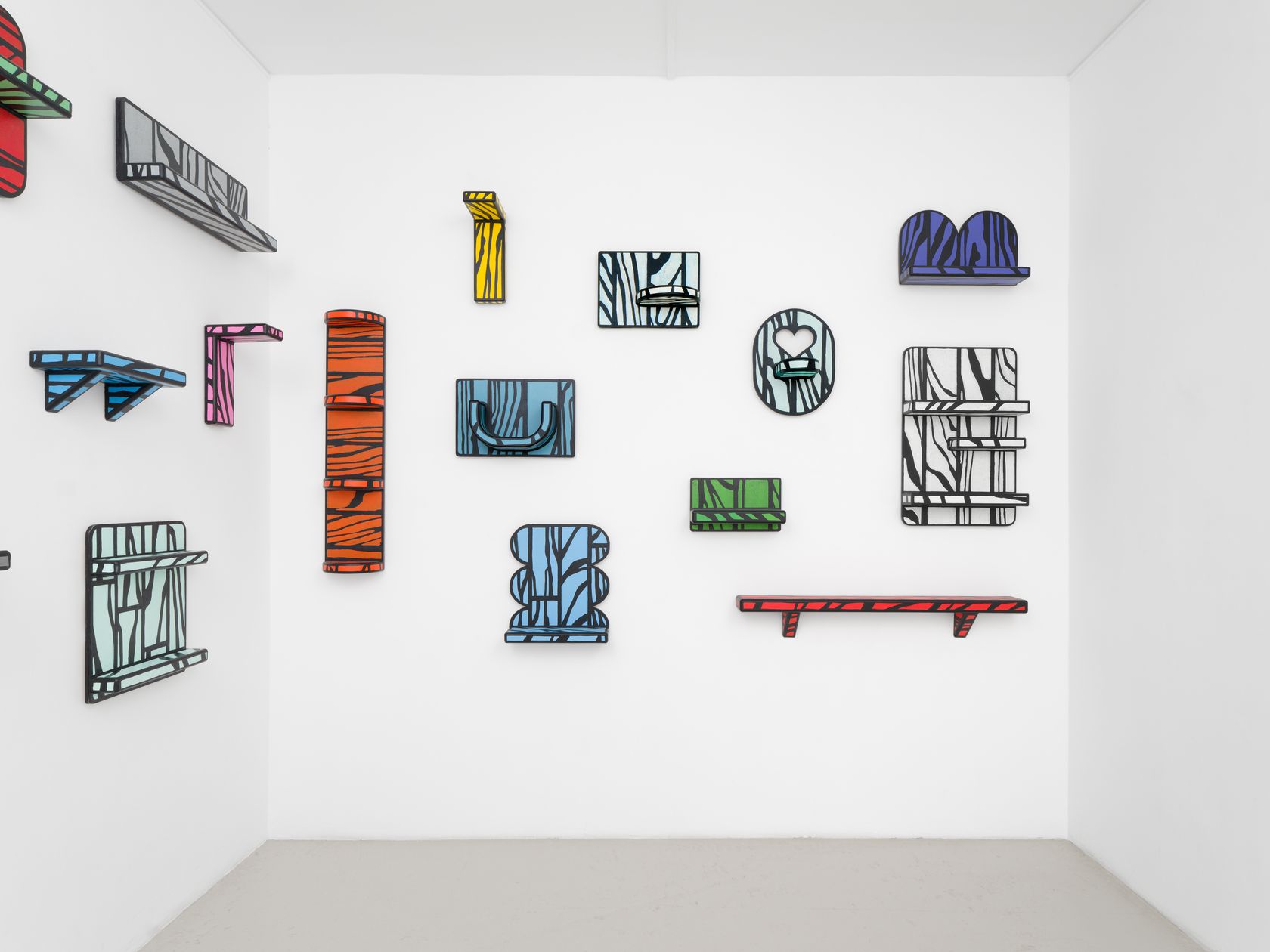
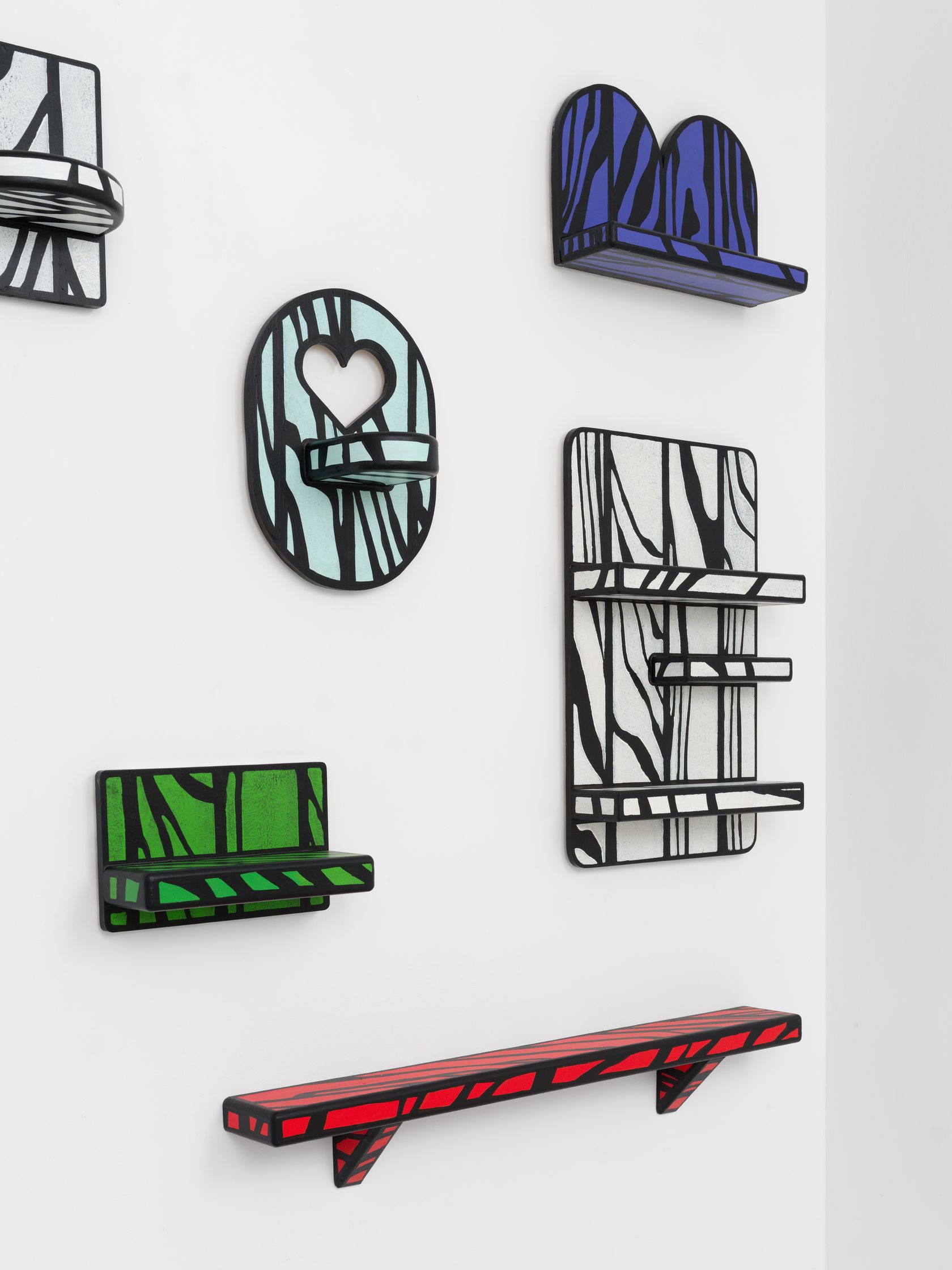
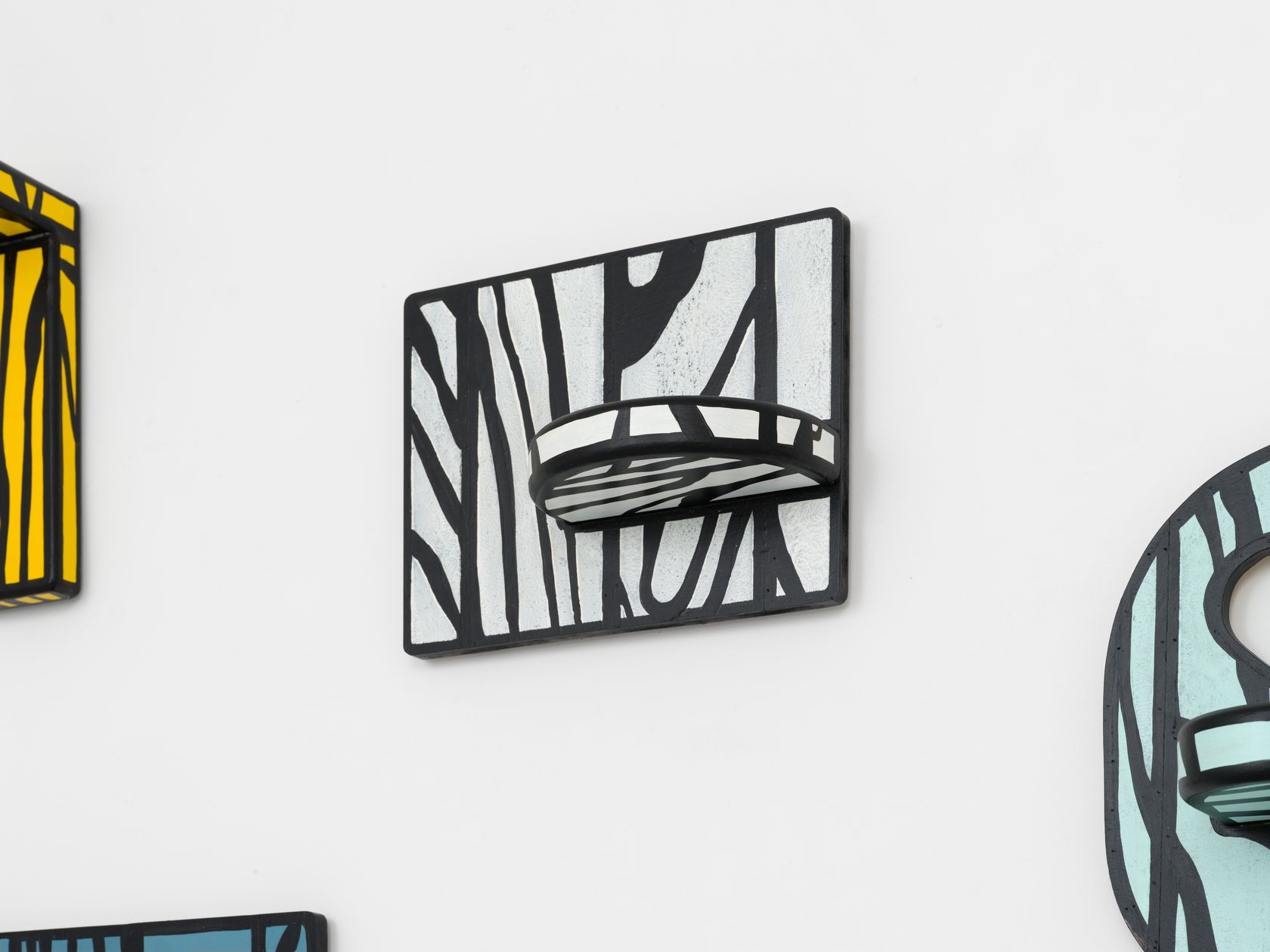
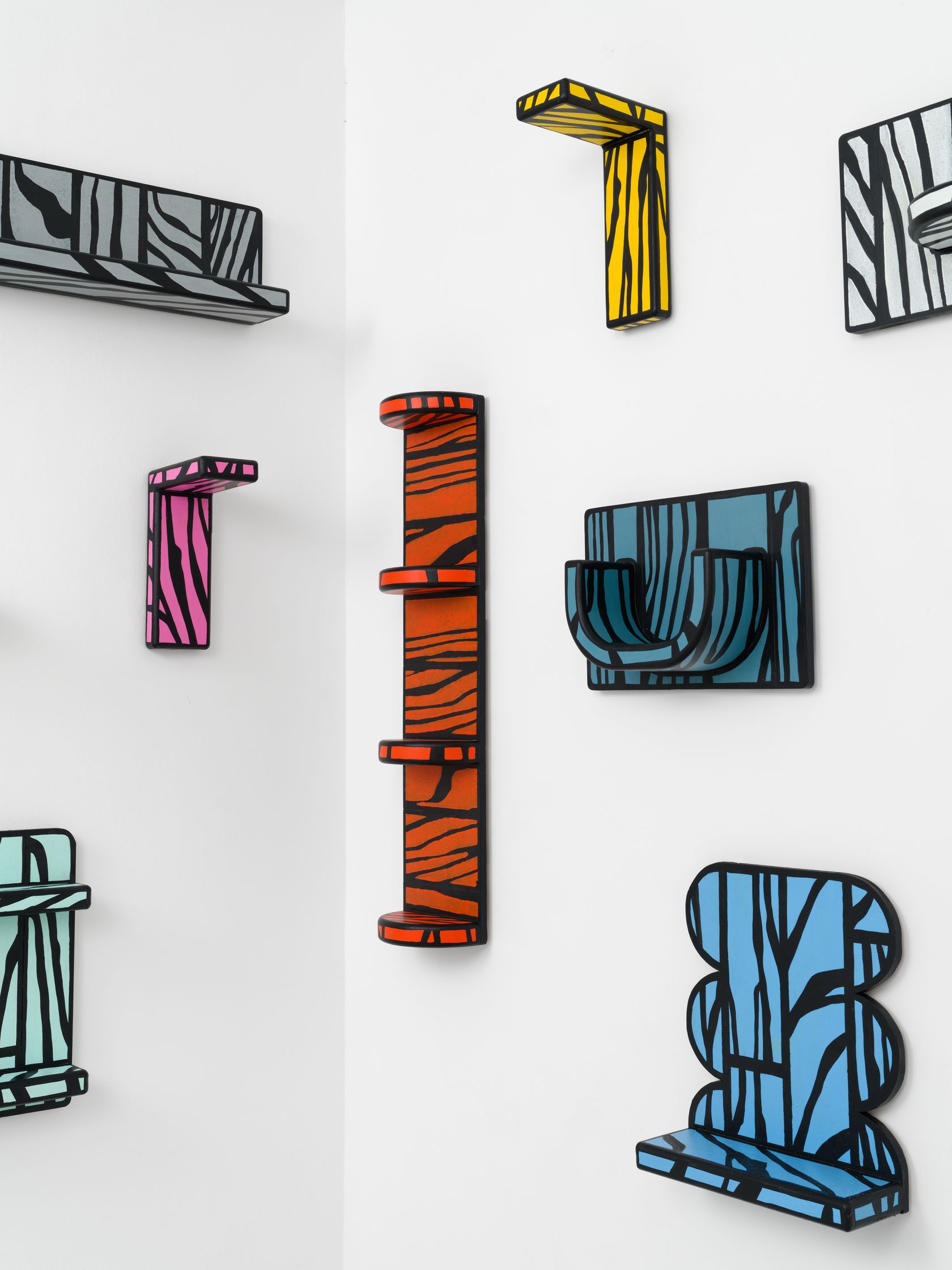
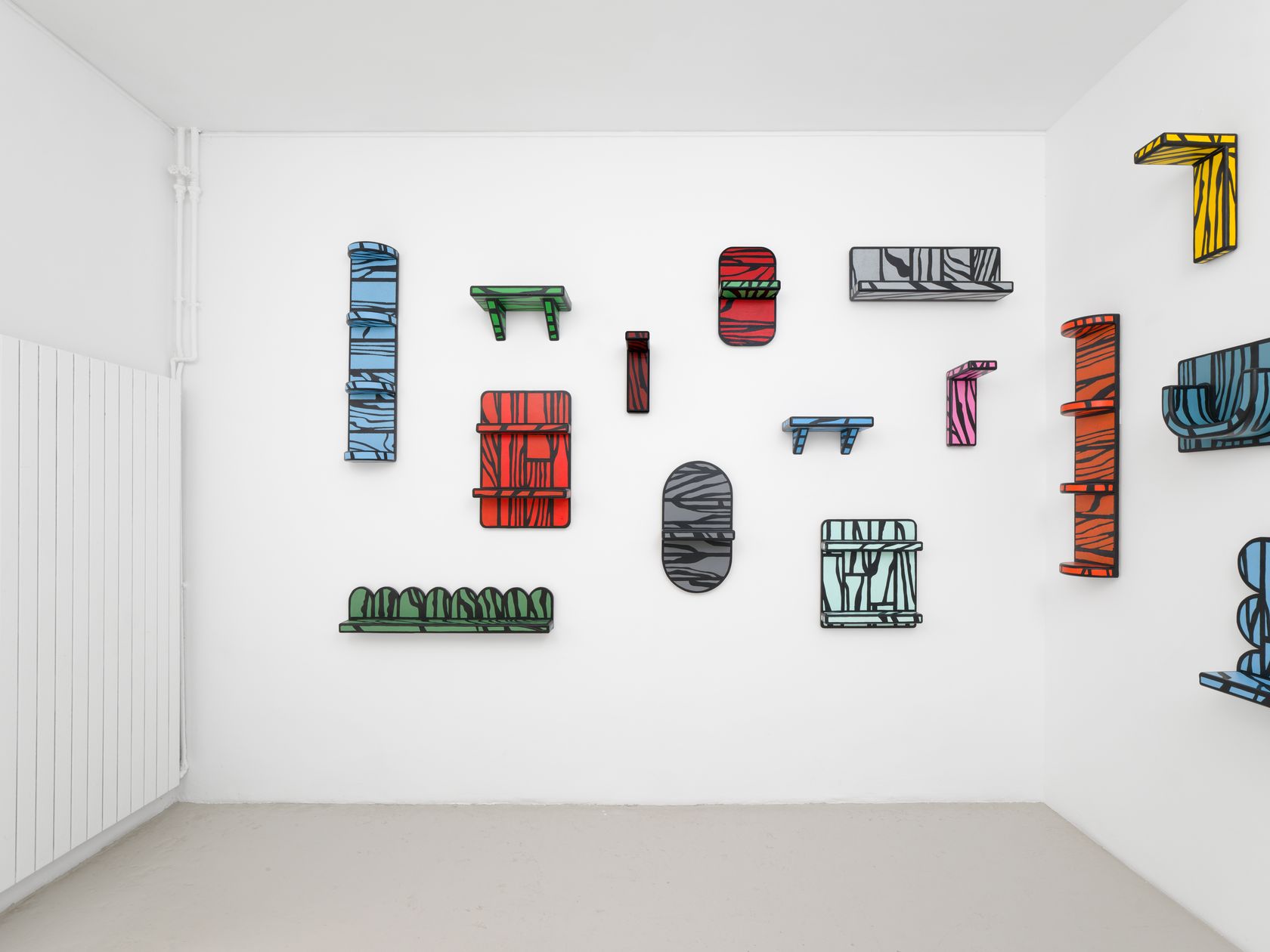
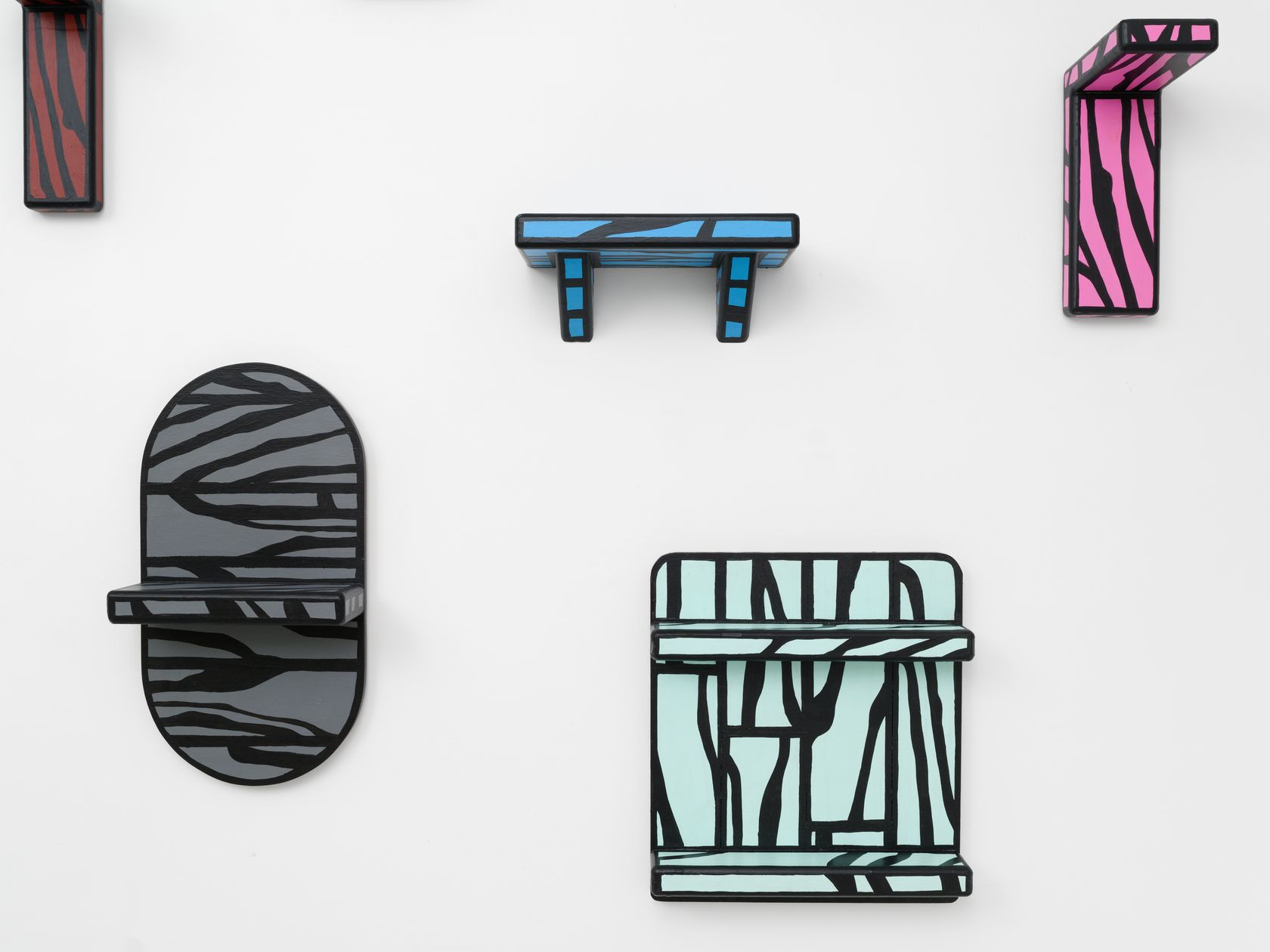
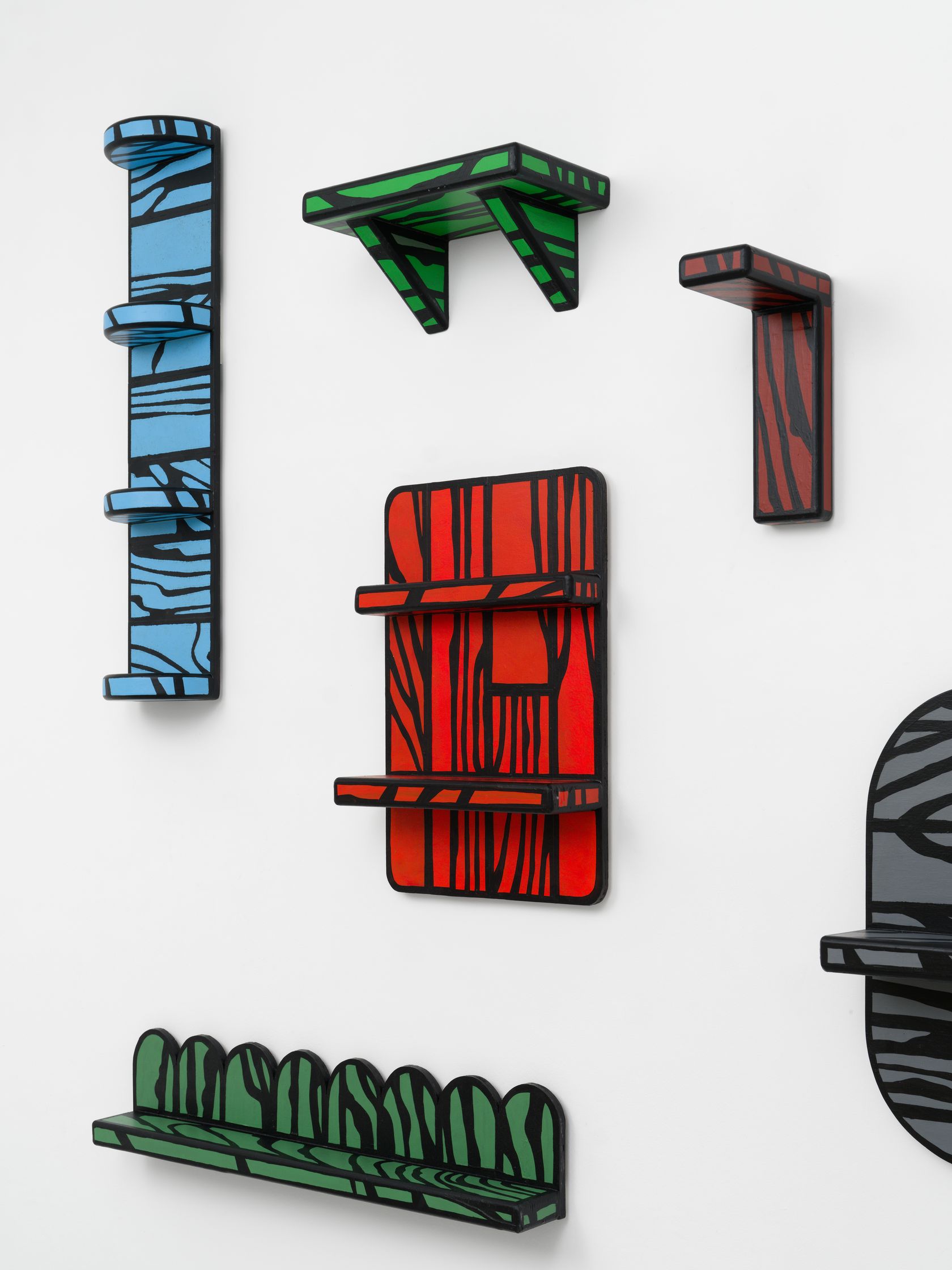
Following on from Harvest, his first show at Semiose in 2023, Richard Woods is back with his latest exhibition Some Shelves I Made, a set of shelves decorated with his trademark faux-wood motif with its exaggerated grain and vivid colors. The shelves have a rustic aspect, sometimes adorned with picturesque details such as an openwork heart, or decorative scalloping, and are hung on the walls like a series of small paintings.
Semiose: After the benches, flooring and tables, you’ve used your favorite motif on shelves. Usually shelves are forgotten background objects used to display objects. Here you’ve taken the opposite approach and it’s the shelves that attract our attention.
Richard Woods: The shelves are just like floors or tables. They are the start of a conversation between myself and the person that lives with the work. A shelf also has a discussion with the room it hangs in as well as a discussion with the objects that are placed on it. It’s this combination of practical and intellectual use that I enjoy. It’s fun to play with that, to allow the shelf a little more volume in the conversation than it may normally have. I love making the floors because I’m in a way only half finishing the work, the work is completed by the person who lives with it or the architecture it sits within. I feel the same way about the shelves, I’ve done half of the work and now it’s up to someone to finish the work off by choosing a vase or a stack of books or a picture of their favourite pet.
You mean of their loved one…? What would you choose as the ideal object to put on your shelves?
RW: I don’t want to dictate what the objects would look like or the uses that they might have. It’s the collaborative activity that fascinates me. I like to have that conversation with the person that will be using them. One of these shelves is me saying ‘Hello!’ and where the conversation goes after that is very much up to the person that is collaborating with me.
Which artists did you have in mind when designing these shelves, both in terms of relating to them or distancing yourself from them?
RW: My art hero is Franz West. I’ve always been more interested in artists that have a multi-disciplinary practice, and Franz West epitomises this method. His works play with ideas, aesthetics and usability. He was continually moving on from stylistic locations that lesser artists would settle in for a lifetime. I hope that making these shelves has made my work more expansive and approachable. I hope that this expansiveness is something that Franz West would find fun?
Some people position you in the artistic wake of Pop Art, while others see your work more from a design point of view, likening you to the Memphis Group. Where would you prefer to situate yourself?
RW: Pop art changed everything, it held a mirror up to society and the reflection that came back became ‘art.’ I think Memphis enjoyed the space that was opened up and jumped right in. I love the aesthetics and approachability of Memphis and have a huge admiration for Ettore Sottsass and Nathalie du Pasquier. But I think Pop art isn’t limited to a style so its fire still burns even more brightly.