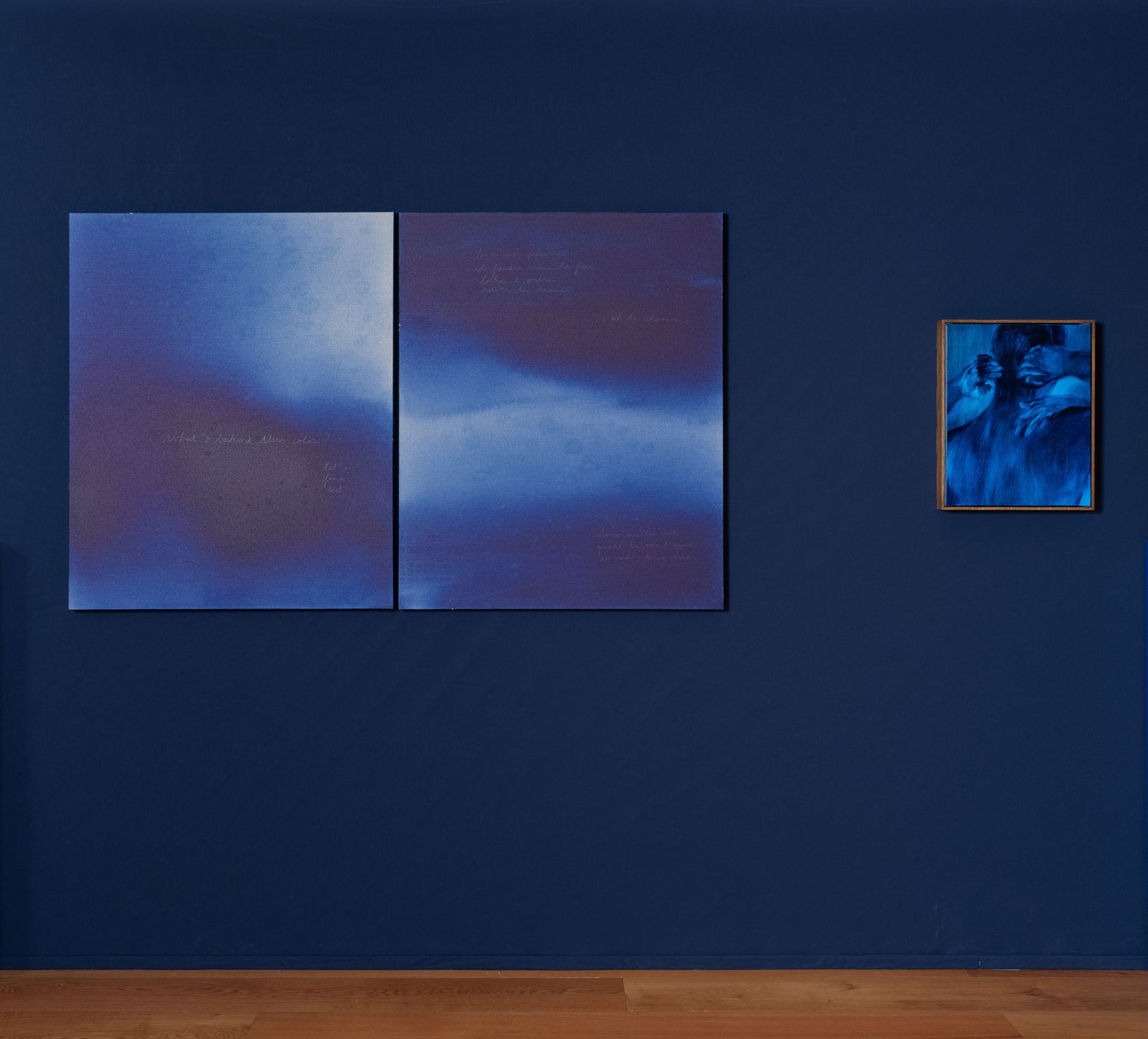
There is a time that belongs neither quite to the day nor yet to the night. A deep, suspended blue, where the world seems to hold its breath on the edge of the void. “The sun has set, yet night has not fallen. It is the blue hour…”. That fragile moment when, for a brief pause, one reconnects with the world and the light. For this new edition, Guerlain, a partner of Art Basel Paris, reopens this invisible threshold at 68 Avenue des Champs-Élysées and brings together some thirty international artists from different generations, cultures and artistic practices. The exhibition thus invites us to experience the ‘Hour of Possibilities’.
For this in-between space is not an end in itself: it is a passage. A moment of transition where what once was recedes, making way for what may come to be. This instant, when certainties dissolve, is also the moment when everything, suddenly, becomes conceivable once more. The journey then unfolds in three stages: contemplation, self-discovery, and taking flight. This journey is enriched by a true olfactory experience, designed to make the experience complete and immersive. Conceived to echo the exhibition design, this dimension is enhanced by the creations of Delphine Jelk, perfumer at Guerlain. Her compositions enter into an intimate dialogue with several of the works on display, offering a unique sensory interpretation of this suspended moment.
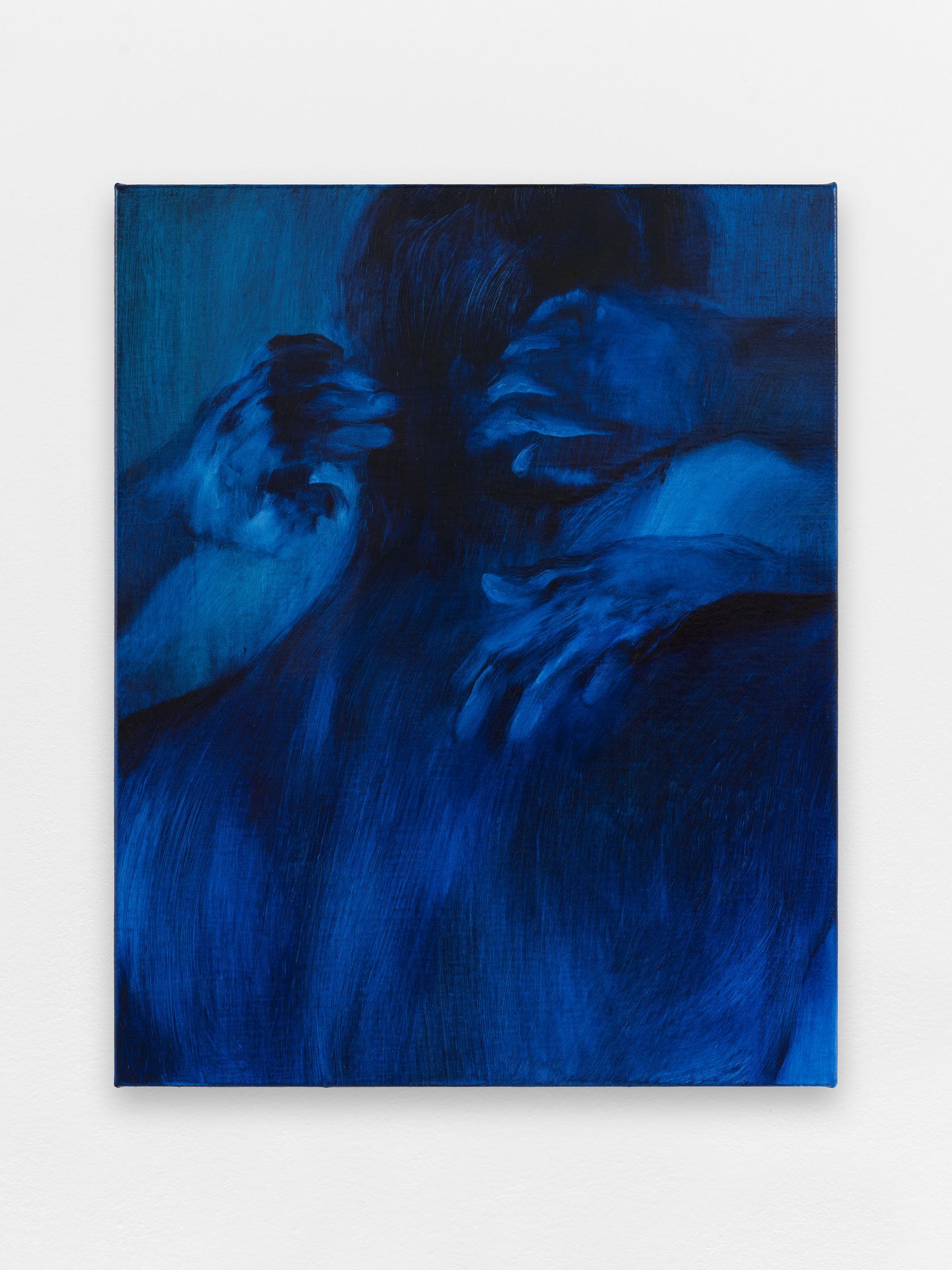
Winner of the 2025 Marcel Duchamp Prize, Xie Lei’s practice takes its starting point in reality but breaks away from it to explore ambiguous, uncertain worlds that his imagination transforms. Most of his paintings evoke unsettling or disturbing situations, subtly linked to literary and cinematic memories, or drawn from the depths of emotion. Xie Lei begins with images of reality, which he simplifies to the point of almost entirely erasing their context. He isolates a figure, a face or a gesture, without providing the elements that would allow the scene to be precisely identified. His characters thus do not refer to any specific story, and everyone can project their own memories or interpretations onto them. His connection to cinema lies in this way of framing. As in a close-up or a freeze-frame, attention is focused on a fragment rather than the whole. Time seems to slow down and the action remains suspended. By choosing not to narrate explicitly, Xie Lei deliberately leaves his images open-ended: the viewer observes, imagines and constructs for themselves what is unfolding within the image.