-
 1/9
1/9
Helene Appel, Un jour
-
 2/9
2/9
Helene Appel, Un jour
-
 3/9
3/9
Helene Appel, Un jour
-
 4/9
4/9
Helene Appel, Un jour
-
 5/9
5/9
Helene Appel, Un jour
-
 6/9
6/9
Helene Appel, Un jour
-
 7/9
7/9
Helene Appel, Un jour
-
 8/9
8/9
Helene Appel, Un jour
-
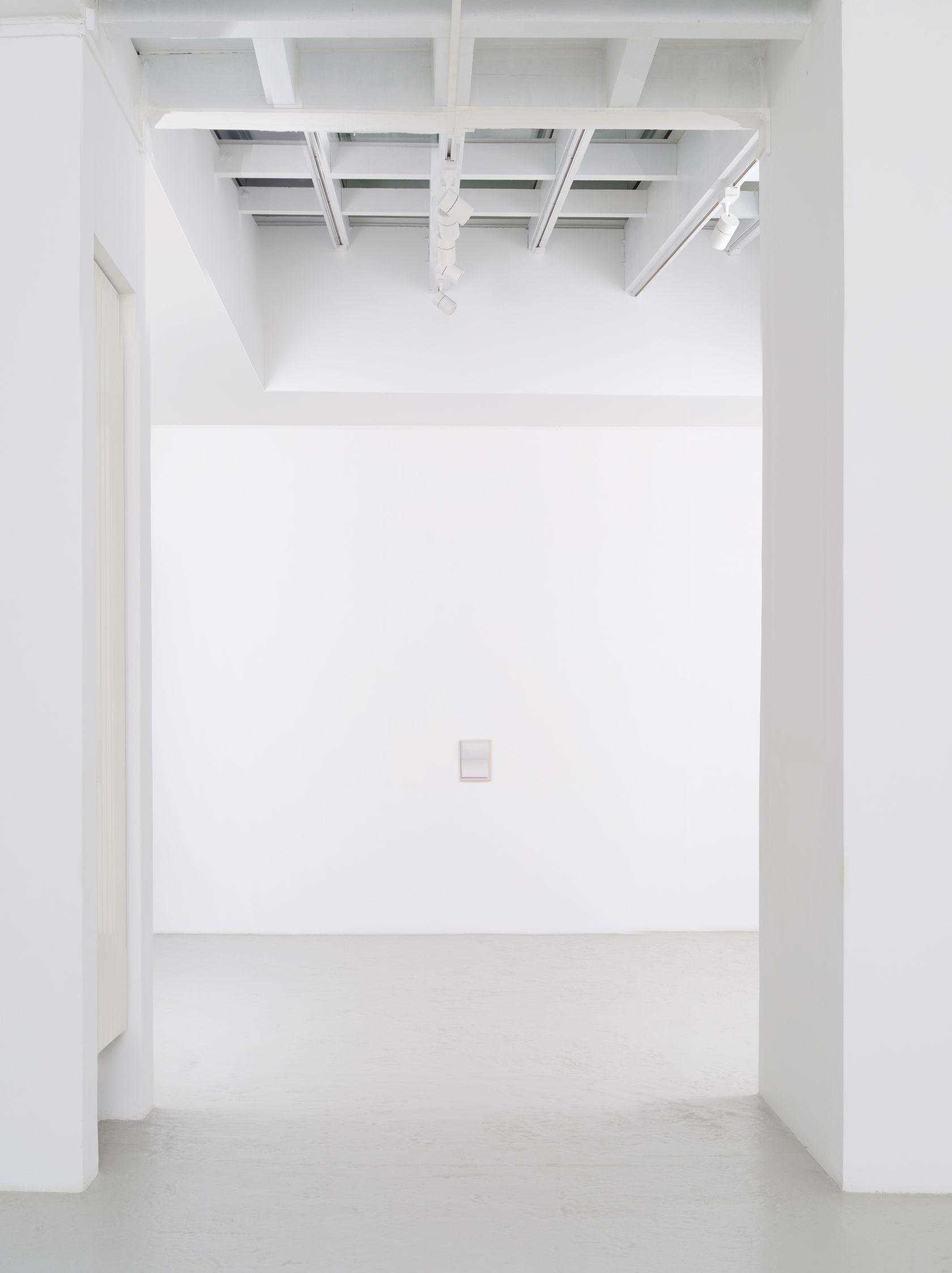 9/9
9/9
Helene Appel, Un jour
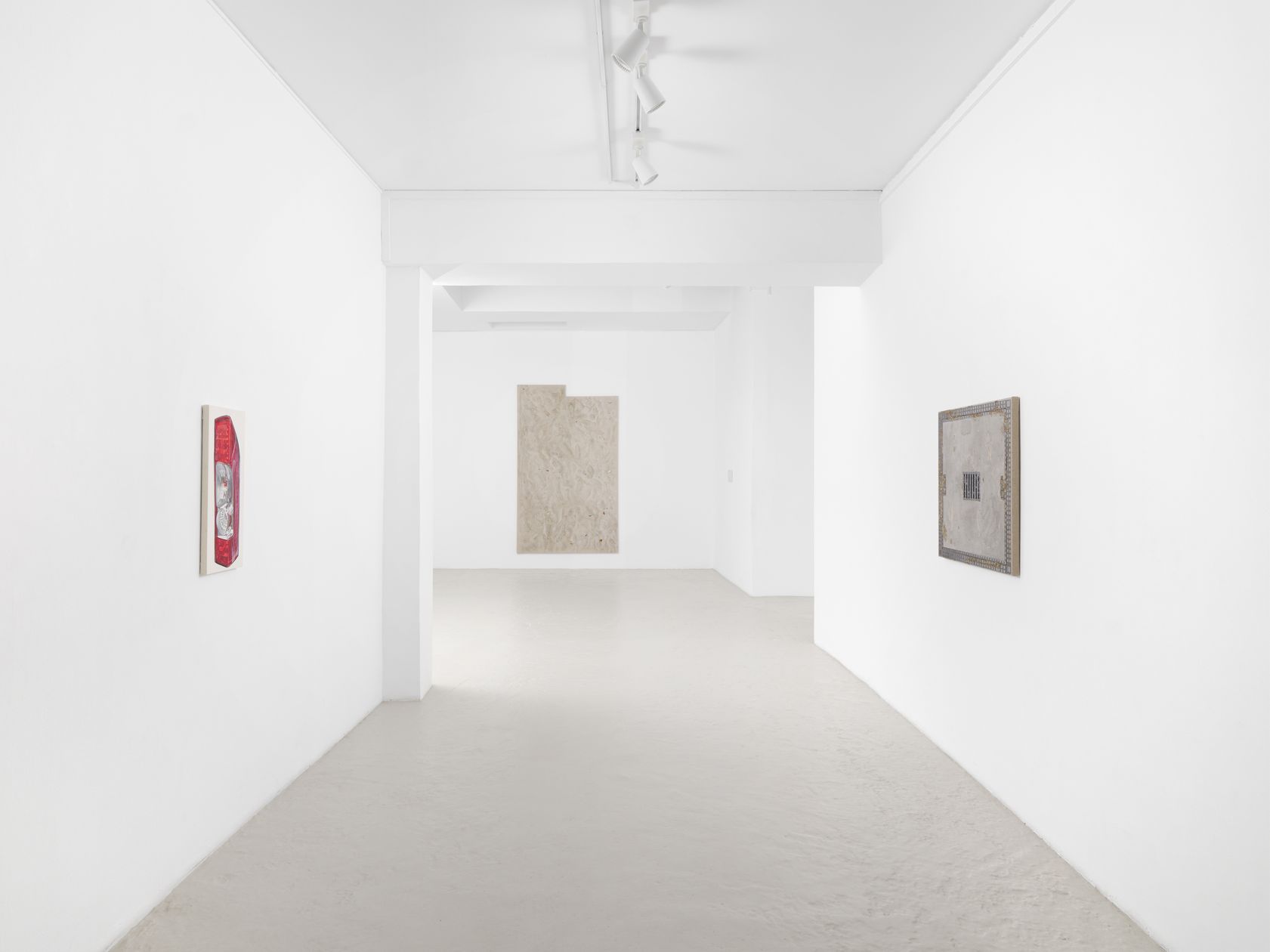
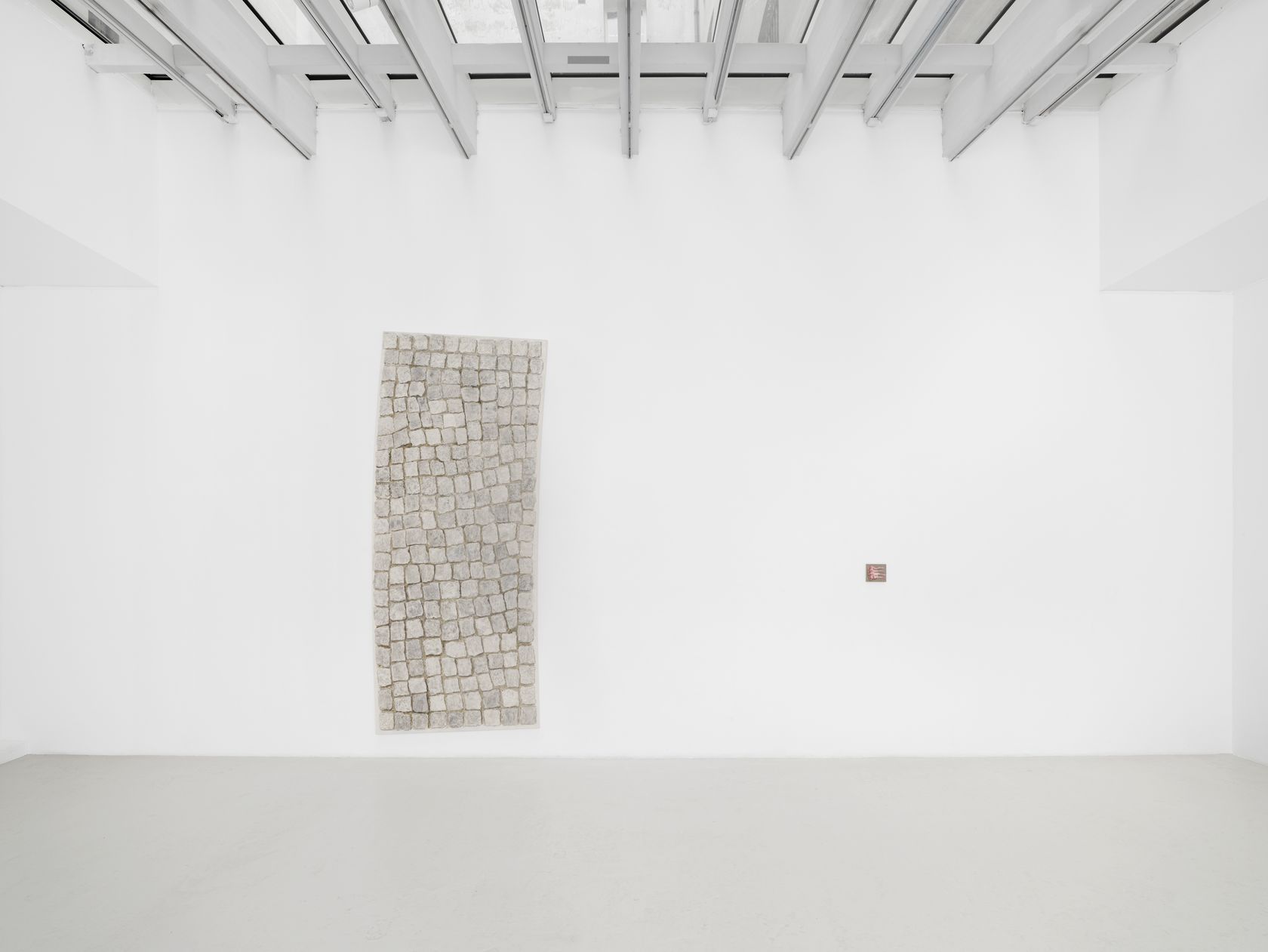
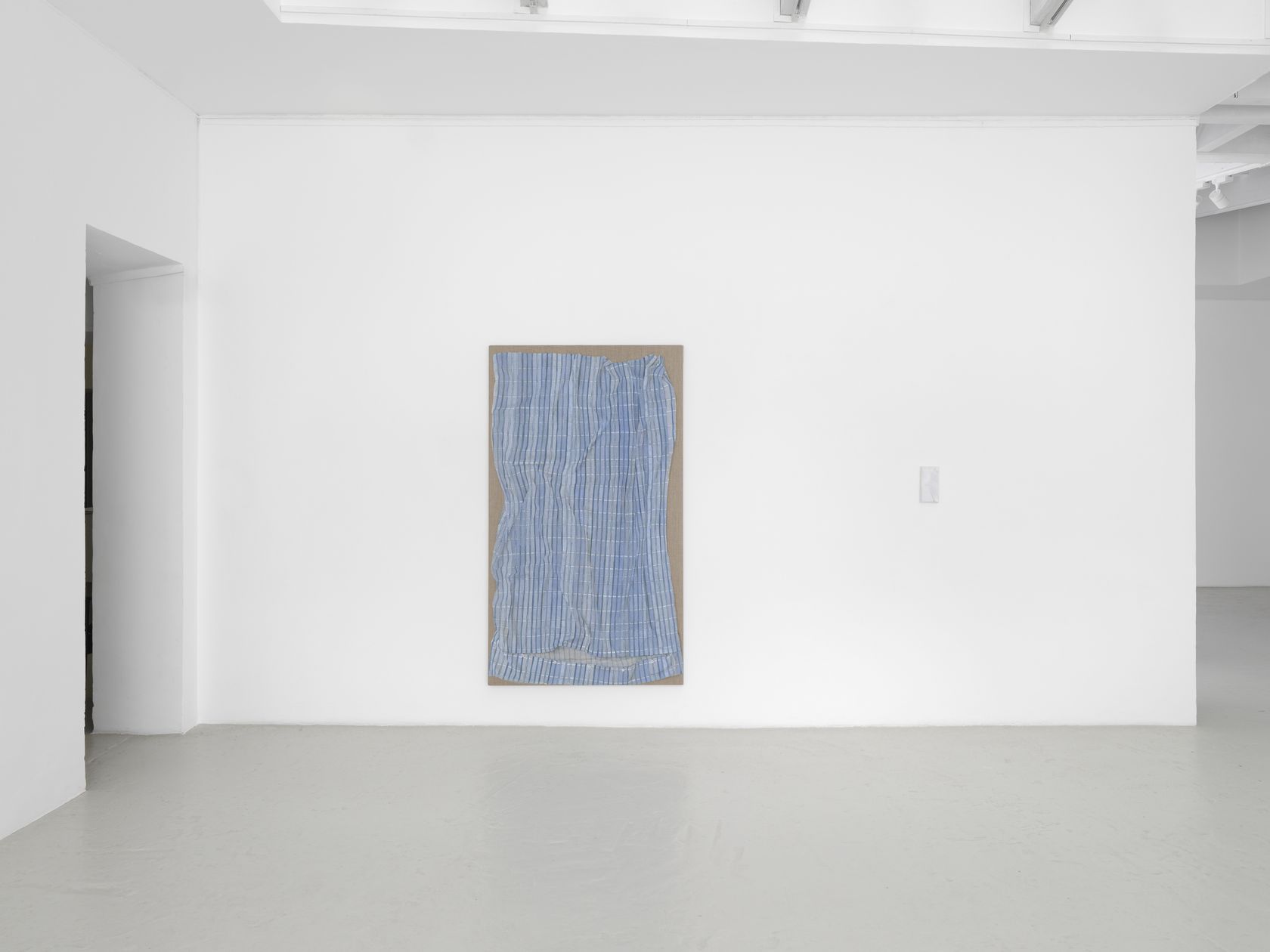
An envelope painted on a small, white, cotton canvas (Envelope, 2025) reminds me of the successive updates applied to the term “realism” as it is used to evoke the relationship to the real in a given era or geographic location. Neo, new, hyper, artificial or even magical… The search for a prefix might serve as a central thread in defining Helene Appel’s work, though this thread would be far too monotonous, due to the multitude of disparate threads and fibers, thick or thin pieces of things, painted on expanses of canvas. From the webs of fishing nets depicted on giant canvases (Fishing Net, 2017) to the woven fibers of worn dish towels that blend in with the real fibers of the linen support (Rug, 2025), this tangle unravels into a multitude of forms. The artist’s body of work even includes the filiform leaves of a leek (Leek, 2021).
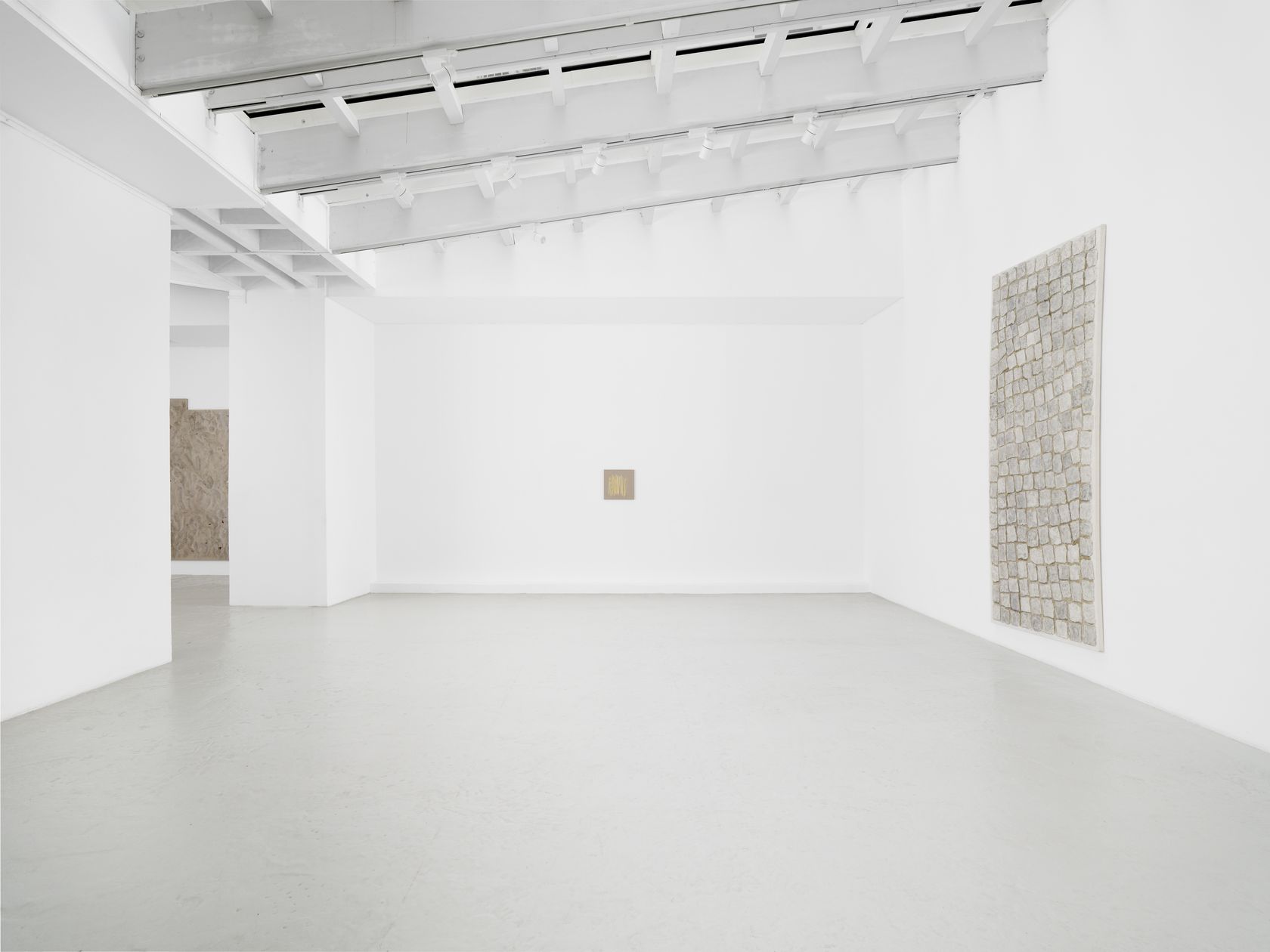
Since she began painting around 1990, and from 2005 specifically objects in their original size (1), Helene Appel has “placed” various objects, both organic and mineral, on stretches of canvas. Her works include vegetables, steaks, grains of rice and broken glass, all belonging to the gendered domestic realm—with regard to this, one might think of a key reference in the subject: Martha Rosler’s video Semiotics of the Kitchen (1975), in which the artist holds up and names kitchen utensils one by one. Yet Helene Appel doesn’t limit herself to the home; she also depicts objects from the outside world, both natural and man-made, such as trees and manhole covers.
We should take note that these objects never meet up: every object deserves its own canvas.
Her work has a certain air of photography, or at least German photography. Just as Hilla and Bernd Becher photographed the facades of the buildings they cataloged head on, or Thomas Ruff captured the portraits of his models with the directness of a photo booth, Helene Appel never represents things horizontally, from an angle, in a corner or masked by any kind of shadow. In fact, she removes the portion of meat or salmon from its packaging and, through the magic of her transformation into painting, presents it to us in the most conspicuous way. Her work is a form of quest for objectivity in the sense that the object takes precedence over everything else, particularly over its context, which disappears to be replaced by the bare canvas. In this way, the viewers gaze does not have to wander through the pictorial space in order to find and connect various clues. The object immediately strikes the eye, like a reflection in a mirror.
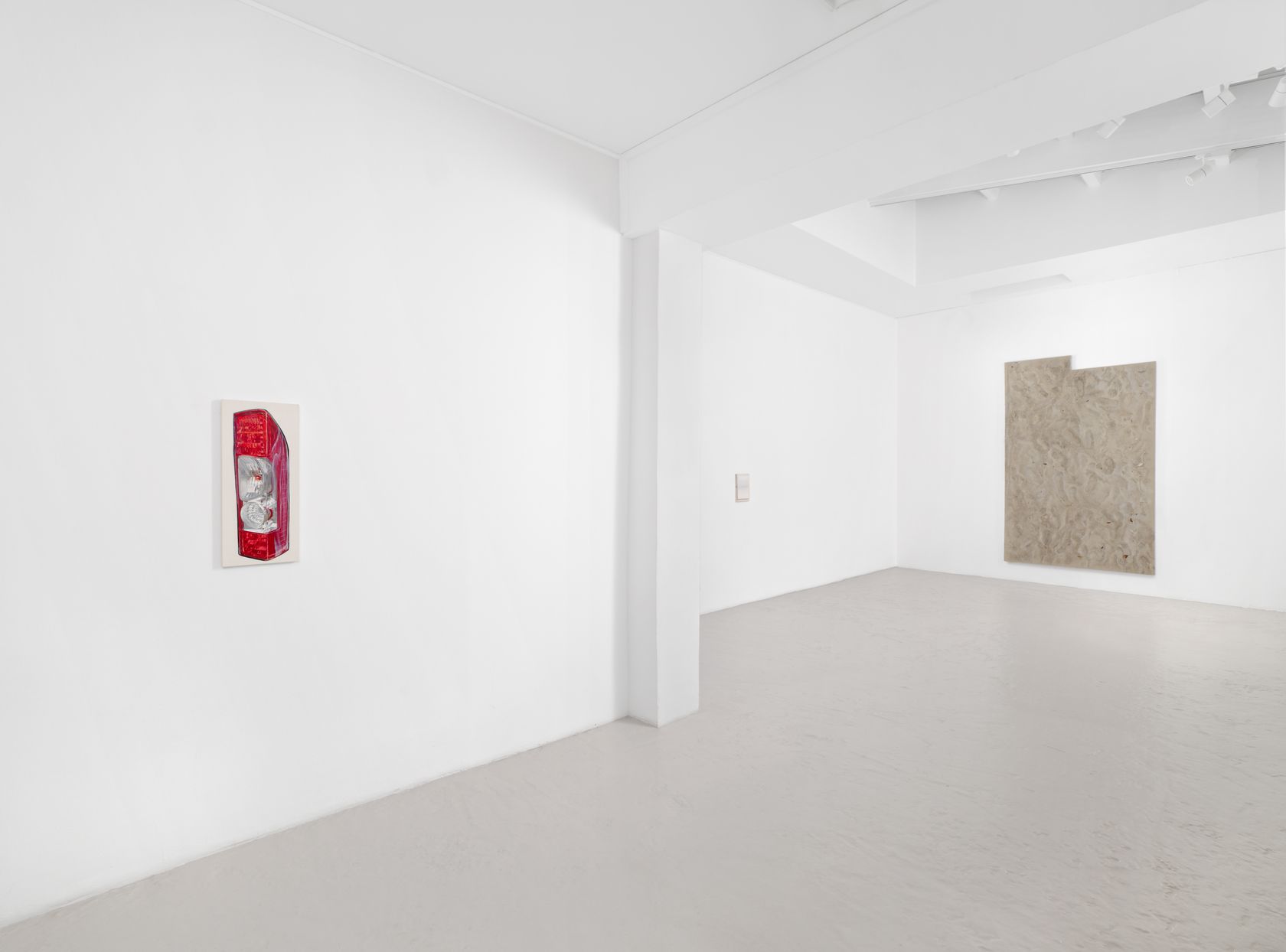
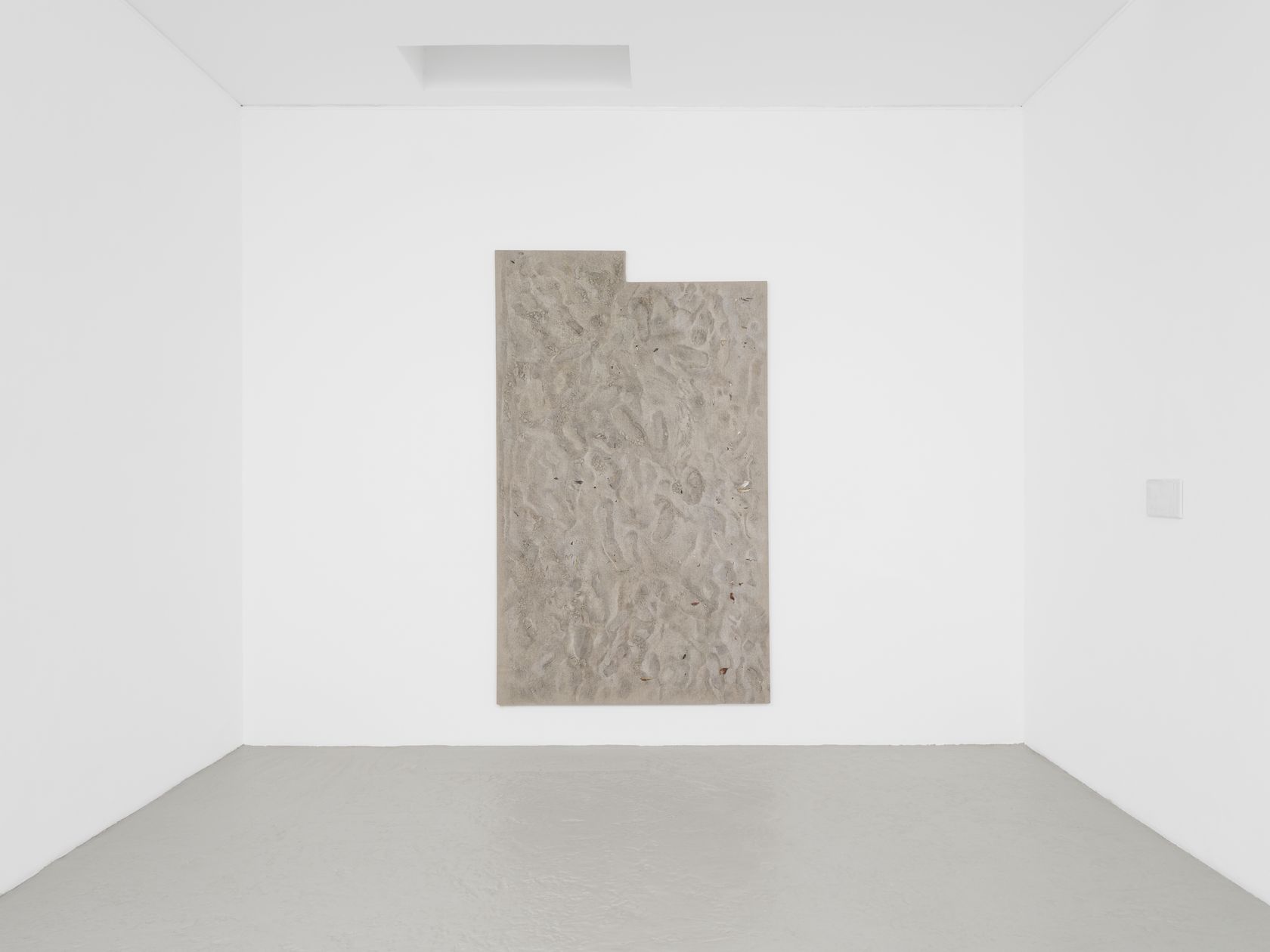
In fact, looking closely at this or that object, you could almost believe you were seeing it through magnifying glasses. (2) However, something else that is also a constant in Helene Appel’s work is that the objects are always painted life size, which also determines the size of the canvas, regardless of usual standards. This choice leads to a wide range of formats, from the smallest—the depiction of a farfalle pasta measuring 6.4 x 4.6 cm—to the largest, used to depict fishing nets or large fabrics that are painted on canvasses of more than 4 meters. However, even though they are life sized, these objects seem more detailed than in real life. Could this be because the same object is more visible in painting?
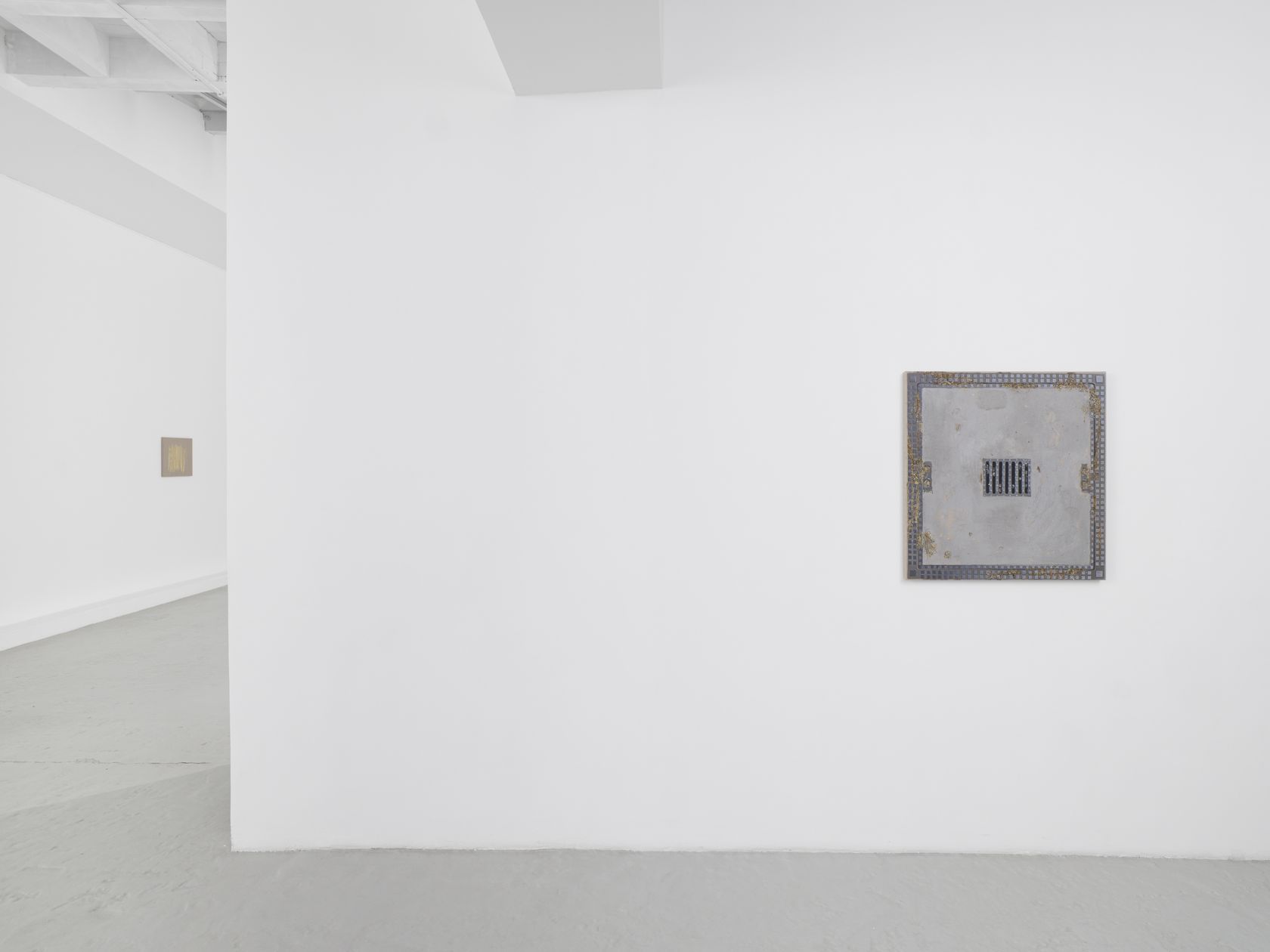
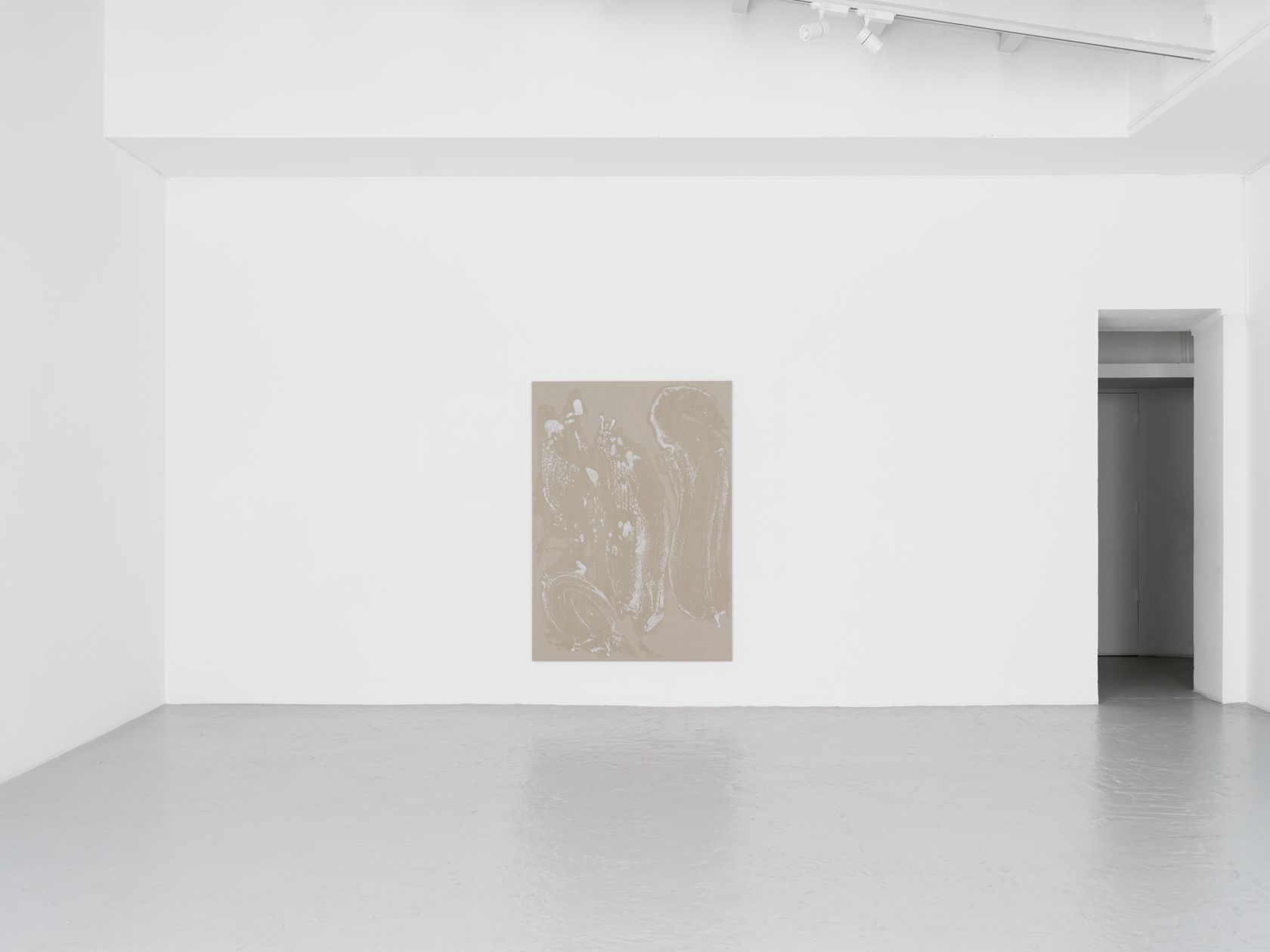
The work of the artist offers a pictorial response to the question of attention. Probably you have never looked at a manhole cover long enough to notice how dead leaves settle into the minimalist sequence of small metal squares. With a painting, you are able to take the time to do this. The objects to which the artist decides to devote her time are chosen because of the challenge it might be to represent them, whether in acrylic, water color or hot wax painting. Before being painted they need to be observed closely, sometimes over several years, in order to allow the artist to find, through her studio experimentation, an equivalent of their qualities to be depicted on canvas.
In a recent text, the art historian Matilda Felix compares Helene Appel’s painting to scientific observation, making reference to a dissecting table. (3) According to her interpretation, we should perhaps reconsider that of Lautréamont—“as beautiful as the chance encounter on a dissecting table of a sewing machine and an umbrella” (4)—and take it seriously. The dissection table of the scientist or poet—I would add the cook’s cutting board or the sandpits under children’s feet—are all work surfaces evoked by the backgrounds of the paintings, made from thicker or thinner canvases and always left visible. Physically present, they underpin the images, even if the objects vary. Or rather: the variation of the objects results in the use of a variety of canvasses, where the canvas background becomes the backdrop of the form—the background of the envelope is not the same as the background of the dishwashing liquid, which is again different from the background of the car headlight. The omnipresence of the materiality of the canvas creates a distancing effect, in other words a departure from any possible trompe-l’oeil effect or a simple demonstration of virtuosity. In this regard, two paintings, one entitled Sandpit (2021) and the second Duvet Cover (2023) are particularly noteworthy. In the first, the expanse of sand reflects the backdrop in color, the dots representing grains of sand blending in with its intertwined threads. In the second, the depiction of woven material is superimposed on the actual weaving of the canvas. Both are reminiscent of the 1:1 scale map in Lewis Carroll’s novel Sylvie And Bruno Concluded: “We actually made a map of the country, on the scale of a mile to a mile! […]. The farmers objected; they said it would cover the whole country, and shut out the sunlight! So, we now use the country itself, as its own map, and I assure you it does nearly as well.” (5) Just as in Carroll’s work the map brings us back down to Earth, in Helene Appel’s work, the object permits us to rediscover the background canvas, which, from being the most literal component becomes the most metaphysical. Perhaps here the background is the real subject, a background which brings everyday life into dialog with the history of painting. This history that Helene has inherited but updates, with a gesture as radical as the one we might imagine as she tears open a packet of spaghetti, before throwing a few strands onto the surface of the painting.
Vanessa Morisset
_
1. Helene Appel was born in Karlsruhe in 1976. She studied art in Hamburg and then at the Royal College of Art in London.
2. In Marcel Proust’s Le Temps Retrouvé (1927), the author uses this expression to suggest a means of reading his novel.
3. Matilda Felix, “Helene Appel’s Visual Representatives and Other Everyday Companions”, in Helene Appel, Hatje Cantz Verlag, Berlin, 2023.
4. Lautréamont, Les Chants de Maldoror, 1869, Song VI, stanza 1.
5. Lewis Carroll’s novel Sylvie And Bruno Concluded, chapter XI, 1893.