-
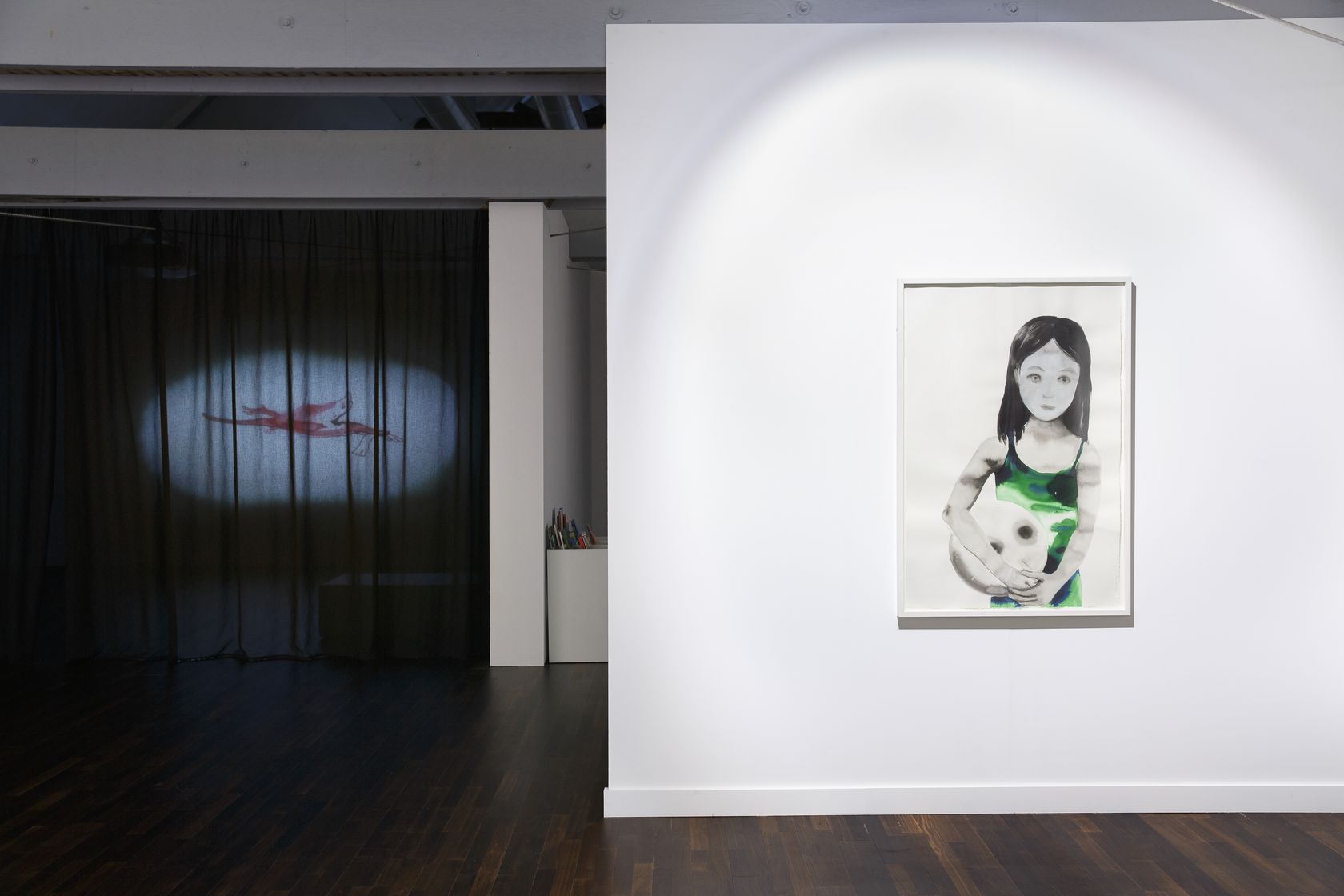 1/3
1/3
Stefan Rinck, Françoise Pétrovitch , Dormir debout
October 10th, 2025 — March 8th, 2026
FRAC Normandie, Caen (FR) -
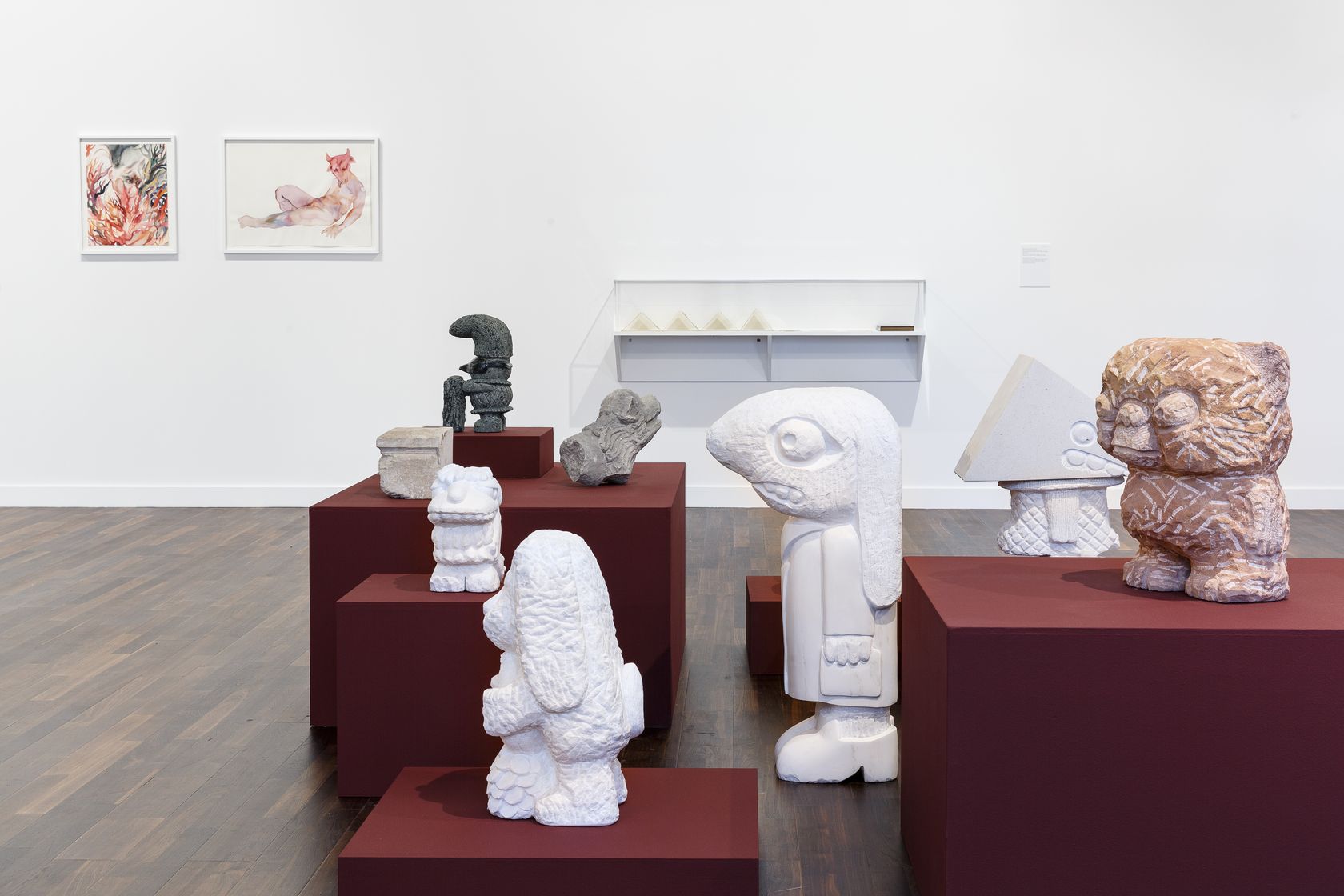 2/3
2/3
Stefan Rinck, Françoise Pétrovitch , Dormir debout
October 10th, 2025 — March 8th, 2026
FRAC Normandie, Caen (FR) -
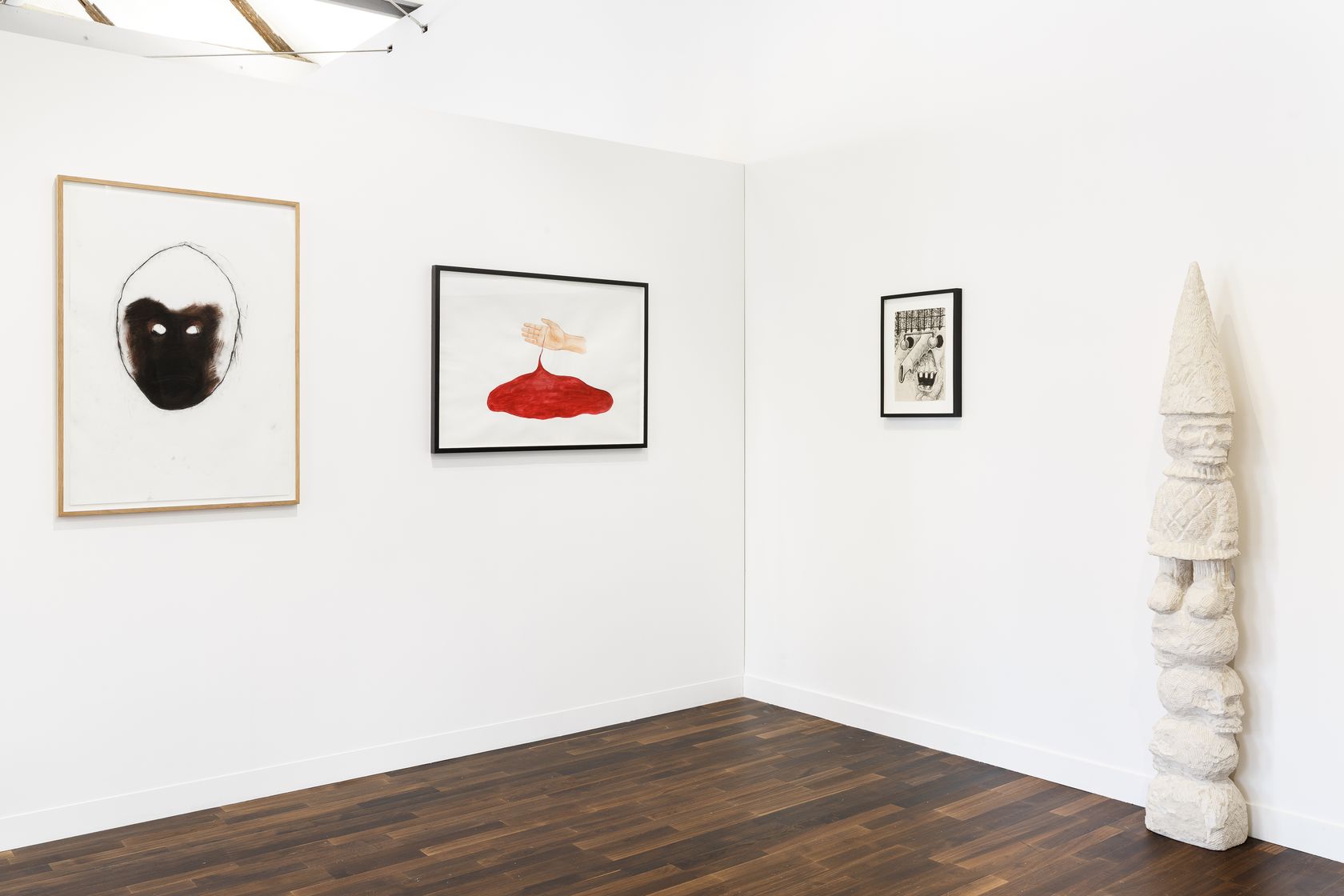 3/3
3/3
Stefan Rinck, Françoise Pétrovitch , Dormir debout
October 10th, 2025 — March 8th, 2026
FRAC Normandie, Caen (FR)
It begins with a cabin, fire, brambles, darkness, the made-up gaze of a doe… is it fear, or terror? And then a first monster bursts forth, suffocating us with anxiety… or making us burst out laughing. Enigmatic masks, fragments of bodies are scattered here and there. Is the monster here to reveal our anxieties—or to point the way?
From our inner monstrosities to depictions of strange figures, both animal and human, the question of monsters runs through the history of art and great myths alike. In the paintings of Hieronymus Bosch, the chimeras of cathedrals, the Buddhist pantheon, or among contemporary artists such as Martha Colburn or Annette Messager, countless forms have been sketched. Lion, dragon, vampire, ogre, ghost, skeleton, yokai… these figures from elsewhere take on different shapes according to their geographic and cultural contexts. Though associated with fear, the monster also resonates with the extraordinary and the marvelous: Monstrum in Latin derives from monere, meaning “to warn, to enlighten.” Is the monster here to provoke a battle—and if so, what kind?
Linked to the night, to the tales of our childhoods populated by witches, monsters are laughing, protective, destructive beings, drawing us into cathartic and redemptive stories. They imprint themselves in both personal and collective memory, playing mischievously with our neuroses.
To conceive an exhibition is to weave a narrative where imagination echoes certain realities. As Michaël Ferrier writes, “it is to tell a story in one’s own way.” Here, Where the Wild Things Are, Dracula, Franz Kafka’s The Metamorphosis, and the traumas of Niki de Saint Phalle serve as points of departure—alongside the Norman territory itself, its rich heritage, and the tensions of a society confronted with devouring figures.
The power of a narrative lies as much in words as in images. The exhibition draws on the vast collection of Frac Normandie and recreates different scenarios. Around fifty works from the collection enter into dialogue with older pieces from regional museums, invited artists—some linked to Outsider Art—and objects from elsewhere. The boundaries blur. The viewer is invited to wander through danse macabres and to question metamorphosis. They will encounter Little Red Riding Hood and some curious wolves, and perhaps try to give a happy ending to all these fantastic bedtime stories!
Marie Terrieux, Director of Frac Normandie and curator of the exhibition.
Exhibited artists: Saâdane Afif, Dieter Appelt, Pierre Ardouvin, Josefin Arnell, Gilbert Bazard, Sosthène Baran, Julie Béna, Gerd Bonfert, Bruno Botella, Sylvaine Branellec, David Claerbout, Philippe Cognée, Martha Colburn, François-Xavier Courrèges, Delphine Dénéréaz, Marcel Dzama, José Manuel Egea, Adélaïde Fériot, Joan Fontcuberta, Makiko Furuichi, Kendell Geers, Vincent Girard, Douglas Gordon, Romain Grenon, Louise Gügi, Margaret Haines, Nine Hauchard, Séverine Hubard, Anabelle Hulaut, Lucille Jallot, Romuald Jandolo, Olivier Kosta-Théfaine, Joachim Koester, Georges Lacombe, Charles Léandre, Sophie Lebel, Iris Levasseur, Isabelle Lévénez, Daldo Marte, Annette Messager, Amaury Morisset, Françoise Pétrovitch, Hervé Plumet, Eric Poitevin, Céline Poulain, Etienne Pressager, Hugues Reip, Stefan Rinck, Kiki Smith, Barthélémy Toguo, Patrick Tosani, Marion Verboom, Brigitte Zieger.