Glen Baxter
-
 1/5
1/5
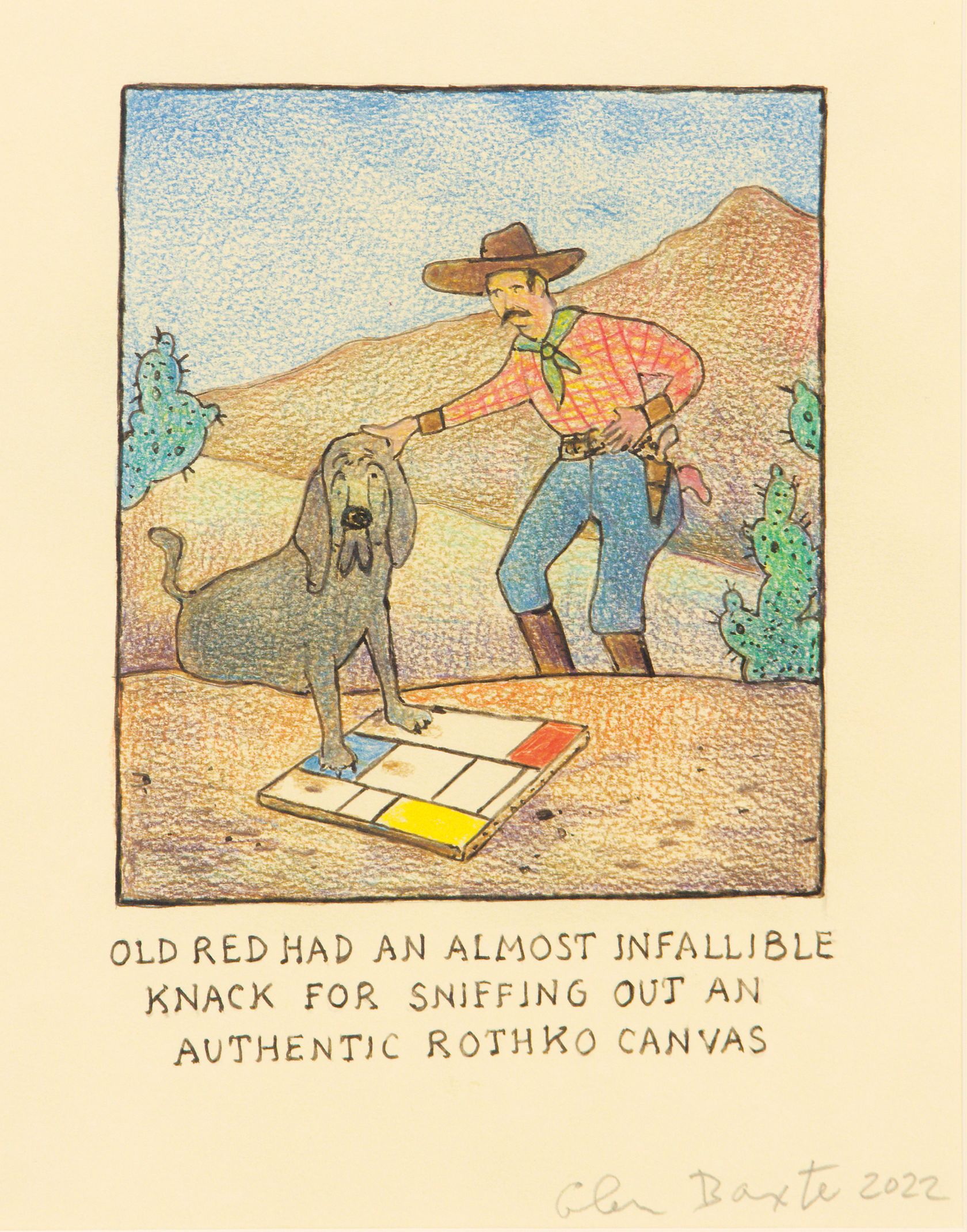
Glen Baxter, Old red had an almost infallible knack for sniffing out an authentic Rothko Canvas, 2022
-
 2/5
2/5
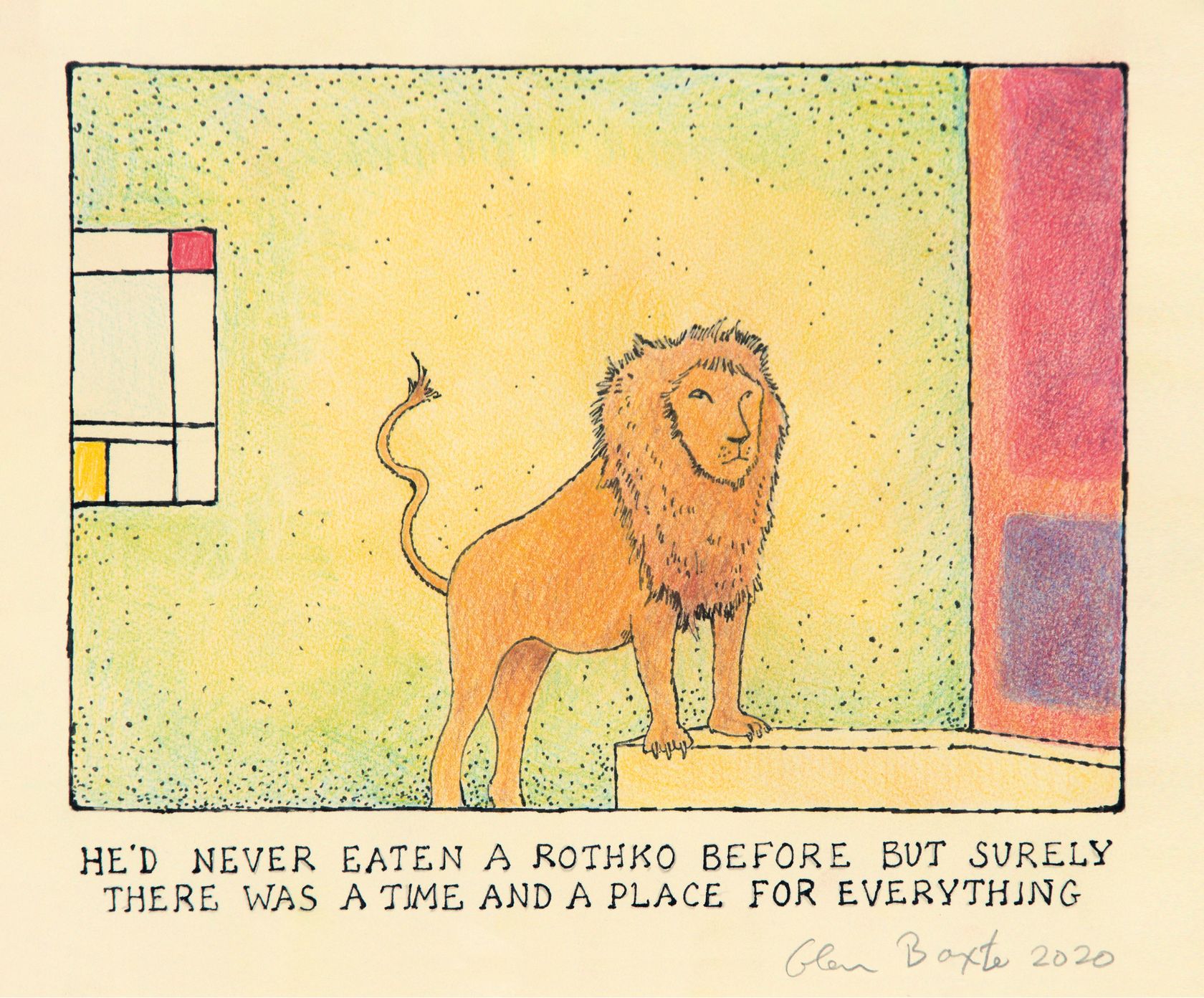
Glen Baxter, He'd never eaten a Rothko before but surely there was a time and a place for everything, 2020
-
 3/5
3/5
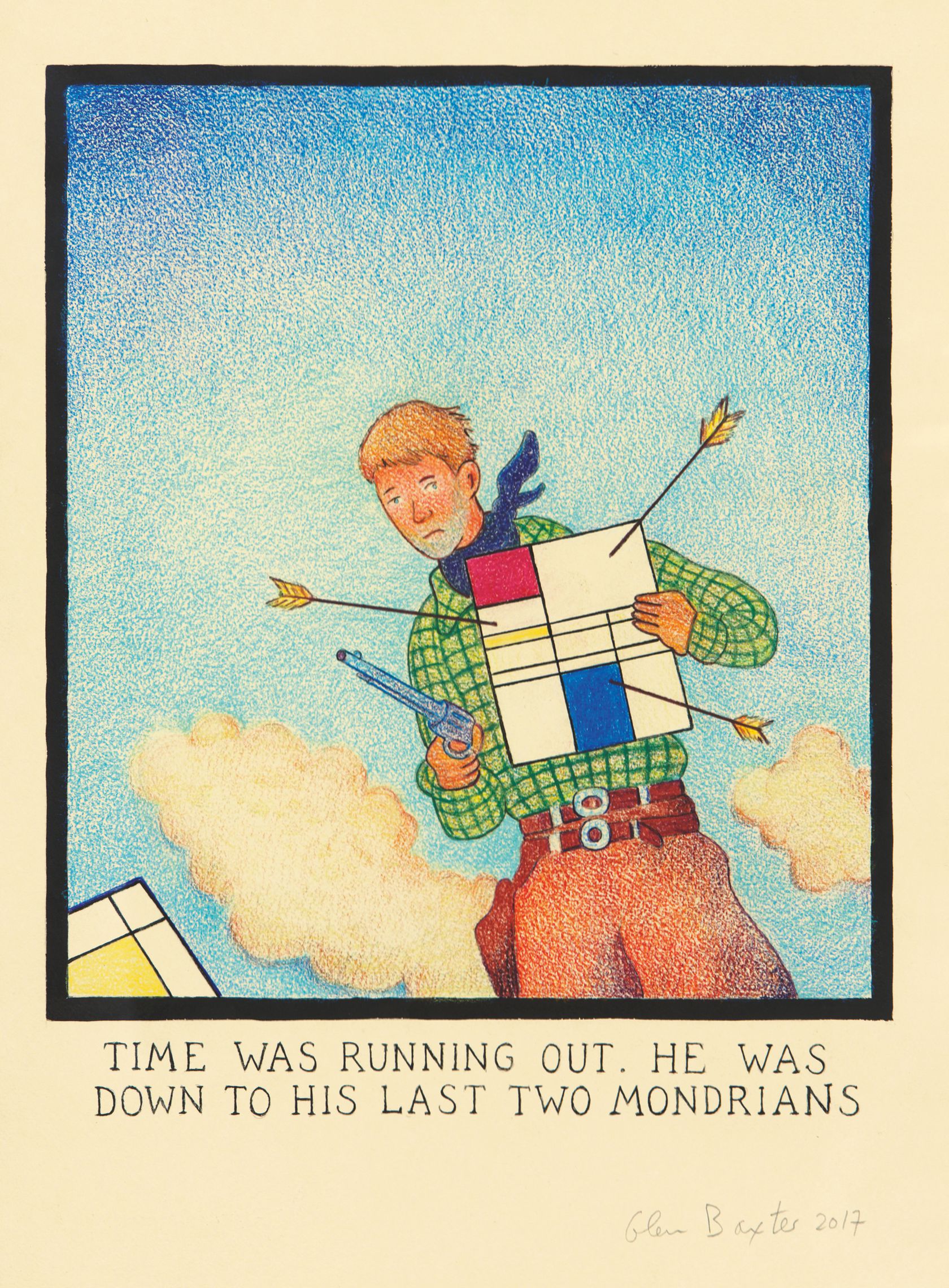
Glen Baxter, Time was running out. He was down to his last two Mondrians, 2017
-
 4/5
4/5
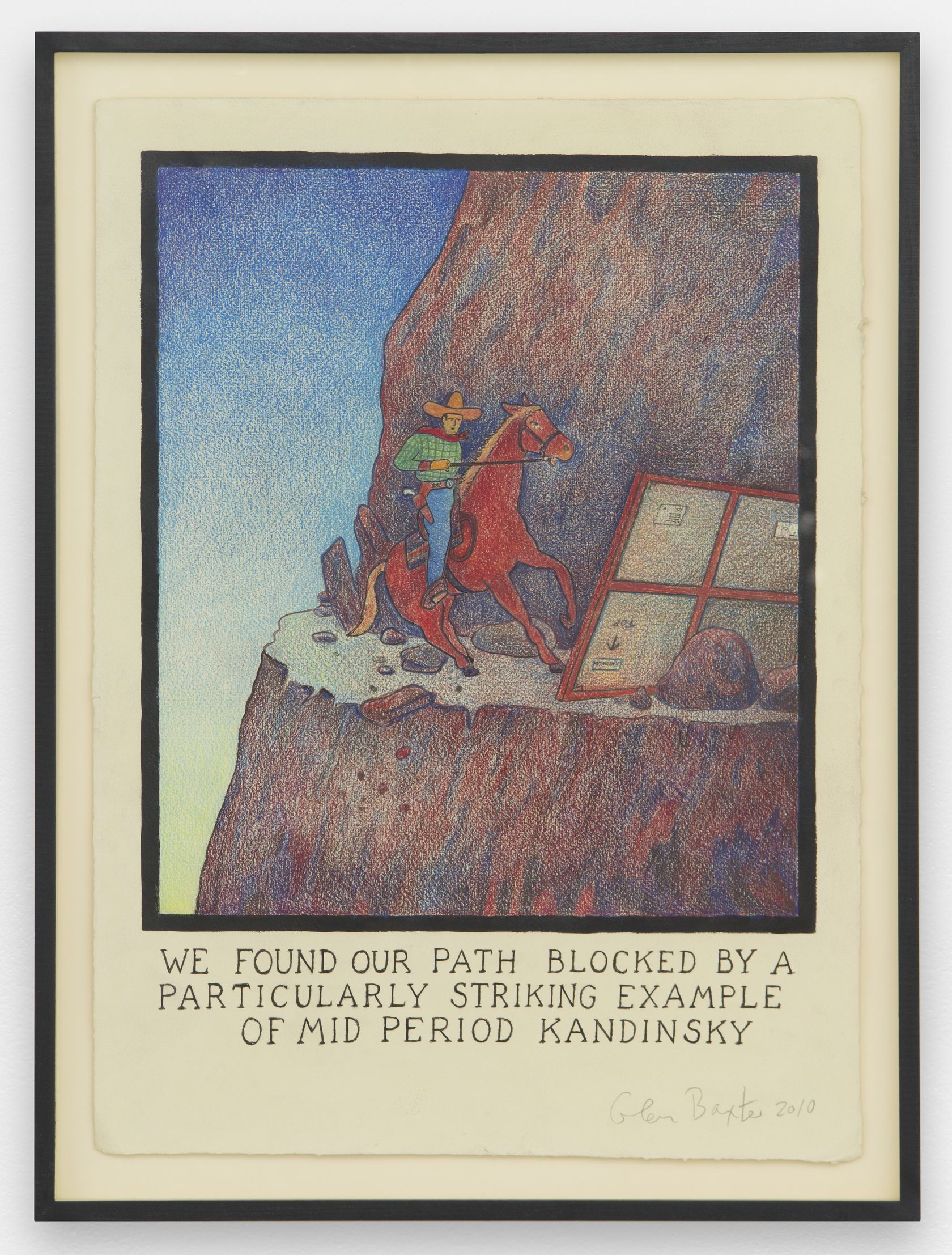
Glen Baxter, We found our path blocked by a particularly striking example of mid period Kandinsky, 2010
-
 5/5
5/5
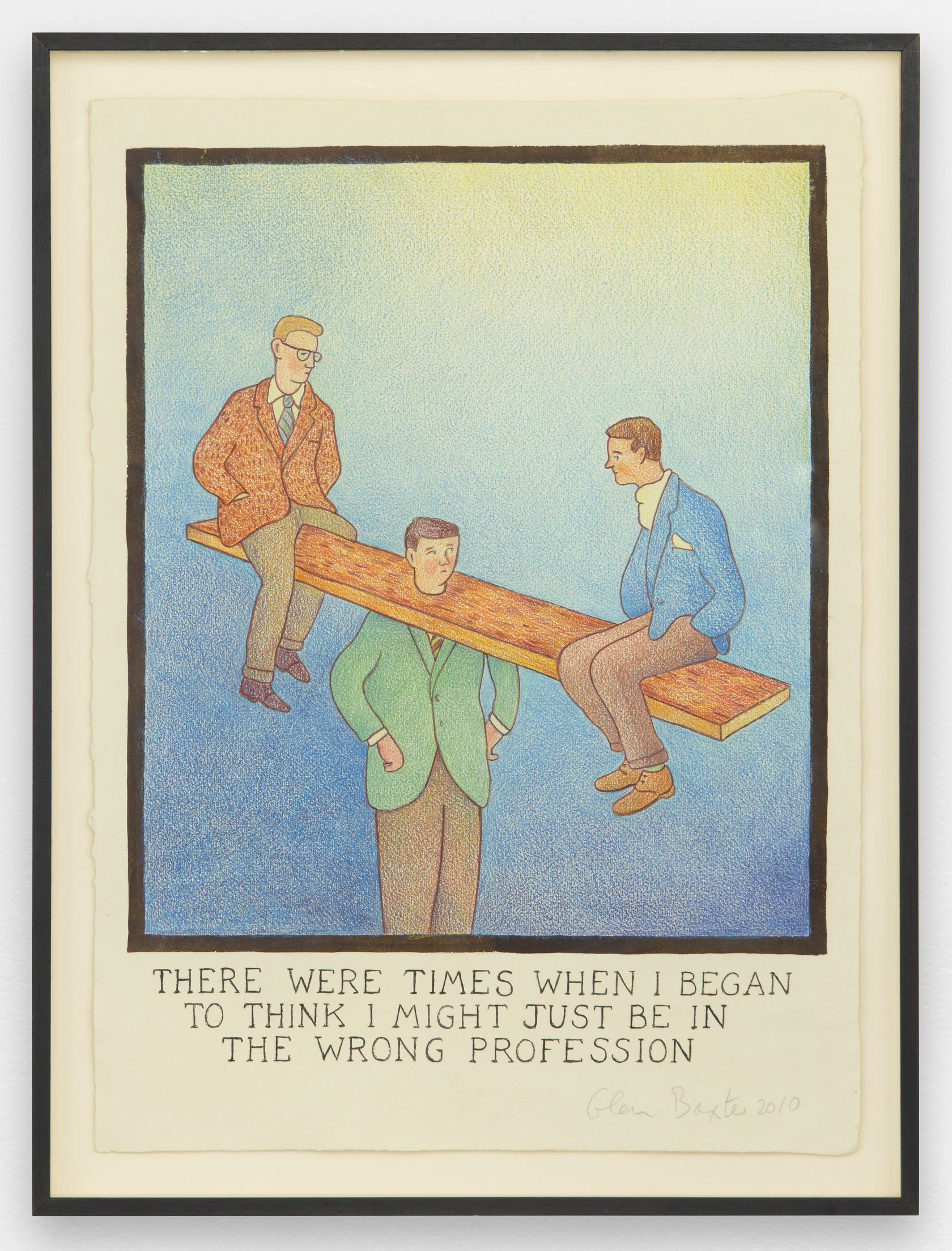
Glen Baxter, There were times when I began to think I might just be in the wrong profession, 2010
Glen Baxter’s œuvre is immediately recognisable. He has remained true to his simple and highly effective process for almost fifty years: a comic sketch is accompanied by a short, incongruous, even discordant caption. Baxter elaborates a parallel world based on a burlesque hijacking of an iconography sourced from the 1930s and 40s, which provides him with an assortment of cowboys, boy scouts and golfers in tweed. His refined prose contrasts with his seemingly outdated imagery, blending elegantly in a quest for the frisson cherished by surrealists such as de Chirico and Max Ernst. Bewilderingly nonsensical, astonishingly witty and tragi-comic, like life itself, these talkative drawings celebrate the heady rush of linguistic mishaps.
Born in 1944, in Leeds, Yorkshire, Glen Baxter attended the Leeds School of Art. After several stays in New York in the 1970s, where he was introduced to poetry through his involvement with the artistic circles of St. Mark’s Church, he finally settled in the Grosvenor Park area of South London. He taught at Goldsmiths College for around fifteen years. His work has been regularly exhibited in New York, London, Tokyo and Sidney as well as in France, where it has been shown in numerous institutions and features in around fifteen public collections including the Pompidou Centre, the National Centre for the Visual Arts (CNAP) and several Regional Contemporary Art Collections (FRACs). His oeuvres are also included in the collections of the Tate Gallery, the Victoria & Albert Museum in London and the MoMA in New York. His drawings have regularly graced the pages of the New Yorker, Vanity Fair, The Observer and Le Monde. He has also published some fifty books.